Learn this ONE rule of Permaculture and Your Half Way to Your Homestead Dreams
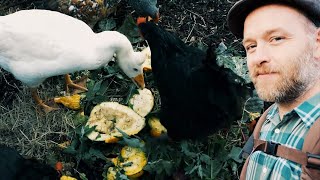
In this instructional video, the presenters walk viewers through the core permaculture principle of designing a homestead so that every element (house, garden, chickens, livestock, plants, windbreaks, privacy barriers, etc.) meets the needs of the others, reducing external inputs and moving toward self‑sufficiency. Drawing on Bill Mollison’s Intro to Permaculture and teachings from Jeff Lawton, they demonstrate a step‑by‑step functional analysis: first list what each element needs, then list what it provides, and finally map the connections. The chicken‑garden example shows how chickens can supply manure, pest control, tilling, and even mulch, while the garden supplies food scraps and foraging material. They illustrate placement strategies—situating houses near water sources for gravity‑fed irrigation, positioning gardens between houses and livestock for easy resource exchange, and using biological resources (trees, shrubs) as windbreaks, privacy screens, trellises, mulch sources, fuel, erosion control, wildlife habitat, climate buffers, and soil conditioners. Practical planning tools are offered: printable cut‑out symbols of homestead elements that can be rearranged on paper to test designs, a method encouraged by Jeff Lawton for low‑cost error‑checking. The video also points viewers to the Permaculture Plant Index for layered plant uses and to a “7 Essentials of Keeping a Flock Alive and Happy” article for chicken needs. The overall message is to shift from seeing farm components as isolated to viewing them as an integrated network, with encouragement to experiment, iterate, and use zoning principles in future videos.
Chapters
In this video, we're going to talk about how to make the connections, the things of your farm, to move towards more 100% sustainability. In the last video, we talked about what permaculture is and what it can do for you. Some takeaways from there were we wanted to work with nature, not against it, and things go better for us. We also want to turn problems into solutions. In today's video, I'm gonna— I promise You're going to look at things of your homestead different. Like, let's take for a chicken, for example. You're going to be able to see a chicken not just for its giving of eggs and meat. You're going to see so much more that a chicken can give. And I'm going to teach you how to go through those exercises so that you can do that with a chicken. You can do it any of your— anything on your farm. Discover that it's worth so much more than just the obvious. Not only am I going to show you how to get more from each of your elements so that you can have exponential improvements. In the last video, we talked about how the system should be ecological and economical sound and meet its own needs. In this video, we're going to talk about how every element can work to meet each other's needs and down the requirement from outside sources. This training series is largely based on the book, Bill Mollison, Intro to Permaculture. I mean, if I was stranded anywhere, on a desert island, on a cold island, on a tropical island, in a cold temperate island, I would get Intro to Permaculture with Bill Mollison. That's where I'm getting a lot of my teaching. I'm going to quote that right now. The core of permaculture is design. Design is the connection between things. It's the very opposite of what we're taught in school. Education takes everything and pulls it apart and makes no connections at all. Permaculture makes the connection, because as soon as you've got the connection, you can feed the chicken from the tree. To make a great homestead design that may include a house, a pond, chickens, some gardens, private barriers to be efficient, then they must be put in the right place. So that's what this lesson is about. We're going to begin to teach you where to put things, how to put them in the right place. Here's some examples of good placement. Houses, livestock could be put below water sources so that things could be— so that water could be gravity-fed down. Remember my Everflow watering system? And this is going to be easy as ever. Look at that, the dirt is settling on the bottom, clean water at the top, always running, need no electricity, not worried about this. Biological or non-biological privacy barriers can be placed to create privacy but also not block the winter sun.
Let's say I wanted some privacy between my house and the neighbor's house, okay? And I wanted to use plants and shrubs. Now I'd want to be careful here because that's the— it's also the south, so there's the south, there's the sun. I don't want to block that winter sun. Okay, so the sun's making— going across like this, so I don't want to block that. So I just got to be very careful there. Sometimes I think because we would be far, farther, far enough out that if we were to create a barrier right here, we wouldn't want to go too high with it. So we wouldn't want a pine tree like that because then we'd be blocking the sun.
Onto our house.
There will be limitations. Like, at some point, if utter 100% complete privacy, it's going to block out the sun. You got to give one or the other.
And when I say biological resource, we'll get into that more at a later date. I'm talking about like living, growing things. So in a privacy barrier, it would be a bush, a tree, something like that, as opposed to a fence. How about this one? The garden is placed in between the house and the chickens so that when you're going from the house, you walk right by the chickens. You can give it food scraps, you can tend the garden, you can take excess from the garden and take it to your chickens, theoretically, on the way to the chickens. And then on the way back, you could take some manure or something like that from the chickens back into the garden.
I want to show you how my garden system here, my kitchen garden system. The garden right next to my house is a complete showcase for a permaculture garden. There's the house. So you come out of the house, you know, right now the chickens are in there getting it all ready. There's no garden, but the garden will be right here. And so I walk out, you know, I pick from the garden, I get some of the waste, I just, you know, weed a little bit perhaps, and then I would walk out further from the garden. And look, here are the chickens. This will be the more permanent chicken run right here. And so I take the garden, take the waste from the garden, and give it to the chickens. Theoretically, then I can take the waste from the chickens and give it to the garden. I'm going ahead and doing that in advance by putting the chickens on it. But if you had a permanent system, you would want your garden here and your chickens here, and then they complement each other, and you can service your garden on your way to your chickens.
I've developed what you call the chicken garden miracle. I take it a step further, and the chickens and the garden sort of become each other. It becomes one system, not just systems next to each other, but one system.
Here, what I have going here is a step beyond textbook permaculture. What's going to happen here is the chickens are a part of the garden.
They're all—
it's like one system. They're in here, they're helping spread this mulch, they help break that down, they're manuring and fertilizing. And then as we add a garden bed, we'll put this electric net around it to block, to keep the chickens out of it, and plant into that and get the chickens over here where they need to be. And then when that grows We'll harvest it, and then when we're done, we just open it back up to the chickens. The chicken miracle garden.
The whole idea here, if you can, is to meet the needs of one element by another element, and vice versa. Do you capture that? If you don't get it yet, you will. That's the point of this whole lesson. Typical elements, and the ones you guys are most interested in, are the house, chickens, and garden, and maybe small animal. We saw a lot of people raising small animals like rabbits. Look at him munching on the fresh grass.
We're talking about the slats here. This makes it possible, um, slats. He likes to put slats along the edge because that's where they're more likely to dig.
If they go down through here in the middle which they can at this point, their size, technically they could. They'd have to dig a really long way to get to the edge.
Have you seen them escape like that yet? Um, no, not like that.
Here's the trick. We're gonna take things we want to plan for, what we already have on the homestead or what we want to have, and we want to plan, move them around paper, around on paper if you will. By the way, in the show notes I have printouts of popular elements that you could cut them out and you can move them around on the table and just play with it. Just say, what if I put the chickens over here? And what if the garden was here? How could they work together? What if the house were here? I mean, you're probably not going to be able to move your house, but maybe if you're starting fresh, you could even move around the house. But so you keep your house planted and you just move things around. If that doesn't work, if you don't want to do my printout, or I don't have— like, I don't have land or anything, Print out, like, from a magazine, Mother Earth News, Modern Farmer, something like that. Print those elements out that you want, or old school, draw them, cut them out, move them around. Remember, if you only get one thing from this, I believe it was Jeff Lawton that told me this, it's a lot easier to make a mistake on paper than in real life. So don't be afraid, be crazy, do crazy stuff, ridiculous, that may not make sense in real life, Just go to town. You might discover something you would have never imagined. It won't hurt. What will it hurt? You make a crazy design and you're like, oh no, no, that's not going to work. Just move it around and fix it on paper and then go into real life. Now I'll note, you'll go into real life, you're not going to get perfect. Let's not act like we're going to have a perfect Garden of Eden here, okay? You're going to go to that, it's real life, you're going to have to make adjustments as you go into real life. You thought you had a good plan perhaps and you go into real life and then it grows and it's not. So then you just make adjustments. As Jeff Lawton would say— I'll never remember this, I'll never forget this, this was probably one of the coolest things I've got, I got from studying under him— he says, you know, you get— if you get frustrated, which we do a lot in homesteading and farming because there's so many different things that could go wrong, when that happens, you just come in, get some tea, and rework the plan. Every element should be placed according to its function, according to what it can do. Not just— that can be one factor, like the chickens may be pretty over here and the garden's pretty over here. Let's go beyond that and think about function. What does that thing do and how often does it do it? And in the next video, we're going to talk about further placing things according to how much time you visit them and things like that. So hang in there. Start fooling around with plants here, but after the next video, with these two videos, you're going to be really able to figure out where things go. Let's do this. Let's think about the different possible functions of a plant as an example. What are the different things a plant can do besides give you food or give you shade, right? We'll include trees in with plants. Plants can serve as a windbreak.
Let's do what you call a walkabout for this little section here to show you all the different uses for plants. Say I wanted first the windbreak. So my wind, from experience and research, is going to come from the north. So it would not be a bad idea— actually, it would be a great idea— to line that whole area that's just open to the north, to the north winds, with plants that block north winds, plants that are a wind barrier. We're also in the valley, so we're actually in the frost pocket. It's not the ideal place to build a house, but it's what we have. Put it— but so we could deal with that by putting biological resources up, by putting plants up that block the cool air coming down from the mountain.
Plants can serve as a privacy barrier.
Plants can also help you with privacy. Those very same plants that could be a wind block from the hill could also be a privacy from that neighbor. See, look, look, there's the neighbor, here's the house. So what if you were a plant giving us a barrier, giving us some privacy?
Plants can be A trellis.
Plants could serve as a trellis, you know, further off in places that you just visit infrequently, just to be something beautiful, or something everyday like right here. What if we wanted to turn this dock into something we used more often in the summertime particularly? It's a little bit of a shade from the southern sun when it's there, so in the evening this could be a great potential. But maybe we would want some more shade covering up there, and maybe we'd have a trellis system here, maybe with something edible like grapes.
Plants can be used as mulch.
Here I've got a crop garden that right now is in need of the mulch, so we're going to actually cover this. We're going to actually cover, uh, we're going to actually cover crop this.
But what about this?
Look, we have a tree going there, it's doing good. I think the one down there is not doing so good. This one, something happened to it when I was on the road. So anyway, what plants could be grown near or in the garden so that they could be cut back and actually used as mulch? And then you don't have to import wood chips and leaves, of course. Oh my gosh, do you see all those leaves over there in that yard? Leaves, there's your mulch right there. So plants, when I say plants, guys, I mean anything as small as an annual vegetable plant to as big as that oak tree over there.
The obvious: plants can be used as food. Plants can be used as animal forage, and we're not just talking about grass, guys. We're talking about herbs, even weeds, bushes, even trees. Plants can be used as fuel. For fuel, how about plants way over there on the edge of property in the forest? How about that for Growing the plants for fuel. So growing trees for fuel. They can be used as erosion control. Here's a little micro example. Here we've got a little bit of erosion. So that's another thing a plant can do. That's another thing these plants are doing. Notice where this grass is growing, there's no erosion. And where plants aren't growing, there is. They can be a wildlife habitat. Why do you want wildlife? You know, I let that possum go the other day. We had a possum come and get in the coop with my 3 fat hens. Y'all remember that from the vlog? And somebody— it's inevitable when wildlife comes and I let it go, somebody always praises me and somebody always gets very upset with me. You know, you should have shot that thing. Why do I let it go? Well, why did I let the possum go? Well, for one, you set off the balance. If you get red of a possum, you introduce— I think it said like 8 or 20. Do I want to say 20? No, let's just think of it this way. If you get rid of the possum, you bring in other rodents that the possum was eating. Possum in particular eat thousands and thousands of ticks each year. So I have Lyme disease, I don't want my children to have Lyme disease. I would give that possum a hug if I could. Just got to do a better job of protecting my chickens from that possum. Did you know that another good example— so I might want to encourage possum. I might want to, if I have a really excess of scrap meat or the offal from our chicken slaughter— not the offal, the guts and stuff from the chicken slaughter, things that we don't use— I don't think it would be wasteful to put that on the edge of the woods to feed the wildlife. So why not create— I've heard of Joel Salatin, you know, piling up his brush instead of putting brush in a burn pile. Putting brush on the edge of the forest to create wildlife habitat.
Classic burn pile. What do people do with their brush? They pile it up and burn it. And maybe that could work in permaculture if maybe you need to spread the ashes on a garden or something like that, but— or you wanted the charcoal. But what about putting this in the edge of the woods to create a wildlife habitat? Rabbits, snakes, all kinds of good stuff could live in this.
And then climate buffers. Yes, they can cool things off. Yes, they can be trees. They can totally cool down your house.
Yeah, as I walk down my hill back to the house, I'm following the path of cold air. Okay, heat rises, cold lowers. Uh, here comes the cold air. Here comes the cold air. Right to my house.
Lastly, but probably not all, so just the ones listed in the book, soil conditioning. So you can improve your soil with plants.
Just in the last video, the last— we heard just in the last of these introduction videos, uh, Steven from the Permaculture Orchard just talk about nitrogen-fixing trees giving the soil more nitrogen. That's something it needs. Just a plant that you can cut back that releases nitrogen into the soil. Can you tell me what this is and why? Yeah, so we go on a trio system. So our trees are based on trios. So we'll have nitrogen fixing and then two fruit trees, or a nitrogen fixer and two nut, or a nut and a fruit.
I will tell you an invaluable permaculture plant resource. It's the Permaculture Plant Index. I'm going to leave a link for that in the show notes. It's so cool. Because he divides the trees up into different layers. Like, you have your big tall tree, you have your medium tree, you have your shrub layer, you have your ground layer. Not only does it divide it up— does he divide it up that way, he also divides it up into uses: windbreaks, edible, all those kinds of things. You could spend a lot of time there. I constantly reference it in my planning and moving forward with plants and trees on my homestead. So check it out, I'll leave that in the show notes. To get started with this, you'll need to do a functional analysis of each element. I know that sounds like fancy and serious, but you'll see it's very practical and helpful. For our functional analysis here, let's do an example with the chicken. First step in doing a functional analysis, you'll ask, what does that element need? So for a chicken, what does a chicken need? If you don't know what a chicken needs, actually I have an article, 7 Essentials of Keeping 'A Flock Alive and Happy.' I'll leave that in the show notes. But if you don't know, Mr. Google Pants can be your best friend. What is the need of a pig? Pop it up, read a few of those articles, see if you don't get a better idea of what a pig needs or a chicken needs or a certain plant needs by doing a little bit of research with sitting down with Mr. Google Pants. If that doesn't work, you can get a good book or you can seek out a mentor, somebody who has done what you want to do. Oh, you can always observe too. Watch the animals. What they do when it rains. Do they seek shelter? Do they like to walk around? Do they like to roam? What, what are they eating? Those kinds of things. Second, you want to write out those needs. For us with the chicken, they need a shelter, grit, dust bath, water, air, good clean air, food, other chickens. So in other words, with air, don't coop them up.
Fresh air. Don't keep them inside. They don't want to be inside. They need fresh air, at least 3 square foot per chicken.
Thirdly, we want to write down and brainstorm what a chicken gives. You'll research that, you'll observe that. With chicken, it's eggs, no duh. Meat, another no duh.
Feathers.
What are you going to use feathers for? I don't know, bow and arrow? Manure.
Manure.
And do you guys know that you can not only use the chicken manure— I like to call it holy chicken squat— for fertilizer, you can also use it to make methane gas. Now, I've never done that. I wouldn't know how to begin on a small-scale level, but they do it on a big level, and some folks have even done it on a small-scale level. Chickens scratch, which means they can till, they can stir, they can spread.
Chickens forage.
When would you need foraging? Well, maybe you want to get rid of the bugs.
Maybe you want to get rid of certain weeds.
Put the chickens on it, they're going to forage it. Chickens fly. Now I don't know why we would ever want— see, we're just brainstorming here, we're just putting things down. Okay, what does that matter if a chicken flies?
Entertainment?
Something fun to watch? I don't know. And lastly, fighting. Why is that a good thing? I have no idea. I do not encourage cockfighting, by the way. But you see, we're writing down the way chickens express themselves, and some of them may be useful for us, some of them may be things we want to do, some of them may be things we don't want to do. Fourth, we then make connections. We begin making connections. If we've done a analysis on the garden, we see that the garden gives food, maybe garden gives mulch, maybe garden gives a refuse if you were to let chickens in there. On the other hand, the garden needs fertilizer, it needs mulch, and it needs water. So then we've seen that— wait a minute, the chickens can give the garden manure.
So let's review and look what's happening here in my system. Here are chickens and gardens married happily together. The garden needs mulch. We've, we've brought in wood chips, but the chickens are help spreading that. They're actually manuring and fertilizing that, which helps break down that, not only fertilizing soil but helps break down this wood chips, which will end up being compost. Them turning it will aerate it and help it break down into compost. The chickens are de-weeding, they're debugging. There will be no weeds in here, there'll be no bugs in here. They will help this mulch maintain and keep it. This area we haven't mulched yet. The chickens are fertilizing. The food scraps that we have fed the chickens are going to the soil. The soil eats that. The worms will eat that when this is covered up with mulch. You know, right now the garden is taking, taking, taking from the chickens. Chickens are fertilizing it, composting it, spreading mulch. They're doing what they need to, but that's what they love to do. Don't feel sorry for the chicken. They absolutely love it. They're getting their fresh air. Okay, they have their water, which will end up on the wood chips, which will help break them down. What will help break these wood chips down and turn into compost is water, air— which, here's extra water from cleaning out their water— air from the chickens scratching it, and nitrogen, which is their manure. Okay, and then the carbon, which is it itself. That's going to make compost. It's gonna be rich soil under here. And then we move the chickens out strategically. In here we're just gonna have rows and plant our crops. And then it's time for the crops to give back to the chickens because we cut off the bad parts of the crop, feed it to the chickens. Plus when we get done, or if we have extra, we throw it to the chickens. And then if we have extra, we throw it to the chickens. And then when we're done, we move the chickens in it and they have all that we didn't use. So do you see, do you see how powerful this can be? I'll tell you a couple of other ways to do it. You don't have to do it exactly how I do it, but why not? A lot of people, as I traveled America, had classic chicken runs. So if your classic chicken run is going to be over there and never move, why not at least have your garden right here? That's probably the easiest move for you. If you can somehow come up with a mobile coop, you could have this and put the chickens over here this year and the garden over there this year and then flip it. So there are other ways besides how I'm doing it to marry these things. I encourage you to explore that creativity and just do something. Just begin to think, how can I connect stuff?
So there you have it, folks. Hopefully I've revolutionized the way you look at the things of your farm. Not only do you see them for their obvious needs like a chicken for meat and eggs, but then you see that a chicken can do so much more than just that. And then hopefully you make that connection, guys. You go from being a gardener and going out and piddling in your garden, and then going from being a chicken man and going out and taking care of your chickens over here, and then you say, oh, wait a minute, the chickens are over here, the garden's over here, they can work together, let's put them here. All of a sudden You've become a permaculturalist. Congratulations, pat yourself on the back. In the next video, we're going to talk more about placement, how to place things, how far away to place them according to your visits. It's really good, it's called zoning. I really want to talk to you about that. We're going to talk about how to plan and factor for wind and how to look for where to put things according to the sun and all those other factors. Get started doing your analyzing now. And then in the next video, we're going to talk about even more about how to place those. With these two videos together, it's going to absolutely blow your mind and revolutionize your homestead.
More from Justin






If I had to start my Homestead all over again, it could only pick one animal… 




