No More Weeding | Our 8,400 sq/ft Garden
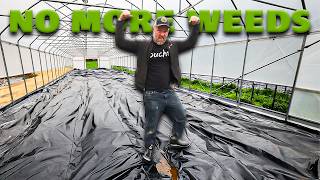
Victor walks through a rainy Sunday on his 8,400 sq ft homestead, using Farmer's Friend silage tarps to suppress weeds in his 1,200 sq ft high tunnel. He moves 2,000 lb of feed with a track loader, manages guard geese and sheep, and plants rye cover crops to restore soil after Hurricane Helene.
Chapters
Happy Sunday seed day! I am inside our 1,200 square foot high tunnel. You guys hear that? It's raining. That could hamper with much of our plans to weed-free this garden, although we could still work in here. I'm not rained out in here. We've got weeds coming up despite no moisture. I've got an old tried and true way of controlling weeds. We're gonna do that on this high tunnel, Lord willing, and the creek don't rise, and a new method that could revolutionize and make a big difference in our family's journey to grow our own food. Look, because this ain't— this 1,200 square feet? No, this is 2,400. Sorry, 2,400. Still, it's just a quarter. Look, look at all that garden! Oh my gosh. Hopefully we can keep these weeds under control. We've got lots of ideas. We're going implement something old and something new. Hopefully today, if we can, uh, if this rain will work with us. First, we have 3 critical tasks that must happen rain or shine. One of them, because it's raining— thank you, Superb, for sending me these can jars. A couple pints, a couple— one for canning, a quart jar for canning, and just— and then a regular quart jar. These look really nice. Oh no. That rain was not supposed to happen until this afternoon. Uh, it may damper with our plans of weed-proofing our 8,400-square-foot garden. Next up on my list—
hear that?
That's in our front yard. It's driving us crazy. They're doing their job of guarding the chickens. They are guard goose up there. That noise and that racketness, you know, it's going to keep the predators away, but it's also homeowners away, and we like our front yard and want to be in it. So because they're in the front yard, there's not that much predator pressure here. Let's move these guys down below. I wonder if one would be less squawky, and we ought to just separate them. Let's try it. And which one was the most gentle? I'm gonna assume the first one. I'm thinking they made me more bold and loud because they're together. Well, I thought we found the— oh boy, it's really starting to come down. The goose seems to be more quiet. One thing we can do to fight our weeds even in the rain is lay out one of these Farmer's Friend silage tarps in the high tunnel. Critical task 3. I think it's raining too hard to take you guys, and we gotta do— well, we've got to move the sheepshaw from way over there, the bash shed, to there. Yeah, okay. 2. Oh, still can't see, still can't see. Oh, hope it's not raining too hard. Okay, to way over there. Those poor sheep are in the rain. It won't kill them, but they'd rather not be. We'll take you on the 360. Oh my, what happened here? Okay, beach shawl must have blown over. We had some crazy wind last night. Wait a minute, I think I can carry it in such a way as to not get wet. It's definitely not as light. Okay, but I'm staying dry. All right, you get the shoulder. There we go, much easier. They're very interested in this. Sheep Shaw. I'm going to just lay that down.
That's so cool.
I must say that. And then they're going to get out. They're so timid. They don't even break out when I lay the fence down. Never mind. Never mind. Never mind. And then they all want to go. Lily, come spot me. Come spot me. Come spot me. Get these two sheep. They'll never jump. Jump it to get back in. Just, and now that a couple of them are out, they're all going to want out. The problem with this is it opens some of the cows.
What?
We're going to have another problem if the cows get over here. Why they want to get over here so bad? Okay, get, get the sheep in there now. Oh no. One more. Uh-oh. Let me get this up for the cow. No, no, no. Stay right there. Stay right there. Hey. Okay, that's kind of why I wanted to— Hey, bird. That's why I wanted to go put them in on that end. You know what? Let everybody out. That's the only way we're going to get them all back in. All right, bring that fence back. If you just had one sheep get out, we could easily put it back because they're flock animals and they want to be back with each other. As soon as, as soon as you get two sheep out, they're screwed because they can go, because they can go and do— all right, now open that up all the way. Here I was bragging on them, I'm being docile, wouldn't jump over the fence, and then they did. Uh, part of it is they've run out of hay. Open it. All right, that's good. Help me get these people in there. Anywhere but back in there, right guys? Here we go, we're coming, we're coming with some fresh hay. Oh, okay, I'll spot you if you put the fence back up. Thank you, we did it. Now they're enjoying their sheep shaw. They need a couple of sheep shaws, looks like it. Thankfully I've built the chick shaw and the sheep shaw are the same thing, or the meat shaw, and we only use the meat shaw when we have meat chickens out in the field. So we'll just use it. I'll bring it down too. There's a system called welcome to where they want to be, and right now they don't want to be in there. The, the sheep shaw will help. The fresh hay will help. So keeping the animals at peak happiness will help keep them in. All right, when the boys get up, we'll get them to get the— get some hay bales over here. It's raining and I'm without my teen boys. I let them— they work hard. They built that bridge, uh, they went to a MMA fight last night with Austin and weren't home till like 2 AM. I like those boots. Get in, gotta do your chicken still, of course. Make sure hay and eggs in the morning and eggs in the afternoon. Okay, we're out here milking. Well, we're gonna milk. I don't mind milking. The boys are usually doing it these days. I actually really like milk. Milking part. Uh, here's the thing, a lot of people when they go to get a family milk cow, they, they're thinking about the milking and they're thinking that's the work. That's not the work. That's even the milking part, right? Because The work is the management. Hey bud, keeping the cows, uh, keeping the cows in milk, make sure they're getting bred in the winter, making sure they're getting hay, getting up that hay, paying for that hay, managing deep bedding in the summer, managing rotational grazing, keeping everybody in minerals. Keeping everybody in water. I really hope we can get to this garden project. Sunday is the one day we can dedicate our whole day to the farm, and we've really got a lot to do to prep this 8,400 square feet of garden. Would you do that? Yep, that'd be awesome. Oh, I appreciate that, honey. Let's get Vanilla. She has a bad habit of putting her head on the side of this feeder. She got her head stuck the other day. Hopefully it's not stuck today. Okay, good. Come on, let's go. Wait, is this honey? No, that's, that's honey. Whoops, whoops. Come on, come on, come on, come on, Vanilla. Gosh, it's 9:30. Boys are still not awake. It's, uh, kind of going from hard rain to light rain, and this wasn't supposed to happen till this afternoon, so who knows. I need to feed the pigs. I thought chores were going to be easy, but I have my scraps. I need a little bit of grain, and we are out of grain. Well, we're not out of grain. There it sits. 1,000 pounds of pig feed, 1,000 pounds of chick starter. Chicks are coming soon, and I don't know, 200-300 pounds of turkey feed. How do we get to that? Here's how you move over 2,000 pounds of feed at a time. One— is this 40 pounds? 40-pound bag at a time. Turkey's coming next week. That leaves us for two 1,000-pound bags. I was really hoping the boys would have been up by this time because they could do this so much quicker than me. I can do this though, but first let's, uh, tidy up in here a bit. In order to get the rest of this clean, I need to get everything out of there. I'm gonna have to move these and arrange this anyway. Let's go get the track loader. Now you're getting all the sheep stuff and the blue blocking glasses. I'll take those. All right, just promise me not to leave this area. Okay, you won't? Okay, we have it on tape, folks. He won't. It's not raining. It stopped raining. Let's hope it holds. I'm curious why you all of a sudden so interested in riding this track loader. I think he might think I'm gonna make a fool of myself, which I probably will because compared to the boys. Hopefully the radio is off and we can start this thing. Started. We have no problem starting it. First things I realized we got to do, we got to get the bucket off. I got the machine warmed up. And it's already raining again.
5 minutes later.
I went and got Henry, and I kid you not, it's not raining. It's getting— make up its mind. First task, let's get the hay forks on. Trying to figure out what's most important, uh, because pigs and the ruminants need their feed. I think there's still some— well, there's still hay out there. I could see from here they're Munching on some. It's not choice hay, but the pigs have zero feed, so let's not wait too long to feed them. Let's grab the pallets.
Many, many minutes later.
How many boys can you ride in a track loader? Apparently two. All right, we've got to get all these out, clean this up real quick, and get this down on a pallet and put it back in here.
Sorry I'm a little late this morning.
We're gonna— I was hoping to weed today too. We may get to our weed prevention to help stuff like this from happening. Look at all this. Just look at this explosion. The warmth and the water. This is new gardening ground, so of course it's going to be extra. This— we, we even have an idea for this, but we actually need a hot day so we can hoe this and these roots will die off. If we were to hoe it now and the soil moist, it's just gonna reroot and not even kill the plants. The tree's budding. The weather report said it'd be quit raining by now, 11 o'clock. I need to check on the kids. We'll wrap this up in a second. At least he didn't run off with this important sheep stuff. Maybe the boys are up. This is definitely a record. Okay, they need to get up. It's time to get up. Guess who I rallied? The boys. Hey, you young moms and dads, kids not sleeping through the night, just tell yourself— is how I got myself through those rough nights— he will eventually go to sleep. And I meant that day. They do eventually go to sleep that day. It may be 4 o'clock in the morning, but then eventually they do sleep, and you're the one prying them out of bed. Good to have my boys back on the machines, although that was fun. You were driving the machine? Yeah. Is that why everything was so beat up right there? What do you mean? Two more things to move. Let's consolidate this alfalfa on top of this. Decide, do you want to eat lunch first or you want to move these things? Probably going to want to move these things.
Move the thing. Okay.
That machine's handy, isn't it?
Walk alongside spotting it.
That tracks right there. I ain't doing that. I don't care if it falls.
Should be able to eat.
Oh, you have to feed the little pigs some more. I didn't have enough to feed them completely. And we should be able to cover this garden. It's after lunch, free-range children time. What are y'all going to be doing? Hello! Just working on my feed room. Okay. Feels so good that we got this done, stacked. We even— I didn't want to do it, but it's the right thing to do. Did you notice the slits? Yeah, who did this? Gideon? Henry? Henry? Gideon? You need a lasso. Ah, I got it! She got me, she got me. Okay, I actually think they probably did that with good intent. They were actually getting the plastic wrapper off. I think it's sort of a rookie mistake, not a kid fooling around mistake. See, that's what it's like. You have this plastic and you cut it, and if you're not careful, you cut the bag. It's the excitement of the day. Prime time entertainment right here, guys. I guess this could be another use of pigs restoring pasture. Some of this grain has sprouted, unless that's our rye. That could be our rye cover crop. In any regard, that's very exciting. We've run the animals through here. We're planting rye behind them. Rye will go down into the sandy soil and dig deep and add organic matter when the roots die off after we graze it. I just got to show you guys something that's really, really exciting. To put it in context, Hurricane Helene washed away about 2 or 3 acres here of topsoil. It's very rocky. But I see green. I see green. We put down leaves to build soil. We're gonna come through here with hay bombs. But oh my gosh, and that's grass. Looks like fescue grass. That makes me so excited. There's seeds in this sandy soil. Mmm. This, this means this is putting us ahead a year, 2 years into our recovery. Just knowing that there's seeds here and stuff can grow in it. Of course, adding the leaves will help to help keep it more mulched and, and moist. I'm excited for this. I'm glad you guys can share this moment with me. That means this, this land is going to be restored sooner than I imagined. I mean, we might even be able to graze it this year. This, this fall, somebody might be eating off this stuff. We're getting a break in the weather here. First thing we want to do here is wet this down. I wish I would have covered this immediately, but anyway, nothing's gone to seed, so let's cover it, encourage growth. We'll smother things with the silage tarp. Any other seeds will germinate within a week and then hopefully die within the next week. And hopefully we don't have to plant this for 2 weeks. We certainly don't have to plant the whole thing for 2 weeks. The longer we can keep it covered, the better. First up, water hose. This is already drying out way too fast. It It took me way longer than I thought, and I really didn't even soak it as much as I would have liked. I guess there's a point of diminishing returns. That would have took forever. All right, here's the magic sauce. I first found out about this on the Great American Farm Tour in 2017. Remember all those talks we'd have at night talking about doing something crazy and just traveling all over America? But come morning time, we'd always have some great reason Why not to? What finally took us over the edge?
I asked myself, what would I do if I wasn't afraid? I can't believe we bought a bus!
Not only did we do America, we actually went to Canada. East and west side. And on the east side, we went and saw JM Fortier. Are you the mother? I am. Okay, I kiss you.
Oh good.
Okay.
All right! You're in Quebec now. That's what we do. Charming fella. Fish in the French district of, uh, Canada too. He showed me how he kept up gobs of acreage. How many, how many was it, Austin? I forgot. An 8-acre market garden. Yeah, it's a really big project, and without a tractor and no tilling. I wonder if there's wrapping on this, or I have to be careful not to cut that. Okay, good, it's in a bag. I would have been a little more rough. If I would have realized this isn't back— this thing's fortified. And I hope it's 100 feet too, not just 50. All right, there we go. I got it. Anyway, that was 10 years ago that JM Market Gardener, uh, introduced me to this silage tarp. Uh, we've never looked back. We were sus at first because, I mean, it is plastic. It's a lot of plastic.
This is heavy.
The plastic's gonna be with us forever. I was sus, so I put it on that first time. And like, what would I have done in here, guys? It's hard to just prep a couple beds at a time as you need them, you know. You kind of have to prep everything, and then you need to keep the weeds from growing until you're ready to plant. Wood chips don't really work here in western North Carolina. We get so much rain, we grow mushrooms in our wood chip back to Eden garden. 40 inches of rain. I said I'd give it a try, so I tried it, and the first time I picked this stuff up and looked underneath worm castings everywhere. And of course it kept all the weeds at bay, and I could just lift some off one of these rows and plant, and when I was ready, do the other stuff. The bad news is the plastic lasts forever. That's also the good news— it lasts forever. You can, if you take care of them, don't let your cows run on them They have repair tape, but, uh, if you take care of them, they will last forever. The amount of food you will successfully grow and not have to rely on a truck trucking it from California— we want to be these purists, but some— sometimes at the expense of actually getting it done and actually succeeding in our growing programs. And then we're just relying on the unpurest food solution. So sometimes you have to have a compromise. We're serious, it's 8,400 square feet of gardening. We're quitting the grocery store. We're going to come very near to it. We're going to take all the help we can get. We went over. That's okay. That's what I really like about Farmers Friends. One thing is they make it longer and wider. The standard market garden plot is 100 feet by 21 feet. Theirs is— their tarp is like 105 feet by 24 feet, and you need that because of the for width, the undulation and covering all these hoops or humps down and up, it's actually, you know, more than 21 feet for a tarp to travel across the surface. Across— don't just use any tarp. Don't use just like a Walmart tarp. You need a UV-treated so it's sun resistant. If you use a regular tarp, it's just going to shred to pieces and it's going to leach plastic. Then you're gonna be eating plastic. I'm not gonna be too pretty with this today. One, I don't have sandbag— we don't have sandbags, and it's been spring, it's been windy. You can get this at Farmer's Friends. I'll leave a link down in the description. But also, if you're an Abundance Plus, you can get 5% off of this just for being an Abundance Plus member. New Country Organic feed, Premier One electric nets. Dude, you can pay your— cover your membership with what you'll save in discounts you can get inside there. Oh shoot, it's time, it's quitting time. Shoot. All right, we're gonna have to do this real quick, we're too close. Hopefully we don't have any technical problems with the webinar. Not as pretty as I would like, we could make it prettier, but how long did it take? That took 5 minutes. All the rest of those seeds will germinate because they're wet in the dark, and then they'll try to grow and they'll get snuffed out. Same thing with those ones that we're already trying to grow. Up on my honey to-do list— you see this? This used to be clear. This is our water filter. That's sediment, y'all. Hurricane Helene brought with it a lot of sediment into our well. This has only been— I don't know, time flies. Month, maybe two. This kind of stuff though, for whatever reason, just stresses me out. I don't know, I've never done it before. I'm telling myself it's good for my brain. I've got instructions for this. I got to be able to do this. Turn off water supply. Okay, there's three potential— up, out, in. There we go, we're on it, we're on it, we're on it. Turned off water supply. For water discharge from system, then press the water I know. Press release button. Use filter housing wrench to unscrew housing. It says prepare for, uh, drainage. Okay, ready? Get in there either. Hopefully that's far enough. That's it. Oh, it's gonna come out right at the top.
Really?
Look, that's where it comes out. Oh boy, that's weird.
It's gonna be messy. Okay, unless there's not a lot of it.
Okay, oh wait, here it is. Open the nearest faucet until flow stops to depress.
Oh, there you go. That should be cold.
That's as far as down as it goes.
Moments later. It's still going. This is going to take forever. That'll drain it fast.
Is this—
is this coming from inside our house?
Okay, yeah. The I think the water may bypass.
I don't think they come in through our hydrants.
Still a ton of water. Not a ton, that was strong, but it was very— it's getting a lot weaker. They can just dripping now. It is. That one's still going.
This one's still barely going.
That's slow enough.
Yeah.
Okay, whatever we don't get out here, we're gonna have to get in a towel. You ready?
Pressure, pressure release button. Prepare for systems discharge water when you remove the housing.
We press the red button. I don't think we keep pressing it. Milk pail to the rescue. We got the shell. The bottom of the filter, you can just see gook. In a second I'll show you the filter.
It's good.
Here's the dirty filter. Here's the clean filter.
You can see this sludge. It's just like pure Dirt?
I don't know, it probably just keeps that in now. Yeah. Ready?
There it is, it's full on.
Flush it.
Oh, there was dirt in there.
Oh wow, good. Got the dehumidifier going, feels good. No leaks. We did something we've never done before. It's good for our brains. Piece of self Little more self-reliant. Burn it up. Cooking show, trying something new. We're gonna make a sausage sweet potato hash. We have leftover sweet potato hash. We've made a sausage seasoning thanks to Grok. Let's mix it in. Are we making this in the patties? I guess we're gonna cook it in patties and then crumble it. Cooking the sausage. Oatmeal. Leftover salad. Thanks for the beauty. I'm afraid she might not be a hash girl. Might be this hash.
Well, I'm afraid that I eat 4 eggs every morning.
Yeah.
With sausage.
Yeah, and I skip breakfast most mornings, so.
So you'd like—
I'm gonna breakfast this supper. Oh, this is gonna be heavy sausage. I thought we had more leftover hash. That's okay with the carnivore. Looks like we're making some creamy eggs. I don't think the beauty likes creamy eggs either. Steak's coming on. Fried taters for the kids coming on. Crumbled up half the sausage in a pan, the other half went in the sweet potatoes. Definitely a homestead kitchen. We have 5 burners going. I could add a broth, really. We're gonna have all 6 burners going. Some cheese. Yellowish dish.
More from Justin






If I had to start my Homestead all over again, it could only pick one animal… 




