Pete Kanaris’ Permaculture Plants
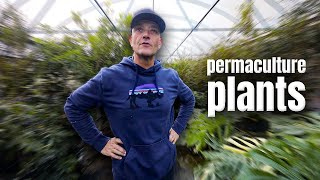
In this YouTube walkthrough, Pete Kanaris, a permaculture designer and nursery owner, guides interviewer Justin (SPEAKER A) through the Green Dreams farm and nursery in Spring Hill, Florida. The tour covers the evolution of the site from a large, undeveloped plot to a 2‑2.5 acre retail garden and a 36,000 sq ft nursery, highlighting recent infrastructure upgrades such as shade houses, gravel beds, heavy‑duty weed‑mat, and a new well. Pete explains how Hurricane Milton stripped many mature trees, reshaped light conditions, and prompted a redesign of the entry garden. He showcases a diverse plant catalog—mangoes, avocados, bananas, loquats, jabuticabas, miracle fruit, bamboo, and many native or edible species—detailing propagation practices, cold‑hardiness tips (e.g., banana hibernation, frost cloth), and the split between stock for client installations versus online sales. The conversation also touches on pest management (fire‑ants), chicken integration, community outreach (Loquat Festival, farmer’s market, workshops), and the business model of on‑site retail, online shipping, and design consulting. Throughout, Pete’s tone is informal, instructional, and enthusiastic, emphasizing the practical challenges of subtropical permaculture and the philosophy of turning lawns into productive, edible landscapes.
Chapters
Uncle Pete's, long time friend.
Now I'm a little bit cold out here today.
He started the tour in the truck.
We went around in the truck with the sweatshirt on in the truck and the heat on. It was pretty comfortable, but I got out and I'm freezing.
So it's what, 37 right now?
37 in Florida is cold for y'all that are watching this. Like, we have humidity, you know. I think that's the difference. Our cold goes to the bones.
He's got the Carhartt Patagonia on. Okay, so this is Green Dream TV. Useful plants, permaculture design. You're a legit permaculture designer actually doing installs.
That's it.
Last time we were here though, this was a site you were gonna— you're gonna turn into a retail space, and it's here.
We're 9 months later, the retail space has opened up, and, uh, where we were last time was an absolute mountain. This mountain has shrunk. Now it's probably 20-25% of the size it was, and we do want to get rid of it, you know, use it to build beds. We've been selling it to clients, using it for jobs, but we want to kind of establish our entry gardens here as you're coming in. Since this is our closest to the road, everybody will see this when you're driving by. So we kind of plan on doing big bamboo on drip and native trees and more fruit trees. And kind of as you work our way in, we've developed about, I don't know, 2 acres, 2.5 acres of nursery so far. Um, where is this? We're in Spring Hill, Florida, about, you know, 40 minutes north of Tampa, right near County Line Road, really close to the expressway.
And, and is this Green Dreams?
This is Green Dreams, you know, um, yeah, farm and nursery education center. You know, we've got some other interesting long-term goals. We'll see what happens.
But as we walk, tell me about what Hurricane Milton did to you.
Oh, we took it, we took a beating, Justin. Um, I've lived down here, you know, most of my life. I've been through a lot of hurricanes, and you know, this one, if we're not even being super close to us and only having winds in the 110, 120 mile an hour range, but it was the amount of sustained time we had those winds. I mean, just in the area we're standing, I probably lost lost 10, 15, you know, 100-year-old trees as big as this or bigger. I mean, this cedar was a stud. Whoa, big cedar tree, completely gone. I mean, obviously a little bit of a weird form, but every one of these broke off of here. You see the stumps over there. And unfortunately, kind of a change of design concept here because this was all planted with the idea of dappled light, you know, for the jabuticabas, the gingers. Um, that's a cold-hardy coconut and a malanga taro in this bed. Now we have more light. So the zone has changed a little bit. We're probably gonna have to change our species and planting. Um, so yeah, as you come in, you know, this was the idea to be an entry garden. Next time you come, this will be developed, and maybe we'll have a meetup here. We kind of talked about that a little bit, right?
Is this stuff that you're gonna harvest then for sale, or is it more for some of this propagation material?
We'll divide roots and stuff, but more of our propagation is based in the back. This would be our north property line. I don't think any of this was planted last time, and it's, it's got a little bit of a lean to it now. This is all graceful bamboo, and if this would have been a little bit more developed and stronger, a little more mature, it might have given us a little bit more protection during the hurricane.
Okay.
But you know, it's, it's interesting as you look around here. I call it the hurricane lean. Like all three of those trees right there, that sign that was on it for parking, those were perfectly straight. What, you know, so we've dealt with everything that's hit the ground, but you know, if you look around in here, I mean, there's what we call widowmakers and broken limbs I still need to get to. I need to rent a lift. I mean, I've done about a month worth of tree work out here to get this place to where it is. And, um, yeah, so we took a beating. It's coming back. Um, you know, now we can start focusing coming into spring on planting a lot of our demo gardens, our food forest areas, um, you know, kind of agroforestry zones to where We only have a lot of these shade areas planted out now, and like you said, it's, you know, 37 degrees today, so some stuff is covered as we kind of walk around and look here. And frost cloth, you know, I mean, everybody thinks Florida, you know, coconuts and citrus. Well, you know, 80% of our citrus is gone, and we get frost, we get freeze, you know, we get those cold nights.
So should we go see what's in here?
If you want to peek over here. Yeah, all these lines over on this side are, are plants that don't like overhead water. That we keep on drip, more of our mangoes, avocados. And you can see the bricks that are left out, we just uncovered them this morning. The girls are just pulling the frost cloth off. Mangoes obviously don't like frost, but we're very close to St. Pete, we're very close to Tampa, you know, areas where you can reliably grow, you know, coconuts, mangoes, things like that. And a lot of our clients come from warmer areas, so even though we really shouldn't be growing them here, we sell some stuff.
So you buy these or you propagate these, or do you buy these when they're young and grow them up? So this is one of those items that we broker in.
We buy small, grow them up and resell them. You know, there's mangoes, bananas that took a beating from the cold, all different types of avocados, um, more avocados on the next row. We've got some of our grafted loquats, olives. Figs do really well here. Figs were all going deciduous. They're kind of losing their leaves right now, just like a lot of our mulberries, peaches, and plums.
So bananas will be okay up here?
We do really well with bananas.
Yeah, I mean, and it's going to be cold. It'll get You said it's going to get 22 degrees next week.
We're supposed to get, yeah, the Arctic blast. We haven't had that about 10 years, so whoa, maybe 7 years.
You'll see, we'll see.
I mean, no, even though no matter what, the bananas are going to freeze down to the ground. So, you know, a little pro tip for you guys that want to grow bananas in a further northern zone: if you know you're going to get that really, really cold night where it's almost going to like melt back the banana, you're actually better off cutting that banana off at the ground, putting compost and mulch on top of it You're kind of almost like hibernating it, putting it to sleep. So this way in springtime it's going to come back and not be damaged and set back. You know, it's almost like a bomb coming back up out of the ground.
How fast will that banana come back? How long until you get some fruit?
I think if it's cut back, you can, you can have 6 months fruit again if you're feeding it properly. You know, if a banana isn't fruiting, it's just not being fed. You know, it's not getting enough nitrogen, not getting enough water. Um, they're very, very heavy feeders. But I can tell you, I haven't bought any bananas from the grocery store in about 9 months. Probably got about another 3 or 4 weeks of my supply left for my smoothies. You know, like I said, I do a lot of smoothies, so we get enough bananas around the farm to keep us going almost all year long.
And bananas do put out all year long.
They do. They non-stop. Once one banana fruits, you know, it dies and the next one is constantly coming up and taking its place. These are some kind of lanky rainbow.
You can—
yeah, who kind of client buys this?
Yeah, who's your target?
Most of our audience is obviously interested in growing edibles, moving away from that typical yard Okay, um, the grass hole, you know, and having a more useful space with, uh, they don't want to be grasshopper no more. Yeah, whether it's, you know, and whether it's for us to eat or for the insects to eat or the pollinators, whatever it may be, you know. And a lot of our clients may be just interested in butterflies, you know, they don't even want to grow anything to eat.
Um, so what's this?
This is called a finger sap. This is a really interesting fruit, kind of makes a long red fruit. Maybe not a favorite. These are a favorite for me because they're very cold hardy.
What's the name of it?
This is a loquat.
Oh, okay.
Yeah, commonly confused with a kumquat. Yeah, it's not in the citrus family. If you smell the flowers on these, they actually smell like a rose. And these are grafted varieties.
I think it smells very nice.
Casey told me he's seen these vanilla-ish. Yeah, growing up in Charleston.
Wow.
Maybe not reliably fruiting up in Charleston, but, um, the trees grow. They're very pretty trees. They're dooryard trees. So, you know, we could, uh— the goose is kind of trying to take over the show here.
I think the goose is trying— is, is nervous about us.
Yeah, he's our—
what do you call him?
Drill bit. That one's Drill Bit. Yeah, grafted loquats, you know, cold hardy, good fruit, kind of tastes like a peach. A lot of people use the leaves for tea, very medicinal. This is our cherry. So we can't grow a typical cherry down here in Florida, um, like that Bing cherry that you would see in the grocery store. They want a little bit more chill. This is Eugenia, called the Cherry of the Rio Grande, and it actually makes a Bing-like cherry that'll grow to North Florida. Pretty, pretty tree. You know, another dooryard type tree. And loquats for days. So we have a Florida Loquat Festival coming up in April. It's kind of a big event every year. Um, you know, there's probably 10 or 15 known varieties of loquats. You have some of them getting as large as a golf ball, some tasting like a creamsicle. So wow.
And you'll go sell at the Loquat Festival?
More of a— yeah, we'll bring our grafted trees, you know, we'll do some, uh, maybe grafting demos, speak on the trees a little. I've been doing it. I missed— actually missed last year because of the store. We opened in about 9 months ago, right at the time of the Loquat Festival. So I will not be missing it this year.
Is that one of those black chickens?
That's an Americana, but a beautiful one. He's got green feathers in him.
He looks all so black.
Yeah, like I said, everything's kind of sleeping. Um, anything that had any kind of chance of getting frost damage, we cover up. You want to check out the shade area? You can see what my chickens love to eat.
Yeah, your chickens are free-range.
What's up with that? Uh, so the— a lot of my fence— I didn't even mention this— I lost 2,000 foot of chain-link fence during the hurricane. That's how powerful the winds blew down chain link with windscreen on it. Um, chicken coop got blown to pieces. Fence for the chickens gone, went down, and we just haven't put it back up. Um, you know, chickens love it. Downside, we haven't really found too many eggs. We plan on locking them kind of in a more of a closed space, uh, for the next couple of months there in the back, and then moving them up to that front area under the trees. I'm probably just gonna have to keep them back in a net because they are getting a little aggressive on the mulch. In the beds, you know.
They will, they'll eventually get— take it too far.
Yeah, it can be a problem, you know, pooping where we don't want them to poop. I will say everybody that comes here absolutely loves it. Oh, kind of gives that farm feel. The kids are always chasing them, so they love the perennial vegetables. Like, this is called longevity spinach. Um, I think this is probably the chicken favorite. Oh yeah, this was a full patch in here. This is called sisu spinach or Miami spinach, and every time it's sprouts back, they just eat it right back down to the ground. There's that beauty. I guess we could go check out my favorite chaputacabas, and then we'll go look at that shade house real quick. We've got some coconuts— shouldn't be here— laid down, a little bit of protection. This is a bit of a native zone, you know, probably about 50-60% of what I sell is edibles, you know, the other 40% is natives and bamboos, you know, useful crops for other windbreaks or bringing in beneficial insects. This is one of my favorites. I don't know when YouTube's gonna get the old, uh, scratch and sniff effect here, Justin.
I know, right?
This is called sweet almond. I've seen this growing all the way up to like North Georgia. Um, never stops flowering, always has a pretty strong— yeah, you get it, you smell. Yeah, so just know we're in the middle of wintertime. Spring, things perk up a little bit around here. It's not going to be all covered in cloth. Maybe next year we'll do a little meetup. Is that a possibility next year?
Yeah, we'll have to do that.
Most popular trees that we sell are these jabuticabas. This is the Brazilian tree grape. I've got lots of different varieties. This is a San Pedro. This is a yellow variety.
And what do you do with this?
This is a scarlet variety. And, you know, originally when I got into growing edibles and got kind of fascinated with this stuff, this was one of my favorite trees. And the most common variety was called the Sabará, and that is the— this is the tree of Brazil. So, um, you know, if you go into a nice restaurant there, you'll see these trees. Very well known for making wine out of it, but it fruits like 6, 7 times a year right off the trunk. They'll take into the mid-20s. So this variety in particular, um, is very, very, very popular because it'll fruit in 3 years from seed, which is unheard of. Um, but what makes it really, you know, really cool is that the fact that it'll fruit 6, 7 times a year. So it's not like you're getting that one crop like you would get out of a persimmon or an apple Yeah, you know, the fact that it's continually fruiting like that makes it so fun.
And these are mostly homeowners coming in here and buying this, not mostly homeowners, not farmers?
Yeah, we're working with some, you know, golf courses right now, which is quite interesting. You know, I actually working with the golf course on the East Coast that's putting a 10-acre regenerative farm at the entrance to the course. Um, you know, we've brought some chupoticabas in around some of the different clubhouses to sit on the porch, you know, for people to look at while they're eating. So definitely creating a—
uh, and this is where you come to get your installed plants when you're working for a client.
It's actually how it all started, you know. When we first started doing this, I'd have to go 6, 7 different nurseries to find what we needed. And it just started, all right, I'm gonna buy a few extras, keep them in stock, you know. Before you know it, I had more than I can maintain. That's when I found Katarina. She's been with me now for almost 9 years. And, um, you know, it's just grown. It's, uh, I would say, you know, a couple years before COVID it started becoming more than just having on hand for installs, you know. And once we started shipping online, um, you know, it just grew the whole thing and made it kind of— made it go to another level.
So what can you ship online? You can't ship this online.
So that's the goal long term, is to actually stick one of these on a pallet, box it up, and send it right to somebody's door. We do have a ton of these. This is our most popular plant. We probably sell—
what is this?
This, this is one of the Japodocarpus. Okay, um, these are probably some of the most popular plants we sell online right now. The biggest I'm shipping is a 3-gallon. The goal is to be able to put like a 15 or 25-gallon on a pallet, box it in, send it to somebody, whether they wanted to use it for a Christmas tree, you know, keep it inside as a houseplant. I mean, we sell them to people that live in New York, um, you know, Washington. It really doesn't matter where you live because you can keep this in a container its whole life and put it on its porch. What I think we could probably find one— it's kind of hard to see that one over there had a couple, but that's actually a little flower, and as they mature, they spike more and more and more. Probably squeeze into the greenhouse real quick when we get back so you can see a couple. But constantly fruiting off the trunk of the tree.
The fruit comes off the trunk of the tree.
Yeah, it's called cauliflorous production. You know, another, um, popular tree that does that's the jackfruit, the largest, you know, tree-borne fruit in the world. It's the only way it can actually support that weight. So this is a common houseplant everybody sees, the Monstera, um, the Swiss cheese plant. Also makes an edible fruit. Most people don't know that, you know, it makes a fruit that's about this big, tastes like a pineapple cantaloupe.
This isn't bug pressure, this is how that's cold.
No, the hole. Yeah, that's how it grows. Yeah, I thought you got the yellow spot. Yeah.
Oh, okay.
Yeah, the holes are normal. Yeah, they call it the Swiss cheese plant. It's a very, very common houseplant. We like to put them in beds and plant them like a philodendron or grow them up the base of an oak tree. You can see a little bit of, uh, mad plants over here from the new growth. Got a little bit orange from all the the cold we've had the last week, a little bit mad.
Um, not going to kill them or anything, but do you have pressure just to offload these before they get to a certain size, before you have to just toss them?
Not really. I look at them more of a long-term investment because the older they get, as they get more mature, they become a, you know, then they get to a fruiting value. So for me, I mean, you just pot them up. Yeah, yeah. I mean, like, for us, this is the type that we ship on a regular basis.
Okay.
Um, you know, this is just a little tree, but you know, to think that— all right, so this one, this could be 9 years before this tree fruits. Like, these ones are 10 to 12 years, but you can see the new growth on them.
I mean, they're just, you know, it's like it just gets more and more valuable.
Oh, it's just like fireworks do. They're very pretty as they flush. You know, we were kind of marking— why did you imagine— why do you get a Christmas tree?
Why do you get so excited about plants?
I've been playing with plants for so long My whole life my mom was into plants, you know, my dad was a landscaper. And to go from just looking at plants for the aesthetic value to realizing, you know, there's a— you can eat this stuff, you can, you know, it has a medicinal value, it has, you know, so many other purposes other than just to look at. Like I said, edible landscaping, for me it was like someone turned the lights on to realize that you can plant stuff that you can eat instead of just planting stuff with no value. You know, most of the ornamentals getting planted today aren't even native. Aren't even feeding insects or butterflies or anything. I mean, we're just spraying our yards. And coming from that lawn background to find something that makes sense, that gives back. We've been doing landscaping for 20 years, and to be able to put something in somebody's backyard that will give back to them, like I say, it's like the food 401(k). When we come in your backyard, we're not just planting pretty stuff to look at, we're planting stuff that's going to give back to you in so many different ways. And the goal is to get the client out in the yard, you know, hands in the dirt, touching the food, trimming the plants, you know, not us just coming back and harvesting for them and bringing to them, but we're actually— we're giving the tools to give them this connection, whether it's back to nature, you know, knowing where their food came from, knowing what was put on, you know, put on their food while it was being grown. So yeah, I think the, uh, the passion for me comes from, you know, just the, the end result and what's been coming from this this whole time. It's just been exciting to find something to do that's not work. And when you love what you do, it's just, uh, it's easy. So lots of different gingers. I hope it's not a—
okay, that's not— I think of that big goose turd.
We're good, we're good. Working on our windbreak here for this back north line. Hopefully next year this will be a little bit more filled in. Like I mentioned, you know, we ship online. That shipping process is still going on out of my home farm. We're in the process. Okay, like I said, we're on our way here, moving all the plants up here, moving the shipping container up here, moving the boxes up here, and kind of going to move that process to underneath this pole barn. I think last time you were here, my tractor was just sitting out in the yard, you know.
There was no pole barn.
Yeah, it's nice to have—
there was no plant—
little protection, little coverage. This is an interesting one, highly talked about tree. Um, this is called the miracle fruit. The fruits off of this tree actually make a lemon taste like an orange, so they change the flavor receptors in your mouth for up to 30 minutes. Um, become very popular in the last 10 years or so with anybody going through chemotherapy that can't taste their food. They actually sell little candies of this now. But I've heard, you know, people have flavor tripping parties with these in New York. You know, they'll pay $5, $10 a fruit, buy 10 of them, have a bunch of friends over, and they'll eat all these different citruses and fruits, and it'll, you know, it makes a black coffee taste sweet almost. Neat tasting fruit too, pretty tree. It's another one that could be kept in that container its whole entire life, so, um, you know, it can be grown on a porch, doesn't have to necessarily be put in the ground. Mentioned it briefly earlier, 80% of the citrus is gone down here. We don't do a lot with citrus. I do carry a few trees. If you're going to grow citrus in Florida, my suggestion is to try to grow them underneath a live oak somewhere in the understory. There's some type of symbiotic relationship with mycorrhizae or roots. We're not really sure what it is, but they tend to do a lot better in that area. You can see, just like the bananas, the Turk's cap, star fruit, you know, a lot of these trees can take that dappled light and don't need full sun. We found a really good rule of thumb is anything that loses its leaves, that goes deciduous in the wintertime, needs that full sun. To where, you know, evergreen subtropicals can take more of that dappled light understory situation.
So if a grass hole comes into you, you comes here today after seeing this and says, hey, I don't want to be grasshopper no more, I want to, I want to, I want to turn my lawn into something. Where should I start? Uh, half a dozen plants or what?
Well, give us a call, we'll come out and do a site visit consultation. We'll create a master plan design for the property, something that can be implemented in as many phases as you like. It can be broken into a couple phases over a few years, whether it's, uh, you know, starting in the backyard, working our way to the front yard, Um, or, you know, I tell people to check out some of the videos. I give you— I give you the knowledge, I give you the tools for the ones that want to do it on their own. And I think it's like you always said too, you know, if they're going to do it on their own, start close to the house. Yeah, right. Start in that zone 1, whether it be with a couple of raised beds, you know, and work your way out, you know. And, um, I've seen so many people, you know, buy plants and sit on them and read 10 different books and just scared to even try.
I see.
You know, we— I've been to You know, I've done consultations for people that read more books and probably know more than I do that have, have been scared to even put that plant in the ground, you know. And, uh, so, you know, I tell people, fail better, you know. I mean, try, you know, better.
I like it.
That's how you're going to learn, you know. I mean, um, you're not learning if they kill that plant.
They can just get another one.
That's it, you know. I mean, plants are tough. We're weak. Yeah, plants come back. Like we were talking about the bananas. I mean, it might— you could come here next week and it might look like a flamethrower came through. Like, I'm surprised we're green today for as cold as we've been the last couple of weeks. Yeah, um, we haven't been hit yet. Everything will be black, everything's gonna be brown, you know. Come back in 2 months, once we get into spring, it's all going to come back to life again. I kind of look at it as a seasonal transition. So there's our chickens back here.
Yeah, you have a Roman chicken back at that wall. Hey, at least they're ranging.
I'm just noticing, I think I said when we were out front that it looked like there was a little bit of mulch gone. Now I noticed all all that was just freshly mulched. So then the girls probably found some free time, actually grabbed the machine, mulched that in for me without me even telling them. So that is exciting. We had a cover crop in there of, uh, cowpeas and Seminole pumpkin.
Okay.
And, uh, just kind of transitioned down. The idea here is to have an entire windbreak the whole way. What happened was about a year before I planted, my neighbor's like, hey, I want to block you off. So I told him what bamboo to get.
His bamboo is already taken off a little bit before mine, but that's a friendly—
we want to get that going.
I want to block you off. You tell him what kind of bamboo. Here's how to block me off.
This is how— this is how you don't see your neighbor. Yeah, I mean, you know, bamboo conversation is one of the most useful crops in the world, um, literally. You know, it's so fast growing and it has such a bad reputation. There's so many people that hear the word and their eyes cringe, you know. I mean, you know, your ears are like, oh my gosh. And it's because of these running invasive varieties like you see up in the Carolinas, up in Georgia, you know, where The varieties that we deal with specifically here in my area are clumping varieties. They'll never run, they're never going to end up in your neighbor's pasture, they're never going to go this way. They're going to hit a certain footprint and that's it, they're going to stop there.
Um, can you get non-clumping varieties in North Carolina?
I hope not. They should be illegal. They should put somebody like that in jail.
No, non, non, uh, so the problem is, um, yeah, you get non-spreading.
So the problem is with the clumping varieties they're not as cold hardy. They're not taking that, you know, 10 degrees. So there's varieties that'll take it back down to 12 degrees, you know, but you could have that hard, hard winter and it could, you know, it could really take a toll on it. So I think that's the problem is the cold hardy bamboo is the running bamboo, and that's what's giving it the bad reputation.
So it's a grass too, so you could feed it to the cows.
That's it. Yeah, yeah.
And the problem is the solution. It stays green all year.
Green all year long. Um, You know, a lot of people use it for fodder, the leaves and stuff, and I think cattle will eat it. So many, many different uses. And then including, you know, carbon sequestration. That's like the new popular thing, right? I mean, it's supposed to be one of the highest carbon absorbing things there is out there. You know, people are planting it to offset their carbon footprint. Yeah, I love it for its beauty, you know, and it's soundscaping. You know, like right now, yeah, you hear a little bit of road noise.
I like that.
Yeah, you know, where once we plant all the different varieties out there, the bamboo is going to create the noises you want to hear. And hide the noises you don't want to hear. So we'll get some clanking and some whistling, you know, instead of different cars.
So your neighbor's happy now?
They're getting happy.
You said just block, just block me with some bamboo and he's happier.
They're getting happier.
Yeah, yeah, because he, you know, they're living out here and having a house and then, you know, commercial comes in.
This is a big change for the neighborhood. Yeah, I was the neighborhood, you know, fire pit slash trash dump slash, you know, four-wheeler trails. Everybody lost their riding spots.
Cut.
So things changed a little bit. We're getting— they're getting used to it now.
Yeah, you're a good neighbor.
I try to be, you know. I mean, I think there could have been a lot worse here. There could have been apartments, you know. It could have been—
you could have been the guy that 300 people wasn't gonna put— talk about putting bamboo up.
The pole barn's been up for about 7, 8 months. This has been up for about 2. We actually finished this about a week before the hurricane. I just got all the weed mat down, um, and this entire side came up during the hurricane. It took me about a week to get it down. The next step would have been building tables, you know, and putting pallets on top of them, having propagation area, and it would have stayed down. So we're getting ready to re-attack this and, well, this is kind of neat.
We get to see the process. You put the poles in, you put the shade cloth in, now you put gravel in. Is that what this is?
Yes.
Fine gravel.
So the problem is, you know, when you're irrigating plants for the long term and if you don't have some type of base or gravel, you know, you end up getting a lot of soft spots, settling spots, water sittings. Okay, this is actually about 12 inches higher than all the area around it. Everything is kind of—
this is neat to see it, or was pitched off, you know.
And then you put the weed fabric down, and then we put the heavy, heavy-duty weed.
That is heavy, heavy, heavy-duty.
Heavy, heavy, heavy. It lasts 10 years, uh, maybe 20.
Yeah, dang.
Yeah, this is as heavy as it gets. I mean, there's a couple of different mills on this stuff, and nothing will grow up through that. I, I mean, rare.
What about North Carolina?
What I've seen is, is the dirt gets on top of it and then the weeds grab the dirt. I mean, if you feel that stuff, yeah, it's pretty tough. I mean, this is, I think, a 4 or 6 mil.
And is it mesh like that so water can—
water does perk through it, you know what I mean? So it is a permeable surface. I always fold the edges because this is what tends to fray and then it tears over time.
Yeah, look at the heavy-duty stakes you have into it.
Yeah, I mean, these are actually actually small. They get twice as long. It's really hard to work with this stuff on a cold day, so it's a little bit warmer out, it's a little bit more flexible.
I think you're gonna get back in the house, aren't you?
We're waiting for it to warm up. That's another reason why we've been abandoning this. We're waiting for hot season, you know. Um, yeah, I don't, I don't do cold very well.
You take it easy. And these days, like, you're gonna go hibernate, aren't you?
Make me think about Costa Rica, Justin.
Yeah, this is a good day in North Carolina right now. Oh, Costa Rica never gets cold like this.
Never gets cold like this. You know, in the mountains you might get 55, 60 degrees or something like that, but that would be— wow, not much of a change of a season. I think they have a dry season and a rainy season, so that is the seasons of Costa Rica. But you know, good luck. That was originally Costa Rica coming to be a garden plot.
Are you gonna go over there? Huh? Yeah, we're going.
Just another big nursery area if you wanted to point it out real quick. Yeah, so this was originally set to be a large garden plot. I had, had the area prepped for about a year, put mulch here. Didn't end up working out with needing more garden space. We had plenty of space with the other area over there by the fence, so we just transitioned this over to base and mat. This is another 36,000 square foot of black mat. Since we do shipping, I get a lot of inspections, so anything that we put in the mail, um, has to be inspected and kept off.
Wow.
So a lot of our plants, you know, this is all of our shipping stuff on the first two rows, has to be at least 24 inches off the ground, you know, because we're constantly inspecting for nematodes, fire ants, things like that.
Okay.
Which is a fun one down here. Fire ants is probably our biggest pest issue in the nursery.
And sometimes they'll get in the plants?
Yes.
And you can't ship them because they don't want the fire ants in the other—
that's a— that is a big thing. Yeah, between Texas, Arizona, and California, they don't want our fire ants, we don't want theirs, you know. Um, ants are bad, you know. We have no natural predator for them. We've got a couple of different methods. Our best method is honestly drowning them out. So if they get into a pot and nest in the pot, we just put it under, you know, a trickle of a hose for a day, and they usually get right out of there.
Um, there's no good traps or anything organically, and naturally it's very, very hard.
The most common is like a borax, bacon fat, peanut butter mix that works really good to get rid of them naturally. Um, but otherwise, you know, most of these chemicals, you know, they don't actually come back to the queen and kill off the colony. It's just enough to piss them off and chase them off, you know.
And chickens aren't eating them?
Chickens will peck at them here and there, you know, if they're like attacking a baby, from what I found. But they don't just eat them to forage, you know, or as a snack. That would be useful. Yeah, look at it, look at that, picking through the pots. Yeah, if we could train them to pull weeds and eat ants, I mean, come on, come on.
He'd have a lot more, a lot more of you if you guys would eat ants. Tell your friends, we have a free army, that's for sure.
She actually sent me a video yesterday, they were helping with the mulching, I guess. So the chickens do some work around here. Yeah, I'm hoping to put a big cheeky hut here in the center, kind of having like a a market area. You know, we've been talking about hosting markets here around this circle in the, uh— oh yeah, in the wintertime months. And I was just getting a couple more farmers from out in this area. You know, the urban farming movement's kind of, you know, where Jim's place is, you know, Tanner's doing it now, Tampa. That stuff's kind of starting to take off a little bit. Not as common out here though.
And then having a farmer's market here would bring people into your nursery, bring people into the nursery.
You know, we've had, uh, the idea is is to also to be an education center, you know, to have events, whether it be, you know, how to plant a food forest, how to graft, you know, how to propagate, um, you know, have all different types of educational events on top of it. Look at this, your rooster's up on the golf cart. And I see now the coconuts are standing. She already put them back up. They're a little yellow and pissed. Of course, you know, we have to have our biochar. Okay, potting mix, compost, one-stop shop. So if you come in and you want to be a little bit less of a grasshole. We've got the plants for you, you know, we've got the fertilizer for you. Oh man, he is beautiful.
Hey, we got a good shot of him.
So that's some of the excitement of having, uh, chickens around here all the time. Definitely gives that farm effect, doesn't he?
Yeah, yeah. Hopefully he doesn't bite anybody. Ours bites us every once in a while.
Yours does? Yeah, mine acts tough, but he doesn't actually, uh, close it out unless you try to pick them up. Like, look, look, look, look. Oh, I heard What are you talking about? Did we even have a driveway started last time you were here?
No, no, no. We were literally all that. We're gonna have to pull back some of the old—
I'm actually— I was, uh, I was a little disappointed. I didn't think enough happened, but I guess there's been enough changes.
Oh God, no. Yeah, you don't see it because it's happening slowly. There's a road here now. There's, there's trees underneath. Everything's mulched.
Yeah, our biggest setback had been the hurricane, and then, you know, the— honestly, the, the other big thing is a lack of additional water. You know, I pretty much maxed out the original well was here with the nursery space that you see. Um, I just got another well put in. It just wrapped up 2 weeks ago, so that's going to give us, um, twice the horsepower we had at the big 5-horse pump and, um, allow us to kind of take a little pressure off this front well and then start putting in some more nursery areas.
How deep are wells in Florida?
We went 220. Okay, this one over here, it doesn't need to be as deep because it's a smaller pump, but it's like 160.
Yeah. Okay. All right.
Yeah, the water in comparison here to my house down the road is just night and day.
Really?
This is like what's coming out of your sink. I mean, it's—
this is good stuff.
Yeah, it's really good. I think we're tapped into the Wikiwachee, uh, wow, spring system.
Good for you, good for you.
Yeah, water is life, you know. When you have crap water and you have good water, it's, uh, no comparing of the two.
We are now at your home site. Is the sprinkler supposed to be on? Sprinklers are on. Okay, in the morning. Greenhouse.
This is the greenhouse.
That's not a heated greenhouse.
This is not heated.
It's just gonna protect them from frost.
I will say that, uh, the water heats it because of the, you know, the temperature of the well. It's about 68 degrees. So, okay, if we did have a night, um, that was going to be so cold where there's, you know, something to worry about, um, we just turn the water on like this. I think there was a really good one back there. Here's a good one too. Not as many.
What are we looking for? Oh, we're looking for a fruiting.
Yeah, I wanted to show you.
Oh, there's one!
So you can see the whole trunk of the tree, every one of those is flowers. Wow, they grow right on.
Every one of these is going to be fruits. There's one. Wow, wow. Kind of has a grape taste to it.
I think it's like a very tropical grape. They're only about half size of what they normally are. They do get bigger in size too.
Tastes like the muscadine grape we would grow in North Carolina.
You think it has a muscadine kick?
It's a little sweeter.
I'm gonna say I thought it had a little bit more tropical. There's almost never a time of year though when I come in here and there's not a japodikaba on the tree.
Wow.
Um, they almost never stop.
So how come we don't see these in the store, do we?
We don't.
They don't see these in the grocery store.
They don't have a super long travel or shelf life. This is a different variety. This one actually gets like a little bit of a stripe in it.
Okay, that one's called the Scarlet. Ready?
Oh yeah. All right, these are some of my other favorite trees. This is called the Sapodilla. Um, the fruits on this taste like a pear dipped in brown sugar, so they're quite delicious.
Is that the only fruit that fruits off the trunk?
Um, I think I mentioned earlier that jackfruit's fruit off the trunk of the tree.
Okay.
And I think there's, um, there's one or two other things.
Okay. Oh, that's neat.
Yeah. All right, well, that's my greenhouse. Get out of here.
So, so, Pete, if people, if people want to plant, greendreamstv.com, greendreamsfl.com.
Okay. And then we're just Greendreams TV on all the social media platforms.
All right, Instagram, YouTube, TikTok, all the things.
Maybe X, who said something about X? We'll see. Yeah, I gotta step up my game.
All right, well, next comes up, check him out.
More from Justin






If I had to start my Homestead all over again, it could only pick one animal… 




