PJ Taei on Being Persian, CEO of 130 employees and Dreaming Big
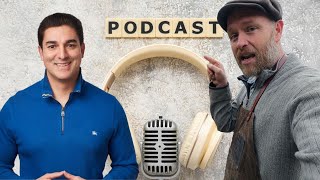
In this interview, Victor Justin Rhodes and PJ Taei discuss a wide range of topics spanning personal identity, cultural background, spirituality, stress management, and the challenges of scaling a growing media business. PJ explains the uniqueness of his Persian name Pejman and its meaning, his belief in a higher power without strict religious affiliation, and how he incorporates prayer into decision‑making. They explore the pressures of growing a company from $20 million to a $100 million revenue target, emphasizing the need to tolerate pressure and maintain calm. PJ shares lessons on early delegation, hiring smart people, and building a team across functions such as finance, HR, and community management. The conversation shifts to content strategy for his platform Abundance Plus, including subscriber growth tactics, the role of free trials versus direct sign‑ups, and how to double subscriber numbers. They delve into community features on the Uscreen platform—comments, maps, workshops, and future tools like email blasts, analytics, and engagement graphs—highlighting the importance of fostering a tight‑knit creator audience. PJ also reflects on work‑life balance, aiming for an eight‑hour workday while scaling, and discusses the future of interactive media where audiences can participate in shows, donate, and become extras. Throughout, the tone remains conversational and reflective, with PJ expressing optimism, occasional stress, and a pragmatic approach to growth.
Chapters
Where were you born?
I was born in Tehran in Iran, and I came to the States when I was 7.
7. All right, so before you came to the United States, did you have an idea of what did you want to be when you grow up? Is this a universal thing? I know it's an American thing. Yeah, we're always wanting to know what this kid— what do you want to be when you grow up? That's a common question.
Yeah, it's interesting. I actually have a really good memory of myself when I was younger, like really young, like, yeah, 3 years old. I could still remember my memory, but then I started to lose it, unfortunately, in my mid-30s. As you get older, yeah, it went away. I don't know what happened. Um, but yeah, I did. I wanted to be a heart surgeon.
Wow.
For some reason.
At what age?
I think I was about 4 or 5 years old, and my parents and my grandparents would always tell me, you would always say you want to be a heart surgeon. I think there was a few reasons for that. I want to be a doctor, I want to help people. To this day, I like helping people. And then, um, I was very fascinated by the heart.
Hmm.
So that was the reason for that.
Why were you so fascinated by the heart?
Um, yeah, I've never—
this is at a young age, this is before you were set?
Very young age. Yeah, I think it was because of the fact that it was the I knew it was the body part that if you lost, you wouldn't live. For some reason like that, I knew it was that important.
How did you know that? Did you grow up around animals or other doctors? How are you thinking about the heart like this at 6 years old?
Yeah, that's true. No, I didn't actually. I don't know why that was. No one had a medical complication. It's not like a close family member had a heart issue and I was like, I want to solve it. You know, um, I don't know, I was just very attracted to it. And I remember when I came to the States, it was the same in an elementary school, middle school, but then it started— that dream started to kind of phase away.
And what did it morph into?
It morphed—
you're in the United States by this point?
That's right, yeah. I came to the States when I was in 3rd grade, and the reason it actually started to phase away is I started to not do well in school. And the reason for that is when we came to the States Um, I was born in December of 1980, so my mom, what she did is she put me a year ahead. So when I came to the States, I spoke no English, and, um, it— first, there was no ESOL the first, um, 2 years of elementary school, so I didn't absorb anything. It wasn't until 5th or 6th grade I started to absorb when I started to get ESOL.
What's ESOL?
ESOL is, um, it's, it's like an education for language. It's still around, okay, um, in, in some of the public schools. Okay, it's a program by the state.
You're learning English?
You're learning English. It's like a period a day or something like that. So I started to absorb information in 5th, 6th grade, but then I was kind of not liking school because I was kind of beaten down by it in school, like saying you're not good at it, right? You're under your level. Is what my third grade teacher, Miss Mullin, would tell me. You're under your level. And my parents—
look at that, you remember her name.
Yeah, my parents would really be tough on— immigrant parents were really tough on me, right? They were like, we came here, changed our whole life, and you're not doing well in school. Which I totally understand now. Like, I wouldn't be here today and doing the stuff I was doing if it wasn't for what my parents taught me.
Why do you understand it? Why do you just You say understand it now, so at one point you resented it?
Yeah, that definitely— probably actually till— I'm 41 now. I resented it till my late 20s. I knew they were helpful, and my parents are in so many ways have helped me, but since they were strict in school and certain things in life, that made me, um, not like you know, certain things too much. Like, like I didn't like schooling too much just because I didn't understand it, and then I was pressured, right? But then as I got older, I was like, wow, everything I have is because of my parents. I was simply lucky because I was born into a good family. It's really true. Yeah, I have, you know, good family, good parents, good uncles.
Back to— well, into your family, did they— when, when, when this came up that you're going to be this heart surgeon, were your parents supportive? Or did they say, eh, yeah, that's just a dream? What did—
no, no, they were really excited. They loved it.
They liked that.
They loved it.
They supported that.
Yeah, their son's going to be a doctor. They loved it.
Did you ever officially tell them, hey, I'm not going to be a doctor anymore?
No, I think I morphed into doing business really, uh, early.
Yeah.
So I think what the heart surgeon thing shows me now is I was very passionate Okay, in telling my family and people that I wanted to be a heart surgeon, and they remember that, but they also see how passionate I went into business at a very young age, which I can initiate too.
We're gonna go there for sure. Did they, um, were they then just as supportive of you going into business as they were you going into it being a heart surgeon?
Yeah, for sure. Yeah, the heart surgeon was just me super young, and they were surprised. Why he wants to be a heart surgeon, but I was so passionate about it.
Uh, we're definitely going to go and get to that where you got into business, but tell me more about this. Why, why you, you said the immigrant parents are hard on their children. Not hard or the right, you know, they just want them to do well in school, have a, have a a Korean friend, same way. He's first gen. They're adamant that he get A's in school. Is that what you're talking about? Or are we talking about across the board?
Yeah.
Perfection, like a holistic way. Is it just something about getting good grades? Or do they want you to be overall really high standard?
Yeah, overall high standard. I think it goes back to what we were talking about earlier. The hunger pains we were talking about, the immigrant mentality.
Okay.
I feel, um, that I still have in the way that I still run the business, or up to this point has— is just instilled in me just because I feel like a lot of immigrants when they come over to the States, they're extremely fortunate about the life they have now. And because America's land of opportunity, there's so much here, like no other country is like this. The best country in the world, right? So when you experience this, and based on what you came from, it's not as equal, right? It's not like— especially Iran's a third world country. It's still— there's a lot of advancement there, but it's not America. Um, fairness, equality, all the stuff that happens here. So I think immigrant mentality is when you end up from a situation like that to here, you don't take it for granted because you pretty much had hunger pains. And what I mean by hunger pains is you had to make sacrifices. You didn't have all the opportunities. Suffered a little bit, right? So the same way— so I had the same experience, um, early on in business. It was really difficult. So once you experience that, you're extremely paranoid. When you start to succeed, you're still paranoid. You wake up sometimes like, oh my God, I remember the bad days. And you were telling me you had the similar situation.
Talking with your interview of me, yeah, how I went through the hard times, and that fire doesn't go away.
Yeah.
That same thing for you?
Same thing. And I was actually telling Daniel, I was like, man, Justin doesn't stop. He creates so many types of content. How does he do it? But then when you sat down, you were telling me about that fire. Yeah, I think that immigrant mentality, that's what I mean. That fire, it comes from a void.
Yeah, well, that's why I like hanging out with people like you, because we just made comment content from 7 AM till 3— it's till 10 till 3. And we said, let's go hop on a 2-hour podcast in 10 minutes.
You're like, okay, that's right.
This is not normal.
No, I think we're just pushing.
We're also getting our content all day today.
Yeah, that's right.
And we don't need no break.
No, I mean, give me an apple.
You wanted an apple.
Exactly.
That's all you need. That's why you're working like a mule. You're working hard. All you need is an apple.
Yeah, I have to get my fruit in.
Do you have a thing for fruit?
I do like fruits and vegetables. Yeah, I like fruits more.
Do you just like them or do you believe in them? You know what I mean? You passionate?
Yeah, watching your content made me care more for—
really?
Yeah, for fruits and animals and stuff like that. I never looked at it like that, but I definitely, um, I think I've just grown up with my parents. We eat a lot of fruits actually in our culture, in Persian culture. So I do like a lot of fruits.
So you called it— you identified yourself earlier and you just said it there, Persia. But Persia, forgive me, I'm like, I would be like you coming in questioning the farm, right? You don't know anything about farming. I don't know much about the Persian culture. So you didn't say— you said you were Persian. Yeah, you didn't say you were Iranian.
Iranian. Yeah, you're right about that. So there's a catch.
Can somebody be Iranian?
Yeah, there's a catch to that. Okay, so it's funny actually, um, this is a very long conversation, but I'll keep it short. So technically the country is Iran, right? And the capital is Tehran. That's where I'm from. Okay, you could obviously be from any city, but I'm from Iran. But Iranians— so first, Persia used to be most of the Middle East, right? And then we lost a lot of ground and then now it's the country Iran, which, you know, obviously there's a lot of political issues and stuff there. But if you leave that aside, Persia itself was a really big region. So then it slimmed down, which what is left now is Iran. So the country is Iran now. That's the name. What happens though, when you speak to often Iranians like myself, we don't say we're from Iran. No, we say we're Persian. There's a few reasons for that. Mainly it sounds better. Right. It's also adopted a lot better in America. Right. That's because there was the hostage crisis and all the issues with Iran and America. And Iranians oftentimes, a little bit in the back of their head, they're a little bit shy to say I'm from Iran because we associate Iran with Iraq.
Yes.
Nobody likes Saddam Hussein, right? So there was the war, there's all those issues. There was Iran's issues with America, which still stand today. So it's a lot easier in conversation and sounds better if you say we're Persian. So there's even comedians that make fun of that. Oh, yeah, it's a very common thing. We say we're Persian, but we're really Iranian.
Yeah, because when you said you're Persian, honestly, I think I thought, oh wait, there's no Persia.
Yeah, it's, it's literally a nice, nicer way of saying, you know, like I'm Italian, something like that.
Okay. Honestly, probably the first time I heard or saw the word Persia was Persian rugs. That's a thing.
That's right.
Is that, is that a real thing? Yeah, like they're sold here in America, but is that actually a thing?
Yeah, that's a rug from Iran, just kept.
And it's a superior, really nice. Yeah, I guess I really nailed that down.
Yeah, like this is a, this is made in China most likely.
It's no Persian.
Yeah, Persian rugs are just handmade. They're dyed to this day. And then we have Persian cats. Oh yeah, the really fluffy, flat face, flat nose.
Oh yeah. What else? Anything else?
We have Persian cucumbers. Ah, they sell them in Trader Joe's.
Do you eat the cucumbers there?
Yeah, they're good cucumbers.
For real?
Yeah, they're Persian cucumbers.
Can you— are there Persian restaurants?
Yeah.
Are they good?
Yeah. So the most common Persian dish you'd be familiar with is kebabs. Kebabs originally come from Iran.
Really? So it might be a lamb kebab, probably, or goat.
Yeah, lamb kebabs. We don't eat that much goat.
You don't? No.
A lot of Arabs eat a lot of goats.
Okay.
Um, Jamaicans, countries like that, we don't eat. The last time I had a goat, I chipped my tooth. There was a bone in it.
That's like, that's like whatever you ate before you threw up because you got the flu, you ain't never eating it again.
Yeah, so I have a little bad memory.
Yeah, we don't eat the goat again.
No, we don't eat that much goat, but we like lamb. So kebabs are from Iran. So we like— it's, uh, it's rice with kebab or chicken kebab, something like that.
You still make that? Do you actually— you cook?
No, I don't cook that much. I need to.
Okay.
I'm hoping to cook when I have kids.
Okay. Yeah, I heard you're, you're married?
Uh, engaged.
Engaged.
Was gonna get married this year, but I'm procrastinating.
Is she Persian?
She's Persian too.
Okay. She like to cook?
Uh, she's a really good cook.
Okay. Yeah, she cooks you kebabs?
Uh, we don't— yeah, she can make kebabs, but she can make other Persian dishes, which are really a lot of stews. She's really good with her hands. She's in dental school.
Okay.
So she's busy and can't cook a lot, but, um, generally speaking, she's a good cook but just doesn't have the time yet.
Is there anything that you used to eat or that your parents would prepare that you just cannot get?
As far as enjoy?
First of all, that it's just not available. First, that you can't get unless your parents make it, or you just like can't get because these ingredients are not in America.
No, we don't. We don't. Yeah, I see what you're saying.
Anything like that?
No, I think Indians have a lot of dishes like certain spices that are not available. No, not really. The, the most unique spice we have is saffron.
Okay.
Um, which is— you could still buy here.
Okay.
And then, I mean, yeah, my parents make some— my mom makes some dishes that— I mean, obviously I don't cook, so I can't make a lot of dishes.
So did you have any farming or growing your own food in your culture?
Um, yeah, like my dad, we have a good-sized garden at our house now. We have tomatoes, grapes.
And that's because he had that when he was there?
Yeah, yeah. In Iran they do a good amount of farming for sure. We have a lot of good trees. We have persimmon trees.
Okay.
They give a lot of fruit. Do you have a persimmon tree?
You should plant one.
Yeah, they give a lot of fruit.
Why'd they leave? Why'd your parents decide to come here?
My parents went to college in Texas.
Okay.
And then they went back because my whole family was there at the time.
Okay.
Now today I only have my dad's side, and there's, I think, 4 uncles, 2 aunts. I think 3 of them are there. So 3 families are there. Almost all their kids are here, and all their kids are here. Not a single, um, cousin is there. They left because it's just more opportunity for us. It was a no-brainer. They went to college here. And okay, my grandpa was always well off. He did trade, he had a book publishing company. So all my uncles and my parents traveled, and then when they came to the States, it was a no-brainer. I mean, you wouldn't stay in Iran. Iran had the revolution in the late '70s, I think it was '78, '79. They were there at that time, and then they came back to the States.
He had a publishing business in Iran? What kind of books did he publish?
All types of books. He was a book publisher, so Anything. Yeah, I think it was 30 years. He had all types of books. Yeah.
And these were, uh, what's the language?
Uh, I think they were primarily in Farsi, but I'm sure he had English books.
Okay.
Yeah.
So what was your— as a 6-year-old, we talked about your dreams, you're going to become this heart doctor. What, what were, what were some of your fears as a 6-year-old? Yeah. I mean, what would you— I hate to say it this way— what would you pee in the bed over? I mean, what was— I had fears at 6. I was afraid my grandpa died and I peed blood soon after and it was unrelated probably. And I was convinced I was going to die. So I would pray that I would live till Christmas. You got any fears like that?
Yeah, good question. I was very fortunate that up to the point where I came to America, I had no fears. I was a very happy kid. I had a really good surrounding. I think the only fear that I can remember was schooling in Iran was, was really difficult. It was just, um, not a good educational system because the country went through two big events. First, when you have a revolution and all the people, the government changes you got to start over. And that happened when I wasn't born yet. It happened in '78. I was born in '80. And then, um, the government was extremely strict. The one that took over made women wear scarves and stuff, which they're still around. Um, and then there was the Iran-Iraq War that lasted 7 years, and I was there during that time. So that was a whole mess because, um, there's a lack of medication, all that stuff. And, um, the school system was not nice. It was very difficult. My brother's 4 and a half years older than me, so he had much more experience in the school system. But that's what I remember. I remember the school system being extremely mean. The kids were mean. I couldn't—
teachers were mean.
The teachers were mean. Yeah.
You talking about spankings?
I don't remember. I, I do remember that we had heard of kids getting hit. I never got hit or anything like that, but yeah. Oh yeah, there was, there was the first 15 years after the Iranian Revolution, it was a very strict country, and I think my parents made the right choice for sure leaving. So schooling was hard. That's what I remember. Yeah, happy we got out of there.
Yeah. Do you ever want to go back?
Yeah, I went back actually. I definitely want to go back. I don't think there's any fears in going back. I haven't gone back because it takes so long. It's a complete time change. It's 8 hours.
I've been—
it's my second business.
I've been harder to travel now.
It's— yeah, it's— COVID will be hard. That's right. I haven't been back in 20 years. That's when I went back. I went back twice. Once we came.
Your wife-to-be, does she want to go?
Yeah, she still has— she has more family than me in a city on the east side. It's called Mashhad. So she definitely— she went back, I think, 4 years ago.
What's your heart language? Uh, what do you think in which language?
I, I think in English.
Do you pray?
I do.
What language do you pray in?
I pray in English too. I, I can mix it with a little bit of Farsi, but I definitely— most of my thoughts are in English.
Can you understand and speak Farsi?
Yeah, fully.
Your parents speak it to you?
Yeah.
You understand what I'm saying when I say heart language?
Yeah.
That would be a language you would pray in, think in, speak to your spouse in, dream in. Dream?
Yeah.
You dreaming in Farsi?
Yeah. No, I dream in English.
100%.
Yeah. Yeah, most of it, I would say almost 100%. Yeah.
Why do you think this is?
Just when I was— when I came at 7, I was still very young. I'd be curious what my brother would say because he was 4 and a half when he came. He came, so he's 4 and a half, so he was 11. Yeah, 11, 12. Yeah, for me, I mean, I was pretty much raised here, right? Yeah, before 7, I have really good memories, but I didn't— it's— I was very young. I don't remember much of schooling. I couldn't retain the information. I honestly, I don't remember that much of the schooling. I remember other memories, but I don't remember learning much in the school system. And I think my parents knew that, and that's why we left. It was like I said, like, I think you have to see it to believe it. Like, after a revolution, like, there's not much infrastructure set up.
Yeah. And I say this with 100% respect, you have a bit of an accent.
Yeah, that's right.
I think it's beautiful. Yeah, I think the southern accent is beautiful. Have you ever picked— you can understand people, you know, uh, and then I think the northern— you know what I'm talking about, right? Like the— if, if I have friends in New Hampshire, totally different sound.
Yeah, yeah, you have a little bit of an accent. Yeah, nice accent. It's not— it's— I can still easily understand almost all accents in the States. I still have an accent, and I think the reason for that is, yeah, I picked up English a little bit later. Yeah, because of the ESOL issues and just not learning the first few years. So you asked me earlier, did you have any struggles at 6? What did you worry about? Yeah, yeah, I'd say when I came to the States, um, the first 3 years up to, up, up to about 7th grade was really difficult for me. Just like my parents came, we didn't have a lot of money, so I wore the same clothes overall. We had a few pairs of clothes. School was really strict. I had never been bullied. Um, kids pick on kids here more than they do in Iran. Over there, they'll just like slap you or hit you or something like that. Here it's more like make fun of you. We don't— yeah, I don't remember such a thing in Iran, but it's just different cultures. And then, um, so I was bullied, and I think it was just more difficult just from the clothes you wear and I didn't have nice clothes, I didn't have nice sneakers. And then, um, I went to, I went to an elementary school that's also in a neighborhood that's very up and coming. So I think, I don't know if it's all kids or it's that elementary school, kids were definitely meaner. Because initially when I came, I went to a nicer neighborhood. We didn't end up living there, we couldn't get a house there, and the kids were nicer. But when I came to my elementary school, it was torture.
You're talking about in America then?
Yeah, in America.
And because you were in a worse part of town.
Yeah, not a nicer part of town. It's the low-income part of town.
When you were in Iran— Iran, I said. I'm used to saying Iran.
I mean, Iran.
Until today, how you really say it— Iran. You were saying kids in Iran were bullies in the physical sense. Kids in America are bullies in the emotional sense, making fun. Putting you down. Well, did you ever— because you're coming to America, this would have been in what year, years?
Uh, I came in '89.
Did you ever experience any real racism?
Yeah, for sure, because, um, and remember, a lot of this is in my personal opinion, right? Everyone can have different experiences, um, as far as bullying and stuff like that, but when it comes to racism, yeah, for sure. Things are very different in America now, even though you could watch TV and there's, you know, a lot of the what's happening in, on, you know, in the media and stuff, right? Like Black Lives Matter and all that stuff.
Yeah, when you say in America now, do you mean after 2020, or do you mean in America now, 2000 to 2020?
No, I mean in 2020. Like when you— yeah, every decade is significant difference. So if you look at now You people still see racism. It's nothing compared to what it was obviously 30 years ago, right? So when I first came to America— oh, go ahead.
So in your experience, the racism situation is getting better?
I definitely think it's getting better. I mean, there's other types of racism possibly coming out. That could be true. Okay, I'm not fully like studying racism or paying attention to that detail, but from what I see is you know, just looking at the news per se, I think it's getting better compared to what it was for me as an Iranian in the '80s, right? I came in '89, and I think the primary issue then was that the hostage crisis was— so basically what happened in Iran when the revolution— or this was after the revolution, I think, or no, no, so the first few years of the revolution. So it was 19— I think it was '79 to '83, some within those years. So I was a few years old or just born. In Iran, they took a bunch of— they took over the embassy and then took the American workers there hostage for a while. I think it was a year, and we could look up the details. I don't remember, but it was a while, and that was That was really bad for Iranians in the States, or in general, in Iran. And so after that, we came to Iran— we came to America 10 years after that. And my uncles, which were here during that time, it was a really bad time for Iranians. So that effect lasted all of '90s. In fact, my 6th grade teacher— wow, excuse me— his name was Mr. Vernstein.
Mr., you remember these names?
Yeah, I remember him well. He was, um—
is that like you to remember names, or is that because they had such an impact?
Yeah, had such an impact. Okay, but my childhood memory is a lot better than my memory in my, um, 30s and 40s. My fiancée gets pretty mad at me about that. What was I wearing that night? I don't remember. So Mr. Wernstein, Mr. V, my 6th grade teacher, he was, uh, he was honestly, not kidding, he was an alcoholic. And it was his last year, was coming out of retirement. He was extreme, he was crazy. He would kick trash cans, and we had metal trash cans and stuff. He would throw his keys. He was intense. He was not a good, good teacher for me. And he would pick on me because he knew I was Iranian, and he would say it in front of the class. Oh no. Yeah, but that would— that happened a couple times until I got to middle school, luckily. And like, God came down and helped me. And like, middle school was a lot easier.
God, how did he help you? I don't know.
I think just like the spotlight went off me and I wasn't in such a spotlight. And elementary school is really difficult. I had really good teachers though, besides Mr. V. I really did. I have a lot of respect for teachers because I always had really good teachers all the time.
So you can't explain it. It had to be some higher thing. There's no other explanation. Yeah, help from a divine.
I think the classes were smaller.
Okay.
When you go into— now at that time it was 7th and 8th grade was middle school, intermediate school, right? We call it middle school back then. Now it's 6, 7, 8. So we had no periods, so there was a lot more people in the schools. Elementary school, it's smaller classes, there's 20 people. And generally speaking, I wasn't the coolest guy. I didn't have nice clothes, I didn't speak the language, so I was picked on a lot. 3rd, 4th, 5th, 6th grade. Because my teacher— then as I got older, going into those schools with more people, I just like kind of blended in and It was easy because you were the only Persian in the school. No, no, that's actually not true. No, no, there was a lot more Persians. Yeah, I grew up in Montgomery County, which is 45 minutes outside of Washington, DC, so we had a very diverse school. Okay, so there was a lot of Persians. I just, for some reason, I didn't have the nicest clothes, and I had a little bit— I had a tougher time than other kids in my class. During elementary school. Now, I don't— I'm not saying it was in any way horrible, but because of the language barrier, and it could have possibly been because I was more sensitive, maybe, I felt it was a tougher time for me.
This was bullying and some of it was racism?
Yeah, definitely. And I think a lot of Iranians experienced that in the '80s and '90s.
Do you— is that thing— because you, you, you kind of linked it a little earlier, you said You identify as Persian sometimes because Iranians is associated with Iraq. So some of that going on, uh, that, that their association, uh, with the Middle East, they're making assumptions.
Yeah, yeah. I think Iran and Iraq, they're very similar names.
Yeah.
And the lack of— obviously it's a country all the way over there, right? And it— both Iran and Iraq in the media are not good. Generally speaking, for Americans, right? So the Middle East in general is a very troubled area, okay, right? Has been for so long. There's not much stability there, and Iran is in the center of it. If you look at it politically today, the government is probably the one that has the most trouble with the States, right? With the United States. It's a very— it's Islamic Republic of Iran is the actual name. So it's like the religion is a part of the government, which is crazy. The government controls the religion, right?
Yeah, that's different than how it is here.
Yeah, that's right.
So they're at least trying to keep— yeah, religion out of government.
It's not an opinion. You don't shoot.
So that's a, a religious-based government?
That's right.
And you said it's crazy.
Yeah, I personally don't agree with it.
Why is it crazy?
Well, I think you should be able to be entitled to the religion and faith you want to have, right?
Okay.
And then they put it in the school system. And also, there could be reasons where, okay, that's okay for certain people. But I, but I think in the case of Iran, it's been around for so— that revolution brought extreme people into power, and which you often hear in the media, they're called radicals. So they brought very extreme people into power that forced religion upon people, and whenever you force something, people rebel. Now, I haven't been to Iran in 20 years, right? So I don't know exactly how it is now to detail for the youth, but it's probably not— it's probably not that easy, right?
Does that break your heart?
I think yes, for young people it does, for sure. Young people Yeah, especially for the youth, right? You want them to have opportunity. Okay, like the—
you're saying the kids that are still there, their heart is breaking?
Yeah, I definitely say they're not happy about it.
No.
Okay, I'm pretty sure of that. A simple thing, they control the internet. Just think about that.
Oh, wow.
The internet is filtered in Iran.
Really?
So that just gives you the answer of how much opportunity do they have. Also, Iran has sanctions. Against them, right? Because the relations with states and Iran are not good, so they can't import-export things, right? Now remember, the Iranian people are amazing people. They're great people, and they love Americans. If you go to Iran, they'll love you. Like, the blonde hair, you're white, they love that.
They'd really love my kids, all the blonde hair.
Yeah, yeah, they love that. So in general, Iranians love Americans. We have no problem Right, and probably Iranians like Americans, like Iranians too, but obviously there's political challenges there that put restraint on the people in the country.
I really like you, PJ.
I appreciate it.
You're the first Iranian— or the internet said it's interchangeable, so is it? The one there, the Iranian? Iranian?
Yeah, Iranian, Iran. I like Rand.
That doesn't offend you?
No, that doesn't.
If I call you a Randian?
No, I'm actually not offended easily. Yeah.
Okay. Well, that leads me to— well, I like you. You're the first Randian I met, and I wouldn't see any reason— you're a wonderful representation of the people. I wish I could meet more of you, your people, now.
Thank you.
You've been very kind and perceptive, and we've related on so many areas. That leads me then to, if I pick up on an accent or just help me, or I see a different skin tone nowadays, I feel like, and maybe it's good because you don't want to offend or hurt anybody's feelings, how do you say Where are you from?
How would I say?
Yeah. And I can see how that might bother somebody, because if you ask an Asian or something, where are you from? Well, I'm from America. They can be American. You know what I mean? Yeah. You're an American now, right?
Yeah. You can tell.
I think when I asked you where you were from at first, I could pick up on a little accent. I think you said Maryland.
That's right. I said Maryland.
Yeah. I told my friend Arun, who's very Indian, he's just, you know, he's just from it. He still goes there like for 6 months at a time. And I say, Arun, when people start asking you where you're from, say Texas. Yeah, just to throw them off a bit. So yeah, is that okay? Is that like— I'm very interested in people's cultural heritage.
Yeah, and I can tell. I, I think nowadays, just my personal opinion, people are very— could be offended easily, right? Yeah, maybe. I don't know, more— maybe we're more sensitive towards people's feelings. I'm not an expert in that, so I don't know. But I'm not offended in any way. Yeah, someone asked me, where are you from? Hey, you don't look American. Hey, why do you have dark features? I I'll answer you. It doesn't matter.
They say they've said that to you before?
Not, not to that extent, no. But even if they do, it doesn't bother me at all. So, you know, you could call me American-Iranian, Iranian-American, American-Iranian, it doesn't make a difference. But I'm always curious about people's culture too, you know.
So I guess in your heart, where are you from? Where, where's home?
Yeah, I would call myself Iranian-American. Okay, yeah, obviously I'm from Iran, I grew up there, my parents speak Farsi to me, right? And Farsi is the language. And then I have Iranian culture, right? I definitely have Iranian culture, right? So, um, but I'm Iranian American. I'm an Iranian who's raised in America, and of course I have more American culture and different habits that I've built, but to the core, I'm Iranian. I mean, it's my blood, it's my family, and certain cultures— those things that you kind of grew up with and your parents taught you, you can never really take away.
Hmm. What are some good habits that are the Persian culture that you maintained that aren't necessarily American? And what are some bad habits that you've forsaken?
Yeah, from specifically from the Iranian culture.
Yeah.
Um, I think a lot of good— I mean, we're very family-oriented. Um, we have a really— we— I think we have good discipline. We're hard workers. And Americans are the same, right? I think we share a lot of common beliefs. Iranians really like Americans in general. Like, if you go to Iran again, as an American, the Iranians really enjoy that, meeting you. And then the food, the culture. I think, you know, the different things I've learned from it as far as the values like family, education, hard work, helping others, those things. And then What are things that I've kind of set aside? That's hard to say. I don't think anything in particular.
Are you going to be as tough on your kids as your parents were on you?
That's a good question. I think about that often. I think kids now, especially around me, like my nephew and all my friends that I see, we grew up very different. They're, they're growing up a lot different than I did. Like, we grew up with first-generation immigrants, right? Most of my close friends are first-generation immigrants. So we came— even the ones including my parents that now are, you know, upper middle class per se, uh, they— when they initially came, we all lived in small apartments. So for that reason, we had one toy, two toys. Now it's like everyone has everything, like around me, right, where I'm growing up. So, um, I think about that a lot if I have kids. And I remember myself, I have one toy, you know, would I value that differently if I had many toys? I would, because I used to look at that toy and look at every single part of it and enjoy it. And know it and cherish it. Compared to now, you give a toy to like one of my friend's kids, they look at it for 5 minutes and then set it aside. Yeah. So I think often when I have kids, will I also want my kids to have many toys and not value it? Because I totally believe— this is just how I feel— I've seen many successful people like on TV, like, you know, Warren Buffett and stuff, that they're kids are actually very successful. Um, but most of them, I don't know if they are. I feel like success comes when you have hunger pains. Yeah, you really keep pushing. You've suffered. Yeah, and you keep pushing. When you're comfortable, you don't push that much. You're a lot more relaxed.
Have you made any conclusions? Are you going to give your kids a bunch of toys?
Luckily, my fiancée, she has really good values. Okay, and she's grown up with, um, really good parents that— I mean, she's very disciplined in her school and studies and stuff like that. So I think her as a partner, she'll do a really good job raising, uh, kids. And I think I will too.
Yeah.
Um, so my conclusion is I want to make them work. Yeah. For things and not just throw things at them.
I'm hoping that's True, PJ. I'm clinging on to that because my dad was more monetarily successful than his parents and living more comfortably. And then I'm more successful than him. What about my kids? I don't want them to be spoiled brats. Privileged or not privileged. Not privileged. Because I think you can use that for good. Entitled. I don't want them to feel entitled. And I hope the trick is that you have to work for something. They want these go-karts and they're expensive. They're like $1,000+ but we're privileged in the sense that we've come across this business and we even have this opportunity to give them. I don't think you're any lesser of a man or a woman because you've been presented an opportunity and you walk through that door. Right? That would be stupid. That would be stupid to shush it away, you know? That's not what our forefathers would want, right? Because they can have a job, because our business is doing good, I'm hoping that's going to be enough. That then they've worked for it. I didn't just give it to them. They helped with the videos. They helped with the farm. Now you can buy the parts for the go-kart. Doesn't it make it sweeter? Like, if you're buying— if you had to work to buy something, doesn't it make it sweeter when you get it?
I think exactly what you're saying is, is that's— I believe in that. Yeah, making them work and then rewarding them.
Yeah.
And that when you really, uh, instill good cultural values and beliefs, yeah, at a young age, that sticks with them.
Okay.
So I think exactly what you're doing is ultimately the dream and what I want to do. So you're the role model.
I'm, I'm— I laugh because I'm only 43 and my kids are 14 to 1 year old. And we'll see. At this point, I'm still hoping. My 14-year-old has turned out fabulous. I look forward to the teen years because they're more productive, independent. We have better conversations. Uh, I don't dread the teen years. And so far I was right. I haven't dreaded it. And I think what we're doing is saying, stay around here. Here's a job. We would hope that you would stay around and be on the farm and build a house on the property or live in one of these houses. And I would always have a place for you. So hopefully creating that family culture is going to work. I don't know if I have any models on that, so we'll see. You mentioned earlier about how you really early on got into business. What were some of these first businesses and at what age?
Yeah, the first way I earned money was mowing lawns. So I mowed lawns for my parents' home. Obviously I didn't get paid for that. And then the guy across the street I remember— I don't remember his name. I'm still— I went to Friends with his, um, daughter, Media, so I still know her. He paid me $10 to mow his lawn, and he actually taught me how to do it because I was doing it like a vacuum, and then he's like, you need to go in lines. Um, yeah, so then I end— I took that pretty seriously. I was about 13 years old, I think, and, um, I had about 15 customers or so, like not that year, the year after. So like, then they— each lawn was $10 to $15 because we were in townhomes. And, um, I did that till about 15, so 2 to 3 years I, I did that every summer. I also went and shoveled snow during the winter, and I saved a few thousand bucks. Actually, I was always really good at that. I saved money till this day. I'm like that. I believe in— I follow this rule, it's called pay yourself first. So you get paid you set it aside, you put it in the bank. And then you— that rule, uh, I read it somewhere.
I think it's that, um, Rich Dad Poor Dad, and it's called pay yourself first. Yeah.
So what it means is when you get your— you get money, let's say you get your paycheck on the 1st, you take that money and you set it aside, put it in a savings account. That means paying yourself. The other percentage you have left is what you can spend on your mortgage, rent, car, And I've always actually, um, and I'll get to that, we'll get to saving money. But, um, back to the question, I did that by mowing lawns, and I did a good job, and I made good money. Then I became a lifeguard because you could get an official job and a work permit in Montgomery County or Maryland as a lifeguard. I was 15, and I did that, and I worked 2 summers And then I went to— and then I got into computers, which is, uh, a whole nother story.
That's probably going to lead to the Uscreen thing eventually. But first, how did you, uh, did you save money when you were, uh, mowing these lawns? Yeah. What were you saving the money for?
Yeah, that's good. My dad, one thing he, he taught me many things, but one of the things that always stuck with me, he did a really good job, is you got to save your money. You can't just make $10 and go spend it. He taught me that the first time I made a dollar, and that always stuck with me. My— we— me and my brother a little bit rebelled against that because all our friends would spend money. Yeah, they would get $10 and go—
they buy—
they go to the movies and spend $10, or they'd buy a little remote.
I remember falling into that sometimes.
Uh, no, not a lot. I— we just felt bad about spending money.
Would they make fun of you because you didn't spend money?
Not really, because we didn't have a lot of money to spend. But yeah, they could be like, hey, you know, why were you— okay, why don't you buy this remote control car? And be like, oh, my dad won't let me, something like that. So it never became an issue. But I did— I saved money. I saved good money. I think when I was 15, I had a few thousand bucks. I did do one thing, and I rebelled, um, because my dad was pretty strict. And I've always, since I was, I think, about 8, 9 years old At first, I loved bicycles. I like anything with two wheels, but that leads me to motorcycles. I've always been a huge motorcycle fan. Ah, yeah, huge. So I would get like the Road and Track magazines, and I've always liked sport bikes, just the way they look. It just, for me, was always— to this day, I love cars, I like racing a lot, but motorcycles is my number one. And so I did Rebel. I did something fun. I had a few thousand bucks And I went and I bought— I paid $300 for a 1988 Kawasaki KTM 100. So it was 100cc, 2-cycle. It's loud too, really small pipe. And I started riding that thing around the neighborhood, just flying. And it had gears at, uh, 4 or 5 gears. And I rode that. And then my parents found out 3, 4 months later. I started being a troublemaker.
When they did take it away from you?
Uh, I sat down. My dad was really reasonable, my mom too. I sat down, I talked to them because I was hiding it behind my friend's house and paying them rent. I was paying them like $10 or something a month, and we were 15 to let you park your motorcycle. Yeah. And then the neighbors, the kids started talking that Pejman has a motorcycle.
What'd you say?
That's my full name. Pejman.
Pejman.
Yeah, P-E-J-M-A-N. You go by PJ.
Yeah, that's butcher it.
No, you said it right.
Okay.
Yeah, so my parents call me Pejman.
Pejman's got a motorcycle.
Yeah, and then the name— the reason I changed the name is a, is a funny story. I'll come back to that, you can remind me. Um, but yeah, they found out, they heard I had a motorcycle.
Okay.
And they were worried. No parents like their kids to have a motorcycle, so they called me out on it, and I sat down and talked to them, and they let me bring it to the garage. Wow. And then I rode it for a while, then it got like a year. I rode it every like, you know, weekend or so. It eventually got a flat tire and we didn't fix it and we gave it to, I think, a neighbor or something. He was moving and he had a U-Haul and we gave it to him.
You say you're still saving money. What are you saving money? Well, that was a— in your mind, that was not a wise expense. What was the first wise, wise thing you purchased with your saved money?
Yeah, good question. No, that was a really wise expense. Oh, you like that motorcycle?
You don't regret that?
And I had saved a good amount of money and I spent $300 on a motorcycle. No, that was an amazing expense. What was the next one, huh, that I used? I think the next one was my brother had a, a passed-down car. It was a Pontiac 6000. Okay, I think that was '87, 1987. And I bought that from him for $500. That was the next car. I was 17.
So you're saving money just buying cars? Yeah.
So then I bought a car.
Okay.
And then 2, 3 years later, I bought his other car because the Pontiac, uh, I think it broke down or something.
Man, all these kids going to the movie theater. You got a motorcycle, man. He's a cool kid now. Yeah, yeah. You're paying rent to a buddy to hide your motorcycle.
Most of my friends were getting cars passed down to them. Just their parents had an old car, they get a car. I had to pay for my car.
No, I mean, that meant you took better care of it.
Yeah, I took better care of it. I did all the oil changes.
That meant you were happier.
I was happier, yeah.
All right, you wanted me— we'll get to your name story in a second, but what What car are you driving now? What car are you happy to drive around now?
So now I don't— I have a— what year is it?
Up in here, a Land Rover?
No, it's a 2011. It's a G550. It's a Daniel—
why you smiling?
Because Daniel's laughing and he finds that car— it's, it's a funny car cuz it's a G-Wagon. What they call— I have no idea.
Why are you laughing, Daniel? Kim Kardashian drives.
Yeah, it's like Kim Kardashian.
Oh, you got your—
again, yeah, the thing— not gangster, but the thing— the reason it's not for me a Kim Kardashian car— yeah, Persians do like G-Wagons, he's right, the rich Persians in Beverly Hills. I'm not one of those. But, um, the reason it's— first of all, it's not a like an expensive car because it's 10 years old, 11 years old, and it's actually a very well-built car. It's a true truck on a frame and it's got a really powerful engine. So you see, I like cars.
Well, did you, when you were 6 and, and the Persians have these G-Wagons and that's the arrival, did you ever imagine that you would be there one day?
Yeah, yeah. When I was young, I always knew I would have a business.
Yeah.
And I had a dream that I always would build a big business for some reason.
All right, what's a big business in your mind? When you were dreaming?
Yeah, for me, when I started to get into tech, okay, that's the time Microsoft started to boom and I got my Microsoft certification. So successful big businesses were always Bill Gates and stuff, but they're way above what I will ever be, right?
Talking about thousands of employees.
Yeah, or at least something successful. I'm not like irrational, right? I think Uscreen's a really good business today.
I think You have 115 employees.
Yeah, we're about 125, 130, something like that now, 130. But I think UScreen's also at the beginning of its journey. It really is.
Yeah.
And I can talk about that.
Yeah, we can go there. That's not a small business anymore. I don't know what defines a small business. Maybe 1 to 10 employees.
Yeah. No, it's not a small business in any way.
Big business. It's not mega. It's not Amazon or Walmart or— Microsoft.
But yeah, like, I, I would say it's no. Okay, let's put it—
you know all their names, the 115 employees?
Uh, 130 employees. Oh, it's 130. Would I know? No, I don't know all their names. Yeah, it's about 130.
Yeah, that's pretty—
do I know, do I know all their names? No, probably not. I would say I know most. I know 80%. Yeah, I think the number, the magic number, if you talk to most CEOs, is after about 120, 130, you begin not to know everyone's name and you begin to not interview everyone.
At about the point you are.
Yeah.
Is that a good thing or a bad thing?
I think it— there's definitely pros and cons.
Yeah.
Um, when you want to think bigger and build a bigger business, there's no way to know everyone's name.
Yeah.
And you have to let your managers do their jobs or else you'll never grow the business.
I get it, man. Hope everybody listening gets it. Did you find that there's a difficulty in tripling Like, going all of a sudden, it's okay, it's okay to be solo, and then you hire one other person and you're good, but then when you hire that third person, it's weird and a hard transition. And then it happens again at 9, and then at whatever, 36 or whatever it is.
Yeah.
Is there some truth in that? Is there some difficulty on a certain level of numbers?
Yeah, I don't know if I would say it's so linear, like it's 10, 20, 30. Yeah, I think there's some really pivotal moments where you go from 1 to having 2, 3, and you're like, okay, there's a few people working for me, but you're still handling a lot of responsibility. And then even the 10, 20 range, you're giving up more responsibility, but then it reaches a point where you're like, you got to completely let them do their thing.
Yeah.
And that's a very big change.
You're CEO of Uscreen, which is the platform we use to host Abundance Plus, to host this. We use your service to make that happen. You're the CEO. Are you also the owner?
Yeah.
Are you the only owner?
Uh, yeah, I technically founded the company, and then our co-founder joined 18 months later. There's obviously other shareholders in the company.
You do sell shares?
We do sell shares.
Obviously. Why is it obvious?
Well, we don't sell shares. You can get equity based on your—
obvious. Is there a certain point where you have so many employees that then you're gonna have shares? Oh no, you know what I mean?
No, the, the The way you get shares is based on seniority.
Okay.
Just certain levels, like director level and above, would get—
and these are shares that people could sell?
Uh, not— you could technically sell it on a private market, but it's— Uscreen's getting to the point where we will transition into a C-corp.
Okay.
And then possibly look at investment.
Oh, it's not that kind of share yet? Yeah, it's like more like if you wanted to get out, you would sell your share to the partners? Correct. Yeah.
Okay, yeah, it's equity shares. It still shares, it's, it's appreciation rights.
Goodness.
Um, but it's very different with an LLC compared to a C corp.
When you knew you were going to have a big business one day, I'm guessing you weren't thinking, hooray, I'm, I'm looking forward to figuring out shares and managing bunches of employees. Why, why did you want a big business?
Yeah, like the shares aspect and, and all the processes and all that, that comes naturally. That's not a big change. Um, I think for me, Justin, it wasn't so much the big business. It was I always like helping people. Yeah, I've always liked that, and I get that from my dad, my mom too. And I know when you give someone a job, you give them something they feel entitled to, and it satisfies them. So that is a way of helping people. Yeah, right. Especially if they have a job they enjoy and they can build something. So that's the way I see it. So the first way is, if you were to ask me what's your ultimate goal, I want to help people. I— if I could, yeah, make a lot of money, I would help people. I would eventually probably give away most of my money, and I would enable people by not just giving money to foundations, but doing specific things.
Yeah, we've been saying the best way to help somebody— we're talking about our own kids— is to have them work for it.
That's right.
So in a way, by giving people— 130 people jobs, you're doing one of the best things possible.
Exactly.
So that's the way they're earning their money. Yeah. Can you sleep at night? Uh, do you ever think, oh my goodness, 130 families are dependent on on me and the success of this business? Um, you sleep well at night?
Yeah, I don't— not if I have any stress. It's just overall business things that come up, not the fact that will these 130 people get their paycheck, right? Because there's obviously revenue coming in and it's, it's a— okay, it's a calculated approach.
Okay.
Um, unless there's a catastrophe or something, which then everybody would be affected. Per se. The internet shuts down.
That makes sense, you know, something like that. Do you, um, okay, so how did you— did, did, uh, did Uscreen already exist and you buy in and come in, or is that also your invention?
Yeah, no, I, I started Uscreen from my previous company. I had a web hosting company, okay, like a GoDaddy competitor. But GoDaddy wasn't around when I started.
You, you hosted domains?
I first hosted domains, domains in 2003, and then I started a web hosting company because my brother was doing freelance graphic design. He had a graphic design company, it was just himself, and he needed somewhere to host these websites. So he was like, come host these websites.
Okay.
And I was like, what is web hosting? That doesn't sound fun. And then I started hosting his sites. I put a website up and he helped me put it up. Um, and we started to get some phone calls.
And that was fun.
Yeah, that was fun. I enjoyed the moment I got my first call. I loved it.
All right.
Yeah, and there's a whole story on how I did that, and I got fired on my job at the time. Um, but you know, that ultimately led me to have that company for almost 14 years. And then I launched UScreen because, um, I saw the need to sell digital goods, streaming goods.
I had custom— what was— what you saw the need? Where did you see that need?
I had customers that were selling DVDs that were like, hey, can I stream these DVDs? And I was like, why don't you just put it on YouTube? This is 2013. We started in late '14, we had the idea, and literally like early '15 we started to launch beta.
This was 2013. So definitive. I guess that you're saying that because YouTube was just getting started. That's right, 2010-ish. That's right, was getting there, right?
Yeah. And when I started to see that need, I picked up the phone, Googled fitness DVDs, and I called 15, 20. And I also Googled kids DVDs. I focused on these. I called 15, 20 different companies easily, and I was like, would you ever sell videos? Would you want to stream your videos and sell them? And then I started asking my friends.
They didn't even know what streaming meant, did they?
Uh, they did, but it was very early.
Okay, what'd they say?
Well, the friends that I talked to, they were like, yeah, I think I subscribed to Netflix, I would definitely pay for content. Oh, I bought a course a month ago. And some people would be like, no, why would I do that? I'd watch it free on YouTube. But I knew that content creation is not easy, and eventually all these people that make videos will eventually want to put them behind a paywall. And all that—
how'd you know that?
I knew that because, um, I knew just video was difficult. I had a hunch that that would eventually happen.
Oh, because it's too hard to make a video and not get paid for it. It's not sustainable.
That's right. Eventually people will want to—
and you knew DVDs were going to die?
Yeah, that was already happening. It was already out the door. There were—
Blockbuster was still around?
Uh, Blockbuster was on its way out for sure. I think it was the end of it.
It's kind of all around the same time.
Yeah.
And Netflix was trying to start to get some traction.
Oh, it was already—
Did you ever see— I felt like it's easy to sit here and call it now, but I remember thinking Netflix at first was a great idea. They're sending these DVDs. But I do remember thinking We were at to the point technology-wise, it seemed like, why aren't all the movies just online? And I thought maybe there was, and maybe there was, maybe there's some legal rights type of stuff going on with Hollywood and the film, the, the, not, uh, not the production companies and stuff, uh, but maybe, maybe the streaming capability wasn't there on that end, or the consumer end? Because we were— you're talking about dial-up. You're not streaming on dial-up internet.
No, no. At the time we had good internet. Oh yeah, this is about 8 years ago, so internet was good. Okay, internet was good.
Internet was good. DVDs were dying. You said, I know content creators are going to want a paywall better than YouTube, like monetization possibilities.
You knew that for sure. There was multiple signs for that. There was Netflix. There was the fact that people already had membership sites. There was membership sites.
Yeah, I was one of them.
There was also very smaller— at the time everyone was small, right— competitors that were already doing paywall type content. One of them is Gumroad. Yeah, still around. And then another one which Vimeo bought, and eventually Vimeo has the service today. They bought a company called VHx. That's what Vimeo OTT is today. It's VHx, which is a super basic cookie-cutter service. And when it's just— it's, it's kept that way. They haven't updated it at all in, you know, 6, 7 years. So they were around, but they weren't doing that well because, um, the creators were pretty much artists, the founders, and they were focusing on indie filmmakers for the most part. And they weren't making money. And I knew that because they would publish their numbers on their website. They were actually very ahead of the curve. They were very transparent, very smart.
Who was publishing their numbers?
VHx was.
Oh, VHx.
So we knew they were— like, I remember in a period of 2 years, this is like 2015, they had only made about $1.5 million. And that's not a lot for a software company. And I was like, wow, maybe there isn't a business here. Um, And eventually Vimeo bought them, which was a really good sign because Vimeo bought them and made things popular. They made overall the service popular.
You seem to go the fitness route. Why the fitness route?
So that's a good question. We actually never went directly the fitness route. We got more— a lot of more fitness customers initially, especially larger ones. And the reason is just fitness workouts were one of the first things that came online, and on YouTube they were very popular, so they were already launching membership sites. We just got lucky, we got some big fitness customers initially, and then everyone found out, and then the fitness ones started to come on board. What is fitness now? It's a fourth of our business, maybe a little bit more.
So that's pretty big though.
It's still pretty big.
Yeah. Is there another big chunk? Is there a runner-up?
Uh, entertainment, educational content, kids content. Yours is entertainment/educational. That's a big one that's moving forward really well.
Let's go back to your name story because I don't want to miss that. So how did you get the nickname PJ?
Yeah, so I— when I— and I'll go back to the work stuff a little bit too, which will make sense with the name. So I, I was lucky because my dad got me into computers really early. So my dad has his own business, and him and my aunt are— they're partners pretty much. And he started to— he got into— he first did computer sales. We went to California for a year when we moved from Iran to America, and then he couldn't find a good job there, so my uncle got him a job in computer sales. And my dad's always very technical, he can fix anything. So he would take me to his office and I would learn like basic computer stuff. But then he came and launched his own business with my aunt. And what he would do in the early '90s— they started in 1991— Dell wasn't around yet. There was Packard Bell, okay? I don't know if you've heard of these. And then Gateway, Gateway 2000, I think it was. Um, so we would build custom PCs That's what he would do. People would— Hughes Network Systems and other companies would order 100 orders of PCs from him. Right now they order 100 laptops or, you know, desktops and stuff. They would order 100 towers or desktop machines, and they're big. I don't know if anyone's seen like a gaming machine. They were literally that big, and we would custom build it. And I was just 14, 15, so while I was mowing lawns and a lifeguard. I would be in a very— he has a literally an office this big and it has very small windows, and I didn't like it at all because back then, um, being technical and being in the internet was not cool. And obviously I was young, I want to be the cool guy. Seriously, being into computers and stuff was not cool in the '90s. Bill Gates was frowned upon, his software was very buggy, no one liked Bill Gates. He had the issues in the news and all that stuff. Um, so I started to learn PCs with him, and then he got me into— so that got me into going into Best Buy. And I think I was last year in high school, and I went and worked at Best Buy at the Geek Squad, which was at the time called PC Tech. That's what they would call PC technician. It was literally PC technician at the top. Then they named it Geek Squad, and That's where I started to work on a computer. That was my first job where I was actually servicing, and I knew what I was doing. I couldn't believe it, the stuff my dad taught me. People were bringing their PCs in and I was fixing it, and, um, I was like the least geeky looking guy there. It was kind of funny. And, um, from there I went to Montgomery College, and I was part-time. I did full-time for actually a year, and school was too slow for me. So I got 2 years of school done. I never graduated college. I did 2 years of school and it was too slow for me. I couldn't take it. I really could not take how slow college was. I was like, why do I need to study these subjects? Because in, in at work I was so ahead and thinking so ahead of everything. Where I went to school, it felt really slow. So just fast forwarding and then to the name situation in a moment as I began to work on more cool projects. I got my Microsoft certification, then I eventually got my CCNA, which is Cisco Certified Network Associate, and I was only 19, 20, and I was making really good money. I worked in the Pentagon for a while. I was making anywhere between $30 to $60 an hour as a contractor. I would work with consulting companies and jump to different jobs and do networking. And as I went from Best Buy to these different contracts within those 2, 3 years— 18, 19, 20 years old, 21— I started to see my name being butchered big time because I have a tough name. And I wasn't offended in any way. It didn't bother me.
What are some of the butcherings? Can you remember?
Uh, it was just hard to say.
Okay.
When they ask you to spell it. So you'd walk into a meeting, you'd walk into an interview. Yeah, it's hard to say. How many times do you say So one day it just clicked. I was like, man, this is a real showstopper. This is really bugging me. So I just named it to PJ. It was either Peter or PJ. And that's— I just named, and it clicked, and I stuck with it. I've questioned in the last few years, not in the last 3 years, before that, if I should go back to my original name. But then I'm like, no, everyone knows me as PJ. I'll just leave it.
It feels so easy to remember.
It's so easy. Yeah, so I kind of struggled with— I was like, man, am I selling out here? I'm like not using my real name, that's like not cool.
How long do you struggle with that?
A little bit, not a lot. It came back to me like 5 years ago. Then I was like, as I got older, I started to rethink things. Then I was like, whatever, it's not a big deal.
Does your— what does your spouse call you?
She calls me by my full name. All my family calls me on my full name. If they call me PJ, I think it's weird. Most think they're making fun of me or something.
Yeah, well, they probably— that's probably a— what's your name again?
Pejman.
Pejman. That, that's, that's a common name. That is a Persian culture.
Yeah, it's not a common name, it's a unique name. Yeah, I, I do really like the name. It's a, it's a—
but they're gonna have an easier time remembering that. They've heard that name. Oh yeah, I've never heard that name.
Yeah, the thing with my name Pejman is J is not a character English has. Doesn't have J. That's the character. And in Iran, it's not used a lot either, so it's a very unique name.
Okay, what does it mean?
Uh, I, I forgot what it means.
Yeah, we'll have to look that up, which is, I think, a bad thing.
I don't remember. I don't think it has the most beautiful meaning, to be honest. It means something like subtle subtlety or something like that around that. So it's not the most beautiful meaning because I'm no way subtle. I'm just kidding, but I don't know. Well, you guys be the judge.
I want to go here, and I hope we have time to get back to the business things, but you mentioned God earlier in the podcast. Is that Allah? Yeah, so that's a Muslim God.
Yeah, so a good question. It's not the Muslim God for me. So obviously I was grown up Islam, right?
Obviously, because you grew up in a government state, right, that was Islam.
Yeah.
So, so most people are Islamic there?
Yeah, that's right. Yeah, it's the Islamic. So exactly, so the religion of that region is primarily Islam. For me, I luckily, because of my dad, and I'm proud of it because it's been helpful for me, I do have faith and I believe in God, I believe in a bigger being. I don't sit there and dissect the details of the prophets, of the specifics. I just believe in a greater being, and I have a connection with that, with God, and I keep that, and I pray, and I have faith. And for me, it's a simple peace, and it's a connection, and it's a bond Wow. Even if I don't— like, if people start asking me details, I just— I don't know the answers. It's just within me. I don't know how to answer it. Is it— you know, so I don't go that far into religion.
There's something intriguing about what you said as a base. I've been running across Catholics lately, and that's not how I was raised, but they have this sense of this sense of base, this something that the bigger that they're revolving around their life around that intrigues me. So how do you take your faith into business? Do you?
I think, yeah, my faith—
you said you pray. Do you ever pray about making decisions, or what do you pray about?
Yeah, I think it's with me all the time.
Okay.
On every decision, or most decisions, or anything significant. So yeah, it's part of my life.
You seem to have a peace about you. You don't seem too worked up. Is this true, Daniel? Daniel, you share hotel rooms with him.
Daniel's seen another side of me. Yeah, he says yes. Peaceful. Yeah, he's just joking.
You don't seem too stressed out. I mean, he gets stressed. This— okay, okay, so you're stressed. What are you stressed out about right now?
I think— so what am I stressed out about now? I couldn't— overall, there's too many things. I would say it's probably a series of just business things. Um, But I, I would characterize myself— you said, um, a peaceful guy. I would characterize myself in a few ways. One is I oftentimes come up very— come off very serious. I'm actually not that serious.
Okay.
Yeah, when I get comfortable with people, they're like, who is this guy? He's like, he's a goof.
Do you like— the question is, do you like the movie Nacho Libre?
I haven't seen it.
Oh, come on, you gotta see that. You have homework now.
Yeah, I got homework. Nacho Libre. Have you seen it?
You're not serious. You gotta watch that movie.
Yeah, seen it.
So, so Daniel, what's the last thing he stressed out about? The decision to post videos somewhere?
Yeah, he's right. So Daniel and I, we, we were really close, but we obviously were remote. Like, if Nick, our CTO, was here, he would tell you yesterday what I stressed about.
CTO, what's this stand for?
Yeah, so that would be Chief Technical Officer.
He would tell you what he stressed out about?
Yeah. Oh yeah, we share offices and we're really close friends. Um, he's the guy that builds use screens. So if there's ever a bug, you know, yeah, write them.
His job is to fix the bugs.
Yeah, his job is to build the software, but yeah, the bugs would be his, um, his side too.
So it— somebody asked, somebody asked, uh, Tony Robbins or something about his stress level, or if, you know, dealing with stress. He's got 1,000 employees. So he said, and I'll apply it to your situation, you have 115 people working for you today, right now, still at work. What's the chances one of them is screwing something up?
That's a good question. So as an example, one of our, not key people, but someone who's a manager just put in their notice in the last week. Did that cause me a little stress? Maybe a little bit, but then again, the company, once it grows to a certain point, it has different issues. You see, so like little stuff like that, unless it's a, God forbid, sexual harassment charge or some legal issues, like you don't worry too much about stuff like that. But like what you were saying about Tony Robbins, what happens with these 130 people is there are a lot of issues come up, and I deal with a lot of stress. But one thing I learned, and I think this, this is something I listened to recently, they asked a really successful business person, what's the one thing you need to be able to do really well in business, or to be able to build a big company, um, or grow in, in business? And he, they— he said pressure, to be able to put up with pressure. Okay, so that's why I seem calm now, is like, or calm in general, is because there's so many things in my head that I've learned to not show or deal with. But there's absolutely stuff that comes up that keeps me up at night.
So a film shoot like today, it's kind of like going to summer camp. Oh, that's immersed in it and you kind of forget all your troubles.
This is 100%.
What kept you up at night last?
Um, the decisions in the business that we make today are very different than the decisions we make a year ago because the company is a $20 million a year company now and we want to build a $100 million a year company.
You want to?
Yeah, I think that's what our potential is, to be honest.
Can you handle the stress of a $100 million company?
I think I could, yeah.
Because you want the stress, you want that pressure.
Yeah, I think if it didn't go would be more pressure.
Oh yeah, okay. Yeah, growth. You're more stressed if you don't grow.
Yeah, that's where the stress comes in.
Well, let me ask you this, because I'm asking this from my own perspective and my own, you know, uh, I've read the book Hatching Twitter. Have you ever read that? Yeah, the Twitter story. If you read the Netflix story, uh, the Airbnb story. Airbnb one's not as dramatic as the Twitter one, but it's like vicious and, uh, all time-consuming, and they have no other life. Is that you? Do you have no other life?
Yeah, that's how it is now.
Your life is you screen.
But I've always been like this.
And you like this?
Yeah, business is a part of my life, and I think about it all the time.
Okay.
But I love it and enjoy it, and it doesn't— okay, it doesn't like take away from me being able to live my life. I still enjoy it. But I would say— I would answer that differently from with the last statement I made 2, 3 years ago, or 3 years ago. The first 5 years— 8— your screen is 8 years old today. The first 5 years was not fun. It took most of my, most of my time, if not all. And it was a lot of pressure, and it was the pressure of not making it, okay, or building something good. Are you wasting your time? Are you not? That's not fun. Now it's more fun. And the reason— so you're asking, hey, you're 20, you want to be 100, do you want to deal with that stress? I would say the stress would be more if we don't grow. That's where I stress, how can I get it to 100? Because I think that's totally what we're capable of and also what the market can support.
There will be many more content creators, plenty of opportunity to grow in my opinion. Uh, you know what gives me hope? Jeff Bezos sleeps 8 hours a day.
Oh yeah, I sleep 8 hours.
He's adamant about that.
Yeah, I sleep 7 hours, 7 and a half.
I get one of the richest men in the world, and his, his idea and theory or whatever that— what I've heard is he'll make 6 critical decisions a day or something. Yeah, and that's what he does.
Yeah, I think he even said a week.
Oh, maybe it was a week.
Yeah, a week, that's right.
And that's what he pays himself, basically $5 million an hour to do, right?
Yeah, this is true.
So, so that kind of gives me hope because I, I think about Abundance Plus and I am a founder, uh, just because, uh, you know, I don't— people are independent contractors for me. My employees, they're not official employees or whatever, but they're full-time contractors or whatever. The growth, thinking about growth but also being nervous about it and not wanting to be consumed by it and ruin my life and still have a balance. So you think it's fair and able to say, I'm going to work 8 hours a day and I'm just going to be so smart with those 8 hours and surround myself with wonderful people that I can grow this level without killing myself or being all consumed. Do you think that can happen?
100%. I would answer it this way. I think growth solves all issues. If you grow—
tell me more.
Yeah, if you grow, you can hire good people and pay them well.
Okay.
Yeah, which then carry a lot of weight. Wow. So the reason Jeff doesn't stress is because he has a big company with a lot of layers, and he only needs to do really important things, a few of them per week. It's the same for me now. A year ago, I had to do many things that would stress me out. Now I have smart people that make those decisions better than me, right? So yeah, in, in business, what you want to do is hire people smarter than you. Oftentimes people think that's the— it's the opposite, because if you hire smarter than you, they're going to steal your ideas and then launch their own business. I mean, technically that could happen, but if it happens, then that person, you know—
how do you retain a smart person? I think if you're talented, you could say the same thing with talent. You want to hire a talented Yeah, our artists.
I think when you have something cool, and you absolutely have something really awesome, people want to be a part of it. Yeah, that's the way to look at it.
So whether you go— where do I go from there then?
You, you just tell the story. Hey, I'm Justin Rhodes. I have this YouTube channel. I have Abundance Plus. We're going to build the coolest streaming service. We already have one, but we're going to build the biggest streaming service around homesteading, and you're going to be able to be a part of it.
I like how you said We, we're going to build it. Yeah, I'm including the audience on there because I have this weird line to walk because I, you know, I started out of this homesteader and just filming this homestead content, but really all along it's been a business and I need to take people along on that business journey and, and continually remind them in some way that this is a business. I'm actually more than just a homestead. This is a business. And so you're seeing the behind the scenes of building— you're seeing the behind the scenes and building the app and Abundance Plus. And I need to keep doing what you said. It needs to be a journey with them.
And it is.
It needs to be a we.
That's exactly what it is. That's how you have to— it is, it is a we story.
What you said about hiring people, you know what's interesting? And you— I don't know if you agree with this or not, but Early on, we would outsource it. When we got back, we went on the Great American Farm Tour. We went to 50 states in 10 months, made video every day of the journey. And we came back, of course we're tired, beat up, health's just rambling. We hired somebody to help us in the house full-time. And a friend might say, how do you afford Anna? Had one, had one word answer. Anna. It was never that we had all this money sitting around. Oh, how do we make our lives easier? It was, um, how do we grow? Well, if we bring in Anna, I'm spending less time on domestics and can create more content. Do you agree with that, or do you get to a safe spot and have extra money and then hire somebody?
No, you have to start to delegate early on to be able to make more before you even have the money. Yeah, when quality goes down and then you're doing too many things.
Yeah, okay.
Yeah, I mean, I wish I did it earlier. There's many times I've delegated—
heard that too many times. That's why I did it early.
Yeah, and the many times I did it early, but then other things I didn't do early, like when the pandemic happened, I buried, and I was doing sales, I was doing onboarding. I should—
why did the pandemic bury you?
Uh, just because of demand. I mean, so many things—
your demand went up.
Yeah, everyone wants to stream videos. We were— I think we were a critical part of helping people reach their audience.
When I was coming on— well, that was, yeah, a year ago I came on with you.
Yeah, yeah.
But you had it all under control by then. You had met the demand.
Yeah, so you have to, you know, okay, delegate.
So your situation was the business was growing and you just couldn't handle the— you couldn't keep up with it anymore?
That's right. I wish I delegated sooner.
Yeah, well, what are you going to delegate next? I—
we— well, we— there's a lot more to delegate as far as bringing in key people to man different parts of the business, like finance, for example, or HR. Um, even my time, like, I need some type of assistant to help with some of the core things that I need to do at the business, right? Yeah, with my scheduling calendar and all that. Um, but I'm pretty efficient, I would say. I think for us, the challenges lie in getting good people in now to do the things we need to do, because we see the opportunity, we have the vision It's really an execution play.
From your perspective, you're, you're seeing a lot of people like me putting content there and growing. From your perspective, what's the best— what's the best way I can double? If my goal is to double every year, how can I double this year, 2022?
Yeah, that's a good question. I would one say is I would do more of what works, right? So if you see a certain type of content gaining more traction, I would do more of that. I'd probably lean into Abundance Plus a little bit more as well. So it's not in any way you're not advertising it more, but you're offering more valued content. Yeah, could be mentioning it a little bit more, but you're putting more content on there. Because I think the barrier for people to, um, subscribe to a streaming service is non-existent anymore. No one has a problem with it, and you see that already. And YouTube is your top of the funnel awareness. Here's what I do. So I would continue to nourish that content down to the platform. Like you said, the goal of doubling the subscribers, I think you absolutely can double it. I think you can reach 100,000 subscribers. Yeah, I think that's totally possible.
I have 15— I have 14,000.
Uh, yeah, I think you can double this year. Yeah, as long as you lean into it more, you continue to grow YouTube, you continue to mention and put more content onto Abundance Plus that brings people there for value, like you're doing.
Yeah, like this, like this show.
Exactly.
So you're seeing that as more content is the secret because then there's something more. Which is it? Which is it? That it— I have something more to promote that's fresh or I'm making people happy that are already in Abundance Plus.
I think both for sure.
Yeah, I got to get people watching it talking about it offline. And now more than ever, they can say, go to Abundance Plus.
Exactly.
And somebody could Google that and find out how to get it. You don't have to say abundanceplus.com. They could go to the app and get Abundance Plus. So just that helped us grow significantly. Before, I had no real way to tell people how to— people, it was members. Abundancpermaculture.com.
Like, that's not—
yeah, hey, go check this out.
One of the ways you can look at it is the pandemic has caused so many people to come online, and you're only a year into it. Yeah, you're a year into— there's no way. I mean, you should consider 2, 3 years from now you're going to be at 50,000 subs.
That's true. That's encouraging.
I mean, you're a year into it. That's not a lot of time.
Yeah, I've noticed one thing. Let's see if we have time. Yeah, I've noticed one thing. Uh, free trial, pushing the free time, pitching the free trial. It almost works better to not pitch the free trial. I found more success with just pitching the sign up. I don't know if homesteaders are, are weary of free trials or worn out by them or what, but what do you see? What do you see the trend going, uh, that the free trials are working for other creators or not?
Yeah, good question. For competitive spaces like fitness, free trials are good. Okay, people can give it a test because they're like, oh, there's so many fitness. Okay, yeah, but for someone like you, they know who you are, they just want to subscribe. They're going to make a decision. What's this service? Oh, okay, premium content, no ads, other shows, let me buy.
Well, your perspective on this, the, um, I'm putting out 5 videos a week on YouTube. Everybody who, whoever meets me at a meetup, that's where they found me. You know, but I had a friend, Rory Feek. He's starting to pull his YouTube content because he wants to put all his community in one area that he has more control of. There is something sweet and precious about that. But then there also is the heartbreak of maybe missing out on somebody that just simply can't afford it. And to be honest with you, if somebody emails us or reaches out, oh, I'm a single parent, here, we give them a free ride. We even have— one of my best sales videos was called Rip Me Off, and I did a whole video about how you could consume my Abundance Plus for free. You could sign up for the 7-day trial, you could get a scholarship, and that ended up creating more sales. That was like one of the best. I didn't really intend that. I really wanted to communicate that, hey, if you can't afford this, you can get in there. So where's the balance there? You may not know the answer, but what's your idea for the balance in that people can consume this free content versus, you know, maybe I'm putting more of it behind the paywall.
I think you have so much content on YouTube and you're going to continue to nourish it and tell the story there that as long as you offer— you continue to offer that content, even if you lower it a little bit.
Yeah.
And put more on Abundance Plus, I don't think anything will change.
Yeah.
I think the key is you're offering value in your content and the people that enjoy it are willing to pay a few bucks, especially be a part of the community.
Yeah, I was excited to hear when you said you're putting more community features on Uscreen because, you know, right now people can comment, but, you know, it's not, it's not as— it's a safe, it's a safe place because we can show the content we want to show. There's not as many rules that YouTube would have, so it'd be really cool there's comments, but it'd be really cool if and when, and you're talking about doing it, folks can get in there, know when their comment has been replied to, that type of thing. That's golden. That's going to change things big time for me and my audience as well.
That's right.
Because a lot of people are coming to it for community. You've picked up on that. How did you pick up on that? People are— because not— you're an OTT platform. Yeah. Not all of them are going that route. I mean, you'll see net— somebody has watch parties. Who's that? Netflix, Discovery? I don't know. They'll do watch parties where you can invite friends to watch, and that's kind of creating community. But you're wanting to beef up your comment section. You're wanting to actually create a Facebook-like community area.
Yeah, the community's already created. It launches this quarter.
So, man, why didn't you launch that 20 years ago, man? We have to build our own.
Yeah, it's in the works. It's going to look good though. We'll get you migrated. It's going to look Good. Um, the community we've been hearing for over 2 years.
So it's okay.
Ultimately what Uscreen is going to be and is, is an all-in-one monetization platform. So it's the full system. It's not just, hey, we give you the apps and you can sell subscriptions. It's you have your community, you can monetize, you have your apps, but you have all your marketing tools. You can build a website, you can host all your content. It's the all-in-one place to host your online business. Yeah, right, your creator CRM. So that's ultimately what it is, and the— there is— there, the core is there. So it's a matter of adding those pillars. I would say, like, we have donations coming out, right? So if you do a live stream, someone can donate to you.
Yeah, just like, uh, YouTube does.
Exactly, Super Chat. Exactly like that.
That's cool.
Community is a big part of that, and that's, that's a whole engineering team that's been at it for almost a year and will continue, and that's going to really sprint forward.
Uh, one thing that we put in our community area, and I don't know if it will make sense for you guys, but a map where people can list themselves and we can find each other. I actually found our newest farm sitter by going to the map.
Wow.
And contacting a fella 30 minutes from here, said, hey, would you be interested in the farm? Got him.
Wow.
He came out, tried it out, and I'm like, let's do this. Next week he's doing it while I go to a show. Wow.
That's great. Yeah, those requests are exactly what will enable us to build cooler things. Yeah, some type of location tracking. Yeah, is exactly what is—
I think that's how we stand out from the, yeah, from the mega guys. That, that's how we beat the, the $150 million budgets that Netflix is putting in. That's right, their shows. That's how we beat it, because then we can have a a $15,000 budget on a show. And, and, but, but people being able to interact there with the people in the show, you know, I was, I was inspired by the, The Chosen app, not because I just saw the future of, of the way we consume entertainment, just going direct. You don't need, you don't need a TV channel, you don't need a YouTube channel, you don't need a network. You can have your own app and go direct to the people. But then the marketing of it, the, if you donate a certain amount of money, you can come and be in the set. You know what I mean? You could come watch. And then if you get to this level, you can like come be an extra in the film.
Wow.
That's the future, isn't it? This interacting, you know, it's realistic that a member Well, we'll have workshops. Who am I inviting to the workshops? I'll have real live workshops like butcherings, and we put out a Google form and people can apply and come do these workshops.
That is definitely the future.
That's an interactive medium, isn't it?
More interactive, correct.
Yeah. So, so this is probably a good place to end. We're talking about the future here. You're talking about bringing more community aspects to it, which I'm very excited about. What's next? Is that the big what next, or is there something else?
No, there's a lot of good stuff.
Okay.
A lot more built-in marketing tools.
Okay.
Because the audience is there, they're coming to the site. How can we keep them?
Yeah.
How can we email them? We have an email blast feature coming.
Yeah.
So inside of the platform, you can email your users. Okay, that's a big one. So a lot more, uh, email tools, a lot more community. That's its own product inside of the platform.
People can opt for it.
That's right. A lot of opportunities on the website and building themes. Yeah, so you can add pages, landing pages, design options. I imagine that's right. Capture emails, email your users, opt-in.
So you deal with this balance also of— I have this balance of, well, I want to market, but I also want to make the existing thing better so we have retention.
That's right, retention.
But you have to figure out how to balance that.
Yeah.
And how do you balance it?
Well, I, I think just building product in general is not easy, so you have to balance based on requests, based on its impact. Based on how much it'll help your users.
It's harder to, to measure. It's harder to measure retention and how much they appreciate a new show or a new video or a new video podcast versus I launched spring registration and got this many new members. That's really easy to make.
Yeah, yeah, that's right. Yeah, but we still have, we have some tools on our side that we can see certain things and see behavior and collecting a lot of data, and that helps us build. Yeah, you do really cool stuff.
I actually say this video podcast is really popular because I can see the amount of comments that are on it.
Yeah, that's true. And in the near future, we're going to have video engagement graph as well. So just like YouTube, you can see the retention of how much your users— what, where they're dropping off.
Is there a need for a podcast option? I'm— right now, people could consume this podcast-wise. They'll have— they'll They'll go into the Abundance Plus, they can actually download this video and then just listen to it. Have you thought about that at all, that there would be a more—
Yeah.
Or a written section where you could, because we have plans. We put in our community, we had to build something to where people can go and get our plans. Because right now we had to put like a 15-second thumbnail video and then people could see the plans for PDF downloadable plans in the descriptions. That was our hack. To put our plans on. Got a new screen.
Yeah, other form factors will definitely happen on our radar. So podcast section.
Okay.
Audio is exactly that, as well as some type of easily written community is another form factor. Yeah, right. So that's definitely the case.
All right, good. All right, anything else?
No, that was fun.
Folks can find you obviously at UScreen. They create their own platform. Yeah, you had fun?
I had— I did. It was great time here. I appreciate you hosting us and our team and good feeding us amazing food. I don't think I've tasted food that good for a long time.
So you're gonna go away energized.
Yeah, I mean, I, I told you it's always been a plan for me to have a farm, and the fact that I can hire a farm operator is— I think farm keeper is ideal.
When you are ready, let me know and I will pass before the community to apply for your job.
I appreciate that.
There are a lot of folks that would love to have a job like that.
Awesome. I appreciate that. Thank you.
All right.
It's a pleasure.
Thanks.
More from Justin






If I had to start my Homestead all over again, it could only pick one animal… 




