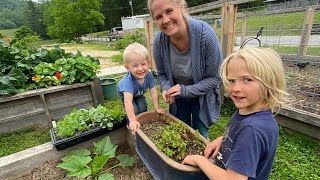
In this video, the presenter outlines their 2024 garden plan aimed at quitting the grocery store by growing their own food. They describe a 21‑by‑50‑foot plot containing six 4 × 8 intensive raised beds arranged in 30‑inch‑wide rows, with a seventh bed to be added behind a persimmon tree using vertical trellises and planters. The strategy relies on intensive square‑foot planting, back‑to‑back crop cycles, and season‑extension via a greenhouse to maximize yields throughout spring, summer, and fall. The garden incorporates a pig port for composting garden waste (and possibly feeding pigs) and a chicken area. To manage the complexity, they are using a custom software planning tool that generates weekly checklists and will be demonstrated in a free live workshop at 2 PM Eastern on Sunday. Viewers are invited to join the workshop and receive access to the software.
Chapters
2024, we're quitting the grocery store. Here's— how about a winter tour? How about, uh, I'll share the plans on how we're going to do that with our gardens in this video. One of the things we're going to do is a software planning tool to plan and stack and give us our weekly checklist of things to do in the garden. I'm going to leave that where links go in for videos. Right outside of our house in Zone 1, 6 raised beds, 4x8 intensive back-to-back square foot garden planting, the, the cut-and-go types of crops. Plus one more, we're going to build one more raised bed over there behind the persimmon tree. It will, it will take advantage of the vertical spaces. We'll do trellises We're going to have planters on this. Beauty's going to have to put her, uh, her herbs somewhere. I don't know if she's going to work it in there. We used to have them here. Maybe she'll do it in there, just those cut-and-go herbs. As we walk to the crop garden, this is the problem you face with gardens. So when, where, and how. So you have your garden space and it stays there all year round. So to grow your own groceries, you're going to need to maximize that out. I mean, it's there, it's in the way, you can't fold it up and get it out of the way. So plant it intensively. In most places, you have 2, 3 opportunities to grow a garden. Cheat the season with a greenhouse in the spring, starting seeds early, planting out in the spring, and then right behind As soon as you're done with that crop, take full advantage, optimization of your space. You want to plant a summer crop. Then again, timing that and what can you plant right behind it. Again, the fall crops, which are like the spring crops, the cold hardy stuff. So we have— these are 1,200 square foot garden plots-ish, I guess. It's 21 foot by 50. 6 30-inch wide raised beds with a foot between them, 50 feet long. They're covered in silage tarp now. They've got compost, they're ready to go. We'll pull those back and plant them. There's one plot, two plots. We got the pig port this year, very excited about that. We'll take our garden waste and put everything into the pig, extra, extra produce. Maybe we'll plant some stuff for the pigs. With this amount of space, is it enough? I think with high efficiency, back-to-back planting, only growing what we love, it is. There's another garden plot here, and then there's the one that the chickens are in. So planting— what, what do you love? What do you like to grow? Only plant that. When, when does that go in? And then how to— there's a lot of planning involved to make sure You— each plant spacing, maximizing the rows, not planting too much of one thing. I see Mr. Henry's shoes right there. And then making use of that space. So like when those are spent and those are done and those are grown, you want to plant right behind it with your next crop. That's a lot. And what do you do from week by week? And what do you do if you miss a week? Of work. But anyway, that's what I'm hoping this, this thing, the software, will do for us. This actually— 2 PM today we're going live doing this workshop. We're getting walk— we're walking through how we're planning the garden for our year, and you guys are welcome to join us on that. It's free, so it's a bit of a workshop and you'll learn some things, and this software will be made available to you. It's actually free, so I, I definitely, definitely check out the links, and I hope to see you guys there this afternoon, 2 PM Eastern Sunday.