Raised Beds were a BUST, but Dad has a better Idea
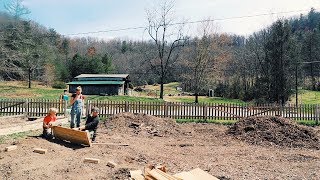
Justin and his family redesign their raised garden beds after they failed, with help from Rebecca's dad. They also clip and band Icelandic chickens for breeding, move cows, and manage pasture with electric fencing on their homestead.
Chapters
The problem is we need more Icelandic chickens. The first thing we're gonna do to prepare these guys for our breeding setup is make sure everyone has clipped wings so we can keep everybody safe inside of a poultry net. Jonah, go get me the blue bands. I don't Just put them inside in the tool cabinet right inside. We might as well— we're clipping individual wings, we might as well put the marker bands on them. We want to get started what you call selectively breeding so that we can create our own stock that thrives on our own land. You want to help me?
We got a little bit of a We got them.
So today we're gonna prepare to selectively breed these guys. You know, a ruler, a scale, bands, and some other supplies. And then we're gonna set up a whole— when you selectively breed, when you pick your best stock, you want to put them in a separate pen, in a whole separate chicken operation. That's what we're gonna do. Color can identify the family. We only have one family right now. Numbers though, individual numbers on each of these. We will take measurements tomorrow. There's a number of 3 or 4 things we can do to tell who's going to lay eggs, who's going to be a good, you know, good for eating. And we'll do that tomorrow, but we gotta have bands to mark. Like, who's this? Well, this is going to be 24.
That's 7.
Oh, oh, she caught me!
Ow!
I got a feisty one.
I think that's one of the best ones. She's trying to bite you.
That's, that's, that's— could be a good sign. Oh shoot, this one's 007. You're extra cool. I'm glad we're doing this today.
He doesn't like his hands squawking. That's good. No, he becomes mean.
These are little tiny hens. These guys will not be free range behind the cows. They will be behind the cows, but they'll be in an electric pen. We gotta put this thing on because we're too small of a farm. They end up coming back to their favorite spots and they don't end up working the paddies behind the cows, so How many hens do we have?
Uh, 13, and then there's 14 chickens, so it's in there. You can see both.
So 14 counting the rooster, 14, counting 15 with the goose, 13 count—
oh yeah, 15.
How many hens do we have? That's all we need to know.
13. About a length off.
Oh, so close. I'll give us some slack up there, so maybe there. There's gonna be a change. Somebody's gonna come over here. Who's that body? Should that be the breeders or the non-breeders? Should I put the breeders in the chicken tractor or keep the breeders in the Chickshaw? You want the minimal amount of stress as possible. I guess we should keep the breeders in the Chickshaw where they are. And then there's no change for them except they lost half their flock. We're gonna separate. We're gonna take probably our best half. Although the green grass in there could really excite a chicken here in the spring, could help with egg production. What's up, buddy? You coming with me? Okay. So I feel really good about that setup there. It's nice and green. We got everything set up. We just need to add water, really. That's it. We gotta add water and chickens, and that's tomorrow. So now all we need to do tomorrow to make this happen is just go through the specs and pick out our best birds, best 5 or 6 birds, put them with our best rooster and let them go at it for a couple of weeks while we harvest those eggs and get ready to incubate and hatch them out. Okay, Mr. Brown, milking time. Laurel, please get off that plastic.
Laurel, come on.
Good, lie down. Oh yeah, good job. Okay, stay. Aha, she's getting much better. Laura, come.
Good. I want you to look at this after all that wing clipping right there.
We got an escapee. I want to see who that is because I don't want her. I don't want the genetics of somebody who's working so hard to get out. Now she may be working so hard to get broody. Let's see. But I don't think so because she's been doing this a while. So number 12, we don't want to breed number 12 because number 12 and potentially her offspring are not gonna want to stay in a fence, and that's going to be a problem when they're way out there out of our protection. She's back. You think you know where she's getting out? Yeah, show me.
Be that Kind of cracked there, right there underneath.
Yeah, maybe. All right, makes me wonder if the fence is on. Fence is on. You think that's where it is?
Let's see. Oh, ask me.
Here, watch out, Mr. Brown. Let's see if she'll show us where it is. There's a spot down there in the corner over there. You made me remember juice today. What kind of juice you making for us, honey?
Um, we're having lettuce, carrot, and celery. Ginger is really good for SIBO.
You have SIBO? Cheers to our health. It's much better than you would imagine. She's out again.
Yeah, I know where.
Where?
Over there. That brick you saw. Oh, over there.
Oh yeah, let's see if she'll show me here. She's trying to get back in. Did she lay her egg?
Yeah.
Yeah, she laid her egg and now she's wanting to get back in the flock. They never want to get back in as bad as they want to get out. Yep, we finally— over the weekend we got the cows into the north field. We got all the cows here in the holding area. Let's go, let's go all the way over there. Keep them coming. It's still off, right? Look, they took off running when they saw that grass. Flossie's way over there already. Those cows improving this pasture one holy cow squat at a time. And once we got over there, there's grass there. But you know, we're kind of on that edge. It's like the end of March. Grass is growing a little bit, but— and it's about to explode, but not quite yet. So we do have to supplement with a little bit of hay, but that's okay. What they don't use will go into feeding the soil, and we can put the hay at the top of the mountain for them to go up there, eat, drop their— and then the nutrients will run downhill. Oh, you got her hay on here, buddy?
What?
I guess you got her hay on here. Oh shoot, this reminds me, get— this is Mom's raised bed. She's gonna put one together today. Will you go get the hard rake and I'll get her this up? I'll put this up there for her.
Uh, sure.
Beauty is gonna start work on our raised beds. We've gotten these kits. She's gonna put them together, or at least one, and see how it goes. You know, we looked into building raised beds and then we found these kits and it's actually cheaper to buy the kits. It's going to be a lot easier to make them. The plan here is raised beds, 4 foot by 8 foot, right here, as high up as we can get towards the sidewalk. And then coming down this way. I think 7, 8, 9— why can I never remember how many? Down through here and then a chicken run right there. We got new mulch to lay down for the chickens for a deep bedding. Thank you. That's what she wanted right there. Amanda, you all right? Did you guys see that? You just fell off the roof. Thank you, Jonah. See if you start. Did you choke it? Yeah. Okay, let off, let off, let off.
Ah, shoot. Today is such a beautiful day. I am gonna work on my kitchen garden.
Dad? Yes, honey? What do you need?
I have this locust log right here, but I don't think it's gonna be long enough.
Are you sure that's a locust post?
I think it is.
Yeah, it is. You gonna carry it or you want me to carry it? All right, here we go. We got this one in. So you want the log going that far? How far do you want it? Okay, can I go now? Best friends. We got that stump out of the way, Mr. Brown. You ready? Let's do it.
Doesn't this look so much better? So as you saw, I got Justin to come in and help me, and we cut this— well, we had this one, and then we cut that one to length. And then over here, this was kind of a big fat disaster. The rock had moved this way and dirt was coming down, and oh, look at this, it's getting all over the sidewalk. This is what I feel like spring's all about. It's not just about spring cleaning in the house, it's about spring cleaning outside the house. So I've got this nice pile of debris and I'm gonna get rid of that, and then I'm gonna kind of clean this up a little bit to make it look a little better, trying to make this for my first raised bed. I knew this was going to take a long time and that it wasn't going to be like real quick easy, but that's all right. All right, I think I'm done. Looks pretty good. That's hard work. Raking and stuff. I will say it feels really good though. Oh, the guineas, they were up on the roof.
There they are, way down there. We went up this access road, came way up— probably talking louder than I need to— came way up here so that we could easily get the hay up on top of the mountain. One way to tell if your cows are eating enough as if they're actually laying down. See them all laying down? This makes me happy. If the cow's up and wandering around and hunting food all day, it's bad news. You're not feeding them enough. You want to— do you want to do that while I go fix the fences? Just come right here, put them here, spread one that way and spread one that way. Okay, I'll go fix the fences. Come on, Miss Thing, come on! And now we block off their access to this spot and it gets adequate rest.
Papa, look what I get you! An air mattress!
Oh, thank you, buddy! We did it! We got your hay up here, buddy. Here, they're on their way on up here and find it.
I'm gonna go get some water and some tools and start putting these raised beds together. All right, here we go. We have some ideas about what we want to do. We want to— we would like to put logs in the bottom, and then we'll put in some, uh, hey buddy, And then we'll put in some, uh, here, come here, wood chips to kind of go in the cracks of the logs. And then we will probably put some poop in there, some cow poop in the, um, in between. And then a dirt— I'm just gonna order dirt from a local place that brings it to you, and it's in totes, and it's by the cubic yard. I don't know, something like that. Are you gonna help me? Are you gonna help me? Okay, so there's no directions. I'm gonna go inside and just look on their website.
Uh-oh, uh-oh, that doesn't look like a crazy easy kit. Well, it didn't go too great. I mean, we couldn't find the rubber mallet. We made it do with a metal mallet and a board. I did not find a rubber mallet, but I found a wood and a mallet. Okay, where's your thing?
There. So it goes up, like there's one side almost to the bottom. Other way.
And you need to hammer this down?
Yeah.
So put your board on there. Wow! What?
Are you serious? What happened?
You busted the board, didn't you?
It's not gonna be easy on us. There it goes. But still, it wasn't coming together quite right. The walls of this kit just seemed thin. It just seemed like it would push out. We weren't entirely happy with that kit. Her dad came by at just about the right time. He's a construction man. He's a concrete man. And he gave us some really good ideas on building these— building our own raised beds. Why do you laugh at that, Beck?
Because my dad is a South Florida concrete man, which means whatever he builds is for hurricane proof.
But when you have this, when you have that frame behind it, like, it's going to be a lot stronger because it can't—
here's your 2x6s. What's this?
This is your 2x4, your 2x4, and then one connecting it. I've got some pieces I can show you up there at the house.
You can trust him to go the strongest, beefiest, whatever you need.
Well, with your dad's help, Rebecca, it's gonna be hurricane-proof.
It will. It will never blow away. It will. Joda starts laughing.
Joda, you be using these raised beds with your kids.
Yeah.
Then you got your post here. You got another one here, here, here. If you were only 4 feet, but if you're 8 feet, you're gonna need another one here and here.
Wait, where's your— where's your 4x4?
4x4 is here.
4x4 goes like this and it attaches with this. Yeah, you can attach it to here and then we'll have another one. Yes. So technically this would be going over to cover the 4x4?
Yeah, yeah.
Or would the 4x4 just come up?
Come up to it either way.
Okay, so you have a 4x4 here, and then where are you gonna mount the boards?
On the inside.
On the inside? Yeah. Okay.
And then this is what it'll look like on the outside.
I think it'd be fine.
I don't think it looks bad.
No, it doesn't. It'll have some depth.
And then I did order the 5/4 by 6, the 1-inch. Yeah, 5/4. I want to go on here.
Okay, so what goes on this way?
That one too, the 5/4. The problem with the raised bed kits was they were just really kind of difficult to put together, and I realized that for just a little bit more money and a little bit more effort on our part, we could have something that would last a little bit longer. I think that that's what it came down for me, is I was like, there's a, there's a reason these kits were a certain price.
Yeah.
And from— for not that much more money, I can have something that's really beefy. And my goal this year with the greenhouse, with these raised beds, is that next year I can just go out and just do.
Yep.
I don't have to worry about making, fixing, repairing. I don't want to do that. I'm sick of that. And I'm ready to like put down these roots and make whatever we're doing permanent. Yeah, very permanent. And if we go ahead with these plans, it's gonna be very permanent. Just like the greenhouse.
Who you got there?
Almanzo.
He is fuzzy.
Yeah, he is.
Are you— got your winter coat on? Do you have your winter coat on, Almanzo? Are you getting warm on Jonah? Are you cuddling in on Jonah? You guys got matching hairdos. Lots and lots of hair.
Really?
More from Justin






If I had to start my Homestead all over again, it could only pick one animal… 




