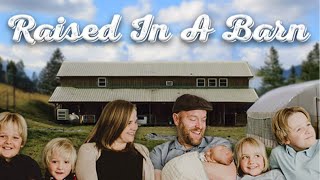
Rebecca and Justin explain why they chose to homeschool on a farm, prioritizing the parent-child relationship and life experience over curriculum. They let their kids fail, support entrepreneurial projects like van conversions, and define success as freedom from a 9-to-5 job and community contribution, not grades.
Chapters
That's what you do when they turn 5. You teach them how to read and you start doing this whole curriculum and you just start doing it. And he was like, well, maybe you don't have to do that.
Most kids my age are going to school from Monday to Friday, but opposed to me, I get to have weekends pretty much every day, which is nice.
I don't remember what caused us to homeschool, but going into the homeschool, we went into the homeschool very normal. We did the very normal homeschool thing. Most homeschoolers are just schooling their kids at home.
Joan and I were sitting on the floor and just butting heads, butting heads. And after that 20-minute session, Justin was like, why, why are you doing this? And I was like, well, he's 5 and he needs to learn how to read, and that's what you do when they turn 5. You teach them how to read and you start doing this whole curriculum and you just start doing— and he was like, well, maybe you don't have to do that.
Yeah, so the relationship is more important. I mean, I could see that at that time, and I didn't even know that that was an option. But because we had questioned the food system, and then we got into homesteading, and then we questioned how that's done.
And well, you also did feel in your going to school years that your creativity was squashed.
Rebecca and I just totally grew up normal, just like everybody else, going to school, going to church, doing separate things as a family. Maybe, and we both had a meal a day, a supper. That was probably normal as for us growing up, but nowadays that's not even normal. But what was normal, if you think about it, is very separated. I'm in a grade at school and I'm separate from my siblings, and I noticed I went to a small private school, so I had half a dozen boys to pick from to be my best friend. We raised them very different to that. They're looking around the classroom and saying, who's, who's, who's gonna be my best friend? Who's gonna be my, uh, my friend? Well, it just so happens to be their brothers and sisters.
If I could thank my parents for one thing, it would be that they didn't put me in the school system, in homeschooling or public school or even private school, which I'm very thankful for. I don't really like to have to learn that type of stuff. And it would just be annoying to do homework and the farm and school all in the same time.
The culture was the kids go to school, we go to work or whatever, and everybody's segregated, so there's only so much room for culture. Okay, we have dinners together, but it's through here. And that got even worse as we got through high school because then they wanted us to play sports, and we got involved in sports, and we're going this and that. And so then when is there room for a family culture to develop that a child would be attracted to or used to or comfortable with, or that the parents would be comfortable with or know. We were riding our bikes one Friday just recently. We broke down or something and we're fixing it. One of the boys said, what movie we're going to watch tonight? These are 17, they're 17 and 15. And I thought that actually when Jonah got his license that we were going to lose him more. And we've lost him some. I mean, they go to play soccer on— it's all great. This is all part of it. It's, it's okay.
Yeah.
But when I was 16, it was every, what are we gonna do Friday and Saturday night, and it had nothing to do with my parents. I was thinking there in the woods and riding along and being like, is this okay? And then I'm thinking, oh, you know, you better enjoy this while you have it too. But if you think about it, it's not strange to them because we've been doing this all along. We have this culture and we— it's positive, and we have this, uh, traditions that they can plug into and be excited about.
The relationship is more important than school.
Mm-hmm. Yeah.
Is the ultimate thing. Like, the relationship with your child is more important than them getting this dumb workbook done.
So where I get most of my education is from, is from life experiences, just living life and getting through day by day. The only thing I really missed out on is like being crazy good at school, like academics. Like, I'm not really crazy good at that type of stuff, but like, I don't need to be. In this era, you have an iPhone. You can look anything up and learn anything. If I could thank my parents for one thing, it'd be for not sending me to school. I think I'm getting a better education by living on the farm and figuring things out. It's teaching me how to operate a machine and work on the cabin and learning to weld and just building things in general.
There's one really good question I ask a lot about everything, and that's Why? So if you're going into homeschool, for example, why? What, what is the end goal for this? What do I want of my kid? Turns out you probably just want a child that has its values in place, has maintained its creativity, knows how to work hard, and can teach himself something. Then you can say, with this curriculum or whatever else, Do I really need that for my goal to happen? And oftentimes, no, no, you don't. Somebody else's success may be a college graduate, but my success is going to be something different. So success for my kid is that they would be an asset citizen, so they would give more than they take. Because if they're contributing citizen, they're being good to themselves, they're being good to their family.
They're being good to the world.
And they're being good to everybody around them, and that's a fulfilled life. So I guess ultimately I want them to just be happy and fulfilled.
How I define success is not having to work a 9-to-5 and being able to spend time with my family. And not being tied down to a boss. The reason I think that I don't want to be tied down is because I want to be able to have freedom. Freedom is like being able to do stuff when I want. A 9-to-5 doesn't feel like freedom because you have to show up on time and you have to leave, and it's just a pattern constantly. You get the weekends off, but that's it. And then like 2 weeks of vacation. The reason I think that way is because of how I was raised by Mama Papa. They have shown me that you, you can be successful without having to be busy and work a 9 to 5.
Yeah, one thing I learned from Joel, and we can learn from Joel and speak confidently about, is, you know, he's in 60s or 70s now, and his son is 42 now and running the farm. So it's having an opportunity for my children to buy into or to step into or create for themselves, that has to be presented to them. So, and that has to be in our culture, that you guys can be a part of the business in any way you want, or you can create your own business venture here. And that's very much what Joel did with Daniel.
When I grow older, I'd like to work for Papa.
Joel let the children have their own ventures from very early on. And so we've just done that too here and can be confident chances are it's going to turn out similar to what Joel has seen with his son Daniel. And I will be going and already happy to go to the boys and say, what do we want me to do?
So my definition of being educated is figuring it out on my own, like with a little bit of guidance, but then just figuring it out.
Jonah's building the bridge from the hurricane on his own accord, his own idea, and I'm gonna have to let him make some mistakes and fail. And I already have— he's— they already have a different idea for the secondary road for big trucks.
You can alternate route still?
Yeah, big fire truck, dump truck loaded. I'd rather them not go across the bridge. They probably could. What's the problem with the alternate route? I was just gonna put those rocks there. One thing that we've done from the very beginning, and I don't know why, but we've let them fail.
One thing that Papa has taught me is that Failing is okay. You can fail in life and you'll still succeed. And that's a part of growing up is failing.
So Justin's always said, don't be a dream crusher. It's hard as a mom to let your kids fail. And they're not failing like, you know, they're not losing money. They're not hurting themselves physically. It's, you know, building a fort that doesn't work.
It's harder as they get older because the fails are bigger.
Yeah. I mean, Jonah—
'Cause if you give them the Instagram, well, they could go down a rabbit hole that could have a significant impact on their life. Example, when they were a kid, Jonah wanted to plant all these seeds in one spot. Okay, sure. I knew it wasn't gonna work. And he did it, you know, interesting enough, it actually did work and it beat my garden. We learned a lot of things about that. But now his cells are gonna be bigger. So it's a little harder, you know, 'cause if I see him scrolling, you know, when they're sick and it's hours in a day. I mean, that— there could be some implications there that—
well, we bought a dirt bike. We allowed them to buy a dirt bike. And Jonah, you know, has a new hip. He got a hip replacement at 15. That was a pretty big fail, and it felt really hard for a long time.
Yeah, because he still has the dirt bike.
And, and then— so then I had taken the dirt bike away, and then I was listening to Dr. Laura on the radio, and she had a mom call in whose son had gotten injured, and the mom was like, I don't want him to do it anymore. I don't want him to ride anymore. And she was like, you do know that there are men who jump out of helicopters to save people, and we need that in society, and your son may be one of those people, and you can't hold him back from that because you're not letting him have his full potential. And I was like, oh. So I went home, and at dinner I said, do you guys want the dirt bike back? And they were like, yes.
We want to support our kids in their dream. We're fully prepared to up and convert a van and that be our life, following them around. Plan A is that most of us will be here on a family multi-generational land.
Yes, even if they choose to work a job either on the computer or like at a, an office building or wherever, you know, whatever. But if they living here, their family is raised here, you know, like I would love that. Um, but yeah, we're totally prepared to like dismantle the whole thing and, and, and get an RV, van, and that's if nobody was interested.
Yeah, I feel like I'm prepared for adulthood because of how Mom and Papa have raised me, with letting me fail and succeed and then fail and succeed and just helping me get through those hard times. So when I turn 18, I don't really have too many plans figured out, but I'll most likely move into an apartment downstairs, and I will be working on the cabin to make that my home eventually when I get married.
Jonah's already talking about, I don't want to be in this room with Gideon when I'm 18. Yeah, he's not talking about moving into the cabin until he's married, so converting a stall downstairs into a bachelor pad.
As long as they're being respectful and following by the rules of the house and things of that nature, then they are welcome to stay. But they have to be productive. Like, they're not going to sit on a video game. They don't have to like go out and get a job at Waffle House or Chick-fil-A or whatever, you know what I mean? Or Lowe's.
Like, in some janky apartment.
Yeah, they can stay here work on some— because entrepreneurial, like forging their way— you're more than welcome to stick around.
There's this idea that of normalcy, you know, of, of the children going away when they're 18. Rebecca and I, since we very first— our very first questioning of normalcy is, you know, ended up being in the diet and switching over into more organics, healthier food. But then once you question one norm It usually spirals into many other questions. You're questioning your food, and then it moves to how you're going to birth your children, and then how you're going to homeschool them, and then how you— it goes all the way down until it never ends. Then you're questioning church, and then you're questioning all the way down. We grew up as Christians. I think that what we can take away from that is we came across morals and values. And that's a lot of what we got out of that, the specificities of that and how it's practiced. Of course, we question that just like everything else. So, you know, there's that famous verse, spare the rod, spoil the child. Turns out that's a shepherding term, and the shepherd didn't hit the sheep with the rod. The rod was to hit the predator and to protect the sheep. From that. So we all come to the Bible and things from a Western perspective, and shepherding from a Western perspective. In, in the West, we herd animals. In the East, which is where the Bible is coming from and where the concept— where they were talking about shepherding— is you lead. I then began to look at, well, what does the Bible say about shepherding and shepherding people and children. Then when it's talking about raising children, it's often talking about a shepherd to a sheep. I learned that a shepherd needs to be more leading. And then one thing I took from it is when a child is having a problem, you bring them close. You don't put them away. If you put them in timeout, it's for the parent so you don't do something stupid. Yeah. What you really need to do long term when a kid is acting up is then bring them close. That's a big part of why we keep everyone close. And you keep them close before there's even a problem too. It's not just, oh, we have a problem. And, and you know, when one goes astray, you go and get it. Bring everybody together and keep them in tight. Well, why do they gotta leave? Why can't we always offer them something on farm? They can be their own idea and their own thing, and it could have nothing related to farming. It could be a downhill mountain bike course they run, or airsoft, or just working from home doing something completely different.
I understand the 18 thing though of leaving because it is the next process, the next thing of life. Like, I don't want my kids to stay here and get babied and like not become men. Yeah, does that make sense? So like, in some families, the child needs to leave to become a man.
Yeah, if you're living in town, what's this 18-year-old— he's got nothing to contribute. He's going to be taking more than he's giving. Here in the way this lifestyle is set up, they have something to plug into. In other cultures, or if we were a more impoverished culture, we wouldn't even be talking about this, going out and living separate. That'd just be ridiculous.
Yeah.
Why would you do that? Especially if we had— we had 18 stalls down below on the first floor. Yeah, the kids got to get out when they're 18 if you're wanting them to live the American dream and have their own, you know, house and college debt and 9-to-5 job.
So when I grow up, I want to be able to get married and have children. I would like to travel some. For a job, I think I would like to be more of like a businessman, like maybe doing YouTube and selling something, or doing like a grading business or something like that.
I think that that is a newer idea. I actually just saw something about this recently, that the— that we have complete control of the outcome of our children. Like, that's a more modern parenting idea. I think that before it was less ultimately they're gonna make their decisions. Like, sure, my parents raised me a certain way, but I also made decisions that my parents didn't agree with.
So one of the downsides to our lifestyle is that it's harder when I go into society for me to understand things, but slowly I've been getting used to it. Sometimes it's harder for me to, like, spell text out, to like how to word it. It's harder for me to learn. Stuff like that.
Yes, I do think we've chosen some things to shelter them from. I don't think that we shelter them as much as other homeschool families shelter them, I would say.
When I dislocated my hip and got put in the hospital for 4 days, sent me back and put me on crutches for 6 weeks. After that, they put me in PE, and I was okay for a little bit. After that, I started to decline, and I couldn't move my leg at all. And I was pretty much bedridden. Mom and Papa helped me through that tremendously.
What's the secret to him coming to you?
I think that Jonah is very extroverted and his love language is talking. Like, he just needs to talk it out because we have another teenager who doesn't talk that much.
That's true. If your teen comes and confides in you, I think that's a success. I talked to Joel Salatin about that once. Daniel came to Joel talking to him about a girl he was interested in. And I said, Joel, how did you do that? That's success to me. And he said it was quantity time.
Hmm.
Not necessarily quality, quantity time. So being together a lot. And when you go to school, your best friend is who you're most compatible with in that room that you spend the most time with. Well, if you're at home, well, Mom, you're among the best friends and they're going to come and talk to you and me. I'm in the running when they're looking, when they're considering spouses. But It started with that little 4-year-old going to sleep by her side. It is threatening when you first go against the norm. I feel like it threatens them, makes them feel like they didn't do a good job or they did something wrong. But you just know you have new information and now you're moving on. And it's been so long and we've, we've bucked so many systems that I've forgotten about that because now the normal people have written us off a long time ago.
The reward I get from this lifestyle is the freedom to do what I want. This lifestyle that we have lived leads me to freedom and success.
We came across your channel, we came for the animals and stuff like that, but one thing that kept us watching was your family. I remember me and Ashley talking, we were like, Like, that's— we want our kids to be like them.
More from Justin






If I had to start my Homestead all over again, it could only pick one animal… 




