Roots and Refuge | The Rooted Life Farm Tour
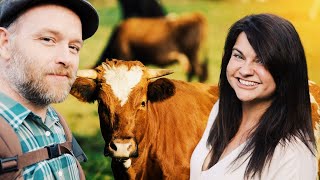
This content was created by Victor Justin Rhodes. This content was uploaded by Victor Justin Rhodes. This is a YouTube video titled 'Roots and Refuge | The Rooted Life Farm Tour' (created 2022-02-18). It is an on-site homestead tour/interview in which Jessica (Roots and Refuge Farm), her husband Miah, and an interviewer (Speaker B) discuss their move to the property, houseplants, daily routines (coffee, milking), livestock (cow Hope, Helen, goats, chickens, pigs), milking setup and barn layout, garden and greenhouse plans, upcoming coffee-roasting equipment and subscription plans, staffing, and plans for a learning center and market/YouTube presence. The content is diarized dialogue describing practical homesteading activities and future plans for the farm.
Chapters
Um, okay, so I actually never kept this many houseplants on a regular basis, but we moved here and I didn't have a garden and I had to like exert my plant-loving energy somewhere. So that's what happened.
How do you keep them all alive? Becky, take some notes.
I literally— all the plants—
I don't really, she says.
No, she buys— okay, so there you go.
I'll out myself. I don't keep them all alive.
But she buys a few extras and that way when one dies, you just swap it out with another. Most people don't pay attention.
Okay, no, nobody— you keep like the really tall, like long ones alive.
That way you— because you'll notice if that was to die. But like, the little—
nobody's—
small little guys are just like, it could swap out in the next 6 months.
Nobody names the plants, they're easily replaceable.
No, I had— I will tell you my oldest plant. You want to see it? Yeah, I do.
I want to see it.
Okay, so this one I've had— I think this was like one of the first houseplants that I bought, and it has been cut back so many times. Um, it used to be like really, really long, and I cut it when we moved, and so it's kind of getting some length again. But I think this might have been one of the first houseplants that I ever had. This, it's an old pothos. It doesn't have a name though.
Nice. Okay.
I like all of these. Just, I'm gonna have to find a place to do something with them.
Yeah, it's just cool how you put them all hanging in front of the window.
Actually, I really, I think I would really like this like over our bathtub. I have some in my bathroom. We have plenty of bathtubs.
Do you really? It might be easier to water them if you keep them in your bathtub.
I know, see, I literally be in the bathtub and I'm watering.
Those do really well.
She's like, I'm watching you.
I wonder if a bath bomb will hurt the plant.
I wonder if it'll come out cleaner.
But yeah, I came up with the black iron pipe hanging system.
Yeah, I like that actually. It's really nice.
You got your coffee, you go outside? You take your coffee outside?
Yep.
How many coffees do you drink a day?
One.
That's it?
Yeah.
You're a coffee snob, but only one.
And she doesn't even drink her full cup.
I mean, ton of caffeine isn't good for you, so I do try to like rein it in. I drink tea the rest of the day.
We're not an accountant. We don't drink like 12 cups. Normally, actually, I drink mine fast. I just like— okay, so a lot of areas in my life are still very military. Like, I just need the information, or like, I just need the product. So like, I don't like sip on coffee and enjoy it. I'm really just like, get it in your system, get to work.
All right, you ready to go outside, Beck?
Gigantic machine, and you just—
oh, that's a small one. Wait till we— when we build our house, it'll be much different.
She's gonna have a coffee shop in his house.
Oh yeah, oh yeah.
That'll be funny. And is this why you're going for a coffee shop? Yeah, so you can have somewhere to go and get coffee at extra.
And also, you know, part with the coffee shop, we're going to start our own roasting company and roast our own coffee. There we can like develop flavors.
And, um, well, this is something that can go on this. I know this isn't coming out for a little bit, but we actually just placed the order, or we just got the quote to place the order for our roasting equipment. So that's coming like in this year.
Yeah, we'll be selling coffee subscription.
So this one's gonna come out in the end of February, probably.
People can know though.
Yeah, okay. Boots of choice?
Um, okay, so it—
and do you like your boots?
I do. I wear Ariat boots, leather boots.
But these are Ariats?
Yeah.
When it gets real muddy, which it has been raining a lot here, I usually wear like— those are Bogs and they're pretty good.
I used to wear Bogs and then they stopped making them in the United States.
Oh really? What are these? Mucks? You like them?
I just like lower boots. I'm actually looking for the next pair of boots I buy them and try and find a brand that's crafted in the United States because they just last longer. See, Bogs, that's what they do. Like, they started in America and then they like developed a reputation, and then when you're not paying attention, they outsource it to China. So now these boots fall apart. Like, mine are already falling apart and they're not even that old.
So yeah, that is one thing we go through. We go through some mud boots.
You have some prizes there.
Yeah, we got eggs.
How many days is that?
Um, probably 2 and a half.
Nice, good job, guys. Oh, right outside your door, the Zone 1 garden right here. Yeah.
Yeah, so this is sort of in, you know, flux right now. We're gonna tear a lot of the stuff out. I just planted a bunch of strawberries in here, but most of this is about to flip over, and I'll replant some different cabbages and cool weather stuff. Yeah, to harvest in the spring. My eventual goal for this garden when we build our bigger one is, uh, this will be like herbs and salad greens and like stuff you want right outside the door. Yeah, and of course we put this mobile home in Uh, we bought raw land and we wanted to get out here. We were making a 750-mile move and we, we moved right in the middle of like the post-COVID building material crisis thing. And there were no— we didn't have a lot of options. We couldn't get a house in town. There was nothing to rent. There was nothing available. And we were able to buy this house thankfully, and it's been such a massive blessing. But this will eventually be a guest space just because with what we do and what we want to do, doing like a learning center and stuff, we'll always need a guest space. We have 6 kids. Okay, yeah, having extra space, have a lot of siblings, like there's just—
having a guest space will never be a bad thing.
But no, we're gonna build a house.
Yeah, so this is pretty good given that it's January 4th.
Yeah, yeah, we have a good deal. I'm, you know, got a little chard coming and still some peas, got a few little turnips here.
I reckon it never has to be covered here in South Carolina, never in the winter.
Okay, the coldest it gets here— this is zone 8, so the coldest it ever really gets here is like maybe 20-ish Fahrenheit. What is that, like -6 or so?
Yeah. Um, cool. So, so you go— you, you've got your coffee, coffee still in hand. Yep. You got your boots on. You're gonna head to the—
we're gonna head over here. Well, obviously I would have milking supplies. Jeremiah takes the side-by-side at this point. He usually goes down. We have all our feed in a shipping container. We just got our barn done, so we haven't really moved into our barn yet. So you're kind of seeing this, what we've been doing, which is a little temporary. Uh, so we have been keeping our cow in this corral, and right now—
well, we keep her in the corral at night.
Yeah, in the night. Yeah. This might be familiar to you.
Ah, Chickshaw and chickens at work.
So ran in with the storm the other day and didn't have the latches.
Yeah, the wind caught it and I've got to basically— I've just got to undo some screws and reattach the back piece.
That's good, man.
The hinges.
But you did a good job. Hey, how'd you rig up the kickstand? I'm still trying to figure a way out. Does that work?
Yeah, it works pretty good.
Yeah, you did it.
So it's got—
it swivels.
It swivels and then it's got a hook on the left that just holds it up when we're moving.
Oh, I like that. And it holds it up above the bottom.
Yes.
Yeah, that's, that's, that's good.
So right now what we do is we've got this big corral and we lock Hope, our cow, up at night to separate her from the calf. And then we're flipping— like, we flip Hope and the chickens every few days, so it kind of cleans up. Flies aren't an issue right now because it's so cool. But yeah, but so I'll come out in the morning into this little paddock and this is where she is in the morning. And we just hope— we just milk in the field right now.
Okay.
And she's used being milked out of a stand, so we don't tie her or anything. And I just, you know, we feed her and milk her right here. And then I still have her calf on her. She's like 9 months old. She's old enough to be weaned, but Hope was my first dairy cow. And I've kept goats, but I've milked y'all's cows, and I knew that it was more of a task than milking even a few goats. And I didn't want to risk Hope getting mastitis with my inexpert to milking, so I kept the calf on her just to give me the grace to be able to be less.
How's that working out?
It's really good. It's doing really well. Now that we're past the holidays, we might look at weaning, but I did get a second cow and she's due. I know one's not good enough for you.
All right, just can't stop. Now are you going to be the crazy cow lady?
I, I— hey, I'm open if the title's available.
I've never heard that one, but maybe.
Yeah, milk.
And then the Helen's supposed to be pregnant with a sex semen Jersey heifer, so we'll have 3 full-blood Jerseys.
I'm like, yeah, well, there's chicken, and now I've learned there's cow calculus.
You done went from the crazy goat lady to the crazy cow lady.
And I still have my goats, and they're all pregnant too.
So yeah, what are you gonna do with those goats?
He's like, leave them.
I asked him first.
If it was up to me, we probably wouldn't still have goats, but that's okay.
So what are you gonna do with the goats at this point?
Well, I obviously don't really need them. I might milk like 2 of them while I'm hauling in like gallons of milk.
Yeah, we might spend a couple of goats and it's like, you know, while we're bringing in 50 gallons.
Well, we are going to be partnering with our neighbors. They have 80 acres here behind us, and I think we're going to be running our goat herd kind of as brush goats at this point. I have downsized all the goats I have minus one who I've had. She's one of my first goats. They're all really good moms. They're very resilient. They don't require care a lot by way of like, you know, care or medication. They've just— we've narrowed it down to like the fittest, I guess you could say. So they'll be a good brush herd.
And I don't know if I can have babies, we can, you know, sell the, you know, wean babies and kind of COVID their feed costs or whatever we have to do for keeping them. Really, at this point, we've had them for so long and they kind of got us into like actually homesteading with animals. Like, it's like they deserve to retire.
Yeah, you've taken in the gallons and gallons of milk.
Yeah, right now off my one cow with cow I get 2, 2 and a half gallons.
And that calf's on her all the time? No, you separate them at night?
Yeah.
And then you feed the chickens?
Yeah, we feed the chickens. So that, that, at that point, because Maya goes down and gets the feed and then brings it back up, he then kind of— I take the milk in and then he takes the feed around to the rest of the farm. And I'll usually meet him back outside after I'm done straining the milk.
And then where do you go?
Well, it's winter right now.
Yeah, you're done, huh?
I don't have a whole lot. That's pretty well it. But right now Our big plans are we have 2 high tunnel greenhouses up here that we're about to start building, and we're about to start building another glass greenhouse, a window greenhouse like we did at our last farm. And so my schedule in another 6 weeks is going to be—
yeah, a lot of that stuff, which 6 weeks will be mid-February. You're going to get cranking.
That's when I start seeds. Um, our last frost here is around, around April 1st, very similar to what it was in Arkansas. And about that time of year, my schedule fills up fast with the garden. Usually after milking, I'm in the garden until it gets too hot.
Yeah, this is cool.
Yeah, this was because innovation from children. Yeah, he came up with this. We had one between the trees, and of course one hammock. Yeah, um, the three little boys were always— we'd come out, all three of them would be in one.
This is cool.
I built this, which is pretty neat.
It's what Joe Solis and call creating a comma in your life.
Oh yeah, it is, it is good.
It's a little hangout on your farm. What would you be planting in mid-February?
In mid-February, I'll be starting all the seeds for that year's garden. So the tomatoes, the peppers, eggplants, anything that's not going to be direct sown. Now a little bit later, I'll plant squash and cucumbers just a few weeks before I'm going to plant them out. I'll start those, but most of of the actual bulk of the garden gets started by seed in the middle of February.
Nice.
Yeah, another thing we're gonna be doing this year is putting in like berry bushes and an asparagus patch and all of that perennial stuff that, you know, you plant once and then you eat on for a really long time. But you got to get it planted soon. We just didn't want to do it ahead of time, ahead of this, because we weren't really sure what we were doing.
So it's winter Do you like this forced rest? Are you over it?
I accept it. I don't celebrate it, but I accept it. What are you gonna do? It's forced rest. You're forced. But I recognize the necessity. But it is definitely a harder thing for me. I am more comfortable doing it. You guarantee? Yes, I am.
So you're ready to go?
Yes, I am ready to go.
You've had enough rest?
I'm ready to go right now.
And yeah, you, you're, you, you are coming from another farm to this one, so that's another interim.
Yeah, well, I left my garden last year in July, so this is the longest period of not having a garden that I've had, like, in the last 15 years of my life. So it's definitely a forced rest.
Is this the name Milk Cow?
No, this is Helen. This is my new girl. She's pregnant.
It's up and comer.
She's the one who will be having in a few weeks. And then Hope is nice, so she's my girl that I Okay, milking daily right now. And then right here is her calf.
Nice, sweet. You gonna milk Honey too? Are you gonna—
I haven't decided yet. Okay, um, we might kind of go more beef with her. I'm thinking about getting— actually, I got a lead on a Devon. Okay, Devon bull calf. Yeah, so I know I messaged Rebecca and she said y'all would really like that.
So are these your pet goats? Yeah, or are these your pet goats?
That's all of them, which we'll let— I'll— we'll let those back out. They're locked up. We have to put the girly goats in this barn because the boy goats can't eat their grain or else they'll get uric acid crystals. So, so yeah, this barn's actually about to come down now that we got the new one. This was just an existing structure when we moved here, and so we just like gave it a real quick facelift to make it usable, but this is all gonna be nice and I'll probably probably scrape everything here and use it in the garden. Yeah, probably a nice thick layer.
Good, good.
Nice.
So it's hard to convey this on video, but I can tell you while you're sitting here, and everybody else can keep scratching their head because I've explained it so many times.
We'll try again.
Yeah, but, uh, when you come in our driveway, uh, down here, we have some hogs right up there at the front. They're about to start moving around, and this whole side of the driveway going all the way around is gonna be growing effort. So I've been calling it my garden belt, but we're putting two high tunnels up there at the front. The pigs are actually— that one pig pen is a footprint of one of the high tunnels.
Wow.
And then berry bushes, maybe some like dwarf trees, some different things, uh, scuppernogs and muscadines. I don't know if you— those are a pretty big deal around here, kind of like grape varieties. And in-ground gardens, onions, garlic, all of that, potatoes, sweet potatoes. And then down down here I'm going to do kind of some raised bed, potager type area, similar to the garden I had at my old farm.
Well, this homestead level, or is this going to be market?
Um, it's YouTube homestead level. It's kind of like, obviously it's growing way more than we can personally use. So one of the things that's really important to me, we already have one full-time employee, Jeremiah's brother. We're actually bringing on another employee that's going to work on the farm for some months, and then actually to head up our coffee roasting. He has a history with and one of the things that I really want is for the people who work here on our farm to be able to eat the food from our farm. So I'm kind of like accounting for them. And, uh, I'm also going to do some cut flowers here because my hope is eventually when we have like our coffee shop and stuff like that, we can have like our flowers in there for sale.
So what do you think, sweet Maya? Are you— and are you involved in the garden? Are you more the animal guy as far as responsibility, or building guy? Yeah.
Yeah, I'm the building animal guy, but I mean, I also help build, you know, I'll be the muscle. Yeah, for both of us to have all the knowledge, it's just, you know what I'm saying, just tell me what to do. It'd be like, you know what I'm saying, like I could— I mean, Jessica might sit down and work with me on like a construction project or something, but like it's not like she's gonna go out and like learn how to frame a house, you know what I'm saying, or learn how to do finished carpentry.
That's not efficient that way.
You know what I'm saying? I'm already really good at that. Like, and she's already really good at gardening, obviously. Like, so I'll help, and I've, I've picked up knowledge, you know. Yeah, I know how to plant stuff, I know how to harvest certain things. Like, but I mean, I'm also like, I excel at like applying vision, if it makes sense. She'll be like, hey, I want it to look like this, and for the most part, I'm pretty good at picking that up and making it.
Okay, so you understand this vision? Like, along this road, like, I designed the barn without really Oh, the red barn.
I understood what she wanted, but like, I made the call on a bunch of different decisions, and like, when it got built, she's like, oh, this is perfect.
Is it perfect?
Oh, I love it.
I love it so much.
Cool.
It's beautiful.
I like this, uh, I like this mobile kennel here. You just put a kennel on skids. That's a hack right there, man.
Are your dogs nice?
Yeah, my dogs are super nice.
This could be a meat chicken. This could be meat chickens. This could be Your turkey troublemakers, you T-birds. Here we are in the brand new barn. You build this yourself, Jeremiah?
Oh yeah, 4 days.
I guess not, huh? No, you found the plans.
Well, honestly, with as fast and as high quality as they did of a job—
I know, right? That's the thing. If you did this yourself, it would have took 4 months.
4 months? I couldn't have built this in 4 months.
Oh look, they left their bit.
I saw that. I actually need to ask them because that's supposed to be a bolt. Look, see on that?
Oh, you think they jerry-rigged a bolt? They ran out of room. They ran out of bolts, buddy.
Okay, so I did this because that gives us 4 enclosed stalls. So inside, no exterior exposure.
Okay.
Um, cold, whatever, you know, just different, you know, brooding chicks, keeping them safe from rodents and different things.
Okay.
The two stalls at the very end, the one on the very end to the right is going to be our feed room. So we're gonna build a pad, pour it, frame, make it as rodent tight as we can.
Yeah.
And then have some vertical storage on top. So I'll put, you know, 2x8s on top for the roof to be able to put some stuff up there. And then we're going to do a milking room on the left.
Nice.
Concrete pad, frame it up, put in a tankless water heater, deep sink that'll just drain off, you know, gray water into that ditch and they'll just disseminate into the grass, which won't hurt anything.
Yeah.
Um, shelving for bottles, you know, like mason jars for milking, all of our milking supplies, all that stuff. And then that will go with the outside stall, which will be our expansion.
Yeah.
Um, rather than— for us, rather than milking in the field, I'm gonna have a corridor set up against that back fence that when— if they're out rotationally grazing, I can just come down there, open it up, run them down the corridor to the milking stall, and then put them back in the right paddock for that next day kind of situation. And that way we can keep all of our milking stuff here. We'll have a fridge in here. We can literally go from the milking pail filter into the freezer, into the fridge.
Yeah.
Um, and then these will be 4 stalls that will have the inside component and the outside component, which also has benefit. Like if you have a sit-go that has long-term stay, you know, being able to get outside and get into the sun I just have more space. So that's why I did, uh, the two different types of stalls. So like this stall— well, this set of stalls having the outside access and then this one being closed off.
Guys, thanks for the tour. Is that pretty much it? Yeah, we've gone from coffee to bedtime. What are you gonna watch tonight when she goes to bed?
Um, what day is it? Today's Tuesday.
I don't know, you might just sit there.
It might just be one of those days where I just sit in the peace.
Okay, what time you going to bed tonight?
Um, I've been aiming to get in bed by 10.
Yeah, okay, that's your New Year's resolution. Okay, good luck with that. All right, where can we send folks?
Uh, rootsandrefuge.com, that kind of funnels it all out.
So, okay, that goes to all your stuff, YouTube, your Instagram, your TV show, all that.
Yeah.
Okay, cool. Uh, the coffee roasting coming up. Yeah, all this exciting things coming up, all this stuff. The accessibility to this farm, right? Have you talked about that yet? Like, you're gonna have a learning center right there?
No, the learning— this is kind of like—
that's just a hangout.
Yeah, we want to be able to do some classes out here and stuff, and we're kind of setting up with the plans of being able to do the first stages of our learning center. Eventually we want to have some something bigger somewhere else. But this— we're setting up for that too.
So for folks to follow all that, rootsandrefuge.com.
Yes.
More from Justin






If I had to start my Homestead all over again, it could only pick one animal… 




