Rory Feek on Writing for Blake Shelton, the Grammys, His Down Syndrome Daughter, Losing His Wife
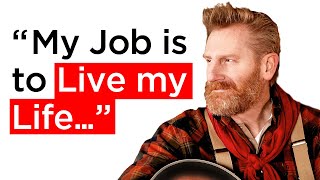
In this candid video podcast hosted by Victor Justin Rhodes, songwriter and storyteller Rory Feek shares a wide‑ranging conversation that weaves together his personal life, career, and philosophy. He opens by emphasizing authenticity as his primary service to any audience, describing his work as simply living and capturing great stories. He recounts the emotional moment when his daughter Indiana, who has Down syndrome, walked to school for the first time, describing the spontaneous filming, the lack of voice‑over, and the deep gratitude he feels for her presence. Feek explains how his wife Joey’s unexpected home birth and later diagnosis of Indiana’s condition shaped their family dynamics, noting that Indiana’s only “special need” is the absence of her mother. He reflects on the challenges and blessings of single‑parenting after Joey’s death from cancer, describing how daily routines gave him purpose and helped him process grief. Feek then shifts to his songwriting career, detailing how he co‑wrote Blake Shelton’s “Some Beach,” the business of Nashville publishing, advances, royalty streams, and the financial realities of the industry. He discusses his “divergences” – deliberate choices that led him away from a conventional Nashville path to buying and renovating a rundown farmhouse, building a homestead, and creating a self‑produced media platform called the Homestead Channel, which will showcase farming life, music, education, comedy, and family stories. He articulates a philosophy of gratitude, describing a personal transformation that required “going through hell” and repeatedly choosing gratitude over resentment. Feek also shares his Christian faith, his view that love is a conscious choice rather than a feeling, and his perspective on cancel culture, forgiveness, and the importance of extending love even when disagreeing. The interview concludes with practical information on where listeners can follow Feek’s work.
Chapters
Honestly, I didn't want to show you this video, but ultimately I was like, I can publish imperfection and you'll have something, or you won't see it at all. And ultimately, as your servant, as someone trying to do my best to love you all, I thought you'd probably rather see something as opposed to nothing. The problem is We're a few episodes into this video podcast. Setting it up ourselves, it's difficult. 3 cameras, audio, and long story short, Rory is a little bit out of focus. You guys might not even notice, but many of you will, and I just want to acknowledge that, that I wish he would have been in focus. It was— this was a wonderful interview. That's why I think it's too good to not put out there. Even though he is in focus, I've had Dan, our editor, do a little more broad shots where it's both of us. But, you know, Rory tears up in part of this interview, and we talk about everything. We talk about his Down syndrome daughter, losing his wife, dealing with, you know, and accepting family members who have different moral ideas than you do. And loving them and where they're at. And so this has got to go up. Just please forgive the imperfection, but hopefully it's an inspiration to all of us that we just need to get out there, spread the word, hit publish, get the message out there no matter what. And, uh, I want you to enjoy this conversation with Rory. Rory, We like to jump right in. You basically give your own introduction here. How do you best serve your audience?
Ooh, that's a great question. I think the best way I could serve my audience, if my job was to serve my audience, is just to be myself, to be authentic. That's the best thing I can do. For myself and for anyone who cares.
You said if your job was to serve your audience.
Yeah.
It's not.
No.
What is your job?
Well, my job is to live my life and, you know, to live great stories and hopefully capture some of those and share some of them. So I don't do that to serve the audience. I do that 'Cause it's inside of me. It's something that I have to do. I have to share. I have to capture. So I haven't transitioned to a place to where it feels like a business or anything like that. It just feels like life.
Off the top of your head, what are some of these great stories you're talking about?
The day my little girl walked to school for the first time. That's a good story. Huh?
Today? No, the day, the day my little girl, Indiana, walked.
Well, it was just, um, I didn't know if she was going to walk. You know, I didn't, I didn't know when Indiana was born. We didn't know what we were going to get. I still don't know what we're going to get, but she's amazing and thriving in every way. So She didn't learn to crawl till she was almost 3, and a month later she learned to walk in braces and things like that. So fast forward, and she's 5 or 5 and a half or something, and she wants to walk to school, which is just across the parking lot from our farmhouse. But she wants to walk by herself the first day, and so I just happen to have the camera in my hand, and she gives me a kiss goodbye, and off she walks. And And I just stood there holding it while I watched her out the screen door. And then she got too far away, so I had to step through the screen door and then on the porch, and then I kept following her. And then it was a special kind of emotional moment. Then I went into the milkhouse, which is where my office and my studio is. And then I just pushed play and I dropped some pretty music underneath of it and I just cried and cried and cried. And as did, you know, a million people. And as do I every time that I do it, that I watch something like that. So that's a great story. Yeah. But, you know, it's not a story that, that we made on purpose. It's a story we just lived on purpose and we captured it.
Okay. You captured this moment. And you publish this moment, did you give a bit of context in the story to the audience, or did you just capture this first walk to the schoolhouse? I just said, put it up there.
Yeah, I didn't, I didn't, I didn't say anything. I didn't, I didn't do a voiceover. I didn't. I think the only thing I wrote was, you know, Indiana walked to school for the first time. That was the only thing that I put. And those that don't know, Indiana has Down syndrome. Yeah, she's 7 and a half.
And you knew that before she was born?
No, we didn't know that.
Okay.
No, when she was born, she was born at home with a home birth at our farmhouse. And so my wife and I had no idea. We'd never had, as you know, because you've had home births, we never had a single doctor's appointment. So everything was a surprise. We didn't know if it was a little girl or a little boy. And we definitely didn't know she was going to have almond eyes.
Ah, well, what was, what was it like when you discovered the almond eyes?
Well, it was, you know, we didn't discover it for a little while. It was, um, at first we just thought she was beautiful and perfect, and then they said when a little later someone said that they thought that she might have Down syndrome and And we really didn't know what to do with that because it hadn't occurred to us and we just didn't really know how to process it. So my wife, it's a long story, but she had had some complications and had to go to the hospital after giving birth to Indy, and it was there at the hospital that the doctor had said that. So when she woke up from surgery, I told her that and You know, I was still processing it, and we didn't know for sure. That was just something that they suspected. And, you know, Joey just, you know, it was like, oh no, we got the greatest perfect baby in the world. She just never gave it another thought, and we really have never given it a thought. We just don't, you know, she's just a little girl, but we are aware of the fact that she's gonna learn and grow differently. And I think the best thing about that is I have two older girls, so Indy's 7 Hopey's 33 and Heidi's 35. So like most people, you don't realize that your children, they're all different. They're all born with different abilities and learning abilities and communication abilities. And, you know, one, one has lots of talent for performing, another one has some other thing that they're into or whatever. But I think up until Indy coming along, you just felt like, well, we're all supposed to be, we're supposed to finish first grade at this level, and at fifth grade or eighth grade, you have to know your multiplication tables and anything else. If you don't know that, we are failing as parents or something. By the time Indy came along, it was like, no, none of that matters anymore. All that mattered was that she was gonna be what she was gonna be, and we wanted to help her be the best of that. And that's been good for me. Good for her too.
Was it ever a struggle?
Was what a struggle? Just her being different?
That she would have special needs?
Well, she doesn't really have any special needs. She doesn't. I mean, her, her only special needs is, is that, you know, I mean, the only special need Indiana really has is that she doesn't have a mama that lives here. That's really that's an unusual special need is that somehow she has to figure out how to be confident as a young girl without having a mama. She has two big sisters and lots of ladies around, but that's a special need. She's grown up without a mama. Outside of that, yeah, I don't see it.
Have you always viewed it that way?
I think so. I think Joey and I, you know, we came home and we Googled it a lot. We read, I bought some books, we ordered some books online, and we, we met some people early on who kind of welcomed us into the Down syndrome community, and my wife didn't like it. She just, she just said, no, I'm not doing that, I'm not going to be part of that. And it was just that she didn't feel like we or Indy needed to be part of a community or that we needed to be— we, we had just a little girl and we didn't need to change our expectations at all. She was just going to be a little girl. And so, so far that's been our experience. And, and honestly, she's so bright. Yeah, I'm, I'm going to be real surprised if one day I'm not like riding in the passenger seat and she's driving me here, and you know, it has her own life in every way you can imagine. I'm going to be real surprised. I'm okay if she doesn't, but she just keeps surprising me. And she has another little boy that she goes to school with who learns slower, like he's— he doesn't talk as well, and he just learns a little bit different than her. And so they all learn a little bit different, all kids do, but little ones like Indy, they, they all come with different abilities. And so So far she's been surprisingly sharp.
Did Joey have the same spirit and attitude?
Yeah, she did. She never wanted to have babies of her own, so we had been married 10 or 12 years before she finally decided to trust God and let Him decide what was best. That was a big deal. I mean, because from the moment I met her, We really didn't argue about things. She was just such a good person and a good woman, and, and, but babies were a big deal to her. She wasn't going to have any. We weren't going to talk about it. Like, she was just completely against it. She didn't think she had a motherly bone in her body. But after 10 years or 12 years of being together and being married and all of her dreams coming true and then some, and we had such a wonderful marriage, I think she got to a place where she came to me and said, you know, I can't keep— God has blessed us and blessed me so much, I can't keep holding something from him just because I'm afraid of it. And so she said, I think we should see what he wants. And I was actually frightened at that point. I'm baby crazy. I held your little boy earlier. I love babies and I love children, but for her It was such a shift, like a mountain had moved, and I thought, even though at the time I was 47, about to turn 48 when Indy was born, I was ready to sort of ride off into the sunset, enjoy the older years. My girls were grown, older girls, but because it was such a shift, I immediately recognized that God's doing something in her, and I'm with her. Whatever this is going to be, I want to be. So for us to have a baby is a big deal. And then Joey, I think part of her was she had a wonderful mother who was such a terrific caregiver of her and her 4 siblings. And her mom was a singer, you know, who wished she could have moved to Nashville, and she never did because she took care of her family. So I think Joey knew that to be a mother, you can't have both. And she wanted to be Dolly Parton. So that was part of it for her. And then another part is I think she was afraid of childbirth. And I remember not long after she got pregnant, we were laying upstairs and we just, like you, we just never really had television, but we had an iPad and I had seen this documentary called babies, and I loved it. It's like 5 babies, just the first year of their life, and I was trying to show it to Joey, but it— wherever it was, it wasn't available anymore. And when I, when I looked it up, another, another documentary came up called The Business of Being Born, and Joey watched it. And so she went from literally like laying down in bed that evening and turning that on and being afraid of childbirth to it. The credits rolled, my wife closed the laptop and said, we're going to have a baby in the house with no medicine. And that girl right there, that lady is going to be my midwife. And I was like, oh, really?
That lady? The lady on the screen?
The lady on the screen. Yeah. Her name was Miss Pamela. Like, Joey recognized it. Turned out that a lot of the documentary was shot about an hour away from our farm at a place called The Farm.
Yeah.
Where the most famous midwives in the world are, and Pamela is one of the original ones. And so Joey, just for some reason, it's like homesteading. It made no sense to be, you know, to go— you're going to have babies in the, in the hospital. All that stuff scared her. But the second she realized, wait a minute, I could have a baby at home the way they've been having them forever, and she was— for some reason, it immediately resonated with her, like the the hard stuff was going to be the good stuff. And, and she did so great.
That's good.
It was so good.
That's cool.
So when Indy came along, there's a long way to get to that. She didn't, um, she was surprised, but on the other side, you know, she just was— she turned, turned into, of course, just like that, a light switch went off in her. and she went, oh, well, this is what life's about. Like, she's, she's realized, no, no music, no career, no dreams, nothing compared to this feeling of having a baby. And she was in love with Indiana. And so it was like Indiana wasn't flawed or less. She was perfect. As a matter of fact, before Joy passed away, you know, 2 years later, Joy would say quite often— I don't think we ever like I didn't put it on film or anything like that, but she would say, I think women should wait to have babies until they're a lot older so they have a better chance of having pretty little almond-eyed kids like mine.
You think that's what she said? Is that she was—
Oh, I have no idea. I think God caused it, but, but there— the reality is, is that the chances, they— it increases when you get older, and Joy was 30. What would she have been? I don't know. I can't really do the math right now, but she was in her later 30s. So all that that meant was she felt like she won the lottery. So if you want to win the lottery, maybe wait a little while. So that's pretty good.
Yeah, that's a, that's a really good perspective.
Yeah.
How old is Indy?
She's 7.
Okay. How old are you?
I'm 56.
Okay. You getting tired?
No, my knee hurts.
Okay.
But I'm not tired. No, I'm getting older.
What would you— help us out here. This is a mentality a lot of people want and need. 'Cause you hear me coming from, you know, was it a struggle? You know, is it something you feared? Help us out. Help out the parent who's struggling with it.
With that child's decision.
Yeah, maybe disappointment instead of delight. This is special, this is a gift. Everybody should have almond eyes.
Well, you gotta remember, You know, not everybody sees it that way. And when Indy was born, you know, we, we found ourselves on the phone with a lot of people. You know, everybody's so excited, they're so excited. And so, tell us about the baby. And so one by one, we would tell them, you know, that the doctors think Indy has Down syndrome. And pretty much every single person said, I'm so sorry. And you know what, I would have said the same thing if someone had told me the same thing, because you don't really know what to say or what to think because of what the culture says. Except my neighbors, Gabe and Mandy, they had a little girl who had special needs who was older. She was— what would she be, 4 years older than Indy or something? Anyway, I found myself a couple days later in their kitchen Joey's at home with the baby and I— and they want to hear all about it. And I tell them, you know, Indy's born and she's doing great and Joey's doing great, but the doctor said that she has Down syndrome. And they get this big smirk on their face. They start almost giggling. And Mandy says, sorry, you know, forgive me, but I just want to say congratulations, you just won the lottery. And what was neat about that to me was they, they recognize that you're given a gift that a lot of parents aren't given. And that just meant it gave us permission to think about it a little bit differently. And not that we hadn't, it was just, it just became a real visual, uh, moment. And I'd like to think that, you know, if you follow our world at all and have followed Indy's life You know, I don't have to say anything. I don't have to tell you she's a gift. You know it. Yeah, that's true. You just— I don't have to tell you we treat her different. She's— she's— or we treat her just like anybody else. But I think the main thing is, is for people, if you wanted to be an encouragement to them, it's just, you know, every— we're all a little bit different. You know, I have brown eyes, you have blue eyes. I'm a little bit taller than you. There are people like Mark who's a little bit smaller than you, or Jason. Jason, you know, we're all different. And I just feel like that's— it's just that some of it scares us, you know. It's what we don't know. It scares us. But for me, man, it's been the greatest. It's been such a gift.
Tell me that. Tell me, why has it been so great?
Well, I mean, I've had two older girls and then I have Indy, so it's a gift for me for a bunch of reasons. Number one, I was— when I was younger raising Heidi and Hopi, I was still just a kid myself, so I made every mistake in the book, and they pay the price. You know, I'm their dad. But I'm Indy's papa, and the difference between that is Heidi will say this quite often. She'll say, sometimes I wish you were my dad. And the meaning is you're so different today than you were then. She'll kind of joke about it because we lived off of like Taco Bell in a one-bedroom apartment, and Indy has her own school. So we live on a big farm and life's a little bit different. So she'll say it kind of in that way, like I wish I was your kid today because It's a better life. But what she actually, I think, is talking about is just that I'm just more present and I'm trying harder and I've learned a lot. So that's one thing is it's a gift. It's a gift. It's like for you, you got some older kids and then now Henry's real small. And so by the time Henry's 10, it might be a little bit different experience what you have to give him. And so that's one thing I get a do-over as a father. Number 2, you know, as God does what He does, I was a single father for 12 years with my 2 older girls before Joey came along, and they were 11 and 13 or 12 and 14, something like that, when Joey and I met. We got married soon after. When Joey got sick, I remember we were sitting on the back porch talking, and the baby was about a year old, and we just kept getting worse and worse news, and cancer had come back, and it was stage 4, and, and she was upset, but she wasn't upset that things were looking bad and that she might not be here. She was upset, and she made a real point to say, You know, I just, I just, I don't want you to have to be a single parent again. But the gift was, and I told her in the moment, like, I don't want to be, but somehow he knew, like, I'm good at this. I've already done it. Like, he already knew I could do it. And that's a crazy thing that I could have never imagined would happen. And so Indiana is a gift to me too because her mom is not here and yet her mom is here. I don't know who I would be and what I would be doing if Indy wasn't here just to wake me up in the morning and have purpose. I mean, eggs and bacon, every morning. No, I don't get to sleep in. We have, you know, we have baths and bedtime and all sorts of stuff that make life meaningful. So she's also a gift because she gives my life meaning and her mother lives on.
You said you made mistakes when you were younger as a parent. What were those mistakes?
Well, I was, I was very, you know, I wanted to be a singer, a country music singer, and then a songwriter. And so I was chasing my dreams. And so my dreams It meant, uh, we were sharing something earlier, it meant, you know, the kids are in the back seat and I'm in the front seat, not really there. I'm planning, you know, I'm working on where I'm going. I mean, I'm there. I didn't— it wasn't, wasn't that I wasn't there, it's just that I wasn't there as much as I could have been in lots and lots of ways. Another way was for a long, long time I just desired I grew up in a broken home, and so I just really wanted to be in a really good relationship, and so I went through a string of relationships, and so I just drug my kids through all of those relationships for a long, long time, and that's another one. It's like you're making all these other things priority, and they're not, or they're not enough, so all those kinds of things, in education when the kids, when we moved to a small town on the farm we live at now, I put them in school and I thought, oh, they'll just be fine. When I was growing up, we moved from town to town and state to state, and I went to school wherever the bus picked me up, and it was fine. But it wasn't fine for them. They were getting lost. One of my daughters was falling behind and getting lost, and the other, was just getting lost in the culture some, and so I tried to come up with answers on what to do, you know, move them to another school when I was kind of almost too late at that time. But as I'm older, it's like, oh, I don't think a school is going to fix that problem. Like, it's an opportunity for me to be part of like fixing, you know, the education system or whatever, but it wouldn't have occurred to me then. So all those kinds of things.
You had said that you're good at it now. You're a good single parent.
I'm good at it.
What makes you good at it? What makes a good parent?
What makes a good parent? I mean, I'm still learning and I'm still getting better at it, but I've just— I've never really been wired— I know a lot of people who have children and they just need a break.
The parents need a break.
The parents need a break. Yeah. They're just— they're just overwhelmed and they just need a break. I don't— I don't ever really need a break. Like, it's not— it doesn't feel— it just feels like life. It doesn't feel like you need a break from it. It's like for some reason I've always just recognized it as this is life. Take the kids with us. We'll just do life together. And India was really no different, even though when we came home after Joey passed away, and she's only 2 years old. Now I have a little one in diapers. It was very complicated because it's not like, you know, breaking up with a girlfriend and you're, you know, you're back to just you and your kids and this girl's not living with you or whatever that happens to be. This is different. It's like real grief and real disappointment and heartbreak, but it requires you to change diapers and yeah, learn how to teach her signs and sign language and, you know, a million other little things, and learn how to cook again and learn how to take care of her and all. And then, you know, figure out who you are and stuff like that. So, but the part that was easiest for me was the picking up the baby and just trudging on, okay, giving baths. And making the bed and doing laundry. And like, and so the parenting part of, for a long time, that's the just the parenting and being there with them and taking care of them. And then now it's just, you know, being part of their lives and believing in them and loving them.
So you lost your wife, your daughter lost her mom, and you still had to change diapers. You still had to feed. Do you, did that help you through your grief process, having to keep going, or do you resent it?
Oh, I know I don't resent things. I don't. I'm not wired that way. So I didn't, and I don't, I don't resent that. Uh, it helped me. Yeah, I mean, it was hard sometimes and frustrating at times when you're trying to teach her how to potty train and it's just not going very well and I'm not sure what to do. Um, There's things like that that were hard, but I didn't resent it. It was, it really, like I said, it gave me a purpose and helped me to stabilize every single day that no matter what, this is how the day is going to begin and this is how the day is going to end, and there's going to be a whole bunch of stuff you got to do in the middle of it. And while you're doing that, figure out who you are and what, what's left of your life and what you're supposed to be doing. And so no, I, I think I recognized immediately that God had given Joey and I a gift We knew it at the time, long before we knew that gift was going to be left with me and help me through everything. So yeah, I've never seen it as anything except for a gift.
Nice. Do you— you said you're not wired that way. That's not something you had to work on. You just don't resent.
Well, you know, there's a bunch of things. When I say I'm, I'm not wired that way, it's like God has rewired me through years and years and years. And so I don't really have a resentful bone. I just don't even know how to access that. It's just not the way I'm wired. I also don't have like, I don't hold grudges. I feel like everybody means well, you know, hurt people hurt people. It's just not inside of me. I can't find that. But for a long time, I think like all of my 20s, before the 20s, in my 20s, probably, maybe, you know, my early 30s, I would have probably felt a lot more like a victim. And why aren't things going the way they want? Or even when they're going really well, why am I not happy? Why am I unhappy? Even when, you know, music success is happening or something. Um, I was really jealous, you know, for a long, long, long time, and really, really, really insecure. All those kinds of things. And then one day, about 5 years after Joe 5 years after Joey and I were married. And that didn't go away immediately. Like, she was very, very beautiful, and I was very, very afraid of losing her to the music business and all sorts of stuff. But one day— and what was funny is like, I would have these fears and things, and, and they would, you know, she would— they would turn out unfounded, and she would just be the most solid person in the world. And I'd realize, what am I doing, like, letting my mind run away with me? And then one day I woke up and I was like, I don't even know how to be jealous. I don't even know. I don't even know how to find it. I can't even find it anymore. And like, that's not who I inherently am. That's who God sort of inherently rewiring you. And, you know, I'm inherently now— I'm not inherently— I'm rewired where I'm— I tend to be filled with gratitude a lot more than I'm filled with grief. Like grief cannot compare with gratitude. And that's just a rewiring. It's like I just, I don't know how to hang on to the pain. I only know how to hang on to the gift of it. It's just all I know.
How do, how do we mimic that? How do, how do we have our overnight transformation experience?
Well, you, you gotta go through some hell. You're gonna have to, you know, suffering as we were watching earlier, it's like suffering is, is how you burn out all those bad parts so that you can be left with the gold, with the good stuff. So I don't think there is an overnight way, but I do think it comes down to you decide to be grateful. It's like in Sleepless in Seattle where he says, I'm just gonna wake up, I'm gonna breathe in and out. And then I'm going to breathe in and out again. And then one day I'm not going to have to remind myself to breathe in and out. And it's that way. It's like, decide to be full of gratitude. Be grateful for what you have, just in a decision. And then, you know, and then it'll— selfishness will sneak back in, and then decide again, and then decide again. And then pretty soon you won't have to work as hard at it. It'll, by default, it'll creep up and be like, Oh, that's right. I'm filled with gratitude.
So somebody's wanting what you have. They want this transformation, and you got it by going through hell. Do they just let time run its course and let hell automatically happen, or do they raise some hell? And if so, how?
Raise some hell?
Yeah, like create some hell for themselves to get to this place of purity and transformation.
I think that's a good idea too. I do think that's a good idea.
Give us some hell. Hell-raising ideas?
Well, if there's something inside that— if there's, if there's something you know you should be doing but you're afraid to do it, do that.
Mm-hmm.
That's gonna, that's gonna upset things, and it's gonna make things harder, but it's gonna bring you closer to where you want to be. Then all of those things, wherever they are, but like, if there are things that you know you should be doing that you're not doing, something that you know you should be saying, choices you know you should be making, places you know you should be going, whatever that stuff is, do the hard thing, whatever those things are, that will quite often, that will blow up your world in the way that it needs to be blown up. And that will create suffering because you'll upset you'll upset the world that you've protected for so long and it'll make you vulnerable. And that will move, you know, if you can decide to be grateful even when you're scared, little by little by little, you won't have to decide to anymore.
That's the secret.
Not as much.
It's gratefulness.
Yeah, you were talking about that earlier. It's like, it's not health.
Yeah.
'Cause health is good. So that means that as we get older, no one is gonna be happy.
Yeah.
I don't, it's not gonna, you know.
That's true, you're right.
Yeah, and so, and happiness cannot be the answer either. Like happiness cannot be the attitude, it can't be the answer. So I do think, you know, I think gratefulness is pretty high up there, you know, where you can find meaning in the work you're doing. The dreams you have, the chasing of them. Um, but gratitude will get you a lot farther than, than happiness. I think that's a good word.
I would say we faced fears, you know, we've gone against the society, we took the Great American Farm Tour, checked it all, traveled the road. So these are kind of, you know, people are afraid to go into homesteading. We face that. Now I'm in like this boat of— I'll give you an example of a fear. So it's And I'm sure a lot of people would face this fear, but fear of confrontation. You know, Rebecca and I are really good at that with each other, and so we have the deepest relationship there is. But when a friend hurts your feelings, or a business associate does something you're not questioned about, that can be, that can be tough to confront, don't you think?
Yeah, you have to confront it. Yeah.
What's your fear? What's your fear that you're, you're working on now?
Um, well, probably my biggest fear— would I— I don't know that it's a fear. So I'm a storyteller like you are, and I've been doing it a long, long time. And I'm, you know, I came to Nashville to learn to be a storyteller. So I, I wrote songs, but I want to learn how to write great songs. And so the way that I sort of seen the evolution is that I came to Nashville and I buckled down. I got mentored by a lot of great people, and I've learned to write great songs. I learned to write great stories, and I still wasn't happy. And one of the reasons was that, of course, when you start having success or, or money or fame or any of those kind of things, that, that, you know, if you're If you aren't happy where you are, you will not be happy there. If you're not happy in an apartment, you will not be happy in the mansion. If you're not happy with little, you will not be happy with a lot. And so one thing that I came to realize was that, you know, I didn't want to just write a story, a great story. I started to realize I want to be part of one. And that was a real game changer for me. And, and it, as I started shifting my life, it, it was almost as if in writing a song and you start understanding storytelling, your character has to make choices and do things that make the end of the story amazing.
Mm-hmm.
Well, I started to realize that that's something that I or my wife and I needed to do in our lives. And so we started trying to make choices that would help us be part to tell a better story with our lives. And, and we have, and it's been incredible. It's been so much more fulfilling than just like writing a great song or making a great, you know, whatever it is, video or whatever that stuff is. So the next level of that is the scarier part for me, which is something you do, Jessica does, I feel called to help people tell better stories with their lives, but I have a real problem. It's like you said, what was the very first thing that you said? It's like, what, you know, whatever advice or like what, you know, what do you want to share with the very first, whatever.
Yeah. Yeah. How do you, how do you best serve the audience?
Yeah. So I don't serve the audience. So what's the fear of mine? Serving the audience. And there's a bunch of reasons for it. It's like there's so much noise out there. I don't want to be part of the noise. It's like, and I don't want to watch it. I don't want to participate in it. The last thing I want to do is be more of it. I have a real problem with like, who am I to tell you anything? Even though I think I have a lot to say. Like I have a really strong feeling. I went to this thing along, you know, a few years ago. It was life-changing for me. It was a long story, but there was this guy, this therapist, really smart guy that's up there talking about forgiveness and, you know, all sorts of things, grief, all sorts of things to like 60 people. And I remember thinking, I want to do that. Like, I want to impact people in ways like the heart of their heart of their heart of their hearts, but I'm never going back to school. It's not going to happen. I'm not going to have his credentials, none of those things. And, uh, and I just sort of sat there disappointed for about 5 minutes in the room while he's still talking. I just ran ahead and said I wanted to be like him. And then, you know, my songwriter creator brain took over and I said, you know, I'm never going to be a therapist, but I would be a hell of a band therapist. And the reason is, is that And the reality is, is I don't care what you learned in school. You know, I, I'd rather learn from Joel Salatin than from someone who studied it forever. You know what I mean? Who has a lot to say. They've been to, you know, they've been to ag schools and got their PhD. It's like, that doesn't mean anything to me. Like, I want to, I want to learn from someone who drinks out of the trough. And so for me, I think that's, That's a part of where I am is like, I feel like God's given me so many terrible roads and beautiful roads that I've gone down in insight that I feel called to be helpful, but it's transitioning to figure out how to do that that's hard for me, you know, without feeling like you're part of the noise. So that's scary for me. Yeah, to go from being a story— he's basically the hero of your story— to being a guide for other people. That's, that's the scary part, but it, it's where I am. It's what I feel like I'm supposed to do.
Yeah, I think so. To back up a little bit, what is a song that you wrote that would be most recognizable?
Some Beach.
Some Beach. Somewhere by Blake Shelton. Well, it's not by Blake Shelton, sung by Blake Shelton.
Yeah, that's not Blake Shelton's song.
Yeah, no, that's you. You wrote that song.
Me and Paul Overstreet wrote that song. Yeah.
Okay, so how does that process work? So you, you've got this song out, you're trying to be the songwriter, uh, you've wrote this song. How in the world do you pitch to Blake Shelton?
Well, you know, songwriting's a business, so you've got, let's just say, you know, it's 100,000 songwriters in Nashville writing songs, which is probably realistic. 100,000. Wow. You know, they're, they're everywhere. If you, if you're paying for your groceries, you're, you're being rung up by a songwriter. If you've ordered a pizza, if you're in an Uber, they're almost all songwriters, you know, they really are, or singers or whatever, which is what makes the town so special is because they're— it's a town full of dreamers. So you see yourself everywhere. But, but if you reach a certain level, you, you write songs and you could write songs for a publishing company. They're paying you to write songs every day for a living. Okay. And that's what I did at different times. And so they have people within that company, their job is to share the songs that you've written with artists, producers, and things like that. So quite often songs that I've got recorded have happened that way. And sometimes it's, we know people. I think Paul Overstreet probably pitched that song to someone in the camp. So it doesn't really matter how it, it just finds its way and, and somehow you, Blake Shelton.
Yeah, is big deal now.
Yeah.
Was he that big of a deal?
No, he wasn't that big. This is, this is pre-voice.
Would you say that helped?
Well, he did that.
Did Sun Beach—
my wife would say Sun Beach helped and he cut his mullet. That's what she would say.
She would add that and he cut his mullet.
So now, uh, he's actually really funny. He's really a nice guy and he deserves all the success. He's one of the very few country singers who can laugh at himself and has a sense of humor like most singers can't do it.
So you met him? Oh yeah, lots and lots of singers, songwriters have. Is that typical to have a relationship with each other?
I don't know. Okay.
But y'all do.
Yeah. Well, we don't have a relationship. He doesn't come by very often, but if I see him, he's always very nice.
So some beach. Can you, can you quote some beach or a cappella some beach?
Uh, yeah, I mean, for those that don't know, there is a guitar somewhere, right? Jeremiah, we have a little audience.
Michael and Jason, have you heard the song Some Beach?
Some Beach.
Did you know this, that he was the writer for Some Beach? Okay.
Yeah, so the— I mean, I'd rather quote, you know, other songs. Let's just quote another little more country than that.
Do it.
If you want a brick home in a school zone with the doors locked and alarms on Honey, you're— what's that? You're— honey, you're way off track, because I'm a little more country than that. Um, yeah, so I, I mean, I, I just love great lyrics. And, you know, it's like you, you were reading The Road Not Taken. Yeah, it's just great.
Yeah, it's just so good. Um, how's that work? Were you getting paid by the hour over there writing songs, or—
well, it actually doesn't It's the way that it works is, um, I got a job, so I got paid $300 a week. That's that for 5 years. My first 5 years when I started writing songs, my girls were still young, but I got a job, moved to Nashville, got a job making $300 a week, and I did that for 5 years. But so imagine, I think it's around $20,000 a year I made.
Was that big time for you?
I mean, it was big time for me because we were— we had a steady income. I wasn't just playing gigs at night or, you know, trying to wait tables at Applebee's or something. And I was, I was working every day. I mean, I was writing songs every single day. So it was really big deal for me. And, uh, but the way that the songwriting world works, you're basically getting an advance. So imagine if you wrote for 5 years Okay, $300 a week. That means that after 3 years, which I— my first song got recorded, uh, after 3 years, and it ended up being a big number one song. But, and then I had a bunch of other, you know, hits and different things. But so I wrote for that company, let's say for 5 years. I have never made money from that company. You had not? No, because they just recoup They recoup all your money from a very small little thing. And so it just, it has this magical way of like never, you know, you never really get. So yes, it did change your life. But at the, what happens is it's really just an advance that they recoup. That doesn't mean that I didn't make money. It just, just means in that, in that context. So you also, you make money from, from, uh, you know, radio royalties, which is a different royalty stream, which is how I bought our farmhouse. So you, You, you get advanced the money, but they also take the money back from other areas and stuff. So it's kind of a great situation, especially if you've never made any money before. But if you learn how money works, it turns out it's really sucky.
Does that count when you, you say play on the radio? Does it count when it gets played on Spotify and YouTube and all that?
I mean, that's why I think everybody's upset about it, is that they, uh, like Spotify, you could have 20 million listens or something and you get paid pennies. I don't know how that stuff works, but everybody's upset about it. I'm not upset about it. I just don't think about those things. I just feel like it's all gonna work out in the end.
You mentioned The Road Not Taken, is that the name of it? By Robert Frost. Where was your divergence? Where was your divergence from the mainstream?
I'm a big, big fan of that idea. Of the road not taken. My divergence, I think about that a lot. My divergence happened without knowing it happened. Number one, when I had my first success as a songwriter, I don't have any idea why you could have done, you know, there were so many better choices I could have made with the money. I could have— we lived in an apartment. We had already moved into like a nicer apartment. I could have like moved into a really, really nice apartment or rented a house. I could have had like all new furniture, a brand new vehicle, like, and money in the bank and all this sort of stuff. But for some reason, I got it in my head that we were going to go buy a rundown farmhouse and fix it up. And so about 45 miles south of Nashville, that's what we did is we bought this run-down farmhouse that, you know, you— we had to wash dishes with a hose, and it was a disaster. It didn't have— it was just a disaster. Um, but I spent all my money on that, all my success money on that. And that was, that was the first divergence, because up until that, that moment, I had been trying to get to Nashville, trying to get in the music industry. And then somehow I just chose to get the hell out of Nashville and put down roots far, far away. You know, it was an hour away in a town, in a community outside of town. So that, that sent me down a path that most of the other songwriters that I knew, people that I knew, wouldn't have taken. Now it's 22 years later. and that path that diverged, diverged again and then again and then again, then again, then again. And it just keeps happening in so many different ways. Um, you know, it happened when, um, when, when I was about 33, I'd been in the house for a couple of years fixing it up and God was working on my character and I was really turning over myself to him for the first time. I had, I'd wanted to have faith, but I couldn't figure out how to have it. I kept waiting for him to hit me in the head with a brick. I'd said the prayer. I'd come forward. I'd been baptized a couple of times. I'd done everything, and yet it just hadn't happened. And so I finally just realized it wasn't going to happen. Instead, I would just try and make better decisions. And next thing you know, it happens. It's like, turned out he wanted to use my hands and feet and mind and that's, that's how He did it is like little by little. One day I woke up, and I was different. I was moving in a different direction, and so I've been out in the house for a couple of years, and working on the farmhouse, and I really, really wanted to be with an extraordinary woman when I— around that, you know, when I'd gone out there, and it turned out that I didn't know it at the time, but the only— that wasn't going to ever happen unless I was going to become an extraordinary man. I just thought for some reason he would give me this great woman first, but he didn't. I had to do a lot of changing and stuff. And so one of the things that happened was, um, all the beautiful people I knew lived in Nashville. All the beautiful girls, all that sort of stuff. And my one of the divergents was I was just going to stay out here and see if I could— God had somebody or something in store. And I was like, that's a bad idea. It's going to be lonely. I'd been to my Walmart and seen the spandex, you know, the polyester and stuff. It's like, oh, well, you know, it'd be fine to be alone in the farm or whatever. And little did I know, that's how God would bring Joey into my life by choosing to look somewhere else or actually stop looking. And so that again, like, kept encouraging me to do different things. And then Joey and I, um, we didn't have a television, and yet someone came along 5 years after we were married and encouraged us to try out for a reality television show, kind of like American Idol for duos. And, uh, I thought it was a terrible idea. It was just going to be miserable, and I was so worried about it. Why'd you do it? Because she asked me to. My wife asked me to. She was 32 at the time and getting older, and she asked me if I would, and I thought, oh God, please don't ask me that, because I thought, you know, I— but, but my hope was I thought I was going to end up, you know, on the outtakes of the first episode, and I was going to be humiliated and never leave home. And then my beautiful wife was gonna, but I thought maybe someone would discover what a gift she was. Turned out that I didn't understand how television worked. It's like they see through to the heart of you. And even the people who made the show, they recognized that what we were together was important. And so they wouldn't change that at all. And so we ended up getting to have a music career and all sorts of things. And then after we had a music career, this was another divergence. I'll tell you two more, then I'll stop.
You like this.
Oh, it's, it's, it's the— yeah, it's the fact it's just so good. Um, we were at an award show and we had been— had a lot of success singing, and we were nominated again for top new vocal duo or something in Las Vegas. And I remember my wife was just so unhappy, and I was too, because I just— we were just gone all the time, and, and it just felt like success that was unfulfilling. And you were always chasing, you know, everything else around you. And so they called the nominees and my wife looked over at me and said, are you ready? And I knew she— and she was holding my hand and I knew she wasn't asking, are you ready to go up on stage when they call my— our names?
Wow.
She was like, are you ready to go home? I knew it. I knew it. She was like, she's— this is— she's ready to— she didn't want to sing about living on a farm. She wanted to live on one. And so we decided to give up the music industry basically and, and not take that path anymore and just go home. We grow a garden and I'd figure out how to grow a music career without leaving home. And that was my job. And so what ended up happening was we ended up turning our barn. We didn't have it planned at the time. We ended up turning our barn, which was just a place like this, you know, where you just kept tractor and tools and stuff like that. We turned that barn into a place to make our own television series with our friends. We'd never made anything like that before, and it changed our lives. And then years later, you know, that's where we do concerts and stuff now. And then years later, after Joey passed away and we had to come up with another option for school for Indiana, We decided— I decided to build a one-room schoolhouse at home. You know, I never saw anybody else do that before. I just thought it was neat and really a good idea, and it felt right. And so all those are just different divergences that have happened that have been wonderful to me. And homesteading is one of them. You know, it's just, yeah, as Joel says, If you start to question where your food comes from, pretty soon you're going to question everything. Yeah, you're going to question education and politics and, you know, money and, you know, happiness and all those things. How the world— what the world tells you is the best way. You're going to question those things.
What are you questioning these days?
Up until now, most of the stuff that I've done, storytelling that I've been done, have been on other people's platforms. On other TV networks and things like that. So probably the big thing that I've just questioned lately is, just like you and a lot of people, we've had conversations with Magnolia and different networks through the years and questioned whether trying to find the right network is the right answer to tell your stories. And instead, I think maybe the right answer is to just create your own. Rather than try to find the right platform, potentially just create a platform that feels right.
Is anything stopping you?
No, just starting. The only thing stopping me is starting.
How long ago was this idea, I gotta create my own platform?
Well, it's not really been, it doesn't really happen like that where I feel like I've gotta create my own platform. It's more like through the spring this year and early summer, you could just feel like a change is sort of finding its way way. And then as fall came along, um, it just like some, some of the doors that open and close and are confusing start to make you wonder. It's like, these are not all closing for a reason. I mean, but they're not closing not for a reason. They're definitely closing because they're supposed to. And I think it's just been a bunch of different things that have kind of led to the idea that maybe we could, should just start our own platform from home. And one of them is is seeing you and some other folks that have done it. And, and I'm a big modeler. So a lot of times if I— it's like if you, if you can take apart a great song, you can write a great song. You, if you can learn from someone else.
So what do you think your platform will be about?
Well, it's, it's called the Homestead Channel and it's like the Hallmark Channel, only it's the homestead. But it's not really homestead in the world that you guys use it, because it's not really about, you know, teaching or those kind of things. I happen to live on a 100-acre homestead that a lot of things happen there. And so what this would be is it's a channel based upon the stories that are unfolding there. So it's like, it would be my story, mine with Indiana, that we're living. And it's part of it's homesteading, but part of it's, it's a million other things. It's navigating music and concerts and writing children's books and, and living on a farm and having your sisters on both sides of you and restaurant and all those sort of things, and a little girl and school and stuff. But it's also the school have its own story. They'll have their own show. And because right now, you know, the education system is just in an uproar, it's, it's so confusing. And so gives us an opportunity to tell multiple stories right on our homestead. So we would tell our story, we would tell the school story, which is just an opportunity to say there's a lot of ways of teaching children today. Education. There's a lot of opportunities. Let me show you one. So we would tell that one. We would tell my sister's story with the restaurant. She has a restaurant called the Meal House. So we would tell that story. We have some music program. We have like just this plethora of content. And up until now, I was like, I don't— there's just so many things that you're doing or want to do, but you don't know where they should live. And as you start to look at it and you realize You should just create a platform for them to all live and then it can grow out from there. So it's live concerts and like this weekend, a week from, well, this coming Friday we have a comedian at our concert hall.
Nice.
So, you know, you're, it's a, you can have comedy. So it's our first live at the Funny Farm. So we'll capture it and you can have comedy on you. It's like, it's, it's all kinds of things and it's, you know, my own unique storytelling. It's, you know, my nephew's over there with a camera. There's lots of storytelling and some of it will be homesteading, but it's really more about the way that I see homesteading different than a lot of people is, I mean, we have a garden, we have cows and chickens, and we just butchered a bunch of turkeys and we have pigs and all of it, but that's part of a much larger system, ecosystem that's going on. And so for me, homesteading is like, I'm always reminded that 150 years ago, homesteaders, homesteading was, you know, running across the country, whatever it is on your wagon, putting your flag in the ground and saying, here's my 160 acres or whatever it happens to be. And you're going to live on that for 5 years and you're going to prove it and then you get to have it. And that's really about settling on the land. And being sustainable with the land. But at that time, you know, it was all, all the conflict that they dealt with was external. It was all, let's try not to get killed by bears or by Indians. Let's try not to freeze to death in the winter. Somehow we have to grow enough food, raise enough food for our families, not to, we don't, not to get you know, killed by, you know, all sorts of things that are happening. You're just trying to keep your families alive. And so all, all of it up until, you know, not that long ago, 30 years ago, 50 years ago, all the conflict we had in our lives, especially as homesteaders, was external. But nowadays, almost no— most people deal almost all their conflict is in their heads. Everything is internal conflict. Everybody's upset because they're just looking around on Instagram, and you can't— you can't— you know, kid, the anxiety levels are through the roof, and depression and panic attacks and health and all these sorts of things. And a lot of it has become— it's because, you know, we, we, we all have like big screen TVs and cars that start, plenty of food in the fridge. I mean, the majority of us. Yeah. And yet we're so unhappy and we're so wracked with anxiety and fears and all that stuff. And part— a lot of it is, is these devices and all that stuff. So, so for me, all that to say, I feel like homesteading today is about planting a flag in your mind. It's about choosing to go against the grain and saying, I'm going to go down a different path. And question a bunch of these things. And, and a lot of it is, is that I've, you know, I've got to turn off technology, or I've got to limit it, or I've got to, I've got to make different choices for my family, you know, all those kinds of things. And so this, this channel is really a conscience. It's very conscious of those kinds of things, not just gardening. Yeah. And animals. It's, it's really more about all the other things. Like, my tagline would be, thanks for watching. Don't be afraid to turn this off now and spend some time with your family. I think it's really important.
No, I think you're going to create something special there in the sense that up until now we watch a show and it's a series and they'll introduce characters of that show and one episode might be more about one character and that kind of develops, but in your series If Marcy Jo makes an appearance in your show, but they want more Marcy, then they can go over there and watch that.
You're taking binging to the next level. It's really more like, it's like Mayberry, you know, you might have turned on to watch Andy Griffith, but if Mayberry had its own network, the barber, everybody would have, they've got their own stories and they're all intertwined.
That's great.
May not seem like stories sometimes. I'm a big fan, I was telling Jessica, of slow TV. And so I'm, I'm a big believer in like sometimes nothing has to happen. Like my favorite, some of my favorite stuff is like nothing's happening at all. And because we're moving so fast, we have so many images coming our way, I feel like slowing down is an important part of it. So there's a lot of that stuff.
Would you say you're a Christian?
Oh, super. Yeah, I'm absolutely Christian.
Okay.
And would you say you're Christian? Uh, somebody asked me about that the other day. I was like, I don't really know the answer to that.
I know. Um, we'll have to have a whole nother podcast in the future.
I'll have you on my show.
Now you have to make a show.
I'll have to have a show.
You'll have to create a show. Somebody told me, uh, I don't know, I don't, I don't know, you were speaking at Homesteaders of America or something. And I came across your The Life I Live. I caught the trailer. I like this Life I Live. So it's on YouTube. Folks can search that and go see that. And one thing that it came across, I think you mentioned God early on in that, but then your daughter got married to a woman on your farm.
How does that sit with you? Well, I mean, it's not the choice I would have made for her. It's not. It's not my choice. But it's her choice. And to make things, you know, a little more interesting, if Hopi was sitting here, Hopi would tell you she's a Christian.
Yeah. Okay.
You know? Yeah. So that was a surprise for me. So after my wife passed away, almost immediately after she passed away, I was sitting at the kitchen table back at our farmhouse and Hopi It's a long story, but what came out of it was she told me that her friend, her girlfriend Wendy, was her girlfriend. Okay. And that was a real surprise for me, and I really wasn't sure how to take it. And people have, you know, people have a fit over, you know, if you're honest about something, they have a fit. If you're not honest, they have a fit.
So it's like, it doesn't matter, they're gonna have fit either way. Just be yourself.
Yeah. So, uh, I, you know, my reaction was at first not very good, and one of the reasons was is that my wife had just passed away within the last week and a half or something, and we had just buried her. And when I drove back from Indiana, which we had been in Indiana with her family for 5 months, and I drove back to the farmhouse for the first time, I had this 2-year-old baby in the back who's just barely 2, And I'm thinking about my older girls and the job I did parenting, and all of a sudden the responsibility that I have. And I was thinking, oh, I need to really be careful with Indiana, like not let her be around things that could be harmful to her. Like I need to really— because I thought I tried to be careful, especially in the teenage years of my older girls, but I had just said to myself, I've got to be really careful and protect Indy from, you know, things that could hurt her and hurt her faith as she's growing up. And here I am sitting there with that, and as Hopi's telling me that, we sort of have this unspoken conversation where she says without saying, she asks without asking, am I still gonna get to spend time with my little sister. And there was a part of me inside— my first reaction was, I don't think so. Because, you know, there's a part of me that goes, okay, is this where in the Bible it says, you know, brother will be against brother, and, you know, sister will be against mother, and all these different things? And maybe this is where I'm supposed to take a stand. And then— but the other thing that I think she was asking me at the time without asking me, just in her eyes, was, "Are you still going to love me?" And I think there was a part of me that was just saying, "I don't think so. I think I'm supposed to— this is where tough love happens and I walk away," or something. We didn't talk about it, but it was a very heavy conversation. But you know what? It didn't take me very long at all to realize that that's not the right answer for me. For me, the right answer was, I'm with you. You make your choices. Number one, even if I don't agree with them, and I'll tell you, I may not agree with it, but it's your choice and it's your life and I'm here with you. I may not support your choice, but I can support you. I may not love your choice, but I love you. And that felt like the right thing to do and it wasn't too long before I was informed, you know, I don't know, 6 months later or something, they were engaged and getting married, and I knew the right answer was I was going to be happy for them, even though I was worried. I was worried for Hopi because I was worried that it seems like the way that God works, when I don't do what he says I should do, when I don't live the way he says I should live, it seems like I don't find happiness. Seems like I'm left empty, and I was worried about that for them. But still, you know, I gave her away, and we had a big wedding in our— in my wife's garden, you know, and it was a beautiful day. She has since, uh, they got divorced probably a year, year and a half ago, and, and she's here with us, and she's doing great. And who knows what her future holds, but I think it's important that she knew and that she knows I love her, and I want her to be happy. I may not completely love all the choices that she's made, but you know what? Every day is a new day.
Yeah.
Who knows where she's going, what's going to happen?
Have y'all had that conversation?
Oh, we have it all the time. Okay. Yeah, we have it all the time. I mean, we have it without having it. When she said— well, she'll say, oh, that Matthew McConaughey, he's a hottie.
She'll say that.
I'll just go, oh yeah, he is. You know, we'll just giggle together a little bit. You know.
Whose idea was it for her to get married?
All right, all right, all right.
Whose idea was it for her to get married on the farm?
Oh, her idea. She wouldn't, yeah, it's her idea.
And you said at that point, sure?
Yeah, absolutely.
No hesitation. Was this another overnight experience?
It wasn't overnight, but it was pretty soon, pretty soon that I realized. That the best, most Christian thing I could do is love her. Just love her. And the other thing that's important to me is like, I do not believe that choice is for everybody. I don't say that everyone should make that choice. That's the choice that I felt like was the right thing. So I don't think I've studied the Bible and here's what I think God says about that. I've studied my heart, and this is what God said about that. And here we are, you know, and I feel good about that choice. Hmm.
What do you say to parents or siblings going through that?
Well, I'd say love is a choice. Love is not a feeling. Love is a verb. Love is not this thing that you feel because they They make you proud and you love them. You choose to love them. You choose to love them. And I just think that's what you have to do is like, you choose to love them, especially when it's hard. That's why it's love.
Do you love them because she's your daughter? That's flesh, that's blood, or do you love her just 'cause you're supposed to love everybody?
Oh, I don't know, I think it's a little bit of both. I'd love her, I extra love her when it's hard because she's my daughter and because she deserves it. And I want to give her my love even when it's hard. And I also know it's the right thing across the board. I can love somebody and disagree with them.
Ah, that's a divergence nowadays, Rory.
Diverge on, my friend. I mean, it's important. It's like we're not all going to agree on stuff. We need to have our own opinions and our own thoughts.
How do you love somebody when you disagree?
Love is a choice. We'll go back to that. Love is a choice. It has nothing to do with whether you like them.
Okay.
It has nothing to do with whether you like them. It's a choice. Hopefully you like them, but even if you don't, it's like a long time ago, it's like, and I even with my wife, I came to realize she's been gone for 6 years and I'm still, I still wear my ring and I still feel married to her. It's a choice. You know, I'm— no matter what happens, I think I'm always going to feel that way. I don't know what tomorrow holds, but it has nothing to do with she gave me a bunch of love last week and this week, and she made me a great meal, and she's letting me do what I wanted. Has nothing to do with— she doesn't even have to be present. That's a big deal. I couldn't love people who were present. So, you know, love is a choice.
That's a good— that's a good way to end it.
Sure.
Uh, love is a choice. Uh, you summing it up here as, uh, you can love somebody even if you disagree with them. Because right now in 2021, it seems like there's a lot of disagreement and strife out there. There's a lot of like cancel culture. That's— that's in our vernacular now. We haven't heard that until Yeah, that's a backwards culture.
Like that whole thing, like that's why faith matters, you know, in this world. It's like, you know, I don't think we're supposed to cancel people. I think it's— I feel like it's the opposite of what we're supposed to do. It's like the whole point is forgiveness. It's like the whole point is, you know, what I've done has been canceled so that I get to have a new day. It doesn't matter what I did yesterday. That's the whole point. That's what forgiveness is about. And so it's like, otherwise, why even try and be better? I mean, wouldn't you say in your own life and most of our lives, we are trying to become, you know, all that we're born to be. We're trying to reimagine our lives and our characters. And every day is a new day, and if you take that away from us, there's— what's the point? We're all going to fail. And so it feels like this cancel culture is, is the reverse of what it's supposed to be. Instead of— because it doesn't matter what you've done in the past, it doesn't matter how much good you do, it all cancels and goes away. It all goes away because of something you did. Everyone's going to fail that test. I feel like the only way to survive it is to say, you know, You can't pretend that the past hasn't happened, but you can learn from it. And we need to be forgiven for our past. It's like, that's a big part of why I think I feel so much gratitude is because I've made so many mistakes and I feel I've been greatly forgiven. And so you have to be able to forgive greatly if you've been forgiven greatly. Yeah.
Okay. Yeah, I think that's a good word. I think that's a great way to end it. What— where can folks find you if they want more of Rory Feek?
Uh, we can find me here on the Justin Rhodes Show, uh, in an upcoming episode of Divergence, possibly.
Yes, you'll be on a Divergence.
Um, you can go to RoryFeek.com.
Okay.
Places like that.
Okay, good.
Yeah, thanks for having me on here.
Good to be in your bar and good to be with you today, hanging out in our bar.
I love what you're doing. Keep going, man.
We're going to sit around and talk. We might as well tape it and share it with the world.
Great.
You had a lot of good things to say. Thanks for sharing that.
Thanks for having me. All right. Appreciate it. All right.
More from Justin






If I had to start my Homestead all over again, it could only pick one animal… 




