Shaun Deller on Primitive Skills
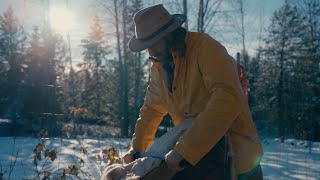
In this interview, host Victor Justin Rhodes talks with primitive‑skills practitioner Shaun Deller about a wide range of ancestral techniques and modern applications. Shaun explains bark (vegetable) tanning using tannic acids from hemlock, Douglas fir, tamarack, and even tea or coffee, describing the lye‑pre‑scraping step, common pitfalls, and historical context such as the long‑running Muir & McDonald tannery in Oregon. He expands the discussion to other animal‑derived bags, including pericardium sacs from buffalo and deer, and shows bark‑tanned sheepskin and salmon‑skin bags. Shaun demonstrates birch‑bark knife sheaths, a hand‑pecked river‑rock mortar and pestle, and an obsidian flint‑knapped knife with sinew and pine‑pitch glue, plus a buffalo‑horn spoon, primitive pottery, and a tule‑reed sheath. He describes his involvement in experimental archaeology—recreating Stone‑Age gear, fur‑trade era treks, and living‑history gatherings—while teaching these skills at the Kaniksu Folk School in Sandpoint, Idaho, under the Kaniksu Land Trust. Shaun shares resources for finding similar gatherings (hollowtop.com, Tom Elpel’s directory), his upcoming website (shaundeller.com), and Facebook presence. The conversation closes with a cultural note on making haggis, his mixed German‑Ukrainian‑Scotch‑Irish heritage, and the supportive local community that processes roadkill and shares meals. Throughout, Shaun emphasizes hands‑on learning, preservation of forgotten knowledge, and community‑based skill sharing.
Chapters
I saw your show Discovering Home and I was blown away. I thought it was, I thought it was really neat. This was kind of my first toe dip into primitive, uh, primitive skills. Is that what you would say what you do?
Yeah.
Have you done that your entire life?
No, it was something I got into in my early 20s.
And why did you get into that?
Well, um, do you want kind of the long story of it, or—
Go for it, we got 2 hours. Well, we got 45 minutes.
I, uh, as, as you know from the video, I grew up in Pennsylvania. I moved out to Oregon, into Portland specifically, back in like, I think this was 2003. And, um, but when I moved out there, I was really into backpacking And I had read this book by a guy named Ray Jardine, and it's all about, um, it's called Beyond Backpacking. It's all about ultralight backpacking and how to like sew your own backpacking gear. And instead of carrying like 50, 60 pounds in a big, you know, backpack, you're carrying only 10 to 20 pounds and hiking in a pair of running shoes or sandals, you know. And doing long-distance trips like the PCT or the Appalachian Trail, you know. And that's what this guy's book was all about, and I was really inspired by it. I had a sewing machine that I had brought out west with me and started like making some of my own gear. And around that same time, I met some friends who were really into animal tracking, and they had done some classes to through a guy back in Jersey named Tom Brown, Tom Brown Jr. He wrote a book called The Tracker back in like the late '70s, and it's all about kind of ancient wisdom of nature connection, and it's sort of a, it's a tale that nobody really knows whether it's truthful or just his, you know, a kind of a fantasy that he wrote. Some people think it's made up, but whatever the case, it's a really inspiring book that when in my early 20s, it was like, yes, this is exactly what I want to do to be like feeling more connected to the natural world and not feel like a just an observer in it, but a participant in my environment. And so that just kind of fed into this idea of ultralight backpacking that I was into. I was like, well, I can make my own gear and I can like, you know, carry really light stuff and travel a long distance. What if I actually knew how to like go out there with hardly anything, maybe, maybe actually nothing? Could I go out and travel some distance and spend some time in the wilderness without having a backpack with all the things in it? And yeah, so that was kind of the progression of it and there were certain elements of those traditional living skills, primitive skills if you want to call it that. There's all different kind of terminology for this. Some people might call it ancestral skills, um, because what people sometimes get hung up on is the idea of primitive skills. They hear that and they think that's a derogatory term because it sounds like if you're referring, let's say, to Native Americans in our— in North America here, and you're saying They do— they used to do primitive skills. That was how they lived. It's like, oh wait, you're calling them primitive. That sounds derogatory, you know. But the root of that is primary. You know, those are like the primary skills of human existence that before there was industrialization and agriculture and all of these things that came about, there were primary skills common to people all over the world. And certain cultures, you know, had those kind of primary skills that they used for living up until a very, you know, pretty recent times. And some of them lost those skills over 1,000 years ago. So, so yeah, that's— there's some, you know, debate as to how you should refer to those skills.
Well, I guess there's debate on, like, when I, when, when I think of primitive skills, well, how far back do you go, uh, primitive or primary? I mean, do you go way back before there were knives and steel? I mean, obviously you don't. I mean, in, in the video, but you, you are killing minimally. And I mean, when you're just killing with a knife a sheep, uh, well then I guess I'm, I'm, I'm into primitive skills too.
Yeah, and so that there's, there's, uh, gatherings that happen around the country in different places, these primitive skills gatherings, and at them people teach a whole slew of different things. And it could range from the very kind of really early skills of stone tools, you know, flint knapping obsidian and basalt and flint and making knives and you know, sharp edge tools, spears and whatnot. But it can also kind of come up through the ages of being like, oh, well, using a scythe to mow hay.
Yeah.
And, you know, that's still a pretty— that's a skill that, that goes back to the time of the Stone Age, but it's come forward with modern metal blades on it and everything. But essentially, it's a very similar tool. So you might find people at these events teaching things that are those really early primary skills and also some of the ones that might be considered more like kind of homesteader skills.
Yeah, your story, it seems like you got into this primitive skill, uh, stuff and then got into homesteading. Would you say it's that it went that way?
Yeah, it did, basically because I was living in the city at the time Yeah, I was in Portland, you know, in the early 2000s. Portland was still like a pretty inexpensive, like, easy city to live in and live cheaply. And I got into— I had a little garden, you know, in the backyard, a few little raised beds. But by 2009, we had this opportunity, my wife and I, to move out onto 150 acres about 50 miles outside of Portland that a friend owned and set up our yurt there. So that was kind of the time period when I was able to take some of that stuff I was learning, you know, and actually like put it into, put it, you know, experience it out on a bigger landscape. And it's what made me start thinking about, oh well, I have this chance to live on a big piece of property now. I can actually play around with some of this stuff instead of, you know, being in the city and like, yeah, you know, processing a road-killed squirrel and learning how to tan its hide. Now I can be like, oh, what if I raised rabbits, you know? And, um, you know, now I have a whole lot of hides and meat and things to, you know, um, make food with and tan the skins of.
I'm going to pause right there before my next question. I think some people might not be muted. Dan Oman, you told me I can mute everybody. How do I do that?
Good question. It should be—
everyone, make sure you're muted since I don't know how to unmute you. I keep hearing clicking. I don't think that's Sean, is it, Dan? Do you hear that clicking?
I don't hear clicking.
No, probably somebody moving around on the desk or something like that.
It looks like everyone's muted though. I'm looking at the list. Everyone except for you and me.
Okay. All right, well, it's my fault then. Okay. All right, so, well, I like one thing that happened in the movie, and I, and I think I brought it up here, where you— if you go— if you went to these primitive skills meetings, you're gonna have these people on all levels. You're gonna have the, the people who are— who, who can skin and process an animal with stone tools. And then there's others who, who are on that journey and maybe not that deep into it, and they're using a knife. And then you have others on a different level.
In—
I love in the show where you said you would, if it were up to you, you would just have— you just live on a dirt floor hut. Is that right?
Or cabin, right?
Good for you. Good for you for embodying and, and accepting where, where she is on this journey, if it is any, if it even is the same journey. Is it the same? Is she on this? Is she on that same journey? Is she on like, I want to get as primitive as possible, or where's she at with all this? Kirsten, is that right?
Yeah, Kirsten, my wife Kirsten. She's, um, she's really, you know, supportive of all the stuff I'm interested in. But she has her own kind of crafts that she likes to explore, whereas I might like to tan a deer hide and sweat over scraping this deer hide, you know, which she's done. And she's been like, this is exhausting, why do you like doing this? She likes spinning and knitting and felting wool. A lot of the fiber arts have appealed to her. And Yeah, so she's really supportive of it. Her, you know, she's come into it through the fiber arts, I guess, and that's a big part of these gatherings as well and learning these traditional living skills, primitive skills, is fiber arts because fibers were from the beginning of time a huge thing, knowing how to make string or knowing how to weave something, whether it's cedar bark or wool.
Yeah. When she asked you, why do you like doing this, what did you say?
Um, like initially, like when we first met?
Well, no, when she said— when, when she's over in that deer, deer skin. I mean, we'll get to initially too, but in that moment, what did you say?
Um, I guess I just like the— I think I probably told her that I just like the kind of raw work of taking something that— a deer hide is typically thrown away by most hunters, or they try to be like resourceful and they'll throw it in their freezer and be like, yeah, one of these days I'll get it out and tan it, and it sits there for 10 years and then they remember and throw it out, you know. So I like being able to take that thing that's like one man's trash and turn it in, you know, spin that, you know, straw into gold by making this thing that's often just discarded in the woods and turn it into this beautiful buckskin that can be made into moccasins or a coat, you know, or a bag. There's just something in that alchemy of that process is really— has always appealed to me. And even though it's hard, it's hard work no matter how you tannin hide, if you're going to do it traditionally without pretty toxic chemicals, it requires some elbow grease. And I like that part of it. I like the way that I can, you know, sweat and I work out on it. It's kind of like my gym at home, you know, of getting some exercise.
Yeah, you mentioned that it was a deer. So did you go and hunt that deer?
Well, I I do hunt. I'm not a great hunter, I'll tell you that. Like, I, I'm more of a scavenger, and I've been learning more about hunting as the years have gone on. I didn't grow up hunting. So yeah, a lot of the hides I get— because in Idaho, you know, you can get one deer tag and then you can get other through whether you're paying more money or you're entering different drawings and such, you can get additional deer tags. But usually you're going to get like a single deer. So if I want to actually tan enough hides to sell some or make something from, it makes more sense for me to go out and scavenge what other people have left behind.
What does that mean, scavenge? How do you arrange that? Are you talking about roadkill? Are you talking about hunters? Yeah. So, and how do you make that happen?
Yeah, so both are possibilities. There's some state land back behind where I live. I go up there during the hunting season maybe like once a week or every two weeks. I'll go up and there's just along the dirt road, there's a few turnouts where people who, you know, who hunt and live in town and they don't have a place to dispose of the carcass and the hide and everything. They'll pull over and just dump all their stuff out there.
Okay.
And so sometimes I'll find, you know, within a season like 10 to a dozen deer hides, and I've even found like a bear skin and a moose skin before. Nice.
Somebody's asking, while we're talking about skins, what do you like to make with rabbit skins?
Rabbit skins are nice for making kind of small crafts from, you know, if you want to line a hat with rabbit fur, or one of the projects I'm planning on doing one of these days soon, because I have a freezer with maybe like 70 rabbit skins in it right now, is there's a traditional style of blanket that was made by a lot of indigenous people along the California coast And they call it, you know, it's a rabbit skin blanket, but it's not like we would think of where it's a tanned pelt sewn end to end together. Instead, they would take the pelt and while it was fresh off the animal, they would cut it like a spiral from nose to tail. If you imagine this sock shape that's just been pulled off the rabbit and then taking from its nose to its tail and cutting a spiral, so you end up with a long, like, probably 25 feet of rabbit fur yarn that's— maybe the skin on the back of it is about a half to three-quarters of an inch. And when that's pulled taut, then it can be twisted so that when you turn it, all the fur bristles out. So it looks like just a fur string. They would take this then and make a pretty basic loom, and then using some kind of plant fibers I think that would be the weft. That would be called— they weave in between the warp of all these rabbit fibers that are in these long strings. So you get this blanket that just has fur on both sides. They're beautifully light and soft, and you get all these kind of multi-colored, you know, if you have various colored skins in it. Yeah, I know that's not rabbit, but just Yeah, Dan mentioned here I have a, you know, another option for, you know, like small, you know, thing that can be made from a fur. This is a muskrat actually, and it's made into a bag here where— Wow. A lot of times the way that we skin nowadays is to take the pelt off of the animal from the the hind end here and pulling it— well, this is upside down— pulling it down toward the head and pulling it off like a sock. But there was a method that some tribes in the United States made tobacco pouches or pouches that you would carry your fire lighting gear in it. And the pouch is skinned, the animal is skinned from a cut that's made from the neck here down to about just a little bit below the front legs. And then the carcass would be pulled out through there. So the whole bottom is intact and you end up with a bag when it softens. So that's what that is.
That's cool. So what is your take then on the, um, on the, the taking of the life with the animal, uh, and your approach there?
Yeah, I guess so. So personally, when I'm harvesting an animal, if it's some rabbit that I have raised, or if I go out and trap a muskrat, I'm always giving some kind of thanks for that animal or leaving something behind as to honor it. Yeah, so that's my own personal, like, you know, what, how I feel good about doing that and taking that life. And then trying to make use, just like I showed, you know, in the video with me processing that sheep, is trying to make use of all parts of it instead of wasting a lot of that animal. I feel like that's where it's disrespectful.
Yeah.
A lot of, a lot of, uh, trappers, you know, trappers who, you know, trap to make a profit by selling the furs these days, um, if they're doing it for profit like that, there's some of them, some of them are very resourceful and use as much of the animals they can, and some of them just kind of, you know, throw the carcass out, just get the fur and dry it and try to sell it and make a buck. And, uh, I, you know, I trap maybe a few animals each year, and if I do, I make as much as I can out of it. I eat the meat from the animal. Um, so, so yeah, that's, that's my take on it.
You mentioned that the muskrat skin was soft and who's, who is softening different, how is softening different from tanning?
Yeah, well I should say it is, it's tanned. It's tanned in that it's been an oil, an emulsified oil has been put on the skin to soften it and we often today call that brain tanning, because traditionally a lot of tribes around North America use the brains of an animal to tan with, because the brains contain emulsified oils, meaning that they'll absorb into water, unlike, say, like lard that would just sit on the surface of a pot of water. The oils in the brains emulsify and get into the water, and you can then either, you know, soak the hide in that if it's a deer skin, or with a muskrat skin like this, I might take a washcloth and soak it in that oil and water mixture, put it inside, and let the skin absorb all that moisture and oil. And then as it's drying, I'm pulling and working the hide, pumicing it with some pumice stone to kind of buff it and soften it up. And what I'm doing through that process is I'm letting the water evaporate out of the skin and leave the oils behind in the skin. And through that softening of it, it's part of the tanning process.
Yeah, so what would they— you might have touched on it a little bit with the brain. So the indigenous person with a buffalo or a deer or whatever, how are they going to do that? How are they going to tan and get themselves so a buffalo coat.
Yeah, so with buffalo on the plains, what was done is they would use the brains of the buffalo, and in some situations they— everybody had different recipes, you know, and this was often the women's kind of specialty. They were the ones who passed this down through generations of like, maybe they tested out this other little thing of putting in some rendered fat from the buffalo, or they added— liver was sometimes added. I can't really say exactly what the chemistry was there that was happening, but the brains were the biggest, you know, the thing that was going to be the most useful for making that hide soft. But in the case of a buffalo hide, they're very thick. And buffalo, a lot of people think of them as being a hide that is super tough, and it is because it's thick, but when you look at it up close, it has a very loose fiber structure. And so when you see a tanned buffalo rug, whether it's commercial tanned or, you know, primitively brain tanned, look at the back side of it and you'll see the fibers are just really loose. In some places you can even kind of see light through it if you hold it up. And when they were tanning buffalo to make it a soft robe or blanket, they would scrape the skin side of that buffalo really thoroughly, thinning the whole— if you imagine on a buffalo hide or any animal really, the thickest parts are gonna be the neck and going down the middle of the spine and then the rump on each side. So if you can thin those areas out to be as thin as the belly, so that whole hide is like an even thickness all over. Like, and maybe you thin it down to the consistency of like a medium thickness deer skin. That way you could get those, those emulsified oils from the brains to really get into all the hide fibers much more easily. And you're also not fighting this really thick skin and trying to break it soft in the end. And that's how— that was the key to softening a buffalo hide. My first attempt at doing one, I didn't really do that well enough, and no matter how much I tried to brain it and work it soft, you know, had it stretched out in a big frame and tried to soften it with a big kind of canoe paddle, it would still come out hard on all the center portions until I started reading more about it and realized, oh, you really have to put some work into thinning this whole surface down. Wow.
And so you tried a buffalo hide and it was too stiff? You had to just use it as a rug or something?
I ended up with that one, I ended up cutting it up into sections and made things out of different pieces of it. Some of it became a pair of winter moccasins, some of it became kind of a, um, just a sleeping pad that's about the size of like a big sheepskin that I can lay on. But I later got another buffalo hide from a friend and, uh, properly tanned it and it came out quite soft and you can, you know, you can roll it up and use it like a sleeping bag now.
And this time, and this time you scraped it better and—
Yeah, yeah.
Rubbed the brains on there better. Where'd you get the brains? You get it from that kill?
No, um, I got those from a neighbor's cows. He raises a few cows every year and he'll come over and say, hey, you want the hides? And most years I say, I don't have time to work with cow hides, but can I have the brains? And sure, you know, I'm going to throw them out in the woods if you don't take them. So I, I went up there and got 4 cow brains from him, and that's what I used to soften that with. And so the, the brains— there's kind of an old adage that any animal has enough brains to tan its own hide, which is kind of true. Like a deer, you could use the brains of one deer and tan a deer skin with it, provided it's not like a really exceptionally tough mule, like like big buck mule deer. But a buffalo, you need like 4 or 5 brains to really adequately cover that whole thing with that solution and get it absorbed in there and soften it up.
Did you use salt in that process of the buffalo?
No, no. The hide was just given to me raw still. It was, you know, pretty freshly skinned, and so then I had to do the whole process. Okay.
And yeah, because we will have to salt ours before we send it, but I guess that's so it just doesn't rot.
Yeah, exactly. That's just a way of preserving it, you know. And if— and for most people, salting a hide is a convenient way to not have to store it in their freezer and take up freezer space. If you have freezer space, freezing is kind of nicer because now you don't have all the salt to clean off of it when you want to work on the hide.
Yeah, I wonder how the indigenous people figure that out. How did they just— oh, we want to keep this hide. Yeah, sure, I can see them knowing, well, let's scrape all this stuff off, but then to rub various things on it, that, that's what's impressive.
Yeah, I suspect, um, I, I've heard people ask that question a lot, and I suspect that, you know, with certain animals like a raccoon, for example, I've taken their hides and they're very greasy. They have a lot of oil on them. And I've taken a raccoon skin, simply fleshed it and got all the residual fat and meat off of there and then just started stretching it as just a raw green hide. And it'll come out soft. It'll— that's called breaking the hide. You're basically doing the same thing as if you brained it. You're just working that thing until the moisture in it is evaporating. And the oil that's present in the skin kind of lubricates those fibers and keeps it from turning into rawhide.
Did you know how to do that going into it, or was it pretty intuitive and you were just going with your—
I had heard that somebody, a friend, had told me they had done that before with the raccoon skin, and so I just said, what's, you know, what do I have to lose? You know, it's just a small hide. Now, if that was a bison hide and somebody was like, hey, I've stuffed into bison hide by not putting anything on it, I would have been like, yeah, this, I mean, this could be like, you know, 20 hours of work that is for nothing. Something I should say too is that all around the world, different cultures have tanned hides, you know, in a lot of different ways, but oils weren't always brains. Brains were used by a lot of Indigenous people in North America, but also I know that down in the Mojave they would sometimes use the jojoba oil from the jojoba plant that grows there. On the coast they would use fish oil, kind of like whatever kind of oil you could— that was easy to obtain and you know, people test it out, and if it worked, they, they used it.
You think they might have figured it out because they would have tried to make use of this raccoon hide or something similar and it was oily and it worked out, that they're like, oh, okay, we need, we need some oil on this. The brain's oily. Oh, the liver looks kind of oily, you know.
Yeah. A scenario, if you wanted to have like a scenario of how like the first hide became softened and tanned, it might have been something like this. They took a deer skin, let's say, and deer skin was being used to— it was dried out into rawhide to make a parfletch. Parfletch was sort of their rawhide envelope. Sometimes they were cylinder containers just to hold food, clothing, things like that. So let's say you had a rawhide container and you're traveling with your family from camp to camp. And maybe in that container you have a bunch of fat and dried meat because that pemmican, basically, right? So you had pemmican as a stored form of food and it was in that rawhide container. And that container is getting abuse, being like banged around and opened and closed day in and day out. And it starts to work some of those oils into it. Maybe it gets rained on and, you know, during that time that it's drying out, it's being moved around and they start— people start noticing, well, this hide's getting kind of flexible and, you know, soft now. Another option could be, let's say you made a pair of quick moccasins because you were traveling over rough ground and you just took the raw skin of an animal and crudely sewed them together and you're wearing these things and they're kind of greasy and you're walking in them. And as you're walking, the moisture inside is evaporating and drying out. And the action of your foot moving in there is keeping those fibers moving, agitated, and not allowing them to kind of turn back into that hard rawhide. And perhaps at the end of the day, they're semi kind of soft. And you sit down by the fire and the fire's really smoky and you hang them over the fire to dry out and the smoke from the fire gets into that skin. And then people realized smoking of the hide actually made it so it would soften again more easily. So that's a step I haven't mentioned, but after the hides would be gone through this softening process using an oil, they would often be smoked. Not always, but often. Like your everyday kind of clothing, your moccasins and leggings and shirt, things like that. They would be smoked in either hanging up in the smoke hole of a teepee or sometimes just actually made into taking a hide and putting it over a punky wood fire so just this smoke is constantly getting into the skin. And people realized that that smoke, there's natural formaldehydes in it that would preserve the skin and make it so that you could get it wet and dry and wet and dry and it wouldn't crisp back up into rawhide.
Ah, oh, a lot of this is— it's sounding like they had this— they would have this intuition. Like, I can see in my own head, you harvest an animal, oh, maybe I could use this skin, this hide, to cover my feet. And then they walk in it, and then they discover, oh, we could make this softer, uh, and then putting over the fire. So there's some intuition, and then there's some, um, just circumstances.
Yeah, maybe accidents that happen, um, you know. And this is all my kind of modern white man perspective of it, you know, because you could talk to some people who might say No, it wasn't just like experiment, you know, like the same way we talk about, well, how did people figure out if a plant was poisonous? Oh, they just ate it and those who died, they— A lot of people could tell you what might have actually been going on there was people had a more spiritual connection to the plants, the animals, and there were visions and, you know, direct messages that came to them. And in our scientific world today, we think that's a bunch of woo-woo stuff, but I'm not going to say that's not true. I believe that there are people who have a pretty strong connection to their natural environment.
Yeah, well, um, chickens— if you throw— I feel like you can throw anything to a chicken as long as that's not all they get. You could throw anything in there. And if it's poisonous to them, even in their bird brains, they know not to eat that.
Yeah.
And I think I was asking Joel Salatin about this sometime with a pig or something. Uh, it could apply to the chicken. So why do the chickens— how do the chickens know, but we humans are eating crap all the time that's going to kill us, right? It's terrible for us. He said they don't have TV. So what he was saying was they're, they're really connected with themselves and attuned to themselves and have very little distraction. So perhaps that's it. And Swiss Family Robinson, if you ever read that— and I know that's a fictional story— they didn't know if they could eat it or not. They would throw it to the monkeys and the chickens.
Yep.
And they would know. Somehow these, these primitive animals would know. And they, they would know when the human who could build a ship Didn't know.
Yeah, I was reading that book last year sometime with my boys and I told them as a kind of disclaimer to that, I said that's not always a good rule of thumb because there's things that animals can eat, you know. For example, I have friends who have done some goat packing and their goats will chow down on poison oak. Yeah, it doesn't mean you can just chow down on poison oak, you know.
You don't want to copy a ruminant. Nope.
Yeah, yeah. Or birds, you know, certain birds that'll feed on berries that are kind of toxic to humans.
Yeah. People have chimed in, uh, a couple people are really appreciating that. They think this is cool and they're enjoying the show. Uh, somebody said, oh, that was a favorite book of mine, Swiss Family Robinson. It's a lovely adventure story. I wonder if Sean How, how do you think an average modern person would do if just suddenly the internet was gone? The, uh, the— there's no oil, just sudden, and people are immersed and they're having to find their food and resources this way. How well do you think we would do? How much do you think is instinct and how much do you think is, is, is passed on and, and really having to learn it?
I think people would struggle pretty mightily if that happened. I think, you know, and that's kind of like in the, you know, the prepper kind of world, that's like, oh yeah, that's, that's what's going to happen and we need to all be prepared like that because it— yeah, it would— it wouldn't turn out pretty. I think that a lot of people don't have that knowledge, and it wouldn't just come to you if you were thrown into that situation. It takes, it takes some beginning, you know, place to start from, you know. For example, if I'm starting to learn about— when I was, when I was first starting to learn about like how to sleep out in the wilderness in a shelter I built from for myself without sleeping bag or any kind of— just in my clothing. I didn't go out 50 miles from home and just go into the woods and do that and hope that I stayed warm enough. I would do it and bring a sleeping bag with me, and I'd test out the shelter. And if I got up in the middle of the night saying, oh my gosh, I'm freezing, you know, like, I wouldn't get hypothermic and die because I have a backup plan to, to test out my theories and practice it before I'm really thrown into a real situation where I have to use that skill.
Do you think you do this more for, uh, prepping and, and being prepared for something like that, or do you actually enjoy this process, or are you connecting with the— with your ancestors?
It was different when I started learning all this stuff initially. It was because I wanted to just have a more, more of a connection with my environment, with just feeling like I belonged in the landscape and wasn't separate from it. And I think as time went on, I started to, I guess I started to feel like I not, not only the benefit that I'm getting from this is I'm getting like a sense of connection, but it's also empowering because it starts to give me a sense that like, oh, you know what, I'd be okay if that happened. And I try not to bring in the whole like fear kind of mindset to it that I'm doing, you know, we need to do this or I'm doing this because we might run out of oil or because a nuclear war might happen. Whatever, whatever big disaster. Um, yeah, I think that, I think that for me that kind of takes the enjoyment out of it and puts me into a space of fear, and doing things out of anxiety and fear doesn't really bring me as much satisfaction as it does to do something just because, um, because it's more meditative or because it makes me have a— yeah, of a mindset of like, wow, this is what people must have had to deal with, say, 1,000 years ago or 10,000 years ago.
Did you— did it work? Did it work that you were able to connect with the land?
Yeah, I think so. I think that it, um That definitely happened. And initially, I think I was, I was learning some of this stuff in a very academic kind of way. Like, I'd go to a sit spot every— tried to do it every day. This is in my early 20s. And go and sit in one place for whether it's a half hour or 2 hours and just— and preferably in kind of a natural space, not just in like a city park, but if that's all you have, it's a possible place to also observe nature and just watch things like a meditative experience where you're sitting there, turn your mind off, you're letting your senses take over and amazing things would happen. Initially, you might sit down in a spot like that and be like, your mind's racing and you're thinking about, oh yeah, I got to pay that bill. I got this. Thing I have to do with a friend tomorrow and all these thoughts. But then your mind kind of will— the more that you practice that, your mind can sort of shut off and you can start paying attention to what's around you. And as I was doing this and stuck with it, all of these sort of amazing experiences happened where I saw an otter come up out of this pond and start bouncing on a dock, you know, and playing and jumping back in the water. Or was sitting, sitting there and saw a raccoon that came walking right up within like 5 feet of me because it didn't know I was there because I was so silent, just kind of in my zone, that this animal couldn't feel my presence. And, uh, it takes some time to get to that place, but it was— it's worth doing it. And I Although I don't do that now, I probably would benefit if I had the time to sit down and do that more. But by doing that for a few years in my early 20s, it really like just jump-started my kind of connection to the natural world. And I would go out there and if I saw a bird that I didn't recognize, as soon as I get back home, I get out the bird field guide and I'd page through and it's, oh, well, that's what that was, you know, that was a That was a dark-eyed junco, or that was a, you know, chestnut-backed chickadee or something. And that would be then kind of cataloged in my brain and I'd remember that. And so I often surprise myself now where just those initial years of taking that time to do that when I had more freedom to do that and I didn't really have as much constraints of jobs and kids and everything else. Now that's been patterned in my brain and I'll go out for a walk sometimes with my wife and she's like, what's that bird call? What was that? And I'm like, oh, you know, that was a flicker, you know, or that was a towhee over there in the trees. And she's like, how do you know that? Well, I just, I remember it from 15 years ago, you know, or so, so yeah, that, That's kind of like, you don't have to do that practice through your whole life. If you did, think about the amount of knowledge we would have. But that really built on my connection to the environment, I guess.
How did you know when you had connected with the land? Was there a moment or was it a slow boil?
Yeah, I'd say it's more, it was more of like a slow boil, I think, where I started to like kind of forget what I was even doing. It just became so patterned and just kind of normal. And I think what would take me out of that more, what would make me, maybe I should say, what would make me realize how much I had learned was when I would go and hang out with people who were very urban, you know, or people who like really spent no time in the wilderness. And I'd be surprised by the amount that they didn't know and I'm like, "It doesn't everybody know this?" You know? Yeah, so I think it's, it just kind of, it never was like a perfect point where I realized like now I'm connected to my environment.
Yeah, if you went in the woods with a typical person, what are some things that you would maybe notice that Typical people might not. What are we missing?
Yeah. I'm— when I go into the woods, I'm usually looking at tracks on the ground.
Okay.
Or evidence on trees. You know, things like a buck rub where a buck has rubbed his antlers on a small sapling and scratched the bark off of it. Things— Things on the ground, but then also sounds. So I might be paying attention to bird alarms that are happening. And those bird alarms can be telling me things that are happening far off in the distance. Like because we're walking through here, we might've just scared some coyotes that were hanging out over here under this hedge. And now they're being pushed this way. And those birds are alarming, you know, way off in the distance there because those coyotes just passed through their area. Yeah, that's the kind of stuff that you're just— your ears are hearing, your eyes are picking up on, but I think that most people are instead walking through and they're just thinking about like, oh, that's a pretty view out there over that hillside, you know. And that's how I used to be. When I would go into a forest, it just all looked like green stuff to me. It just looked like trees and a bunch of green plants. You know, even up until my early 20s, I didn't know hardly anything about plants. I remember my first friend, one of my first friends out west was like, we were on a bike tour and he says, oh, those are huckleberries. You know, we were bike touring in July in the Cascades and I was like, that's, I've heard about huckleberries, I've never eaten one because I grew up back east and just So from then on, I'm like, wow, yeah, there's huckleberries everywhere. I never even knew.
Have you read the book The Lost Art of Reading Nature's Signs?
I don't know that one, no.
And you would really like that. Uh, it's called The Lost Art of Reading Nature's Signs. And one thing that he said in the very beginning of the, of the book is, um there are 3 types of people he finds that can really observe, observe the landscape in a deeper way, and that ends up being soldiers, indigenous people, and artists. So he encouraged you, no matter what your art level is, to go out into nature and sit down and draw the landscape, and that forces you to see things that maybe you wouldn't have seen before.
Yeah, that's very true. I've noticed too that some of the people that I think in our modern society we don't respect as much, or some of the old-time, as far as their knowledge of the natural world, is some of the old-school hunters and trappers. Because we kind of think of them as being just, you know, taking and taking from the environment. And some of them maybe, I don't know, you know, it's all depends on the situation. But I've been surprised at times where I've hung out with some old-school hunters and I'm like, they know all of this sort of like traditional wisdom that I've read about in these more like, you know, these more new age kind of nature connection books. They know about it, but they know about it from a different angle. They know about it because they're going out in search of, you know, deer or elk, or they're going out and trying to find out what the habits of a bobcat are if they want to trap it. And a person who wants to, who has that goal, is, if they want to do it successfully, is going to pick up on a lot of wisdom and knowledge of the natural world, you know, within that. I think it's just how they how those particular people then choose to, you know, share that knowledge, or are they using it to, you know, to— are they still like trying to be respectful for the natural world and not just taking?
Yeah, they're doing it for a different reason. Okay, and then, um, well How do you turn your mind off if you're up there and you're thinking, oh, I got this bill, oh, this guy said this to me, I'm upset? Uh, how do you— how do you— are you allowing yourself to daydream, or are you really trying to focus on what your eyes can see and ears can hear?
You would really try to just focus. And well, I shouldn't even say focus because The ideal, if you're going out to what would be called a sit spot and trying to observe, you're letting your ears pick up on all the sounds around you. And instead of staring straight ahead at, let's say, a pond in front of you, you're gonna let your eyes go out into what we call wide-angle vision or owl vision, where you're just sort of letting your eyes see everything out here to the periphery, you know, where you can put your fingers out wherever you can see your fingers in the periphery, you're trying to take all that in and just let your eyes not be focused on one particular thing, but just pick up on any kind of movement. And through doing that, that practice helps you to quiet your mind and just observe and take in the information and Yeah, that openness of your senses is where you start to pick up on things that are— you might not see if you were over here focused on staring at this tree, you know. Instead, your eye might pick up on this slight bit of movement off in the distance here, and when you look over a little more closely, you realize that that's a weasel, you know, coming up over some tree roots looking at you.
Yeah, but the, um, what's the big takeaway? What's the big benefit of that? And do you think, uh, this is very ancient? Do you think this is indigenous?
Yeah, I'd say the, the big benefit of that is just being, um just having awareness in your world, whether it's knowing things out in the forest and being able to feel like you're at home in the forest, or if it's on your own landscape, like at home on our little 5-acre homestead, I'll use some of that same kind of awareness if I'm out just feeding the animals in the morning and I'm walking out to the barn. I'm listening to the sounds around me and I'm hearing things happening and I might notice a plant on the ground that I'm like, oh look, you know, the nettle's coming up. It's already, you know, it's coming up, seems like it's coming up earlier this year than it did last year. Or, you know, there's more water over here standing in this place after this rainstorm. And that kind of nature observation is really important also from you know, that more permaculture aspect of things, of knowing the landscape and then knowing how to work within that landscape. Yeah, so I think those two worlds can really blend together in a beautiful way. And I should say that one of the people that I was really inspired by back in my 20s and 30s, and, um, you know, had attended some of his talks, is a guy named John Young. And he was a protégé of this Tom Brown Jr. fellow that wrote the book The Tracker back in the Pine Barrens in New Jersey. And John Young came west, I think maybe in, I don't know exactly, maybe the late '90s, early 2000s, and started a school in Duvall, Washington called the Wilderness Awareness School. And through that Wilderness Awareness School, he really spread this idea of nature connection and came out with a a program called the Kamana Program, which if you go to their website, you can still see they sell like these series of books that are like sort of a beginner level working up through to an expert level of nature awareness, you know, where it's— the book is kind of prompting you with these questions of what your local flora and fauna is and getting how we— how to learn that stuff and be more familiar with it.
And that's, that's John Young?
Yeah, John Young, J-O-N. His name's—
okay, and he does the nature awareness books?
Yeah, and as far as I know, he's down in like Half Moon Bay area somewhere now in California. But at some point when he moved down to that area, he got involved with more of a permaculture design scene that was happening down there. And started to really blend some of this stuff with the world of permaculture. And that's how I attended some of his talks that were in Portland at the time. Some of these, there'd be these joint kind of gatherings where he would come and speak to, instead of it being all like the naturalist kind of animal tracking crowd, it was more of like the permaculture design crowd. And letting those two worlds kind of come together, and the knowledge that was brought from both sides of it really meshed well together.
Okay, I'm trying to see if I can't share that screen. I don't know if you'll be able to see it, uh, but the people will be. Let me see if that worked. Let's see if we can't pull that up. Oh yeah, it's working now. I don't know if you'll be able to see it or not. You able to see that?
I can see it.
Okay, so it's John Young, Nature Awareness. I hear the dog out there barking. He's sure— the guard dog's sure aware of things.
Uh, where we got—
yeah, so it looks like Wellness Awareness School.
Yeah, that comes up first.
I'll encourage people to go and check that out. So that's, that's the right resource right there then.
Yep.
Okay, cool.
Yeah, so there's a lot of these schools that have sprung up around the country in the past, you know, 30 years or so. Maybe 20 years that have been inspired by some of the stuff that he's, he's put out there.
Look at that. Tracking, edible plants, coyote mentoring. That's cool. Journaling Gone Wild, making fire. Huh. You know, when you talk, when you, when you talk like this And you said, when you said, you know, you'll look for track marks, you'll look for something scratched on the tree. Really what I'm thinking about is you're just, you're super localized at that point and you're really collecting your own news. You're becoming your own journalist. And maybe what's happening is, you know, we can do this and observe the entire world or any information we want. But perhaps we've forgotten to just be able to go outside and get the super, super localized news. That's one thing that one guy said in that book that I mentioned to you was, uh, you can have the weather report, but it's— they take the weather up at the, um at a certain height, at a certain area, and the weather can vary drastically from little spot to little spot and have these microclimates. Just today, moving the, uh, moving the sheep out, we moved them to an area on the farm. It was just right next to the mountain. The sun hadn't hit— the sun's coming up here, so the sun hadn't hit here yet. So much colder.
Yeah.
Um, and then a friend asking me just yesterday, what— which, which part of your pasture is the best? Well, I said, I said that one, and then there's the second best, and there's the third best, and then here's why.
Uh, so I think, yeah, starting to ask a lot of questions of, of what you're seeing. You know, I think people who are more into the small farming permaculture design kind of realm might see, um, You know, see the benefit in instead of seeing weeds in a pasture and saying, oh, we got to spray those to get rid of them, saying, well, why are those weeds there? They're there because they're telling us something, that soil needs something, you know, or they're here to help build the soil back up. That same kind of questioning and observation is really important to the person who's tracking animals and paying attention in the natural world like that, in the undeveloped kind of world, the wild, by asking similar questions. Why is that animal using this trail continuously? Why do I keep seeing the tracks of that animal? For example, I teach at this nature awareness program on Friday mornings for 4 hours to a group of about a dozen kids. And through the year, we were on this 30-acre property, and through the year, we, you know, seen it through all the changes of weather, through the fall and the winter and everything. I had some suspicions about this one creek we were following that goes through the property. And playing around there and I, in the fall it was kind of hard to tell if there were tracks of any animals on there. But I'm like, I really can't wait till the winter comes and we can see in the fresh snow. Fresh snow going out and tracking is just amazing because you see all of these things. It's like that you had no idea they were even present there. And I had my suspicion that like, I bet there's some critters like mink moving through here. This place probably doesn't support beaver anymore because they've kind of taken out any natural dams and it's homes built around there. They don't want flooding, but I saw evidence in this place where the kids like to play of these old sunken sort of tunnels that came off of the creek. They looked like something had tunneled there and it later collapsed in and now just made this trench that ran, you know, 50 yards off the creek. And I stood back and I looked at this creek and I said, I think what this was is at some point before all the habitation here, there were beavers here and they were probably damming this area up and this was more of a pond and less of a skinny little creek meandering through here. And these are tunnels from beavers and muskrat because the beavers in our area will not always just make a, you you know, a big lodge like you see of sticks out in the middle of a big pond. They'll burrow into banks too. And I think what this was, was beavers burrowing into some of these banks, probably, I don't know, maybe 30, 40 years ago. And now all we see is this trench, you know, where a tunnel used to be there. So that's kind of looking at the old history of this creek. And then when the snow came and that froze up this winter, We were out one morning and we're walking along and I saw these tracks on top of the frozen creek in this real fine snow. And the kids, you know, these kids are like 7 to 8 years old. So they're kind of, they're not looking at tracks that are this big. They're running all over the creek and playing slip and slide on it. And I'm like, wait, look, there's tracks there, stop. You know, like you're ruining the tracks. And I finally get them to slow down and I look at the tracks tracks. And I say, these are mink tracks, you know. I've— this is exactly— this is the pattern that mink make. This is the size of them. And I said, let's, let's follow them, you know. You guys got to stay behind me though, because you keep running over all the tracks and obliterating them. So eventually I got them to follow along long enough, and we could see this clear trail that just kept going for the longest distance. I mean, we probably followed it for several hundred yards until we came to the end of the property. And it was this mink that was using this frozen creek as a highway, basically, because it's sort of the path of least resistance where this creature can travel. And at some of the openings in the ice, it can dive under the water, go back in the banks and look for food. And we're following this thing and just kept seeing these tracks. They just kept going on and on. And then there was a place where a little weasel, you know, had crossed over over the mink's tracks. So those kind of natural mysteries that are out there, they're right under our nose, but those kids would have never picked up on that because they just, they don't have that in their thoughts at that age, you know, to just be like, hey, I wonder if there's mink around here. So having a person to point that out to them and make them start to see some of those things that are kind of hidden You know, most adults would walk through and not see that either.
Yeah.
Speaking of—
all right, so, uh, Ken says, I find it important to pay attention to tracks, scrapes, and your surroundings on a farmstead to be aware of predators. We have a lot of wooded areas that I will occasionally walk to look for signs. Yeah, you know, that made me think of another permaculture concept that I learned in permaculture is Um, you, you mentioned that you can look at the weeds and then you can discover what that land needs or what it's really trying to do. You can also look at if somebody says something like, well, what do I do about this boggy area or this shady area because this tree, uh, we automatically go to cutting down the tree or, or draining that boggy area. but you can also ask, it wouldn't hurt to first ask, well, what could I grow there that likes shade?
Yeah.
Or what could I grow there that, that likes, moisture or what is already growing there and what's related to that plant that I like that I could plant there or, or run there. So there's that thought too.
Yeah, exactly.
Another one, and to encourage people to be spending some time in nature, what's that Zen proverb? If you— everyone should spend 20 minutes a day in nature, and if they're too busy, they should spend an hour. I'm gonna see if I can't pull— let me look at my notes. So, um, was— oh, I should go back to really kind of towards the beginning here, when you were just getting into this from an urban situation, props to you for not— for, for not waiting till you get the 100 acres, but to just doing what you could. Actually, uh, you— and it was where you were at too, you know, you liked hiking and whatever, so you just tried to be more minimalist in your gear and then 'Oh, what if I don't take gear?' And so it's this process. Do you actually— do you have any moccasins? You aren't wearing any moccasins right now, are you? Or you didn't have any on you? I should ask if you have any more show and tell there.
I do. Yeah, I asked Dan about this yesterday. I said, 'Do you want me to bring some stuff?' Yeah, sure.
Yeah, let's go ahead and do the show and tell right now.
I got a pair of moccasins here that are pretty, uh, shabby looking now. As you can see, they got some holes in the Wow. That have been repaired because I've worn these quite a bit. These are a pucker toe style that would have been kind of common back east. A lot of, you know, on the eastern seaboard, a lot of tribes around there would have worn these, you know, 400 years ago.
Wow, talk about barefoot shoes.
Yeah, so those are brain tan deer skin that I've done there. They're also coated with a little bit of fat, probably some deer tallow that I've worked into them there just to keep them sort of supple. Because over time of wearing them in wet grass and then drying and getting wet over and over, they do get a little— they can get a little stiff on the bottom.
How are you going to repair those? Are you going to repair those or just make another pair?
Well, you can see that I sort of semi-repaired them. The heels are what wore out first. First.
Yeah.
One's got just some little holes. So what I did to do a temporary repair is you put a sole inside of some thicker deer skin and then just stitch it at a few spots, like at the heel and the toe and on each side. So it's got like a sole kind of liner in there. That can work. Another way is to sew a sole on the exterior of a few Yeah, so they're kind of a neat pattern because it's just made of one piece of skin that's folded and then sewn right up the middle. And when that seam is sewn, it's pulled so it kind of puckers the front seam there and makes that shape that makes the toe kind of come together.
Are those neutral or are those left and right?
Oh, that's— yeah, that's a good question. They can be neutral. Yeah, they can be either. And one of the ways that you keep your moccasins from wearing out too quickly is you switch them from feet every now and then. So you're not always, you know, the ball of your foot is not always on the same side. It's on a different side. That's something somebody— someone told me that at one point, and I was like, that's a good idea. But not all moccasins are made that way. Some types, like the Plains Indian side seam style are more left and right, you know, they don't have a neutral shape like that.
Do you ever wear those to town?
Not so much these days. I wear, um, yeah, I wear them around at home sometimes, and I definitely wear them when I go to camp. Like, even if I'm just car camping with the family, I might bring a pair just to throw on when I'm around camp.
Yeah.
And it just depends on the environment you're walking in, you know. I think that wearing moccasins is great when you're in the proper environment for it, but our world has changed so much in the forests and landscape than it was, you know, back before things were logged and changed so much where, you know, now you have old remnants of barbed wire and broken glass and you have like There's some places where I've lived where if you want to walk through the woods there, it's just like slash everywhere of all these stubs of branches sticking up from, you know, being logged 15, 20 years ago. But when you're in more of those older growth forests or a place that has kind of a more managed trail, it can be such an awesome experience to just have either be barefoot or in a pair of moccasins things like that and just feeling the earth with your feet. But there's definitely a time and a place for wearing some soled shoes when you're walking in some rough stuff or doing some heavy work, you know.
Yeah. I'm gonna— what I found— another thing I found fascinating about your show was you were doing primitive skills, sure, just for eating, uh, for hides, but then with Kirsten and her fiber art, so then clothing. So, so far this is really practical, uh, primary things, but then your woodland trees, and I imagine that's for decorations or for entertainment. What is that for?
Well, that was a class— that was some footage of a class I was doing back in the winter. Myself and a group of friends have started a folk craft school in our area here with the intention that there's a few folk craft schools around the country. One of the big ones being John C. Campbell Folk School. I believe that's somewhere in one of the Carolinas. Then you got the North House Folk School up in Grand Marais, Minnesota. And these schools teach folk crafts from different cultures. You know, the North House one teaches a lot of Scandinavian kind of craft, but it can be everything from shoemaking to basketry to how to bake bread. And that's what we're starting up here. It's about a year into the process here, and we've been doing some different classes. I've been teaching a lot more of the wood carving side of things. Some friends and my wife has been doing fiber arts. Eventually we want to bring in people from, you know, outside of the state who can come in and teach other skills and grow it to be a bigger program. But those folk craft skills, back to like the wood carving you were asking about, it's that That project I was doing in the video was a way to teach a small kind of simple craft that's more of like a decoration, but it's a way for people to learn the basics of wood carving. So although it's not like some super practical, you know, primitive tool you're making, you know, or like a fish spear, let's say, you could use the same technology and the carving technique we use there to make something like a tool, like a spear, or you could use that same— some of those carving techniques to apply to making traps and snares out in the woods. The basics of kind of knife handling can be taught through really simple kind of crafts like that.
Yeah. I'm going to read some of the questions folks had submitted earlier. You gotta love this one. What is the most productive skill to have if the world suddenly went to crap? A little similar, similar to the question I asked earlier, but most of it is good. Like, the product— what is the most productive skill if everything as we know it just went away?
Uh, growing food, I'd say. Um, I think raising, you know, growing food, whether it's raising animals or having a garden and knowing, or even like, you know, tending the wild, knowing how to make the plants that are out there grow more of them. Um, that's a really useful skill.
But that comes before fire?
What's that?
Would that come before fire?
Well, okay, so if we're talking more like I guess that's a hard thing.
It's like, I don't know if I would know how to make a fire without a—
but how long would it be if it— let's say you're living, you know, you're not out in the woods when this— when the world collapses, you're at your house. Yeah, yeah, probably have a lighter and some matches.
Yeah, I'm gonna get a fire going and I'm gonna keep it going, aren't I?
Yeah, so probably for the next month, few months, maybe even a year, maybe longer depending what you have, you could make fire fire without having, you know, knowing how to make it with a hand drill like this here, you know, where you're taking a fire, a hearth, a board like this and spinning a stick rapidly to get friction and make a fire.
Okay.
Now, if you were out in the forest and you were lost and you had nothing with you, fire's pretty darn important.
I see. You know, I'm thinking about on our farm where we've kind of arrived, we've got all the animals we want, you know, we've grown our own meat. Now what next? So I'm thinking, well, let's get some redundancy in our necessities. And, um, meaning, well, what's the most important thing? So probably water. So let's find the springs on the, on the land. I mean, before that it would be air, but let's assume the air is still clean and can still breathe, right? So So, uh, the next most important thing is water. I mean, you'd die in just a few days without water. So how about tapping into some springs, running into the house as an alternative to the well, the, the grid-powered well? Uh, and then, but then you, you can really get down this, this, this hole too, because I mean, my dad grew up across the street, no running water and electricity, and they would go bathe in the creek once a week. They would Um, they had a spring house for keeping the milk cool or whatever they would put in there. And, um, but then, I mean, you could look at the cultures, uh, there's a— there's cultures in Kenya who, um, the, the spoiled milk is, is, you know, they store their milk in a, in a— what am I thinking of— a gourd. And relish that, what we would call spoiled milk.
Yeah.
Okay. Um, you know, one guy I told, uh, I said once, you know, I can— Sean, how old are you?
42.
Okay, so I'm 43. So you can probably remember sending your first email or getting on amazon.com for the first time or getting on the internet, right? We were in our 20s. Yeah. Okay, well, my dad can remember getting running water and electricity in his house. I mean, he was older. And then my grandma can remember seeing the first car coming down the road. Yeah, it was horse and carriage. And then, uh, what's next? What was next, you know, in the future? So the iPhone, the smartphone, that was a big world changer. So then what's next? And I was having this discussion with somebody at my permaculture design certificate class in Australia, and he says, well, maybe we'll go back to the horses. I'm like, yeah, would that be so bad? I mean, would that be so bad? I mean, like what you said, yes, it would be. It would be very bad because there are so many people unprepared and it would just be absolutely destruction. But maybe in the end, would it be so bad?
Yeah, I like to, you know, so for example, I like to go out and scythe. I have a scythe, you know, traditional kind of like Austrian style scythe, and I'll scythe some hay on one of our pastures. And I have a neighbor who will see me and he's like, what are you doing? He's like, I have a mower, you know. And he'll laugh at me about it. And then I, you know, put the hay up. I'll make a hay rack and put the hay up to dry. And I know it looks ridiculous to the neighbors who might have like, you know, 100 acres down the road and are raising like 20 cows and, you know, getting hay in massive round bales. But to me, it's like, it's kind of a fun experience. You know, it's an experiment in how hay used to be cut. Because I can now go out there and do it and I can say, isn't this interesting? Oh, well, this is how many times they'd have to wet this blade to sharpen it and keep it, you know, cutting good through the grass. Or these are some of the— this is how the kind of tai chi of how you have to move with this scythe so you're not sore and just aching after doing one row. And then experiencing how this— isn't it pretty cool that you can take this grass that you just cut and you've only let it dry for like a day in the hot sun, and you put it up on a rack, and it doesn't have to be as fully dried out as that compressed hay does that will rot if it's put, you know, put up damp. And now I have this cute little haystack in the yard. My boys go play under it like it's a fort, and it's made a small amount of hay for my animals. But in the experience of it, I've gained kind of the wisdom of like how did things used to be done. And I also have that knowledge now that like if I really ever had to, I could gather up some of the neighbors and we could say, I could say, here, I have enough scythes for 4 of you. We're going to go out here and hay this field and we're going to make hay like it used to be done. And we're going to put it up in hay racks and make loose hay because You know, it's not— I don't know, whatever the scenario is, we can't get it the way we used to in convenient bales by the ton. So I don't really think that time's like around the corner. Like, I probably won't see that in my lifetime, that like me and the neighbors have to resort to scything our own hay. But I just feel like keeping those traditions alive and knowing how it was done done is what's important to me. I have this kind of mindset where like, if people show me a sport or some hobby or something, I'm always like, yeah, that's cool, but how was it done 200 years ago? Like there's all these people in our area who are really into skiing, downhill skiing, you know, cross-country skiing. They got the most high-tech carbon fiber, $3,000 setups. And to me, I'm just like, that's boring. Like, what was it like when somebody had to carve their own ski out of birch?
Yeah.
And go skiing on that as a way of traveling to Grandma and Grandpa's house, or as a way to go check their trap line in the forest. Like, that's what really intrigues me and gets me excited. I— it's just kind of a weird quirky thing about my personality. Used to be done.
A lot— it seems like a lot of people might have got— get into this for prepping, but you're— you keep reminding us that you're in it for the joy of connecting to the land, of having this experience that just— of the way it used to be. And that's just something that, that you get a kick out of. It also happens to be something that, uh, if something were to go down, you would you would be very well prepared. And what's the— what's the worst? And if something doesn't go down, you know, that's how people approach me and say, well, uh, what are you doing to prep? And well, I'm homesteading, and if things go bad, I'm all right. And if things don't, I'm, I'm all right. What's, what's the harm in going out there and slinging a scythe? I mean, look at you, you're in great shape. You get out there and move like your body wants to, you know. Yeah. And you're out there struggling and you're solving problems, and goodness, it's working your brain. I mean, it's working your brain even more than the people who are doing that in the 1800s or whenever, because you're having to learn it. You're not learning it from dad.
Yeah, exactly.
Grandpa.
One of the avenues that I've found for all of these kind of primitive skills, as you might call them, is, um, living history. So, okay, uh, all around the world there's different people who, you know, do living, living history. I think it's more common in kind of the Western world, but, you know, there's, um, if I lived— let's say I lived over in like one of the Scandinavian countries, I'd probably be really interested in like being that dork who's set up showing what Viking life used to be like, you know. Yeah. But because I live where I live in northern Idaho, the avenue, sort of the outlet for showing these old-time skills to people has been the early fur trade time period. And what really fascinates me about that time, approximately like 1809, is when the explorer David Thompson came down from what's today Canada into into this area to set up a fur trading post. What's really fascinating about that time for me is it's like this crash coming together of these traditional nomadic kind of hunter-gatherer cultures and the more industrialized, you know, kind of world of European culture coming together. And there were some moments in that time period, although it didn't turn out good overall. When you look at the span of history, there were some moments where there was shared kind of appreciation of one another's cultures with some of those people. When Thompson came in here, a lot of the men that were traveling with him as his hired kind of hands to paddle the canoes and carry the packs of trade goods to trade with the tribes in this area, they intermarried. A lot of them intermarried with the tribes. They took on a lot of those customs. And the trade goods that were brought in, in many ways, were appreciated by the people that were here because they were novel, kind of interesting things. It was pretty unique to find some wool fabric that was bright red or glass beads that were bright blue or a knife that was made of metal that you couldn't break easily and it could last you your lifetime if you took care of it. That time period has been really intriguing to me and that's what I found is kind of an outlet for some of these skills is putting them into a historical context and not just saying like, you know, I showed in the movie about a flint and steel fire, there's a scene of me making a little flint and steel fire. Well, being able to put that into context and say, this is how fires were being made by the Euro-American kind of trappers that came out here, but the indigenous cultures that were here were making fire instead with, you know, like what I showed here of like a hand drill kind of friction fire or a bow drill where you're making fire by friction and being able to show that and say, but You know, then this simple technology of striking a piece of steel against flint comes in and it changes so much because people pick that up and they say, this is interesting. This is kind of an easy way to make fire in some respects, you know. Or firearms came in, the flintlock firearms came in and started to replace some of the bows and arrows and spears.
Yeah.
And that over the long course of history, that wasn't good because all that knowledge was lost. Because then that father who started hunting with a firearm didn't pass down the knowledge of how to make a bow, then his son didn't pass that down, and so forth until that was forgotten about. But that explorer David Thompson, when he came when he was coming west on some of his explorations as a young man, he got to stay in the tent with the Blackfoot tribe with an elder of the tribe who was, I think at that time he was maybe in his 80s or so. His name was Sakamape. And Sakamape was alive when the first horses came to their people, when their first horses were traded from the south and came among their culture and also was alive when the first firearms came from the east and were traded in. So he witnessed— he got to— David Thompson, as you know, staying for a period of time in this elder's lodge, got to hear stories of the first horses coming and the first firearms coming to the people and how that changed their culture. And Yeah, it's kind of fascinating because like we think today, like, oh, this, the cell phone, you know, it's not really as interesting as the first horse coming or something. But, um, you know, my children don't know anything different than a cell phone. They've never seen a phone that you put your finger in and turn a dial, or, uh, just some of this older stuff that I grew up with. Um, yeah, so I'm rambling here, but I like those stories of the past and how certain people witnessed the first coming of this, or how culture changed because of this, and knowing that backstory.
Sean, do you know this? I'll share the screen again. Do you know this channel on YouTube? This is Early American. So Apparently a lot of other people are fascinated with this because they just made a video on making a working-class breakfast in 1820.
No, I'm not familiar with that.
2 million views 4 months ago. So, and then I've watched a little bit of it. So she's made— she makes the butter. She just— the whole house is 1820s and she's using all the kitchen tools. And oh look, she's got a hide behind her too.
See it? To check that out. That looks pretty cool.
And then A Working Class Supper in the 1820s, 1820s Working Class Christmas.
So that's kind of fast. I've seen those BBC series that came out a few years ago, you know, like the, uh, Tales from the Green Valley and, um, Tudor Monastery Farm and some of those. Are you familiar with those ones?
Uh, there was another one too on BBC where They took modern people and put them in those day pioneer— what was it called, Pioneer or something like that? And they had to— they had all summer to prepare for the winter, and they would be judged on the end whether they would— they would make it through the winter or not, like actually live or not. That was a fascinating show. I wish I could remember the name of that show.
Yeah, I think I know which one you mean. I've seen a little bit of it.
Uh, okay, so let me ask another question. Oh, Pioneer House. PBS Pioneer House. Okay, so then another question some people submitted is, can— I live in North Georgia and hunt deer and turkey on my family's farm. What's the best ways to use the whole animal and not have nearly as much waste as taking into a processor? I would like to utilize the whole animal. Yeah, how are we going to get them started on utilizing the whole animal, Shawn?
Well, I would start looking into how, like, how to process game yourself. I imagine there's a number of books out there on the subject and probably a bunch of YouTube videos as well. One book that I have on my shelf at home, it's called, I think it's called Butchering Livestock and Game, and it's like, it's by a veterinarian. Blanking on his name. It's a book that's been out for a while now. It might even be 30 years old or more. But it shows in there how to butcher everything from hogs to deer to— I think there's even some small game in there and stuff. So starting to learn that, like what are the best cuts of meat, what are the tender cuts, what's the tougher meat, how it's best best to package that stuff up for steaks or stew or ground meat and learning what parts of the animal are good for what. And you don't have to get into, you know, I have that knowledge to a degree, but if somebody asked me like about the really specific cuts that are, you know, listed at the grocery store or the butcher, A lot of times I'm like, I can't remember, is that the backstrap? I don't remember, you know, like I kind of know just like the basic parts and like where is tender and where is tougher meat. And based on that, it might become cube stew meat or ground meat. So starting to learn that so you feel confident that you can parse those out well yourself and cut them up. And then getting to know like What do you do with the fat of the animal? So like for a deer, a lot of people don't use the tallow from a deer. It's, you know, maybe a little more— it's kind of like waxy, doesn't have that nice consistency that lard might for if you fry some potatoes in it, but you can cook with it, you know, it's useful to— it won't hurt you to eat. Just has a little bit of a waxy feel to it when you put it— cook it with your potatoes. You can use it as a leather dressing to keep your shoes soft. So looking up some videos or information about how to render fat can be something important to do. Knowing about the bones of the animal, because a lot of times if you take your game to a processor, you probably aren't going to get back any of the bones of that deer. A year. But you can take those leg bones, slice them in half or into thirds, and throw that in a crock pot and make some good bone broth and get the marrow out of those bones. You know, it's really good stuff to eat.
One thing, so I have 4 boys and 1 girl, and she's right there in the middle. I call her my princess cowgirl because she'll be wearing the loveliest of dresses but then picking up a worm and just playing with it. So she has this blend of, you know, uh, being prissy but also tomboyish, and it's great. I love it. And, um, we were out— we have one bull on the farm, and we were out there one day, and she, she looked over at the bull and she said— she pointed— oh, you know what? When we, when we harvest him, I want to keep his balls for making a purse. I thought, you are savage, I love you. And I kind of laughed it off. Well, then I saw your show. You take scrotum and turn it into a purse. She had this intuitive— if that wasn't just her being a princess cowgirl, that was like Yeah, intuition. She saw this is already shaped into a bag, right? Can't be that much harder to put a little string on top, right? Yeah, we saw your show and we went and told her, Lily, no, this is legit, this is a thing, we might do this.
Now you got to get to work on learning how to tan a scrotum, huh?
Yeah. So how did you learn how to tan a scrotum? I don't imagine you can Did you look that up on Google or what?
Um, well, no, it was— no, I don't know if anybody else has a video about how to do that out there.
Hey, you got— you can corner the market, Sean.
The scrotum tanner. Um, I think I just— I had already had some knowledge about tanning hides, and at the time I was learning about bark tanning. Um, and bark tanning means using— or people call it vegetable tanning. Where you're using the tannic acid that's present in certain tree bark like hemlock, Douglas fir, tamarack, a bunch of different trees. South— anyway, I'm blanking on it now. A bunch of different bark and certain leaves, even like black tea and coffee have tannic acid in it. And when something is soaked in a certain way in that tannic acid, it literally tans that skin, and that's kind of where that term of tanning the hide comes from, soaking in that tannic acid. And I was doing that with some goat skins from goats we were raising at the time and tried it out on the sheep skins and deer skins. And so it just made sense, like, well, this would be kind of a fun experiment. Let's throw this sheep scrotum in there and see what happens. Happens. Yeah, it's not quite as simple as just like, here's a sheep scrotum, throw it into some bark and water. There is a little bit more of a process to it. Like, if you want to get the fur off of it first, you're putting it into, into some wood ash and water, which makes a lye solution. And then after 3 days or so in that, you can scrape the fur off really easy. You can turn it inside out and and scrape all that membrane sort of fascia tissue off of the inside of it, and that prepares it so it will take up that bark tan. And yeah, so it was a lot of that trial and error. I screwed up a lot of hides learning, you know, some I put in that bark tan solution and it was too strong of a solution, which can case skin, case tan the hide, I think they call it, where the outside layers of the hide tan through but the inner layers don't and the inside starts to rot and you pull it out and it stinks and the hide starts falling apart. So there's a lot of this old school knowledge that, although it's been pretty like forgotten about, there are some little areas there where that area, that knowledge can be picked up. There was a tannery in Oregon down a couple hours or so south of Portland that was called Muir and McDonald, and they shut down in 2007. Unfortunately, I never got to go visit the place before then, but it was like the longest functioning tannery in North America. They had started in business, I think, in 1865. Or something, and they were using all the bark that came from the logging industry from these fir and hemlock trees, and they would grind that bark up and steep it in these huge bathtub, you know, hot tub size vats to make that tannic solution, and they were tanning cow skins in the early Oregon Territory, you know, for the settlers to make saddles and shoes and everything from. So there's— and there's places in Europe where they're still doing some of that tanning in the old way. Something that got cut from the final film, Justin, that might be interesting to add here, Sean, is that when you see the bull scrotum that Sean tanned in the film right next to it was this paper-thin little sack. I cut this from the film, but Shawn explains in there that that was the pericardium sac that's around the heart. Oh, wow. Yeah. If you want to get down to some of the nitty-gritty of making use of all the animal— another natural bag thing that all mammals have is a pericardium, which is like this sac around the heart. And in, in a buffalo, they're big. They're like buffalo heart or cow. So that could be if it's— if the animal is processed really gently and that heart is removed with some care, that sac can be pulled off of there. And then what people would do with that is blow it up like a balloon and tie it off and then let it dry dry, and it looks like this clear, like plastic wrap almost. It's amazingly thin and flexible. And so I have a bag of that from a buffalo hide that, you know, when I'm doing some of my primitive treks and show-and-tell things for school kids, I like to have my pemmican in there. Guess what this is, kids? You know, eating some meat out of it. Yeah, so that was another place that a bag come from, from an animal like that. And I've harvested them from deer too, and you know, from a deer they're not very big, they're a fairly small thing.
We've got a few more minutes. Do you have anything more in the show-and-tell pile?
Oh yeah, here's another bag that's a bit of bark-tanned sheepskin there. That's some of that sheepskin I was tanning with hemlock bark years ago and then a little bit of salmon skin that's tanned. Nice.
What?
That's kind of a Sami-style bag from northern Scandinavia that was taught to me by someone. I've got some birch bark. I really like— we have birches in our area and Birch is just a beautiful tree. The bark of it can be made into so many things. So these are knife sheaths that are woven out of birch bark.
Nice.
As far as stone tools, I've got a little stone mortar and pestle here that's been pecked out of a river rock, meaning that this kind of fairly soft volcanic stone came from the Columbia River, I think, in Oregon. Using another sharp stone, not quite like this, you would peck at it for hours basically until it makes an indentation in it. And that's how modern fossils would be made like that.
That's how you make that, that, that hole, that indentation, you just peck at it with a stone?
Yeah, so that was just a round river rock. You find another harder stone and just peck, peck, peck, peck. Wow. So I didn't sit there and do that all in one go. I probably had this thing, you know, I had a couple of these sitting outside my doorstep, and every now and then if I came out on a summer day and was drinking a cup of tea or something, I might sit there and peck at it for 15 minutes and then put it back down and come back to it another day until it eventually made a nice little bowl shape.
Okay.
So that's a way that, you know, something like a bowl could have been made thousands of years ago. With nothing but stones found in a river. Here's an obsidian knife from Glass Butte in Oregon that obsidian came from, and then I made— there, you can see in that light better. I made that blade out of obsidian there, learning a process called flint knapping, and then it's hafted into the handle with a bit of sinew, deer sinew wrapped around it, and then also some pitch glue made from pine pitch and some charcoal and some horse dung.
Nice.
And then the sheath there is made from tule reeds. What else do I have in here? There's a spoon made from a buffalo horn, half of a buffalo horn cut to make a spoon.
I'd like to see them inspect your bag at the airport.
Yeah, right. Some pottery, some primitive pottery here made from river clay, just formed by hand without a wheel or anything and then fired in a campfire. Different sizes of them. And then I have that in just an old scrap of buffalo hide here.
Nice.
Into a bag to keep them protected. There's some folks who do this stuff, uh, going out making all this Stone Age kind of gear, and they're really into the Stone Age living history, um, and they make all the gear for it and then go out and go on a trek. Maybe it's a week long, maybe it's a whole month long, and travel through the wilderness with all the stuff they made and put it to the test and see what it's like to sleep out under a buffalo robe, walk around in deerskin moccasins, traveling long distances and practicing cutting things with stone tools. It's kind of a way, like an experimental archaeology. And so that's something I'm interested in. I'm also interested in bringing that forward into history a little bit further. And I go out sometimes with a group of friends and do more of a fur trade era living history where we go out with our flintlock rifles and we might go on a canoe trip. We're wearing moccasins, but also maybe some linen shirts and wool hats and things like stuff that would have been available during that time period.
Well, Sean, thank you so much. Let people know where, uh, where you can be found. Like, I don't know if you have any social media stuff or if you're going to be doing any public events. Let us know about that.
I'm, uh, trying to get a website set up. I'm— you can see I spend more of my time doing this kind of stuff, connecting with the internet, and so therefore I'm a little bit, um bit of a Luddite, but I'm trying to get a website set up which will be shaundeller.com. I have that.
Okay.
And then I'm on Facebook. If somebody finds me on there, you kind of—
and that's S-H-A-U-N?
Yeah.
And D-E-L-L-E-R?
D-E-L-L-E-R. Yep.
And then I'm teaching D-E-L-L-E-R?
Yeah, that's correct.
And then that'll be where you are on Facebook too. Okay, now where are you teaching?
I teach at a, uh, this folk school that we call the Kaniksu Folk School in Sandpoint, Idaho, and that's part of a larger organization, a big organization that sets aside green spaces for parks and such called the Kaniksu Land Trust. And they can be found at kaniksu.org. That's K-A-N-I-K-S-U dot org. And that is, that's where we have this. There's a link on there for this Kaniksu Folk School where we're teaching some of these traditional skills in the Sandpoint area.
Okay, I'm writing all this down in the chat too.
Okay, and another shout out I would just give for if people want to find things like this in their area, there in a lot of states from the east to the west, there's people doing these primitive living skills gatherings that are usually about a week long. A place that you can find some of that, Hollow Top, I think it's called. Let me— I actually wrote it down for you because I think this is an important place for people to look up. At hollowtop.com.
Okay, I'm typing into the chat.
That's the website of a guy named Tom Elpel in Montana who does a lot of these traditional living skills. And on his website, he has a directory of where the different skills gatherings are that are happening, happening all around the US.
I think I've picked it up. Let me share the screen. Uh, let's make sure. So is that it?
Yeah, that's it.
Okay, so they can get in here and go to the Green University or whatever. Here's an outdoor wilderness living school, brain tan buckskin, all the things. And then you had mentioned John Young earlier too, nature awareness. Yeah, so we just reiterate those. Okay.
Cool.
Well, thank you, Sean. This has been fun. This is expanding our minds for sure.
Yeah. Thank you, Justin. I appreciate that video out about my—
thanks for participating. What'd you think of the final product? Didn't Dan do a good job?
I think it was awesome. Yeah, I really thought Dan did a great job of showing our story. There wasn't anything— there wasn't anything in that where I was like, oh, he didn't get that right.
Like, it all felt like, yeah, that's kind of how he handled it, didn't he? I should ask you about the haggis because, you know, it ends in this celebratory meal with the haggis. Is that Scottish or Irish?
Scottish.
So are you Scottish or are you, are you just experimenting with ways to use all the offal in the stomach lining?
I probably have a little bit of that heritage. I've got more of a German and Ukrainian heritage, but I have a little bit of like kind of Scotch-Irish, so It's more just me learning. If we have sheep, what's something useful to make use of all the parts of a sheep? Okay, well, here we go. This is a good use of it.
Yeah, that was cool. And I should say, for those who haven't seen Sean's show, you definitely want to see it— Discovering Home, Episode 3 on Abundance Plus. But did you, um, you had guests over? It wasn't just you and your, you and your wife. Where do you find— were they into it? Did they eat the meal when the camera was off?
Oh yeah.
Where do you find— where do you find friends that are going to come over and eat haggis with you? And not just as, oh, a fun little bite, and then have the lamb chops. No, it was like front and center, main piece. Where do you find these friends?
We have a, uh, kind of community of friends, you know, within like 50-mile radius that are all pretty like into all of this stuff.
Okay.
I guess was not a stretch at all for them to eat. You know, they're all people who pick up a roadkill deer and process it if they see one. And, um, you know, I've eaten weirder things than haggis before.
Haggis is a superfood, man, I'm telling you.
It is, yeah. And most people— I will say that, like, even when my parents visited, I made it for them and they were like, that sounds gross, but actually this is pretty good. Oh, they like it. They're willing to give it a try, will realize it's actually good.
Good. Okay, well, thank you. You're, you're an inspiration.
Thanks, Justin.
All right, you have a good one.
You too. See ya.
More from Justin






If I had to start my Homestead all over again, it could only pick one animal… 




