Shawn & Beth Dougherty on Burn Out, House Burning + Frugal Homesteading
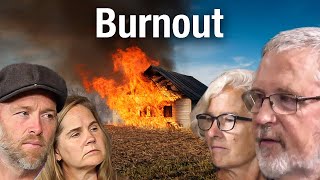
Shawn and Beth Dougherty talk with Justin Rhodes about running a homestead without burning out. They discuss soil loss, pasture management, and the difference between farming for cash versus stewarding land for the next generation.
Chapters
Wait, can you put that there?
Oh, still so affectionate. There's a camera, bub. How are we still so affectionate?
Well, because you're capturing us not fighting. He hasn't asked the question yet.
You got to scoot in.
I will.
That's the thing. That's what they're saying. Yeah, I'm going to bring it just in case I need a little bit for my feet.
Yes.
I went over— I went with fashion over function.
My people were not very affectionate, nor were yours.
No, they weren't. Our parents were not super affectionate. I mean, we're affectionate, but we're not like—
I think it expresses itself in a lot of different ways.
Yeah, it does.
I mean, you can do all this.
Are we rolling?
But if you don't listen to one another—
We're already into it.
Yeah.
Did you hear my first question or should I repeat it?
When the parents are focused on the babies, yeah, that's all that matters.
Yeah.
And you guys are really good, focused together on their baby.
Yeah, it has to be the together.
It does.
Because a lot of times I feel like I'll hear like, oh, the man is like, I don't feel cared for, um, because my wife is so focused on the children.
Right.
And what do you think?
And I'm thinking, well, you need to be focused on her and the children.
That's right.
Because that's That's the family unit, right?
Right.
She'll have time to serve you if you help her.
Exactly.
Serving the children. Yeah, because that's sort of— I feel left out.
Well, wait a minute, say that again. Are we talking about the wife? Uh-huh. Yeah, say that again.
Talking about—
say that again, exactly what you said.
Well, for the husbands who say, I feel, you know, like I feel left out, or I feel like I'm not getting enough of her attention, um, it's not always— this isn't always the right answer. But a big part of the right answer is she'll have time to spend on you when you spend time together with her on those children, right? The us time will come, but first it has to be the us with them. Yes, that's right. And some seasons of your life—
that's right, that's your vocation. But you're going to make money, and a lot of men think, oh no, that's my vocation. No, no, the family is your vocation.
It also comes down to the human walk being One of service. Ultimately, you're here to serve. And you know what? It's trite but true. That's what's gonna make you feel good. It's the thing that's gonna make you happy and feel community with people and feel in union with your spouse is gonna be that there's something outside of, you know, like focusing on each other, that you're both focused on, that, you know, like I've got my shoulder brace and he's got a shoulder brace and we're both working for the same goals.
That's right.
It's when we kind of turn in on each other too much that it becomes a little bit of a problem. We need to be focused. I mean, the kids are what keep us focused out, you know, looking ahead as opposed to just staring into each other's eyes.
Especially if we tried to be romantic a bunch of hours of the day or even a bunch of hours of the year.
It's exhausting.
Well, it would get— I mean, your sense of humor asserts itself at some point. You know, like, we know each other. Really well. I'm present when you have gastroenteritis. So, like, there's only moments when you have that poignant realization, "You are my other." And the rest of the time you live it out without sitting, waiting for the poignant moment. And then you fight and you say what you— and you talk about what you're fighting about and you admit. Your words and my words don't mean the same thing. So even the talking is, yeah, all it's going to do, we're going to talk enough that we both admit you are trying and I am trying.
We won't communicate really because we're male and female and women don't make any sense.
I saw that eye roll in there too.
Well, it's just so much fun, but it is absolutely true. In the end, you'll love each other as a mystery. He's a mystery. I don't get it. But I have too many years with him to rest in the statement, which I might want to say to myself sometimes, "Well, he's just mean. That's why he's doing this, 'cause he's mean." And I have to go, "Well, defend that one if you can. This is the man you've been with for 40 years. He's not mean. You just don't understand him." But the fact that we both have—
I am insensitive.
Men are more insensitive.
I think we are. And I am often insensitive. And I want her sensitivity. I want her emotions. To not be so dominant in a discussion.
Yeah.
And that's not fair because that's what— that's how she communicates, that's how she thinks. And for me to say, well then why didn't you marry a man? And you know, right? I mean, I mean, that's what I did. Yeah, I know you did. But I'm saying that's what, you know, if you wanted a man to respond, then marry a man, right?
But I would not recommend No, that's what we saw a reel once that the lady was complaining, "Oh, I want a man that's sensitive and overreaching," all these different things. And then what the response, the funny response was, "Well, what you really want is a woman." That's a true saying, so get over it.
And I do think the male-female bond in the end is like negative and positive polarization and magnets. The only reason you stick together is because you are so unlike, and you have to embrace that and say, here's this mystery that I want to bat over the head with a brick every once in a while, but I couldn't do without.
And we like us—
this is something that we actually made this conclusion back to when we were engaged, right?
We went through an engaged encounter, and one of the things that occurred to me is I like us better to— I like us better together than either one of us apart.
And, you know, it makes sense. He wrote that in engaged encounter.
You pass letters back and forth, and he wrote that, and I was worried about it.
And it's funny because he was worried about sharing that with me. I didn't know that, right? But I read that and I thought, he is going to make it to the altar, right? Because at that point I'm like, well, we're planning a wedding. It's a good thing we're not putting a ton of money into it because I don't know that this man, you know, like, it took him a long— I was a bad bet. I was absolutely who your mama warns you not to marry.
Not really.
She didn't. But I was that. My background— There were backgrounds.
What she was telling me about how she grew up, she had some issues.
My background is the background that a psychologist would say to you, "That woman is a bad risk." Wow. And So, you know, he was cautious. He said, I always wondered, like, what's going to stop us being the people?
But I think any man would do that. And you know what my mom said? So I said to Mom— well, actually, this was after we were married. Before, I was thinking, why, why are we not going to end up in divorce? Why is, why is our marriage good that we divorce, right? That's right. I mean, you look at the culture, you know, where you Catholics— the percentage is that you're going to get a divorce. And I— after I got married, after we got married— and we got married, we're Catholic, we got married in the Catholic Church— after we got married, I said to my mom, I said, I used to have these concerns, and I said, I don't anymore. And this was very soon, months after we got married. I said, that doesn't concern me anymore. And she said, that's the grace of the sacrament at work. And I really do believe that, that, that removed— and that's never been a concern for me. I knew that our, our marriage is going to last. It may not be the funnest.
That's right.
That was the concern. Yeah, of course.
Like, when you've got a 50-50 divorce rate— yeah, Catholics can divorce, they can't remarry. If—
no, it—
so the teaching is this: man and woman are united in marriage. They become one. It's biblical. And what God has put together, let no man put asunder. But that union requires certain things. One is that it have been consummated. In other words, they have had intercourse. But one is that it be that you, to the best of your ability, understand what you're promising and really promise it. So if somebody is like—
And promising you will have children.
And open to children.
Yes, that's a promise you make at a Catholic wedding.
Catholic wedding. Yeah, that's right.
Oh.
And so when Catholics divorce, that's a statement about their finances and their political situation, maybe about somebody's safety, right? That's a legitimate thing, like there's a space now because that other person has become unsafe. Divorce and remarriage, we would deny as possible, except that sometimes the conditions for a marriage have not been met. Suppose you accidentally met a loony. Like married a lady who was actually off her nut and you couldn't tell, and she hid it from you, and her family hid it from you, that's not a legitimate marriage. That would get annulled.
Oh, okay.
If you married somebody loony, outside of their mind, make the commitment, right?
She cannot— it's not, it's not loony, really. I mean, it really is someone— I was using a really terrible answer, but someone who does not, cannot, could not understand what a Catholic marriage should be? That you—
okay, now you just broaden the field hugely because, because in today's climate, how many people have ever seen an example of lifelong commitment? Most people have seen one or two, but do they know it? So when people say the words, whatever the words are, their marriage vows, and they say, 'Til death do us part,' right? That could just be pretty words if they— if you don't really believe anybody ever can make that promise, and you're not making it at 18, 19, 20, even up to 25, you've—
there's nothing in your life that has ever been till death do you part. And I don't mean just because you haven't even thought that way, you know. Your career, you think, well, this is until I get— everything is until, right? And, and the marriage is totally different. The marriage is Now this is forever.
Not only is it forever, it defines who I am.
And it's not only forever in this world, but we believe— and again, I don't know this is theologically accurate, but I know I believe this with my wife—
that when we're in heaven, hopefully we will be united.
We will be united in heaven.
That's right.
You believe you'll be united, recognize each other?
Oh, heavens yes.
I think so.
Oh, heavens yes.
I will be looking for her. If she goes first. I'll say, "Where are you?
You're out there somewhere." I'll be waiting at the gates.
I feel like people are naturally, perhaps, transient. That's what I'm finding.
Yes.
'Cause I'll ask people, this is only coming from, well, seeing people just move and spouses finding, kids finding spouses in other states and just people just are very transient. I'll ask people at Homestead events, Hold on one second.
Yes. You have to be—
No, it'll be too loud.
You would be very loud. Maybe if they moved the fire pit.
Move the fire pit.
Move the fire pit to Ashley's house. Yeah.
All right.
And Jerry, you can keep all this in there unless otherwise we tell you. We are recording. And if you ever say anything or I ask something you don't want to answer, you can say that and we will cut that part out.
Otherwise, this is not live, live.
No, no, no, it's not live, live. One, it's live, live, but right now, but it's uncut. Yeah, unless you say so, or I say so. But we'll have to let Jerry know if we want to do that. Jared. Jared, sorry. Yeah, people are transient. They say— I'll say one of my questions will be, are you gonna die there?
Yeah.
And you don't know if they don't want to think about death or what, but they They can't commit to the land.
Oh no, this has been one thing that's been very hard for me is that Oklahoma is my home of— not of birth, I was actually born in Texas.
The Dortys have been there since the late 1800s.
That's right. And there is a cemetery in the corner of a wheat field where the Dortys are buried. And I'm moving to Ohio and I'm thinking, I want to be buried in my corner of that thing. But we have moved to Ohio, to Appalachia more than even Ohio.
Right, not Ohio.
We've moved to Appalachia. We love Appalachia. And we farm a Franciscan convent mostly. That's most of what our farm is. We are negotiating.
3 years ago, we helped them build a cemetery. They had 2 sisters die.
Yes, and those are the first sisters that had died out of their order. We are negotiating with the possibility of being buried here.
For a Doherty Claire. It's in my cow pasture. No kidding. We're talking about cemeteries.
These sisters have become our sisters. I worked for them as a maintenance man for 7 years. We farm for them. We've been farming for them for 15 years, and we are very close with them. We love them very much. And, uh, but I under— I can understand them saying, no, this is a convent cemetery. On the other hand, we have heard they're not closed. They're not closed to the idea yet.
That's right.
So it would depend on whose mother at the time, perhaps.
Right.
I think there's another part of your question too, Justin, because people, you know, like our generation, your generation, now you guys are where you came from, but most people have moved a lot. But when we as homesteaders settled down, there's two more layers to this question. When we settled down in a place, first of all, our children are born there. They are from here. This is their land. And so we had a growing realization that although I still obnoxiously referred to myself as a Texan after, you know, 15 years in Appalachia, My kids would probably say—
Oh, bigger than that, dear.
I'm from here.
You've been here for 30—
We've been in Appalachia for 35 years.
35 years, probably, yeah.
So for a long time, I'd say, yeah. I mean, I'll still say, if somebody says, where are you from? I say, I'm from Texas, but I'm now from Appalachia. But my kids identify as people of this place, Northern Appalachia. And there's one more piece, which I can't remember what our number— why our number 5 son would've been putting this into words, but he turned to one of his siblings and said, "You can't leave land when you're the only people who know what it needs." And every piece of land has needs because that's why people are here. Like plants and animals in an ecosystem, do a fairly good rough— in fact, they do an excellent rough and ready job of life. But when you add people, we can enhance it, not just for ourselves but for them, and raise it up a level. As Wendell Berry says, you become the people who know which corner you should never plow before May, which corner has to be grazed after April 15th, you know, which hillside no tree should be coming off of unless you are very careful. You become the people who know that, and that's part of what makes you stay. I feel sad. I mean, as soon as you mention people being transient a lot, I feel sad in my heart for them because they won't know this.
Well, they don't know it.
That's that feeling of being nested and at home. I mean, you live in this nest, this beautiful holler, that is, it'll feed you forever. You can just sit here and take care of it. And if you take care of it, if you're content with water and beef and, and milk and, you know, all the other things, right, all the other things that you're growing and all the good things you can plant and save seed from, you need never go anywhere and you will be abundantly fed.
You know what I was getting at? If they have— if we have this transient attitude to the land, that is going to be telling of a transient overall attitude which could translate into the marriage.
That's exactly what Buck Whittleberry says too.
Transient relationships.
He says whatever we do to the land now, we will do to one another in the future. And it's been true. Think how true it's been. Strip mining.
Buck Whittleberry's "Settling of America" is the book that he wrote that says we just used land up and we moved on. And that's been the American way. Europe didn't have that opportunity because they didn't have so much land and there were enough people there and they realized, look, if I use this up, I'm gonna, I'm going to, there was a need. I have to eat tomorrow. So we have to think about what we're eating today and how we're gonna eat tomorrow. And if we're not taking care of the land, it's going downhill. And they won't feed us tomorrow.
You mean that what the United States has been doing for the last 150 years—
another can—
for the last 150 years is robbing our progeny of the possibility of staying?
You know, the topsoil, how many feet of topsoil was there?
I know, and it is gone, and it will never come back.
It will never come back. Now, we are doing an amazing job not us working with our farm, managing our farm, of rebuilding the topsoil. It will never be feet. It will be inches, and it could— might even be a foot, maybe, right? But it will never be what it was. And there was no reason— every time, what should have happened was people should have been adding every time. And if you start degrading your land, it's a management issue. You are not managing it well.
Because ecosystems don't typically degrade. Now, it is possible to degrade an ecosystem, but it's usually by removing—
Hurricanes can do that.
Yeah, but that, no, that's a reset. No, I'm talking about an ecosystem which in its own life. So let's just say that an ecosystem is that vacant field that you pass on your way to work or on your way out into the country. And it actually does a good job of collecting sunlight, holding rainfall, and cycling into as many possible kinds of life as it can, and then recycling it. It may do it slowly. And its principal, you know, our principal objection is it's not doing it in any way that feeds people. But it's doing a great job for itself. So it's good at it. When we come in, we can either be observant and respectful. How does this work? What's here? What's going to make either these things do their job better, or in most cases, how am I going to bring in, say, an animal who can help me change this so that it does grow people food now? And I can either be observant and help the processes that do that naturally, or I can be a fathead and think that human beings with machines and chemicals are smarter than nature, and I can come in and say, I want this canvas to look different. I'm going to use a bulldozer and then I'm going to spray it and then I'm going to plant what I want and then I'll sit back and expect it all to grow like it was an ecosystem. And it won't.
Right. And the motivation is totally different. The goals are totally different. So my goal is to turn this place into money. And that's my goal. I want to turn this into money because money in this— and now understandable in the urban setting, Money is everything.
It's the arbiter of all good things, you know.
And though— and the winner in the urban setting is the person who has the most money, because I have the most freedom, because I can choose whatever I want.
I can go into Kroger's anytime I want and hang out with whom I want to, right?
And I can buy whatever I want. Not in the country. Well, I mean, we could. And if you try and do that in the country, you end up mining your property instead of—
you mean if you try to make the most money in the country?
Yeah, I— that's That's what we find is that the people who are trying to say, well, I'll just turn this— farming should be easy, I'll just turn it into cash. We find that they end up usually mining. It is a rare person. Joel is an exceptional entrepreneur who is very good at generating money, although he doesn't live like he's got a lot of money. Also makes his farm better. But most people—
Also makes a bunch of other people's lives better.
Yeah. And I think Will Harris does that, I think. I don't know enough about Will Harris, but I think he does. I think Greg Judy, I think, does that. They're making their farm better.
Definitely Greg Judy.
Many, many young people who start off farming and/or start off homesteading that we talk to, and they immediately start talking about cash. How can I turn this into cash? They're not good at it and they end up starting, they burn out and they also end up starting to watch their farm degrade.
I think a lot of what's going on though, don't you, is that when you come from a model where every good you have ever experienced except for your mother's kiss has cost money, right? As you grow up, you realize, you know, you say, Mom, I want that. And she says, well, we don't have money for that. Mom, I want that. And she said, well, we'll have to buy it. You realize you can't flush the toilet without paying a bill. Every single good comes through the medium of money, which is kind of funny because if you believe in God, that's where all the good things come from. And we really have a mindset that has utterly overlooked the possibility that there's a God making all this happen. And we think it comes through money. So naturally, our sense of security, our sense of success, our sense even of being lovable centers around how much money we have access to. And when we want a good thing, we typically think, okay, well, do I have enough money for that? And it's a change of mindset. Don't you see this all the time in young homesteaders? It's a change of mindset for them to come to the homestead and realize when you want a good thing, check here first.
That's right.
You may have to change your good thing. You know, like, I can grow hazelnuts, I can't grow almonds. Um, fortunately I like hazelnuts, so I can— so it's okay for me when I want nuts to say, you know, where are the hazelnuts, instead of, call that your standard, I need some almonds. Um, and that's, that's a poor example because it's so far down the line, but for think about chickens and eggs, you know. You, you learn to turn to the chicken house for eggs instead of the store for eggs. And over time, you even learn to monitor the chicken's well-being by giving them their most natural setting so that they can produce the best eggs. That's a learned process.
Yeah.
I don't know if you guys grew up doing that, but most people didn't.
We didn't.
And don't you see that? Don't you feel like you see that a lot of times in, in the—
yeah.
Beginners who come to you that they haven't figured that one out yet?
Definitely. What's your flow then when you want something?
We do really ask instead of thinking about money.
What do you think?
I always say I am so— I, you could call it frugal, you can call it cheapskate, whatever it is. Every time I see a dollar going off the farm, that means my time— I have to spend my time developing, doing work for somebody off farm because that's where dollars are making that dollar.
They don't grow on the farm, so the dollars have to come from off.
So I say Could the farm provide that? That's first. And second of all, I say, do we really need that? So for example, right now we're in a drought. We always are counting on right now at this time, what rain coming down and growing.
Are you sure you wanna go here?
Why not? I think this is okay.
Because this is one we haven't worked out for this year yet.
Ooh, I like that even better. Let's keep working it out.
That's right. So we're counting on rain coming so that we will have stockpiled forage for the winter.
Okay.
If the rain doesn't come, that limits the amount of stockpiled forage. Well, we have a certain number of cows and we're only going to have the number of cows that our farm feeds.
We're going to reduce our numbers to the number of the farm.
All year.
Every fall.
So people understand what you're talking about.
Right. So every fall we have to come into the, into the fall grass growing season with our fingers crossed saying, the number of cows we overwinter is going to be the number of cows I think this farm is going to produce grass for in September and October. It's going to stop growing after that. So I've got 2 months to watch that grass and think, okay, how many animals do I need to destock by? So for last summer, for example, so we've been in drought for 5, maybe 6 years. Last summer we were historic drought, spring stopping, everything drying up. The farmers around us had been on, had had their animals on hay since June. Now we had pasture all through the summer, but we're coming into the fall and we think, how many animals will this farm carry? So I did two things. I said, butcher two steers. So the guys took out two steers that brought numbers down. They were steers we hadn't, they were plenty big enough, but the freezers didn't need to be filled. We just needed to get our numbers down. And the other thing was I took 3, the 3 lactating cows over to a neighbor's where they had 3 acres of second growth after hay. And we grazed over there for a while and we got all the way through the winter on our stockpile forage.
Yeah. The other option is, and we toy with it, but this is, I mean, this is where it comes down to, is we could buy more hay. We always have some hay.
You always need hay for an emergency.
But we could buy more hay. Okay, so we could spend dollars buying more hay in, and then we're in a certain sense, we're covered that way too. I would really like to see our farm work as an ecosystem.
Okay, whoa. So this is where the conversation gets deep.
Oh, she's going to start yelling at me.
When he says, when he says, I would— I'm going to get him to clarify. I would really like to see our farm work as an ecosystem. How long has it been since we have Oh, no, no, no, I'm not— restocked. How many years have we done that?
No, no, no, I'm saying it is working as an ecosystem. That's right. And it has been for many years. And you change that a little bit, a little bit when you say, yeah, well, let's just buy in more feed.
But—
And I would say the same. Well, let's talk about chickens. I mean, we don't want to buy in chicken feed. You don't buy chicken feed to chickens. We don't want to buy in food. You buy in a little.
We buy in some grain for the chickens. Now because we could drop down to the number of chickens we grow grain for.
How many chickens are we talking about?
A couple dozen. We could feed those without importing any grain. So you feed those from milk scraps, animal harvest scraps, table scraps, squash, manglewurzels, everything else the farm produces.
Oh, you grow some food for them. You grow some food for the pigs.
And Traboncino, yeah.
Right. Yes. Oh, lots.
Right, right.
So that's what we're trying to do is how can the farm provide their food rather than us buying in food. And one of the really significant parts of that, and I think a lot of people do not get this, is I don't have as many cows as I want. I have as many cows as my farm will feed. And if I limit myself there, and it's not really a limit in a certain sense, One of the things that happened when we started up at the Sisters, their land was as bad as ours was when we started. Really terrible, all down to clay.
Some ways worse.
And we would bring in some cows. We had to bring in just a few because again, we wanted to feed them all year round, and that land was not doing it. We now on 30 acres—
that land has always— we just didn't plan for winter grazing in the beginning. It wasn't the land's incapability, it was our time.
Well, but also the— I mean, the grass was really bad, but we never, we never overstocked. Yes. Yeah, right. We didn't overstock, and we might have overstocked, I guess is what I'm saying. We would be overstocked now if we were doing what we were trying to do, because we now run 20-some-odd animals on 30 acres. We couldn't have done that just on that grass before. We've been able to build up that herd because our grass is that much better, our soil is that much better. And that's a patience. I was talking to somebody recently and I was, you know, we were at a conference in the Ozarks and I was talking to somebody about it and I said, farmers don't have patience.
Farmers do.
And he was absolutely agreeing.
We do. We need more.
That's right.
That we want to move at suburban speed rather than nature's speed. And nature's speed is slower. And we have to, you know, we have to allow ourselves to be tied to the land.
There's a give and take though. There's a give and take. And I bet you guys have seen it, if not on this land, other people's land. And because for a variety of reasons, most people are going to be working on damaged land because we've damaged a lot, but also because homesteaders typically don't have a million bucks to invest in land. And so they're gonna buy the wasteland. Damaged land is where you sometimes use imports to bump things up. So we all know the people who say, "I wanna build a garden," and they order a semi-load full of mushroom compost or topsoil or something. And if you don't have soil, that is a place to start. Right? How often have we helped people on a farm where they start out and they are either on land that was previously row cropped or they've just cleared under tree, you know, just cleared a bunch of trees and they want to graze in that space. That's a moment for importing nutrients, bringing in hay, bringing in maybe some compost to get something going because it's plants, it's living plant life that adds organic matter. That's where all organic matter starts as plant life. But if you have no soil or you have nothing for the animals to graze, you have no grass, then you might bring some in so that you can initiate the organic process in that spot and then keep it going. So that's a place where a good conservative management practice might be to bring in nutrients. But you need to have the plan for how you're going to stop, right? We also know people who order this semi-load of mushroom compost every year or two because they haven't figured out, you know, your land could be doing this for you instead of you having to make that investment of money every year.
I've been thinking about what you said about degrading. If somebody has the capacity to degrade something like land, depleting it year after year, or any other kind of job, if you have that capacity, that means that's in your personality or character, and that's going to apply to your relationships.
Yes.
And it could end up applying— how I'm relating it to all we're talking about is it could be— it could— we need— what I want to get at with you guys at some point during this is, uh, fighting burnout. And so, um, Yeah, maybe part of the puzzle is adjusting this degrading personality, you know, to accept the land and how it is and its limitations, to accepting your marriage, how it is and its limitations, and accepting yourself. Okay, we're degrading on ourselves sometimes, aren't we? Start there.
Oh my gosh, absolutely. Yeah, we might have goals that are way beyond what we're capable of, at least at the beginning. And we need to slow down and say, that's beyond me right now, and I need to work at my level and, and write and, and keep my priorities in focus.
Well, I think you've just described two— you know, so often you sit and you struggle with a problem or a thought, and when you get to the end, you find that you've come to a conclusion that you've already heard in somebody else's words, and often it's biblical. But you've just described that thing which is to die to self, which doesn't sound, you know, like you've got to die to yourself. I have to admit that as a non-Christian, I did not find that an attractive or compelling phrase, right?
Not really.
Or you're a Christian.
Yeah, yeah.
Um, well, and even as a Christian, it's not really— I mean, Jesus— why did Jesus have any friends? The only promise that he made, and I think this is fascinating, I think people don't get this, the only thing he promised in this life— that's right, he didn't promise you riches. He promised, if you follow me, you will suffer.
Wow, that's right, right?
Great.
People skip over that.
They do. But that's really true, that if you follow him, you will suffer. Now, we will be able— that's how we learn. That's what we need to go through. That's what makes us a better person.
And in the end, it's what makes us happy. That's what I'm going for. Because that burnout question is such— it's a vital one to address. Like, where does this come from? And I think it comes from work, lots of it, that doesn't seem to be adding up to what it, you know, to some healthy functional whole. And at some point you think, okay, this isn't getting better, right? Like I could be doing, it's not chores. Like the fact that you have to go collect eggs every day, that doesn't make you at the, you know, after 10 years you don't go, my gosh, I'm still collecting eggs. When is this gonna be over, right? That's okay.
That happens.
But when you're doing a bunch of unrelated jobs that all have to be redone all the time, they undo themselves or something undoes them and you have to keep doing them. And they aren't meshing together into a related whole that feeds into itself, feeds itself, and builds something bigger than you could build without its cooperation. Then we, that can happen either because our pattern is off or we've taken on too much, or at the present moment, our family culture needs for us to focus somewhere else. But that's when we start to feel burnout. And it always requires that we approach things that we think are precious with the willingness to say, If this is not of the essence for all of us, I will give it up. Yeah, right.
When you, when you say all of us, you mean your whole family?
Yeah.
If this, if this is not the essence, the children, for all of us, we give it up.
I, I don't think that that means that my ch— if one of my children says I don't like this lifestyle, we're going to give it up. No, because you would think that if it's starting to shred the family Yeah, if we're finding that we are, you know, this is really starting to tear us up. Okay, and a family has to be the most important thing.
I don't know what you do. I don't know what you guys say to this, but I get it all the time. What do I do if my spouse is not on board? And I say, you're not gonna like this answer. You don't get them on board. You, you find out what they're into you meet them where they're at, because chances are you're asking this question, you weren't like this when you got married. And the relationship's more important.
Yeah.
And hopefully they'll come around and they may not. And you just do what you can do within the confines of that marriage without aggravating them.
If that means I have to give up homestead.
Yep.
You know, the thing that I love now, we have watched this couple, they are some of our dearest friends. She has been waiting and waiting and waiting for the homestead to happen. The homestead looks like—
40 years.
It looks like the homestead is maybe about to happen. We're very excited for them. But she has patiently, patiently, patiently waited.
They're a beautiful couple. And they've seen and, you know, raised a bunch of kids. And it's like they're back to back. So they, you know, they're, they're guarding the same stuff. They're seeing different landscapes and they're— they know they are and they're each taking care of their piece of the landscape. And the moment is finally coming when the homestead, which has been his dream too— he's just very belt and suspenders when it comes to finances— the homestead is happening. They have a house going up on the homestead now, and it's really good to see. But she waited. You know, one of the things she did while she waited? She watched Justin.
Oh, really?
In fact, in fact, in fact, because we don't watch YouTube videos, right? She was our primary source for who you guys were. Oh, that's funny. When we want to know, who's this Justin Rhodes? He's got this cute kid named Mr. Brown.
She lives vicariously through me. Yeah, that's right.
That's funny. Um, that's really funny.
Yeah, Joe, Joe will tell you, when you ask— if you ask Joe what to do with burnout, he's not going to say get more sleep, take good care of yourself, like you might think. He's going to say You need a deeper vision. And I've asked Joel, and we'll get to it with you guys, like, how don't you— how do you not burn out after all these years? You seem still so excited. I'm burning out. I'm not as excited as Joel seems about it.
You're also, to be honest, tired.
And it's August.
There's a bunch of other stuff going on. Yeah, yeah, yeah.
And you would think, well, and there's part of that, right? If it's— there's a difference between burnout and overwhelm. And so there is a time to cut some things out. But, uh, he'll say you got to get a bigger vision. And you may have started to save money.
Yeah.
But then you might get in a place of stability that you didn't have when you started, and you're like, why am I doing this? I can just buy this easier in the store. So for him, it's the land.
Yeah.
It's because, do you know, it's improving the land in the way he does homesteading.
You know what excites me the most What I love the most is working with my kids. Okay, I love that. And when our house burned down, that was one of the happiest days because I knew that they were going to rebuild this house. And I knew that for 2 years— well, I didn't know it was going to be for 2 years, and it was for 2 years.
You were hoping it maybe wasn't going to be for 2 years.
They would— I, I was at the point where I have— I had 4 kids at home, 5, 4 or 5 when the house burned down.
3.
Okay, 3 kids at home. And the— what I was imagining was the days of the summer. So I, I mean, part of why I taught, part of why I said I will take that on, not as my vocation. Only reason this man taught was he said I did not like the idea of it.
The summer of 1980s 6 and said, I hate school. I always hated school. I don't want to be a professor, but I want my summers off. And that was how he ended up teaching.
And that's how you could grow and work with the kids.
That's right. And so that allowed me— and but I was at a point where I'm thinking, okay, though, because summer would be the time— we would be the summer of the barn building, or the summer of the— when the B&B— or the summer of something. Yeah, it was very— so I always knew that there was going to be time when I was going to be— and usually there was a big project a building project, because I love doing that with my kids. And that was declining. I mean, we weren't— we had fewer people at home, we weren't going to be able to do that kind of stuff. And, uh, and I thought, oh well, we'll find other things. Um, and then the house burned down, and I did not do that intentionally. I did not. But, but it was very exciting. And then what they brought to it was beyond my wildest dreams.
I can't wait for you to see it.
I'm really excited.
It is really lovely. You saw the old house and, you know, it was just—
so next summer we're going to be in Ohio, so we're going to have to go.
Absolutely.
For the food summit.
Absolutely.
We'll be at the food summit as well.
Make sure—
let us know before we're out there.
Yeah, if we drive, we can tie it in.
Yeah, we're going to drive, I think. I think that makes sense.
Right. Well, and we have the B&B.
Right, right.
Yeah. So we can maybe talk to Mercer and maybe do a movie.
Yeah. Because we never really— it, it was for 2 years full-time, just that. And by that time, my kids came home to do that with you? Well, all of them did at one point or another, but there were, there were 2 that were the primary— the architect, the son who's the architect did the design work.
You have a son who's an architect?
I went to Notre Dame.
I mean, he was a timber framer.
He finished college and he did timber framing professionally. And he got— well, I just remember him saying, "When you're a timber framer professionally at 56, you fall off a ladder, you're hurt, and you have nothing." Because your body's your tool. And you don't make enough money to save up. So he was married and had— I think only one of the babies was born at that point. And they went back to Notre Dame and he took two master's there. Now he's an architect who— what Thomas does is so fascinating that we can't even begin to go into it, but you would love it. But he designed the house. He took everybody's suggestions and then he fought for his own. I have to admit, there was a moment when he looked at us and he said, if you're not going to do the things I tell you to do, there isn't any— what's the point of my designing it? And we kind of went, okay, do what Thomas said. And we're thrilled with the things. There were things where I was like, I don't need that luxury. Walk-through closets into the bathroom. It's not a luxury. It's just a way to set up a bedroom. And it's marvelous.
So, it's funny because you were talking about the architect last night and how the architect made the kitchen a little bit bigger. I didn't know it was your son.
When the conversation started, I like to tell this. He said, he said to Beth, he said, Beth, to mom, what do you want? In this new house.
I said, I just want my house back.
Yeah. So I want just exactly what it was.
I said, I can tell you two changes. Put the bathroom back on the ground floor. There had been a powder room and then it went. And don't texture the walls. Those were my two requests.
And he said, we'll talk. And he came back with— they had lived in the house for 30 years.
Right.
They knew all the problems with this 100-year-old house that we had cobbled together. And they said, why would you want to live with those same problems? Let's make it function better. And function was what drove the design.
And it's worth mentioning, you remember this morning we were all working in the kitchen and I said all homesteads are pretty much alike. Well, when you rebuilt that house, what were the changes you made? You opened up the south wall, you raised the ceiling, you made the kitchen a little bigger. Those were exactly the kind— exactly those changes. We moved stuff.
That's right, a big pantry.
We moved stuff off the south wall so we could put windows there because the ceiling's higher, the windows are taller, so a lot more light comes in.
And your basement is a workroom. Yeah, the milk comes into the house.
Exactly.
It worked out well for Luke to be butchering down there. Yeah, we butchered our first pig down there in that basement just a few days ago, and the basement was perfect.
Okay, so you guys kept the footprint of the house, or is it exactly the same?
They added porches.
Okay, so the footprint is the same, but the layout is different.
It is. And one of the biggest—
layout isn't very different. My kitchen's right where it was. And if Thomas hadn't insisted on taunting me with it, I just said it was the same size. But he says it's bigger, and I'm sure he's right.
But one of the biggest changes was, though, that the south wall, the wall that you would want the lights coming in on, was where all the stairs were, which prevented us from having windows on that side. So he moved the stairs to the other side. And now we've got all these glorious windows on this outside. We have not had— well, we've had winters in there, kind of winters before. It's been— we moved in on Ash Wednesday, which is— I don't know, that's a good time to move into a house you've just burned down, Ash Wednesday. But, but I'm really looking forward to this winter with all the sunlight and the heat coming in from that side. I really think that this is going to make our house warmer it's going to need less fuel, right, to heat our house.
I have to say, our house, we can— we have a wood boiler. We can barely use it. Yeah.
How come?
Because we did—
we burn ourselves out and we like have to open the windows to just live in there.
Good problem.
So I'm like, I think it's because our old house was so drafty, right? And this one isn't.
Ours is very, very tight. And the thing that we're excited about is we're going to put in a kachelofen, which is a thermal, massive thermal heater on the first floor, which is what we hope.
The base is there, but you don't build those until the house is in. Because once, once they're done, you do a bunch of pre-burns to cure it.
Yes.
So it's in, it's in. Now we have to wait till the— normally we wait till fall and build it.
And we have a temporary wooden furnace in there. And we're waiting on on William to have the time to be able to build this ministry.
Well, and he might have had the time, only our daughter Masha got engaged.
That's right.
In August, and she's getting married in October.
So we're not bitter.
How many kids do you have?
8.
8, and 6 are married? 5 are married and 6 is about to get married.
I want to get into the kids. Yes. I'm definitely going to talk about kids and how they're still around. And their adulthood. I want to get to that. That, to me, that's success in parenting, is that your adult kids want to be around you. So that's my goal with our kids.
I want to be around them, wean from you guys in that.
I want to go back though to the, um, close this chapter on this, this burnout, this degrading. I think it's all connecting. People will ask me, they'll want to say, well, they're coming down on my guns in New York, I want to move, where should I go? I mean, that's a problem. Guns are pretty important. We had how many Californian refugees yesterday? Yeah, at our work day. There's so many people moving out of California. I kind of get that. But also, on the other hand, my cousins are there living in Bishop and hunting and, and growing exotic— I mean, they'll harvest buffaloes, they'll harvest elk, they even eat emu.
It's interesting.
And they don't— they're not we texting and he's not texting, oh, they're so terrible in California, or this and that. He's just doing what he can where he's at.
I would say that it's the difference between the, the urban and the rural. I mean, I think people are— it's not just leaving California, people are leaving urban.
That makes sense.
And that's what God did.
That's true.
He pulled Moses, okay, out of the city. He pulled Abraham out of the city, okay, and said, I'm going to take you to a land flowing with milk and honey. It's the country. It's, it's where you can feed yourself. We've written— one of our field guides is on the responsibility that we were given to feed ourselves, to feed ourselves. And we have, we have said, no, no, no. And God didn't say feed yourself until McDonald's comes along, right? He said feed yourself. And we really believe that we are happiest as humans when we are providing for ourselves. Not in a restricted sort of way, but where we're feeding ourselves.
And it is funny to think that today, we, you know, sort of culturally, we look at human beings and think, you know, everybody walks to a different beat, and every— you know, like there's a million different things you might be interested in, And maybe so, but foundationally, for most of the history of humanity, most people were vitally interested in plants and animals and caring for them or hunting them. Because if they weren't, they got their genes out of the gene pool real quick, and they didn't pass that trait on to any offspring. If you didn't find, the natural world fascinating, fascinating enough to learn its ways and get it to make food for you and build fertility so it will go on doing that, then you didn't live very long. So what we consider this wide array of options being the sort of the human birthright today didn't exist until fairly recently. People didn't have that wide array of options. Well, I don't happen to be interested in gardening. I'd rather paint watercolors. And I think, well, I get that. But if we apply that judgment to anything anybody happens to want to, I'd rather play video games than anything else. Think how many, this isn't a joke. For many people, it's like, well, that's where I find my fulfillment. I think, well, good luck with that one. I don't think you can, We'll stop for a minute and say, if you're a Christian, or if you believe that God made you, and as a creature of his making, you belong to him, then it's not just a question of, you know, what happens to give me dopamine thrills, but what am I called to?
And I think when you start doing that as well, the thing that's beautiful about it is I go out and I get milk out of a cow. That bucket refills every day, twice a day, just by putting a cow on grass and taking care of her. It refills twice a day, and it will continue to do that as long as you take care of it. That is God saying to you, I love you, and I'll keep doing that. That, I think, helps toward getting past burnout. Wow. When we have to make it bigger and bigger and bigger, but when we just say, it's enough. I'm gonna go get milk today, and I'm gonna have eggs, and I'm gonna have the best food in the world, and I'm gonna enjoy that. And I don't have to do anything bigger than that.
Will then help us here, because Catholics don't shy away from suffering, I noticed. There's prosperity gospel. Sprinkled all throughout Protestantism, and there's a spectrum of it, that only good things come from God and the devil's the bad things and stuff like that.
That would mess me up.
And I can't say that's everybody. No, I mean, I definitely think there's— So I should say then, if I'm going to look at the milk carton different now, I'm going to hopefully remember what you said and say, this is God saying I love you. But when— but what happens when, just a shallow example, the milk bucket got kicked or she didn't get bread and the milk pail's empty? How do you find God's love in the hurt that comes with homesteading, in what might be causing burnout?
Well, and this is something that Beth and I say, this is faith. That's where faith comes in, is the belief that God loves us even when you're staring at a dead cow. Or studying. As best examples, the dead zucchini. But whatever it is, facing that, that's when— if it was— now, for Adam and Eve, it's very possible.
You're saying—
I still think they were before the fall. Before the fall, I still think that they worked. But I do think that it was, in some sense, it was, it was always there. They had a relationship with God. They were able to talk with God. God did not veil himself. God is now veiled, and so we can't see beyond the veil. Every once in a while we have somebody like Saint Francis who is able to look through that veil to the point where God even wrote on him.
Wow.
He had the stigmata.
Did you know that Saint Francis of Assisi—
I know him, but I don't know—
bore the marks of Christ's crucifixion on his own body. So it's a rare phenomenon, but it's— you see it throughout history. And in fact, there's been a recent— in 19— when did Padre Pio die? In the 1970s, maybe. A Capuchin friar died who had borne the marks of the stigmata for 40 years or something. So it happens rarely.
And I think of that as God writing on a human. But, but he also— the first step is to remove the veil, is to part the veil a little bit and let us see. And we all have moments when God pulls the veil back a little bit and lets us see. But for the most part, that's part of the fallen condition, is that we are not able to see that thing. And it is when the cow is dead that I think the veil feels maybe most closed, or that you begin to question, how could this happen to me? That's the question that C.S. Lewis I think, you know, is why do good people have to suffer? That's a tough one. That's a tough question.
Last winter, not last winter, winter before last, um, just a slight slip in calculations. The only two dairy cows we kept lactating into the winter were our two best producers. Mama didn't do the math and say yes, and they're also 9 and 11 years old. They are older cows. Well, some kind of cow virus went through northwest Pennsylvania, northeast Ohio. And the only way you knew is that a lot of dairymen are saying, yeah, I got cows dying. And these two girls went down on the same day. Now we pasture our cows on a hillside in the winter. And a cow that is down and can't get up on a hillside is going to be a bloated cow in very short order. She'll try to get up. She'll try. If she tips with her legs uphill, She'll fill up with gas bloat and die. We all know that. So we had to put down two cows, just make the decision, and they were both of our dairy cows. Um, that felt like 20 years of— yeah, my life just getting squished out of me. No, we were just approaching the— our community pig butchering was like the day before, and, um, everybody else worked. I was deathly ill in bed, which is like my physiological response to something really, really stressful is get through it and then just get sick. And, you know, you have those moments where you think, I thought this was the promise. And now it doesn't look like it. But, you know, With as many years of homesteading as you have, you have that history of looking back and going, the bad thing happened and then the good thing came out of it. The bad thing happened and the good thing came out of it.
It's the house burning down. Every time I tell people my house burned down 2 years ago, they all say, oh, I'm sorry. And I say, oh, best thing that ever happened. No, getting married is the best thing ever. Having children is the best thing ever. That was a wonderful thing.
It's the third best thing that's ever happened to you.
And people say to me, wow, I can't believe you have such a positive attitude about that thing. But I knew good things were going to come out of that.
But he's also a phlegmatic. And those of us who have a more choleric temperament, that weight settles on our shoulders and it's a dark cloud. A few years back, so in the Catholic breviary, which is a— it's not something all Catholics do, but it's something that's hundreds of years old and lots and lots of Catholics do. And it's just readings from the Gospels and the— well, from the whole Bible and from especially Psalms. So there's a bunch of Psalms in there. And, um, Psalm 95, at least in the Catholic Bible— sometimes the numeration is different in Protestant Bibles— includes— this is not a very good translation, but I think it's verse 5. It says, "Do not grow stubborn as your fathers did in the wilderness when at Marah and at Massah, they challenged me and provoked me, although they had seen all of my works." And one morning I'm reading that and I'm thinking, yeah, I know Marah and Massah were both, I'm thirsty and there's not water and what are we going to do about it? And I thought, what works had they seen? And it suddenly went over me. They saw the water of the Red Sea stand like a wall on their right and their left. They knew what this God was capable of, and they knew he could give them a drink. And they weren't asking him. They were complaining because there wasn't one. Now, since they knew he could do it, they were doubting his love. They were doubting that he would, that he was taking care of them. And I think homesteaders reach a point if we keep going where we have seen so many of his works that we can always say, I, I know nature works. I know God ordered it to our happiness, to beauty and health, because I've watched him do it for so long. You guys graze cows in rotation. You get fat, beautiful cows, and they are fat and beautiful, and you get milk, and you get more grass than you started with. In fact, every year you do this, You are better fed and your land is more glorious. So then when a cow dies, you have to put that death, which is devastating at the moment, especially if you're, you know, like for me, that's a, this is all me, I can't do it, pour ashes on my head. You have to set that in the setting of this farm where everything has gotten righter. In the big picture, everything has gotten righter. In our families, we have to do that. When you have the child who has experimented with something, you think, didn't I teach you that was wrong? Or the children who are not getting along, like just at loggerheads, you have to back up and put that in the setting of, This is a family who spends tons of time together, works together, and communicates. So if we're not getting along right now, we're communicating. It's not a sign that it's not working. It's a sign that at the moment we need to communicate about something that either has recently come up and it's a flaw, or it's a, it's a, it's a, it's grit in the gears that we haven't addressed before. And finally, You know, like the thing has come to the point where everybody goes, oh, that little irritation, it's become a big issue. Let's deal with it.
And it is the suffering that's leading to something better.
That's right.
Okay.
I mean, if we didn't— no, I don't like it, but something better is on the horizon.
I find that from experience. Yeah.
As Catholics, we try not to eat meat on Friday. And so then what we will often have is like baked potatoes. And so we did that the other day, and the guys who are working— the guys who are working on the farm, you know, they're close still. Our sons are working on a house, on another house, not for us. And they're coming over, and I'm thinking, you know, they've been working all day, they need meat. But they came in and they said, this is fabulous, because it was potatoes— it was baked potatoes, big baked potatoes with sour cream, um, cheese, butter, fried onions. And oh, fried onions, that's what somebody wants when they're working, just carb load. Yeah, it was fabulous.
We are really enthusiastic carnivores, but we don't have a problem because we're Catholic.
What does that mean?
It's a sacrifice.
Yeah, it's been—
it's—
that is one of those things where you ask the Catholic question.
You know, you fast and you abstain.
Okay, on Good Friday.
On Good Friday, for sure. On all Fridays in Lent, you abstain. You don't fast on those days, you abstain. These are church Every single Friday. Is that right? Yeah, we don't—
you're right.
So wait, is every Friday in Lent, which is from Ash Wednesday to Easter—
well, to Holy Week, right?
To Holy Week. Okay.
And then abstain.
And then on Fridays, just then you don't eat at all? You fast?
Well, or you abstain from meat? There were times, small, not that long ago, when the Catholics—
when we challenge ourselves a little.
That's right.
We don't challenge ourselves nearly as as much. You never ate before Mass if you were going to go to Mass on Friday.
From midnight? No, on any day.
You did not—
you did not eat from midnight to when you went to Holy Communion.
Now we fast for an hour before we receive the Eucharist.
What he's saying is the, the over— the historic church has had much stricter observances than it has had since 1963.
Better for us.
In 1963, Vatican Council too closed, and a whole lot of stuff got watered down. Not doctrine, not dogma, but just practices. Okay, so, so prior to 1963, there were a whole lot of Ember Days in the church, and Ember Days were days of fast. All gone. Sean and I could not tell you what the Ember Days are because we don't observe them because they haven't been observed since 1963. Except by people who choose to. Now, I do think the meatless Fridays are like that. Catholics are expected to offer a personal sacrifice on Fridays because it's the day of the crucifixion. It used to be just everybody gives up meat on Fridays.
And when that was lifted, in some ways there was wisdom in this thing that people say, well, I just gave up meat. And I think, well, If meat's easy for you to give up, that's not much of a sacrifice. Or people would go to the all-you-can-eat seafood bar.
That's the one that kills me as you're driving down the road in town during Lent. And it's like Friday, all-you-can-eat seafood. Like, this is not the meaning of the Friday giving up of meat.
So what they're really asking us to do is to sacrifice something. And to offer it up.
I do think that before we beat ourselves up, all of us culturally, beyond the walls of this barn, about what lightweights we are, right? And I'm here to grant you, total lightweight, that's me. But especially by comparing ourselves to previous times that did things we don't do now, I think that's not a real— it's not a real helpful rabbit hole to go down, that looking for meaningful personal sacrifice is more important than, than griping and groaning about the fact that our ancestors didn't eat on Fridays, right? And they still expected themselves to work. Oh my gosh, you asked me to work normally all the way through Friday on no calories? You're going to see a cratered Beth.
Yeah, I don't know how do what you do. That would— that would— I would find that extremely hard, the kind of fasting. Yeah, the fasting.
Oh my gosh, yes.
Now you're doing it for medicinal reasons, primarily. I don't know, primarily. Maybe these are spiritual reasons.
No, no, it's medicinal, but I do believe that you are on a journey, a spiritual journey.
Oh yeah, I do too.
We're very impressed with— we think about you a lot as you— as we think about our own spiritual journey, that these things are— we really believe we have seen you.
You're a seeker.
Yeah, you are a seeker.
Well, I got a spiritual journey question for you then. When I asked you— this is coming from a very open mind— when I asked you, why do you fast on Friday? And you said, because we're Catholic. So to me, that's not out of personal conviction. Oh yeah, it's not out of personal conviction, but rather putting a trust into a community.
Yeah.
Or that church. Is that fair? Or do you fast on Friday out of personal conviction? It didn't feel very personal. It felt just like, that's what Catholics do, I'm going to do it too.
I think it's a great place to start. Is to say, well, this is what Catholics do. So, and I think that the Catholic Church does that, is it sets up these things that you should do.
Then it's a roadmap for people who would have an awful hard time getting anywhere if we each had to figure it out.
Then you start reading the saints and you see their personal convictions, the things that they do, the things that's These are people who have gone way beyond what the church— in the same trajectory and for the same reasons, but they have really owned it. And I think we're all called to become saints, to move in that direction. I think most of us are not very good at it, but I think that's really owning it and making it personal. And I do think, again, like what we were talking a little bit Jesus and Mary visit our world where they can, and I think that the saints are the, the people who are most available so that Jesus and Mary—
for whatever reason. Yeah, and sometimes they're people who are tapped out, you know, that's why they're available. Yeah, pushed to the edge of their journey. In that kind of seeking, Native Americans would go fast for a bunch of days, right?
Yeah.
Because eventually they're pushed to an edge that makes them more available.
And I think if you are doing it even for medicinal reasons, you're going to have spiritual.
Well, I'll give— okay, so for context, I'm 6.5 days in.
Yeah.
Tonight it will be 7 days. I've only gone 5.5. It got easier at day 6.
Yeah.
Yesterday. Although I had a legitimate panic attack last night. Yeah, hands, hands cold, feet cold. I woke up thinking— I told Rebecca, we gotta go to the hospital, I can't, I can't breathe. And I was having a hard time breathing. I could feel my heart racing. Um, and he's looking back, hopefully it was just panic, and hopefully it wasn't a real health issue. But anyway, she told me too, she, she knows so much more about health. She said, you're going to be emotional. And I have learned from the doc the documentaries I've watched about this and the podcasts that you're going to face. Part of what's hard about facing is you have to first face your food demons and then you're going to face any other demons and things come out. You have more time to think. And I'm so emotional. Right.
He was saying— what were you saying? Something to the kids the other day. This is about something.
I told the kids that I'm on a spiritual journey. Yeah. People get an idea. It was funny in context, you know, Brandon Sheard and his wife on your podcast.
No, it was not their podcast.
It's been on theirs.
It was on theirs.
You guys were on there and I came up and my spiritual journey came up. And you talked about how I appreciated your daily mass because that helps you apply. I mean, if you can do a daily mass, you can milk a cow every day.
Oh my gosh.
So if you have this understanding of this higher being and high purpose, Right. You can go milk a cow every day, and we are all lacking that in our culture, this daily commitment to something hard and special and higher than us.
And the certainty, I think you're saying, and this is coming to me, and the certainty that, that that's the source of this commitment that I'm making, that I'm making this not just to this happenstance— well, I've decided cows are what's going to be making the world good. No, I'm— my certainty comes out of that relationship to God.
The thing I tell the kids— remember, this is coming from a very open mind, and I come from an evangelical Protestant background. It's funny because she said— Brandon Shearer's wife said he's a very, uh, passionate Protestant. I'm saying, I'm thinking, where'd that come from? I've never said that. I know I've never prayed on the vlog. I've never shown any other signs of Christianity than other— other than my kids are very Christian names. And then we fell off the wagon, and now we have a Henry, and now we're rediscovering everything. Okay, we named Henry after our grandpa.
We're on our own journey.
So, so we were once very zealous Protestants. Yes.
Yes. Okay.
And maybe that's— but I haven't been since I've been YouTubing or a public figure.
So most people probably still perceive the two of you. You are— you—
well, we still have a lot of the values that we—
say you're modeling, I think, the values.
Yes.
Yeah. I think that you're occupying a space that we think of as being—
yeah, right.
Christians.
I think that for us, that we are, um, from what we were to what we are now is just so very different, and we have questioned so much of what we were, and that has brought us to who we are, I think that we're still trying to figure it out. Like we felt like we had it figured out, but then we had circumstances happen in our lives that shook us. And then we were like, we don't know. Your core.
Yeah. So at the table, we're, I haven't read the Bible in a long time. And I'm starting to read it to the kids. They have a lot of churchy Bible-reading kind of friends, and the Bible is at the least a very important cultural piece.
Absolutely.
Book to read. As a lover of book reading, sure, that's the first one you go to. So I'm reading this to them, and we're— we started in the beginning and we're reading the Torah, the first 5 books of the Bible. And what, what I didn't know much about— oh, it was pork. Okay, so we're reading in the Bible, the first 5 books of the Bible. God's heart is very much— you know, you brought it up— he took the people to the land. That's his heart for his people. And you're saying that's still alive today. He still wants his people to live off the land. Well, so I'm reading the Torah and I'm thinking, he's really passionate about the Sabbath. Very passionate. Yes, so much so if you didn't keep the Sabbath, you could get killed.
That's right, it's in the Ten Commandments.
So I'm seeing that he's passionate about unclean, you know, avoiding unclean animals. And so I'm having this conversation with these kids, and there's other things, and there's other things that seem impossibly hard to keep. One of the, the big commandments is don't eat the, the meat that, that has been boiled in the mother's milk. No problem, I can keep that all day long. But there are some harder ones, keeping the Sabbath, and that means you're not starting a fire on the Sabbath, you're not buying and selling, it's not just rest. So, I tell the kids, let me get to, I'll get to the point about the pork. So, I'm saying, I say to the kids, first of all, kids, I'm really open with them. We're reading about God, And these are his people, Israel, and this is what he's wanting them to do, and this is his heart. And I'm saying— and I said to them, I wonder if I can be that people and can be included in that, if he even wants me. And of course, I cry, right? So, but these are good deep questions because he did have a chosen people. Can we get in on that? I don't know. I'm learning. I'm figuring that out.
Well, I did bring some things up.
She was a spoiler.
I guess.
She went to the spoiler line. And then she's like, oh well, Jesus, he came and he was the atonement. Rebecca, you spoiled it. I want them to read. I want them to, if you see that you're gonna be killed if you don't keep the Sabbath, and then you see that Jesus got killed because you can't keep the Sabbath, it's gonna mean something.
Yeah.
Well, and the question becomes, What does it mean to keep the Sabbath?
Yeah, yeah.
And there should be something different about the Sabbath, right? Clearly. Now, different people have different answers to that. And to me, the thing I love about the church are the sacraments. And the sacraments are the things that— and, and it's the Eucharist. And we really do believe that when we go to Mass, God changes the bread and the wine into the body, literally the body and blood of Christ. Now that to me is why in the world—
that really sounded skeptical to you when you were a non-Christian.
Yeah, but, but this is to me like the bucket filling up. So God will fill this bucket with milk, and all you have to do is do this thing. And you can go to Mass every day and he will give you his body and his blood.
Yeah.
And all you have to do is go to Mass. And I think a total no-brainer. Why in the world would anyone that believes, yeah, that he's offering this to you not go to Mass?
Well, if you'll show up for 30 minutes before work—
oh, that's right. All right, people would be there, right? People would be there.
You got to get her a mic.
Oh my God, something up. We get the body Christ.
Um, what I got at with the kids was pork had been— I, I've been fine with it, but then a few years ago when I went carnivore, if I only ate pork, I would get nauseous.
Okay.
And so some of my— so I'm, I'm really starting to question pork, and then I'm seeing— and now I'm dealing with this.
Is—
was that— is that— that was God's heart, right, that we abstain from unclean animals? It was, right? Is it still? And so that's just what I was sharing with the kids. And I've come to the conclusion that if I want to stop eating pork out of a spiritual or a health reason, it doesn't even matter. I don't really need to stop them necessarily. They're on their own journey. And so it was kind of going over it with them on that.
See that their parents are on a journey and that their parents welcome them to be in that journey.
Yeah.
They don't have a journey. And especially when we let them see— there are some places where we are simply the authority and we call the shot.
Yeah, right.
But that is not because I'm an authority figure and you're a peon. These are the places where it's important for us To have the adult brain.
Yeah, to have the adult brain that undersees the long, the big picture, and to know what is coming.
Welcome them into seeing that we don't know everything and that we're looking— not only that, we're very likely looking to a higher hierarchy and somebody at the top of it who has the truth, who knows what what goodness is and it's going to tell us, then they join us in that.
At least, at least they see that there's something serious, right? When they see us be serious about something, serious to the point where— and to me, I can tell when someone's serious about it because they're willing to suffer, right? They're willing to suffer for this thing. Then I think, okay, you're serious about this, that you're willing to suffer for this. Um, and that really encourages me To be serious about, okay, something, right?
Okay, so that— okay, what is wrong?
Is that— is he calling Papa or Mama?
And where is—
I think he's on the pole.
Yeah, it is Henry.
Okay, call of the wild.
No, you say something good about the, the willing to suffer, because that would be some of our deeper questions is we don't— I don't see a lot of people that are going to church that are— call them sub-Christian— that are willing to suffer for doing good.
Um, yeah, we know Lily is serious about horses.
Yeah, yeah, that's right. She makes lots of sacrifices, right? Yeah.
And I think that oftentimes, and this is something that I find in, in the church, is that I go to Mass with other people and I see them for an hour. I don't hardly see them at all. I'm often very surprised then when I hear the story of this person and what they do for their sacrifice, what they do that's really important to them. So I would be careful about saying these Christians don't seem to sacrifice. Maybe they don't.
That's true.
And maybe they do. I do feel like, you know, every time I go to a Homestead Conference, I get kind of hopeful I think, wow, there's all these people, they seem to be getting serious about homesteading. Yeah, they seem to be serious about this kind of thing. And then we go to Walmart, or, you know, we stop it, or we drive by a Walmart. We try not to go to Walmart, but we drive by a Walmart, and there are as many people— yeah, as that were at this conference. And that Walmart is full every day. I know, of people pursuing convenience.
But, but I'm also gonna come down on Justin's side a little bit in that, you know, as long as we're self-accusatory too, that, um, you know, you talk about convenience, you talk about unwillingness to suffer, and we don't—
yeah, I'm wondering if you're being picked up on that mic, Beth.
No, go ahead.
We don't see the sense. They make a pill for that, right? Why would I suffer it, right? That's right. And, um, and what was the question? Even that is— so whether, you know, like when we, when we look at Chris at Christianity as it is today, have we Christians rejected suffering? No. And partly the answer is yes, and partly the answer is we wouldn't know. And lots of people have lots of suffering. You know, the lady at church who you think, what makes her dress like that? And then you find out that she takes care of her old mom. She may dress like she doesn't know what modesty looks like in my eyes, but she's taking care of her old bedridden mama. Like, who am I to judge here?
Right. It's, it's better to get to know somebody before you judge them.
100%. I don't— because this is it. I mean, like, we put our lives on the internet.
Yeah. And people judge us, and we have lots of judgments happening about us.
And, and I think that if people knew, you know, like, my, my close friends, when we get all get together, we all, you know, there's not judgment happening, really. You know, it's all of us encouraging one another in their struggles because we all, it's so funny, you know, we don't plan it this way. We don't have like, tonight is so-and-so's struggle. But then, you know, it always comes up. We're pressing, not in an ugly way, but in a like, how are you really doing? And everyone kind of gets their turn. And then we walk away going, okay, yeah, we all have that one thing that we're dealing with. Right.
And how can I help you?
Yeah, yeah, 100%. And that's, it's, I don't know, I just think that I don't really wanna judge anyone because I got too much going on. Right.
But at the same time, we do have to make our own personal call about choices.
Oh, 100%, right?
And, and, right, and to look at these choices and, right, and say these are not, these are not good choices that I have made, that someone else has made. We need to look at those choices and say, I, I shouldn't have to experience every sin to know that sin is not, not moving us in a good direction.
Hot water here. And that's just water in the electric kettle. Back to the cheese.
Commercial. And it boiled.
I did not test its temperature. I just let it cool down a little. And it doesn't really matter. So this is what's called a washed curd cheese. And partly we're taking advantage of the fact that we can add hot water to curds in a way to warm them up rather than putting them on the stove. And the hot water dissipates, spreads out. So I can warm more slowly and evenly with the hot water. That's one thing that happens when we use a washed curd method. The other thing is that, of course, the acidity of this whey is going to be diluted a little bit by the water I'm adding. And those are both fine things, and you'll get a good cheese this way. One of the reasons why I choose to use a wash curd method is it's a very, very old traditional method, because for a long time, your, your ordinary person had wooden vessels, clay vessels, but not metal vessels that could go on a fire. And all cheese making which happens at very low temperatures anyway. All cheesemaking was done by some sort of secondary heat, and adding hot water is a standard one. It works for me because sometimes I'm working in a 20-gallon pot with 10, 15 gallons of milk, and you can't pick that up and put it on and off your stove.
Right.
Right? So then it sits on a chair, and I add my hot water. And what I'm doing right now is just—
You're making the curds hot.
Firming them up. So I'm stirring them, and then whenever I come to a big one that didn't, you know, obviously the way my knife was cutting it wasn't really making a lot of little cubes. And so now I'm trying to make them all roughly similar in size because that means they'll shrink at the same rate and they'll be ready to go in the hoop all at the same time. And all we're going to do over the course of this conversation is I'm going to get it up to around 103 gradually. and I'm going to keep it stirred for a while. After I get to 103, I'll stir it for a couple of minutes, and then I will leave it alone. That's called letting it pitch, and the curds will sink to the bottom, continue to shrink, and when they're at the right firmness, we'll put them in the hoop and press them. Okay.
Did you sort it out with Henry?
Yeah. You did Ashley?
It was a misunderstanding. She was right there with him.
Okay, so I'm— I keep bringing it back to this land and burnout. I think we have a key piece of the puzzle here. So as somebody who's searching for higher purpose and we're reading the Old Testament and we have a New Testament background. Um, I asked Rebecca— and it's okay, Christian would be a Christ follower. Yes. I asked Rebecca. She had a real— sometimes she can be so smart. I'll dwell on this something for 3 days and then keep dwelling on it, but she'll just have matter of fact Maybe we'll share what she said in a minute, but I said, um, Jesus was very transient, at least from 30 to 33 years old.
Yes. Yeah, but think about how far he went. I mean, ultimately it was a— yeah, right, teeny tiny area.
His, his— that's true. Okay, that's true. But, uh, he wasn't tending the land. He wasn't, he wasn't milking.
No, that's right.
Okay.
And anybody in his village would have kept some goats and done some and grown some.
And what were the first 30 years? He wasn't just a carpenter and doing carpentry and then buying his food.
They weren't using Roman money as their principal means of exchange.
That's right. They were providing their own food for themselves.
Oh. Oh, you're right, they were fishing. Is that what you're talking about?
But well, fishing, but I also think they were probably doing farming of some sort.
Jesus and the apostles?
Uh, no, no, no, Jesus when he's home with Joseph and Mary, the first 30 years.
Oh, definitely, there's no doubt.
That's right, right. So they were farming, and then what does he do? I mean, he wanders through wheat fields and they eat. I mean, we have records of that.
I mean, yeah, so should, as a Christ follower, should we mimic that? Yeah, and they eat more fish, more not necessarily, you know, roaming and just foraging. And I think of the modern-day dumpster diving. Yeah. And, uh, just evangelizing, sharing the gospel.
I think some people are called— no, we're talking about Christians universally. Oh, I think some people—
then we should forsake our homesteads.
Huh?
Well, we should forsake it all.
No, no, I don't think so. I do think if God God keeps putting that on your heart.
Yeah, yeah, really.
But for many of it, yeah, yeah.
Saint Francis, that's what Saint Francis did. It's what many of them have done, is that they have become hermits and they have, they have seen their— well, and then the, the, the Jesuits that came over to hermits typically would have farmed and the mendicants traveled and preached.
So there were classes, there were, there were, so In the Catholic tradition, where there are different religious orders that were founded by somebody called by God to say, here's a special way of living out my command for some people who may be called this way. And then some people say, I think I am called this way. Two of those orders would include orders that— two kinds of orders would be the hermit orders, which typically did farm small scale for themselves, and the mendicant orders who traveled and preached. So the two primary mendicant orders I think of is— are the Franciscans and the Dominicans.
Now, what the— at Clear Creek, which is, uh, near Tulsa, um, this is a monastery where the men, uh, pray, and— but it's ora et labora, so they are raising their own food.
Ora et labora means prayer and work, or praying work.
Their primary food, just like the medieval period where there were lots of was, uh, it was a dairy-based system.
Is dairy-based system, since this is a— this is an existing monastery.
Okay, so I told her, but I asked Rebecca this, and she's like, well, no, because I mean, we're reading through the Old Testament, she's saying God's— God's taken them to the land of milk and honey. I mean, she just knew.
She's just like, that's right, that's right.
And isn't it interesting that it's not the land of bread, it's the land of milk and honey? Because Rebecca and I were talking about this yesterday, that there is way more investment of, um, work and responsibility in tending wheat than in tending cows. The, the easiest food on the homestead is, is always going to be animal-based.
And Ruth Ann will tell you the garden takes more calories than it provides. In the garden.
That's interesting. In the long run, maybe potatoes, right? Right, right. It isn't true when it comes to potatoes, and that's why we grow so many potatoes. But, you know, the garden—
and I would also say that the garden provides that. You say, how does it not be boring? The garden is what prevents it from being boring, is the greens.
Yes, yes, I would agree with that. As a carnivore, if I can't I hope to God it's not onions provoking me because a fried onion on a steak and a butter or no, I only say— I don't say steak. All these carnivore health gurus telling you to eat a ribeye. They haven't parted a cow. There's only so many ribeyes on a cow. So some fried onions and then the leftover roast refreshed in it. That's what we have for lunch. I can eat that every day. That's right. For lunch.
One of the things that was the last, one of the last things to add to our diet was year-round salad, fresh greens.
Yeah.
And with the addition—
we're doing that this year.
Yeah, we're gonna have— we have done it in the past. I feel like my salad hasn't done good this summer.
I think that's the trick, is to have a winter harvest garden of lettuce. That's what we use.
Oh, it makes so much difference to have a salad as the base.
I'm looking for whatever food we've harvested lettuce.
These are salad, baby.
Yeah, look at that.
These are salads. So good with some meat. I could just eat some— see, like, my— we eat Caesar salad. Like, when I make a Caesar salad, I have to make a lot because my kids love it. But I could just eat the Caesar salad and a piece of meat, and that's it.
I don't need a whole lot because the Caesar salad, it's kind of a base for us. It's the salad leaves are on the bottom, and then whatever else we're having goes on top of that.
And the leaves themselves are so good. Like, if you want to smell something to make your— get your appetite going, pick arugula. Like, just grow a little bit of arugula. It's not—
she would do it.
I've done it. I, I like it on like a sandwich and stuff because it gives a little spice.
Oh my goodness. So when I, when I pick that and I'm carrying it up to the house, my stomach's already rumbling. Like, oh, I can't wait.
Because isn't arugula— it's a little bit of a bitter, yes, to help with the digestion and stuff. So yeah, I'm looking forward to that.
So I'm looking forward to sitting here having this food conversation. It's exactly That moment for me as an adult convert from non-belief, that growing knowledge of, you know, till it becomes— you realize one day, I know God, I talk to him all the time, he's there. It comes through things like, you know, food is so good and it's so varied and it's there all year long. And you, you know, as homesteaders, we learn to— we're— what's growing when and when it's going to thrive the best and when to pick it and You remember to grab it on your way up from the milk barn. You grab the salad so that it's there on the table when you want it. And when life is that good, just because you dance with the rhythm of your animals and plants and climate, you think, anybody who wants to convince me there's not a good creator God, like, you just have to hit me over the head with a sledgehammer because it's not gonna work. The proof is around me in every moment. And I'm not a born believer. I was trained into skepticism. My experience was not—
Well, you were a born believer because in my mind, all of us are born believers.
That's right. But that's true. Because Henry, no matter who was raising him, his experience of the world, your Henry, is that the world is good. People love me. People take care of me. I'm surrounded by good things. That's a baby's experience. But you can unlearn that, and a lot of us do.
We know what you mean by saying that. We know what you mean by saying that. You were even a skeptic, right? Um, so I think we can tie this, this burnout in this land thing in— some of it is you're sharing God's taking them to a land And you're implying that he still wants us on land. That the milk that you receive is his "I love you" for the day. And even the suffering that we receive can be a direction and helping and maybe even a discipline. I'm not saying it is every time. Where was I going with that?
That doesn't mean that it's easy.
No.
It doesn't mean that I have— my whole life has been working.
Oh yeah.
From the beginning. Go ahead, if you want to ask a question, go ahead.
No, go ahead. If you're in the middle of a thought, I'll jot it down.
I'll come back to it. My whole life has been working. I've always gone to work. And I am longing— when it's not working. Now, that doesn't mean that I just want to sit in bed or just read or do things like that. I, I will continue to do some work, but I don't want to work at the pace I have always worked. I want to back off. I want to work a little bit less. I want to work at the things that I want to do. And so that's where I am moving now. I'm 65.
Were you looking for confirmation?
Is that right?
When you get this old, it's hard to keep up with it.
That's right. And I would like to work a little bit less. Now, my wife loves the farming, loves the homesteading. She doesn't like for me to say what she loves or doesn't love. She doesn't want me to speak for her. But But I know she loves this work, and it doesn't wear on her the same way that it kind of wears on me sometimes. Sometimes I get tired of— and I was really happy the other day when the morning milking was pulled out of— I always do the morning, or almost always do the morning milking, and I was very happy when we decided we don't need to do a morning milking right now. We'll just do one milking a day. And I was really happy. So I don't have to get up and do that milking. I still am just an early morning person, so I want to get up, but—
I think that's another point on the side of staying on the land. Because if you were to be dissatisfied right now and move, you're going to have to build it all over again. And you've spent 20 years, 25 years building what you have here, and now you can get set back.
And this is the same thing with wedding, or I mean with marriage. Is that these people who leave this wonderful person thinking there's something better out there—
there you go—
it's not. It's not.
And besides, can you imagine all the work?
That's right.
Oh yeah, we're back again.
Well, go ahead.
Yeah, so my dad, you know, lost my mom and he's alone, and it's not that he wants to necessarily get married again, right? He just would like some sort of companionship, you know?
Absolutely.
And that's, that's okay.
And it's you know, I mean, he's gonna be 80 next month or in 2 months, and, um, he's kind of like—
but he's spry.
He's very spry.
He's very spry.
But he's just like, I don't know if I can handle, um, you know, losing someone again.
Yeah.
I don't know that I can handle some of the, the issues that will come up with, with sharing life with someone, because, you know, him and my mom were married for 52 years. So it's made— not that I, you know, I just— it's just eye-opening to be like, it's sad to see him sad, right? Do you know what I mean?
It's sad to see him very, very lonely without Beth. And would I then seek that companionship in somebody else I don't, I mean, I couldn't find anybody like that.
No, you won't.
I'm so weird.
Well, my mom's name was Beth too.
No, they say, they say the better your marriage is, the quicker you find a spouse after it's over because you had a great experience.
We've known lots of instances of that.
And there's nothing wrong with that.
No, no, no. I'm on this health journey. I'm doing this fast. I'm laying in the bed. In my heart, even before this fast, in my heart, I feel like I should be eating more ruminants. God forbid if that's what's triggering me in all this. Because if you look at conventional— if you just ask the internet, it's going to tell me my problems are stemming from red meat. But, um, uh, in my heart it's— I'm like, I want to eat more of this. So I say to Rebecca, well, because health would come first, right? Health, family, Spirit, God. Uh, well, maybe we need to move so we can grow more remnants. We don't have enough land, certainly. We have to import hay. We do, certainly. We don't have enough land to grow, and we want to— and now we've learned we need to wait until those steers are 30 months old.
Why?
Well, it's richer, it's more fatty.
Oh yeah, definitely.
I mean, I guess it's not— it's not like— it's for us, it's not a hard and fast rule, it's just like ideal, more nutritious. That's what we're trying to see.
We're on this health journey, so we want the most nutritious, fattiest I don't know.
We're trying to figure it out, I guess.
So I'm saying to Rebecca, well, we could go to East, sell this and get 100 acres in East Tennessee. She's like, you'll never leave this land. And she's right. I'm 92 years here. We're communing with my grandfather right now. Yeah. I never even knew him.
Henry.
Grandpa Henry. He built this barn with his hands. And I go back to, okay, you're right. And we need to find another way.
And I'm also so highly skeptical of somebody saying, well, 30 months is the— I think, where does this stuff come from? No, no, I'm thinking—
I agree with that. It's not a magic number. If you need to kill something in the fall, yeah, just because you're on— you could kill—
I tell people, well, we killed our bull. He was not 30 months old, right?
Stuff on the richest, most nutritious land. That there can be the best soil, and I'm using the best methods that I have, I think God honors that.
Yeah, definitely. The father of the prodigal son kills a fatted calf, you know, which would be real. In traditional—
right, okay—
culture, animals are harvested at different stages for different purposes.
Yeah.
Although I honor your, your thought, like, well, It doesn't matter what other people think.
Well, let me tell you something.
If it's perfect, I'm going to do what I think works.
Right.
If you ask Brandon— share, this is beautiful. We're harvesting an old lamb.
Yeah.
I say, what's he going to taste like? I think we culled our ram with him here.
No, we culled a ewe that was old.
Something that was old. And I said, what's she going to taste like? He says, he's going to taste like himself. And I've killed a 6, 7-year-old bull. Stud muffin?
8. He was 8.
Oh my.
He was delicious. Yeah.
It's next level.
Yeah.
Well, we—
You don't even have to eat that with salt or butter.
Was it Flossie that we killed? And you were like, I'm so spoiled.
Flossie too.
She was, she was.
She was tasty. She was an old cow.
She was 10? She was ornery.
And then now I'm eating stud muffin. I'm eating this 7-year-old bull burgers. And then I'm eating Flossie bull burgers. She broke my nose. So I'm even happier about eating this. And she just— I'm spoiled. Yeah. If I go have even if we go to an 18-month-old steer burger, it's just plain. And remember, I only eat meat.
Yeah.
So maybe I'm particular.
Yeah.
A little bit.
Yeah, everybody knew the best hamburger was an old cow because she put the whole— every cut through the grinder, right?
Yeah, we kept the roasts.
But anyway, the point was, um, no, we don't need to leave the land. We work it out. This guy texted me right here. We found a guy that he grazes better than I do. He moves them every day. He does this garlic salt mineral. He does the Greg Judy breed cow. What is that? South Pole. He's got lots of acres. He's only an hour away. And I'm, I'm thinking instead of buying hay, I could— what would you charge to raise my steers?
Absolutely. Buy steers.
I can, I can.
Well, we were just gonna send our steers to him and let them run with his herd, and then when they're old enough—
cheaper to send my steers or heifers or whoever. Yeah.
And, uh, well, but the thing is, is at this point, with how many children we have and our, our high consumption of protein, right, beef in particular, we can't raise enough here on our property.
And we're putting in bids and interest there's not even 2 miles away, 10 acres. We almost got it, and he was going to give it to us for free. Um, um, and so we're on the list there, you know.
Things— we're hoping something—
the guy that has it is kind of like that.
So I think we have to maintain that, that hope. I mean, I wasn't in the, in the room, but I know Sean was talking about his, um, you know, as we get older, the desire to step back the amount of labor we're having to do and focus on quality more than quantity. But we continue to look for land around us. Our kids want to be closer to us. We all need it. You know, as the kids want to come back home, we know we need more land to manage. And the kids all farm, so they need land to manage. And as we look, We're not, you know, like, we have been for 25 years trying to buy land around us and it's not for sale, um, or, you know, it's for sale at— and under terms where we all laugh.
Exactly. I mean, that's us.
That's, that's very much right, um, and that— I think we still have to stay in that game and just say when the time is right, when the gift is ready to be given, God will give it.
So even if we have that problem of we really don't have enough to provide without importing hay on our land, that's a problem, but it's not worse than a problem if we forsook it all and got 100 acres in Tennessee. Can you imagine? We're probably gonna have more problems. Oh yeah, it's like if you leave your marriage for some dream from some fantasy, oh, there's a solution.
and I would say, I wonder.
And how many of them—
and what I would try and do to challenge it is I would try and find every reason why this is not the one, and I would try and close all the doors. And if the doors kept staying open and I kept being pushed in that direction, right, then I might feel like, oh, this is God moving me in this direction.
Okay. Well, also, the other thing is, is that our children don't want us to sell this place.
That's right.
I mean, in 2017 when we discussed selling it. I mean, we had a realtor come out.
Yeah, it was gonna maybe be where, you know— yeah, yeah, yeah, that's what that was about.
Yeah, we told our children and they cried.
Yes, I wish we were shocked because they were little kids. How old were they, 8, 9?
It was 9 and under.
We were shocked.
They were 9 and under. And so that's part of one of the reasons why we stay here is because—
that's wonderful—
there's a, just a pull here. I mean, just Like Justin's dad told me stories about there was a shed just on that side of this barn, and that's where he milked their Guernsey cow. You know, like, it's just—
our kids are fourth generation of milk. Yeah, hand milk here. Here's the thing. You had to say, I'm going to leave— was it Oklahoma? Yeah, I'm gonna leave the graveyard in Oklahoma home. That's home in your heart. But somebody has to start. The legacy.
That's true.
For us, it was Henry. Somebody has to stay, right? Somebody had to not be transient.
And, and that's something that, you know, you must hear this. I know we do all the time. I hear from people who say, I want to, I want to find community somewhere. And I always want to say to them, community is what happens when you don't leave. Yeah, right. And it can't happen if you leave. So when you say, I want to go find it somewhere, What you're saying is, somehow I want to arrive and find that people have already put up a sign and put up, "Welcome! We've been waiting for you, Adrian, whoever you are." Right? No. You settle down and you start serving the place where you are. Whatever's possible. Find a church, find a piece of land, plant a garden. When you see a notice at the library that says, you know, somebody's having a garden club, go to the garden club. Reach out to people. No, it won't feel like what you thought community was going to feel like for a long time, because you're supposed to make it for the next people. But when you— when your presence tells somebody else, hey, this must be a good place, maybe I'll stay and settle down, then you were the seed of that community. Then you get the benefits, but not just because you showed up, right? Those are the people Nobody wants to join their community, right? You know, the people who roll up—
that's right, they roll up and they're like, okay, they want to take part in another community that took 30 years to build. That's right, we're not doing that. That's not how it works.
You might come here, settle down, do your own thing, make yourself available to help. Then some people in 6 months are more embedded into a community. Yeah. And other people might be after 5 years of, what, I, I came to every party Well, we had—
when I, in 2018, I had an appendectomy and I was, you know, in the hospital overnight. And like, it was July, we had little kids, you know, we were overwhelmed with it all. And then, you know, I'm taken out of the picture completely, basically, for at least a couple of weeks. And we had a guy reach out, he's like, I live about an hour away, I just want to come and help you, what can I do? Didn't he even offer to string trim or something? Like, he— and he came and he literally just—
fan at the point.
Yeah, I mean, he was— he was— had watched our show and he just came and he started straight— he just worked. He literally just worked for like 2 hours. I remember looking out the window and just being like, I can't believe this man just came to work.
No, if a fan says, I want to come and pick your brain, forget about it. I don't have time. My kids pick my brain. "Right, right." "They've eaten my brain." "That's right." "My brain is done." "They have eaten my brain." But if somebody says, "I got a string trimmer. I saw that you were damaged by the hurricane. You're probably not keeping up with it. Let me go help you." "Okay." "Right." "And then we're friends." "That's a person who knows what community looks like." "And then we're friends, and then I give back to him." "And we have." "He's become a friend." "Yes, this man, he is our friend." "I just take, take, take." "And he—
we love their family." "Right." And then we go out of our way to be kinder to them than they are to us. So we try and outdo each other in kindness or generosity or something like that. That's what community is, and that's really fabulous.
You have to stay put, and you have to be outside tending the land. You have to be at home. You can't be running off.
That's right.
Because why? Because I'm crossing the street and here comes a car, and we're on a dead-end road. This is taking longer with us being on a dead-end road, but here comes a car I talked to him. Um, he's a grader, so he helped us early on and a lot of our grading and a lot of other things. He's bought chicks from us. Yeah, we've gone in on chicks together.
And then he hires my son.
This other guy comes in, he— we're out, we're walking the road, or we're doing— yeah, and it's an old-timer that knew my grandpa.
Yeah. And yeah, there was a guy I ended up talking to for like an hour and a half standing outside.
He's like, hey, we've met enough people and men that way that we feel confident we're going to have a meet-up, M-E-A-T, where all the men of the Hoopers Creek community bring a meat dish.
That's fabulous.
And a potluck. And I'm— we've interacted enough that they would actually come, I think.
Right. Yes.
And you've proven that you're going to stay because a lot of people have these ideas about, okay, I'm going to join this community "And then, I'm gonna do a party," and stuff like that. And people don't show up. "Well, I did all these things." But you weren't— you haven't proved yet you're staying.
It's interesting. We had a house down the street. It was for sale in 2018. Someone bought it. And— or was it '19? Something like that. You know, they bought it. They were only there for like 3 or 4 years. We never interacted with them.
Well, I wanna go back to something Justin just said, which is, You have to be outside, and you didn't stop and dwell on it. It isn't just staying put, it's being in the space where other people are, being in the place where you can encounter them. And we all know many, many, many stories, because it's most of the world, at least the United States, of people who— most cities are full of people who don't know who their neighbors are.
Live next door in an apartment. I mean, there is a wall between them. That's the only thing. I have no idea.
Well, or what about all the people in all those houses where the most prominent thing facing the road is the garage door and they have a garage door opener, right? So they, in their car, pull up, push a button, the door goes up, they drive in, push a button, it closes, and then they're in there.
That's what she's talking about, this person 3 years ago. Well, that's our neighbors. Well, one blessing. Go ahead.
So interestingly enough, you know, we walk with my dad every night after dinner And we're walking down the street and the person who purchased this person's house, you know, the one who lived there, we never interacted with him. He comes running down the driveway. He's like, "I see you guys all the time. I just wanted to introduce myself." We had him over already.
Right, like, you know?
He's gonna have to keep proving himself that he's gonna stick around if there's gonna be a deep relationship.
We say, "Hey," like when we're walking, we talk, you know, but I mean, Yeah, but there has to be that first moment.
You have to be in the same space.
But he introduced, like, he came down to introduce himself. That was great, 'cause, you know, we knew the house was vacant, we knew it was for sale. We were kind of looking for the new owners. And anytime we would see anyone there, we would like wave, like try to like start a connection, 'cause we want to know the people on our road.
Yeah, here's another one.
One blessing that came from the hurricane.
Two tips for community. If you're driving down the road in your community and you see a— I mean, just chickens, but if you see a Premier One Net or my chick shawl design, there's a lot of chick shawls out in the wild. We've seen them. Pull over, go talk to them. They're trying, they're an attempt at a regenerative homestead. Just talk to them. They might be off, they're gonna be off-standing at first, but—
Might be a little weird to enter into—
You know, I get weird when somebody just stops by cold. But as soon as they say, I saw your net, I just started doing this too. That's cool. What else you growing? I'm going to talk to them.
Right, right. Although Justin is a professional talker.
Yeah, we did that.
We stopped. We would drive by this person's house and we had little kids and we saw the progression of their homestead being built. And then we saw the Premier 1 net come out and Justin said, we gotta stop.
Yeah.
And he did. He went over and stopped. And it was weird. It was a weird interaction in the beginning.
It was.
But now she's a dear friend.
She warmed up. We, we farm set for her. That's how we learned how to milk a cow.
Yeah, she taught us how to milk a cow.
To New Hampshire to get our first cows. First cow.
Our first American milk and cabbage.
Something special.
Just—
yeah, we've been saying, I better stop.
Her and I spent many hours because I drove with her to get the cows. And we spent a lot of hours just talking because there was nothing else to do.
There are so many people listening to this and absorbing our content that have the little kids, and it's very hard. You can only do so much, and you need to keep prioritizing the little kids because that's what you're growing. That's right. You're growing that first before your cabbage.
That's right.
And if you're out there and they're in the way— no, they're not in the way, they are the way. And, uh, you're, you're not out there weeding cabbages, you're out there training children. Antitaupe cabbages. And then, uh, um, training children— it was miserable. I went through a miserable stage. I was getting Lyme disease. I hated milking. I hated— I was doing it early in the morning. I hated it. I was bringing the cows back to the barn. Just, it just, it's just miserable for me. And, um, kind of slowly— I don't know if it's healing from Lyme or just slowly, somewhere, somewhere in there, you know, I was, I was then milking with Lily one day and Lily was 8 maybe, so the boys were 10 and 12. And we were very lonely too. We were nuts. When you first start going into homesteading, you're gonna lose a lot of friends, a lot of family. You're staying at home, you're just a nut. They've written you off at this point. And, uh, we're crazy. And I'm milking with Lily, and Jonah comes to me with, Papa, do you like this? You know, he's annoyed, you know, he didn't want to do the milking job. Do you really? And I thought for a minute, oh wait, I do. What happened? I used to hate this. Well, it's because Lily is milking with me. That's right. And we don't even have to talk.
You're not milking anymore. You're being with your daughter.
Yeah, they became the community. So last resort, just have a bunch of kids and just wait it out and you'll have a community.
Well, and that's it. Like that one time that you broke down and you cried in the walkway.
Yeah.
By himself, he was like carrying, I don't know if it was milk buckets. He's carrying buckets.
Or something, and he just kind of like, just like, God moments, overwhelmed, burned out, just sit down and just cry.
And then he— and then it was, you know, it, it kind of just progressed. And then our children became old enough to have conversations with.
Yeah.
And then it was just different.
Yeah. You know, now help us with this then. How do we, um— this is what we're struggling with— a home-based lifestyle How are they going to find spouses?
How, what?
How are they going to find spouses?
You're going to pray that they do it, that they find them. I mean, again, if you're in a community— we just had an interesting discussion with the people at the Homestead Heritage place, and they— we were talking. Yeah, we just love those people. They're just wonderful people. And that we were talking about community and how you develop community because these are all kids that grew up together, so they're more like cousins, right?
It's a little different.
And in fact, many of them are cousins in some ways, although the cousins aren't going to marry each other, so that is not pertinent to this conversation. And what they say is, we, we don't date. Now, all right, people find interest in, in a, in someone of the opposite sex, and then you talk to your mom and dad and you've got a group of teenagers, a group of young adults, like your kids playing soccer. No, is that all guys or is that guys? No, it's mostly girls.
Our kids Boys are looking out right now, right?
And, and I think we have to believe— we know that God wants your children to be happy, and God can do anything. God can change Pharaoh's heart, and God can— those are real stories about miracles that happened, and we have to believe that those things happen today. And if we— okay, if we honor that, if we— if we believe that, if we ask God in prayer to help my children find the spouse— start praying for your son's spouse now. She's out there somewhere if they're going to get married. She's out there right now. Start praying for her that the two of them find— you know, Luke and— and Jesse, she wrote a letter. So tell that story. It's hilarious.
Jess is from Minnesota, right? She grew up on a farm in Minnesota. She has 8 brothers and sisters. And what's the likelihood that this homestead kid from Ohio is going to meet this farm kid from Minnesota? Well, there's a magazine, Countryside Small Stock Journal. I think it's still around and it's largely reader-written. So a lot of the articles are written by people who just sent them in. And one day Luke comes up to me with this magazine and he says, here's this article, homesteading and homeschooling are a good mix. He said, this is some girl in Minnesota. I could write this from a boy's perspective. And I said, there's your English assignment, go do that, you know. So he wrote an article and he sent it in and it was published, you know, of course with a little byline that says Luke Dirty lives with his parents and, you know, however many siblings he had at the time, 5 siblings.
In Steubenville, Ohio.
Near Steubenville, Ohio. Well, if you're in this country, if you're Catholic of a certain ilk, the word Steubenville, that name means a Catholic university there, Franciscan University of Steubenville. And so, Jess's mom looks at this article and sees— A cute boy. Oh, and he tells her.
She thinks he's a man.
So she goes, Here's a boy who's 17 or whatever. He's got 5 siblings. He's homeschooled and he lives near Steubenville. He's Catholic for sure. So they became pen pals.
And even that was a little bit odd.
Even that was a little weird. But they did become pen pals. And I didn't realize at first, I was like, Luke's got a girl pen pal. I wonder what made him choose that. And then I see a picture of her, right? Which was in the original magazine article.
Oh, so he got seen.
Oh, okay. That girl, I can see how they became pen pals.
Funny, I saw a picture. Well, actually, I met her later. She came down and I thought he hadn't got a shot in the world. She is a knockout.
That's hilarious.
Unbelievable.
So this Luke that's here with us.
So to shorten this story, which has a lot of fun twists and turns, you know, they write back and forth and then he takes summer jobs up there for a while and then they're getting married and we pack up and go help. They're building a straw bale house, and it wasn't done before the wedding. We all went up and helped for the last week or so, and we took a neighbor's son, Peter— they go to church with us— we took Peter along with us. And a couple of years later, he married her younger sister. So there's another— like, Peter married, right, our neighbor's son marries the younger sister. Okay. No, no. And then 12 years later, or whatever it was, our son John Paul, our our number 4 child marries another younger sister, right? So all this stuff sort of came about through a magazine article.
Interesting, right?
But I think one thing that helps a lot is that you're, you're people with certain beliefs. Even if, even if you say, well, I don't know where I am on my Christian journey or on my journey at all, you're people with a certain, certain set of beliefs. You said As homesteaders, you're weirdos, you're nuts, you're gonna be loners, right? And your children will know that they're imbibing these values. And because they're true values, you are not valuing something arbitrarily, like my parents really like Art Deco, but I'm not into it. You're valuing health, nature, beauty, longevity, giving, service, right? Your kids are a different kind of, person. Yeah, from a lot of other kids. And they probably often tell you about it, like, I don't really want to hang out with those kids.
Or, no, when they go to the soccer team, yeah, they're, they're oddballs.
Well, they, they say, like, they don't understand me.
That's right.
That's what I've heard from my children. They don't understand me.
Right. They don't get it. They do.
Like, they don't get it because it's all about money.
And our kids are like, well, I'm gonna go home different.
And muck up different goals.
Well, these aren't worldly kids.
Yeah, they are.
They're homeschooled.
It's more about they want to talk about curriculum and education in school.
They want to talk about education, and that's— and that's not my, my, you know, we're not— that's, that's not our goal here, you know.
Right. In our Catholic world, we have that division too, that, that very distinct division between, um, you know, sort of the highest calling is to be as educated as you can possibly be. And I think Well, my education is that I can tell the difference between that plant and that plant at our feet.
Yeah.
And that's the edu— you know, I want to know God, love him, and serve him.
That's right. That's right. Know what that plant can do.
But that does make our kids different. And then they— and then it does usually narrow considerably.
Country kids versus city kids.
Yeah. Yeah.
Although, like, of our kids, um, Luke married a farm girl. John Paul married a farm girl. William married a farm girl, even though she'd grown up in the city, she was a self-elected farm girl. But Thomas and James both married city girls who are wonderful people. Wonderful people. Yes, but not in a conditional way. It wasn't like, yeah, I'll consider being a farm girl. They married these wonderful, you know, sort of enriched mind city women who over, you know, years of exposure to all the choices before them, city, country, and so forth. Like my daughter-in-law, Christie, loves to garden. They're in the Air Force, so they're not able to settle down someplace. But her best friend back in South Dakota is an avid homesteader. And Christie, is all for all of that stuff. And Rosie, she's— her, her family has bought 40 acres. They're running cattle on it with Thomas and Rosie, and Rosie's looking for the opportunity to buy a dairy cow to share with people. I think, um, you know, like, that question burns in our hearts. Where, where do my children find a spouse? And Part of the answer is we don't live as though we have brick walls built up around it. You know, we all know fortress mentality, homesteaders and homeschoolers, right? The ones who are like, the world's bad, keep it out. And their kids are going to have a hard time meeting anybody. But as long as we have those contexts and as Sean says, we have values, we convey them to our children, and then we hold it in prayer all the time.
Did they all stay Catholic?
Catholic.
Oh, yeah.
Okay, so—
No, that's what we are. We're Dohertys. We're Catholic. After that, probably not too far down the line, a lot of them would say also, like, we're farmers. We do this thing.
And then they would say sarcastic and—
I used to issue a warning when people would come visit us. I'd say—
Loud.
Just know 3 things. We go to bed early. So, it's not that we don't like you. We're just tired. Our voices are loud, so we're not yelling at each other, it just sounds like it. And our humor is sarcastic. We're not really being mean, it just sounds like it.
Did your kids ever have to choose, did your kids ever have to come to an age where they needed to choose the farm or Catholicism for themselves? Or were they just born into it, just like they were born into being a dog?
But that's the human condition.
Can we use John Paul as an example for the farm? So John Paul is our kid who— this is our number 4— and all his life he'd just say, um, I'm gonna make millions of dollars, and if you don't stop laughing at me, I'm not sharing, sharing it with you. I'm gonna make my value— my one value is I'm gonna have tons of money.
And my one value—
he'd say it with a wicked grin, but he'd say it from like very young age. Um, and then as he got older, he was like, I'm, I like, this whole thing is fine for you, but I'm not doing this. He'd say, oh, I'll run cattle. Since I'm going to be rich, I'm going to have a lot of land. I'll run cattle, but I'm never keeping a dairy cow. And he's just, you know, this is our pickle kid who, you know, kept everybody jumping when he was little and everybody just loved. As Luke said the other day, he's just a sweet, sweet guy. But he called us, he and Maggie call us pretty often. They live in Minnesota. And they called recently, maybe a year ago, and they said, we're reading Michael Pollan's The Omnivore's Dilemma. And because he works in ag, he adjusts tractors, big rig tractors. He said, we're reading it and we know every word's true. And all of a sudden we're like, we're coming to diet totally differently because this stuff is toxic and we know it's toxic. We're watching, we're helping them make it, you know, it's just toxic. And, um, you know, a few months later he was like, oh man, we swore we were never going to have a dairy cow. And we're looking at each other and saying, yep. They have a farm now and they don't live on it, but they're fixing the house that they can move in. They, they're going to each other going, yep. Probably going to have to have a dairy cow, you know? And that's our— that's— that's— he's the perfect example of somebody who was going to overtly and in your face going to make sure it was his choice. It was his choice.
It's funny how you have to hear it from somebody else sometimes.
Yeah. Oh, yeah. Oh, absolutely.
Megan told me all about the carnivore.
Oh, yeah.
And then I hear a podcast about it.
I think that's especially a husband thing.
Sean Baker.
Sean Baker. And I was sold.
And I was like, I've been telling you for 2 years, right? Literally 2 years, and you're now going to do it? Okay.
Yeah, because a guy you don't know said it might be a good idea. Yeah, but it's a guy kind of leading that, aren't I?
You are.
Well, I mean, no, you kind of brought in Mindy Pals, Fast Like a Woman.
I have, um, Fast Like a Girl. I have Fast Like a Girl. We've, we've been kind of playing around with fasting. We've never done like such long-term— like, the longest fast I've done is 30 6 hours. So like, I, I haven't done these long fasts. He's done 5 days before. Um, so this is like him saying, I'm going to do, you know, maybe 40 days of fasting. I'm like, okay, I, I hope the symptoms go away before that. I do too.
I'm hoping 2 weeks.
I'm hoping that it's less, but also I'm—
symptoms are already happening. Like, my back's not as stiff, not nearly as stiff. So I've already, I've already addressed that. My mood's better. I have to say, my energy's better. He said to me this morning, we're just lacking the psoriasis, which is nice because it's totally visual. It's there or it's not.
Oh, right, right, right.
I have to say, we've taken pictures of it. It's on my inner thigh, so I don't publicize that.
He said, he said, um, he goes, you know, I'm really smart right now.
She said, this is not the time to make decisions, because I think we were talking about you— what you guys are saying with pork. If I'm going to slow down pork and I'm thinking we're going to have one litter, that means we only need 2 pigs a year. That means we're going to keep a boar and a sow just to raise 2 piglets. Yeah, that's so much imported grain.
That's right.
And a little ridiculous scraps we could have fed to our chickens.
I think we can maybe look at—
looking at that point, we should just buy some pork. Oh, because we were telling you we can't buy feeders that haven't been vaccinated or dewormed.
Yeah, I was just being nervous about where the pork came from, even when they say it's organic.
And well, there is a farm north of here that I was thinking we could go visit, because like, that's our thing, is that if I'm going to consume it, I want to go to the farm, I want to talk to them, I want to look them in the eyes.
That becomes a supplemental for us, like wheat is a supplemental for you.
That's right.
Because it wouldn't be worth it just to— because we're spread to We're spread too thin.
You're looking for the place that where your energy is not being—
And I'm not doing as well as I haven't been following the cows with their minerals. Right. Like I should. So some things are— That's the centerpiece of our farm. That's the one that shouldn't be neglected whatsoever.
Have we looked at her today and made sure she's okay?
That's a good point. I'll feed her right after this.
Well, I'm sure one, somebody fed her.
This morning. Yeah, that's true. And we need to start feeding her twice a day because she's in— like, she has some babies. But okay, so what was I saying? You were like, well, now's not the time to make a decision. I said, you know, I'm really smart right now because you are sharper when you're fasting.
I would think that's true. I think you would be clearer.
The sugar is gone and yes, right, I'm running on ketones.
It's so funny when he said that. He looked at me, you're not really smart right now.
Actually, this is actually the great time to make decisions. It's just not the time to implement them.
Yeah, right. Well, he was saying like, should we move? And I'm like, let's not make any decisions right now.
Right, right.
I think, I think one of the things that we were talking earlier about burnout, I think one of the things that is the antidote to burnout is that we don't get it at the same time. And so, I mean, one of the ways you identify that you know, you're under too much pressure is that you start having thoughts of making extreme changes. And that's the moment when you kind of go, okay, yeah, I shouldn't make an extreme change, but I should change whatever it is that's making me feel like this, right? And that doesn't mean go out and change the thing you're most worried about. It's more like, okay, so first we need to ratchet this down, relieve the pressure. Yeah, right. But fortunately for us We're never both there at the same time. I'm a very, you know, people who aren't very rational often say, I'm an intuitive person. I'm not about to say I'm an intuitive person, but I will tell you that I'm often like, my brain gets fuzzy for rationality. Like, there's so, something gets, is flashing so bright, it's hard for me to stop it from taking over the rational process.
Sean's there.
He's not gonna do that, right? So when that's happening, I should be smart enough to go, okay, if I feel this extreme, it's not a rational response. So when I'm going, oh, this is terrible, Sean's going, oh, I think things are pretty good right now. And that's a good balance.
That's when you get upset, you know?
For the most part. For the most part, we are, like that.
Every once in a while we both are like, oh, and you might get in the heat of the moment, you're like, we quitting it all, we're not doing YouTube no more, we're not, we're quitting the farm, let's just go get a job in the city. We just know you're mad. I mean, right, right, right. And you mean it, right? Because I'm ready how you're feeling it.
I really feel I, I am ready to ride that out.
Make that decision when you're calm or not.
I think though, I think the reason is, is because there's other pressures.
Absolutely.
You know, it's got— we've got the cabin going on, right?
Um, it's usually not that thing.
Yeah, there's other things besides the homesteading you could cut out.
I mean, when I would come home from work and be upset about things like that, Beth would think, well, what, you know, is something wrong with this? And, you know, it's work. Yeah, it's what happened today with the academic dean. It's what happened, you know, with that.
My mother-in-law said to me early on in marriage, she said Kelly is Shawn's dad. She said, "Used to be when Kelly would come home from work and he'd say, 'That idiot in the administration, so-and-so, is doing this, and the dummy down in dispatching is doing this.'" She knew what was wrong at work because he's telling her. She would join in, "He's such an idiot. You're right. Gosh, is that idiot acting—" She said, "I realized fairly quickly I am not making this mix better by jumping in it. I think I'm being supportive, but I'm really just stirring pot. He needs to come in, vent. I need to go, you know, gosh, I see that. Okay, can I, you know, can I make you a cocktail? Or, or do you want to go out back and throw a football with Sean while I make dinner? Whatever.
But not, not become part of the issue here. I think I got a hack for the young people. The part of the burnout is they're doing too much. Yeah. And they're getting their kids involved in individualistic things. —sports or whatever activities. And looking back, now we have older children. It just so happened that we did everything together. Instead of enrolling them in soccer, karate— this one in soccer, this one in karate, the other one in piano— we all just went on a hike together, or we all just— we started a pickup soccer game here on our farm on Tuesday. We all played, adults, kids. Um, then the hurricane washed that away, but, uh, that kind of thing and go hikes together. We remember we did hikes every Friday, and, uh, and we're milking together and, and, and doing the farm. But what happened was, first of all, get their license when they're 16. Don't wait. There's too many people waiting now. Get their license when they're 16, and then they can go do this. Jonah has— he didn't just run off as soon as he got 16, but over time he start— he goes downhill mountain biking on Saturday. He goes— now he's in soccer, and he takes he and Josiah, and we're all still at home, and they are going, and one of us didn't have to take them. Lily— we want to support their passions. We're very like, let's support what they do, to support them. She got into horses, and she cons us into taking her all these things. Really does. We have to say, only one show every quarter. 4 shows a year. And, uh, somehow she got us into a 5th. She asked one for her birthday or something, but she cons us into going all these things. And I wish we would have not even gotten her horses until she was 16. Mm-hmm. I'm just throwing that out there. Maybe it's a possible hack for people.
Those are things to hand—
like, till they can drive themselves.
Well, the thing with the horses is that I feel is like she has horses here, so she doesn't need to be going all over the place.
That's true. She has them here.
If she needs to do something, of course, is they're there, you know. Like, we need to really put the brakes down on the going, going, going. And I think we have, because we had— we've had— we're like in the— yeah, because that's the fourth week of a very busy 4 weeks. And, um, I basically was like to all the kids, like, I can't— like, I— we have so many things happening that I'm not like being mean. I'm just saying that like we're, we're stacked. Yeah, there's no extra time for anything else. So like if you can't drive yourself there or a sibling can't drive you there, I cannot drive you there. And, um, I feel like we have put the brakes on the horse stuff. Like I feel like it's, it was getting crazy there, like 3, 4 times a week. Oh yeah, she was needing driving places with the horse and I'm like, this is that you— we can't.
You know what she's asking for her birthday from the brothers?
What? Driving token. So they'll drive her?
They have to give her a ticket that says, I'll drive you one place. This is my birthday present to you. She is, she is very shrewd. We do not worry about her at all.
She is going to have money. She is going to have horses.
She's gonna have a wonderful meal.
She's, yeah, she like, she has it all. When we came home from the tour, she was 6 years old, and Justin said, "What's the first thing you're gonna do?" And she said, "Make money." She said, "Make money." I'm like, "Where did that come from?" Yeah, yeah. And then we're like, "No, no, no, no, we're talking about like just life." And I think she did say, "Get a dog." Yeah, I think she said, "Get a dog." We were like, "Okay, yeah, that's more of what we're looking for." But she would be like me.
She would get a dog and then start a breeding program and sell the puppies. Okay. Yeah, that's what I did at 14 years old.
That's what she would do. She wouldn't just get a dog.
We just had a very interesting conversation with Joel and the, and the lady who runs, uh, Ozarks. I cannot remember her name. Um, uh, Cynthia. It's not—
no, no, but just because you can't remember now, I can't— Deneen and Cheryl. Cheryl. Cheryl.
And they were talking about birth order. And they were saying the top one has a tendency to be kind of, this is the way things ought to be and kind of, I don't want to make a lot of changes. And then the second one is the entrepreneur and the third or the bottom— yes, the middle child is the entrepreneur and the bottom child is the salesman or this. Yeah. And I thought it was very interesting. And she is, she is the only girl.
She's also oldest, middle, and exactly.
Yeah. Yeah. So she's our first She's the first girl. Yeah. So she's the oldest girl. She's the only girl. Yeah.
But she's middle child. And then she's also the middle child.
She's right there in the middle. We will— we'll have to address this before it's done. I teased it. How did you keep your adult— what did you do early on that fostered your adult children coming around when they're older? Coming, coming around, still wanting to be around you?
Oh, um, So I think that's a layered answer, and I thought about it recently just because when you, when you reach our age and you think, okay Lord, you have, you have answered my desires much more greatly than I could have imagined. I couldn't have imagined these 8 wonderful kids and their spouses, my grandkids and the things they do. And, um, I do think that the number one thing that's that's happened in our family for as long as we've been married comes from the fact that Sean was always committed to this idea that I'm gonna go to daily Mass because as Catholics, we believe that in the Mass, we are offered participation in the Last Supper when our Lord broke bread and spoke the words over the wine and said, "This is my body, this is my blood." There's a spiritual element to that that's an obvious thing to say, but there's actually a discipline element to that. And I was thinking that, and especially for me, without this background or this foundation, that it was a daily reminder that an act, it was a daily reminder I enacted with my body and my time that said, my number one priority is that I'm God's creature and I'm gonna serve him. And so our kids grew up with that. And I know there were times when they must have thought, like, my gosh, it's, you know, minus 20 outside and we're going out to daily Mass. Like, this is over the top. Only they could see that it was what their parents thought was the ultimate value. And then out of that, we could, you know, that sort of the second piece of that is that it says to the kids, I may be telling you what to do, but it's only because somebody is telling me, right? Okay. And so I'm not an authority, I'm simply in a different place in the hierarchy from you. And I'm— because we're farmers and we work together, your kids all experience this— we're a team. And in some ways, you're my superior. You know more about this thing, this project that is yours, than I know about it. So I reference you and I ask for your advice about it. So we become a team together. That has a lot to do with it.
The kids love working together. That's really one of the things that they love.
But I'm going to turn that one back on Sean because he's a fun dad to work for and he hands you the tool early on. He does the cleanup work. Okay. He stays in the game. He lets you have your ideas. Yeah. Whereas working with a Martinet dad might not be that much fun. You know, a dad who's like, "Let me show you the right way."
More from Justin






If I had to start my Homestead all over again, it could only pick one animal… 




