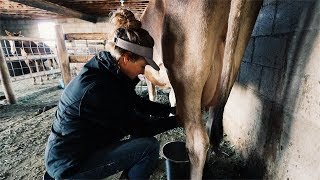
In this casual vlog‑style interview, Jill Winger of The Prairie Homestead (with husband Christian and occasional family members) explains why they left suburban life for a 9‑year‑old homestead in southeast Wyoming. Their initial motivation was to obtain better, fresher food in a regional food desert, which led them to purchase land for horses and then expand into goats, chickens, compost, and home‑grown pork. Jill describes learning homesteading through trial‑and‑error, books such as the Encyclopedia of Country Living, and mentorship from other homesteaders. The biggest ongoing challenge is balancing homesteading tasks with their other business, travel, and social commitments, often resulting in a juggling act where some chores fall behind. The greatest reward is watching their children become comfortable and knowledgeable about food production, animals, and nature, essentially growing up with a lifestyle they never experienced themselves. The conversation also touches on daily routines (making breakfast with home‑grown sausage, herb garden) and ends with a brief look toward future goals, such as expanding land and sustaining the homestead for the next decades.
Chapters
I'm Jill Winger from the Prairie Homestead, and we live in southeast Wyoming, and we're making breakfast this morning, some sausage.
We're gonna— we have to tie her up and then we're gonna go get the hay.
Hey, Mace, you want to just get behind her and smack her on the butt?
We homestead for a lot a lot of reasons.
It started off with food. We just wanted better food, and Southeast Wyoming can be a little bit of a food desert sometimes. I mean, we have some options but not awesome options, and I knew if I wanted good food, I'm gonna have to grow it myself. So that got us into this whole homesteading thing, and then we just fell in love with the lifestyle, the quality of life, what it gives our kids, and we're hooked. We started homesteading right after we bought our property, which was right around 9 years ago. And we bought it originally because we just wanted something, a place for our horses. We just wanted land. We wanted our first home to not be your typical suburban, you know, packed like sardines in town. Simultaneously, we— I just started thinking, how can we make this property pay for itself? And how can we create on this property? And how can we produce? So I started looking at goats and compost piles and chickens, and I just went crazy from there. So really, this property was a catalyst for us. We learned how to homestead mostly from a lot of trial and error. So my husband and I, neither of us were born in the country, we weren't born on a farm, but we wanted it really bad. So it was a lot of jumping in, or like I like to say, jumping out of the airplane and figuring out how to build the parachute on the way down. Reading books, asking people, following people around, making a ton of mistakes, messing up. I love the Encyclopedia of Country Living, the big giant one. There was one I got called Backyard Homesteading. I think I still have it in the basement somewhere. And there was a couple story guides that were goats and chickens and kind of breed or animal specific that were really helpful at that point in time. Yesterday she was perfectly calm, ate her food, then she just has days where they're More.
All right, thank you guys. Mm.
This is homegrown pork. We did have it processed at the butcher. I think the biggest struggle for us with homesteading has just been balancing it with the rest of our life. We have a lot of other pieces of our life that we love, so it's not like we can just hang out here in the prairie 24/7 and never go anywhere, never do anything by choice. We have a lot of other moving pieces, and so it's a struggle to keep that quality of life but then also have businesses and travel and have friends. That's also kind of important. So it's a constant juggling act, and sometimes the homesteading gets pushed to the back burner. And maybe we're not, you know, milking every single day, or we're not growing as much in the garden as I would like, but we just kind of do the best we can and fit it in. So I think the biggest reward with homesteading is just watching our kids be immersed in the lifestyle. And they, they're so comfortable with it, they don't even know what they have, you know. And they're comfortable with animals and food production and so savvy about nature and things growing and just the life cycles. And that's just so fun to watch. Especially because my husband and I didn't grow up with that lifestyle. So to see them just— they don't know any different, right? And they're actually like, some people buy their eggs from the store? Eggs come from the store?
If eggs don't come from the store, where do they come from?
Chickens.
Chickens. This is the herb garden. A little overgrown at this point. I will grab some chives. Go check our sausage before it burns. So this is some chives and this is some thyme. We're gonna sprinkle these on top of the baked eggs.
What is this?
Sausage.
Yeah, did you get that sausage at the grocery store?
No, from the barn.
You got it from the barn. There's a child that knows where food came from. Christian, what's the biggest struggle in homesteading?
Um, this one is not done.
Getting everything done before it gets dark. What's the biggest reward? Oh, probably this right here, having the food that you grew and raised. Where do you guys see yourself in 20 years?
Okay, yeah, I definitely see us— we want to buy more land. That's definitely one of our goals. It's one thing they're not making any more of. So, um, more land, more cattle. And I really want to see, you know, us being able to share skills and knowledge with more people and expanding what we're doing on The Prairie Homestead, the blog, to get to just a greater outreach. So I see that kind of weaving into that as well.