Showing Nick Freitas How My Permaculture Homestead Works
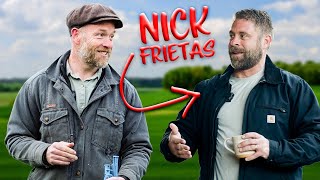
In this YouTube episode, Justin Rhodes gives Nick Freitas a detailed, hands‑on tour of his small‑scale regenerative homestead, explaining the principles and practical steps behind his livestock system. The conversation covers deep‑bedding composting for winter cows, the use of feeder steers (year‑old castrated males) instead of heifers, daily rotational grazing with single‑strand electric fencing, and the economics of wood‑chip bedding versus buying commercial compost. They discuss parasite control through a 45‑day grazing cycle, health management that avoids dewormers and vaccines, and the process of on‑farm slaughter with a custom butcher to reduce animal stress. The dialogue also touches on financial strategies for low‑budget starts, community funding, and the importance of learning from mistakes, illustrated by stories of lost cattle, pig escapes, and a fat chicken death. Additional content includes the design of portable compost bins that require a critical mass (120‑140 °F) to kill weed seeds, a rule that temporary structures become permanent only after three years, mobile milking stations on skids, minimalist pole‑and‑roof barns without walls, mobile chicken coops (Chickshaw) with wire‑mesh floors that let manure fall through, mental‑health benefits of reducing chores, the advantages of sheep over goats (low diet needs, companionship, milk production) and a custom welded sheep pen, portable turkey housing inspired by Joel Salatin’s Gobbly Go, and using chickens to break the fly‑larva cycle after cattle. Throughout, the hosts emphasize a mindset of “fail small, keep moving,” encouraging viewers to start with minimal infrastructure, scale up gradually, and adopt a regenerative, self‑sustaining approach.
Chapters
Hey, we got a new cup for you. What does it say?
Embrace the mess.
Yes, I'm sure I'll be trying to fix the mess.
No, thank you very much.
I'll be looking for that.
Oh, you will see it, my friend. You will see it.
This is not just a regular homestead. I would say this is a regenerative homestead. Yeah, this is what Joel Salatin's doing but on a small scale. Yeah, so these, uh, the cows are on deep bedding over the winter. So that they're not out plugging up the field. The field's vulnerable in the winter and they, they can be difficult on it. Sure. Also, if you poop or pee on the field in the winter, there's nothing to absorb it. There's no microbial life active and grabbing it and it just leaches off.
Yeah, yeah.
But if you put the cows on deep bedding, which is wood chips or spent hay, as Joel would call it, it's a carbonaceous diaper. So the poop and the urine go into that And it does capture it. Yeah, all the nutrients and, and, and life from the, from the manure. You can see a pat right there. She's patting it right there. And what we'll do is once or twice a week we'll come with the track loader and come dump a load of wood chips in and spread it out. And this, this rises up, you know. Yeah, it was two-thirds that size.
No, this is— so this is incredible because, yeah, like I've seen, I've seen it on Joel's property How much, um, like how much wood chips do you think you're going through for, um, the amount of livestock you have in this?
All right, that's probably, uh, let's say you have 2 cows.
Yeah.
Um, you're gonna go through a dump truckload of wood chips.
Okay.
A season.
And that's doable? That's not— oh yeah, do you do anything?
$300 if you have to buy it.
Okay.
If you, if you can't just find free wood chips. Which a lot of times you can't.
Yeah, so yeah, the baby cow is what's gonna eventually ensure that I get cows because every time my wife or my daughters see a baby cow—
Well, then we needed to go and let you interact. Well, wait till you see the little one.
Yeah, when we were talking about this before, you were, 'cause I was complaining about pigs, which I know we're gonna get to later, but, and I was saying that my goal one day is to get to, I want my own beef cattle. And you were saying that That's significantly easier.
Oh, significantly easier. If you just want beef cow, what you want to do is get feeders.
Okay.
So that means you're buying them at about a year old. She's 3/4 of a year old, so not much bigger than that.
Okay.
And you're gonna buy them in the spring, right about now, and you buy 2. If you have a pasture or something like that, you seriously just put up a single strand of electric Temporary fence. That's all it takes to put them in.
Okay.
And, and you guess because you're just starting out how much you think they need.
Okay.
And you give them their little plot, and it— at first it's going to take a few minutes to put it up, but you'll get to where you can— you move and set that up every day because you want to move your cows every day. You'll get to where you can do that in like less than 10 minutes.
You guys have it set up, you know, kind of like a larger area, and then you just rotate them Do you rotate them daily?
Yes, cows you rotate daily. So you'll guess, you'll say, "I think they need this much area." Yeah. Okay, there's your 2 cows. Afternoon is the best time to move them. The sugars in the grass have risen up. It's gonna be more nutrients available to them.
Okay.
The parasites are— the parasites like live down and low. So when the dew's off, parasites retreat, go to the ground, you're mowing it. You got all the sugars in the grass. You've seen how good you graze that. Did I graze— did I give them too much? Did I give them too little? Oh, I gave them too much. There was way— there was way too much grass left over. Let's give them a smaller paddock next time. You build your other one while they're still in this one.
Yeah.
Then you just move them over and they'll come. You just open this and they'll come because it's fresh grass.
Yeah, yeah.
And then you just keep going and doing that. You have to have some sort of water out there. And when I first started, I literally had— I had my faucet here and I literally ran water hose, just make it happen.
Yeah.
And then eventually I would put in plastic water lines.
Yeah, where we're at in Virginia, we get pretty good rainfall, so our pasture is pretty good. But yeah, how much, uh, how much acreage do you need?
Good question. You see this little field here? Yeah, that's about 2.5 acres maybe. That's plenty for feeders too. Yeah, so 1 acre per feeder steer. And what I mean by steer, if anybody doesn't know, it's just castrated male.
Yeah, yeah.
Okay. Yeah, if you leave them, especially beginning out, if you leave them intact, they could smell the ladies and they want to get— they get— they want— not want to get out.
Yeah, yeah.
So you get steers.
Yeah.
Okay, but that— do you have that much land? Yeah. So what happens here, you kind of go back and forth on it, right? You've got— you got into the end, let's say. Well, now you're at the end. Well, then you come over here and you come back. You understand?
Yep. Well, this is kind of what we did with our chickens. I mean, it's like, you know, it was the tractor, but yeah, yeah, you're just moving it along.
So just come back here And this is recovered. Yeah, there you go.
Over again, it all sounds fairly straightforward, right? Yeah, get yourself 2 feeders. If you got a, if you got a few acres, we'll say 3 acres of like good pasture, you can rotate them throughout the year, purely grass-fed.
Yeah.
Um, do you do any finishing of anything else, or just—
Well, you're gonna buy them in the spring.
Yeah.
From a— and in Virginia, you're gonna have no problem finding them. Yeah. No, you're looking for 2 yearling steers. You buy them in the spring, you're gonna kill them in the fall.
Yeah.
Now for finishing them, you want 100% grass-fed, so you don't do anything different.
Yeah. Do you use solar for the electricity or do you use the, uh, oh, for the wiring for the fence?
I love the grid. Yeah, I love the grid. Something's crazy going off-grid. I love it. Yeah, it's so— right now at least, yeah, energy is very efficient. Or not, not— I wouldn't say efficient, it's awful. Like you're only getting 90% from the power plant by the time it hits your house. It's awfully inefficient. But it's affordable, I should say.
It's cheap, yeah.
And so these, these, these, the problem with cows and just one single strand, yeah, you could probably get away with solar because there's not gonna be a lot of weeds on it. When you get a lot of weeds on your electricity, you need power. And you can get so much more power from something that just plugs in.
Okay, so you just—
For so little money.
Let's say you've got property, but your pasture, and it's out a bit. I've seen people, they use just kind of like the battery where they like load it up that way as far as the— as opposed to the just plugging it directly in. But yeah, but pretty much one, you're saying one strand, T-stakes?
Yeah, let's do it. You want me to show you what it would look like? Yeah, you want to definitely see the milking. We can go in there. Okay, great. Put hands on them. We're trying to convince Nick to get a couple of steers because definitely one of the easiest things to do. You don't smell it crazy. I mean, there's a little bit.
Oh no, it's not bad at all.
But it's not bad. You're drinking coffee out here.
Oh yeah, yeah. Well, it was funny, I remember, I remember listening to Joel say you should be able to have a romantic evening in the midst of it. I'm like, that seems a little much, Joel.
I feel bad.
That's your idea of a good time?
Throw down some hay?
But no, it is amazing. Like, this is not It's not overwhelming or anything like that. There's not flies everywhere.
Everything—
it's, it's—
that's my bedroom right there. Yeah, the cows are literally in my backyard. I take it to the next level. Forget the chickens in the backyard, put the cows there. Yeah, because in the winter when we're milking them, we're here every day. Yeah, this is a big— this is the biggest chore in the winter.
You talk too a lot about zones.
That's right.
Um, because that was one thing we, we realized the first time we ever had chickens. We said, oh yeah, we're gonna put the chickens That's what I did.
I was like, I made that mistake.
And then getting eggs every morning was like, like a chore instead of like, you know, just waking up and saying, hi ladies. And so we moved them like right next to the garden, and it was— it, it shouldn't have made that big a difference.
It did. Oh, it makes a big difference.
So I imagine the same thing's true of this. And if you can keep like, you know, what might be considered some of the smells you typically don't like with livestock close to the house, but this isn't bad at all.
No. And if it starts to smell Well, then you're like, oh, I just need to add more wood chips. Yeah, they're not going to eat this hay. They've left this hay. Yeah, normally they spill a lot. They have spilt a lot. Yeah, but this is the concept. Yeah, you can either cover it with wasted hay like this. Yeah, or you can cover it with wood chips. You can see we do a little bit of both.
Yeah, what would have been wasted and actually like either, either harming your pasture from the cattle walking around during the winter where it can't properly absorb it This is now gonna be essentially what, your compost?
Yeah.
Or a large portion of it?
This is actually composting right now.
Yeah.
It gets this mass. It's probably 100 degrees though. In the spring when the cows go out, then all this material can be put in a manure spreader and put out to the pasture. Okay. And we'll take it to pastures that aren't doing as well.
Yeah, yeah.
Like down here the pastures are jammin'. I mean, grass is already this long. But up top, a steeper pasture is maybe this. So that, if that gets more nutrients, it'll start keeping up.
Yeah. And so, and the, so the, the industrial approach, for lack of a better term, for how you're gonna improve your soil and whatnot, just I go buy a bunch of chemicals.
Synthetic chemicals.
And then I test my soil.
From China.
Figure out what it's missing. Yeah, yeah, China now that Russia ain't got it. And then I just spread it in order to try to get the right balance. But you get diminishing returns. Whereas like right here, you're, for the price of $300 in wood chips and then bringing your cattle in, you're actually getting the very nutrients that you're gonna need to replenish your soil.
I know, it's wild.
That's okay.
The things we need are right in front of us. Homesteads would be even more, well, or can be very conducive to it because we're not, hopefully you're not overloading, you're not getting more animals than your land can handle.
Yeah, yeah.
You know, if you're just getting steers, you're getting 2 per 2 to 3 acres. You're just running them from the spring to the fall and then you're doing away with it. And you're not, that's not abuse. When you're rotating them not like that and you've started here and you don't come back to here until that grass has recovered, you've doubled your edibles and halved your weeds. But if you give them all this pasture they're like children at a buffet. They're gonna go for the ice cream.
Yeah.
And only the ice cream. And they're gonna keep going. That's the problem. Then the ice cream comes back a little bit and they go at it again and it hasn't fully recovered, it destroys it.
Yeah.
So then you've doubled your weeds and halved your edibles.
Got it.
Yeah. Got it. And so two options with any animals. If they're gonna stay in one spot, deep bedding.
Yeah.
Joel calls it vibrant decomposition because this is actually turning into compost. It's 100 degrees. It's actually absorbing their manure. This is your sanitizer. Or they move. So if they're out, they're not staying in one spot, then they gotta move regularly.
So let me ask you this real quick, 'cause obviously one of the, there's a lot of values with respect to rotating the cattle. You got the soil, you got the edibles, it's better for the cattle. One is the health benefits, right? Because they're not, you don't have a huge herd sitting in a feedlot somewhere with viruses just going back and forth and running amok. But then when you bring them in for the winter, so would this be something where, like for the cattle you have right now, is this something where they come in here around October, November?
Yeah, you come in here, it's gonna be different for everybody. They come in here when we're out of grass. We usually shoot for Christmas, New Year. It's kind of fun, you know, they're coming back around Christmas time, holiday time.
They're coming home for the holidays.
Yeah, we're all excited 'cause we're tired. We're sick and tired of moving them every day. And then they come to the bedding. And now it's fun to do something different like that. Have two different systems because we like the bedding at first, you know, they're right outside the door and then, you know, we're sick and tired of just going right into the backyard and milking the cows. We're ready to start moving them again.
Health-wise, so out there, obviously a big part of it is just they get sunlight, they get movement, they get fresh food. In here, you know, hay, it's a little bit more compact. So what's the— Is there anything you have to do to mitigate any health concerns once they're in here?
First of all, they're on the deep bedding. Yeah, so that's absorbing any of those nastinesses. We also feed them elevated, so we're not feeding them on the ground. Yeah, where they're going to pick up the parasites from the manure. Okay, so they can get parasites from eating on their own manure. But we get 16 different minerals.
Oh, okay.
This is called the Advanced Biological Concept. We are in homesteading for food, for our own health.
Yeah.
So we're growing food for our own health. So we don't want to deworm them.
Yeah.
Because we don't want to eat the dewormer because we're eating their milk, we're eating their meat.
Yeah.
We don't want the dewormer, we don't want vaccines, we don't want any of that. In the winter, they're on deep bedding.
Yeah.
And we make sure it doesn't smell, it keeps it covered. And then in the summer, they're moving around. So not only does your land recover, if you don't return to where you started until it's recovered, right? Parasites cycle is about 45 days.
Okay.
So if you don't come back to the first spot to pass 45 days, you have a lot less pressure.
Yeah, yeah.
Getting parasites.
So when doing it this way, I, I imagine like the, the vet bills, because that's the— I mean, this is one of the things when I'll never forget We were at a Virginia Horse Council trail ride, and my daughter comes in and she goes, Daddy, I want a horse. And Miss Sue said we can get one for $2,500. I said, yeah, that's the initial purchase, sweetheart. Then there's the tag, then there's the vet, and the whole thing. So vet bills are one of the costs that people look at and they think, I can't afford this. But I imagine when they're getting this much fresh air and they're living in this sort of environment, your vet bills are— Zero.
Ask yourself, both are hard. Which hard do you want?
Yeah.
Do you want the hard of moving them every day or do you want the hard of a vet bill and unpredictability of that? Yeah. And not knowing even if that's gonna work for sure and then inconvenience you and your time.
Yeah.
And then, yeah, and that's just the vet bill equation. Like this is, you're gonna have to health manage your animals in one way or the other. So I figure Why not pick the preventative one?
Yeah, pick the one that is going to actually be turned into, well, you know, your compost.
That doesn't come with a load of fertilizer for you to put on. This management system does. Yeah, you get to load the— oh, or, or, you know, we talked about putting this in the, um, the manure spreader and putting it out, or which we do this, we've got a big pile over there. We, we, when they're done We put it in a pile outside. We turn it every other day with the machine. Or, you know, if you're on a smaller scale, you can do it by hand. And we used to turn it with a little tractor front end loader every couple of days to get it composting fast. And it becomes a really fine compost that you can then put on your garden.
Yeah, okay. So you're not only getting the pasture fertilized, you've got something that you're also using for your raised beds and everything else.
If you had to buy the wood chips for $300, you're gonna get, and maybe it's a dump truck load, you're gonna get a dump truck load of compost out of the thing.
That's a good way to think about it. Because you go to the store and you buy compost, I mean, you figure, you know, 3 cubic feet, that's at least $10. And it's probably not gonna be anywhere near as nutrient-rich as this.
Yeah, if you were to buy a dump truck load of compost, it's gonna be at least, it's gonna be over $1,000.
Yeah, I've bought a couple truck beds.
It's not cheap. It ain't cheap. So there's so many benefits.
Yeah, one is— so correct me if I'm wrong, one of the other benefits of doing it this way is that when, when they're out there in the winter on the pasture, um, that's harming the soil. But when they're in here stepping on this, it's turning— it's actually turning it up, right? It's because you figure when you look at industrial compost, they've got these huge buildings where they've got machines that are like turning it up, whereas you got your animals doing it for you.
Yeah, we're doing a stack, you know, so you have your Right now you can see some manure on here. Yeah, it's almost time. I mean, it wouldn't hurt to do a little bit today, bring some wood chips and just spread it out, right? He's stepping on some wood chips over there, kind of like we're making a lasagna. Yeah, and, and that together, that mixing of that manure, which is nitrogen, with that wood chips, that is carbon. Yeah, that's the— that's 2 of your 4 recipes for making compost. The other one is air and and, and water. It's naturally getting that from their urine, and we can add some when we put it out into a pile.
Yeah.
Um, and if we're putting out on the field, this is rather still quite unfinished. Actually, if we dug down into this at the bottom, the stuff's been here longer, it's gonna have already been composted. Wow. Over time, we don't even have to do anything. It'll do it all itself.
When will you put them back? And for, again, we're out of North Carolina. Yeah. Would you put them back on?
It's going to be different for everybody because your pastures are different, you're in a different climate. We're aiming for pretty soon, a week or two. You want to wait until, um, grass is, is maybe that, that much, about a foot high. Yeah, about a foot high if we want to give somebody some sort of number. Yeah, you want to make sure your grass— before you— how do you know when your grass is recovered? So have you ever noticed how when you mowed your grass, maybe— could you get me a piece of grass, Gideon? So if we have a piece of grass here, see how this is pointed?
Yeah.
That's recovered.
Okay.
If you mow your grass, it looks like that, right?
Yeah.
Like after you've mown it or after a cow hits it?
Yeah.
Well, if you go out there and you still see shredded edges, it's not ready.
Okay.
Okay? And then you go pick a— another test you can do is just actually uproot one of the average grasses out there and count The leaves. Oh, see how there's a stem and a leaf? Like, who knew? Who knew grass had leaves, right? There's 1, 2, 3, 4. It's all pointed. That has 4 pieces, 4 leaves. You're good. 3 or 4 leaves.
Okay.
You might even have some browning on the other end. Hey, I've waited too long.
Yeah.
Once you start, once more than 20% of it has gone to seed, you're starting to get into that, hey, I might wait too long. The problem in the east, our grasses don't hold on to their nutrients. You can let this go so long and you're not gonna have any nutrients in it. It's all gone to the seed. It's all gone. I got it. So you don't want to hit it too early or too late, but I would definitely err on the side of hitting it too late. Okay. Making sure it gets— I mean, Beth and Sean Doherty, old, old school homesteaders growing all their own food, I've seen them hit just the brownest. You know, at the homestead level, yeah, we— the homesteaders learn a lot of their farming from farmers. Like Joel or Greg Judy or whatever. Yeah, but they're on very efficient, perfect timing in there. They got to get to a certain market size, market weight at this certain amount of time. But with homesteaders, hit the grass after it's a little— give yourself some grace. Yeah, yeah, uh, because they're still going to give you milk. Yeah, yeah, it might not give you quite as much, but it's not going to be that big of a difference.
Yeah, yeah, yeah, right. When you're—
I imagine Nick's raised pigs with not the most wonderful experience.
No, I did not.
A lot of homesteaders, when they first start out, they think some of these smaller animals are going to be easier. They're, they're intimidated by cows. Since you want to see the pigs, we'll go past the pigs, do this little demo.
Okay.
And then we'll come back, talk about the pigs. Okay. And the chickens. There's always a chicken out.
Yeah.
Okay.
We—
I've been doing chickens for 20 years.
Yeah, we have. I mean, our chickens regularly just kind of go all over the place.
Yeah.
I told Luke, I'm like, buddy, Your job is to keep all the chickens in this space. I don't care how you do it, figure it out. And, um, for the first week I'm like, man, he nailed it. And then I come out one morning, I open my door, and there's my rooster on my porch. Like, yeah, every time.
Once you figure it out, they're gonna find another way in a week. Incidentally, if this is all you had and this is just an acre and you needed two— yeah, get two steers. Yeah, we're gonna start right here, we're gonna go down back, down, back, until finally we're back here. And has this recovered where we started? Yeah, you know, in the spring it might have recovered.
Yeah, yeah.
Uh, I mean, this, this pasture probably would have. This is like crazy town good pasture. But what if it hadn't? But you still want 2 steers because you just can't find 100% grass-fed, or you have— you want to raise it a certain way, or you just want to get control of your meat. Yeah, you know. Uh, well, have some sort of little shed, put little cattle panels around it. It could be a lot like that shed right there. This hasn't recovered yet. The boys go into the shed. Yeah, for a couple weeks. Yeah, so long as you can get hay. Yeah, because you're gonna have to feed them hay while they're in there.
Sure.
And so as long as you can get some wood chips.
Okay.
And the manure, you put them— this is recovered, you can come in here. But let's just say you have enough. We're going to start in the corner of the area. We're going to be mindful of where our handle is. Because we're always thinking about tomorrow's move. If you have regular cattle mount, they're going to think you're crazy for moving them every day.
Okay, yeah, I imagine.
All right, just like all of Joel's neighbors. Yeah, they all think he's crazy. And this is so easy, a 9-year-old could come out here and do this. And cows, you don't need to be afraid of cows. They're pacifists. Yeah, pigs are the opposite of pacifists. What's that? I don't know what that is.
Yeah, serial killer. Okay.
Back your trailer up. Yeah, put them in there. Now that's if they've been trained to an electric. Okay, you might be getting them from a farm, they've never seen electric. Gotcha.
So they're gonna figure out—
they've never seen electric fence, they will figure it out, but they need to be in a physical holding. So you need to get some panels. Okay, Tractor Supply or somewhere. We got some panels and made a ring for Lily's horse. Yeah, just a little one strand inside that pan, inside that physical holding.
Okay.
And put it on, and they come and touch it with their nose. We've put this about where their nose is.
Yeah.
With a cow, you want them to— they're more likely to go over it.
Okay.
A pig's more likely to go under it.
Okay.
So with a cow, you want to err on the side of too high.
Okay.
Once they touch this once and it's hot, they're going to be trained. The reason you don't want to do this out in the field first day if they've not been trained to fence is what if they're in here and they test it?
Yeah.
And they run forward. Got it. And then they're out and they're not oriented to where home is.
Yeah. What's the most difficulty you've had with a cow getting out?
Okay, my very first experience. Remember when I told you to get 2 steers? Yes. I only got one.
Okay.
And it was a heifer. Okay. I want— I had been sold a heifer even though I wanted a steer. Yeah. We did this. We, we, we, we set her up, put her in the field. You know, when we first started out, I'm just bringing the hose out here, just get it done.
Yeah.
Just buy 6 hoses if you have to. That's 600 feet.
Yeah.
That's enough for this whole field.
Yeah.
It's going great. It's going great. You know, she's in here. She's ate this grass. I think I measured it right. I think she got enough for it. I'm going to teach you how to do this while we talk about this story. And so then your cows are in here. She was in here, right, Ira? I think you can imagine. You've already set up the posts.
Yeah.
So we would have had another.
And then, yeah.
I should have brought another spool and we just set up another one.
Okay.
Let's do this. Yeah, roll it up. Yeah, she'll come over.
Yep.
Because she's been in here 24 hours, she doesn't have the internet, she's bored to death, there's a new buffet open. Yeah, she's coming over.
Yeah.
Okay, so then you pick this one up.
Yeah.
And it becomes your next day.
Yeah.
And you look and say, oh, I didn't feed her nearly enough. Okay, I'll make it a bigger paddock.
Yeah.
Oh, I fed her too much. I'll I'll tighten it up. How do you know that? You just have to get out there and just try. You're not going to kill them. Yeah, yeah, just make sure they have water. Yeah, and it's going to be just fine.
So if I am like, from beginning to beginning to end, yeah, like from an infrastructure perspective, yeah, certainly nice to have something like that where I've got some overhead cover, I've got something where I can put in deep bedding with wood chips, I have something where my hay that I'm going to give them during the winter you know, can elevate so it's staying up out of the ground and whatnot. And that's all good for the, the health perspective. And then now if I'm talking about like steers that I— when I first pull in, the infrastructure I have set up is something with like cattle panels, something for them to go into if they're not trained to wire. They're going to go in there, I'm going to have my electric wire, and that's for the purpose of giving them a chance to touch it, feel it, know like, okay, this is, this is my new boundary.
Yeah.
And then, um, then I can move to just something like this.
Yeah.
And then it's all about just creating, um, creating an area big enough for the two of them to be able to, you know—
that's right. And if you're just doing steers, this is why I tell you to start with steers.
Yeah.
Don't worry about the deep bedding. Don't worry about it because you're not gonna need it.
They're not even going in.
The reason we have deep bedding is because we have milk cows and we keep cows all year.
Yeah.
And, uh, the only reason you would need to do that if you have just steers is if you didn't have enough land. Yeah, or, or you were starting a farm. Yeah. And you wanted to keep mama cows.
Sure.
And a bull over winter. Yeah, that'd be the only reason. Otherwise, just get 2 steers, just do some land, put them in a paddock, move them over. So when I first got it, you know, I told you get 2. Yeah, I only got 1. Ended up being a heifer. And I tell you to get a steer too, a castrated male.
Yeah.
Because we got this heifer, we're moving her around, we're doing good. We're like, hey, we're good at this, this is fun. You know, Dad's saying I'm crazy. Yeah, it's not what he did. He just put a fence up and put them all out in there. And I'm like, no, this is what Joel says and it makes sense. I gotta let this grass recover. I gotta get them out of their parasites, out of their own manure. Well, I woke up one day and I looked out there and you asked me about health concerns. This cow was bellowing— that's mooing— she's mooing, she's walking back and forth, you know, along this Single strand. She's just, she's crazy. What's wrong? She's bellowing and I'm thinking, what is going on? I go out there and look at her. I don't see anything. She's eating, she's drinking, but something is wrong. You know, I kind of keep a close eye on her. 2 or 3 days, it's over. She's just fine again. We're all happy. We're moving things. We're moving her around. Well, about 3 weeks later, it happened again. Started, you know, pacing the fence.
Yeah.
Well, this time I woke up one morning and looked out and she's gone. Now the problem was I didn't have any money. Yeah, I had no money to buy this cow.
Yeah.
So you know what you do when you don't have any money and you want a homestead? You, you call up your friends and say, I'm gonna eat a quarter of this beef.
Yeah.
Do you want to buy a quarter?
Yeah.
And there's 3 quarters, and you, you give half of your money now, and you're totally transparent. You know, get half your money now, and then when we go to slaughter, we'll take The other half, I had sold 3/4 of it and she's gone. Yeah. And I told him, you know, there's risk to this, but I'm like, I can't do this. I don't, you know, started looking all over the place. And long story short, we go to the neighbor, we go down the road. It's been 7 days. We can't find this. Oh wow. This cow. Finally, I just get this hunch and I go clear over the mountain about 5 miles through trails, get to the end of it and kind of give up. And I gotta go to the bathroom, I go pee, and as I'm peeing, I see some tracks. And we're at a fence. And I follow these tracks and I see a break in that fence and I go through that and I eventually find this herd of 20 Angus. And I said, I bet she's in there. And sure enough, I found out who that was and there she was. Do you know what was wrong with her? What? Every 3 weeks, the female goes into heat. She's wanting to mate. And if there's not anybody else in there, that's why I say get two.
Get two.
If there was somebody in there, even another female, it's okay. And that's why I say get a steer. Yeah.
So she was going to the club.
Yeah, she was going to the club. Well, I called up a whole bunch more friends and I brought like three more cows home with her. Yeah. I said, hey, do you happen to have any more for sale? 'Cause I don't wanna make the same mistake again. Yeah, yeah. And so then I had a little herd.
Just started out.
Steers.
And if you're not going to keep them over winter, like, you know, just make sure you have a place where it's— you've got some sort of fencing, not just electric, but some. And, uh, if they're not trained to it, yeah, take them off, let them into that area, get them used to the electric fencing, and then it's just a question of adjusting it as appropriate over the, over the spring and summer.
Yeah.
And then you're slaughtering in the fall and that's it.
Yeah.
And again, if you're getting steers, they're not going to break out, not going to be looking for the ladies or anything like that.
And they're not gonna be— you've taken away some of their aggression. So for slaughtering at the end, you're just getting started, find your local butcher and ask for the farm killer. In most cases, there's somebody that will actually come to your farm and kill them on farm for you. And then take them to the butcher for you. A custom butcher.
And the benefit of killing them on farm as opposed to trying to load up in a trailer is one, I imagine it's a lot easier with respect to transport. And two, You're not stressing them out right before slaughter because that affects the way your meat tastes.
Yeah, it can mess with the amino acids because they get stressed out. Yeah. And all your good husbandry.
Yeah.
Can go down the drain if you just stress them out at the end.
Okay.
And so we're sure, you know, we kill on farm. We're sure to get up as close as we can. We'll even train them to alfalfa. We don't feed grain, but we'll feed alfalfa. And that's a nice treat for them. Alfalfa pellets. Yeah. You know, we'll put out a pan, let them come to it, and kind of every day we get a little closer.
Yeah.
So that we can get really close. Yeah. Come times to kill them.
Much better life than a feedlot somewhere. And yeah, yeah, yeah.
And that, that's what you need to tell yourself too. You're going to make mistakes. You're going to underfeed somebody one day, but you're moving them every day. You have— you can make a mistake and it's only a 1-day-old mistake.
Yeah.
And you might forget to turn the water on one day and you know they got thirsty.
Yeah.
Or they got out and you had to chase them back and you knew they were stressed. It's not going to be compared to how they would have been raised.
Yeah, yeah.
Or the meat, how the meat you would have had to consume was raised, it's just night and day.
Yeah, yeah.
So even I feel like the, some of the worst thing a homesteader could do wouldn't even compare.
Yeah, a cow's worst day on this is better than their best day in the feedlot.
Yeah, yeah, for sure. What do you think, Nick?
I, I'll tell you that that is eye-opening because for you there's always the assumption that the bigger the animal, the bigger the, the pain, the more the infrastructure requirements, the more the feed requirements, the more expense involved.
Yeah.
And yeah, your initial purchase of a steer is going to cost you more than you— probably more than you would buy for like a pig or something like that. But, um, yeah, but yeah, I know we're going to talk about pigs next because I have had nothing but trouble with pigs. And, and part of it was, was just not knowing what you didn't— you don't know. And then I think even worse than not knowing anything is knowing a little and think you got it figured out.
Oh, that's worse.
Especially with—
it's better to go in not thinking you know nothing.
Oh, my, my joke with pigs is whenever, whenever I, I tells, oh yeah, we're raising pigs, we're doing this. And people are like, oh, I heard pigs are smart. I'm like, that doesn't mean they do your taxes for you. No, it means they get out of anything that you put them in.
That's right, they're constantly testing the fence.
Yeah, I decided— I— we hadn't done it for like 4 years. I was like, I'm gonna do this again. I've been, I've been watching, I've been watching YouTube, and I went to Polyface, and I've got this figured out. Yeah, it was funny how you talk about how, yeah, we did this, and it's like, we're good at this. Because my wife Tina was like, baby, the last time we did this, it was Horrible, because our neighbors have thoroughbred horses and they're wonderful people, but they had thoroughbreds that they were doing like championship dressage with. These were like good, nice thoroughbred horses. And I didn't realize how terrified horses are of pigs. Like they will break a leg trying to get away from them. And so every time our pigs would get out, Tina's thinking, we're gonna lose a pig and we're gonna have to buy a thoroughbred horse we can't afford.
Oh my gosh.
There was one time where I'm out there by our creek in the woods pigs. And our— he wasn't huge at that point, but, uh, or she wasn't huge at that point, but she was probably about 175 pounds. And I'm, I'm sitting here trying to lasso this pig so I can get it back. And my wife— so this is in her mind, this is what she is thinking, is she's gonna think it's on like 4 times as big. Oh, I screwed up because I did single strand wire, and then I did a solar panel for my fence because I'm like, oh, it's going to be better because it's just, you know, yeah, I don't got to worry about it. And for the first couple of weeks, I put them in with the hog panels first kind of got used to the area, got everything set up, got everything cut down, and worked like a charm. I mean, they are out there turning poison ivy into bacon, and I'm like, I'm the man, I'm the man. And the other thing I screwed up with is I had, I had some males in there as well, and, uh, I started noticing that whenever they would get out, um, it was always the males leading the charge. It was always— they were always the problem. I'd wake up, go down, go to feed them, like— and you're sitting here like, you're so ungrateful. I have given you the woods, you have all this space, right? And you're still— it's still not good enough for you. Again, it's encouraging. It's one of the things I always appreciated about watching you and Rebecca from, from starting off to where you are now, um, was because people— a lot of people have this idea as they get interested in the whole concept of homesteading, and that means different things to different people, right? Some people completely off-grid, that's their goal. Great. Some people love the grid. Some people, some people just want to, you know, be able to, you know, garden more effectively or preserve the food or learn more about herbs and whatnot. But, um, it's this idea that if I don't have all this infrastructure, I can't do anything. And you guys didn't start off with all the infrastructure and whatnot. You guys built from having like almost nothing to work with except a little bit of, you know, property, um, and making it work. And, and as you, as you experience success from doing that, it, it's almost as if And I don't want to put words in your mouth, but you tell me, because I know I got married young, and a lot of times people— I'm going to make a kind of a comparison here— a lot of times people tell me like, well, if you had waited a little bit longer, you would have had more money, or you would have had more experience, or you would have had more of that. I was like, I learned how to do it all with the woman I love when it was hard.
Yeah.
And what it meant was, is that when we, when we got through some of the hard stuff, um, we had a much better idea of what we wanted, how we wanted to do it. Do you, um, do you guys feel like that's been a similar experience with homesteading on, on the idea of having to do it with very, very little and then realizing some success from it and then being able to build out? Do you think that prepared you for the growth that you would eventually have to be able to do it better than you would have if—
Yeah, definitely. I'm a big fan of Failing a lot and felt— but failing small.
Yeah.
So just starting, uh, right outside your door. Start right outside the door of your heart. So start with what you want to grow and just start with a little bit. So like in your case with you're wanting to get into beef, just get 2 steers. Just get some single strand of electric. Just get them in the spring, kill them in the fall. Don't try to keep them over winter. Yeah. The other big thing, Joel will say, if you want it, you got to want it. So you gotta want it and you gotta go for it, and you can't say can't. Yeah, yeah. How should I word that so I'm not saying can't? You know, don't say can't. Okay, yeah. So in that case, you know, we had even zero money. Yeah, we had some land like you said, but even if you don't have land, yeah, lease some land. Yeah, you find a friend who's got some open space, get into a community garden. Yeah, there are different things. So I had some land No money. If instead I say, I can't do this yet because I don't have any money, instead I challenge myself and say, well, how can I? Well, then I figure out, well, I could gather some friends and we can all kind of— they can put a deposit on this and I can get these steers and go for it. Yeah, I'll be the manager, you know, they're funding it. Yeah, let's go.
Yeah.
And not being afraid to make a mistake. Everybody's going to mess up and everybody's going to fall back— fall down. Yeah, but the question you got to ask yourself is, are you going to get back up? Yeah, you know, so you're going to fail, but get up, dust your pants off, and just keep going. We are a vlog style. Yeah, so we're just showing our everyday life and it doesn't always go good. So eventually we had a bad day. And we had a chicken that just was lethargic and just wasn't getting up and wasn't going in the coop. And it was raining. And, you know, you ever heard the saying, madder than a wet hen? Yeah, chickens don't like the rain. So if it's not good, something's wrong. We try to figure it out. We didn't really know. We ended up killing this chicken. Yeah, because it just put it out of its misery.
Yeah.
And we ended up putting up this video, and, uh, we, we called it Putting the Fat Hen— Putting This Fat Hen Out of Her Misery. Yeah, because once we, uh, killed her and opened her up, we realized she had like a softball amount of fat. For some reason, she was just getting overly fat. She fat. That's what killed her. Yeah, we called this movie killing— putting this fat hen out of her misery. I put that out, I was so sick with vulnerability, I went and took a nap. Yeah, it was our first time being vulnerable. Before YouTube, we had put out a movie called Permaculture Chickens.
Yeah.
Textbook, this is how you do it, you know, all the things. Yeah, really clean-cut. So I'm the apron-wearing permaculture chicken ninja master. I'm not supposed to have a chicken dying like this, let alone not knowing what it was. And then when I found out it's like fat, not knowing what caused that. I put that movie out there. When I got up from my nap, all the comments were, oh, thank you so much, this makes me feel like I can do this. It makes me feel like, you know, if somebody with your experience can make a mistake like this, makes me feel so— so I say that all the to say, yeah, everybody's going to make a mistake.
Yeah, yeah.
And you're going to kill somebody. Yeah, I've killed people. I'm not— people, sorry.
Yeah, I don't know what you get when you get on the property.
Why do I call my animals people sometimes? That's really bad when I do it. Then I've gone into a brooder, accidentally stepped on somebody.
Yeah, yeah.
And they've died. Kids might overhandle somebody. Somebody's gonna die. It may— you may not know why. Yeah, you may know why. It may be your fault. It may be completely out of your control. You may not have any idea why. Yeah, something's gonna die.
It is encouraging because I remember when we first had, uh, goats, and, you know, we, we felt like we knew what we were doing. We felt like we were staying on top of everything. And my, my youngest daughter had a goat she had to bottle feed, and that, that goat lived in a playpen in her room for, you know, like a couple months before she introduced her and the whole deal. And then, you know, the weather fluctuations and the, the, you know, and it died.
Yeah.
And she was just heartbroken.
Yeah.
And the next thing you know, uh, one of our other goats gets sick and she's just like, oh my gosh. And, and she is sitting up there on the balcony and she's thinking like, here we go again, I'm gonna have to bury another goat and this is my fault and I did something wrong. And she managed to nurse that one back to health, like it was on the brink. And she may— and it was And it was nice because it was a win and it was also showing that, okay, you can affect things. Yeah.
Yeah.
But it ain't going to be perfect.
That's a good point.
And sometimes they're going to die and learning how to deal with that is a part of this. And again, watching someone that everyone recognizes as you put in a lot of work, you know what you're doing, you do it well, and things, bad things still happen. It's not a reason to quit.
Right.
It's not a reason to throw in the towel.
And they've seen that. When kids are on the farm and they see animals die, yeah, then they understand when Grandma dies.
Yeah.
When they see animals breed in broad daylight, the birds and the bees conversation comes up naturally. Yeah.
It's not this awkward thing.
Yeah, that's what I'm getting at. It's not this awkward thing, the birthing.
Yeah.
You know, birth— births are not Terribly romantic right out the gate.
I love it whenever you're in a— whenever you see it in the movies and, uh, it's like, oh my gosh, the birth was so beautiful. I'm like, I love all my kids and I've been there for all three births. Beautiful is not how I'd like it. It is, uh, esoterically beautiful, but, uh, but gosh dang, when it's happening, I'm like, it's a lot of sweat.
Where are we? Yeah, we're screaming, gnashing of teeth.
There's a reason why There's a reason why the men used to sit in the library with their cigars.
Based on your story, yeah, embrace the grid. Yeah, it's going to be a more powerful hotline. Okay, get away with the solar. Yeah, just get— just, just run a strand.
I'll do that real quick. So to give you an idea, here's what I did. The first time we ever had pigs, I kept them in a little contained area, but I didn't use the right paneling, so they got out. And then I thought, all right, I'm going to do— I'm going to do the smart thing, cuz my wife's looking at me going, baby, we're never doing pigs again. That was not a good experience. I said, no, you don't understand. I've been to Polyface Farms now. I have seen the, the future, and it is now. And this is how Joel does it. I'm going to do it. So I'm going to keep my pigs in the woods. They're going to turn poison ivy into bacon. I'm going to use electric wiring. It's going to be great because pigs are smart. When they hit that wire, they're going to know I got to stay there. And so I set all this up, and, um, I brought them into a fixed area first. I got all my electric wiring set up. I released them into that, and it's working. I mean, it is working. I had poison ivy like up to my waist, and they just knocked it down. And I'm looking at my wife like, I told you, like, this is—
this is—
yeah, you're, you're welcome, babe. And there's a reason why scripture says pride cometh before the fall, because Dina comes in, I wake up one morning, I'm like, pigs aren't out there. And so I am running around looking for pigs, and my wife's looking at me like Baby, I told you. I'm like, no, it's different this time, I'm gonna fix it. Long story short, a whole lot of chasing pigs all over the place, still didn't get it right. So, and that, that's what I had. I had a little solar panel set up for my electricity, I had one strand wire, and I couldn't, I couldn't keep them in.
Yeah, so, well, first embrace the grid. Yeah, put— just, just get you an Energizer that plugs in. Yeah. It's so consistent, it's so powerful for your buck. So much more than solar. If you have a couple of days of cloudy days, your solar power is getting less. Pigs test that fence every day, unlike cows.
Yeah.
And once pigs get out, it's a nightmare. For anybody watching this that doesn't know, pigs are like cats. You can't herd them.
Yeah.
Uh, cows, on the other hand, you can just herd them and direct them back in. The second thing is Get you a Premier 1 pig net. Joel's got this dialed, and, and I think he might actually use 2 strands, but he's got it dialed. Uh, they're, they're checking it consistently. You're a homesteader, you've probably got a job. Yeah, I know you have a job. You, you got to go away. Yeah, so, so get you a net, plug into the grid. That's one option. What you did, moving them out in the— with pigs, you want to move them once a week. Yeah, out in the pasture. They prefer forest. Yeah, so I don't know, maybe your pigs, it could have been hot in a field and we didn't have enough shelter or whatever. Okay, well then that was all good.
But like we were joking before, when you said I wasn't moving them enough, because I thought, you know, again, last time I came in, I had them in a small area. And again, I, I always have this idea in my mind that my, uh, my animals are going to be grateful for the wonderful experience that I've given them, as opposed to trying to find a better experience.
Yeah, you know what you're gonna have to do to make it up to your wife? To ever get pigs again. Yeah, well, probably you're gonna have to get cows and do it a season and show her that it's okay. Even if they get out, you can easily herd a cow back in. Here's what you have to do when you get pigs again with your wife.
Okay, pig port.
This is a 10 by 12 foot shed, cattle panels on the sides. Yeah, tin on top of the cattle panels, just zip tie it on here. You don't even have to do wood like we did here. You could just do cattle panels all around. It has to be covered.
Okay.
You have to have been a cover for wood chips. If you're going to keep something in, in one place and not move it, wood chips are your best friend.
Yeah.
He's been in there pooping and peeing. That's nasty. That's going to get him sick if he's, if he's walking and eating on top of that. Do you smell anything, first of all?
No, it's really nice.
Pigs do not— pigs don't have to stink.
Yeah.
Okay, animals don't have to stink, right? There's a little bit of wetness over there by Yeah, and pigs tend to poop in one spot. He likes to poop on that end. Despite popular opinion, they're rather clean and tidy in that regard. So I'm just throwing some wood chips over that. The wood chips and then the manure and then wood chips. Yeah, it's neutralizing that smell. It's actually starting to break down that combo of the, the wood chips, which is the carbon, and then the manure, which is the nitrogen. That combo creates life and vibrancy. And deep down in this— we'll call it deep bedding. Yeah, it's probably 100 degrees. Yeah, it's starting to break down. It's absorbing this manure and urine. Yeah, the microbial life's eating it and taking it away, and we're turning this into compost. I like to put, put this next to a garden. It's right next to our crop garden. Yeah, all weeds. Yeah, all extra produce. Birds come and feed the pig. What we get is not only sanitation from this deep bedding system. Well, look, start off with 2 feeder pigs, 10 foot by 12 foot. It's not much, that's not much space. Get 2 or 4 pigs, buy them as feeders about 2 months old after they're weaned. In Virginia, you're not gonna have a hard time finding feeder pigs. Raise them in here till they're about 8 months old. They're not going to leave this. This is a physical barrier. Your wife will thank you. You will— you, you'll think, I'm the man. You're gonna be the man again because you're gonna turn weeds.
Yeah.
And extra produce into bacon and sausage. All your kitchen scraps.
Yeah.
Any dead animal— you have a chicken that dies?
Yeah.
A goat that dies? Put it in here.
We moved our chickens over to our garden that, that ended up being a huge benefit because excess produce went to the chickens. Chicken, you know, we put more of like— we put some of the deep bedding and stuff like that with them. That went into the garden. It's not just the efficiency of it, like, you feel differently about it when you feel like you're not wasting anything.
And it's a good feeling. Yeah, this is, this is nature's greatest miracle right here. A weed or a a roadkill or whatever, some, some something that turns it into bacon and sausage. Guess what? When their pigs are gone, guess what's happened? We remove our T-posts, we remove our cattle panel, and we have compost. This is sort of rough, it's going to need to be finished, but you can remove this and now you can get at it and, you know, make, make compost. Turn it every once in a while, turn it to rich compost. And because we're close to the garden Yeah, then the pigs then feed the garden. Remember how the garden was feeding the pigs? Now the pig gets to feed the garden.
What are some of the things to keep in mind between pig manure versus cow manure when it comes to compost? Is there a big difference with respect to what you can use it for, or—
No. Yeah, you want to just make sure, especially with pig manure, that you've composted it properly.
Okay.
If you're going to be putting it on your garden. So what does So to compost it properly, you would have wanted that compost with— that has been manure in it to have gotten up to 140 degrees.
Okay.
And to get it to that hot, you got to get a critical mass. So the minimum is— think pallets. Yeah, think 4 pallets in a bin.
Okay.
That's like a cubic yard. Yeah, is about the minimum you need for a critical mass. And this is going to be way more than that. But if some home starters at home and want to know, it's cubic foot, uh, yard. And then make sure that gets up— well, I say 140, no, 120. You got to get it up to 120. That kills all weed seeds. That, that will kill any of the harmful stuff in, in the manure. And that means it's breaking down.
And another way to say critical mass is big enough pile.
Yeah, big enough pile to get that hot, or it won't get that hot. Actually, I made this— this is my pig port. Yeah, so it's actually— poor— it's portable. So when he's gone, we lift up these sides. This is portable, it's on skids.
Really?
You can see, you can see the metal skids going into the— here.
Oh, look at that. I didn't even notice that.
And we removed the end panels.
Yeah.
And we can come— when he's done, we'll take off— we take off these sides, we hook up the machine, the, the side-by-side, and move this a length. And then we can get in here and turn the compost. And it's all strategically placed.
Waste.
It's higher up, like we're on a little hill here. We'll move this out and then we can compost here and we can take it to our gardens easy. And we're wheelbarrowing downhill.
Okay, I think that's a mistake I've made before, is I've made certain structures permanent when I should—
don't make anything permanent.
I should have made them—
here's the rule: if it's— if your temporary structure has been there for 3 years, then you can build something permanent.
Okay, okay.
Otherwise you're going to be like, I shouldn't have put that there.
Yeah, when you're looking at infrastructure, to the extent possible, make it, yeah, make it portable.
Or when—
until it— but if it's been there for 3 years and you got a routine, you know you like it there, then you can feel a little bit more comfortable about maybe doing the same thing with a fence.
If you think you want a fence, put it in a temporary one. And then, except for like, um, perimeter, sure, if you have neighbors or a road, you know you're going to need a perimeter fence there. Yeah, but if you think, oh, I think I need a fence here, do it temporary, see if it goes for 3 years.
I have been shocked to find out how quickly, um, I wish I would have done it differently.
Yeah, a lot of people are transient, Nick. I'm surprised. I'm not. I'm deeply rooted here. Yeah, when somebody says, how long you been here? I've been here 92 years. I'm not even 92 years old, but Grandpa was here. Being transient, yeah, or, or getting disrupted or maybe a neighbor does something crazy, you know. Yeah, big development come in or something. Yeah, uh, this is all mobile. This can all go with me. Yeah, my milking— we'll have to go, I don't know, well, if we, if we have time, we'll go. We could go up there real quick if you want.
The—
I milk in the fields. I have a mobile, it's about this big and it's on skids and we move it every single day.
Yeah, because when you make it permanent, that means it's there forever. And yeah, and if you do have to move and there's some infrastructure that you could have taken, or you could have—
well, here's the thing. If you homestead this way, this regenerative way, and you're moving people— I can say it there, I can say people there, and it's not— it's like killing them. People need a lot less than they think they do. Yeah, you don't need the tractor. Sorry guys, you don't need the tractor. Sorry Nick, you really don't.
I do have one.
I farmed so long— no, you did— I farmed so long with one poultry net.
Yeah.
And just some single strands and just some garden hose stretched out to get the cows their water. Yeah, that's it too. Just start. Yeah, with something. Make sure you're even gonna like this.
Yeah, yeah.
Before you go building some dumb barn. Yeah, you definitely don't need a barn in the traditional sense. Yeah, you see my barns, they have no walls. Yeah, they're just poles, just roofs. And that's on purpose. You know, they're getting sun. Yeah, you know, sun's coming in, the air circulation. Cows don't need all this protection. You know, goats like to have a covering. You know, chickens like some, some walls on their coop. My coops, they're all on wheels. Yeah, dude, I don't like to clean manure. You don't have to do manure because the chickens are on wheels and the slats in the bottom of the floor, the manure is falling through to the ground. And to clean my coop, I just moved the coop. There's no manure handling here. I just throw in some wood chips over it.
Yeah.
And then move this and turn compost pile. Even the milk station, we had them— we had the milk shed out there. We're out there, we're out there milking. They use it as a shelter during the day. There's a lot of poop around it. We just move it. Yeah, we just move it every day.
So like with your hoop house here, so you've got chickens in the hoop house.
Yeah.
Um, is that their permanent home? Or do you move them out and then plant in there?
That's just a winter operation.
This is super cool because you can see chickens are right here, raised beds are right there, house is right there. This is— you're not walking an acre to go do something. And if you don't have an acre, this is pretty good. So explain a little bit on why this is set up the way it is and why it's so important both for the health of your chickens, the health of your garden, and for like efficiency.
Yeah, so first of all, if you're going to have Uh, gardens and chickens, those are some things that you're going to want right outside your door. Yeah, get the chickens out of the backyard and put them in the front yard if it's such— get them as close to the front door as socially acceptable with your neighbors, with your spouse. I mean, if Rebecca would let me, I would have the chicken coop attached to the kitchen window and I would just lift up the window and grab the eggs out of the nest box.
Everything's set up in such a way to where whatever's sustaining the animal is also sustaining the soil and the garden and whatnot. So the deep bedding for the cattle is then going to be used to replenish the soil. The other efficiency that you get from all of this is the health of the animals. I mean, it's amazing how, again, you're standing out here and look, I've had some pretty smelly chicken coops, I've had some pretty smelly pig pens, and you don't get the same aroma here. It's a lot more of a fresh And it feels like a lot more healthy environment as well.
This is our pretty Shaw. Yeah, you know, Rebecca got on to me and finally begged me long enough that she wanted actually a pretty coop. Yeah. And so, you know, is this the she Shaw? Is this the pretty Shaw? They've been in here overnight. Yeah, their floor is 1-inch wire mesh, so manure has been falling through. Here's how I clean the coop.
Yeah, I gave myself a chore, you gave yourself a composting system. Yeah, it's just a night and day difference. And like I said, the— for lack of a better term— the mental health of doing all of this is— I know, I know when I feel like I'm doing something efficiently and I'm maximizing my productivity, I'm, I'm excited to do it.
Yeah.
And when I feel like it's a chore, like I got to go clean it out, well, now I'm looking for a kid to go do it instead of me.
I know. See, so they're on deep bedding here, they drop half their manure at night.
Yeah.
Imagine how unrestful that would be to be in bed at night thinking that chicken is piling up. Yeah, that's an underlying over-issue just in your subconscious all the time. If that's piling up in a coop that you're gonna scoop one day, that's evil chicken poo. Yeah. But you want to turn that into holy chicken squat? Yeah, get you a mobile coop. Yeah, it is 1-inch wire mesh. Poop falls right through. It's making compost. That'll make you sleep good at night.
What currently for me is a chore and waste, yeah, uh, for you is an asset.
Oh, that's a good point.
You're, you're making, you're making compost. And again, me cleaning it out, I'm like, okay, if I'm being honest, me cleaning out right now is Luke, go clean the chicken coop. But he's leaving soon, which means it's going to be Nick, go clean the chicken coop. And your, yours was it's just moving it and you're getting it.
You— these designs from Homestead Builds, these are— we have designs for all these. People build these like mansions for these chickens and they want to get in it. Like, why do you want to get in a chicken coop? I don't ever want to go in a chicken coop. That'll hold 24 chickens.
That's nuts.
This little 4x4. Yeah, we're sitting on manure that I'm not even— you know, it's mixing in with this wood chips. Yeah, it's not going to be chicken manure by the time I move it. We already did this for this year. I'm gonna move some of the wood chips to the side Yeah, look at this. This is what I'm handling. Yeah, that's what I'm handling. Yeah, yeah, it's soil. Oh my goodness. The number one most underrated homestead animal: the sheep.
Really?
Yeah.
So I've seen so many mixed reviews on sheep. Why do you think it's the number one most underrated or undervalued?
Because goats are way overrated.
That I agree.
People haven't paid attention to their Bible, you know. There's going to be a separation of the sheep and the goats. And the goats are on the bad side.
Yeah, what are the goats ever the good guys in my life?
And it's funny because you've done sheep, you've done goats and pigs. I mean, two of some of the most difficult ones on the homestead. Yeah, so you've got this. You broke yourself in by going for the most difficult. I'd say sheep are underrated because unlike goats, they're not as likely to get out. Yeah, they're easier to keep in, they taste better, and they can thrive on just grass.
Okay.
Whereas a goat needs half their diet in bramble. Yeah, really, to thrive. So they need half woods, half grass. Sheep don't. In most homesteads, they're so small, you— and grass regenerates itself much faster than bramble. So you need something that's going to thrive on grass. They're little, they're not going to run over your animal, you know, they're pacifists. They also give milk. Yeah, people don't know that. But there's breeds of sheep that gives lots of milk. And sheep—
I actually like sheep cheese a lot better than goat cheese.
There you go.
It's a milder—
and to keep a couple sheep, I could keep 2 to 4 sheep in this 16-foot by 16-foot custom welded thing. This is a cattle panel here with just some 1-inch tubing. You take a sketch to a welder, or you hire a welder to come out and get some supplies here for And you've got a 16-foot by 16-foot— we've got these non-flat 10-inch Harbor Freight wheels, and it's about 6 inches off the ground. They've got a bucket of water, they've got a shade cloth, they've got a rack of minerals. Sheep also never want to be— sheep would rather die than be alone. They're worse. They, they need companionship seemingly more than any other livestock. Okay, this is it. This— I just did my Daily chores.
Wow.
Daily sheep chores are done. I mean, you might go refill the water. Sure. I'm just going to come show you some of these builds. This is the turkey shaw.
Okay.
This is all you need for raising turkeys, plus a Premier 1 turkey net.
Yeah.
And you just move the turkeys maybe once or twice a week. Super simple build. This is built off of Joel Salatin's Gobbly Go. Yeah, but, but much smaller. Scale.
This is the Chickshaw.
Yeah, this is actually the Chickshaw Mini-Me. It's 4 foot by 4 foot, will hold 24 chickens. You just move it like this. Yeah, it's got an option here you can put in a pole. We have a chick— a bigger Chickshaw called the 5.0 that's 5 feet by 5 feet. Yeah, and it'll hold 36 birds.
Your poultry in here. Yeah, for the winter. And then they'll obviously kind of help to protect them, you know, and then they're fertilizing all this, and then you will grow grow on this once. So, so what, what time will you start planting in here?
Pretty soon. These guys will go out in a couple weeks. We'll plant in here in a couple of weeks.
Where will they end up going?
They'll either go out on the pasture, moving once a week. Chickens, you want to move once a week on pasture. This is really fun when we take out that bedding. Yeah, we're making compost. Yeah, chickens love that and they'll help you turn it. Yeah, yeah. So the trick to making compost is getting it oxygen and getting it turned. So we'll pile up our compost, put a Premier One net around it, put our mobile coop— see, they can go anywhere with this mobile coop.
Yeah.
And do any job. They can go out and fertilize the pasture. They can go out and make a compost pile. They could— we could put them in one area for a month and let them till up and desod an area for if we wanted to have a garden.
Yeah.
These guys will probably go to making compost.
Do they follow the cattle as move the cattle.
We can do that too. If you go 3 days behind the cattle, the fly larva— the flies have gone in there, they've laid their larva, they haven't flown off yet. That's the sweet spot. The chickens will actually scratch that manure and spread that fertilization and eat those fly larvae, breaking that fly pest cycle.
Yeah, yeah.
And we've done that too. And you can—
you're feeding your chickens You're feeding your chickens by taking care of your fly problem.
It's crazy.
It's almost like God knew what he was doing.
It seems to make total sense to me.
Yeah.
More from Justin






If I had to start my Homestead all over again, it could only pick one animal… 




