The Epic Plant Nursery at Green Dreams, Florida
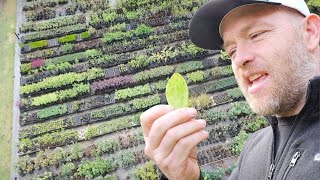
In this YouTube interview, host Victor Justin Rhodes visits Green Dreams Nursery in Central Florida, run by owner Pete Canaris. Pete explains how the nursery evolved from a small, on‑site supply for his installation work to a primarily online business shipping a wide range of permaculture‑focused perennial vegetables, fruit trees, and medicinal plants across the United States. He showcases numerous species—moringa, jabuticaba, mulberries, Mexican sunflower, vetiver grass, elderberry, hibiscus varieties, nopales cactus, cassava, and more—detailing their edible, ecological, and medicinal uses. The conversation covers propagation methods, organic fertilization, pest‑control solutions such as Ant‑Pro bait stations, and the logistics of packing live plants in recycled, moisture‑retaining containers for fast shipping (mostly Monday‑Tuesday). Pete also discusses business growth (shipping grew from 1 % to 20‑30 % of revenue), the role of YouTube in marketing, and future plans for a retail location. The interview blends informal, enthusiastic dialogue with practical advice for growers and consumers interested in sustainable, multi‑use plants.
Chapters
Green Dreams, Pete Canaris, one of the most incredible nurseries that I've seen, and I've seen a lot.
What's going on?
10 months.
Yeah, I think a lot's changed since you came here last. You know, I originally just started a nursery just to have plants on hand when it came time to do these jobs because it's so hard to find stuff. You know, I had to go to 10 different nurseries, travel the state. This was probably my only nursery area last time you came, and I think it was a little smaller. I'm constantly coming out And now this entire nursery is 100% focused for online. So, ah, in the last 2 years we've started shipping plants, you know, so we can actually—
what's your site?
greendreamsfl.com.
I can hear them saying, okay, greendreamsfl.
Yeah, so we ship 1 gallons, we ship 3 gallons. Our specialty are 4-inch, um, lots of perennial vegetables. I specialize in lots of permaculture plants, and a lot of these plants are focused for the south but been growing in the north as an annual. So something like moringa can be grown as an annual. The longevity spinach, some of these perennial vegetables. Yeah, my favorite fruit tree is a jabuticaba. It can be grown in a pot its whole life. I mean, you could live in New York and have this thing on your windowsill where it doesn't really matter what climate you're in. You could bring it inside as a Christmas tree.
Did, uh, so, so when you say permaculture plants, that to me that says useful plant.
So useful plant perennial vegetable-wise, things that are a little less common, you know, not that all the nurseries that are carrying here in Florida, you know, you either go to a ornamental nursery down here, you go to a native nursery, or you, you know, there's a few fruit tree nurseries and not really enough.
So let's get into the usefulness of these plants, but first, who can get these plants? Like, you're not shipping these plants to Maine?
I'm shipping these plants all over the United States.
Some of this can grow in other places?
Yeah, so our most popular clients are coming out of California. Oh really? Obviously a lot going into Florida too, but yeah, things with like jabuticaba, the moringa, we've shipped those to Maine, we've shipped those to Connecticut, New York.
You ship this thing.
So not this one in particular, we can talk about those.
But I mean, you ship a thing in its potting soil.
Exactly.
You're going to have to show us how that's done here.
So we look for plants that are multi-use. This is called vetiver grass. This one is really good for erosion. The roots on this plant can travel 15 feet down into the soil. It grows really fast. It's a tall grass that gets to be about 6, 7 feet. Really high in carbon, really high in silica. So this is one of our ones that we use in our drop and drop system with our Mexican sunflower. Erosion-type plant. This is a nitrogen fixer. This is also a sustainable lawn alternative. This makes yellow flowers that are edible. Really nice ground cover. And like I said, it's a lawn alternative. We don't have to grow grass. This only has to be cut once or twice a year. On this side, I'll probably get into some of the perennial vegetables. One of my favorites for bringing in the beneficial and the predatory insects is this sweet almond, Justin. And you know, this is one of those plants that my neighbors, you know, they think I, I'm spraying Febreze outside. This grows up to about North Georgia, and it just, it has an unreal fragrance. You should give Give it a little sniff, see if you can get on that flower.
Yeah, it smells really good.
Really, really nice.
Nice and sweet. It's almost strawberry shortcake-ish.
Yeah, similar to kind of a gardenia, but I think a little bit sweeter. Um, we've got lots of salvias, lots of different varieties of mulberry. I probably grow 20 different varieties of mulberry. This one's called the Thai Dwarf. Right now our mulberries are going dormant. This is actually a great time of year to plant mulberries though while the leaves are off because they're putting out root growth. Um, this variety fruits so heavy the branches break. And if you've never had a mulberry, it's kind of like a raspberry and a blueberry that made love. They're quite unbelievable. We have some nopales. You could see even at a very small age, that's the amazing thing about a mulberry, it can fruit. So even that little plant is putting out little fruits, flowers. It's really cool.
Mulberries will grow in a lot of places.
Yeah, mulberries, yeah, almost all over the country. This species, I would say, you know, maybe up into Georgia This is a Kinoff hibiscus. This is one I get in my videos all the time. Everybody's like, "Is that cannabis behind you?" It kind of has a similar leaf, I guess you could say. It has an edible flower, edible leaf on it.
Do you grow what the people want, or do you grow what the people should want?
What the people should want. Catleya guava. This is another favorite for us. This is a perennial vegetable. We didn't go over this one on the tour. This is called cranberry hibiscus, and this has edible flowers and leaves. And the leaves kind of have like a tangy cranberry flavor to them. They're quite delicious.
Justin, what's that one called?
Cranberry hibiscus. Lots of Turk's cap hibiscus. This is the flower we were eating during our tour. These flowers are quite delicious. We have red varieties and pink varieties. This is a really common one. Everybody should know this. I don't care where you are in the country, but there's different species. It's elderberry. We grow this as a catch crop, so it puts off berries that the birds will instead of maybe going to my mulberries, but it also flowers all the time. It's also very medicinal. We make elderberry syrup out of it. You know, so it's another just great multifunction crop. I selected this one from very close to my farm. We call this the Sandhill Select. It was grown in a very dry area where typically, you know, elderberry is grown in more of some area with like wet feet.
That grows everywhere too.
Everywhere. This is our fertilizer plant, and this is the one I talk about all the time. This is when I did my first video on after you got me started. This is that Tithonia diversifolia, or Mexican sunflower. This This one wet and fresh is pound for pound equal to chicken manure, so it's super high in nitrogen. I know people with rabbit farms that use this as a feed source, and this is 100% source of feed for rabbits. So, you know, everybody knows that rabbits are one of the most sustainable meats in the world. You grow this, now you're not buying in any feed. Becoming very, very popular in Brazil. They're starting to do all their cattle on it, you know, so putting big fodder banks in of Mexican sunflower.
What's the name of that one? Mexican sunflower?
Mexican sunflower, Tithonia diversa.
Would that grow in North Carolina?
You could probably grow it as an annual. It grows so fast. I mean, down here in Florida, this grows 6 foot a month. Wow. You know, so if you plant it in spring and it dies in the fall, you bring some cuttings inside, you put them in your garage over the winter, you replant them in spring again. So no, it's not supposed to be growing there. Anything's possible.
Yeah.
Okay, this is that red variety of the Turk's Cap Hibiscus. More different varieties of, um, mulberries. And this is a really cool one for Florida. You know, it's very muggy down here, it rains all the time down here. It's— we're not in Italy. It's not easy to grow tomatoes. And this is an heirloom variety of tomato to the south. This is called an Everglades tomato, and it's almost perennial because it constantly reseeds itself and thrives on neglect. Like, this is a tomato— if you're in Florida that you want to have something that's easy to grow, this is the tomato to grow. Or anywhere in the south where it's hot, it's humid, you know, tomatoes want cool nights. We don't, we don't really get that down here. They kind of have a window in spring, a small window in fall to get them, but it's a short window to where these will grow through the summer and all year long. So this is pigeon pea or gandules. We grow this as a chop and drop. Also makes a bean. It's a nitrogen fixer. They're kind of getting towards the end of the season right now. For those that don't know what chop and drop means, chop and drop means we're growing these plants that grow really fast, biomass-producing-like plants, and we're just literally cutting them and laying them down as mulch into the beds. Especially down here in the south, you know, it gets so hot, it gets so humid. That's why it's so important to have all of these different plants that grow quickly you know, that we can just literally lay down as mulch. I kind of skipped over this one as well.
You got a little cactus.
Yeah, so this is a nopales cactus. This is a really cool variegated variety, could be grown indoors. Um, people eat the pods on these. They are spineless. They go really good in breakfast, very common in like, um, Spanish-type foods. And some people say they're a little bit on the slimy side. They don't have a lot of sweet flavor to them, but they don't taste bad.
We're gonna make Justin eat some cactus here. I know, right? Just the carnivore. You're gonna make the carnivore.
I think it has a nice flavor.
You think that wants to be eaten? It's got spikes on it.
Thornless.
I don't think it wants to be eaten.
Has a little bit of a sweetness in the flavor though. You see it chopped up with some eggs or something like that, it's like, uh, raw, uh, green beans a little bit. Raw green beans?
Yeah.
Yeah. Another one obviously thrives in dry areas, grows easily down here. We've got a couple of different types of cactus. This is the regular green nopales, smaller versions of perennial peanut. I grow a penta that is perennial. So everybody likes to put pentas in their front yard, pretty plant. Typical penta has been bred so far away from its normal pollination properties, it's not attracting beneficial and predatory insects. They die off on a yearly basis. The guy I got this from has had it in the ground since the '80s. This is a perennial penta, something that's flowering all the time, actually feeding the beneficial and the predators.
Yeah, how do you get started with all these?
Collecting all of these, you know. So really, once you get into the permaculture movement, you know, you get to know people Um, you know, this person has this plant, this person has this plant. You're buying, you're trading, constantly adding new additions. I just brought 3 new, new ones home this week.
If somebody get— if these people watching the video get excited and they buy you out of all this species right here, they buy, they buy all this out, then what?
We grow more.
Okay, so you've got, you got some more somewhere? You're gonna, you're gonna save some more?
Yeah, so we propagate it. We'll just try to keep up on propagation. We don't, we don't grow 100% of everything. Like, some of our fruit trees we broker in. Um, we use nothing but organic practices out here, organic fertilizers, you know. And some of these fruit trees we buy in They're not using organic practices, you know, so we almost call it like a weaning stage. We start putting them on compost teas, start putting them on organic fertilizers, and get them off the synthetic chemicals. Um, caliandra— this is a really cool nitrogen fixer, makes a nice flower.
So you install edible landscapes? Is this your inventory for that too?
No. So everything you see over here is specifically off the ground for a reason. I get inspected all the time, so these plants cannot be on the ground for nematode reasons. We have a lot of nematodes here in Florida. Also getting inspected for ants. Also have a special mix, so Most of my inventory for the installation stuff is over on the other side. Okay, I still have to buy stuff.
Shipping— how much of your business is this shipping business versus 20% install business?
Okay, 20 to 30%. So you're doing pretty good, you know.
But how much was it 5 years ago?
1%.
Really? Yeah.
So when you first came out here—
this business—
yeah, I mean, I went from 1 nursery employee to 6 to 8 on a certain week, you know.
How does the YouTube help that, your content on YouTube?
I think it's just really getting the knowledge out about these plants and getting people excited about plants, you know. For us, it's Yes, we're an installation company and we do these jobs, but we also give you the tools so you could do it on your own. So you can just follow my videos and put one of these in at your own house.
Oh cool.
This is a big weed. Um, yeah, we try not to sell these too often. This is called the Montingia or strawberry tree. It is a little bit cold sensitive. It's already gotten some spots when we got down into the 40s here. This tree's already got flowers on it, and people call this like the cotton candy tree or the Cap'n Crunch tree. These literally taste like cotton candy. It's known as a strawberry tree or a Montingia. We have a yellow variety and a red variety. Variety. And they fruit all year long. So if you have kids and you have the space and you're in a warm area, Barbados cherry, strawberry tree are like my top 2, and a mulberry— that you are 3 that you want to get growing. This is called longevity spinach. Yeah, this one grows as a really nice ground cover. It can take full sun, can take the shade. This is touted to have a million different medicinal properties in Southeast Asia. This just grows all year long. And by perennial, I mean this is plant it one time and kind of forget it, where annuals need to be replanted every year. So Perennials live, you know, 2 years or more, where an annual would need to be replanted every year. And this is something, once you get these plants, you can propagate easily and start them on your own, expand them throughout your gardens. That's the longevity, or the, um, Okinawan spinach. Just has a little bit more of a red color. And then we have a whole slew behind you here of just edible leaf hibiscus, you know, Togon spinach, way more nutritious than regular spinach. Some of these leaves will get to this big when they're planted in the ground. I literally can just eat the leaves off of these plants. I can eat the leaves off of this plant. So not only can I walk through my farm and eat, I can walk through my nursery and eat, and I know nothing is being sprayed on any of this stuff too. This is a long-leaf variety of the edible leaf hibiscus. We carry passion fruits and sisu spinach, all different select varieties of pineapples, chaya. And you can see, I mean, this is the longevity or the Okinawan spinach, very similar to the longevity but has a really pretty red color. Another nice ground cover, super medicinal perennial spinach. We've got lots of different gingers and turmerics that, you know, that we sell with just the roots on or the plant on depending on the time of year. This is lesser galangal. We have some really select varieties of cassava, and cassava, talked about a little bit earlier in the video, is probably one of the fastest growing crops in the world. Um, you know, you plant a cutting of this and in 6 months you've got a root crop, you know, that can be used as a flour, can be used to make tapioca. Very fast growing. You can also cook the leaves down and eat them, but we have so many other better greens, that's not one we really focus on the leaves for.
I know what this is, but I bet people are going to be really hot about that.
Yeah, so I've featured a couple of times now on my channel the guy that actually invented this. This is called an Ant Pro bait station, and we've got a major problem with ants down here in Florida. And what happened is we've got a lot of invasive ants because of our agriculture industry, and these invasive ants tend to take our native ants and make them like their slaves. They work symbiotically with the pests So this is an ant station that takes a borax solution. The ants come in here, they're social insects, they feed the other ants on the way back to the colony. The idea is to kill off the queen. So this is an organic style of, organic way to actually control ants. Actually Cuties, Organic Cuties, he has the contract for like a 2,000-acre farm, he controls them. So a lot of big ag organic places will use these. Big thing that I've noticed when you first put them in and you have an ant problem, they're gonna get emptied fast. And that's 'cause they're working, that's 'cause they're taking the bait, that's 'cause they're gonna kill off the colony. 6 months down the line you refill them, they're not going to empty as fast, but that's probably the—
It's called the Ant Pro.
Ant Pro bait stations, yeah.
We have that a lot. How do we deal with ants?
Yeah, they can be tough. We also make an ant balm. There's a couple of different ways to do it on a home scale. And these are all just different varieties of chaya. This is one that I talked about, just you can start from cuttings very easily, twice as nutritious as spinach. This is another, just a green that we grow. This is the longleaf sisu spinach. I have a round leaf variety, and we've just been selecting and collecting through the years to where we have, you know, 15, 20 different perennial vegetables now.
What's your turnover rate? How long will these sit here until they're moving out?
Hopefully no more than a few months. Okay, so some of this stuff does get used for jobs. Um, we have another shade area.
Nice. So how do people go figure out what they want? Well, what they need—
you can start watching my videos and see what plants get you excited.
Do that. At Green Dreams TV. Yeah, on YouTube. Or they go to your website. What's— what's—
you have the website?
Yeah. And that will tell you what different plants do for what?
Pretty much. We have a pretty good description on there. If it's a fruit tree, if it's perennial vegetable, what zones it'll do well in.
Okay, that's cool.
Yeah, so we try to— we try to get as specific as we can with these. And I try to feature each of these individually when I have time. So what is growing on?
So these must be sensitive plants.
Yeah. So in my opinion, you know, you really don't need a greenhouse in Florida for vegetable production. But for us, because we're in Central Florida and we do get frost, we get freeze, we have some things that are a little bit more cold sensitive. And mainly in this whole— in this whole house, I have what we call jabuticabas, or Brazilian tree grape. And it's probably one of those trees that I'm just most passionate about. Um, they're amazing. They fruit multiple times a year. They fruit right off the trunk of the tree. There's probably 50 different varieties, and this is one right here. This is a Taiwan Tiger jabuticaba. And these guys will just literally start fruiting off the trunk of the tree. They can be bonsaied and they can be kept in a pot their whole life. I'll take you into the other greenhouse for just a 2-second tour and show you what a fruiting tree looks like with flowers. We also have some different Eugenias in here, but these trees are quite gorgeous when they put on new growth. They have like a really nice orange-red color to it. My favorite is probably the Red Japodacaba or the Scarlet Japodacaba, and those can fruit in about 5 years from seed, compared to like the most common variety is called the Sabra that could take 10 years, 12 years. So it is worth getting one of these varieties that fruit a little bit quicker. Look at this little sexy plant, man. Look at these leaves. So they have a really cool orange color to them when they're pushing out new growth, and they're just beautiful plants. And there's nothing like buying a plant and feeding it and watching it grow and then tasting the fruit, you know. Like, I have 25 of these trees that are fruiting that I bought 5 years ago. That give me pounds of fruit every week. Like, we can't keep up. And this is our seed stock, you know, this is our fruit to sell to people.
So would you say you're a crazy plant person?
I'm a little crazy, yeah.
I would say if you, if you call a plant sexy, you might be a crazy plant person. Is that the sexiest plant you got on the farm?
No, this one's over here.
Now that we're talking, let's see some sexy plants.
This is a yellow jipoda cava and has a really soft, tender— you can kind of see new growth on it. Makes a yellow fruit.
Do you get any touch-me-nots?
Touch-me-nots? No, I got sensitive plants that you touch and they close.
Yeah, yeah, neat.
I got mimosa, sunshine mimosa, native here, another ground cover.
You got any fly-eating plants? What do you call those?
Uh, the Venus flytrap things?
Yeah, you got any of those?
No, I haven't found a good use for that.
Too tropical.
Yeah.
Well, how about eating flies? I guess that's not really a thing, huh?
No. So this is probably one of our most popular plants on the online store. I'm actually out of them in 4-inch right now. I only have 3-gallon. This is a plant that I eat every day. This is called Moringa oleifera. This is literally one of the most nutritious terrestrial plants in the world. Um, you know, 26% protein. This can be made into an animal feed. 68 different antioxidants. Every part of the tree is useful. It grows like a weed. And this is one that, you know, in the wintertime, yes, it might freeze down to the stump and I cut it back, but it comes right back, you know. So if you're in a northern climate, this can be grown as an annual. Maybe you bring that pot inside and let it grow back up. In a perfect situation, you keep this tree at about 4 foot and you're constantly just harvesting this new growth. You put this on a salad, make it into a powder. Powder from this tree is like $40 a pound.
Wow.
You know, and it grows like a weed. It can grow a couple of feet a week. So very fast-growing tree, very useful tree. Grow moringa.
What do you use for the trunk?
The what?
What do you use the trunk for?
Um, I believe you could— it's very medicinal, so you can make it into, you know, make it— you also use the roots on this tree. You can use the seeds on the tree. I mean, every part of the tree is useful. I would say the most commonly used are the flowers and the leaves though.
Nice. And you've pruned this one quite a bit. Quite a bit.
You can see I hacked it right here.
It keeps coming.
This year I want to get it a little shorter. After wintertime, everything will get reset back in this area and we'll cut it lower.
Cool.
All right, so this is my newest greenhouse. This is only about 6 months old. This is a 26 by 96. Oh, it's not quite even filled out yet, but this is what I was just talking about.
Big trees.
These are those trees that I bought, you know, 5 years ago that are all big fruiting age now. This is the new growth, you know, you can kind of see it at a larger scale.
You do not ship these?
I do not.
These are for your installs?
These are for my install, but more for my breeder stock. These are for seed.
Oh, okay.
To propagate from. And if you want to come in here real quick, Justin, you know, the whole entire trunk will get covered with fruit. My nursery staff didn't know you were coming this week and they've harvested, so we're only catching a couple of fruits left on here. These are much smaller than they can be. I would say they would—
they grow on the stem right off the trunk. This is strong.
This is called califorus production, the same way a jackfruit would fruit. Um, and I would say a typical size on these are about a marble. Interesting. Um, it does have a seed on the inside, but if you were to plant seed out of this, it can fruit in 5 years from seed. You know, the seeds on these plants go for $5 apiece. You want to try a couple?
Wow, I've never seen That's really sweet.
This is one that can be kept in a pot its whole life. I don't care if you live in New York, you live in Canada, you live in a super northern climate. Like, can you imagine bringing this thing in as a Christmas tree with fruit on it? You know what I mean? Or keeping it in that windowsill through the wintertime. So they can do good in a pot their entire life. They can be bonsaied and they fruit 5, 6, 7 times a year. When you get to the scale I'm at, there's never a point of walking here and there's no fruit all year long.
Has a nutty flavor. Really sweet, nutty flavor. Good.
I call it like a tropical grape. Probably one of the most delicious grapes I've ever had.
Mm-hmm. More Moringa.
So yeah, these are the Moringas for pickup or installs, and these have been pruned back because you can see how fast they grow. We've got a lot in 3 gallons and some in 1 gallons, and most of this whole entire nursery over here is for our local pickup by appointment, um, and jobs that we do. And kind of hoping our goal for 2022 is to get us a retail location and really start to reach out to the to the greater public.
Look at this nursery. You're kind of using the trees as your greenhouse right here, or your shade house.
You know, these trees are native to Brazil, the understory. We're kind of mimicking that same type of situation. And I mean, just look at the new growth on this one. This is a Campo Ramon. This is a select variety out of Argentina. And I'm constantly expanding the nurseries. We have an area— just put down mat about 2 weeks ago, getting ready to put irrigation in. Um, kind of taking up every little nook and cranny I have here on the farm. This This is another shade area over here on this side that has tea camellias and, you know, different varieties of pineapples, gingers.
How long do these mats last before they wear out and start letting weeds through?
You know, it's very impressive. So I've had some of that original mat down on the ground for 7 years, and the only place that you get weeds are on the cracks and on the pins. If you invest in high-quality, heavy-duty weed mat, pays for itself.
Yeah. Shipping live plants. Is this where the magic happens, Pete?
This is where the magic happens, and I can't say I do all the magic. I have an awesome team, but this is where the live plants get packed. And I'll grab one and just kind of show you what we do here.
You do it after your workout? So your workout is— is this the staff gym?
We gotta keep them strong for packing all these plants, you know? Yeah, things are heavy.
We get a plant, he's got all the ant— are you selling the ant traps too? Are those just for your farm? They're on your site.
We sell plants, we sell the ant traps, hats and shirts.
Everything people— everything people should want.
So this is typically where the plant starts off.
Oh, this is cool.
A lot of times we'll use shredded newspaper and put it on top of the plant, especially in the summertime, to hold some moisture in there. And then what the girls do is they take a stake, they cut it to the height of the top of the box They wrap the bottom in cellophane actually beforehand, so they're puncturing through that cellophane and then they put another bag over the top. And what it really does is it keeps it locked in that box. So the orders come over to this table and then UPS picks up in the afternoon. We can typically pack a plant, put it in the mail on Monday for California, and it's there by Friday.
Wow, really? How often do you ship? Every day or just once a week?
Just depends on our shipping load. So our typical shipping days are usually Monday and Tuesday. Really don't want to ship too much later in the week because they can get stuck in the truck over the weekend and dry out.
And these are all the variety of boxes depending on the size of the plant.
Yeah, so this used to be a man cave before I got into shipping.
Yeah, there's a little reminiscence of the man cave.
That's what's left. I had mats over here. I mean, this was like a workout room, um, and it's gotten taken over. We've got, you know, 20 different size of boxes. Try to use as many, you know, recycled materials as we can— bamboo. Unfortunately, the system isn't quite perfect.
Yeah.
As eco-friendly as possible. Possible. I mean, we've looked at, you know, mushroom-based materials. Hey, you know, we're growing our steaks. Come on, most useful crop in the world.
You grow your cardboard next.
That's it. Live plants to your door.
Yeah, that's neat. Okay, so again, let's remind people where to go. Uh, that's greendreamsfl.com.
Yes, sir.
For shipping a plant. That's cool.
All right, live plants to your door. Permaculture plants.
Good work. Yes, sir.
More from Justin






If I had to start my Homestead all over again, it could only pick one animal… 




