The Fit Farmer: Mike and Lacie Dickson on Family, Faith, Race, and More
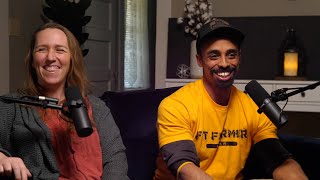
In this conversational podcast, host Victor Justin Rhodes interviews Mike and Lacie Dickson (with Rebecca Rhodes) about the many facets of their lives as homesteaders, Christians, and content creators. The discussion opens with the question of why they abstain from pork, leading Mike to recount how his father's decision in his childhood sparked a personal journey of questioning faith, exploring various churches, and ultimately deciding to follow biblical dietary guidelines and Sabbath observance. Lacie shares her Methodist upbringing, the couple’s exploration of different denominations, and the marital tension that arose when new religious practices challenged her upbringing. They reflect on how the COVID‑19 pandemic forced them to reconsider church gatherings, prompting them to leave a fellowship and wrestle with obeying God versus government restrictions. Their homesteading philosophy emerges, emphasizing self‑reliance, community interdependence, and the practical challenges of building soil, raising goats and chickens, and producing food for their family. The couple describes their family routine—daily meetings, question‑books, and intentional parenting aimed at fostering critical thinking and values. They discuss the balance between being rule‑followers and exercising personal autonomy, both in religious matters and everyday life. Influential documentaries like Food Inc. and Fresh shaped their view of the food system and inspired a desire to farm like Joel Salatin, while they critique the idealized portrayal of farming in Biggest Little Farm. Finally, they talk about their online presence on YouTube, TikTok, and Facebook, navigating audience expectations, privacy, and the decision to share or withhold aspects of their personal lives.
Chapters
So why don't you guys eat pork?
Oh, right out of the gate. Right out of the gate.
Pigs for everyone.
Woo!
Go right into it.
That's a good question because you wanted me to get to the whys.
I said, hey, we got some home runs. You want a home run for this? We're going to get into your whys.
Right. And that's something that comes up on our channel because I do mention it from time to time that we don't eat it. And it's not something that we try to bash other people on the head with. It's just something that we share. We've been convicted. It started off with my father years ago when I was a kid. I want to say probably 10 years old or something like that. He just stopped eating pork and then I didn't. And I just mostly kind of did it because he didn't do it. But then over time I was like, well, as I just started assessing things, went into my teenage years, I just questioned a lot. Questioned a lot about religion, questioned a lot about life, and I just didn't have I almost just kind of left, I would say, the faith during that time just because I was questioning so many things.
The faith? What's the faith?
I'd say the faith of Christianity or faith in God. As you have these questions and they're not getting answered and you're just looking around. We went to all kinds of different churches. You went with me for a number of different churches. But during that time of just trying to figure out where I wanted to be, I just kind of started just reading the Bible for myself. And seeing what the Bible actually says. And as I come across that and I see that it's pretty clear, I decided to refrain from eating pork and continue on.
Why is she laughing? Why are you laughing right there when you went to all these churches?
When, when we were, we were dating at the time and he's like, hey, let's go somewhere this evening. And I'm like, okay. And it was Jehovah's Witness Church.
I'm picking on him.
Now wait, this is your idea for a date? Wait, Mike, this is an idea for a date?
Church.
It wasn't a date. We had been dating a long time.
This was not a first date.
We're just like, he's like, hey, go with me here. But I didn't know. And I'm not bashing Jehovah's Witness either. It was just funny that I had no clue where we were going. And then that's where we showed up. So it was like more surprising than anything.
Sorry about that. Is this the first time you've apologized for that?
Yeah, I didn't see how much of a curveball it was until just now.
By the way, this is funny thinking back on it. I was like, oh yeah, that was kind of—
that's hilarious.
But we went a little all over.
So you went everywhere.
We did. Because I had questions. I was like, I wanted to know—
having questions in the Christian faith, you were like, we're gonna look at other faiths.
Exactly right.
We're going everywhere.
And I was like, I want to know that God's real. I don't want to just the blind faith. I like— I want to know. And, and the Bible says test and prove all things and hold fast to that what's good. It doesn't just say blindly believe.
Yeah.
And I was doing it. I was like, I had questions on why should I even believe the Bible? Why this? Why that? Why life? And And then as I more just tried to get grounded in that, started to get things answered in nature.
Yeah, well, what did you think?
Well, I mean, so I grew up eating pork and everything. I mean, my neighbors would have a hog killing every year that we would go to and all. And as we were, when we first met, I grew up in a Methodist church. That's where I went my whole life. He went there for a little while. We went, okay, so we did Jehovah's Witness. We went to a Pentecostal church for a while.
We did speaking in the tongues.
Yeah, we did non-denominational and all of that. And all of those things, it like came to one point. And then he started learning more about the holy days in the Bible and things like that and really digging in. And, um, he would show me certain things and it would, it was like a point of contention in our marriage. It got to that point where I was like, don't talk to me about this. Don't talk to me about this. Cause it was different than what I had grown up with. And, um, I remember we were living in this little duplex. We'd only been married like a little over a year. And, um, I'm like, God, you show me what I'm supposed to do. That was my prayer. I was like, I don't know, like, this is coming between us. You show me what we're supposed to do or what I'm supposed to do. And, um, Isaiah 58 came to mind. And, uh, like, and my Bible was right there in front of me. So I flipped to Isaiah 58 and verses 13 and 14 are all about keeping the Sabbath. And that was the one thing— what was one of the one things we were learning and all. And, um, I was like, well, I can't deny that. Like, I asked, and if I was to deny that, then I would deny God because I asked.
She was going through that, and we were going through that together. There was also a dominant prayer in my life that we would be on the same page, that God would say, put us on the same page here. We want to— I'm going to follow you, God, and do what you say, but please let my wife and I be on the same page about this.
And all of that, like, wraps into the not eating pork and keeping the Sabbath and the holy days, like all of that together. So I guess, you know, the whole pork question turned into a whole bunch more.
And people are maybe afraid to ask that question. You said it was contentious, him trying to convert you, I don't know, convince you. What was the contention? Did you just love bacon so much?
I'd say part of it was probably me just Oh man, I'm seeing this. I'm reading this. Read this.
Yeah.
I'm seeing this. I'm seeing this. Read this.
It was more of like just shoving stuff.
Were you excited?
I sure was. It was like I had new eyes. Like I saw things that I did not see before.
And that was the contentious point is it was, and also like things that I've grown up with my whole life. And you know, whenever you're making like such a big change and shift, it's hard. And like, I wanted to know that that was what I was supposed to do. That's why I asked that question, God, what am I supposed to do? And I'll follow whatever you want me to do. But I need to know that that's the right before I start going down that road. Because it can be a difficult road. Because you worry about relationships that you have. And you know, how is this going to affect my family relationships with my mom and my dad and my other family and which it definitely You know, in the beginning definitely did cause some, I don't want to say anger, but maybe.
Well, I think there is like you, you were raised that way and they obviously raised you that way. And so then when you change, they feel like you're saying you did wrong.
Exactly.
But you're not saying that.
And I don't like that.
It's very hard though. It's very hard.
And Rebecca are very much the same.
Same that way.
I don't like to disappoint.
You disappointed plenty of people saying no thanks to the ham.
Yeah, yeah, yeah.
So you had to know, yeah, that this was right.
And it wasn't just the pork, it was, you know, like I said, it was like all these other things too. So it was, yeah, it was hard.
If you keep the Sabbath rules, I mean, some people will not start up their car. Yeah, there's a fire involved in that. Some people won't cook that day. Some people turn their power off. They will go down and turn off the main breaker because it takes a fire to get energy through the lines.
These aren't necessarily things that we do, but we take that far. No, no, we don't. Each person has to once again test and prove for themselves what they must do in their walk with God. And that's just what we have to do. And even thinking throughout the Bible, another just the Bible again, examples of people having, whether it be Abraham leaving his country and his family to serve God, that was not easy. Even Israelites when they were leaving Egypt, they were used to comfortable in Egypt. That's why they kept wanting to go back, but no, they left and God's like, no, follow me. And even people following Christ and who willing put themselves, their lives on the line, it was not easy to follow God. It's not easy a lot of the time.
Well, Daniel got put in the lion's den. I mean, there's, there's so many different examples in the Bible of people doing way harder things to follow God than I've had to do.
So, yeah, it was kind of like, I don't know if we want to go there or not, but it kind of felt like, uh, churches when COVID came out, people are having to wrestle in America for the first time. Am I gonna go to church and do something I feel like I should do that is my Christian duty, but here's the government saying you can't go to church.
Yep, yep. And that is—
Can't gather 10 or more.
Yeah, that's exactly right. And it put a lot of people's faith, it forced them to test their faith to see really where it was. And we went through that. We actually had to leave a fellowship that we were in because of that. Because it's like, Ultimately, we obey God. We follow what he says no matter what the government says. Same thing that happened to Daniel. He wasn't gonna bow down to the idol. The government said to do that, but he wasn't gonna do that. He's like, "No, I'm gonna pray to my God 3 times," like it was his custom.
And he's like, "I'm not bowing down to your idol." And I'm not gonna do it in a closet somewhere either.
I mean— He opened his window.
And his window's open. He's like, "Okay, I'm gonna do it and you can see me doing it. And I'm just gonna disobey what that government says and I'm gonna," know, worship my God, and that's what I'm going to do.
Yeah, he didn't hide his faith. God talks about, uh, let your light shine so that the world sees it and be the salt to the earth. That's exactly what Daniel did. He wasn't afraid.
It seemed like maybe it was a little tricky or sneaky or something. It's like, that's obvious, they want you to bow down to an idol. Um, okay, yeah, yeah or no? Okay, yeah. But you also have very heavy consequences. Like you could get killed.
Exactly right.
So here, on the other hand, well, you're not allowed to gather, but that's something that you feel like you should do. But it's a message of, oh, we're going to keep everybody safe, this type of thing. So maybe it's a little more subtle or something. I don't know.
But it's like the waters were definitely muddied. Oh, it's not like it was clear like with Daniel. Yeah, this was like the waters were more muddied. It was more of like a, we're doing this for your safety, so then if you choose to gather, then you're not being safe. There was some—
they could even pull that love one another, treat others as you would want to be treated.
That's what makes deception deception.
Yeah.
And compromise compromise. Starts with a little thing. It doesn't start with a big thing. I'm sure Daniel had smaller things.
Yeah, it's not going to all of a sudden somebody's going to have an idol out in front of us.
It's going to be like you have to bow down.
Incremental changes. Wow.
Okay. So that was revealing to you at your time because you all had to go through it, it sounds like. You're talking about moving congregation. What'd you call it?
Yeah, I call it fellowship. Fellowship.
So you moved your fellowship.
We left too.
You had to make this decision.
Sure did. Once again, it was that decision of are we going to people-please here? Are we going to do what God— we feel God is telling us to do? And you felt like God telling you, got to keep going with what God says to do. Because also it says, forsake not the assembling of yourselves, okay? And do so even more as you see the day of Christ's approach, uh, day of his coming approaching. So as you get closer that time, that means it's even more important for us to assemble and to be together. And when we were at, uh, Polyface for the event that we had there at Joel's, and they had the Weston A. Price people there. There was like 300 people gathering there, and it was just so neat. And you saw the emotion there of people who hadn't gathered together with people pretty much that whole year, and they're in tears because they have an opportunity to be with people again and to see their full face. And that emotion, it just touched me in a deep way, and it shows how important it is that we need each other. And we see that in the homestead. It's like And in farming, you can't segregate and have monocultures. It all works together in a system and in community. And that's what we need as people. We need community. We need each other.
He's getting excited.
I have.
Hands down over there. Mike warned us. I get excited. We finally got it. We hit a nerve. We finally need to go. We got the nerve. So we're going to go down that vein a little bit there. So yeah. So when people started gathering again, I think we realized um, we definitely took it for granted. I mean, this is something—
yeah, like normal life.
Yep, you took normal life for granted.
Yeah, like it was like, oh, this is normal, and then it wasn't. Although I have to say, like, I wasn't mad about quarantining.
Welcome to the homestead life, y'all.
I like being home.
I—
it was like finally an excuse. I didn't have to go anywhere. Nobody was inviting us anywhere. We were just staying home.
She was using it as an excuse.
I was okay with it to an extent. I mean, because like, you know, we do leave. Like, we had an event that had been planned that we were supposed to attend, and then we couldn't do that anymore. So then that was kind of a bummer. But, um, now I like to leave occasionally.
Somebody who—
I don't want to be home for forever.
Yeah. Yeah.
You know, somebody like yourself who loves freedom, you definitely have to eventually. Yeah. You like to be home.
I do.
But you don't like somebody telling you what you can and cannot do. And she's— she used to be a rule follower.
Yeah, I mean, I still am to an extent. Not really though, I guess.
Yep. I mean, are y'all rule followers?
I feel like I've gone a little all over the place with that in my life. But I try to find— I think there's a balance. I think that there's a balance. Because we do need to follow rules. But then also time we do need to have self-autonomy to make our own decisions. Because that's how we grow in our character and human beings. If somebody's just constantly telling us what to do, then we're just robots and slaves. And that's not what— that's not what we should be.
Yeah, it's interesting because I, I said one time to a therapist of mine, I was like, you know, I'm a rule follower in some things, but in other things I'm really not. And she's like, well, that's because you've— your rules you've made— you're following the rules that you've made, and you follow those rules. You don't follow what other people tell you you should follow.
And I was like, oh.
Yeah, that's how I am.
And the Bible talks about that too. It talks about submitting to the authorities, but then it says obey God rather than man. There's that balance there. And then that's another benefit of— a real benefit of why God's word is important. It's not me deciding for myself what's right and what's wrong. It's like, all right, what does God say? That's my plumb line of what's right and what's wrong, and what I should and shouldn't do. It's not me saying, oh, I don't I just want to assemble because I— or not be at home because that's what I want to do. No, it's just what we should do. It's not good for man to be alone.
Yeah, when that was written, what you're speaking of was written in a time where the government was very harsh.
Yep, yep, sure was.
Compared to the government we're under, you know.
Yep, yep.
So he was saying whatever it is, submit to the authorities. What is it?
I don't remember the full verse, but I think it might be in Romans, and they were under the Roman rule and they had to submit to that.
And he was encouraging that in the scripture. So you guys are trying to find this balance of when do I submit to the government like the scripture says, and then when do I follow God's rules?
Because even though many of the apostles, they tried their best to follow the governing rules, but as it didn't overtake God's rule, because ultimately that's what they died for, following God. They said— the government said, don't preach in Christ's name. They were like, uh, can't obey you on that one. So they went and did it. They got in trouble. They got beaten, put in jail, and ultimately stoned to death. Yeah, yeah.
We had someone on here that said that they were going to— if they went to the gathering, the church, that they were neighbors taking pictures. Yeah. People going.
That's sad.
To turn them in.
That's sad. How could you? I could not live with myself if I'm turning my neighbors in.
You know, I have my rules, but like, I don't make other people follow my rules. Do you know what I mean?
Like, I do you and I'll do me.
Right. I mean, I feel like a lot of times it's like the fact that they wanted to control those people so badly, I'm like, you really need to look at your life and be like, what is causing me to desire to control other people?
And it's scary to think about.
Honestly, I really don't care what other people do. I mean, like, don't, don't come in my lane.
Don't tread on me.
But like, yep.
Yep.
Do what you're going to do over there.
Yeah, exactly right.
You know what I mean? So I don't, I don't understand that level of or desire for control of others.
And it's dangerous when we're, we're reporting our neighbors to authorities for things like that. Just think about the trajectory of where that could go. That's just scary to think about.
It is.
Do you always think in these terms, the trajectory of where that could go? This is a macro perspective. Or has he learned that now? Lacey, what are you—
why are you laughing?
He does talk like this.
I mean, thinking in the terms of the macro, like, where is this going?
We do think about it.
That's a good perspective, no matter what we're talking about.
We talk to our kids about this, too. We talk to our kids about you know, look what's going on and for them to see. And, you know, it makes me feel good when we're listening to something or something and my kids are like, that's not right. That's not right. And I mean, just watching TV, we don't watch much TV, right?
But if they're being trained to like see right from wrong.
Yes. And they'll see pharmaceutical commercials on TV and they're like, I'm never listening to that. I'm not. Because I mean, we've told them and they know the—
well, I mean, if you just listen to the commercial, they'll tell you the side effects of it.
You know, sudden death is something that, you know, I try to avoid.
So, I mean, he's trying not to die.
Explosive diarrhea. I mean, who wants that as a side effect to anything, right?
Why would I want to take something that I could suddenly die from?
Yeah. So, like, we do talk about these big things and where these things can go. And I mean, it's not this heavy all the time at our house or anything, but, you know, we want our kids to be aware of it. We want to talk about it. So they can see where these little things can turn into big things down the road and be not good.
Yeah, it's not like we're constantly just sitting around thinking about negative things that can happen. It goes back to what I talked about earlier. I'm questioning—
Well, you could think about a positive. Where is this going? Like the way you're investing in your farm, it could go anywhere.
Or your children.
Are we going to get— because you guys have gotten goats more recently, so you could be saying you could look at that macroly and say, Well, where's this going to take us if we get goats?
Exactly right. Or similar, you see—
it could take you in a positive direction—
how the shutdowns have affected our food system and how the food hasn't been transported to places at times and there's been food shortages. So you're like, all right, I need to step it up on my homestead to produce more so that way I can take care of my family. I want to make sure that we can put food on the table.
And then they see the positive, what we've already done, to be like, look, you know, we do have chicken and ducks.
The trajectory that you had your foresight years ago. Yeah.
Because early on, even looking at the whole lockdown thing, I was noticing just the trajectory once again. I was like, this is totally unsustainable. People, we cannot go on people not working and producing.
Yeah, you're right.
We have to produce individually and collectively. We have to be producers or things just crumble and we won't be here anymore.
You can't always be a consumer.
No, we've been sold this consumer mindset in our consumer society that it's just, consume, get, get, get. But once you're like living on the homestead, you have to understand, you— to provide, you have to produce. Yeah, you just don't kick back on the homestead and just say, okay, I'm going to harvest. You got to sow, you got to take care, you got to water.
Like, I like how he's pulling in for the harvest and he's pushing out for the sowing water. That's good. He's a good hand talker.
I'm bad.
This is a video podcast.
But like we all— we say, like, God's way is give. It's a way of give. It's a way of serve. It's doing. It's not just consuming and taking.
Well, I mean, when the lockdowns happened, you know, like, I'm sure your life didn't change all that much. No, no, ours did not change that much either, you know.
Even when I went out, it didn't change either.
We were still— I mean, we were still—
we were still—
we might have gotten some looks every day. We were— had something to do, you know. Like, all of a sudden, people found themselves bored. Yeah, yeah, because what they were doing was not happening anymore. I mean, sure, like Some of the stuff that we were gonna do was canceled.
Yeah.
Like an event, a large event.
There were plenty of events.
But, like, our day to day was largely unaffected.
Ours too.
Yeah.
So, let's.
Which I was thankful for.
You said your kids would say, oh, that's not true because it's something y'all said. How old's your oldest?
11.
What did you do? To make that happen. You teach that your kids trust you.
Hmm.
I believe what you're saying.
Take it as truth.
Another thing that I feel, and this comes from Bible as well, is that we're to diligently teach our children.
Yeah.
And I take that goal very— we take that goal very seriously. So we're constantly talking with them, having conversations with them, asking them questions. And trying to teach them and helping them to be able to form critical thinking skills, but also providing them with a value system to continue on for the rest of their life.
What was the last time you had one of these talks with them? Well, it doesn't even have to be the last one. Give us an example.
Well, I wouldn't, as far as heavy conversation, well, throughout the day.
I was going to say, it doesn't even have to be heavy. It does not have to be heavy.
Or are you saying you're having heavy conversations? At times. That's important. At times.
But Just kind of give you somewhat of an idea of how our day goes. We get some of our chores done in the morning, and then we have a family meeting every morning, which our lifestyle is conducive for that with homesteading and the way that we've structured our family business. We have a family meeting, we kind of go over things for the day, give opportunities to talk, and then we break, and then we go and do different tasks together. But we're talking as we're doing those tasks. Things pop up as you're living life together. And then at the end of the day, we have family meals together, which I think is very important. Even if you don't have a family business, you need and you have You need to make sure you sit down, have dinner together, no TV on, and just talk with each other. So we'll eat our meal, we'll talk as we're going, but one of the things I try to do after the meal is I'll ask questions. I have a book and I try to just ask questions because one of the things that I learned, I learned this from a pastor years ago, is he started doing that. He was really good at asking people questions and it almost made you kind of feel uncomfortable, almost like right now.
That's good. I'm gonna need this book.
But to me, when he would ask those questions, it communicated to me that he cared about what I had to say and what was going on in my life and in me. And I was like, I want to learn to do that. I want to ask questions.
Okay, so what question do you use on other people now from that book?
Oh, the book is full of questions and it has silly questions and it has more, some more, a little more serious questions. Like if you could have If you could change— what was it? Make one change in the world, what would it be? Something like that. Or if you had $1 million, what would you do with it?
All right, Lacey, if you could have $1 million, what would you do?
$1 million?
Wow. I would have a down payment.
What was the other one? You were going to answer the other one.
It was like if you could change one thing about the world or something.
I don't know. So whoever thinks of the answer first, you got the million dollar question. Lacey? And I got the—
probably our own property.
Buy.
You would buy out your own property?
Well, I would buy a property for us that was ours.
Okay.
Alone.
Yeah.
You weren't sharing.
So you don't necessarily feel rooted there where you are?
I feel rooted. My parents are close. And I want to always have that relationship until You know, it's not there anymore. But I, I, we, because people have asked us if we would move before. And I said, if it, if it wasn't for my parents, then yeah.
So with a million dollars, you could take your parents with you?
Yeah, I've asked them if they would move before.
Where would you go?
Would you move just locally to just a property that was like yours?
Or no, you could go anywhere. You got a million bucks.
I mean, maybe I haven't found a place that I would say that I definitely— I've always lived in North Carolina, and I've, I've been to different places.
Because you live in the place that is the best.
Well, I love the North Carolina mountains.
The mountains. Yeah, y'all aren't—
my favorite.
Just move a couple of hours, uh, west, and you're good.
But that would probably be— I would buy a piece of property that we loved.
Yeah, maybe we could be neighbors with them or something.
What did y'all's kids—
how many acres do you want?
I mean, I don't know. I've always said I don't, I don't want neighbors. I love woods and neighbors. I don't mind people being close, but I don't want people looking in my house.
No, I get it.
So that, so you just YouTube that and now tens of thousands of people are looking into your house.
I know, right?
Uh, I know what you mean. You have full control of that. What did the kids say they would do with $1 million?
Oh, they would come up with—
Oh, I'm sure all kinds of stuff.
I know what Sailor would buy right off the bat. You'd probably answer that.
A horse.
Yeah, Sailor would have at least one horse, if not more.
Yeah, she would have horses and a horse barn.
What do you do if they don't want to participate?
In the farm?
They don't want to answer the question.
Oh, if they don't want to answer the question. That happens. That really does happen. But I've noticed that as we've done it more, that becomes less.
Yeah, they want to participate.
Are they giving you Sunday school answers?
No, no, this is random stuff. Like, um, I'm trying to think of something random that's coming.
They'll, they'll not give you— what I mean by Sunday school answers, they're not— are they saying the answer they think you want to hear?
No, I don't think so. And actually, there's been nights from— I've kind of gotten lazy and I'm like, I'm not going to do the questions. And then one of our children will go get the book.
I like this. Well, they like to talk about this. Themselves. Everybody does. Yeah, we all do.
Well, I mean, I think kids do want us— ultimately, deep down inside of kids, they want their parents to take an interest in them.
Yeah.
Yes. I mean, ultimately, I said that in my book. That's one thing you can do to be— have quality time with your kids while doing chores is to ask them questions. You're sitting there milking. Well, one, you can sit there in silence and you're just enjoying each other's presence. You have energy that's talking to each other. You could say, what would you do with a million dollars?
Yeah.
And she'd go on and on about a house.
I really want to get this book.
I'm excited about it.
No. Yeah. What's your answer to your big one?
My answer to this, and it would probably be that we would all be unified and walking in God's way.
Yeah. And that was the one thing you could change in the world?
Yeah, that would be what I would change. Yep, because I feel like God's way works, his blessings behind it.
And yeah, who is it that said be the change? I want to say Obama. Did he say that? So how are you going to be the change?
Is it Gandhi?
It could be the change you want to see in the world.
Oh, there you go.
Yeah, I can't remember.
That's one of the goals that I have on the YouTube channel. I don't try to preach, and I hope that I'm not coming across as preaching right now in any way, but to share and just live our life and share through the example that we have and what we do. And I hope that that comes through.
Yeah, I don't think you're preaching at all. I don't think you're preaching at all. We're asking you questions. You know what I mean?
Mike is so nice. I will say this. We're frying up the bacon over there.
I know.
And I'm teasing him left and right.
It's y'all's house.
And eating the bacon right from— Rebecca was like, is it rude if we make bacon? I said, I don't think so. It would be rude if you cooked the eggs in the bacon grease and then you couldn't eat the eggs.
But yeah, no, I mean, you guys were like, we don't care if you eat bacon.
It might be rude if I, I think I knew you enough. It would probably be rude if I knew you struggled with it. Yeah. If you were actually tempted to have bacon.
And you were like, yeah, I really like that.
I think you can be tempted. I don't know how much control you have over that. I think you can be tempted and not indulge. Yeah, yeah. And I think there's something to be said about that.
Yeah, yeah.
Somebody who abstains from bacon but really wants it.
Yeah, yeah.
And if they're doing that to follow God's law as an expression of their love for him, then that seems very loving.
I can assure you there was no struggle there. Yeah, I appreciate yourself.
Then we were not real. We were not real because you quit when you were You were 9 or 10-ish?
Somewhere around there, yeah.
And you had said, we're kind of circling back, you said you kind of explored all different kinds of religions. Well, this was a Muslim reasoning back then, wasn't it?
Back with my dad, he had just had a conversation with a guy who was Muslim that he worked with. But ultimately it was just for me, once I started proving things for myself, it was like, okay, it's not following something that my dad did or my parents did. This is what I'm doing with my relationship with God, and that's what I need to do. And everything in life, that's what I feel.
I'm telling to the viewers because they don't see us off, off this. We've been hanging out for a day now already and have hung out, I don't know, countless times, right? And I don't, I don't feel any judgment coming from y'all. Oh, I can eat the bacon right in front of you.
Yeah.
And you're—
and I know you're not tempted. I wouldn't do it if I felt like you were tempted. I mean, I quit eating gluten because Rebecca's not supposed to eat gluten. Yeah, I didn't want to tempt her that way, so I wouldn't do that. Yeah, but that's kind of rare. So how in the world do you not judge us for eating pork?
Well, that's your life. Yeah, like, who are we to come and like push what we feel like God has led us to push it on you or anybody like that? We're not— all right, I don't want to push Because what would that do? What good would that do anyway? Would it show you the love of God? Me pushing that on you? It wouldn't show God's love there.
Yeah.
Yeah, because you would— he wants everybody to walk in unity under God's will. So you judging us ain't gonna accomplish that goal.
No, it would make matters worse.
If you would like, you would foresee that, you know, if we abstain from pork, you know, maybe we would have some joy or something there. You would obviously think that others could benefit from doing this.
Yeah, totally.
But your approach is not preachy.
Yeah, I didn't feel bad.
It's not judgmental. And if you were coming in here, basically, if we were feeling judged, we just probably wouldn't have you back. Nobody wants to feel judged. And we definitely—
especially at your own house.
We definitely ain't quitting the bacon then.
Yep. Yep. It's your house.
The minute you leave, we'd be piling, we'd be craving, you know, piling it up.
Yep.
But somebody kind comes in, you want, and I hope people get out of this. I hope these podcasts open people's minds and they consider other views in kindness, politeness.
Nonjudgmental ways.
We've had Catholics on here so far. We've had pagans on here so far. And then you guys, are y'all Christian? What is it?
I would say, is it Church of God Christianity?
That's what it is? That's the denomination?
Church of God? Yeah.
Oh, okay. I need your question book right about now. Okay. Do you remember the name of that book?
It's 365. Marriage 365 is the overall— the husband and wife that run the organization. And you can find the book on there. It's one for families, 365 Questions for Families, something like that. It's a red book. The one for husbands and wives is really good too. And I'm promoting their stuff and even I have no affiliation with them at all, but they have a lot of good resources.
So you guys told early on that part of what got you into this journey, the spiritual journey, was questioning everything. What was the first thing you questioned that wasn't normal or wasn't the norm? It doesn't have to be the spiritual. It could be food choices or what? What was— oh man, there's usually a— there's usually a starting point. You question one thing and then you're off. You're off to— you're wearing a full tenfold hat before you know it.
So I went to massage school. That's what I did for 10 years. So I was a massage therapist for 10 years.
And you've been holding out on us. I'm judging you right now.
And so I was 20 when I started massage school.
So, and how old were you when you guys met?
I was 21 and he was 19.
Why are you laughing?
20, because I'm older than you.
You're a cougar.
Yeah. That's what I tell him, I'm a cougar. Oh, that's hilarious. Hold on a second. I have another question.
You're going there.
Y'all are going there today.
Stop it. How long did you guys date? How long have you guys been married?
It'll be 16 years in June.
Okay. And then how old were you when you guys got married? How long did you date?
I guess we dated 4 and a half years.
Okay. So you guys were like 25-ish?
Yes.
You got married.
Okay.
Now go on with your story.
You're the one who asked that controversial question.
Which one was? Was how old?
How old were you when you got married? We didn't know.
We didn't know.
I didn't know it was controversial.
Not at all. So like when I went to massage school and you start learning all about natural healing and things like this. So that's kind of where my deep dive started.
Okay.
And so, you know, you don't need surgery to fix carpal tunnel. You don't need all these other things that, and mine started out in the medical, like area, you know, I'm like, I don't, I don't want pharmaceuticals. I don't want all this. So this has been like a 20-year thing for me. Is that, that, and then you start learning more about food and him. We both, like, I used to work out a lot. And then when I met him, he's a personal trainer, bodybuilder, you know, all this. We're really into our food and, you know, what you eat and then going into organic stuff and then learning about, you know, chemicals. And that was another one in massage school. Like chemicals and staying away from all those things. So that's where, like, I started questioning a lot of stuff right then about, like, what we've been told about health and wellness and what we actually need to do.
What can you do to carpal tunnel besides surgery?
Oh, you can— there's massage you can do.
And really?
Yeah.
Yeah. I just call up a massage lady and be like, well, it ain't okay.
It's not gonna feel good. It's not a feel-good fluffy fluffing.
That's totally fine. I'll send them in there.
But yeah, so there's— and there's stretches you can do it on Mike. I can't right here, but I would have to be like— he'd have to be in front of me.
Okay.
But essentially you strip all these muscles up through because the fascia, yeah, has come tight on it.
Yeah. And right here, the nerve goes right under this right here. And what they do in surgery is they'll just remove this section of that like ligament that goes through there. And but a lot of people will actually— it'll grow back even more scar tissue and then you'll revert back to having it too.
Okay.
So yeah, it's not a fun massage to get, but there's also stretches. There's stretches you can do.
The chiropractor has helped him with it. She, she's done some work on his neck because they're thinking because Justin after the reactive arthritis has been having some numbness and tingling, and that can be cervical vertebra. So this chiropractor was saying it could be in your neck, shoulder, or wrist. It's not— and it's usually— or elbow too. And it's usually a combination of all of those. Yeah, we need to find those essential oils and start putting them on where they said to. Yeah, too. I mean, he's seen an acupuncturist as well, and she's helping a ton.
Yeah, I'll work on you later.
She did me a lymph massage in my neck, man, that hurt something. Talk about not fun. She's like, it's not gonna feel good. I was like, yeah, do it. Let's get it over with.
That's what I used to tell my clients. This ain't gonna feel good.
So y'all have, y'all have, y'all have your own online platforms on YouTube, Instagram. Am I missing anybody?
Yeah, we're a little on Facebook.
Just started your TikTok.
Yeah, you just helped me start TikTok.
I started it. Put it on the books. Put it on the record.
I helped him with his very first TikTok.
So when you're TikTok famous, don't forget the little guy. Okay? Don't forget the little guy. Got it on. We got on—
you're the whole reason that we're on YouTube too, so—
oh, good.
Big part of that.
Yeah, well, we weren't even on YouTube when we met you guys.
Keeping the trend. Yeah. Okay, so when— as you guys create online content, um, you talk about this stuff that we just talked about on your Instagram. You talk about going to town, nothing's changed for you, you're going to town. Have y'all always been that open on your platforms politically and with your faith?
Uh, not, not at first. Um, and part of that's kind of growing as a presenter or whatever you call it on and being more comfortable with, with that, um, on whatever platform we're on. Uh, gradually have been more open with some of the faith things on YouTube and trying to share those things because it's really important. It's really important who we are, and we don't want to deny our faith either and hide it.
Yeah.
Once again, back to being a light, and you don't hide the light when you want it to shine somewhere. You want to put it in open, like where we can see it.
Yeah. Were you nervous doing that, bringing it out to the light?
Yes and no. I wanted to be careful with it. I always try not to speak in haste, even right here. I'm trying to be careful with how I say it and not offend people intentionally. But I've spoken in public speaking and have spoken at church before, and I wouldn't say I was completely uncomfortable with it. But I know that it does open us up for people to say things, but it's part of the territory.
Oh, people are going to say something no matter what you say.
People don't say anything, do they, Lacey?
People say things about everything.
They do. All kinds of stuff. One recent one was somebody was asking, like, we don't touch all the time in our videos. And they was like, well, you just never show any affection to anybody. And I'm just like, So the last video, he slapped me in the butt and we left it in there.
Come on.
There you go.
Well, then you're going to have somebody complain about that.
We had to do some kind of act, right? I know, right?
The thing is about it—
At least 3 times.
That's right. The thing that's so interesting about it, YouTube, or sharing your life on any platform, is that people think that because you share some of your life that you should share all of your life. Yes.
Yes.
And that's just not the way life is.
No.
So it's, it's, it's, it's a, it's a hard balance because, you know, like, well, when we first started, we did used to share a lot more, you know, and we've really pulled back. And I feel like I want to have more of a personal boundary, you know, like I don't want to share a lot.
Well, you don't sometimes air your dirty laundry to your whole town. So I mean, everybody has these walls and I think it's healthy to have them. And yeah, like somebody said, you know, 'Your kids are so well behaved.' Well, yeah, but they're also kids.
Yeah.
And I'm not going to show my kid having a meltdown on one of our videos because that's them at their worst. Yeah. Would I want anyone showing me at my worst?
Right. And nobody—
it's respect—
tunes in to see that.
It'd be embarrassing to them as well.
It would be eventually. And shaming. There's so many things.
Yeah. I mean, I'm not gonna do that.
Yeah. Our kids are still just kids. All of our kids. Oh yeah. Like, they're good kids. Yeah. But they're still kids.
Exactly.
Even adults, we have our downtime. Oh, yeah.
I don't want my worst put out there.
Justin may not, but I do.
They call me irritable Justin.
Yes.
Irritable Justin.
Sometimes they just look at me and they're like, I'm mad.
I've run out of patience.
7 PM is Justin's moment where he's just like, is it time for bed?
Yeah, I understand that.
You know, so.
Yeah.
Because you've been patient all day.
Your kids ever do this? You're like in deep thought, or maybe your wife too, and they think that you're mad and I'm just thinking deep.
I think they know me now. I'm always mad. Yeah, we've heard a lot of reports that seem very intimidating.
So many people would say, your husband's so intimidating. And I'm like, really?
And when you meet me—
but he's just quiet and that's intimidating. Whereas like me, I like—
it's hard for people because I'm more quiet. They're shocked when they come through our line at the meetups. And I'm the quiet one. How you doing? Okay, fine. They'll say, hey, how you feeling from the director? I'm feeling better. Well, Rebecca has a whole spiel on it. Yeah. And they're shocked because she's introverted on the camera in the shows, right?
It's just more because you don't put the camera on me. You're hogging it.
You'll talk a lot, though. But I don't take you as like a chattery person. Person. I feel like I'm the same way. Yeah.
Maybe it seems like the vlog I'm chattering because that's really what it is. I mean, it's Justin Rhodes Show.
Yeah.
Got to say something.
Yeah. So I just want to add to what Lacey was saying about as we were questioning things along with questioning the religious stuff. As I was growing up and I started getting more interested in health, I wanted to look like Arnold Schwarzenegger and Sylvester Stallone. I really just started getting into working out. And then along with working out, I was like, I need to start eating better. And later in my teens, I started really shifting my diet. And one of the things that I noticed as I started changing my diet, because I was on a really sad American diet, a lot of sugar. I would eat Frosted Flakes with sugar added onto it.
And this is when you were bodybuilding?
No, this is before.
This was growing up.
Let's go down the list. Frosted Flakes.
Frosted Flakes, 2 to 4 Pop-Tarts every day.
Really?
Like Kool-Aid?
Lunchables, you name it. Just sugar. Coke, 7-Up, Sprite, whatever it was, drinking all that junk. Hawaiian Punch, Sunny D, all that junk, that sugar. And I noticed as I started eating differently, I was able to breathe out of both nostrils. I went my whole life only mostly breathing out of one nostril. I remember as it started clearing up, and as it started clearing up, as I started eating better, I was like, Lacey, is it normal to only breathe out of one nostril most of the time? And she's like, no, that's not normal at all.
Beating like this too.
Yeah, well, growing up, I mean, I grew up with, yeah, pretty much the, you know, Doritos and chips and all, but I grew up beside my grandparents and I always grew up eating like canned vegetables.
We canned and did all that and like they grew it and then canned it.
Yeah. So I think I had, it was still bad food, but we, I think it balanced out with, and that's part of like our homesteading stuff. I always. Wanted to have a garden and all, because I knew how good it tasted growing it yourself and so much cheaper and all this. So that was kind of part of it too.
I never grew up growing anything. I was definitely a city kid, suburban city kid. No contact with anything farm related, no growing vegetables, no cows, no chickens, no any of that. I did have somewhat of knowledge that yes, the grocery store did get this food from the farm some way, somehow.
Magically appeared.
But I didn't really know. But as I started going into the health journey of eating better, and then I started continuing to work out, and then I got into competitive bodybuilding and was bodybuilding for a number of years, and I was working as a personal trainer and got to the point where I was also a nutritional coach where I actually started helping other people with their diets and seeing results with helping others, that it was like I got to the point where I just wanted to keep going deeper and deeper down the rabbit hole. I was like, you know what, if I want to start really eating better, I need to start eating organic food, start doing that. You know what, if I want to eat even better than that, I need to actually know the story behind the food and where it comes from and actually start growing some myself.
Now wait a minute, you were starting to help people with their diets. Had you already switched over? You still eating Pop-Tarts at this time?
No, this was probably my late teenage years is when I really started cutting that stuff out and really just started eating cleaner and cleaner each, each year. As I started learning more and more and was taking certifications in personal training as well as certifications in nutritional coaching, and I was just really studying and studying it. And also along those lines, as I was starting to work with people, getting people in shape, people lose a bunch of weight, work on their diets and fitness stuff. Somewhere along that time, and as I was starting to think, hey, I want to start growing some of my own food now to actually know the story behind it. I also came across, we watched together the movie Food Inc. And that was really, that was really an impactful movie in our life. That was where we really saw even more in depth the realities of our food system and how food is brought to the table. But it also gave us our first introduction to Joel Salatin.
Yeah.
And I was like, wow.
Oh, because he was in that.
Yeah.
I want to farm like that guy. It's beautiful.
Were you farming at this time?
No, but I was starting to grow food in the city. I want to farm like this guy. I love what he's doing. That's how it should be done. And years went by and I was like, man, it'd be neat to meet that guy. And finally, here recently, we've been able to meet him. But that movie had a real powerful impact on our lives.
I feel like every time we talk to somebody, they've watched documentary and it's made a huge impact.
We were documentary junkies.
I mean, I think that's what we were too. I mean, we watched a lot of documentaries. So we watched Food Inc. We actually went to the movie theater and got to see it in the movie theater.
Where'd y'all see it?
I think I rented it somehow.
Rented it. Remember that?
I know.
I know.
Yes, it was Blockbuster. Now they send out the DVDs. Oh, they now send DVDs?
We'll tell our kids about like Blockbuster and we're like, remember? Like we used to like, it used to be a thing.
Be kind, be kind.
Yeah.
And like, you wouldn't.
Yeah. They're like, And the building is still there. So we'll be like, that's where we used to go rent movies.
And the kids are like, yeah, that's our next—
as we drive by, like, and I'll be like, and we used to drive it around the side and there was a return. You didn't have to go.
That's our, uh, we walked uphill both ways in the snow.
Exactly.
We used to watch our movies. We used to drive 30 minutes in town and then we had to rewind that and get it and late fees and pay $4 for it. And then you had to get it back the next day or you have another $4. One time we forgot and you had to rewind it and the late fee was like like $20, $30.
You're like, we could have bought this movie.
I know, right? But, um, where was I going with that? Oh, so we saw Food Inc., but we also saw Fresh, another documentary, at the same time. And Fresh was so refreshing.
Yes.
And Food Inc. was so depressing.
Yeah.
I remember just being like, such a contrast to those two movies and how Fresh was like Food Inc. after.
Yes.
Like, like, how to be the change. That you want to see in the world. Whereas Food Inc. was like, I remember the last— I think it was the last scene where it's a farmer and he's like literally saying like, our— us, the farmers will grow what you, the consumers, want to buy. We're smart people. We know what to grow. So you vote with your dollar. And I just remember being like, that's so sad. Like, he was sad. Yeah, because he doesn't want to necessarily grow what he's growing, but he grows it because that's what pays his bills.
Yeah. Yeah.
And so I just remember being like, that is so depressing. But then we saw Fresh and it was like a breath of fresh air and we were like, oh yeah, there's a different way of growing things. So yeah, but we were, we were— I know now, now there's still, you know, it's still like so many documentaries out there.
Does it make you want to make a documentary?
I have, um, to wind even—
to accomplish your goal, if your goal Is everyone following God's plan in unison? Does that make you want to make it? Does it make you want to make a movie?
I always kind of have wanted to make a movie or TV series at some point. Um, back when I was interested in filmmaking, I have actually went to school briefly before I got into the fitness and working in that industry for computer animation. I was really into Star Wars and being in Arnold Schwarzenegger-like movies. I was like, I'd like to be a director or something one day and do some stuff like that. So yeah, I would. I think that would be neat.
What's stopping you?
Good question. Good question.
Time right now.
Time, resources.
Yeah.
So you saw that on Netflix. We saw it in the movie theater. There was Biggest Little Farm. That's kind of the most recent one that will change people's minds.
I like that movie. But one of the things that I don't like about that movie is it makes it It seem like when you're starting a farm, it's so easy. You just got money coming in, you're just like, okay, we got this money, what do we do?
Well, they had investors.
Yes, that's not the reality of everybody.
Yeah, yeah, like, because I remember looking at the property and I was like, well, yeah, yeah, I mean, I mean, like, they, they— that, that's a way to start a farm. Yes, it's getting investors and doing that. They're actually making a Biggest Little Farm 2. Okay, I think they're even gonna have like a series as well. I feel like I saw something about that. I mean, it's interesting, like, I, you know, part of that movie too though is like they had already been through it, like, so they filmed for however many years and then they made that film.
Yeah.
And so like you didn't see, like, so they showed problems but they quickly had an answer for them and were able to execute that answer. And so it was— I don't want to say unrealistic because it was realistic. It's what happened. Yeah, for them. But it, it was such a— it was a time period. So I think that's hard because people like think like, oh, I'm gonna farm, or I'm gonna homestead. And then when it doesn't all become like, you know, however long that movie is, and it's not all wrapped up in, in this pretty little bow with music playing and all the things, I think it can be a little bit discouraging.
That was my biggest thing with that. I remember watching that and I, I guess because our journey was so different for our farm and a lot of bumps.
Theirs was magical. It seemed magical.
Yes. And then, I mean, I remember magical, but there were hard times.
But see, the thing, it wasn't in real time.
Yes.
Whereas like when you're living your life, it's in real time.
And I remember standing out there, Mike having a metal grate over our beds. Shoveling this hard red clay over it and then taking his hands and running it through this metal grate so we would have soil to grow in.
Because we couldn't afford compost.
Wow.
Because we couldn't afford it. We couldn't afford anything.
I was trying to do my best to create loose soil.
Like, we were broke.
Wow.
Doing it all from scratch.
Yeah.
And I guess that's where that in me, and I know a lot of people out there that are trying to do that. That don't have the resources. And like you said, it makes it look magical and growing stuff is magical and romantic. Yes. And we've talked about that too, how, you know, homesteading life and farm life is over romanticized and, you know, oh, I'm going to go grow my own food and I'm going to do this and it's going to be wonderful. And then everything starts dying all at once.
Yeah.
And then you're like, what have I done?
The romantic too, like it doesn't show. I mean, like even with our vlog, I'm, I never want to portray it as this romantic thing because it's not. Yeah, but like nobody, nobody's going to watch a video of us shoveling for 5 hours. Exactly. So you show a short segment of that and you can say 5 hours later, wow, I'm really tired. But until you've shoveled for 5 hours, you're never going to feel that.
Exactly.
You have to balance that too. You have to— buckets need to be washed too, but you can only show so much of a bucket. So As a creator, you have to show just enough to keep everybody interested, but you still have to get the work done. So you have to leave some time to get something done.
Exactly right.
So it's a balance.
On continuous projects, like if we were to put up a fence or build something that was going to consume most of our time, come along, it's just going to be boring. I mean, I've done that before. We built those nest boxes in the greenhouses. Our content suffered that week because just— that's all we're doing that week is building these nest boxes.
And that's, that's the hard part of content creation and, and farming or homesteading is that there's a lot of boring times.
Yeah.
And people don't necessarily want to see that.
And yeah, yeah, I guess like my whole thing with, with that was just, I don't know, you can't understand what goes into it. And especially having investors is great, but what if you don't ever have any investors? Investors, like, what do you do? And like, I hope that comes through in some of the stuff that we do and show how to do stuff is like, you can do it. It's going to be really hard, but you can do it.
That's actually what we plan to talk about at Homesteaders of America in Tennessee, how to start a farm homestead with no money.
I'm glad we're saying this because let's talk about the homesteaders or the investors though. I don't know the story. I don't know the story. I don't know if they were just planted there. But somebody could take a different mentality and say, well, they found investors.
Yeah, no, I can too.
I applaud them. I don't say anything negative about them at all.
There's nothing wrong with investors. But I just, I think that there's a lot of people that want a homestead and all, they don't even know how to go about getting investors.
I don't.
Or they don't even want, they don't want investors because they don't want anybody else involved.
Yeah, that's part of it.
I don't know how to do it, but I didn't know how to set up a YouTube channel. I didn't know how to, I don't have any filmmakers. Making experience. I don't know how to do a podcast.
I don't want to make an experience.
Figure it out.
Yeah. But I think a lot of people out there, they don't even want to do that. And some people just think it's going to be easy.
But the thing about the investors too, you do have to meet them where they're at.
Yeah.
Well, the investors though, like what Lacey was saying, like, I don't want an investor because I don't want anyone telling me what I should and shouldn't be doing.
And losing control over what you have that's yours.
Yeah. That you've worked really hard to to, to make happen. So I mean, I get like there's a place for that because they are a market farm. No, they are going like— I know they go to— because I follow their farm on Instagram and like they're going to farmers markets and like they are meeting a need in their community.
Yeah, that's part of their struggle.
Definitely a, a place for that. I'm not saying that there isn't.
They probably don't just love to share it all, you know. Yeah. That's probably a struggle for them.
That's one of the things I learned about as we were doing YouTube. And I think this is probably something that a lot of people fall into with social media in general, is you just want to show the good things.
Yeah.
But people say through the hard things, like watching you on YouTube and the struggles you have, that, that helps us out. It helps us to see the struggle and you guys overcome it, to press through it. It's very beneficial to see those things. So over the years, I've tried to share some more of those things. On our channel and people have said they appreciated that, that we're not perfect.
Well, and you're in it together. Like that's where you need people that someone that's done it and been there. Like you need to know that you're not the only one.
And back to the movies and making movies. When you're watching a movie, the hero, there's always a struggle. That's what makes it interesting for that hero to go through that struggle. Struggle and then overcome the struggle. It makes a great story.
Yeah.
What?
Sorry.
No, you go ahead. I have my question written down, so go ahead so you don't forget it. Okay. This question should be in that book, these book of questions. If you were to make a movie, what would your movie be about?
I've been thinking about that a little bit more since you were asking the question a little bit ago. I'm almost thinking it should be something like along the lines— this doesn't have to be the title— but be the change that you want to see.
Okay.
And then showcase somehow people making that impact.
Here we go. Okay. So what does a movie look like to you? What's a movie? What's the definition of a movie?
Oh, that depends. Am I making a documentary? What kind of movie?
I'm asking. This is coming from the guy who asked you what was most interesting this morning, and then all of a sudden you had your first TikTok.
So what?
Things are progressing quickly. And we talked yesterday about you you creating some original content for Abundance Plus. So you might see where I'm going with this. So be the change and you're— well, I don't know. I'm asking you, do you want to make a— you want to make a— hey, you want to make a fiction? You want to make one where they're acting?
I'll tell you, maybe I would take a little bit of this back. I would say I would do maybe— he's backing up now.
I wasn't so sure about that first TikTok.
That's one I would do a TV series on it.
Okay, like a docu-series. It would be like, uh, uh, not fiction. What's—
I'm writing this down.
Nonfiction.
Nonfiction. I'm sorry.
Yeah.
So what's the premise? What's the idea? Just be the change. Who's gonna watch this? What's the problem they're gonna— you're gonna solve with this show?
Um, hopefully it inspires people to to, to do good, um, to make the change, whether they are into homesteading or whatever is being shown on there. And we try to do some of this in our channel as well, but talk about things, principles that can be applied in whatever area. Okay, work or whatever you have in life, that, um, and to have little themes each, each episode or whatever.
Okay, how many episodes each episode?
I hope we keep going, to be honest with you.
So would it be about you every time? Is it about you?
Is it your journey? I'd like to go I like to showcase other people.
So you're going to showcase other people's being the change?
Sure.
That they want to see.
Yep.
Okay.
People who are doing great things.
Would it be spiritual too? Would it— or would it be— okay, it would be— it would have a spiritual element of people being—
what if it was a Muslim? Would you feature a Muslim?
He's doing something great. Yeah.
Yeah.
Yeah.
Because he's—
you can learn from me spiritually.
He is being the change he wants to see.
Interesting.
Or she.
I met a Muslim at the, uh, Homesteaders of America Business or Spring, one of those.
It was—
they have a very interesting story. Like, the dad has been injured and they're holding this farm together.
Wow.
And their foundational faith is Islam.
Oftentimes we'll get sometimes criticism about who we don't showcase on our channel. It's not about color of their skin.
Yeah.
Or gender, whatever. It's about it's about them and what they're doing.
Yeah.
I don't, I don't pick who we go visit based on exactly what they look like.
That's what I was going to ask you. So we have gotten flack for not having black people on our channel. We, we got that when we were on the, uh, no, I don't think we did. Well, I don't read comments anymore.
We got that too.
We got that too. Same thing.
What? We got that too.
Not having, not having black people.
You're black. She's white.
Yeah, I don't know.
And you got caught because your guests are all white?
Probably. Yeah, probably.
Yeah.
Well, you know, where do we get invited to?
We go to other farms.
Who reaches out to us?
Oh, that's right. You go feature Joel Salatin.
Yeah.
Yeah.
So we were under this in the Great American Farm Show.
Not always.
Not everyone. Like, other people we have reached out to. But I mean, if you are doing something and you want us to come visit.
It doesn't matter to you.
I don't make a special case for, oh, I need to go visit this group of people because I got to have them in my YouTube channel. I need this group of people for me. No, it's not about that.
I was wondering how maybe you would—
If somebody comes out with me with that, I don't even want to hear it.
What do you mean with that?
Like with saying like—
Oh, they're criticizing you for that.
You don't have a diverse group of people.
Do you ever feel like somebody's approaching you just because you're black?
Well, I don't take it that way. First off, I'm mixed. I know that's in our society. That's been kind of hard to accept. And there's a lot of background and history with that. Anybody who's mixed, they just get labeled as black.
Ah, there's, there's—
that's a deep hole. So I'll leave it at that. I'm not afraid to go there, but I don't know if we have time to go there.
That hit a nerve.
That's something I could get pretty passionate about. About. And this goes back to just some struggles I had as a kid. And I still remember my grandmother, who is mixed as well, was mixed as well. She sat down with me and she's like, you're not Black. You're mulatto. And that's a mixture of Black and white. I also have Native American ancestry as well. But that, that I really appreciate that. I still remember to this day her telling me that. And I'm like, I don't know what that means. I'll go look it up. And I looked up what it meant. I was like, oh wow, that's pretty neat. But that has been instilled in me. And for me, that also shows honor to my full ancestry. If I just said, hey, I'm just Black, that totally denies everyone else that has gone before me. And that's wrong. I wouldn't want my kids to do that. They're mixed and just say that, hey, I'm Black, and then totally dismiss my wife.
Wow.
Or I'll touch on this. I'll touch on this. Part of the reason that has happened in our culture is a part of the one-drop rule and some of the slaves or the slave owners had children through the slaves and they were like, "Hold, those aren't your children." But they really were part of it, but they got pushed with the slaves. They wouldn't be brought in. Someone would be brought into the house as like the house slave. This is going a little further than I want, but it's okay. But it was like a denial. And that's what it's kind of been in our culture, our society for a long time. And so many don't even know their full ancestry because of this.
Okay.
Yeah.
Wow. Now, would that happen to the kids regardless? Does it always happen that what if, what if the kid looked more white?
Does that happen? Sometimes it's gone the other way.
Some of them used to pass as white.
It has. What'd you call it?
White passing.
They used to pass as white.
There's a phrase for that.
And I mean, I have relatives, my great-grandmother.
What do your kids, what happens with your kids? Kids?
Well, they just say they're brown skin.
This is something— this is part of the— is that mulatto?
Is that mulatto brown?
They're probably having— this is one of their hardest discussions.
Like, we have these discussions.
This is what you talk about with your kids? This is one of the harder heritage.
I want them to know these things. To properly identify. There's so many—
So what do they feel like? What do you conclude?
I just consider them to be mixed mulatto as well.
So if they're filling out a form, and it's asking for your race, what do they say?
When I had to do it as a kid, it was always other. It was one of the things I hated to do when I was a kid.
Yeah, you're saying this with passion, like almost out of spite, you're just gonna say other.
Yeah, because every time we'd go to do those SATs and other tests and they would have the, they'd have black, the Caucasian and white, they would have Native American and they would have Alaskan, I think is what it said, and then other. I'm like, I could select a couple of these, I'm just gonna do other.
Is that because because they're not honoring your full heritage? Or, uh, yeah, you're— you're— what you are is not listed on there. Why are you getting upset about it? Why you get hot about it? Is it because your mulatto isn't listed?
Uh, I feel like it's a lie if I just selected one, and I feel like it dishonors people who've gone before me.
Yeah. Thank you for sharing that.
Yeah, I mean, and this is good. Like, this is— I, I didn't know any of that. No, so you've educated me on this.
There's the more mixture of people, you can start to see some physical characteristics, just like you can with animals. I know some people get a little offended by going animal comparisons, but you can tell if, just for example, if I have a goat that is Nubian Alpine, you don't just say, oh, that's just a Nubian goat. No, you say my goat's a Nubian Alpine. That's what that goat is. That tells you the full history of that.
We have Jersey American Milking Devons.
Yeah.
So you wouldn't just say—
Why would it be different with people?
Yeah. True.
Yeah, there's no one-drop rule for you.
I do sometimes say Flossie, you saw her, the crazy-eyed cow, that she's a Jersey. Because she's only 1/8 Friesian. But she looks like a Friesian. Yeah, because then people will say, well, why is she so dark brown?
And yeah, why doesn't she— why does she not look like a Jersey?
She got that crazy eyes.
So that's the Friesian genetics. Some of those things happen. So people come out dark and light.
It would be hard to say, you know, break it down to all 8.
Yeah.
What if she was like, kind of all over the place?
Yeah.
What if there was like 8 things? Yeah.
She just—
so then you just mark other.
I got a mulatto cow.
Just mark other. Have your— you sound like maybe you've suffered a little bit.
Like maybe there's been some hard times because, um, Some people kind of think that I automatically had dealt with racism from white people, but actually it came from the other side a lot growing up. So much so my mom had to pull me out of a class.
Because you were half white?
That happens too as well. People who are classified as black that were— what is he? That are lighter will get treated differently.
Like both of his parents are mixed. Mixed.
Yeah.
So both, both of them. So really, like, he's, he's just mixed.
So, yeah.
And it's like, is mixed the correct term? I don't want to ever—
I don't know if there is a correct term.
See, that's what we have to be careful in now.
And I think it's a personal thing.
I think if somebody said mixed, if she said mixed, she would not be saying that out of racism or whatever you would want to call that. It would be maybe racial ignorance or something. It wouldn't be out of— it wouldn't be out of malign.
But you wouldn't—
I wouldn't take it that way. But I can't tell you how other people will feel just because there's not enough of these kind of conversations in our culture.
People aren't having conversations.
That's a major part of why there's problems. We need to have these conversations.
Because this is why.
Why aren't we having the conversation? Because you started.
I'll tell you why I feel like we're not having the conversation. You can say why you don't think because it's a little bit uncomfortable.
Yes.
And I would never want to hurt somebody.
Yeah. What if we heard—
and, um, not— I don't want to say offend because I don't think that's the right word, but like it's an uncomfortable topic to talk about because it's been swept under the rug and, and we don't want to talk about these things, but now we do. And so it's like, how do I bring it up?
Well, it's so much in our society—
respectful—
it's like you don't agree with someone and all of a sudden you're a racist, and that's not even what has even transpired at all, right?
Yeah.
And It's, it's just the mislabeling of things, and then everybody gets angry and there's just no talking about it. Well, why do you feel the way that you do? What in your life has happened to make you feel this way? Just like, he is not offended to be called mixed, but other people that have had a different experience, a negative experience, may be offended to be called mixed. And it's just like this whole thing, and It's so complicated whenever really, you know, we're all people.
You guys are always looking at the macro, which is good.
Also, we come from—
What's your thought of like—
There's a lot of thoughts that I have in this, but a lot of it is coming from a place that I don't think human beings, men and women, know how to effectively communicate in general, to have just normal conversations and to ask each other questions. We make too many assumptions. We are also too easily offended. And then you have media and everything else pumping things to put people more on edge. Yeah, it makes it harder to sit down, have a loving, understanding conversation with a stable, balanced frame of mind. Yeah, when you're just already coming on edge, automatically assuming somebody's a racist because they look this way, or maybe they said something wrong and they— you didn't realize, they didn't realize they said something wrong and offensive, they had no idea, but you automatically label them as something harmful and wrong and discriminatory. How is it kind of hard to have those conversations when you're dealing with all those factors?
And we try to go back, like, try not to be easily offended. If you go back to that, like, you know, should I really be offended about this? Like, what nerve is it hitting? Maybe it's a little self— self-reflection on why Why am I so offended in myself?
We're really going through that right now.
Like, if we're saying the word ever offended or hurt, we're like, okay, why?
What is it in me that is making me do that?
Why is this triggering me so much?
One of the questions that come into my mind, if I am offended, even in our relationship or in any other relationship, and I feel like somebody has done me I need to ask myself, do I really feel like they meant me wrong in what they said or what they did? Most of the time the answer is no.
Right.
But we first have to ask ourselves that question. Like if, say, she uses the wrong tone towards me or I use the wrong tone towards her, I'm like, is she really meaning me evil by how she's— does she really want me to be vaporized or whatever?
Does that mean you don't confront her when she's hurt your feelings?
As our communication skills, I feel like, are bettering, Well, we're trying to work on that. I think that's something that most people are ill-equipped for and do not work on enough is community.
Well, we're not taught that as children.
We're not.
So you do, you do tell her when she's hurt your feelings. We will know.
We have been doing more and more of that. And one of the things we do is we're also having— we do our daily meeting as a family, but we're also having our meetings together as just husband and wife. And we're like, all right, what offended you?
What did it—
something I did this week? Wow.
And that's something recently that we started because honestly, there had been a lot of conflict between us. And it's hard to tell somebody that they offended you, or it's easy to keep it bottled up and get mad.
Sure is.
It's so much easier. And then, so the past several weeks—
It's easier because it lets you off the hook too.
Yes, exactly. And that's another thing.
And when you keep it bottled up, it just festers and bitterness sits in and it's hard to have peace when that just keeps growing and festering.
I feel like we need to be more ready to be offended and communicate that because because we have a wonderful relationship, and that's because we confront each other on everything.
Everything.
We can't get away with anything without getting in trouble. Yeah. But we have a really solid relationship.
I wouldn't say getting in trouble. I would say that— so Justin, we started dating when we were 16, and so like, we grew up together. So like, we just say everything. We talk about everything.
But I think that that takes intentional hours and work. A blessing, but at first was a really hard difficulty when we started working together as a family, is we spent all hours of the day with each other. When we had our normal jobs, you can have a conflict, you leave for 10, 12, 14 hours a day, don't have to worry about that conflict that you have. You come home, watch Netflix, and you just kind of tune each other out.
That was before texting.
But right now we're like, we're forced to deal with these things when we work together. We have to do work through it to work together each day.
Yeah.
And like I said, we recently started, you know, being more intentional with saying this.
We've been growing more and more.
Yeah. But like, really, like the other day I was like, you really hurt my feelings whenever you did this. Or you really did look mad all day long. It wasn't you just in thought. And I mean, he tells me, but it makes me, like you said, like, I can't just throw it all off on him. I have to take responsibility for my offense, for being offended and be like, you know, he may not even know that what he did.
That's true.
And also seeing yourself on camera will definitely show you how angry you can be and something can come across. And that's not how you wanted to come across. Across, but that's how it came across because I've heard myself many times. I was like, "Whoo, Lacey." Like, that came across really critical and really, really a big mirror.
Yeah.
Yes.
I think because like how many times when we are upset do we have a mirror in front of us? Never.
Yeah.
But then if you're filmed and you're upset, you're like, "Whoa." And you hear it in your head.
You're not hearing it outside of your body.
You're not seeing your facial expressions.
Yes, exactly.
Kind of go back to how we started the, this chat here is, uh, these are principles that are in the Bible. Again, God's ways work. And it talks about humility, talks about not being easily offended. Also trying not to offend other people is in there as well.
Trying to not offend.
Yeah, yeah. People will offend you, which means you have to work on not being easily offended, and you also have to work on trying not to offend the other person.
Maybe the way is to blend a little bit what we're going on here where she's saying we got to see why this is— think about why this is triggering. So we reflect before we confront.
Yeah.
Consider what's going on before we confront and think about, hey, why I might be triggered. Think about it in terms of facts. Think about why'd that hurt me. You might really just pull something up from your childhood.
Yeah.
And then you're going into this saying, did you mean what you said when you said this or that? You know, kind of coming in with a question. Or I'm trying to think of ways maybe we've confronted each other. And then you could say, you know, I realize I have some things, and this is the way it made me feel. It's kind of hard to dispute that, isn't it? And maybe you didn't. And giving them the benefit of the doubt. We had some guests on here, they were big on giving benefit of the doubt.
Yeah. Yep. I think that's a good approach as well.
So, and like you said, you're thinking he probably gets the tone more, right? Like I get the tone. I'm just like, sometimes you're just going to say, hey, go get me the fork. You didn't say please. You didn't consider what was going on. You just said, give me the fork. You got to hurry up and get out the door. Fork. I don't know what I'm gonna go do outside. The fork.
Wrong fork.
That's what it is. Yeah.
So I don't know what I'm doing. Uh, well, I think honestly what this is like make revealing to me at least is like we need to be teaching this to our children. We've been talking about that on how to communicate so that our children, when they are in a relationship, whether it be marriage or friendship, they can be able to communicate effectively with others and be ready to apologize.
Another thing we should all ask ourselves is, am I willing to take correction?
Yes.
Am I willing to take correction and admit that I have been wrong on something? Actually, the other day I was wrong in correcting one of our children. One of them got hurt. I assumed that they were just horsing and messing around. What normally happens instead of doing chores.
Yeah, it's hard when that's what's normal.
Exploded probably way more, more than I should have. And they started crying and like, Daddy, I didn't do that. And I had processed it and I was like, I was wrong. And I went to them and I told them, and I think more parents should do this.
100%.
Admit to your kids that you have been, you done wrong. You did something that was not right because that shows them the examples that, hey, Mom and Dad can admit when they're wrong. I need to be able to do that too. And I said, I went to him and I said, I am sorry, son. I was wrong. I just assumed that you did that and I should not have done that. I was wrong. Will you please forgive me?
Yeah.
And he said he was crying and he started clearing up and hugging me and was like, yes, Daddy, thank you.
And how did that make you feel?
It made me feel good. I felt like a scumbag that I had did that. But I was like, I was grateful that he accepted accepted my apology. He even said, I accept your apology.
Oh yeah, I've had those moments where I felt so bad and I'm almost tearing up and I bring him over and I hug him and I know he's gonna forgive me.
Yep.
Kids always forgive.
They're terrible to remember stuff. They're terrible to not pick up after themselves. We're always on to them about those things. They are absolutely flat out amazing at forgiving.
Yes, they are.
It's amazing how Amazing.
They can get in a fight. They can be jumping on, punching. If me and you got in a disagreement right now and we started punching each other, please don't do that, knocking over furniture, and they separated us, are we going to talk again in about 7 and a half minutes? More like 7 and a half years.
Exactly right. You're right.
But, you know, our kids will do that. And just like, what is going on in here? And then like, oh, see, he did this and I'm mad at, you know, and then, and then we're like, talk it out with him. And then they ran off. Go play.
And we're like, one of our kids hit one of the other in the face with a stick. Made like this scar on their face. They're like crying. And then a few minutes later, they're just playing off together.
I was like, man, if I whacked you with a stick.
Yeah, if you hit me, it'd be a long time.
I know, right?
Well, we always say that about Teddy. We leave Teddy at home, you know. I mean, we can't bring a dog everywhere we go. So we'll— he knows now, like, he knows when we're getting ready to go. So if he can go with us, then he gets— we'll let him out to get in the car with us. But if he can't, I'll say, Teddy, I'm sorry, you have to stay home. And he knows, and he'll back away from— and he kind of gets depressed looking, and he'll like lay there like looking at us like, are you really leaving me? And then we leave, you know, and we're gone for what, at least 2 hours? Because because, you know, you have to drive and then be there and then come back. So then we come home and he's just like, like so happy to see us. And I'm all like, if you left me at home locked in this house, I'd be mad at you.
Yeah, we let—
we went on a vacation in January and we left him. We left him with a house sitter here at the farm because I was afraid he would try to run away and find us and then no one would ever find him. And so we had someone here for him and he was like, so excited to see us. And I was like, this is the weirdest thing because I would be mad if you left me out when you went on vacation. He left me astray. I know, with somebody. I mean, he kind of knew her, but yeah, like, it's just funny.
Okay, so back, back, and we're going back up.
Not that Teddy is a child, but still.
We're going to back up and we're eventually going to get back to your movie idea. You're not, your series idea, which are really long movies, or it sounds like you have a TV show idea more like.
Yeah.
Um, okay, so we had, uh, a couple of Black people on our show the last time. Now they would refer to themselves sometimes as Black people, sometimes as African Americans.
Yes.
I realize there's some Black people that are actually not from Africa, like, I guess more recently. I mean, I mean, I guess originally But, um, because I guess you had the Jamaicans, you could come from another country, those kinds of things. Haiti. Yep. Um, those kinds of things. But then, um, they encouraged us to see color and to teach our children to see color. So I realized though, they could have an opinion, you guys could have an opinion, but now you're teaching us Well, you know, it could be somebody could look black, but they could actually be just as much white as they are black.
Sometimes, yeah.
Right? Yeah. In culture or heritage.
I do not disagree with him in seeing color. Yeah. Because we need to acknowledge who we are and where we come from.
Yeah.
And, but that doesn't mean we treat people differently based on what their color is. There's a vast difference there. Identity is important. Identity is very important in so many different ways. When you want to raise a certain type of animal that has a certain type of characteristics on your homestead, identity is very important. You want to make sure you, if you're raising a chicken for egg production, you don't want a Cornish Cross or some bird that's going to put on meat and not lay eggs well, or whatever animal it is, a cow, a goat, a If I want a milk dairy goat, I want it to be a dairy goat.
You're right. But you're not going to be mean.
I'm not. I treat all— Exactly right. The animals will be treated the same way.
I think that's where, like, don't see color came from, is that we don't want to either choose or discriminate against based on that.
Yeah, I agree. But I don't think that the term has been defined.
Nobody really knows.
Don't see color, that means, oh, everybody, I don't see what you are.
Yeah, but I mean, I do agree with the diversity, you know, like the diversity of celebrating that and seeing that and celebrating those things.
I do have somewhat of an issue with that. It needs to be everybody has their time of recognition and celebration, not just one month or one time period for one group and that group only. It needs to be everybody acknowledging their various backgrounds in different ways. I don't know how that would be. I don't have the perfect perfect plan for it, but it means everybody. It needs to be equality. Racism doesn't just come from one side, despite whatever the media tells you or whoever else. Anybody can be a racist towards any other group of people or whatever negative term you want to come up with somebody. But everybody also needs to be acknowledged and celebrated for who they are. Every single person is special.
So you think they need to have— there's Black History Month. I just saw on the calendar we're in Women's History Month.
I believe.
Then there's Pride Month in June. Is there a Native American month?
I don't think there's enough months in the year to do this.
This is why I don't think it's super important. Would you have an Asian month?
I mean, I do.
I don't have the perfect answer for you, but I don't think there's enough months in the year to cover everybody and do it properly. I think we're kind of setting us up self up wrong this way.
So what should they do?
Hold on one second. I do want to say this, that I think I understand where they were coming from with this, because history books are written by who? Do you know what I mean? And so, Victor Justin Rhodes. But this is it, like, with history. Like, I'm looking at history that I learned, like, is that really how it went down?
Hmm.
Do you know what I mean? I'm not, I'm not denying that things Yeah, how does— happened. I'm not denying that. I'm just saying, like, because the victor is the one who does write the history.
How does Braveheart open up?
This is another complicated aspect of it, is even if you two have a conflict together, you have your version of history, his version of history. Who's to say who is right? You can say the other group can write the history, but who's to say they're right?
Right, it's true.
There's never going to be a perfect version of history going at it with that approach. Once again, I don't have the perfect solution for it, but those are things to keep in mind. Everybody has their side of the story.
Also, like, we all have different cultural backgrounds. Why can't we, you know, dive into those and see what those are? And I don't know, I've always been curious about other people and different celebrations and things like that. And I've— that's why, I don't know, sometimes it's hard. I'm just like, why can't we just be curious and learn and about everybody.
And we're gonna— we're afraid we're gonna offend somebody, or we're afraid we're gonna look stupid or ignorant.
We have to shed some of that to have—
and not to make one better than the other.
That's another problem. We don't, we don't beat down one group to raise up another. We bring everybody up together. If we're, if we're beating another group down to raise another group up, it's just going to create a problem another way. Yeah, it would never, it will never be never been good. And where we're going right now, this is not going to be good either.
I mean, my kids will say like, well, why is— why are people mean? Like, why are people mean to each other?
The heart, the heart is wrong. And even, even some of the approach of they're trying to recognize another group, the heart isn't exactly right in the manner of being mean and evil towards it. You need to come with it with a forgiving heart and find a way to solve the problem peacefully and on the same page and with love. To be able to, at the end of the day, at the end of the conversation, reach across the table, whoever you're— and give them a hug.
Even if you don't agree.
Even if you don't agree. Yeah, I mean, just say in your heart, in your mind, that I love this individual.
Yeah, because we have gotten to a point where if you can't agree with them, then you don't love them, or you can't be friends with them, which is crazy.
That is totally crazy.
You—
you disagree a lot. You guys disagree.
Oh yeah, like we don't agree on everything.
Oh yeah.
Yeah, we have the verdicts out still. So many issues.
And even with God, I'm like, God, I don't understand why you allow this or that. I still, I still gotta love you, God. I don't know why you allow this to happen in my life. You still have to come back to that center. Love, it needs to be the center of it. If it won't, there will never— it will never work. Yeah, whatever conversations you have, if there's not love there, it will never work.
You, you, you, you did that last night. I'm gonna give an example so you don't have to think of it. We're eating dinner, we got bacon. Did we have bacon? Is that what it was? So the Rhodes family's eating bacon and Big Daddy's eating bacon and Grandma's eating bacon. You're not. Big Daddy's curious, you know, and you know, since it's around meal, I don't know what it is about meals, but it's, you know, it can be, you know, it can offend.
It can be sensitive. Someone's not partaking.
You know, Big Daddy wants to know, well, hey, why aren't you eating pork? And you know, Big Daddy ain't scared to have a conversation, I guess, because he was like, what about when Peter had that dream? Saint Peter had that dream, and God told him, get up, kill and eat. It's not unclean. Well, y'all had a discussion. You had an answer for that. And y'all had a discussion and you didn't hit him in the head with a stick. That's not how it ended.
No, Christ never did that.
No, I didn't even know that.
We were talking.
No, see, that's right.
It was so peaceful.
Sometimes you can— the conversation can be tense.
Yeah.
And everybody would know this is happening, right?
Yeah.
No, I mean, they were having it right over you.
Yeah, actually, Mike was sitting right here and your dad was down there and he was talking over me.
I was having a hard time like, oh, that's hilarious.
I about said, Mike, why don't you go sit by big daddy? I would have.
I can disagree or present.
I knew that bacon was hot, but I didn't even know it was about bacon.
Yeah, and it's one of those things I could see where it could make people uncomfortable. I've had so many of these occasions throughout the years and it's kind of like, okay, that's the one they pull out on you too.
He had his answer.
God said, be ready to give an answer for the hope that lies within you and also to be loving. So I'm like, okay, this is why I do it. I need to be able to respond to him in love. Responded him in love. And I just pointed out, I believe it's either Acts 10 or Acts 11, and this relates to the conversation that we're having right now. The vision, the purpose of the vision, and you can go back and read in those scriptures, it wasn't about eating unclean meats. It was about accepting all people as being clean, not unclean. Because the Jews saw people as unclean, and then as the vision concludes, Peter sees that and understands that, and that's when I believe the centurion man, who was a Gentile, came and started following God's way of life.
Yeah, and he said, God has shown me that all men are—
and it was centered on love and God, and they had peace.
So where you, you said you're worried about the trajectory, where's it heading if we can't, uh, peacefully disagree with each other?
I think that the, the heart of it is not centered in doing it God's way, and it will only create disaster. It just creates more people being angry, more people fighting, and evidence of that all over the place when we had riots and various things that are going on and people on edge. It's not from a heart of love and compassion and forgiving and moving forward together. That's not the heart that's there. The heart is on division. The heart is on raising another group up and beating other people down because they're this, they're racist, or they're this. And it will not end peacefully going with that trajectory. It has to be backed again, centered on God, centered on love, and moving together with forgiveness. If you had ancestors that— or I had ancestors that were mistreated by you or vice versa, we forgive and move on from that. We're interacting here together. That's what we focus on. Focusing on in the past, that's not forgiveness, that's bitterness. And it's just It will never achieve peace or happiness for anybody.
The answer to get that across. You guys were converted with a documentary. So many people have. So we're back to your series, Be the Change. He's nervous.
I can tell he's nervous.
He's like, what have I done?
Why did I fall into his trap?
This guy has pushed me in so many different ways.
Now we're doing it with 3 cameras and our ladies.
You don't grow without being uncomfortable. I talked about that.
You need that coach. I was a personal trainer and I pushed so many people out of their comfort zone.
So who can you think of to be your first feature who has really seen a problem and worked hard to become the change? Touché. Okay. All right. Well, dang. What did I sign up for? Okay, well, then you have to make— you have to— I shouldn't say have to.
You could.
I challenge you. Because we talked offline about how you want to get involved with Abundance Plus and where can you— what can you do to create some original content? That might be it. Might. Well, I shouldn't say might. Maybe that's it.
Well, no, he can have another idea.
Think about it.
This could inspire something else.
And maybe it doesn't end up being me. Maybe you don't go to Be the Change. I don't see a problem with that. I mean, it's what we're talking about.
I like Be Change.
There you go. Be Change.
Yeah. Yep. Abundance Plus. Here we go.
Yeah. So now you're on the hook. Now people are going to see this and they're going to wonder where's the Be Change. Where's Be Change?
Where can I see this?
Okay, so I'll be your guinea pig.
I'll be your guinea pig.
You'll storyboard where you want to go with your storyboard, a documentary.
Yep.
With a nice little story arch. And if you don't know how to do that, you can talk to Mrs. Boob Tube or call me up.
Yeah, I did some of it before in my film stuff. Yeah.
There you go.
And go for it. If we need to rent equipment or something like that.
There we go.
To make it feel legit, hire Jason to come be a second cameraman. Here we go. He's getting excited now. Is that his excited?
A little nervous.
A little nervous. That's the clap nervous, a little excited.
You're here. It's March 1st.
Palms down.
Bless him. Oh, I am too. I'm like, hmm.
She's all like, my work load too.
Oh, yeah.
That's funny.
But that's what it's about.
But that's good, man.
People will like it. I'm telling you, people really responded well to our show Rooted. It was more than worth it for our time, financially, impactfully.
Well, and that's what I wanted with Rooted. I wanted Rooted because, see, people see this. They see this podcast. They see our farm. They see the people barn, like all this here already established. And they're like, well, I can't get there. You know, that's too hard. And I'm like, no, no, no, no, no. You have no idea where we came from. You know, we came from nothing.
You are coming from nothing.
I remember when we first met.
Yeah. Sitting on the couch.
Yep. Sitting on the couch.
Talking. And I was probably crying my eyes out.
And you were like the first person I ever told that we had to be on food stamps. 'Cause that was so hard for us because we worked and worked and worked. And it was just like, we couldn't work ourselves out of it.
We needed to be there.
I think God allowed us to be there. Because we couldn't work ourselves out of it. We did everything. It's not, you know, there's a stigma on food stamps about, well, you just don't work. And you don't want to work. But that was the total opposite of what we were doing. I mean, we were mowing our neighbor's yards. He was picking up washers and dryers off the side of the road and scrapping them for money. Right. Because we didn't, we couldn't feed ourselves. And whenever you're at a point where you can't even feed yourself. And I know people would be like, well, why didn't you ask us? Were you going to give me grocery money every month?
No.
How long would that last?
Right.
Because you would not do that. You would automatically assume, well, you're not doing enough or whatever else. But when you said y'all were too, I don't know. It's that connection.
It's like, you know, we knew exactly where you were. Yes.
You know, it was nice to be in a place where somebody was like, you know, oh, I'm not alone. Like, we're working so hard. And still things aren't working. And that's another reason that we love y'all so much is because it was just like the first family that we saw that was just like, okay, you know, we can do this. We can come out of this.
Yeah.
And all through that, we're asking, why are we dead? Why are we in this position, God? Why are you having us going through this? And years later, it's like, oh, there's so many reasons why.
Yeah. I mean, it's so much.
We learned so much. And I think that's why, because we can connect to more people. And I think, you know, I've learned the trials that we have in our life is for us to be able to connect to other people and help them not feel alone.
Yes, because you do feel so alone. I didn't know anybody on food stamps either, you know what I mean? Like, we didn't know anybody.
And like, whenever you talked about you used to hide your card, because everybody knows the American flag on there. I did the same thing. I was like, and I would get anxiety going, oh, swiping my card.
I'm just like, do we have enough?
Wait till you have your mom with you or somebody with you.
Yeah, yeah, I had my mom with me and I would hide it because I was so embarrassed. I didn't know, I want my mom to know that we were on food stamps. Like, that was mortifying.
It was.
And then that affects you as the man and provider. You're like, man, I am not doing my job.
Terrible.
And I mean, he was—
can't take care of my own family.
Yeah.
It hit you.
I'm very thankful.
It hit me.
That's why I have 2,000 videos on YouTube.
Yeah, it gave me the prod to do more.
There's a fire lit.
Yeah.
Somebody asked Justin on the tour, why do you stay up so late and get up so early and do this? And he said, because I lived in poverty and I'm never going back.
I've said something very similar. I was like, I don't want to go back to that ever again. I don't want to take my family through that again. No, I mean, I will do everything within my human ability to do Yup.
I want to go back to— I love you guys call it a family business.
Yeah.
I love how that is how it's centered. Like, for Justin and I, we all— Justin always worked from home, you know, like we always work together. So sometimes I don't view it as a family business, even though that's what it is. It's because this is how we've always done. But because you guys were, you know, you worked offsite and you, you stayed home, I think, right? With the kids. Yeah. Yeah. So like, but you were apart, but now you're all together. And so you're like, you have your family meeting. That's a fan for the family business. I love that. Like, it's so refreshing. And I'm like, man, we need to start calling it that because that's what it is. I mean, like, we have a family business and everybody has their part. Yeah.
I tell everybody, I try to do it and I probably should do it even more. It's like, this is not my operation. This is our operation. And I was like, I cannot keep this place going without you guys. You guys are very important. Every single one of you.
It's true.
Yeah. Micah has his own flock of chickens now. He takes care of them. I was like, that's his. I help him if he needs it, but it's mostly his.
Yeah. Yeah. No, we're the same way.
What are y'all questioning now in your lives? Good question.
That's a good question.
It's a question whether he wants to make that show for you. I'm not sure he wants to do it.
I kind of, I kind of have been thinking about this a little bit. It's kind of like, where, God, are you ultimately leading me? Like, what is, um, like, what is— I don't know, I'm gonna say pinnacle or whatever, because when I first started homesteading and then got into the market gardening, that was That was one of the main things. It was like I needed that to produce income so that we could live a better life. And I could— because I got burnt out working in the fitness industry and I loved it at first, but it got to the point where I absolutely hated it and I wanted to just have our own business. And then as I started getting into the market gardening and just kind of seeing Jean-Martin Fortier and some of those, and I saw that as just the thing that I would do. But then as the years have grown, it's kind of— I don't— I feel like God wants me to do more than that. I don't mean that as a dig to anybody who's just fine with being a farmer, but I feel like there's— he's got more for me to do than just farming. And as we went through the years of homesteading, we started off with doing it more for health, and then it became more than that. It became, I want to live life together with my family. Family. And then as we started doing the YouTube thing, in addition to health and in addition to family, it was like, I want to inspire others to live a better life and start growing things. And I want to continue on with that. And I don't know how far God will allow that to go, but I want to inspire people in so many ways to continue to grow things and live a more connected life to the earth and to the animals, but then to their families, have better family relationships, and then better spiritual relationships. I just I just want to be everything that God wants me to be. I don't know where that ultimately continues to go, but that's my desire. And I want to bless them with the most abundant life as I can. That doesn't mean financially. I just want them to have the blessed life.
Oh, yeah.
Yeah. I was thinking that was my next question is, what are you questioning next? But I think you answered that. Do you got anything to add to that, Lacey?
No, I've been thinking about that too. Like what, what all, and it's been interesting along the way, you know, the market gardening was first and we started the YouTube and now it's not so much market gardening and more homesteading. And it's also finding a place like where can our efforts go that impact the most people? Yeah. Like our market garden. Yeah, it impacted our customers that bought from us and our locally. But as we grew our YouTube channel and we would get, you know, when we still get emails and comments and, you know, you inspired us to grow our first garden, you inspired us to get a flock of chickens or something like that. It's just like, where do we put our more energy into that's going to reap the biggest reward? Maybe not monetarily, maybe, you know, in somebody else's life. And, you know, like that's what we talk about a lot is give. We want to give to other people. And we want to give our energy where it's going to be the most impactful. And I think, you know, what we've been doing is that's, that's what we've done. We've kind of taken off some of the market garden stuff and, you know, put it in other areas to make it more beneficial, I guess.
It reminds me of a quote, and I may botch the quote, but it says, it's not about the amount of money you make, but the lives you impact. So that's kind of at the heart of what we do. If anybody really wants to know the heart of what we do, it's not about the money we make, but the lives we impact.
All right.
Well, where are folks going to go to find this story?
Well, they can check us out on The Fit Farmer on YouTube, Instagram, now TikTok.
The Fit Farmer on all those platforms.
Lacey is Yurt Mama.
And soon to be.
On Instagram.
Yes.
Be Change.
On Abundance Plus.
On Abundance Plus.
Stay tuned.
All of the farmer content's on Abundance Plus too. Yeah, that's there too.
Ad-free on Abundance Plus. That's right. All right. Thanks, guys.
Thank you, guys.
Thank you.
More from Justin






If I had to start my Homestead all over again, it could only pick one animal… 




