the NO WORK garden Solution : WOOD CHIPS
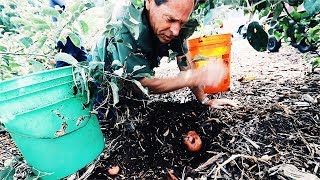
Justin Rhodes visits permaculture pioneer Paul Gautschi to show how wood chips eliminate watering, weeding, and tilling. During a 70-day drought, the mulch kept soil damp and improved fertility so much that potatoes come out by hand. Eight to ten inches of chips over grass is all you need to start.
Chapters
You know, it's just, you know, realizing we had this major drought summer, like, you know, 70 days no rain, and you get down with your hands and you see it's totally damp. This stuff never dries out. It's just so awesome. I mean, look at this. It's just totally—
Another day, another Eden. We keep continually getting better, slowly but surely. Had a great day hanging out with Paul yesterday. Good morning, Paul.
Good morning.
You been up and at them this morning?
Sure.
What you been doing this morning?
Oh, I just, you know, just got the chickens out and fed the cats and the dog. Good morning.
Good morning.
It looks like you're ready for some work.
I'm gonna go get some potatoes up.
Okay, can we come along? Let's do it.
You know how they prepare apples in the store for you to buy?
Yeah, uh, they put wax on them.
Watch this.
The Creator has the most amazing wax you've ever seen. Watch this, you guys. Look at that. Isn't that beautiful? You can almost see your face in there like a mirror.
Like a store-bought apple right there, Paul.
Look at that. That's crazy.
It looks like a— like that could be a fake fruit.
I know, it really could be a fake.
Okay, this is after.
Before.
So there's a natural wax on there.
This one was already— this wood was already—
yeah, hold it up there.
Nice.
Thanks.
And you see here, we, you know, we have different color pears on the same tree because it was grafted. Okay, so they're both Bartlett's, but there's one's a red Bartlett and one's a yellow one.
Nice.
You see that wasabi over there?
Yes.
I mean, could it be in a more arid, dry spot? And wasabi only grows in standing water. I think it's just so amazing. It has a short stem, really fleshy, and as it grows, it pops off.
Interesting.
It's just, it's just, you know, not a good design.
Yeah.
But the flavor is like totally over the top.
This your favorite apple here?
They're all favorites because, you know, all through the season they just get great. But this one here has a sweet and tart together that'll blow your mind. You've never had an apple here.
You hope that's like a Honeycrisp.
I don't really want to wait.
Yeah, yeah, yeah, it's very full of water and minerals, but the flavor, like I say, you get both the, the, um heart.
I wonder if that's the one that I had over in— when we were at, um, that I thought was a Honeycrisp, but it wasn't.
What's the name of this one?
Gravenstein. This is that like—
wow, that's nice.
Over the top.
You would like to taste some?
I like taste it. You want to taste it? So here's the potatoes.
Oh, we would have missed them. I know.
And so I'm gonna— you can see they're obviously done now, so I'm gonna pull the plant up. And this is what I still love about this. Usually when people are digging potatoes, they have a fork. You look at these beautiful potatoes coming out of the ground here. With my hand, I just move the wood chips away. Goodness, look at these awesome potatoes that were growing here all year with no water. And you can see as I'm going down in here, it's damp, it's not dry. Now you see, I got them all out. So what I'm going to do, I'm going to go over here, find my biggest, nicest shaped potato, put back in the hole and cover it. And I just planted for next year. And what you just saw right now is the full extent of the whole potato process. I won't hill, I won't water, I'm done. Is that cool?
That's very easy.
Can it get easier? And look at my hand, it's not even dirty. I know, I'm just telling you, it's so fun.
It's right here under your apple tree too, so it didn't take up any other space.
In a place where you wouldn't naturally grow stuff, right? But you can see the apple's not, you know, hasn't been, um, nothing's taken away from it.
Why did you choose to put it right under the apple tree?
I'm now doing trying to do things they say you can't, just because I want to show people that there aren't any can'ts in nature.
And you'll just come get that next year.
Next year I'll get that with, you know, a whole bunch of other ones. And why plant the biggest? There's a reason. You see these little eyes right here? That's where shoots come out. And the more eyes you have, the more shoots you're going to get. As the potato grows, it feeds on the potato. So the larger the potato, with the more shoots and more potato, you get a bigger crop. You see, the little ones taste the same as the big. Why don't you plant your big ones? Get a bigger crop. And look at that, you know, if you watch the whole process, a little down with my hand, no tools, it just makes it so easy.
Do you do all this work yourself still, Paul?
Yes.
How much work is involved?
Not a lot. It's quite easy.
I just saw the potato process.
Yeah.
It's, you know, and again, you know what I'm finding? When I used to till and weed and have to fight, my garden was a drag. I didn't want to be there. This is fun. This is enjoyable.
Okay.
And now I love it because it's just enjoyable. It just makes such a difference when you have a covering. You see, I'm on my knees. I'm not getting dirty. You know, it's comfortable under my knees because this has buoyancy. It's not on hard, compacted, muddy soil, and it's just enjoyable. It's pleasure, and being connected to the earth and grounded is so therapeutic for you, you know, physically. It's just, there's so many benefits, it's all plus. And watch this little weed, see the little weed there? See how quick it comes out, you know? It's just, every part of it is enjoyable because it's not hard. Where conversely, when I used to till and had mud and compacted ground, fighting weeds. It was miserable. It was no fun. This is fun.
In your movie Back to Eden, it's all about using wood chips in your garden, and the whole idea was that it would eliminate watering, weeding, fertilizer, crop rotation, fertilization. Have you found that to be true?
Totally.
7 years later, this has been like 20 years—
my orchard is 38 years later, yeah.
Okay.
And the beauty is that every year my produce gets bigger and sweeter. Because what I'm finding is that the crater is not static. It's not like it just gets to level. It's always increasing because you see, as this material is breaking down, more is going into the soil than the plants take out. And so you have a compounding interest situation in place. Which is so fun. I'll never forget a couple summers ago, I'm sitting down with my wife eating broccoli, she says, "Carol, I've never had broccoli this good." And I realized I've been growing this broccoli for 10 years, but it just was never this good. It just keeps getting better, which is so fun, so nice. Like, ah, you know, you come out there, look at the size of that, man. I never saw it that big, you know? Well, it's just fun. You know, static, something just being the same, it's boring, you know? So it's just really, really, again, the Creator just didn't miss anything. He made it so good for us. You know, it's just, you know, realizing we had this major drought summer, like, you know, 70 days of no rain, and you get down with your hands and you see it's totally damp. This stuff never dries out. It's just so awesome. I mean, look at this. It's just totally incredibly damp, beautiful soil.
So if somebody else wants to do this, which I'm sure you've inspired thousands of people to do this, myself included, what do you recommend they do? Let's say they have just, they don't even, let's say they have a garden, what do they do?
Cover with wood chips. And right now is the ideal time. If you look in nature, the Creator puts a covering of needles and leaves over the whole planet every fall.
Okay.
And the wisdom of that is, is that when do farmers fertilize?
When do farmers fertilize? In the spring.
Which is stupid when you think about it. You're planting in the spring and it takes time for fertilizer to get to root level. The Creator in his wisdom does it every fall, and then he sends a winter of rain and snow that creates compost tea that feeds the soil, builds the soil for next spring's growth. And he uses gravity to do all the work. When you start looking at how this works, you just stand in awe at the wisdom of the Creator. Gravity just takes it down. You know, if you know anything about, you know, farming, compost tea is a rage. It's the most valuable, desirable fertilizer there is— compost tea. And people buy it and they go out and they, you know, water their garden with it. Second or third watering, it's all diluted and gone beyond the root system. When you put a cover on the ground, every time it rains, every time you water, anytime it snows, you get a compost tea release. So your plants are constantly being fed, unending, and gravity does all the work. It's the most beautiful, simple, amazing system you can ever imagine. Compost tea-free forever, no limit. Just put the wood chips down. It's just—
it's so cool. I love this.
You know, if you look at my soil, you go behind my house, it's just clay and rock you can't move. With a pick, and I'm down with my fingers, man, going into this stuff with no effort. And it's soft and it's not hard. It's just so awesome. Wow.
So this fall, will you come in here and put some wood chips down?
I don't need to now because this is so adequate. See, what I'm finding is that as time goes on, I'm doing less and less work. 'Cause you see, I have a major base built and my soil's not hungry and so it's not consuming. When I first started, Justin, I was blown away at how quickly this stuff broke down. 'Cause my soil was really hungry. It was starving. It's not now and so it just, it doesn't need to eat as much and so it's consuming less. You know, again, it's just, it's such a, you know, it's so simple when you start looking at it. It's just, you know, It's not complicated.
That stuff you're throwing in that bucket, is that going to be for the chickens?
Chickens, yeah. Anything in my yard that, you know, all waste goes to the chicken pen. Everything. And they very meticulously with their little feet chop it all up, grind it all up, and whatever they choose not to eat turns back to soil. And I tell people, this is my soil manufacturing plant. The eggs are just a bonus.
Everybody likes watching this, huh?
But see, I'm moving with my hand, and I'm telling you, man, when I came here, my rototiller was bouncing off this stuff because it was so hard and compacted. Just push it all back. Those little tiny ones aren't worth me messing with, so I'm just gonna give them to the chickens. Chickens will eat those. They're good.
So if somebody had just sod and then didn't even have a garden, how would you suggest they get started?
Grass is a really nice green material, and you just lay wood chips over it. If you're, you know, if you do 8 inches or more, the grass won't come through. If you do less, put paper down, and paper will suffocate the grass, and the grass becomes a wonderful fertilizer to feed. Now see, look at this big root. You have my apple tree, you know. You see, that in no way is impeding the growth of the potato, you know. And it's just, they all can live here well.
Now last year in our garden, maybe you can help us with this problem. We had a wood chip garden, we planted into it, the stuff came up slow and yellow. And what we ended up having to do was based on a local gardener's suggestion was put bone meal around it. And what else we put around it, Rebecca?
We did lime and bone meal.
Lime and bone meal, and it revived. But do you have any idea why?
Soil was weak. You see, prior to you coming, it had been depleted.
Oh yeah, it was bad soil.
And so it had to be fed. And so starting out, it was hungry. And so this is very common, you know, but you'll find next year Without adding the bone meal and the thing, stuff's gonna be green because it's been feeding. And so it just, you know, to me it's just so, you know, simple. The ground was hungry. It was deprived. When I planted these trees here, it took 7 years before I had fruit because the ground was so deficient. I plant, you look at a little tree over there, you see the amount of fruit on that? That's 2 years old.
Oh wow.
So it just, it just shows you Nutrient density is such a significant principle, and when there's none, things don't do well. They can't produce. And when you for years been tilling and mining the soil of minerals to grow plants, it's deficient big time. And it doesn't, you know, empower immediately. It takes time to develop that food source, and you just have to be patient, understanding, and realize like that's how it is. But you'll find in your garden that every year it'll get better. It's this constant upgrade because this is constantly feeding the soil.
So what'd you do at first before you had deep mulch soil?
I used to plant— I'll tell you something amazing, and people need to get this. If you want to have an incredible potato crop, If you have a lawn or grass place you want to use, mow it down real low, plant your potatoes right on top of the grass. Don't dig them in, just lay them on top of the grass. And you do it in rows 3 feet apart and plant the potato one every foot and cover it with 8 to 10 inches of wood chips and water real well. You'll have the most amazing potato crop you've ever had in your life. And it's just awesome, just lay them on the ground and cover with wood chips. It's just phenomenal. See, the grass will right away, you know, break down and start feeding them because it's, you know, good organic material in the wood chips. And it's just so cool.
Do you transplant plants or do you direct seed?
I direct seed because I just keep going to nature and I notice in nature that nothing's transplanted. There's no starts or transplants. Everything's seeded. And I find that when I use transplants, they usually, when you plant them, they stand still and go backwards. They don't grow. And I've often done people tests. This is plant a seed next to the transplant and watch the seedling pass it up.
Yeah.
It's amazing.
How do you plant a seed into the mulch?
You can throw it on the ground like nature does, or just make a little groove. You know, I plant nothing any deeper than like a quarter inch, just shallow. Just make a little groove and plant it. Here's what's cool, you know, in your wood chips, when you first put on, they're really heavy, so you pull them back until you get to some really fine soil. Here's what's awesome: when you get this little ridge here, it knocks out the wind, and down below it's warmer, and your seeds come up quicker. As the seedlings come up, then you take your wood chips and just move them back around the soil to cover it, and then you take off. You go visit with your friends, talk on the phone, go to work, 'cause your garden no longer needs you. It'll totally carry itself. I'm telling you, when you start getting how simple and totally capable this is without any help, it's just so awesome. You know, and you can just, you know, intuitively you just look at this, you just know there's nothing that wouldn't grow in this. This is like nutrient-dense, amazing soil.
Soil.
You know how it happened? I did nothing. I just put wood chips down and it all happens on its own. It's just, to me, so awesome, so amazing. And that's it. This is what kids should be doing— be on the ground, connected to the earth, and enjoying all the benefits of it. You know, you see them, they just— they naturally just dig and have fun because they can.
Yeah. Can they harvest the potato plant?
Yeah, there's one right here, guys.
You can—
for all the brush—
now listen—
you put in this bucket.
Okay.
And potatoes you put in this one.
Okay, so you saw how it's done. So that— and the chickens inside there, and then just dig right there. Oh yeah, look how excited they are. Yeah, save your biggest one.
Well, you can put them all in the bucket, then when we're all done, we'll go find a bigger one. Would you like to have some of these for dinner?
Yes, say, may we have a couple?
You're welcome. See, to me, this is just such— so significant. And I know how you— how you train your children. You just connect them to life. You don't put them in a sterile, dead schoolroom with a bunch of kids that don't want to be there. You just bring them in. Everything you do, they do with you. And that's the most amazing learning process. And they so get it. They're so connected. You know, this is so awesome.
Exactly. Always put the biggest one—
the biggest one back, because you want to— you want to, you know, give your plant a lot of good food to eat so it can grow. It's pretty close, is it? Uh, I think the one at the bottom is the biggest. Okay, put that back in the ground.
This one.
How do you like to cook your potatoes, Paul?
I, I have a wood stove. I bake them, which is really nice. Or I like using, you know, avocado oil when I fry them, and I use garlic. I put garlic in with them, you know, and it's just like, you know, that I could eat that stuff every day all winter. It's just such amazing food.
Is that what you're gonna have again for dinner?
I had it last night. Tonight I think I'm just gonna have some eggs.
Yeah, just grab a handful, Jonah.
Everybody, everybody can take, you know, take some so you can, you know.
Okay, that's enough probably right there, Jonah.
Just all of you take plenty. Oh, really?
What a lot! There's no shortage here.
You get some, you get some.
Say thank you.
All right, you're so welcome. Thank you for your help.
Yeah, say, can we take this to the chickens for you? You may.
Thank you.
All right, let's pay him back and let's take this to the chickens for him.
Anything else we can help you with?
No, I'm good.
Okay, let's take that to the chickens for him. We're bringing this package back. All right, Josiah, make their day, buddy. This one won't make their day too much, but ours will. But regardless, they'll shred, they'll shred this, they'll shred this.
Oh, you're welcome.
But they're not going to eat, they're going to spread around.
They probably like those apples.
Very happy chickens. Now we're on a mission to complement this lunch. We just got potatoes, so we're inspired. A meal around potatoes. What do you got here?
Smells so good. Rosemary.
You gonna put some rosemary in this?
Yep.
What are you thinking?
Rosemary potatoes. We could bake them.
Oh.
Is that not just so heavenly?
So nice. I can even smell it even with my—
clogged up nose.
Yeah.
We already have parsley we can garnish it with. And then kids are picking some blueberries. I don't know what their plan is on that one. I guess just to shove it in.
What are the tomatoes for? Just to shove in?
Yeah. What do you got?
You got some blueberries?
Let's see you eat one of those blueberries.
You guys gotta pick them all. I gotta eat them all.
What's the plan for the blueberries, guys? We know, shove them in.
No, just collect them so Mommy can maybe make a pie.
Oh, they got plans, Becky, apparently, other than, uh, shoving them in. A bowl of blueberries, bowl of tomatoes and spices. You think this food has played a role in our healing?
I think so. I definitely think so. It's like these potatoes are so fresh. I mean, obviously they just came out of the ground, but like, I don't know, like when I was cutting them, they like crisped or something. It's never happened to me.
You can feel the nutrients on your knife.
Yeah, that's never happened to me at a grocery store potato.
You're not?
Mm-hmm. You're moist.
Salt and pepper.
Sprinkle it on top.
Put it in the oven.
How long?
Uh, I'll check it in like 30 or 40 minutes and we'll go from there.
30 minutes, 350.
Yep.
You checking it, honey?
Yep, just stirring it up. Let's see how it's going.
How's it going?
Looks good.
Uh-oh, you're gonna win my heart now, honey.
Yeah, I know.
I bought gauccio cabbage. There it is. And now here it is frying. You're telling me we're gonna have potatoes and cabbage?
Yeah, your favorite.
Oh boy.
Mr. Brown, how was your nap?
Good.
Good? You feeling good now?
Yeah.
Okay, good. Now that's a lunch, honey. I know. Good job.
So good. I cannot wait.
Very excited.
It's like a landmine. It's like you cooked it in bacon grease. I did.
Oh. Good job.
Where'd you get the bacon grease?
Our cabinet.
More ketchup!
Oh, he wants more ketchup. Can somebody please give him the ketchup?
No, right here. Right here. It won't come out. Hey, Mom, it won't come out anymore.
I'm gonna see if I have another one.
I could get that one.
He's always prepared. You know, I was thinking about it.
We don't really need to go to the grocery store because we have all this food here.
We got fruit, we got vegetables.
Yeah.
Why do I need to go to the store?
More from Justin






If I had to start my Homestead all over again, it could only pick one animal… 




