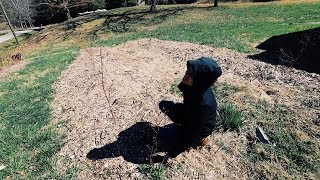
In this on‑farm vlog, host Speaker A, Rebecca, and permaculture consultant Donu discuss daily chores and long‑term orchard planning on a family farm. They start by describing how they fed the chickens entirely on food scraps from pig butchering and skim milk, and how they processed cream into cultured dairy. The conversation shifts to permaculture design: Donu recommends planting nitrogen‑fixing goumi berries among blueberries, adding elderberries along a creek, hardy/fuzzy kiwi on fence lines, muscadine grapes, and mulberries or hazelnuts on a frost‑prone south‑facing slope. They evaluate the suitability of apple trees in a frost pocket, considering placement, spacing, and late‑blooming varieties. Throughout, they emphasize the goal of creating a self‑sustaining food system for their children and grandchildren, integrating livestock, orchard, and garden elements. The segment ends with a collaborative song celebrating earth‑healing and community effort.
Chapters
They virtually tilled in this entire cover crop in one day. I'm encouraged by that. There's a little bit down here. Maybe 1, 2 more days just to get the fine stuff, but I have a trick up my sleeve. If they leave some stuff behind, it's gonna be okay. We emptied this last night. Jonah did a good job remembering to do that because it froze. It's like 20, 17 degrees out here. And this morning we were able to feed 100% on food scraps, the entire chickens, because we just had so much from the pig butchering, from our cleaning out our fridge, all that kind of good stuff. Wish you guys could have just seen this. I was cleaning the water, Jonah was bringing in the cows. Quassy came in all by herself. You're a good one, you're a good one, huh? Aren't you? Got a little spirit. That's okay. Some people have said, do I miss pigs already? Heck yes, because sure, we have less chores and it's nice to have a break, but they're so efficient with that feed. And then the skim milk, sure, we can soak the chicken feed in it, but they don't, you know, it's just something different. They just don't eat it. That and scraps, you know, chickens can get a little finicky with their leg, their egg production. If you're altering food, they can survive, but do they give you as consistent egg, egg production? Pigs keep gaining weight no matter what you feed them. How's it going in here? 5 gallons of skim, a little more.
We have a liter of cream, so it's like for a gallon, for 5 gallons of milk, a little over a quart of cream. And then we got skim milk. I'm just letting it run until this heats up.
It's— I need an—
I need to buy some more.
Okay, no problem. What are you gonna do What are you gonna do with the cream?
Yeah, I'm gonna make cultured cream.
How you doing this morning, Mr. Brown?
Good.
You got your tool belt? Yeah. Uh, what do you guys think? It was 25 degrees outside, no wind, so I'm thinking I overdressed. I'm pretty hot. What do you think? A little overkill? Oh, we got Grandma helping, huh?
Yeah. Yeah, you'll heat up the milk to 95, pour it in here, and this lovely machine puts the cream over there and the skim milk here.
We have a very special visitor guest today, Donu, from— where are you from, Donu?
Oh, I was born in Central North Carolina. Okay, I've been living in Asheville for the last 9 years.
Okay, you like Asheville? Yeah. Okay, Donu is here. He's a permaculture consultant. He also specializing in planting trees. You like Johnny Appleseed, bro? You like the modern Johnny Appleseed? You're gonna help me? Okay, good, good. That's a good reputation to have. Main activity is over there across the street in the house. So we did plant our blueberries here and a row of raspberries.
What I would do is plant some nitrogen-fixing goumi berries in between the blueberries.
Okay.
I don't know if you drink coffee, but I have some.
I have a whole— my parents are staying with us for a couple weeks while they finish their house, and, uh, can you, can you, can you put too much coffee on them?
Um, like, they're getting—
they'd have to go pretty wild with coffee.
Okay, there are 2 cups of coffee a day, so It's not a whole lot.
I guess that's not too much, huh?
These are black raspberries and then raspberries.
Yeah.
Would you suggest the gummy berries in among them too?
It might be helpful.
Okay, Donu, this is our cow pasture here. You can see the damage from 80 inches of rain in a year, double what we're used to. Yeah.
Wow.
But anyway, you can also see a temporary fence kind of at that knoll. See it running along the knoll? I'm keeping the cows generally out of the creek.
Yeah.
I'm open to what you could suggest along that bank between the creek and the fence.
This looks like an ideal spot for a big elderberry patch.
I love elderberries.
I'm like, I just haven't— I, I just don't know where to put them. And so I'm always like, I know we have places, I just don't know where. So this is perfect. This is awesome.
I want to show them these, uh, this is a wild grape growing on our perimeter fence. So that's like, you know, multi-purpose for that fence. Yeah, and we're trying to, you know, we'd rather not have to go and string trim this fence. So should we go with that and start thinking, hey, what can we plant on these fence, like, uh, domestic grapes or hardy kiwi or something?
Yeah, there's a fuzzy kiwi that has been surviving in West Asheville in a very exposed spot. I'm planning to propagate a bunch this year. So you can grow hardy or fuzzy kiwi.
Okay.
And then there's muscadine grapes. Yes, the native, the native grape to the Southeast.
So here at Don Nu, we had a market-style garden. This was our fall/winter garden. And then we decided to move our garden over there where it's flatter because this is a little more sloped. And we're thinking here could be a permaculture orchard. Yeah, I just wanted to ask you though, this is, this is the frost pocket. Can we even plant an apple tree here?
Well, I know I wouldn't recommend rose families in this instance because the, like you said, it's a frost pocket. Yeah, they're gonna bloom early sometimes, especially given such a south orientation and lots of sun, so the soil heat up earlier in the spring and they'll bloom and then that late frost that comes along will turn it into like a harvest maybe once every 3 years if you are lucky.
What kind of fruit could you recommend here? What are late bloomers?
Mulberries, gosh, I mean nut trees is what I usually recommend for like really exposed south-facing slopes because they are not going to be as heavily affected by the late frost. So hazelnuts perhaps.
We can do some research on that too to find out more late, late bloomers.
Fruit trees that are late bloomers. I like mulberries. We could do that. So we could plant the, uh, this could be more berries.
Berries.
Okay.
Oh, more blueberries.
Raspberries. Could they be down here?
Yeah.
Okay, cane fruits. Okay, now you're talking my language.
Could be goumi berries. More goumi berries.
Okay.
Strawberries.
Strawberries.
Okay, we can look from here, or maybe we need to walk up. But Donnie was telling us apple tree— and I, I was worried about apple trees in a frost pocket. So you got to go at least 50 feet up from the valley, right, Donnie? Yeah. And I'm thinking straight up that way, my old mountain board course. I'm thinking that, Rebecca, because it's closer to the house. I'm thinking we're more likely to visit it. Yeah, it's over here above the barn.
No, I agree. We get to see the beauty of it too from our house.
And Donu, this is where we're gonna be buried, buddy. And they're gonna— the kids are gonna plant the tree over our pine box. And Josiah's already said he's gonna come and eat of the apples and remember us. So what do you think here, Donu? Cold's traveling down. Not gonna settle right here. This is north, that, that's south, so we're sloped northeast.
Yeah, or northwest, I mean.
Yeah.
Would you— would we plant apple trees going this way, or would we plant rows going this way?
Uh, you could just have them kind of even. They don't have to be in rows.
Doesn't have to even be in rows. Yeah, cuz I guess nature doesn't plant in rows.
You know, we get all this just, just so that they're spaced in an appropriate way, and you could put standard trees going up here. I don't know how many trees you'd like, but we'd like a lot. Yeah, we have 4 kids, so yeah.
And, and you are—
and maybe going wider than a traditional orchard too, so we could still have pasture. Yeah, right. Once they got established, or protect them while they're— yeah, while they're young from the cows.
Yeah, especially after the rotten apples on the ground.
Yeah, yeah, yeah, that would be great.
I would clean it up for you.
Yeah, basically our end goal is to obviously live out our days on this place. Um, it's his family property, so that's part of— that's one reason we're so committed here. Um, but then also for our children, to, to leave them something that they can feed themselves and their children. So it's more— that's like our long-term game. So that's why I'm like, let's plant as much as we can. Not even for us, but for our children and our grandchildren, really.
Yeah, so that's, that's my long-term game.
Yeah.
So I think to sum it up, we're 20 years behind on planting those apple trees. We're gonna get that going. 15 trees is not unreasonable. We're gonna get them mature, or 5, 5 years old.
Yeah, that's mature.
Yeah, get some elderberries going along the creek, maybe, maybe a few hardy kiwi— or not hardy, you like the other fuzzy kiwi. Along the fence, and then a blueberry patch in our old garden bed down there. A berry patch down there below where the Icelandics are right now. Here you go. So we're gonna heat up some meat stock too. Do you want some of that, or would you rather have—
or would you rather have applesauce, or both?
I love vegetables. I love bone broth. So you're gonna play us a A song, huh? Yeah, I got a song. This is a bonus.
Earth healers, we rise, growing up to the sky. Roots down in the deep, deep. We're sowing dreams for all to thrive, just like the love in our hearts. Our hands know the earth. There's a new world coming, and she's soon to give birth. Plant seeds to the left, plant seeds to the right.
Well, let me sing you that one, the one part at least that was inspired by the video.
That's inspirational. Knowing each character and the unique gifts they bring. Weaving a whole system, a web of connecting.
Here we go.
Like chickens and pigs, preparing the soil for seeds. Nourished by compost, bugs, and fresh air on the green. Earth healers, we rise. Earth healers, we rise. Earth healers, we rise. There's no one beat for us in skies. Plant seeds of love. We plant seeds to the right. Plant seeds all around. Ground and watch the blooms feed butterflies. Just like the love in our hearts, our hands know the earth. There's a new world coming and we're soon to give it birth.
Oh, I gotta play the last one, it's so good.
Plant trees and grow a forest of abundant diversity. Just look into the eyes of a child, that's all the reason Your knee.