They're Making a Living on this 1.5 Acre Market Garden
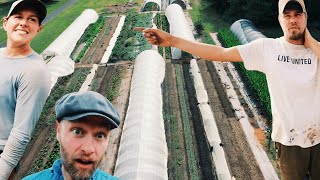
This content was created by Victor Justin Rhodes. This content was uploaded by Victor Justin Rhodes. This is a YouTube video titled "They're Making a Living on this 1.5 Acre Market Garden" (created 2021-09-10). The excerpt is an informal farm-tour/interview at Honey Tree Farm featuring a host (Speaker A) visiting farm owners/operators (identified as Tori and another speaker, Speaker B). They discuss the farm's history and acreage, production practices (high tunnels, irrigation, seed starting, compost), crops (lettuce, carrots, beets, turmeric, garlic, etc.), pest and weather challenges, markets and customers, labor, tools, and small-scale business economics. The tone is conversational and instructional, with on-site audio and references to past footage from a 2017 farm tour.
Chapters
Honey Tree Farm! I'm super excited to be here. Finally came out here, came and visited y'all 2017 on the Great American Farm Tour.
Yeah, at a different property.
That's right. And how many acres was that?
One.
They're market farmers running a market garden. They did that on one acre. We're going to show that at the end of this video. I'm going to— we're going to go back to, uh, throwback to that.
That was the homestead days.
So you guys are going to show us Now where you are now with this, how much, how many acres?
It's like 4.5, but I say an acre and a half in production.
Yeah, it's insane. And you've been working hard all day.
Yeah, all of our clothes are ruined. Yep.
And because it's big, big getting ready for the market.
Yeah.
Okay, let's see this, let's see this craziness.
All right, this is like 100-degree heat, heavy downpours.
It's hot right now.
Yeah.
At like 345.
Yeah, and, uh, the bugs and the fungal pressure is super high right now, so everything is like against you, but we still have to harvest every week for the markets and we still have to plant for fall and winter.
So you say that out of fact, or do you say that out of please excuse some of the eaten plants?
Both. Yeah, well, it's like some of the salads is like the best. Like we had the tropical storm Yeah, it was like 3 days of nice weather and it was 100 degrees for 2 weeks straight. All the salad was like, nah, this is dumb.
So these little start plants, they love it.
Yeah, they're all right. We got shade cloth in this tunnel.
Look at all this. How many people are you feeding?
I don't know. I don't even know how many customers we have. Uh, so we start everything in the basement.
She's gonna give a guess.
Yeah, 2 markets, restaurants.
2 markets in a week, a restaurant, uh, 2 restaurants that are pretty consistent, and then 2 food hubs. One is super consistent and the other one is getting there. They're pretty new.
So it'd be fair to say hundreds, probably feeding hundreds of people.
Yeah, we probably talked to— okay, I know I talked to over 100 people at the market.
All right, what's your seed bill? Do you know that?
Feed bill?
Seed?
Oh, seed.
At least $1,000, like every time we order seeds.
Is that your biggest No, our biggest expense at a market garden—
we've probably spent $5,000 this year—
was $3,400 one time, and that was just once through the year.
Wow, it's cheaper than feed though. It's way cheaper than feed.
And there's thousands of plants in here.
Dino kale, Swiss chard, red Russian kale, all the new stuff coming in. We start seeds every week. We're always—
yeah, nice. Every week of the entire year.
Yeah, pretty much. We close down in winter, obviously, but, but you still plant every week? Yeah, we still sell all year, so there's always that push of constantly.
Are you burned out right now? You're at the fall? How do you not burn out?
You actually get kind of pumped in the fall.
Do you?
Yeah, it's like, yeah, I hit my second wind like 2 weeks ago. I was like, yeah, fall's coming, let's do this!
Why, why, what's the secret to all the burnout, huh? Burnout is this It's the season change.
Completely avoidable.
How?
Um, well, you know you're gonna get it, or you know it's coming, so don't get it.
For me, I just sleep more.
You just go to sleep more?
Yeah. Okay, go to bed at like 8 o'clock.
Yeah, yeah.
I've been working outside like my whole life, so it doesn't really— I've already worked through.
You were made for this. You're born for this. You know the secret to getting up at 5 in the morning? Waking up, going to bed at 8.
No, yeah, this is something cool. So that was a nursery tunnel, and then this is tuberick.
And that's your mascot? Yeah, I don't know if people heard that, but she about blew up. This is not normal to grow in North Carolina, right?
No, this is pretty unique. And there's, there's a guy in Charlotte that sold it next to me at the market, and, um, So I bought the mother plants off of them.
Nice.
Yeah, there's a flower.
So now is this— sorry, I don't know. What does turmeric look like when it's done?
It kind of looks like ginger.
Yeah.
Yeah.
Okay, so it's in there. It's a root in the ground. Yep.
There's a flower.
Look, it's a pretty plant.
Yeah, it's awesome. There's like no pest pressure too.
Yeah, pests are like, what is this?
Yeah, uh, it's like a medicinal too. There's a lot of different ways you can eat it, but you got to eat it with black pepper for your body to like absorb it.
We were in the back of the house, now this is the front yard. I like it. Forget backyard gardening, just surround your house with it. Take it to the front. So much more garden space. Yeah.
This is kind of unique with the trees. This gives us like, you see the shade on that plot over there?
Yeah.
And then this one's in the sun. Ah, well, in the morning, uh, this is shaded and that's sunny.
So it's like an advantage.
Yep.
So tell the people how.
In the summer, the afternoon shade's good for like kale, spinach, beets, collards. What else do we grow there? We had cabbages like in August.
Yeah.
Chard. It's all about using your microclimates.
Nice.
That's why I have so many tunnels too, because it rains so much here.
So did you see these trees and say, that's what we're gonna do, or did that evolve and you kind of figured it out?
Yeah, we pruned it this, uh, spring. That's what all the wood is. Okay. Still haven't split it before I would have chipped it yet. It's been sitting there for like— was that— what is that, 4 months?
Yeah. There's gardens and tunnels Everywhere.
We just built this.
Now, is this on you or is this your neighbor?
This is our land.
What do your neighbors think of you?
Neighbors are awesome.
Yeah, our neighbors— we couldn't have gotten better neighbors.
Neighbor Phil's fixing a thing right now so we can run our cooler.
Oh really?
Yeah, he's like a genius for fixing stuff.
Has anybody said, wait a minute, they, they can do this, my yard looks just like their yard? Has anybody planted a garden because of you?
Uh, they had gardens, um, already, but they've gotten some plants from us.
Nice.
Yeah, they got plants in the spring. We gave them some tomatoes.
Do you sell all this?
Yeah, that's why we plant it.
Really? Like, there's many people buying lettuce?
Yeah.
Wow.
The restaurants, so we do like almost 50 pounds a week.
Wow, that's a lot of lettuce. One restaurant group that has a lot of restaurants. So how many pounds of lettuce is going to be in this one row?
That's probably 20.
Okay, so that restaurant needs 2 or 2.5 of those.
Yep, it's pretty much a whole 100-foot bed a week in the summer. The yields will go up as it gets colder. Yeah, so these 3 tunnels, uh, the white stuff's DE for caterpillars. They're really bad, like they're super ridiculous. Chard, collards, and then that's a baby kale mix with the netting. Uh, this was all carrots in the spring, so it's, uh, pretty cool.
I like it.
We did lettuce over here too, right?
You have wobbler sprinklers in there?
Yeah, that's to help things get established, and then there's drip tape in all the tunnels.
That's probably your biggest expense, the high tunnels?
Um, no, that and water. I say our irrigation was probably the biggest—
oh really?
All the tubings and fittings and the well. Well, yeah.
Ah, we didn't pay for all this at once, or do you pay for this as you grow your business? As we grew, we're back over on the side of the house.
Yeah, so this is, uh The first plot we built.
Is it?
Uh, this is my last step. This is where we grew garlic this year, and then it was all beets.
All these beds were garlic, and then we cropped out the garlic and they were all beets.
And now it's arugula, kale mix, bunching onions, and spinach to take us into the fall.
This is a 100-foot row, so how many wheelbarrow loads? 10 of compost?
4 to 5.
4 to 5.
Yeah, we put down like 200 yards this year.
Oh wow, that's a lot.
Yeah.
So do you pay more for compost or more for seeds?
Seeds.
Okay.
Yeah, our compost— this is a really nice compost, actually pretty cheap. We kind of lucked out with this stuff.
But did somebody quit halfway with their broad fork there?
That's to harvest the carrots. Oh yeah, using your broad fork and pop the carrots up.
Let's do it. Can we harvest one?
Yeah.
And you just go right in between the water line, the drip tape?
Yeah, that's fine.
Can't see, Mr. Brown. Back up real quick. Thanks. Yes, nice.
We'll do that.
Those weren't ready.
Um, this bed got Alternaria, so it's a little rough.
What do you do with the weird ones like the one you just pulled up?
Um, I'll still bunch it.
Okay, people are tolerating it.
Yeah, most people—
good. Well, you got some really good straight ones there.
Yeah, not a lot of people have.
Some people think it's fun. Yeah, you pull it up, you harvest all, then what do you do to get it ready?
Bring the stirrup hoe through and then take the weeds out and rake it out, put compost on, and then run the BCS over it.
Where do you put your weeds when you pull them up?
In the grass.
Oh, all right.
Here you go.
There you go, Lily. He's washed it for you. Is it good? Tastes like a carrot.
It's like all carrots.
Oh, she rinsed some off for you, Mr. Brown. We got the tomatoes coming on. More lettuce. But more lettuce for the restaurant.
All right, we grow a lot of this beets over there, um, and this is all cabbages, Brussels sprouts, broccoli.
Cat, uh, this right behind us. Did you have a hard time getting seeds in 2020? Everybody was rushing to get seeds.
We got a lot of stuff, some varieties.
Okay, sugar snaps. Yeah, and you've got them on T-posts every, what, 15 feet?
Uh, yeah, probably 10, guessing.
Uh, yeah, we just put them in, we didn't measure.
And then what do you do, you just do another rope?
We're gonna put, uh, we did a rope on the bottom so that to get them straight and then let them grow up a little bit and we'll do another rope.
You'll do another rope? He says rebar.
Well, they don't really fruit much till they get taller, so we'll have to extend this height so we can— so we'll just put rebar on here and figure a way to fasten it, probably like with a clamp, and then have it be taller. Nick sent me these from Paul Gauci's place.
What are these? Really? Back to Eden? Yeah. In Washington State.
Yeah, he sent us cuttings. We need a fig tree.
2019 fig trees are tricky for us in the mountains.
I even know what a fig is.
But you can do figs all right here.
Yeah, they, they took the winter pretty rough, but it was 16 degrees one night. That's what really got it. Yeah, this is all growth from this year, so all right, they're all right.
You've planted onions and lettuce together on purpose, or that's some volunteer?
So the onions were really sparse and not doing well, and— but they were like halfway grown, so I just planted the Salanova in there and kind of interplanted it. It's all right.
Anytime something's like not that good, we just plant more stuff around it or just crop it out and start over.
It depends how bad it is.
What's your biggest fear?
Fear?
Tonight when you go to bed, are you afraid of anything? In regards to this market farm?
Hmm, I worry about a tornado lifting up these tunnels and throwing them into the power lines. Yeah, hail would be bad. We had a dust devil come through last Sunday. Yeah, and it just like picked up some insect net and blew it into the power lines.
Oh my gosh, do you have insurance? Is there such a thing? Yeah, you can get insurance on—
okay, nice. Yeah, Farm Bureau is pretty good with everything. This is probably our most used tool, I think.
Why do you say that?
We use it for weeding, flipping beds, and the jang seeder.
Yeah, can you demo it? So it hoes on, on both ways, frontwards and backwards.
So we got little carrots growing there.
You're probably a really good hoer.
Yeah.
How many hours a week do you spend hoeing? He's laughing.
3? No leaf compost.
Oh, that's it. You just, you just, you just— come on, you got to tell the people how in the world with a million plants do you weed only 3 hours a week?
Go through the work to put the compost down, get this weed seeds out.
So you buy good compost on top of it, I think helps.
Yeah, the smaller they are, the less time. You know, you can come through here and you can let all those grow bigger Yeah, there's some weeds in here.
So are you late on that? Yeah, let's hit it. Look, he can't even— he can't even look at it. He's got to get the turbo. He's been working all day.
You wanted to demo it.
There he goes.
I mean, that's it. And then one of the things though is like, it's gonna rain later probably, so it's not a good idea to weed right before the rain. Yeah, they're gonna come back in.
How do you get real close to the plant? Do you worry about it? Do you guys weed near each other and talk?
Yeah, we have, we have, uh, high school girls that work here. Yeah, we'll all like work on beds together and make jokes.
Fun.
A lot of times we'll do most of the weeding like when we're flipping a bed. Like if we can't get to the weeds when the crop is growing, we'll just wait until we crop the whole bed out and then we'll do the work then.
Then it gets even easier because I'll run the flow mower and I'll just put the blades in the soil a little bit.
Yeah, and just Just chop it.
Everything—
those don't know is the flail mower chops it up really fine.
Yeah.
And then, then you would rake it with a, with a soft rake or a spring rake. Spring rake is what it's called. All right.
Yes.
This— look at him, this one hand.
Or this one, um, that was salad that I harvested this morning and then I mowed it and then we prepped it and planted it.
Yeah.
This is arugula.
Oh yeah. Is that a hot item?
It is.
Yeah.
What is the most underrated item that you have? You take to the market and you're like, dang, why aren't you buying this right now? It's so good. Kohlrabi's underrated, probably.
Yeah, people buy it in the winter though.
Who's overrated?
Sweeter.
Uh, kale.
Tomatoes.
Tomatoes are overrated.
Yeah.
Yeah. There was like a huge rush in the beginning for tomatoes and everyone was like, yeah, tomatoes! And then it just died.
Peppers. Peppers are such a waste of time for us to grow. They're the easiest vegetable. All you— you don't have to do anything to them. And then we like take them to the market and people are like, oh yeah, I got pepper plants at home. I'm like, yeah, I would too because you don't have to do anything. So we only grew like half a bed this year. Instead we did carrots and summer carrots and summer beets. Uh, because it's more difficult than peppers. What's up really well?
What's the most lucrative? What's— where's, where's our cash cow here?
Salad and beets and carrots, probably.
So bang for your buck, salad, beets, and carrots.
Yeah, turmeric's gonna make a lot of money too.
Yeah, garlic too. Onions did really well for us this year.
But y'all have made enough that both of you, this is your full-time job?
Yeah.
This is— this replaced— this replaced your job last year? Banking?
Uh, it was in corporate analytics.
Okay. Yeah, it was a corporate job.
Yeah.
And it replaced your job landscaping?
I was an arborist before.
All right, what are we going to do with this? Some, some weeds that have gone to seed.
Uh, I'll pull them out by hand so they don't get seeds out and then just throw them back there and mow them.
This is where I need to pay attention because this is how our garden looks, right? That's how most people— hey man, everybody's like Oh, there's my garden. Yeah, well, especially this time of year.
This section right here isn't— it's too sloped to do vegetables, so it's all comfrey and then elderberries, serviceberries, persimmons, figs, and then another row of comfrey.
So this is your perennials?
Yeah, this is a hedgerow, so it's kind of the wild area.
This just made everybody feel so much better about themselves.
No, we have weeds.
You have this immaculate garden and then Yeah, this personifies you.
Well, this spot that doesn't make money, we don't really put a lot of work into it.
Okay, see, priorities.
What we'll do is, uh, the crabgrass isn't really going to germinate much after now. It's not really its season, and we got a big pile of leaves, so in the fall when we're slower, we'll just cover this with like a foot of leaves.
There's sweet potatoes there.
Wow, cabbage, cabbage, kale, and then Cabbage.
We're gonna kiss a cabbage. We're going back to the original. We gotta kiss the cabbage. Do we got one big enough? This is where it all began, guys.
Yeah, I know.
I started kissing the cabbage at your place. Oh, I don't eat them anymore, but I can still kiss some. Kiss the cabbage.
That's carrot. Those are two carrot beds that got wrecked by caterpillars. So one of the things that can happen here is the caterpillars will hatch out and overnight you can lose like almost a whole bed of freshly popped carrots and beets. So that's why there's diatomaceous earth on there, so when they crawl across to try and eat it, they get cut up.
So there's white powder on the beds, that's their DE.
So armyworms, um, they really like Bermuda grass. And most of this was Bermuda grass, which is terrible to get rid of. Yeah, um, so they'll hatch out of Bermuda grass and come on over into the vegetables. And we lost thousands last fall to caterpillars. Yeah.
Does that get better now that you've been cultivating it year after year? Bermuda grass, or same? Yeah, the pressure, the bug pressure, the weed pressure.
Yeah, it gets easier.
You gotta stay on it.
Yeah.
So you haven't gone on vacation in 3 years. Are you gonna actually be able to rest?
No.
Are you gonna be checking your phone? You probably check your phone now. Oh yeah, I know you can run your water now. You show me that.
Yeah, I'll be making sure the irrigation's running.
You'll be texting the girls, won't you? I will be. Will you sleep in?
Oh yeah, yeah.
How long sleeping in?
Oh yeah, 9, 8, 9. I can't even sleep till 8.
Really?
8, 9. Okay, stay up late, watch movies.
I don't know, probably walk the beach at night.
Nice.
We really watch movies.
We're gonna go see their chickens now. Look at this.
This is our neighbor's land and, um, they let us raise the chickens on it.
So we did meat birds here last year too, but is it meat birds this year?
No, it's just the layers. We had predators take out like way too many, so there's a lot of new ones down there close.
At the end of the day, um, I'm walking around. I'm getting around. All my ankles, they're holding up all right, thank goodness. You coming? It's the best part, the chickens. Look at this. You got a couple of nets up. You're gonna just move them around in this pasture? Yeah, you got an OG Chickshaw right there. That's Chickshaw 1.0.
That's like 5 years old.
Yeah, it's been through a lot.
We've moved that thing from Huntersville to South Carolina to here.
Yeah, the Chickshaws are designed to be able to move by hand, but there are a lot of people that can that have a mower or a machine. Yeah, we could use a bigger, bigger coop.
Sometimes we'll move them from over here for whatever reason. We need to put them maybe up there. Yeah, we'll just put everything on the trailer, like all the fencing and the water or something, and then come back or set it up and come back and get the birds.
Nice. People can find you at Honey Tree Farm on Instagram, YouTube, and Facebook.
Yep, TikTok. I I guess too.
Yeah.
And then, um, at the market, if somebody's in Charlotte— where are y'all?
What's the— the Charlotte Regional Market.
Okay.
Yeah, it's by the airport.
Okay.
It's the big one.
All right, let's get some business.
Yeah.
And I'm in Hickory, in downtown Hickory.
So cool.
Saturdays.
Good job, guys. Proud of you guys. I'm so excited to be here bringing back farm tour memories.
It is.
Yeah, this is tripping me out.
Feels like so long ago though.
It was, it was 4 years ago.
Wow. Yeah, so that's crazy.
Let's roll their clip of what they were doing on, on, on less and just a backyard homestead. You weren't marketing department there, were you?
No, no, we were, we were both working.
That was cool. I think you're a good model. Both of them working full-time, they maxed that out, and then they kind of weaned into it. They got him going full-time first, and then they brought the sugar mama home, and then they just made it both happen together. Yeah, didn't they?
Yeah, we still joke, we still joke, calling Tori the sugar mama and me a jobless loser.
Well, I'm like, no, I'm not the sugar mama anymore.
I know you like it, you like it, you had control, you had more control than me.
No, not Tori runs stuff now. I'm just the peasant.
She counts the money, gives it out. Yeah, here's your pay, buddy. You get tacos tonight.
I know.
All right, let's roll that footage of them 4 years ago.
More from Justin






If I had to start my Homestead all over again, it could only pick one animal… 




