This is What Permaculture Can Do For You
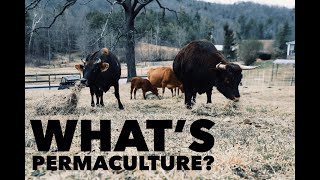
Victor Justin Rhodes introduces permaculture as designing with nature to create abundance with less work. He shifted from market farming to permaculture after Lyme disease, and covers quick wins like mulch, chicken tilling, and mobile coops. The session includes livestock integration, zone planning, and a Q&A on practical homestead questions.
Chapters
Hello, welcome everyone. We hope, hopefully you're getting this part. If you're seeing this part, you're probably a replay viewer because everybody's got to get notified, everybody's got to jump on. Rebecca, we got to make sure it went public and just go unlisted. The beautiful one, the lovely beautiful one here. Boy, do we have a show for you guys. So I mean, if you want to just jump to the show, we're going to aim to start in about 3 minutes, so we need to check some things. Make sure folks can hear us and all that good stuff. So hang on, we got a really neat show for you guys. This is something we've never done before live. We're gonna actually show a video from our member area live here on the show, and we're gonna be here to answer questions as it goes. People are saying hi. Hi everyone, it looks like it's gone public because we got 230 people in this living room right now. You got your phone? Get some milk, get some tea, guys, get some tea. Get some drink of preference. Parties like this are always funner with something to drink, something to relax to. This is gonna be a fun show. People are coming in. Let me call some people out. Kathleen, welcome. Lori, Luther, Jorge, Dionne, Molly, Bennett, Curb, Marva, Adam. Guys, welcome, man. Everybody's coming. Everybody's coming tonight. We tried to do this Sunday. Yes, it was the Super Bowl.
I didn't realize that when I planned it.
I'm so sorry. We had technical difficulties so we couldn't do it anyway, so maybe more people can show up tonight anyway. What are you lovely people doing on this Wednesday night anyway? So what would you guys have done this Wednesday night if you were not hanging out in a webinar and drinking tea with the beautiful one and I? What would you guys have done? You just guys hanging there, we're just testing stuff. Did anybody say, somebody say you can see, hear me. I guess people would say they can't. I know there's a delay, so it might be 3 minutes before we know that they can't hear us, Beauty, but I'm going to trust that everything's going— Okay.
There you go.
There you go.
So I might have cut us off there. I didn't mean to. Okay. They did hear me because people are starting to say what they do. This guy would have been doing nothing. Somebody's drinking hot chocolate from Florida. You guys hang in there, don't answer this yet, but I got a question for you here right before we go officially live. You know, if the show officially starts in 1 minute, we're gonna let some people get in. We got 452 people here in the living room right now.
This is very hot.
I told you, you're trying to— you trying to hurt me, Becky? No, I just told you we got Soda Land in the house moderating, trying to keep up with all this, all these excited people in the comments. Lorraine, thank you very much for moderating for us and making everybody behave. So hopefully everybody will behave well. We got 1 minute, we're gonna get this show started. So this is going to be really excited people. You guys like this new setup? Beautiful one got me this stand-up desk, it's in the corner. And what a nice backdrop for a live show. In case you get bored, you can kind of look around and see what you might have left out that didn't want to leave out. So I think we cleaned it up pretty good. So, um, 4 Kids and a Farm, hello! Mindy Pat, Mindy Pow, I can't think of that last name. Joseph, welcome to the house, buddy. Glad to have you here. Mark in the house. Rebecca, you moderating comments too?
Ken Chapel is here.
I'm trying, this is really hard.
Hey, give it up for Ken. Hey Ken. Moderating on our channel, moderating now. Thank you, Ken, for showing up to this. We forgot to get any moderators, but now we have 2 already. So we think—
someone's crocheting.
All right, let's get this party started with a, uh, just a brief idea of what's going to go down. We're going to intro this, we're going to welcome you guys. I got a question for you guys so we can all get to know each other a little bit better, feel sorry for each other, or be happy for each other. We'll see. Got a special question for you. Well, thank you, Heirloom Permaculture, for the contribution. We really appreciate that. So hey guys, then we're gonna jump— we're gonna jump in, right? We're gonna do something different. So after we welcome everyone, we're going to jump right into a show. I have a video I made for my member area. I'm going to show it to you guys live. It's previously recorded, like as soon as we got home from the Great American Farm Tour. What's wrong?
I need to make them a moderator. How do I do that?
They can't moderate right here?
No, I haven't made them a moderator, I guess.
Oh boy, you're going to go find that search and hit the three little buttons. Okay, hold on, let me go tell her. So anyway, So we're gonna show you the show on permaculture that I filmed after the farm tour. It's a total classic. It's what we're gonna learn what permaculture is, what mainly what it can do for you. And we're gonna start discussing how you can turn a problem into solution. That's one thing permaculture teaches us. It's not just about growing things and planting things, but it also teaches us some good life concepts and practices. So we're gonna be there live during that video. After the video, we're gonna come back live and answer any questions you have. Hopefully we'll keep this to about an hour. Grandma, bless her heart, Big Daddy are watching the kids and they're gonna want to come back down soon. And incidentally, we're gonna do two more of these shows tomorrow and the next night, not on this channel, but I'm gonna talk to you later about how you can get on that at no cost a little bit later in the show. So Rebecca, I think once you get this moderator on, we can jump into the show. So while Rebecca's getting this on, Tell me. Everybody's been saying where you're from, but say where you're from and how cold it is there, Fahrenheit.
Okay, please, in Fahrenheit.
So give it a minute, we're gonna see how cold it is. Maybe we should give some kind of a reward for the coldest person.
Make it—
hey, 180 Degrees from Average is here!
Yes, I saw that.
Welcome, buddy! Some cool channels here, some cool people here. Uh, Claire Burke, old friend, lots of comments. The Texas Boys, Texas Boys in the House. Hey, welcome, welcome to the club, welcome to my house. You tell me when you got that figured out and we'll get going.
Okay, I'm working on it.
So let's see where everybody's from. Georgia and Rainy, somebody's 68 from Florida, 44 in Marshville, North Carolina, 26, 26 in Michigan. 34. Oh my gosh, it's going by so fast.
Thank you.
30 in Ohio. 30.
60.
68.
20. 20. Somebody got a degree at 20, but I couldn't— I've never seen the comments fly by so fast. Wow, it's a really hot topic. 2. Somebody got minus 2 in Toronto. Color Plunge Award. Polar Plunge Award up there. Yeah, they could have some fun going in the creek at minus 2. Uh, plus 8. Somebody— oh, there's another minus 2, another Toronto. We got some Toronto folks in the house. I cannot see.
I know, it's going so fast. Yeah, that's correct.
29, 26, 22. And I get a lot of these Floridas. So you guys jealous of the Florida people, or are you happy up in your minus 2 and 10 and minus 35 in Colorado? No way, I can't be reading that right.
Negative 617 in NB, but I don't know where NB is.
Oh, you're gonna be in trouble, NB. You're gonna be in trouble. I know, 60 in Florida. All right, good. Let's— now that we got them all riled up, calm down, kids. Everybody be quiet. We're gonna go into this.
This is the classic. I didn't plan like a wind down, get all the kids to like get crazy before bedtime.
Okay, I'll wind them down a little bit, guys. If you want This is gonna be a fun show. You guys see how you like it. I'm gonna show you a video. We're gonna be here chatting. Hang in there, we're gonna be at the end. Let's keep it to the topic, to the homesteading topic of permaculture. Gonna help you begin to think about design. So I'm also gonna make 2 other shows tomorrow and the next night. Those are gonna be available to you for free, but inside of our member area. How's that happening? Well, we have this 30-day free trial inside our Do It Yourself Abundance member area. At the standard level, you can get in there and get our live shows tomorrow. So all my current members get that, and all you guys who join the free trial can get that. Uh, sending out an email about that tomorrow morning, so get in on that tonight. Okay, I think we got them calmed down a little bit from the weather. And, uh, you want to jump in the show? Let's see how this works, Rebecca. This is gonna be interesting. Thanks for bearing with us, guys.
I hope it works. Okay, let's— hopeful.
Okay, here we go.
Okay, hold on one second.
I gotta put it Justin Rhodes, also known as the apron-wearing permaculture chicken ninja master. I recently polled my audience, what would you guys like to learn from me? Believe it or not, the number one thing was not chickens. I guess I've teached chickens till I could teach chickens no more. Now you could never do that. But now it wasn't gardening either, which I love to put chickens and gardening together. Which by definition, putting chickens and garden together is permaculture. So yes, the number one thing people are asking from me to teach them is permaculture. So welcome to my introduction to permaculture class. In other words, this lesson—
not—
yeah, we'll define permaculture, but most importantly, we're going to say and conclude what can permaculture do for you. We're going to go away with a really quick win So let's just jump right in with what is permaculture. I like to say, if I was in an elevator and somebody said to me, what is permaculture, I might say, well, permaculture is a way of designing that works with nature rather than against it to produce more abundance with less work. Is that simple enough? More abundance, like fruits, veggies, meats, eggs, that kind of stuff. With less input. Because what permaculture does is it makes the connections. That's where I fell in love with permaculture. When you make a connection, you make things easier on yourself, you work with nature, and you produce more. Let me give you two quick examples in the garden of how permaculture can work with nature rather than against it. So in the garden, we have grass growing. Nature wants to cover herself.
She's very modest.
But in the garden, we don't want grass. We want vegetables, but how do we work with nature to make that happen? Well, instead of covering her with grass, what could we cover her with?
Mulch.
Work with nature, not against her. Also, chickens till. Oh my gosh, do they till! Holy smokes, do they till! That could be a problem. That's not a problem here because we're working with nature and we're having chickens prepare our area. Look, they've already gotten rid of a lot of this grass. Now leave that too long, it's going to be a problem. Have them till, cover it up with wood chips which the chickens can spread, and then move them on. So what is this introduction permaculture series going to do for you? You're going to walk away knowing how to lay out your homestead. This is going to be your best homestead ever because you're going to know how to lay it out. We make plans for our houses and other things, so why not make plans for a homestead. You're gonna walk away with a plan to maximize output, minimize input. You're gonna discover all that chickens can do for you, and in that, you're gonna have a blueprint to figure out what other things can do for you, what other plants. Besides, you know, chickens give eggs and meat, but they do so much more. And that's the same for what you call other elements. Chickens are an element of your homestead. There are other elements of your homestead. Through this exercise, you will find how to put everything to work for you better. I'm also going to teach you how to do a weed-proof, bulletproof garden even if you don't have chickens. And not just do this garden, but do it instantly. Instantly get started, like set this up and plant if it's that time of year for you. I'm going to talk to you about how to get started with your very first fruit trees. Now notice I said trees because you don't want to just plant one tree. So tell me, this is not your average orchard.
There is stuff planted in between these trees.
Can you tell me what this is and why?
Yeah, so we go on a trio system. So our trees are based on trios. So we'll have nitrogen fixing and then two fruit trees, or a nitrogen fixer and two nut, or a nut and a fruit.
How do you plant a tree? Well, one way is to plant more than one tree, and that's what we're going to teach you. I'm going to show you why that's good and show you how simple that can be and show you how that can be more beneficial, and that one tree will do better because you planted more than one thing with it. Another thing we're gonna talk about is we're gonna explore different small animal systems that can totally improve on your quality of life, things that are easy to keep but have a big impact.
So a general principle with any livestock is you can't have them on the same ground all the time because they eat everything up and it's all done. So I fence off little, little paddocks for them, and you can see here where I've got like clover and rye and oats growing and it's fenced off from them. And when this gets up to, you know, 6 or 8 inches, I'll let the rabbits in there for a while to graze it, and then I'll kick them out.
Now, that's a list of some of the things we're going to talk about. We're going to talk more about that, but essentially you're going to walk away with a plan for your best homestead ever. Now, back to today's video. It's about the concept of permaculture. What can permaculture do for you? For me, When I got Lyme disease and got sick and had to slow down, I was doing organic market farming and doing well and growing that business and doing fine. But when I got Lyme disease, I had to slow that down. And as the farm began to dwindle, I began to say, there's got to be a better way. You know, I had the chickens over here, the garden over here, and the cows over there, and I just said, there's got to be something. And then a friend told me about permaculture and told me about Jeff Lawton, and I found one of his videos online. I'll link it down below. It was a tour of his farm, Zaytuna Farm in Australia. And just by him walking around and me seeing the absolute abundance of his farm and quite the variety, what you call food forests, which are, you know, trees growing food that is like a forest of food, special gardens, gardens on contour, chickens preparing the way for gardens, It absolutely blew my mind and captivated me, and I walked away with one thing: permaculture makes a connection. Permaculture says, why have a garden over here and the chickens over here when you can put the chickens on the garden to prepare it and fertilize it? This is, you know, the chicken gets manure, so why— and the garden needs manure, so why not have the chickens fertilize it? The chicken scratches, and the garden needs tilling, so why not have the chickens do that? And then the chickens need food, So, uh, and the garden provides food, so why not, you know, you've prepped the garden with your chickens, you've moved them out, you planted your garden, so why not then have the chickens near there or bring the chickens back through after the produce is done and let them have something to eat? Uh, when I found permaculture, I realized I could do it. If with low energy, low time, I could do it. The ultimate goal of permaculture is for your place to be economical and ecological profitably valuable without any inputs. Now that's the ultimate goal. Are we ever going to get to where we don't have any inputs? I sure hope we don't ever get to where we don't rely on our neighbors to some extent. But the idea is to consume less, produce more from our own land. Ideally produce more than we actually need. We're meeting the systems, we're meeting the chickens, the cows, the elements of the system, the garden. We're meeting those needs within the property so well that those are sustaining themselves, but then so well that there's an abundance and we can give back. So naturally, the first thing we want to do is lessen energy consumption. One thing I've done is gotten a wood stove. It's much more efficient. I can get the wood off the land than, say, our oil furnace. Or you could do like Paul Wheaton and take it a step even further and be 10 times as efficient as my wooden stove and do a rocket mass heater. So we kept it between 66 and 71 all winter, and we used 0.6 cords of wood. And for a house like this in Montana, in this climate, a normal wood stove would probably use 6 cords of wood. What about this one? What about changing our diets and eating whole foods? Whole foods that we can grow. You know, it's harder to grow pasta. You know, it's harder to grow the wheat and process that and then turn it into pasta. But it's easier to grow meats, just straight up meats, just straight up vegetables, straight up fruits. What if that, as obvious as it may sound, As food-growing people, we often forget it. So less packaging, more food from our land means less energy consumed from outside and more that we can get from our own self. So it may be looking every week and saying, hey, you know, as we plan the menu, what do we have in the ground? What is growing? And, you know, every week, every 2 weeks, planting. When it's growing season, planting something, planting stuff that you like. Finding a place for it. We'll talk about that more in future lessons when we get into the garden. But plant those things you like, and then every week you're saying, "Oh, we've got onions in, we've got kale in, we've got collards in. Okay, so Monday night we're gonna have— let's have a kale and an onion dish. And oh yeah, we have some meat from in the freezer from last year's hog or last year's chickens or whatever, so let's have some chicken with that." You see what I'm saying? Now, are we gonna be there 100%? No. And are we gonna beat ourselves up if we're not? Absolutely not, but just an obvious idea that we sometimes overlook. Some things that you've seen me do with chickens— let's just talk about lowering our energy consumption with chickens. One of the easiest things you can do is, well, feed them your food scraps. And if you're eating whole foods, that's no problem. Feed them what you are not eating. Another thing is just simply filling your— what you would feed them in grain and put it in a bucket and soak it overnight. I mean, it goes 15% further right there, guys. Pat yourself on the back if you get nothing from this lesson. Go out to your chicken feed, set out what you would feed them tomorrow, soak it tonight, feed it to them tomorrow, give them 15% less than you would have. Quick win there. You'll hear me say it a million times, talk about it all the time, but tiller chickens instead of machine tillers. I gave up my machine tiller years ago and now use tiller— I mean, tiller chickens. How much less energy is that? Another one that maybe you might be looking at is Mobile coops. When you have mobile coops, they can serve many different functions. Okay, you can say you change your mind and need it to be over here, or you want it to be over here with the garden to be able to till. Mobile coops means the ability to diversify. Here's another one that may be as obvious as eating whole foods. Maybe not quite, but you're probably not gonna want to hear it like you didn't want to hear it eating Whole Foods. It's not exciting, it's not fun, it's not something we do, it's something we cut out. This one is stay home. It takes a lot of energy to go out, believe me, I know. I did it for 10 months and about wore us out, but now we're, we're home and we try to stay here as much as possible. We go out maybe once a week and That's our goal. And when we go out though, we, we go to the grocery store, we go to the feed store, we go to Lowe's. That's, that's what we did today on our town day today. Oh, and we went to our doctor's appointment. So we did 4 things when we went to town today. Now, you ready for the meat of today? You, you want to know what I want you to take away from today is that one concept of permaculture is that it wants to turn a problem into a solution. And what's beautiful about that is It begins on the farm, but then you begin applying it into your own life. When I was at, uh, Geoff Lawton's farm in Australia getting my permaculture design certificate, his farm manager said, when we talked about this topic, he said, "The core of the problem is the seed of the solution." I mean, think about that. Write it down. The core of the problem is the seed of the solution. How amazing is that? And it is absolutely amazing. I mean, as in There are— let's talk about some of the problems we have on the farm. We have weeds. Maybe we have too much manure. Maybe we have a forested area, not enough pasture. Maybe it's too wet or too dry, something like that. Those are some examples on the farm. In our own personal lives, in my case, my problem was Lyme disease. Well, it slowed me down. Because it slowed me down, I began to drop back on the market farm, but I began to pick up on the homesteading and began to teach it. And now You know who I am because of that. And I have this nice business teaching others how to homestead. I have this nice life, home, nice life homesteading. I turned that problem into solution. I said I need to slow down. Okay, I'm gonna shift. I'm gonna discover something different.
It's gonna be permaculture.
You know, it's different, but it's the same. I mean, it's not like I went and got an office job working for a bank or something.
I'm—
it's still related, you know what I'm saying? I was market farming. Now it's like homestead permaculture and teaching. If you want a quick win, force yourself to sit down, have some tea, get a quiet spot, sit down. This is what I did when I did that video. I did a video recently on my Lyme update where I finally basically thanked my Lyme disease. And that was hard. I had to sit and think quite a bit because I began to think about the different complaints I had for Lyme disease. You know, there's the brain fog, there's the Slowing down, there's the muscle pain. The muscle pain in particular, I had to sit and think, how could I turn muscle pain into a solution? How could I thank muscle pain? Well, finally, after just sitting there with a paper and a pen, on one side I had wrote the problems of Lyme disease. So you could write the problems of your farm, the problems of your marriage, the problems with your kids, the problems with work, whatever. For simplicity's sake, we'll maybe start with the farm. I mean, it's more cut and dry, but once you get good at that, you can apply it to other parts of your life, and it's exciting. So I sat there and thought, what's the problem here? Oh, one of the problems is muscle pain. So I said, how can I be— how can I thank my Lyme disease for muscle pain? Well, I remember as I suffered from Lyme disease, some other things happened. You know, I hurt myself. You know, I'd hurt my leg and I'd be limping or something, or I'd cut myself, and I'd think, Oh my gosh, if I had this pain all the time, oh my word, it would hurt so bad. So I begin to be thankful that that was all it was and that it wasn't something different. I know that may be shallow and that may not be 100% satisfying to ourselves, but it's a different mindset that begins moving us into a more positive direction. So I mentioned some of those problems. So let's think, problems with weeds. Well, did you know you can eat the weeds? You can eat dandelion, plantain is medicinal, and I know very little— you can eat the lamb's quarter, it's like spinach. These are some common weeds in our garden. If you're more interested in learning how to eat the weeds, I think there's a resource, eattheweeds.com, and you'll be blown away by everything that you can eat. So just shifting that mindset. So maybe this isn't a problem. Maybe this is food.
And maybe it's not food for you.
Maybe it's food for your chickens. And at the very least, maybe it's food for your worms. You slash it, let it go down to the ground. The worms eat it. The earth eats it. All right, we have no problem anymore. It's mulch. Uh, you could go a step further and Cut your weeds where you want a garden bed, mow your grass there, throw out some food scraps there, you know, throw out any kind of soil amendments you might want, maybe put down some compost and put down a layer of weed barrier like cardboard and then a layer of mulch on top like wood chips. And all of a sudden I'm teasing into the Instant Garden that we're going to talk about in a later video. And then plant, plant down into that, and your weeds only serve as food for the soil and worms. Recently we had some guys work up a bunch of fallen wood that was around, and look, they kind of tore this up in the splitting area. Oh, let me get down closer. See how they, they, they kind of tore this up? And I could get up and get upset and say, oh man, they tore up my yard. Or I could say, oh wow, they tilled the surface of my yard, a nice shallow till. Let's plant here. Take manure.
I got too much manure.
Chickens are on, you know, there's chicken manure in the yard. Well, take those chickens, put them where you want a garden, put them where you want manure, where you want fertilization. Maybe you want to beautify a pasture, so move your chickens around in it. Ducks, great at cutting grass. Turkeys, great at cutting grass. Move those around in the yard, cut your grass, right? Fertilize your grass. What if you don't have enough pasture and you have too much forest? Well, why don't you get pigs or goats? I've got way too much forest than pasture, and I used to think, oh man, I'd love more pastures because then I could get more cows. Well, Wait a minute, you're eating bacon or sausage every morning, Justin. Why don't you just get pigs? They love to be in the forest. Chickens love to be in the forest. Goats love to be in the forest. So maybe don't eat so much beef, eat more pork or goat or something like that. What if you did like Andy at Henhuen Farm and put your pigs on clearing the forest? Here we are at the pigs. Look, you can see where they're going. Are they going to go in there eventually, Andy? Yeah, we're going to move them downhill and over, so we're going to use them as food or brush clearing, kind of like goats but tastier. I agree, I agree. Okay, look, this is where they're going. This is where they've been. That's some serious work effort, guys. Hey, good job, fellas! What if you have a wet spot like I do in my pasture, loaded with water? Cows pug it up. There's water coming off the mountain and it doesn't make it to the creek, so therefore it's kind of swampy here. Well, my plan for that in the future— you have a wet spot, it's a pain in the butt— why not turn that into a pond? Actually, pound for pound, fish for protein is much more efficient than cattle. So there it is again. Do we have to have beef? Because couldn't we have fish? Couldn't we have pork? Couldn't we have goats? Thinking about it that way, I mean, remember the pond at ABC Acres, Tim Southwell's? Tim, this looks like a crater and a garden.
It does look like a crater and a garden, hence our crater garden. Yeah, you know, for lack of a better term, realistically it's a subsurface, subgrade garden feature, and that resembles potentially a crater hole, if you will. And so this is something totally unique to ABC Acres and We're trying to do some really inventive agricultural work through taking hints, taking clues from Mother Nature, and putting them all into one spot to try to create a microclimate for upper zone plant productivity.
Okay, so there are some of the basic problems, some examples. It doesn't matter what problem you have. Sit down, think about it, think about how you can turn that into a positive thing. Lastly, let's conclude this video with permaculture ethics. Basically, it's people care, earth care, and return of simple. If we would care with plants, the earth, contributing that way— and it may not even be in a social media way like this, it may be in a more neighborhood way— but educating. Here you have this, these systems, no matter how small or big, there's always somebody that wants to learn about it, whether it be your neighbor or people on the internet. Finally, you want to have long-term consequence thinking. How is what I do today gonna affect everything that it's gonna affect long-term? So there we go. That's lesson 1. It's intro to permaculture, the ideas, concepts. I hope you go away with some quick wins, just some reminders of the quick wins. We're lowering energy costs. If you have chickens, one quick way you can do that is just soak your grains. Another quick win for anybody, no matter what or where you are, is think about the problems of your life one at a time. Maybe it's the major one, and think about how you could turn that into a solution. And it could be the problems of your life, but it, you know, that could include the problems of your garden. That may be where you want to start. But think about those problems and sit there and think. Force yourself to just sit there until you can think of a way to turn that problem into into a solution. Alright, see you at the next video.
Josiah, can you say, "The core of the problem is the seed of the solution"?
The core of the problem is the seed of the solution. Good job, buddy.
Good job. The core of the problem is the seed of the solution. The core of the problem is the seed to the— The core of the problem is the seed of the solution.
A problem with a cord is the feet of a person.
Give me 5.
Yes.
Hey, say it fast, Mom.
What do I say?
The core of the problem is the seed of the solution.
The core of the problem is the seed of the solution.
Say it, Mr. Brown.
The core of the problem is the seed of the solution.
I'm Okay, now it's working.
We should have the mic now. We did it! I'll say it again, I'll say it again. But that was so much fun, we guys. We got this, we got to show you guys a video, and hopefully we're back. We'll wait a minute to just make sure we're coming back. Sorry if you're replay viewer, we didn't put on— we forgot to unmute the mic when we came back. Uh, okay, somebody said yes, so does that mean they can hear us?
I hope so. Okay, there we go.
So yeah, that was fun, guys.
This is our first time, and so we're just like happy that it even works.
This is a new technology to us, being able to show you guys a video. That was so cool. And be able to chat with people. This is so fun hanging out and just watching movies together.
Yes.
And look how many people are excited to watch a Permaculture.
It's like doing a premiere, but we can talk afterwards.
Yeah, that's totally cool because you can't—
I don't think you can talk after a premiere. Yeah, so, so yeah, it's like doing a premiere.
But so the land's on there excited saying yes. Okay, they can all hear us now, so that's good. What else did we say? We just said that you guys are just beautiful and handsome and we just appreciate you very much. That's what we were saying, isn't it? All right, let's answer a few questions. What do we got, 7:30 here? Oh gosh, do a few questions for you guys.
I will say this in advance, we are super sorry, we will not be able to answer every single question. We're not trying to ignore you, we just literally can't answer every question. Yeah, so that, just know that, yeah, we are doing our very best, but we do have children and they do need to go to bed tonight, and we need to go to bed tonight too.
So Y'all need to go to bed.
Yeah, get in the bed. So, so we'll do, we'll do as much as we can, and then we're all farmers here, aren't we? Yeah.
So what's, uh, uh, what time y'all getting up in the morning to do your chores? Let's answer that while I look for some of y'all's questions. Of course, that might have just blowed up the chat.
What did you ask?
To fix the broken, uh, Scott says, "Band together to fix the broken system." Somebody says, "11:04 watching." Isn't that so cool what this technology does? It brings us all together. Oh, here we go. Here's a good one about cows. Okay. How many acres to run a cow? This is a good and common question. If you want to grow your own hay, now I'm pretending you're in the cold temperate climate where water magically falls from the sky, okay? So you want to have, if you wanna grow, if you don't wanna not buy hay, You want 5 acres per cow, and then you can do what you call stockpiles. Save up grass and just graze it all winter long by strip grazing, by just opening it up a little bit for the cows each day. If you want to grow cows during the growing season and then give hay in the winter, there's a bunch of 530s. 3 AM!
I know, man.
Hardest worker in the room right there. 3 AM! Woo! Good for you, buddy. You're gonna be getting off of here soon though. Okay, so—
well, depending on where he's at.
A bunch of 530s and 730s. 4? Okay, what was I saying, man? That's throwing me off. I forgot what I was saying.
Anyway, I want to say this.
I want to say, oh, acres. 2 acres per cow if you're going to have it during the growing season and then supplement with hay. That's what we're doing because we need 2 milking cows, but we are grazing 8 acres. We don't have enough to stockpile grass. As you can see, we're going back on, on grass that we hit 60 days ago and the grass has not come back. So we are supplementing with hay.
Yes. Okay, I want to say this, sometimes we'll answer the question in the chat. Yeah, so look for that. I will— if one of us answers it in the chat, we'll always do the and then your name symbol. So we might not answer it with voice. Somebody did have a good question, um, how long do you work on fences, moving them, checking them, all of that, every day?
Okay, so every day in the afternoon we go out at 3 o'clock. If everything goes well, I would we could do it in an hour. Everything does not go well every day. You want to check the fences, like you said. Now remember, I'm moving sheep and cows. Hour, hour and a half. We all go out there and work for 2 hours every day in the afternoon, and that's because we always end up doing a little bit extra. That's because we're filming. That probably slows us down. What do you think filming slows us down? 15% maybe? Yeah, 20%. Jason, so the land, or, or Uh, how much, how much does filming slow you down, buddy? All right, why is it I can't see the chat?
Sorry, maybe you need to scroll down to the bottom there.
Yes, we're gonna try to answer as many questions you can. You guys are a bunch of early birds. Early birds get the worm. Do you sell any farm products or is everything you produce for your family? Everything we produce for our family. Uh, we do not sell any farm products. Our main farm product Our centerpiece is content creation. We create these YouTube videos, we create our member area, we create DVDs and courses and things like that, and that's our main content is teach, is inspiring and teaching others to do the same thing. What a wonderful age we live in. Are we against it? Are we thinking about maybe doing some in the future? Certainly, but probably from a perspective of showing others how to do it and maybe how to get into it. We've thought about, uh, for us mainly because we have 8 acres in grass, we have more acres in woods, we are seriously thinking about production pork. And we'll see, we'll see where that goes.
Yeah, I'm just—
I would not get goats. Somebody asked why I will not get goats. Don't get me started. Why are they going to get me started on the devil eyes? Okay, goats, seriously, they're hard to keep in. They don't taste as good as sheep, and sheep will do just as much as a goat will in browsing and then in clearing things. So a cow, and then followed by pigs, will do just as much as a goat. And all these are tastier. Goats, okay, but these things are tastier. And well, I guess we're all about the taste and prioritizing that and keeping our animals in easy. I mean, you can keep a cow in with a strand of electric, you can keep a pigeon with a strand of electric. Greg Judy keeps his sheep in with one strand of electric. And, uh, so that's probably enough said. I love you if you keep goats. If you're a goater, my heart goes out to you. I love you.
Okay, somebody asked about—
but they're just not for me. And there is sheep milk.
Somebody asked about the milk strainer that we use for our cow. I linked it in the description or in the chat. I couldn't find your name. So sorry about that.
Oh, goats require 50% of their diet in browse, and for many people that's hard to give them browse because browse doesn't recover in 15, 30, 60 days like grass does. So I would prefer something like a cow or sheep who could do browse and grass but could sustain just fine on just grass. Yeah, so that's my two cents. You guys asked, you guys asked. I'm not— I'm not— somebody asked, somebody probably does that every time.
I know, just to stir it up.
Who's out there stirring it up? Not the devil eyes. Okay, I like goat meat over sheep. Okay, cool, cool. How do you get a hen to go broody? Okay, to get a hen to go broody, put a fake egg in there. Put fake eggs in there. Don't harvest them. Like golf balls or river rocks the size of an egg, or wooden eggs, something like that. And that will encourage them to go broody. I mean, it's not foolproof. Why don't I raise rabbits? Because it's all dark meat and we don't really like the taste. I mean, it's okay, we've had rabbit, but we like the taste of the other animals better. Rabbit is more efficient and can give you more meat for the amount of feed input because they can eat on the grass and stuff. I know this, but we like the taste of the other things. Will we one day get rabbits? Maybe. After we get turkeys next year, after we get bees, after we get, uh, duck meat ducks, after we do a few meat geese, raise a Christmas goose, then we might start thinking about— it's kind of, it's kind of there, kind of like way down on the priority list. We are doing turkeys this year, about a couple of dozen. Uh, where— someone says to put it on slow mode, but I don't know what sheep minerals— what sheep minerals are you—
I, um I commented to Avery Dodd in the thing. It is, um, Advanced Biological Concepts. Let's see, um, how many eggs do you get a day and why don't you ever show collecting them?
Ah, because that happens at dark.
We collect them.
Yeah, over at filming by that time.
Yeah. And actually, and the kids collect them and we get a couple dozen a day right now-ish.
We should show that time. Yeah, we should.
It's more just that it's just because it's just when it is.
So when you filmed all day, you just kind of like, you just get done at some point.
Yeah.
Let's do it sometime. Let's do it sometime. That's good. That's not a bad point. How about a horse? No, got enough.
Yeah, we are not getting a horse. There's just some things we're not doing.
How do you find land that you can homestead on? What's that called?
Zillow is a good place. I mean, just going to where you're looking and asking around. Sometimes people are gonna sell and— oh gosh, oh boy, cancel. Okay, hold on, we had something. Okay, we're here.
Oh, don't do that now. Okay, all right, Rebecca, we got 20 till. Maybe we can hang out.
Our software tried to close on us.
Yeah, no, you got that.
Okay.
We don't think quail because quail are for low—
I would think small spaces.
I would recommend those for like if you live in an apartment building, but we have so much space.
Or even like if you're urban, quail is better. Okay, so this person: How helpful is the permaculture series if we do not have a homestead but we're looking to do this in the next 4 to 5 years? Will it help me get a good idea of what kind of land to look for?
Uh, it does not cover what kind of land to look for. That might be something good to add to the member area in the future for sure, or even content for this channel. But it is good for even if you are in a backyard, because I understand actually most of you— put in there, put in there— how many acres do you guys have to work with? Because the last time I surveyed you guys, it's like half of you don't even have half an acre. So Just tell me how many acres you have. So I'd realize that—
Hold on a second, I wanted to answer that question.
Okay, sorry, did I scroll down?
Yeah, you did.
Um, and now it's going to be blowing up with me.
Okay, so would pigs still be suitable to the forest if there are no nuts, weeds, or grass? It's so dense with blueberries, azaleas, and young birch.
I don't see why not, especially if you want to clear the forest and encourage grass.
I mean, you would obviously have to feed them. Like, you couldn't just be like, they're gonna get all their food out there. Like, you would need them a ration of grain every day.
I think the forest food is just supplemental food unless you really know what you're doing.
Yeah, I would never not—
which is not even at my level. Like, I've only done pigs, this will be our third season. I'm not daring doing that. I'm giving their— I'm giving them their daily ration of grain and, and letting anything in the forest be bonus.
Okay, Holly Isaacs asked, where do you buy all your grain? No good quality places here in Southern Ohio. We buy ours semi-local, it's more regional. It's out in the middle of the state of North Carolina. It's called Reedy Fork Organic. You can buy grain that they premix or you can get a custom mix for them or you can get whole grains and you can mix it yourself and grind it and all that. So really the best way to do it is, um, Azure Standard is a good one. Google New Country Organics. If you just want non-GMO, Sunrise will ship. So there's lots of options. Google is your best friend. Is your friend here. So looking for feed mills, depending on when you want, um, when you want, um, what was I saying? I lost my train of thought.
Uh, you were talking about the different kinds of—
so you just depend— you just kind of like put in like what you want, like you want non-GMO, organic, and just kind of go from there. There is one in Kentucky too, Kentucky Organic feed something or other. So there's lots out there, you just have to kind of look for it.
Somebody's in a townhouse. Somebody's got 80 acres, 5,500 square feet. Good for you.
My butter is yellow. My yellow is very beautiful.
1/2 acre. Uh-oh.
Um, okay, you're gonna experience buffering. Okay, our internet is—
let's keep going with the show. Okay, I'm gonna— you know, our internet's getting a little funny. Uh, maybe now is the— I should say this, guys. If we're gonna do 2 more shows tomorrow night and the next night— tomorrow night's on making connections of your farm, so maybe how to, how to analyze a chicken and a garden, how to make those 2 work together, and but how to do that with all the different elements of your farm. And then the 3rd night, we're talking about zone, like how do you lay out stuff, like If you want some trees, where do you put them? Where should the chickens go? Some of you are talking about pigs and goats. Where do those go? We are going to talk to you about how to do zone planning. You can pretty much, after these 3 videos, go and do a rough sketch design and go for it. And guys, that is going to be tomorrow night and the next night, but that is inside of our member area and we are doing a free trial right now. I am going to put a link for that down in the description. It should already be there. It's free, 30-day trial. You'll get an email notice 3 days before that's over and saying, hey, do you want to cancel or do you want to stay on? And of course, you can cancel anytime after that and you just get on to the standard membership if you don't cancel. So I just want to encourage that here before, just in case we cut out, you do want to check that out because I'd love to see a bunch of you there tomorrow. I know Ken will be there. He's a faithful member. Scott Burton, he's been on here tonight. He's a faithful member. He'll be there, I'm sure. And we'll be hanging out with all the members, standard and premium and free trial members, tomorrow and the next night. So let's answer some questions.
Okay, Lee wants to know what's the latest status on the puppy. We're not really sure if we're gonna get one.
Some of y'all scared us.
We are— we're trying to figure that out. So we have time because the litter isn't even due until March. We already have our space in line if we want to do it, and if we don't, then we can get our money back.
So, um, yay Holly, thank you for upgrading your membership and getting in there, guys. What I'm talking about, I should make clear, there's a button below the YouTube that says join. Do not hit that. That's not what I'm talking about. I'm talking about the link that's in the video description. That's where you go and and join my membership. That little join button, that's a whole YouTube thing that has nothing to do with my Do It Yourself Abundance. So get that link for Do It Yourself Self-Abundance down in the description. Brett will be there. Good.
We are— somebody was asking about Mother Earth News Festival next weekend in Belton, Texas. So we will be going to that. Justin and I will be there. Without children. They're staying home with Grandma. And so we are going to go, um, and meet hopefully all y'all. So come and see us in Texas. We'll be doing other Mother Earth News Fairs. We're going to be at Layman's in June and Homesteaders of America in October. So lots of opportunities to come and see us in person. And yeah, somebody wants to know when I'm going to start seeds. Hopefully when we get back from our Texas trip. I'm gonna start some cold weather seeds, um, and at the end of February, beginning of March, I'm gonna plant some onions and potatoes and stuff like that. So we're gonna get, get going on this garden.
So some people were asking about books. So, oh yeah, my number one favorite book, if I could only have one, it'd be Intro to Permaculture by Bill Mollison. And so, uh, then, uh, Joe Salatin's Salad Bar Beef, Joe Salatin's Pastured Poultry Profits, Joe Salatin's You Can Farm, Harvey Ussery's Small-Scale Poultry Flock, Elliot Coleman's New Organic Grower, JM Fortier's Market Gardener, Elliot Coleman's Four Seasons Harvest. I think we list all our books in the member area and that's continually updated. Updated. So if you get on the free, free trial, you can get in there and get to the resources and get a list of all our books because I just rattled them off. Hopefully you could hear that, or you can go back and catch it.
We will be at all of the Mother Earth News, so we will be at Pennsylvania as well. Yes.
And, um, and we're gonna go to Layman's in Ohio.
Yes.
Did you already mention that?
Yes, I did. I mentioned all of that.
Sorry, I was reading the chats. Somebody's got 12.5 acres. So people—
somebody wants to know if the premium membership is open to join.
Yeah, it just— this just the free trial right now, that's all. And you can get into the free trial and then that upgrades you to the standard edition. That's not premium or anything, but once you get inside to the free trial, we are gonna try something new. We're gonna try to do an upgrade offer soon after we do these, uh, 3 live shows. So someone— more on that if you join.
Someone said Holly, I believe, is going to be at Polyface, so we will see you there.
Yeah, if you guys are at any of these events, come and see us.
Yes, yes, and introduce yourself. See you guys.
We got Grant in the house, 12 years old.
Good for you.
Somebody wants to see me cook chocolate pudding pie. Ooh, Justin wants you to see me do that.
So next time you do that, let me know, I'll film it for you, for your channel.
Okay, thank you.
Okay, it's been a while.
I know, I know, it has been a while. Um, we are going to Ohio in June to Layman's. It's the last weekend.
We will be at Polyface in July.
It is gonna be amazing. I'm really, really, really excited to be going to, um—
we will not be in Topeka, Kansas for Mother's Day. I guess we're just going to the Main Mother Earth News is.
I didn't know that there was gonna be— we're not going to— I think that's their headquarters in Topeka, Kansas. They don't, they don't have an event. They, they're— they didn't want us to come to that event. Tell us about that one.
Marianne will see us in September. Yeah, it's gonna be fun meeting, meeting you guys. Saudi Arabia in the house.
Will you eventually bring pigs?
You know, uh, I don't know, you just never know about it every once in a while.
You just—
somebody said, what's the best breed of pigs? Well, it depends. We like the fast-growing pig. We like to buy a pig from an experienced farmer that farms like us, about 2 months old, and raise it till it's about 7 or 9 months depending on the breed, and, and be done. Just do that continually so we always have some pigs to give us skim milk to.
Yes. Somebody wanted to know where would we do— where would we start our homestead if we had do it again if we didn't have our sweet home? We would still be in this area, 45 minutes from Asheville. We would be, we would be in this area. We love this area. Even if we didn't, even if like our family wasn't from here and stuff, I think that we would definitely—
if we got kicked out of North Carolina, we go to East Tennessee.
Barbara, they are not doing Mother Earth News Fair in Asheville this year. It is only—
we—
it will be Texas, Belton, Texas, Nashville, Tennessee, Polyface, which is in Virginia, and Seven Springs in Pennsylvania. They pared it down a lot this year.
So yeah, they're naming, they're naming where they're from, they're naming a lot of the events they're going to go to. Rebecca, oh good, uh, wanting to know if we're gonna get bees. Good Lord's willing, the creek don't rise, we're just kind of wondering when.
Yeah, we— it's, it's really— I think right now we're just really trying to get a grip on what we already have.
That's right.
And we want to just really smoothify what we already have. Like, we worked on the gardens, we've got them done, and then we want to work on our fences, um, and get that all smooth and just keep on kind of doing what we're already doing and then add things in as we can. So we'll see about getting bees and other things. There's other things we want to do, believe it or not.
So, uh, she does have a video about how to make yogurt. Search The Beautiful Life yogurt, and I bet Mr. Google Pants will bring that up for you. Beautiful Life yogurt.
Um, if you were to have another breed of cattle, what would it be?
Well, we have Jersey and really like that, and American— probably look at American Milking Devon.
Guernsey, I would maybe be up for a Guernsey. Um, but they're a lot bigger, so—
man, we really like these Jerseys.
Yeah, I really— we really have been impressed with what we have right now. We really love them, and we love the American Milking Devon, and Hamburger is just the cutest mix of Jersey and American milking Devon. So I'm looking forward to seeing Phyllis's baby this summer and see what he or she looks like.
So we will be at Nashville Mother News. Yeah, Mother Nashville. That's gonna be a fun one.
There are—
it's all gonna be so much fun.
I know.
We're gonna have Texas— who's coming to Texas? Mother Earth News next weekend. We're gonna be gearing up for that. We got to gear up for that next week.
Yeah, we're leaving next Friday.
So we might meet some of these people in Texas next week. So guys, we're gonna wrap this up in like 3 minutes. Don't forget, get more of this tomorrow night in the next— same, same. It'll be a little more intimate because there probably won't be 1,400 people there. Yeah, maybe a couple hundred. That would be awesome if we could get a couple hundred of you guys over there. How fun that would be. Let's continue this on. Now's the best time. We're just trying this. Get in that, and on that, it's free. There's no obligation, so come on, let's see you there tomorrow. Will you add solar to the farm? Not yet. We're working on cutting our biggest bill, which is food. We've grown pretty much 100% of our meat, so now we're tinkering on vegetables. And yeah, maybe one day we'll get into the alternate energies, but for now we're just enjoying getting our, our food established and smoothifying it. You'll notice our farm is getting cleaned up, our farm is getting organized, our lanes are becoming more clear.
Oh yeah, somebody wants to know if Stud Muffin's calmed down. He has calmed down. He is back to his normal self.
They might have got—
yeah, he is not— that is not common for him to be the way he was, um, because it was just because Flossy was in heat and that is it.
It beats the alternative, which is artificial insemination, which for us we did not have. It was a bad experience. We never knew when the cow was going in heat.
Adam Link's here.
Oh, Adam Link, where's your chicken? This man says love the grid.
Of course, love the grid.
He's stirring it up, he's stirring it up, bringing the grid into it.
Somebody also wanted to know if our cows were A2A2, and they are A2A2. That is one of the reasons that we excited to get them.
For those that don't know, what in the world is A2A2? Is that my grandma wanting to bring the kids? She's like, are you done already? No, is it Grandma? Okay, A2A2, Rebecca.
Yes, it's basically— people don't know what you're talking about. So A2A2, it makes the milk more digestible and it is similar to goat's milk. So, um, people who say that goat's milk is healthier than cow's milk, it isn't if the cow's milk is A2A2. A2, then it's the same thing basically.
So look at Solarland Jason's grid life. We love the grid.
Oh my goodness, it's so efficient right now. Actually, we're about to install a generator, a massive generator, to keep— in case we lose power. Yeah, we have— I used to shy away from this, but now I'm proud of this— we have 10 fridges and freezers of our abundance of what we've produced, of our meat, for a year.
Yeah. That's pretty crazy.
Lamb, chicken, pigs, steers. What else? Chicken. That's it. Okay, a bunch of food, a walk-in cooler with fridges in it. And so we're going to protect that with a diesel generator, of all things. So that's going to be fun. Uh, all right, so will we have an event at our place? We're thinking about that. We're probably going to lean towards for— we don't know, we're looking through that. It's gonna be low and intimate, be more like workshops like we've done in the past, and we're gonna shoot that out to our members first. That's gonna be one of those things where there's probably gonna be so many wanting to get in there, we might— we're probably just gonna like push that to our members first priority, and then if there's anything open from there. But we hope to have some different themes like chickens and pigs and and, uh, maybe trees or something like that, orchards and stuff like that. So, oh, are some people talking about if they're coming to Texas or not somewhere? Okay. Are we ever coming back to Maine? Maine was absolutely beautiful state. That was one of our temptations of moving when we were on the Great American Farm Tour, but I don't think we have any plans to go back there anytime soon. Uh, so, all right, I think this is it, Rebecca. I think we should wrap it up. These folks are early birds, they're early risers. Hope you guys come to tomorrow's show. Please join the free member area and we'll see you tomorrow's show and the next show, and we'll continue on this, on this fun journey. Hope you enjoyed tonight's show. If whether you're at tomorrow, then hope you enjoyed tonight's content and learned something. I'm gonna leave this video up, guys, so, uh, enjoy the replay. And hey to everybody who's watching later, uh, we love and appreciate you for watching the videos, and we couldn't do what we do without you guys. And we love and appreciate you guys so much. And thank you for joining and hanging out with us. And, uh, I got asked in an email today, what is, what is the number one struggle, or what are the number one struggles in homesteading? And loneliness was way up there. Lack of knowledge and loneliness was way up there.
Yeah, because this is a lonely lifestyle.
We started creating this content, we were still lonely.
Yeah.
And we didn't know this But by creating this content, we actually created a community that blessed us, and that has been a blessing to others. And that's just a wonderful thing. And when you guys support us by watching the movies or getting in the member area and get— you invest in yourself and learn some things, you're also helping us. And that's a wonderful thing. We're kind of, uh, helping each other out and growing this community and sticking together and doing really good things together and making this world a better place. For our great-grandchildren, right?
Yes, that's what we're trying to do.
Good night, everybody.
Good night.
We love you guys. Thank you for coming to the show. Uh, we'll hopefully see you tomorrow night. Yes, live. If not, you'll— we'll see you tomorrow in the vlog.
So awesome.
That'd be great.
Good night, everyone. Let's see, how do we end this?
See ya.
More from Justin






If I had to start my Homestead all over again, it could only pick one animal… 




