Watch This Before Starting a Homestead
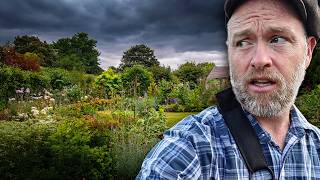
Victor Justin Rhodes and Rebecca cover ten essentials for starting a homestead: plant gardens near your house, keep animals mobile for rotational grazing, use temporary infrastructure over permanent barns, and choose cattle or sheep over goats. They show tomato harvests, chicken feeding, and pig moving while sharing mistakes like broken freeze-dryers and shoulder injuries.
Chapters
Happy day! In today's vlog, 10 things to think about before starting a homestead, looking at common mistakes and how to avoid them. While we work and talk, we've got to harvest tomatoes, get the chores done, go to the chiropractor— maybe that'll help me with my arm— and preserve those tomatoes. The first thing to think about, and the big mistake many people make— that's our front door. People don't think about where to start, and they start way yonder like we did, like something like 100-something-odd steps to our first garden. Have a big garden there now, 8,400 square feet. It's a good place for a garden, but certainly not if that's all you have and if you're just starting out. Okay, while we're over here looking at the garden, let's look down on the backyard. Don't fall off. I kept chickens down there in a stall in the backyard because that's where you kept chickens, in the backyard, right? Let's go back. That's if we went left out my front door. Let's go right out my front door and see the difference. Gardens within steps of my house. Peppers, onions, basil, a garden full of herbs, tomatoes, more herbs, tomatoes. Zucchini, cucumbers. Look at this cucumber. You tell Beauty we got some cucumbers ready out here. It doesn't take long for them to swell. And beets and lettuce conveniently getting shaded out by the sunflowers. And then here's the kicker. Here's the garden, here's the chickens. Let's get a different angle on this. That's my front yard. Get the chickens out of the backyard and in the front yard, front and center where they belong, close to the front door. The point is, when you start, start right outside your door. Let's ensure everybody gets water this morning. It's going to be a hot one. Pretty Shawl, so easy to move. I can move it with one hand. In the same vein of starting right outside your door, start right outside your heart. We love to eat chickens. We love to eat chicken eggs. Everything in this garden we love to eat. Well, except for the The pretty little flowers here and the sunflowers. But the sunflowers are protecting the lettuce and they're pretty. And these flowers are pretty. These are close to our heart. Beauty's heart. What are we doing this morning, babe?
Okay, so I'm gonna start— oh no, I think it— oh, I wonder if a child pushed it over.
How important is it to plant right outside your door? Very, very super important. How'd you learn that?
Um, doing it. Let's get these off. Let's get— let's harvest this so that we can have these beautiful flowers.
Okay. What do you think knocked it over?
A child.
Really?
Well, I found 4 green—
somebody tried to climb the sunflower.
I found 4 green peppers, so they were— tells me they were in this bed. Searching for something to do. Then I guess we can just cut it and then put it in the chickens.
Yeah. Do you think we learned to put the garden close to our house by doing it? I think we learned to go close to the house by not doing it.
Oh yeah, probably.
Our first garden, 130 feet away.
I mean, that makes sense.
You want to get those tomatoes before you have to eat, so let's get those cucumbers. Well, you had to get this before they went bad. Speaking of growing close to your heart, when Rebecca and I first started, one of the things that was really cool, really good, good for you, was kale. Remember that, Rebecca? We grew all the things plus kale without much consideration of do we like it. And if we look back I certainly force myself to like it. I think she actually likes it. You actually like kale?
Um, I like it in certain instances, like you got that recipe with the mashed potatoes and you put a little bit of kale in it. Okay, and then like you eat that, it's good. Okay, that's like—
okay, I forgot about that. What about Ugali and greens?
Ugali and greens, I would like that.
Yeah, but for the most part, we try kale chips. We try everything to try to get this— I'm putting quotes up— superfood down. But something happened over the years. We eventually gave ourselves permission to be ourselves and like what we like and don't like what we don't like and not give in to the trends. Folks, don't grow kale just because it's cool. Or because kale—
no, or because you're supposed to like it, right?
Is this more pickles?
Yeah.
Okay, pretend this weed is kale. This is what you do with your kale, okay? Take your kale, feed it to the chicken. Feed it to the chickens.
Well, Ruth Ann Zimmerman, she feeds her kale to cows.
They love it. Definitely, because raise your hands if you actually like kale, if you're being honest with yourself? And if people are around, don't even raise your hand, just raise it in your heart so they don't even have to know. No pressure. Big cucumbers.
I mean, they're not really that good.
Cucumbers want to grow in these raised beds. Look at that, those are perfect. So that means cucumber salad every day for a few weeks. The only way to preserve a cucumber is pickles. I guess you could do— I guess you could freeze dry them.
I would like to try to freeze dry some and see if I can't powder the cucumber. And then like when we want to eat raita or tzatziki sauce, like add a bunch of that powder to yogurt. I feel like I'm failing currently at freeze drying because somebody shut my freeze dryer and it got mold inside of it. And so now I have to wipe it down.
Third time this has happened.
I know.
Now you have to wipe it down and do a cycle, do a cycle of bread with vinegar on it.
But I've got to do that today so that I can freeze dry like my herbs.
There's one over there. Oh, you can see it right through here, up midway.
Hold on, let me get these big ones down here. These aren't all for pickles.
Should we give our chiropractor some cucumbers?
Yeah, we'll give them some.
You're definitely gonna have cucumber dish at the baby shower this weekend, right? Come on now, let's go! Burning daylight. Burnin' daylight, that's what my dad used to say. What's next? I gotta leave my notebook up here. Aha! Uh-oh, uh-oh, we're skipping college. Taking that in? Oh good, tomatoes next. If you're gonna start a homestead or a farm or most anything in life, skip college. Oh wow, gross. That's a bunch of maggots in this liver for Winnie. Because that's like the, the prime of your life. That's like prime time learning years. And instead you're going to go to college, not learn that much, for being honest. Lecture style, you don't learn much through lecture style. You gain tens of thousands of dollars in debt. Ah, we found one crate. We found two. One crate is about one round of canning tomatoes. Rebecca, I got the crates. That's all I'm saying. Nothing major. Okay, don't panic. I think she's on edge since I busted my shoulder. Anytime anybody calls her, she's like, I went to college and I wish I hadn't. Uh, the only thing I learned is I learned this amazing, uh, pull-tight knot in canoeing class. I learned the concept of sunk cost in economics, where you tend to invest in something and you want to keep doing that even if it's— even if it ends up being the wrong thing, you keep doing it because of the time, money, and energy you've put into that, and you don't need to. And lastly, presentation. I got a C one time on really at least a B project just because the notebook I presented it in was pfft. So it's all about presentation. What I learned in college could have easily been learned online or even better, learned more if at that young age before children, before big commitments, before big bills, I would have done an internship with a businessman, with a a farming man with Joel Salatin or Elliot Coleman for gardening, and Joel for animals, and some, some online guru for online business and marketing. Now with YouTube and Abundance Plus and things like that, online resources, AI, you can learn anything. I've found over the years one of the best ways to learn something is through learning it directly from someone else. Find somebody doing what you want to do and serve them, even if you're working for them for free. You're young and you can do that, and that's the cost of your education. Que más?
Did you wipe the mold out of the—
No.
Yeah, okay, I see.
I know that was for the liver fiasco yesterday.
What was the liver fiasco? I don't even know about it.
Well, when the freezer went, the liver's got soft, so I just put them in the fridge and was going to feed them to Winnie, right? Well, they leaked in the fridge. Hey, maybe I'll get some points. And I cleaned it up without you even knowing.
Should I do the parents division?
Yeah, hobby horse. Yeah, definitely works better with a camera.
I'm not doing that. I don't want like these orange ones.
I get it.
It needs to be bright red.
I get it.
Hi.
So maybe, maybe I'm a support.
See, like, is that even— do you have your knife on you? Yeah, I think it's the story of our life, right?
Yeah, it's harvest. It's harvest season. Do you know harvest is more than half the work? Yeah, especially if you count a lot of the harvest and preserving. I'm going to talk about the importance of moving animals today. Can you Make sure you just get one shot with this when you move the animals over. It can be when you let the non-milkers over. Look at an update on your face, dude. Yeah, crashed. Crashed on your mountain bike? Yeah, scraped it. You okay? It hurts a lot. Is that the worst crash you've ever had on a mountain bike?
Yeah.
All right, you were wearing your helmet? Okay, good. Could have been worse. Well, my face kind of just landed in the All right, I'm back with my next point, which is move animals. How did we get so lucky, come across Joel Salatin and learning how to farm?
I didn't come across Joel Salatin right away. We came across Joel Salatin from Mr. Meeks. He's the one who told us about it.
That's right.
We came across— I came across something that was just like— I cannot remember the title of the book on Amazon. So basically I just went to Amazon and I found Elliot Coleman there. And then I found this like small— I think it was like Small Scale Grazing or something was the name of the book, and it was rotational grazing. But it wasn't Joel Salatin.
I feel like we're so fortunate.
Yeah, well, I think that— so we were already on our journey at that point, like the journey of like questioning things and being like, what am I eating? Is it healthy for me?
Yeah.
So I think we were already like— because like when we started our garden for the first time, like we were like, we want no chemicals, we want to use no chemicals.
Yeah. And then when we found Joel Salatin, we were already at the point to not even be afraid to question the normal way of homesteading. Guys, don't get caught up in this. Don't, don't get caught up in, oh, I'm just gonna put the cows out in the pasture. And there, that's where the cows are going to be. Oh, I'm going to put the chickens over here, and that's where the chickens are going to be. Listen, they've got to move. Animals have to move. If they're not going to be moved, the land— it's not necessarily all about them. It's more about the land than it is about them. If you leave them in one spot, they will go back and eat the ice cream again and again, the ice cream grass, and that will kill that grass. And they won't touch your weeds. Your weeds will grow up and thrive and seed. You've got to let their land rest. And it turns out the edibles grow faster than the non-edibles.
Honestly, a lot of it is that we're not really— like, some people say that we're not just growing the animals, but we're like restoring the land. Yeah, your dad kind of rotationally grazed. He didn't like— he didn't rotate them every day, but he did rotate them, and he would give— he would give the land a rest. Yeah, because like he would use this side, he would use this side, he would go over on that side, and then he would go up there.
That's better than—
and our, our soil— I remember driving by our neighbors and realizing that they had just clay and we didn't. We were like, why is our soil so nice?
So any rotation is better than no rotation. But the next benchmark is 3 days. Once you mow a grass, it doesn't start growing back for 3 days, so animals can be on that pasture and not harm the grass any further. But once it starts growing back and it's just a little bit of growth and they mow it then, then it damages it big time. So, uh, Like Rebecca said, I mean, just dividing, dividing your farm in half and going back and forth is better, but it's exponentially better to do that every 3 days if you can. And top optimal, every day. I feel like I'm helping much. I feel like I could carry that crate for you, but I— you can't, you're hip. You like saying that. I do.
It's fun. It's a little bitty hornworm.
Oh wow, it's a baby hornworm.
Yep. Might seem strange because all the fruit is down low.
Yeah, but then, um, you're gonna have so much fruit.
This variety is Grandero, and, um, where's the other variety? Here. This variety down here is Carolina. So there's two next to each other. So this is Carolina, this is Grandero. I've never, I've never actually grown granderos before, but I thought I would try. Last year I successfully grew so much of these, and so I wanted to try to see what these were like. But none of these are ready yet. But see this right here, Justin? Come look at this one. This particular fruit, I would love for them all to look this fat. Do you see it?
Oh yeah, it's huge.
Um, so we'll see, we'll see. I kind of want to do— I hope that at one point, I'm pretty sure it will happen, that I'll have enough Carolina's to do a batch and I'll have enough of these to do a batch, and I can kind of side by side see. Like this crate, we know in this crate if I overflow it a little bit, I'm gonna have, yeah, 7 quarts of sauce.
Are you gonna get a whole crate today?
I'm hoping. If not, I'll do a half half a quart. Yeah, half a, half a thing.
It's good. A crate isn't overwhelming either. It's just one round, you know. 4 crates would be overwhelming.
I would be like breaking out.
Who is pushing it? We'll probably have 2 before it's done in a day. The difference between a farm that gets better year after year after year, you actually get more production from it a regenerative farm, a regenerative homestead, versus a homestead that is degrading, that you're getting less and less. And folks, you can degrade your homesteads easy. There's no regulation in homesteading. Your homesteads can be worse than conventional farms because there's zero regulation. Is moving them— Joel calls it rest and sanitation— so allowing the land to rest. Look at this clover coming up. We're about to hit this. This is almost— well, yeah, we're gonna hit this in like 2 days. It's just loaded with clover. Ask my fact-checker. Hasn't always been that way, has it, honey? The other option is vibrant decomposition. Oh, let's go show you that now since I have to go to the pigs anyway. Hey, while you're here, can you get me out of here?
Yeah, watch, that's what I do.
Oh, okay, I probably could have done that. I've dislocated my shoulder a little over a week ago. Okay, you see this? It's like— and I haven't, I haven't planted a seed here. We got clover. We're a little ahead. No, maybe not, maybe not. When about 20% of this has gone to seed, it's optimal time to hit it. And maybe that's about right, right here. See the brown clovers? That's when you know a pasture is mature. Uh-oh, the boys are coming. That's not good. What's wrong? I need that camera. Camera's right inside the door where I said it was. Where I was talking to you. Look at these handsome guys. While we're at it and we're over here, another thing to think about it when you're starting a homestead: discover permaculture. Okay, watch permaculture in action. You don't feel like grabbing a bunch of wet broccoli? Spit— no, don't do it, don't do it. There's the spent broccoli. We've already harvested it all. Here's the pigs. Two things going on here. One, well, the plants and the animals are doing the work on the farm. We're feeding the plants to the pigs. They're on deep bedding. Remember I talked about that vibrant decomposition earlier? Deep bedding, if your animals are not moving, that's going to turn into compost, which feeds the farms, feeds the garden, the pastures. And the second concept here is we just fed the pigs from the garden. The garden feeds the pigs and the pigs feed the garden. Pigs with their compost, the garden with its produce. The second permaculture concept going on here— there are many permaculture concepts, we won't go over them all— is proximity. That is easier to happen when the garden and the pigs are in proximity of each other. Here's another one: energy cycling. That's food scraps from the house. That's not leaving the farm. That's not going on. We're turning that into a— that's going to be energy for the pigs. And that's enough for them today, isn't it? No necesito grain. That's turkeys doing the work of the farm. This is where hurricane washed out soil, and turkeys are manuring and build it back up. So we aren't just raising turkeys for meat, we're raising turkeys to rebuild the land. You done, Dar?
I am always trimming tomatoes.
Okay, not too overwhelming. No, there probably will be a day where you get a couple crates.
Yeah, that's all right.
Um, let's just teach the kids how to do this too.
My plan will be to— well, I wanted to also do some freeze drying.
Okay, we're gonna start that after the chiropractor today.
Yes.
Uh, I haven't forgotten that. I need somebody to help me with that though. You can help me get that. We gotta throw that to the chickens. Oh yeah, let's get it before Mom sees it too, and then let's carry that up to the chickens. All right, get that up. Don't spill it, be mindful. Yeah, that's probably the best way. Winnie's like humans. We could eat bugs, but we ain't gonna. No, we'll just feed that straight up to them, right? Give me one second, I'm going to my next point. Which is barns. Yes, and how they are vastly, wildly overrated. You don't need one. Grab it, grab it, grab it! Let's see if they go crazy for it. Over here. That one figured it out. Now they're all figuring it out. I fed Winnie that liver and it was just growing maggots. If you ever— bonus, bonus info here— if you ever read a label that says vegetarian fed and they're talking about chicken eggs, they're eating protein that dog won't even eat. Grandpa's barn, nearly 100 years old, hand-built from locusts from the land, farm from the land, certainly. I mean, wood from the land. All it's good for now is a people barn. Super impractical. When people get into homesteading, the first thing they think they gotta get is a goat. We're going to talk about those devil eyes here in a minute. That's my next point, I believe. The second thing is a barn. Number one, it's a permanent infrastructure. What if you build it in the wrong place? Two, it's very expensive. And three, you don't need it. Certainly not a barn like this, a traditional style. All right, transferred these blueberries a week ago plus one day, so they're 8 days. I'm honestly starting to think they're gonna make it. We might even get berries off of them this year. Here's the thing, you don't even need a barn. You could just do a mobile slay shade for your cows. For years, for decades, we didn't have a barn. You can feed hay out in an area in the winter that needs hay balm, that needs improved hay balm there. You can stockpile grass and not even need hay if you have enough land. You can store hay in the field. I've seen Joel Salatin do it— put the bottom hay on its side and then cover the hay pile, the haystack, with a tarp, and you only lose a little bit of the bottom one, and maybe some of the top from the moisture rising up. It can be stored in the field. Ask, how can I? Not— don't say I can't. And if you must build a barn, build a pole barn. We're gonna let that water. The key to transplanting a bush or a tree mid-summer: I'm gonna water it profusely every day for at least 2 weeks. Come on, Henry! 7 to 8. Well then, 8. Hang tight one second, I'll show you an appropriate barn. Must you build one? And give you some reasons why you would. Come on, did you get your cart ready to go? All right, let's go do it. This is a pole barn. Concrete floors, no walls, high ceilings to accommodate deep bedding. Concrete because you can scoop the deep bedding out, you can put it on Easy. If you can't do concrete, you can't do it, but you can still do this concept. Wood chips come in. The sheep and the cows are here in the winter. They manure on that. It captures it. The thing about this is we're at Nook and Cranny Farm. We could feed our— and we did for years— out in the field. You lose a lot of that nutrients because the ground isn't active. It isn't alive during the winter. It's not going to absorb those nutrients. It's going to leach off. You're going to get some organic matter from the organic material, but you're not going to get the nutrients that was that manure. However, if you drop that manure in wood chips and it absorbs it, and urine too, you preserve that. And then in the spring, we pull that material out and we start turning it. You don't have to turn it, you could put it straight onto your fields, but some of this we'll probably use in the garden. So we're going to turn it and turn it into a fine compost, and then we take that and manure spreader out in the field. And because we have not enough land for as much as food we want to grow, this helps because we need to get more and more productive. So that's why we eventually went to this system. We learned from Joel Salatin. We eventually went to this because we're a nook and cranny farm. We need to make the best— we need to absorb all the nutrients we can and put it all back on the farm. And this is the best way to do it. Plus it gives us a break. I mean, our house is right there. We get a nice break in the winter. We're not moving the cows. We just check their water. We just throw them some hay. Did you go feed the turkeys? Check eggs, clean out the nesting boxes, and feed and water. When I meet a normal person and we get talking and they learn that I have a homestead, the very next thing they ask is, do you have goats? To which I say, have you read the Bible? There's a separation, the sheep and the goats. The goats aren't on the right side. No, seriously, I say goats have devil eyes. He has devil eyes. They are more prone to parasites. People don't end up eating their goats, so they're just laying around, they're just around unproductive. Goats need browse. They can't just thrive on just grass, and browse can be hard to come by. Goats are escape artists. I've once seen— one time I saw one goat get out 3 different ways in just my visit there. The goat got under the fence, and then the goat coerced somebody into picking them up and taking them out of the fence, ooh, and then coddling them. The goat got out 3 times. To get that done with the chicken Yeah, let's connect our fence back. No use having the fence if we don't connect it. Sheep, on the other hand, aren't as susceptible to parasites, can thrive just on grass, will also eat bramble like a goat. They'll eat poison ivy, they'll eat kudzu. They taste better. You can also milk them. They're also small. Don't let those devil eyes trick you— uh, mesmerize you, I should say— into thinking they're easier than a cow. A lot of times people starts with goats because they want dairy. Well, one, you could get sheep for dairy. Two, goats are not easier than cows. Cows you can keep in with one strand of electric, and cows can thrive 100% on grass, which most people have grass. All right, I got 4 more points I want to make, and we still got to go to the chiropractor to check on this shoulder and preserve these tomatoes. So don't get goats because you think they're the ultimate homestead animal. Cows and both sheep are easier and both give milk. The 7th thing is farm where you are. I mean, even in Maple, our converted school bus, when we were traveling across America, we had a— well, we put a terracotta pot in our windowsill. We planted basil. We zigzag across the country, then we had pizza with a little bit of basil on top. We had food from the land in Wyoming on our bus. Started the seed in Iowa and zigzag across the country. We're having food from the land. You're in an apartment, um, windowsill, a stoop on a porch. I mean, remember my mom's garden on her porch? So if you're not maxing out your stoop, you're not going to max out a yard that you're dreaming about. If you're not maxing out your yard, you're not going to max out the 5 acres. So don't think, oh, I'll do it once I have the 5 acres. That's not going to happen. Another thing is you don't even have to buy the land. Remember Misael from the Workday Sunday? Yeah, he's renting a farm for about $2,200. It could be everything he ever wanted there. He's growing pigs, cows, gardens. He has this beautiful farm, and probably the most beautiful thing is zero debt. He's homesteading, farming. If something were to happen to him, he could walk away from it. Uh, if he burns out, he could be done. Any number of things. That dude is free. He just recently sent these pictures and he said— I said the best thing is that you're debt-free. He said, yeah, that's the best part. We figured leasing was best option at the moment, being how hard and expensive purchasing land is. No excuses. No excuses. Cooking them at 500 degrees, getting them hot so the skins pull off. Ah.
And then once the skins pull off, you just put it into the pot.
I miss this. We are out of tomato sauce and we're about to be back in it. Some of them we don't have to can, do we? Because—
what do you mean?
Because we could use it right now.
Oh yeah, yeah, I put it in the fridge.
We have some spaghetti this week.
Well, is that on the menu? It's Wednesday.
We're making up the menu as we go, so let me We baked it for 500, 500 degrees. We've now peeled.
If it was 500, it would take it like 3 or 4 minutes.
It was trying to get to 500. This is just getting the excess water out. Yeah, I'm excited about this, babe. This is like your jam. It's great.
Well, you know why? Because this is something that we do eat a lot of, tomato sauce, and we use it all. And we had 70-something quarts last year and we used it all, all year, you know.
We're working hard now. Our future self will thank us.
Let me get all the juice out because then I don't have to cook it down as much. Okay, see, there's that. See this? This is just water, and I already poured some in there. You can save that and can it. We did, but I think we have a lot of it.
We didn't use any of it. We used a little. Now we're going to turn that into pork bacon—
bacon seeds, because she should be pregnant. Well, we might just be raising a bunch of pork. We're gonna eat only pork.
Just kidding, we're gonna be porcetarians.
Well, we can't because it's too expensive. Well, we gotta— we gotta look at how to raise our own pork without—
not without much grain, but yeah, whole grains that we make.
I took all the skins off and I put, um, I put them in here and then I just immersion blend.
Okay.
And I'm just gonna get it up.
Now we're just getting the water out of it.
I've gotten a lot of water out of it already, so I'm just gonna— this is a nice sauce. I feel like it's a good consistency because I've, I've gotten water out all along the ways. That's why I always had it in and this, all of it?
Yeah.
And then I have my 5 quarts in here because I know I'm not gonna use 7 quarts, and I'm just gonna take those out, get that in there, and then get it back in there, and then turn it on.
You can some— well, you're putting it in the can. She's getting all the bubbles out. It's getting ready to go in the water. I don't need to get all the bubbles out.
I don't know, I need to research this more to understand it.
That's just the bubbles we can see.
I know, that's what I'm saying.
Well, whatever you did last year worked. Yeah, it is almost time to eat. How long has it been sitting in that hot bath?
We're gonna boil it for 10 minutes.
We're gonna leave that to cook. We're gonna take it out in a few minutes. We've got Indian chicken from the land. We're gonna eat, buddy. What is this? Raita, green beans, Indian spices, rice. 3 more things to think about before starting a homestead. I used to milk right here. Now that's the basement bottom of our house. That's pretty smart. It's zone 0, except we would then have to take our animals out in a lane. There used to be lanes down through here. There were lanes down through there. There were even lanes leading way out there. Then those lanes would lead back to water. But the problem, those lanes end up being sacrifices sacrifice areas. Plus we would have to go all the way out, get the cows, bring them back, take them all the way back. It was a lot, and I— but I did that for years. I mean, what does Joel Salatin say? Do something even if it's wrong. So I did it. Joel Salatin, in a— in a— I hired him for a consult, told me milk on pasture. It's easier for you to bring your stuff to the milk cow. Even if you don't have a milk sled and it's raining, put on a raincoat. It's easier to go out to the pasture than to bring the cow there. And we tested that, and sure enough, and now we're milking in a different spot every day. I'd never go back. When the cows manure, it's just there where it's supposed to be. When they pee, there's no cleaning out after manure or pee. There's no bringing them in, there's no sacrifice lanes. Milk on pasture. Kind of nice. Put— got my next point and put my notebook in there. Let's go check the sea monsters. I have something, you know, we're losing the, the little caps for the waters, and so we're having to put our fingers on it while we fill it up. This is a cap from an olive oil that we're done with. I'm gonna see if it will work. But while we're out here, mobile structures, mobile meat shaw, mobile pig sled, chick shaw 5.0, mobile cow barn, milk sled— everything needs to be mobile. Nothing needs to be permanent, at least for 3 years. Have a, have a fence there for 3 years, have a water line there for 3 years before you bury that water line, before you make a permanent fence. You could say that about barns too. Dude, I'm glad I'm out here because they're out of water. That goose is especially aggressive right now. Okay, so we want to put this over this and hope it's— that's too big. The reason you want mobile infrastructure, well, one, it's not permanent. Two, without taking all this, you can move it around. I mean You can have these meat chickens down here on the hurricane pasture or up by the house in the backyard, and you can be somewhere different every time. I see a lot of people wanting to build a— that's what I should have said too— build fancy fences. You don't have to build fancy fences. One more thing, look at these cute and fuzzies. Ram, couple mamas. Yeah, there's the mamas. A tenderheart will come out here visiting and they'll look at these sheep and they'll say, oh, you're not gonna eat those, are you? And you know they want you to say no, they're just for kicks and giggles. They're worried, so I put them at ease. I say, no, I'm not gonna eat them, I'm gonna eat their babies. Doesn't put them at ease much, but yeah, I'm gonna eat those cute little things. If you're growing it for food You gotta eat it. And if you're gonna eat meat, it's so good for you, at least at some point, to feel the weight of that animal's sacrifice and harvest an animal you have affection for. Love that animal. Respect that animal. Give that animal a name. Treat it well. It's the least you can do. And then on butchering day, you pull the trigger, you slit the throat, and you feel the weight of that sacrifice, and you hurt. You aren't hurting an as much as they are, they're giving you the ultimate sacrifice. It's important to keep the cycle going on your homestead. You don't want to feed and house a loafer, okay? Unless you're in it for kicks and giggles. But if you're in it to grow food, something's gotta die. I hate to end it on that note, so I'm gonna let beautiful one end it. I don't want to end it there, so let's end it with Rebecca wrapping it up. I talked about permaculture earlier. I have a really nice ebook on how you to Can design your best homestead ever. I'm gonna give that to you for free. Where should that be, Austin? I mean, you'll do the QR code, but let's put a link in the description, or people can go to abundantpermaculture.com/design. How about that?
My timer just went off and I've been going for 40 minutes. I'm gonna let this cool some, and then I will take them out and put them on my counter and let them cool. And then, um, yeah, so, uh, we will see you tomorrow. Happy day!
More from Justin






If I had to start my Homestead all over again, it could only pick one animal… 




