What Am I Gonna Do with 367 Chickens!
A farm tour covering 367 chickens (including 100 meat birds called "sea monsters"), garden beds, and a compost system that needs to hit 140°F. The host also previews a Permaculture Pigs course launching on Kickstarter.
Chapters
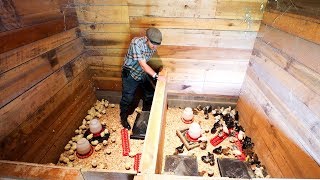
2, 3, 4, 11, 12, 13, 14. 14 Icelandic chickens following behind the cows 3 days to scrap— to spread the manure, the fertilizer, grab the fly larva that's developed in there, therefore breaking the pest cycle. I have 100 sea monsters, Cornish Cross chickens meat chickens being harvested in 3 weeks, going into our freezer. 1, 2, 3, 27, 28, 29, 30, 31, 32. I've got 32 old laying hens tilling, fertilizing currently 1,200 square feet of gardening of a 10,000 800 square foot animal garden miracle master plan here. 3 more Icelandic chicks, 1 mama hen, and 1 layer chick in there. The Icelandics are part of the plan to add to the Icelandic flock in the pasture. Mama hen will be saved because she went broody, and we'll need broody hens in our future. So she'll be a long-term player on this farm, and the other layer hen joins those other chicks in replacing the old laying flock. Whoa, in here, 117-ish, and I think one died. 116. 16 Icelandics. Gonna— hopefully half of those are hens and they're gonna go out in the field with the other Icelandics. We'll harvest the roosters. The other 100 are layer chickens that hopefully 50 of them will actually be hens and will replace our old lady hens. Oh, look what you got there, John.
Yes, he's even softer and cuter than any of the other chicks.
It's actually a she.
Oh, she.
Yeah, yeah, isn't she fun?
Uh-huh. And she's, um, and she's softer than any other chick I've ever seen.
There's actually a new goose there. Is that the one in there?
Um, yep.
And then there's a new goose in here. Right across the street, another 100 chicks. These are Cornish Cross meat chickens, sea monsters I like to call them. They're actually gonna go out to pasture the day the pre— the first run gets harvest, and they will be for our bellies in 8 weeks. Can you believe that? In 8 weeks they'll be ready. This family eats like 4 to 5 of these guys a week. The other 50, the 50 roosters in there, I mean, give or take some harvest, great meat stock. So that's what I'm doing with all these chickens. I think it's a record. I think it's probably the peak. I don't feel overwhelmed. I feel totally ready for this. At first I thought, am I the crazy chicken lady? But no, I got a— there's gigantic uses for all these chickens. We got uses for all these chickens, don't we?
This is your weekly update video.
Let's see what else is going on. We're a day early on this. I'll tell you about that in a little bit. But let's see what else is growing on, as my buddy Pete Kanaris would say. We've been working in the evenings trying to get plants out of the greenhouse. We're done with the greenhouse for the season. Look at this, huge! I didn't know plants could grow that big in soil blocks. I hope those can survive the transplant. Some of those went here. We're calling it the kids' garden. Fun stuff like watermelons, melons, pumpkins— no, maybe not pumpkins, I don't know, uh, a green bean teepee. I'm checking these blueberries, I'm checking these blueberries constantly. Oh look, I'm saying fruit in a month. Lots and lots of fruit coming on. And over here, I'm excited about this. This was our fall/winter garden, came back great. We, we hoed it for one last time and then we undersowed cover crop and it is just coming in so strong. It's going to shade out most of the weeds, and we basically walk away because these things are old enough to be ahead of it. I keep forgetting to show you guys the strawberry and asparagus patch, absolutely jamming. I think though we did miss our opportunity to actually harvest this asparagus. Problem is, you get too far from the house, you start forgetting and neglecting certain things, but That deep mulch system there has just— it's allowed it to happen. Like, we, we've grown that and walked away. It's been kind of nice. Right next to this, this is a plot we didn't use in the garden. We planted a cover crop, and, and we planted it over here, and it's been amazing because this is where— this is one paddock for the cows, this, and then just regular sod. You know where they go first, the cows? Go in here first and they just eat it down to the ground. They absolutely love it. So that's telling me when we have bare ground out in the pasture or something, let's throw down some seeds that the cows are really going to be into. Yeah, you guys see the steam rising off of that? You can kind of see it right there. Oh, you can see it right there. Good steam rising off our compost pile. Some folks asked— I meant to answer this last week's update— why a bin, like a four-walled bin? Well, there's a number of reasons. One, we normally make our compost inside of where the chickens are. I thought that maybe this would have been a chicken run when they got off the garden, so I built it in a bin. Two, it makes it easier to, like, pile this up. This isn't nearly done. Like, we can get a ramp and get it on top. It's hard to get the material on top of a pile. You see, a compost pile has to be at least 3 cubic yards to work. It's probably that now. I happen to have these bigger bins. The bigger the better. And I've got a lot of material, so this is already heated up and I'm just adding to it and it's already going, so that's good. The other reason for these bins is we're containing our compost pile Nothing can get into it, and it gives it enough time to actually heat up. And once this actually heats up, at least for 3 days— it's been longer than that, and that's fine— but you want to get your comp— let's say you build it all at once, let it heat up for at least 3 days, 140+ degrees. Then we remove these pallets and either turn it ourselves or, and/or have our chickens or pigs turn this pile And then we just keep turning it. So this would compost eventually just as it is. If we want to speed that up, we turn it. We'll remove these pallets after it's inoculated, after it's heated, and then go for it. The pig operation going good. This little net's working. I'm so ready to get to them in the forest. I'm hoping Sunday, I'm hoping we're going to get these guys, 3 of them, into the forest. Uh, it's been working good just to remove, remove their manure. And put it in the compost pile every day. That's what folks could do on a super small scale. We're also going to show you what you could do to make compost with pigs that might even be a little bit easier than this. That starts Friday. That's why we're doing this update video early, because my friend— I've hired my friend Jason coming on Friday to start helping me build this compost, this carport compost pig system. And we're going to do it in place out, out in the garden. And while we're at the pigs, let's talk about Permaculture Pigs, our project. It's one part documentary, another part course that's coming out on Monday. We're kickstarting that Monday, only going to open it for 7 days, only going to have it going for 7 days. Just limit my time marketing, get more time on the farm and actually— get more time on the farm— get more time on the farm and actually spend time creating the content for that Also know that the Kickstarter— basically a pre-sale, up to 50% off this stuff. So I don't want you guys to miss that. That's why I keep reiterating it. That's coming Monday. Let's check out the Animal Garden Miracle plot number 2 in process. We're going to call it Frosty. Let me switch angles here. I want us to learn something from this. Well, one, this is part of our evening. We come out here and weed here. 100 foot of carrots. No, 50 feet. 50 foot of carrots there, 50 foot of carrots there. We got Swiss chard coming on. Cabbages looking okay, I think they might make it. Uh, and then more Swiss chard. I guess some of those are beets. Learned something yesterday though. See this new row? We're going into the second plot. Casey Ostwich had told us for the, you know, wider space stuff use landscape fabric. So we were going to Lowe's the next day, we bought landscape fabric, and then we're rolling it out and working with it, and I'm pretty sure— no, I, I can see right through it. And I'm thinking, wait a minute, weeds are going to grow in this, weeds are going to grow under this, push up this, we're not going to be able to get at them. And then I realized we're probably supposed to get a specific kind of landscape fabric. It's been a half an hour, 45 minutes, putting these in, and that may or may not work. We're probably gonna have to come in and put a leaf compost over it to block out light from getting in. Not the end of the world. But then the other half of our evening was spent weeding these carrots. So in a sense— and we won, we won, like we got almost both rows done in 45 minutes. So basically we win some and we lose some. But the point is that we were just planting. The point is just plant. As Joe Salatin would say, just do something even if it's wrong. Bam! I just love this beautiful garden up here. We're calling it Arun's garden. That's what he gardened while we were on the farm tour. Absolutely amazing. So proud of this garden coming along very nice. Looks real good with the leaf compost. In there. Hmm, I think this is the year— this is our best gardening year yet, even already, just with this jamming garden, the one in the back, the first one we looked at today, and then a whole nother plot there. And probably at least 1, 2, 3— at least 3 more plots can be planted like this spring, summer, hopefully. Let's look at one more thing. I should mention the apple trees up the hill doing just fine. I've been protected from the cows when they're there. Rebecca's raised garden beds. With our new mower, we've gotten an attachment to catch grass clippings. That's an on-site mulch, y'all. We've piled it up here and we can easily use the grass clippings to mulch, and it breaks down quick, so it'll be— it'll work itself in real soon. Come in here, it's not— it's so easy to come in here and cultivate. I thought, oh my gosh, 6 raised beds on top of what we're doing. No, like we could come in here and rake these weeds down, this whole area, in like 5 minutes. And because it's raised beds, it's easier to reach. I'm just really liking this system. The garden soil that we bought is doing great. Oh look, Beauty's tomatoes are doing great. I wonder what she's got planned there. She's out of— she's out of room here, guys, but she's still got— she's got more tomato cages. Oh, strawberries coming on! Look at that. All right, we've got the update on— should speak to the cows. They're doing fine. Uh, we're letting the calves have them a little bit longer than we have in the past, just to give the calves more time. We're getting plenty of milk, so we're getting about 3-ish gallons a day from them. This though, that's— this one would do We have some time here before milking. Let's keep working on this pig forest. Beginning of the forest trying to take over our pastures. Let's, let's think pig paddock through here. Oh, you know what, I got a blade trimmer. Let me get the blade trimmer and maybe get some of the 1-inch. Okay, so we've got this mode around here. I don't see why we can't bring in our fence, our shelter, our water lines over here. Guys, the pigs are coming over here. Say that again. I think you need a shelter. Oh, uh, they, they may in this first section because there's no significant trees. In the second one, they won't need it because we've got the pine tree, but we're gonna just split it in half. Like, maybe they're just gonna have this part first. Super excited about that. I don't see why we're not gonna be able to move the pigs out here by the weekend. Tricky part, getting 3 pigs out here. It's gonna be fun.
Two things as I wrap up this update video. My friend David the Good, you may remember him from the behemoth video, has come out with a book. It's on, what is it, Kindle? So it's a digital download and it's on Amazon right now. He asked me to share with you guys. I think it's great. He's a very funny writer. Very practical at what he's teaching. It's called Free Plants for Everyone, where he teaches you propagation so you don't have to go to the nursery. You can save some money on that. It's up on Kindle right now for only $5. I'm happy to share that. I like his stuff.
Check that out.
I'll put the link down in the description. It's called Plants for Everyone. Also, I should show you one more thing here. You're getting the exclusive— this is a real quick online preview of our Kickstarter, guys.
You guys are the first to see I've gotten the info.
Here's the guys that are gonna be in it. I've gotten this info to my assistant Heather.
Ooh, she's—
this is the first time I'm seeing this too. She's put some nice pictures in there with the text. Okay guys, I'm excited for that. That's coming Monday. You're seeing this Friday, Saturday, Sunday, Monday.
In 3 days.
I'm super excited for it. There's a few more things we need to tweak on that and plus the trailer for that gonna come out. Sunday. Yeah, air that on Sunday.
And then, oh my thing, what was it?
Tomorrow, pardon my friend Jason from Sow the Land coming tomorrow. We're gonna begin work on this deep bedding system that I hope anyone can do. We're talking like 120 square feet, 2 pigs, y'all, and compost at the end of it.
Yeah.
More from Justin






If I had to start my Homestead all over again, it could only pick one animal… 




