What I Tell Myself When I CAN'T Go On
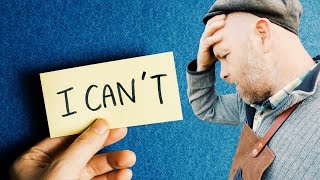
In this vlog, Victor Justin Rhodes (Speaker A) shares a candid health update, revealing a Campylobacter infection diagnosed via stool test and the resulting joint pains, while noting his doctor’s advice to limit exercise and use antibiotics alongside herbal support. He then walks viewers through a day of homestead chores: pruning tomato vines, handling hornworms, milking cows, operating a tractor, and tasting a newly harvested beef from a Devon/Jersey cross. Mid‑vlog, Rhodes pivots to promote his premium community, Abundance Plus, describing how members like “Adam” receive rapid, personalized assistance (e.g., DIY pig waterer guidance). The core of the episode is a motivational discussion on the pervasive “can’t” mindset cultivated by lifelong scarcity messages. Rhodes contrasts this with an abundance mindset, offering concrete tactics—asking if you’ve truly tried, taking baby‑step actions, committing to 1 % daily improvement, and brainstorming “how could I” solutions. He illustrates these ideas with homestead examples (ice baths, chicken butchering) and cites the survival book Skeletons of the Sahara to underscore perseverance. The vlog blends personal health transparency, practical farm operations, community building, and mindset coaching aimed at encouraging viewers to replace “can’t” with actionable “could.”
Chapters
Let's start the show with the fact that I'm not a doctor. This is not medical advice. I am actually under the specific care of my family doctor. Sickness-wise, feel 100% better. I mean, solid bowel movements, don't feel bad, hungry. Physical, to walk, it's probably about a 7. Pain level. My wrist is like a 9, 9.5. A little pain in my ankle there. We decided because we thought this was physical pain from laying down because at first was only in my hip and we thought I had salmonella. Thank goodness for my family doctor having us get a What's a nice way to say it? Fecal? Uh, stool test. Stool test. Uh, and we found out it was Campylobacter. I can have like arthritis-type pains. Was it? Well, that's explaining the physical pains. Hey, my man! Oh my goodness, did everyone hang this? Oh my, I didn't know he did it. You got this whole row done on the tomatoes. Thank you. Let's do the cucumbers. Oh, we roll out— we ran out of rollers. Yeah, did you check in the greenhouse? Yeah, we do. We have another bag right there. Little Farmer Henry about with us. So it's not like I'm gonna physically injure myself moving, right, Rebecca? And I don't want to cause any more problems by lack of movement.
Okay, Jackie said yeah. No exercise.
Jackie's our doctor. Stretches are fine, but no exercising. She also had us go on antibiotics, which we hated doing because it can be, uh, well, it's disruptive, not necessarily a cure-all. Well, there's antibiotics disrupted to the gut. Campylobacter is more and more resistant to it.
It is becoming more resistant.
So our hope is— we've checked with the pharmacist, compounding pharmacist, and we're integrating the herbs, and it's fine. It's okay to take it with the antibiotic.
Correct. We have gotten help with that and found out what we can and cannot do.
Uh, we try to do things as natural as possible, but we also— because we went so long, I think, because we didn't know.
Well, if I would have realized that this pain was from the infection— yeah, I really didn't believe it. And, uh, you know, um, you learn—
can't blame you.
You learn, uh, every illness, you learn a little bit more.
Yeah.
And how— like, and you gain confidence. And I have learned When you're 60, you're gonna be a wise old healer.
My grandkids still learning though. You'll still be learning. You, you get my— hey, my grandkids will benefit from this. I'll take the hit. Since this one's touching the ground, let's go ahead and get rid of that. Just that we have to pile these up. So if it's touching the ground, cut it off? Uh, not necessarily. You kind of, kind of wait on me for that call because we need to tighten these up. Look how this is not top. Let's just clip it once. This whole— you pull this down. Look, Josiah, you pull this down tight. Okay, you pull that down tight, and then— all right, we did good right there. So I'm trying to tell them what a sucker is. So if you have the vine, there's a little— there's one that comes right out the middle there. Okay, that can be trimmed. So like this right here is actually— look, right here is a big sucker. All right, Mom does approve that. I mean, because it's so big, I guess you could run off of a sucker. Let's get our, our brace and, and tie it, pull it up tight right there. You don't want any touching the ground. Now pull them out because we can't— you don't keep the dead ones in here because they can get the fungus.
There's a bucket right here.
Hornworm. Hornworm. Cool. Do you want me to cut that thing off with it? Uh, yeah, I guess it could go to the chickens. All this needs to go to the chickens. So, Sally, you want to throw our tomato scraps into the chickens? There's a hornworm in there, guys. There's a little surprise for you. You'll find it. Milking time. I thought I'm not going to be able to squeeze today. It's crazy how fast All right, get her lined up, guys. Irene's got her some feed. Brush, wash her. I'm acting like I'm doing something because they know exactly what to do. I did drive. I drove. Somebody's got to drive. We're back from milking. Film protector. Do you mind if I go rest, Becky?
No, go.
Randolph's here working on the people barn. I am wondering what I'm gonna do because my right hand is out. I don't think I'll be able to type. I'm supposed to write emails to promote Abundance Plus to my list. I think I just need to rest and then prioritize and get done with what I can, maybe after a few minutes of rest. Today's theme for our launch of Abundance Plus is Getting rid of the can't in your life. How appropriate, because I can't move my wrist, but I didn't— I can't let it be as an excuse. Did I get as much done and as quickly as I would have otherwise? No, but I got something done. Am I running the farm at full max? No, but I'm doing something. It's shaking off the cant and putting on the can. This must have been how it went down. A member, let's call him Adam because that's his name, would have texted me, say, I am interested in building your water. So he would have texted me, for your pigs, uh, Justin, how do you— what are those parts for your water? As a premium member, Adam can text me and I would answer them in 24 hours. He could turn on the computer and log into Abundance Plus, but he probably didn't because this is so much easier. He probably went to Abundance Plus, went away from whatever he's watching. He probably went up to search. What would he search for? I don't know. Justin's pig waterer? Pig— let's do pig waterer. Okay, do-it-yourself pig water. Oh, that looks like Justin's pig water. There you go. Hey Beefcake, can I look at your water for a minute? These handy dandy 55-gallon food-grade barrel drums. Oh man, you don't need the instructions. There's all the links. So then he texts me and says, never mind, I just searched for it on the memory and just found it. So, you know, that all happened before I could check text. So for tools, comes in handy to have a 1.5-inch hole saw. First, a hole— I like to go right below our ridge right there. This is normally where, you know, I'd go out in the farm and do some sort of project and the scene would change, uh, just to keep it interesting. I like to stick to the, uh, 10-second rule, which something changes every 10 seconds. Dan might digitally zoom in on me, the scene could change, but I'm gonna have to throw that rule out for you guys, and we're gonna have a real talk today. We're gonna talk about the can't culture. You want to homestead. Now, you may be just starting out, but you may be already homesteading, and you have goals. There are things that you want. But the problem is we've grown up our entire lives being told, "No, sorry, can't have that. You can't do that. I'm sorry. Nope." We have so many rules imposed on us, and no wonder by the time we get to adults, we start developing a can't habit. "I can't do this. I can't do that." It's no surprise because All our entire life we've been told no. Are we crooked? You know, it's just probably just gonna have to do. All right, here, just one page, just one page of content here, guys. We're already a quarter of a way through. The problem with this is it's, uh, it's— you may not recognize it as this, but it's a scarcity mindset versus an abundance mindset. And believe me, I'm being tried more than ever as I go through this ailment. So I'm speaking to me as much as I am speaking to you guys. How do you know when you're caught up in the scarcity mindset, the can't mindset? Well, one, you are now listening to this, you're gonna be aware of yourself saying, "I can't, I can't, I can't do that, I can't do it." can't. That's simply an obvious— could be, should be a signal to our brains that I'm entering into a scarcity mindset. But it's become so normal to us, it's acceptable, isn't it, to say I can't? What does Yoda say? It's do or do not. But that's not normal for us. But That doesn't mean it can't be or it shouldn't be, but there are some other more subtle things that are reflecting a can't mentality. And that might be, "If only I had..." So you would be saying like, "If only I had 5 acres, I would be doing this. If only my spouse was on board, I would be doing this. If only I had money," right? You might word it different grammatically. "I could never do that." We get that a lot when we're out there ice bathing. "Oh, I could never do that." Well, that's a can't mentality. I mean, if you don't ever want to do that, well then maybe think about saying, "I won't ever do that," instead of "I can't," because it seems like that's debilitating. Is that the right word? And debilitating to yourself. Would that be the right word for it, Rebecca? This is one thing that I tell my kids when I hear them say "can't." And me telling my kids this is some of the best medicine for me because it's a reminder. So they'll say, "Oh, I can't do this." And it would have been something I asked them to do, and I wouldn't have asked them if they couldn't. And so I'll say, "Can't never could, and could did it all." And isn't that true? Of course you can't. With that attitude, you can't. And, but if you took the opposite attitude, "Oh, I can," or "I could," then "could" did it all. Which one do we want to be? Do we want to be on the side of "can't," where can't never could, or do we want to be on the side of could and could at all? Now, that's not saying you can, me at 42 years old, go be an NBA star. If I said, oh, I can't be an NBA star, well, that doesn't mean I couldn't enjoy basketball. That doesn't mean I couldn't try, and that doesn't mean that that wouldn't be a try. I'm going to try to be an NBA star. That doesn't mean there wouldn't be one. Okay. Probably a better example is there are many times on the farm when we're going out and we only have so much time to do a project before we need to go milk. And what will we say? We'll have this crazy goal. There's a very unlikely chance that we'll get to it, but we have this goal and then we go for it. And what happens? What do I always end up saying in the vlog? When you set out to do the impossible, extraordinary things happen. So you might not get to it, you might not make your goal, but something happened. And most likely because you had this crazy goal, extraordinary things happened in many cases. That's all good and all, can't never could and could did all, but what are some practical tips for overcoming the can't and becoming a could? Step number 1, ask yourself, have you tried? And then, so have you tried it? Oh, I can't, I could never get in an ice bath. Well, actually, have you tried? Another one similar would be go into baby steps. And this, this, let's use the ice bath for example. I should probably be using a homesteading example. You could use this for like, I couldn't, I couldn't get chickens, I could never harvest, I could never kill my own Chickens, this kind of mindset. I don't have enough room. I don't have money. But okay, I can't do that. Well, if you're gonna do it in baby steps, can you put your hand in? Could you put your finger in? Could you get in if it was 75? And then, okay, next week, could you get in if it was 70? Do you see the baby steps? Or if you were just trying your hand, I just put my hand in there. Or a lot of people will start out, could I, after warming up in the shower, could I turn it slightly to the cold? Baby steps. Same thing for the homesteading is, oh, I can't do this or that. Well, why not start moving in that direction? Why not take baby steps? You hear me say it all the time. With the 1% change. If you're just changing and moving forward, at least you're changing and moving forward on something, and you are making change. And if you only make 1% change, it's the rule of compounding. In 72 days, you've doubled. If you only want to go away with one thing from this, instead of saying, "I can't," say, "Well, how can I?" Don't just end there. Like, force yourself to sit down and write on a piece of paper like 4, 5, 6 ideas on how you could. And it does— they don't have to make sense. This could be a brainstorm. You want to just be able to plop some things down on paper. But if you were saying, oh, I can't do the ice bath, and instead of saying that— well, let's, let's give you, let's give you a more homestead example. I could never butcher my own chickens. Well, instead of saying I could never, we'll say, well, how could I one day butcher my own chickens? Oh, well, I might think, well, I would probably maybe need to watch it happen some more from somebody else. So you could go to Abundance Plus or YouTube or wherever and watch some people. What else could you do? Oh, maybe I could go to somebody else's butchering and just kind of watch from afar. Maybe I could, maybe I couldn't butcher a chicken, but maybe I could buy a whole chicken at the grocery store and part it. I don't know, that might help you, that might not, but you see where I'm going with this? Like you're thinking of all these things. Oh, maybe I could do it if I had somebody here that was more experienced. Do I know anybody that's more experienced? Or if I had just some other people that were maybe uncomfortable that were interested but willing to do it, and we kind of have that community. So see, I've already thought of like 5 or 6 things, and we're getting somewhere, and somewhere is better than nowhere. I was laying in the bed the other night, and I don't know why I had this, but I had this daydream, and somebody said to me— we were doing something important— somebody said, oh, I can't, I I can't walk there. And I said, well, then crawl. I'm taking that mentality in today. I'm definitely speaking to myself today as I limp around. Well, if I can't walk there fine and dandy with no problems, well, then just limp. And then if you can't walk, then crawl. So if you can't— in other words, if you can't butcher your own chickens, Find a way. Put a blindfold on or something. If that's something you want to do. We're assuming you're going after your goals here. One other thing, I got it from this book. This is so good, especially to be reading while I'm ailed. Skeletons of the Sahara: A Survival Story. These guys are just shipwrecked, been wandering around in a raft for a week. They're just parched and thirsty. They're crashed on the African Ocean on the Sahara Desert. And they climb up the cliff, because they're coming up from the ocean, there's a cliff there. And they get up above and it's just desert. And they're just absolutely defeated. And finally one of them says— because they're going to give up, they're just going to lay down and die, they really are. That's how bad off they are. They're parched, they're starving. I think they've already lost 1 or 2 people by this time. And one guy says, "Well, what's the use of lying down to die as long as we can stand up and walk?" I leave that one for last because the way it helped these sailors, they couldn't even comprehend and grasp hope at this point. And there was no hope. There's no hope in this statement. Hope is gone. But it's this resolve to say, well, why are we just going to lie down and die? We're able enough to walk. Let's just, let's just walk. That is in all y'all. And I bring that up because this week the theme is you can homestead, we can help. Hopefully, hopefully this helps because we address the opposite. That'd be like if our theme was you can't homestead we won't help. But we're the opposite of that, and you are too. You can homestead. We can help. I showed you a little bit how we're helping Adam. We have our premium membership up till July 4th to where you can text us, where you can get on live shows with us. We've got 10% off until July 4th. I encourage you guys to check it out at abundanceplus.com because you can, and We can help. Let's get rid of the can'ts in our life and let's just do it. Let's just get up because we might as well be walking and moving forward than just laying there doing nothing. Azure Standard's here. Turn around. You know, I noticed something, Rebecca. The, um, the driveway's not leaking anymore. Oh yeah, that's good. That's awesome. This, uh, may or may not be a tractor job. I kind of hope it is, even though I'm struggling. I think I can change the gears with my left hands. It's just fun to drive the Kubota. But it might be a job where he just— if we have the whole pallet, he can just unload it right there on the road. Yes! Okay, we're gonna need to use the tractor because we're either gonna sift through it up there or down there. It's gonna be a lot easier to go through it down here, so that's where the tractor comes in. There's no liftgate on that truck. Look at this, they've made fajitas. This is, this is hamburger, guys. This is the first time we're tasting hamburger. This is an American Milking Devon slash Jersey dream of ours. That's why we have stud nothing. Gotta have Jerseys to breed those two because of the meat, uh, well, and the hardiness and the milk calves that they'll give. That was ribeye. I'm a little nervous because I hope it's all true. I hope it's like, you know, hamburger was hearty. He ended up being 446 hanging weight. He was huge. That means he was about 700 pounds live weight. We've got— that means we have 400-ish, uh, 350 pounds in our freezer. Oh, it is tender. That's what I need. That's what I need. Oh, so good. So good. Are you kicking around in the bouncer? You kicking around? You'll be eating that beef before we know it. I want you to try that beef.
Oh, he's jumping.
Because have we— have we had it? We haven't had an American milk in Devon. Jersey. That's what I'm talking about. What, what cut was this? Ribeye. Wow, super tender, like eating it, like eating a tenderloin. I'm gonna enjoy the fat of a ribeye. Okay, that's why I haven't been excited about ribeyes. I haven't had a good ribeye yet, but there it is. That's good.
Delicious.
More from Justin






If I had to start my Homestead all over again, it could only pick one animal… 




