What We Fight About
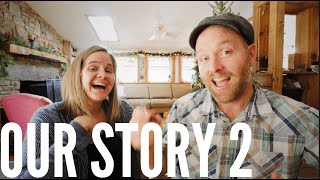
Justin and his partner discuss 23 years together, starting from a church youth group in North Carolina and a ski trip that led to dating in January 1996. They talk about what they fight about: listening, using "I" statements, and forgiving each other. Justin also describes building the Mountain Board Shop while in college, pioneering drop-shipping and early SEO.
Chapters
Part 2 in a 5-part series, the history of us, to give you guys some context of where we're coming from and how we ended up YouTubing. So last video we talked about what we were like growing up, Floridian country boy but also very involved in the, in the city, born in California. Today we're going to talk about how we met and how we began dating. So first, what brought you to North Carolina?
So from Florida, my dad, um, was offered a job here building a Holiday Inn. And so they came up here. They always wanted to live here. It was kind of like one of the things that they had always wanted to do. So the opportunity came and so they said, let's move. And I was, I just turned 16.
So what did they get you? You came to North Carolina. That's a different culture. What did you get involved in?
The primary thing, because we came at the end of my 10th grade year, so school was already out when we moved. Moved to here, so it wasn't like I could like go to school to make friends. So, um, we just got involved in church at the local Baptist church here in town.
One summer when I was a teenager, I was 16 I guess, or 17.
You were 16.
Uh, mowing grass, having my own business. Uh, in summertime, I'm the kind of guy that always like to have one close friend, but my close friend ended up going in the summers to visit his mom in like Washington State. And I can remember mowing grass one day, just being particularly lonely, and I just thought, all right, I'm just gonna— I was on my way home and I just prayed and I said, God, give me somebody tomorrow. Remember, I'm 16, 17 years old. I know God's not a genie in the bottle, but this was the 16, 17-year-old. I even cried, I was so lonely.
Bless you.
I think that was coming from, 'cause I had tried to visit with a friend, and I wasn't coming home from mowing, I was coming home from visiting a friend, and they started doing some things I was not comfortable with, smoking some stuff and whatever, drinking, and I wasn't into that. And I went home thinking, well, this can't be my friend, and this is no fun. And I cried and asked for somebody tomorrow. Well, tomorrow came, I mowed grass, and I thought, You know, it's the end of the day, I'm thinking, well, God, I guess you're not gonna give me anybody. But I thought, looking back now, like, what, really? Some girl's gonna come?
Come out of the house and be like, who are you?
Let's be friends. Get me some iced tea, sweet tea, I don't know what fantasy I was having.
You should've been mowing my yard.
Yeah.
'Cause I probably would've come out and talked to you.
Having grown up in church, I got involved in the youth group, so I would go to the youth group that Wednesday night. Yeah. And I went down and sat on a curb, And I was there early, and before it started, this beautiful, bony, morony young lady, blonde, came walking around the corner.
Yep, and it was me.
And then what happened?
And I came right up to you and I said, hey, what's your name? Because I was there to make friends, you know.
What did I say?
I guess Justin. I have no idea.
Yeah, I'm glad you came and talked to me because I'm scared to death of girls.
Yeah, you wouldn't be able to talk to them.
You wouldn't be able to talk to them.
So I just was like, well, so in my— like, cuz I— here I am, the new person in town, I don't really know people. This was like a— this was the second or third week that I had been to Wednesday night church. Um, and so again, remember I moved around a lot as a child, and so one, church was always a stable thing for me, and two, then school there were always places that I could make friends, but school was out, so church was the only part. So, you know, I was 16, but I had made friends at many other churches before.
Oh yes, you were good at this.
So I had had some experience with, with making new friends. And, you know, like first day of school, you got to make some friends, like in the first couple of hours, like, hey, when do you eat lunch? And like, can I sit with you? And you have to put yourself out there. It's really hard to do, but you get used to it and you know how to do it. So I came up to him and just started talking to him.
What was our— we were friends, we dated, we thought we were dating, or I thought we were dating. We don't have to get into that. What was like our first like date date, or when I asked you out? Do you want to tell that or do you want me to tell that? When I like asked you out and you knew what I was saying.
Yes. So we, it was January 23rd of 1996. We went on a ski trip with the church. It was, what is that? It's some holiday in January.
Okay.
That we didn't have school. And so the youth group had went skiing, snowboarding up at Sugar Mountain. And so we went up there and we had, we had actually, there wasn't enough room in the vans. They didn't have enough drivers. So, um, we ended up riding with another couple who had just become a couple, and so they said to us, oh, you guys should date. And we were like, ah, we're best friends, like, we don't really want to ruin our relationship by dating because we really enjoy one another's company. And they were like, you should still date.
That sounds like you talking. No.
I think we both were saying that.
Okay, alright.
Anyways, so then later on that day he asked me on the ski lift if we would want to be boyfriend and girlfriend.
Is that what I said?
No, I think you said go out, but I think we—
Okay, so we started dating on the snowboard mountain and every once in a while we remember our dating anniversary, January 23rd, 1996.
Yep.
So we've been together 23 years. Which brings up Rachel Rissa's question: What do we fight about? We fight. We—
I don't like to use the word fight because I feel like it sounds really dramatic. We just have disagreements where we have to work it out and, and do, and, you know, figure out how to proceed in agreement with one another.
So to answer this safely without getting each other in each any more trouble. I'm gonna say something that causes trouble, and she might say something. If you want, you can say something that causes trouble.
I do.
I cause trouble when I don't listen, you know, and I'm too quick to come up with a solution too. Sometimes she just wants to talk and I just need to hear it out, and sometimes I don't hear it out, one, and then two, I'm trying to come up with a solution. And that could be very frustrating, and that's something I'm personally working on because that's disrespectful not to listen. Yeah, so I'm sorry about that, and I'm working on that. And, uh, that's probably a lot of guys' problem. I think we all struggle with listening.
Yeah, not me. Okay, I'm just kidding. I mean, yeah, communication. Communication is probably The biggest, like, communicating what you're really trying to say and the other person listening. Like, I am not great at, I guess maybe, I don't know how to say this. Am I not good at speaking my needs or?
That might get us in some trouble sometimes.
Like, I'm not good at like saying what I really—
Communicating directly.
Yeah, I'm not communicating directly enough. That probably is a big thing. I don't think we— we don't really fight about money, do we? I don't think we've ever fought about money. We've never— we're really on the same page about a lot of things, which is really helpful.
Yeah, how did it turn out? Because we got married and we were not into like healthy eating. I was a professional mountain biker.
Well, we started dating when we were 16, which is— and then that doesn't usually last. Like, it's like, what, isn't it like 2 out of 100 people who are high school sweethearts get married, and then 1 out of 2 of those couples gets divorced?
Yeah.
So it's like, how did we—
and that other couple that was with us on the trip is divorced.
Yeah.
So I think that— I don't know if I have it in here or not, but I think then the— but we've changed so much. Well, I think it's not like we could have sat down and said I want 4 kids. I want a farm when I grow up. I want to eat organic.
Well, we did say we wanted 4 kids.
That was something we agreed on.
Homeschooling we didn't talk about.
We had a fight. We had a fight before we had kids.
Before we were married.
I wanted to do like my dad used to do and just put our lunch in a grocery bag. A grocery bag. Plastic grocery bag.
We're not doing that.
What'd you want? Paper bags?
I wanted to do the little brown paper bag.
And I think now we would both agree on reusable. But we had a big old fight about that. We fought about if cars and trucks are boys or females or males. Apparently they're all females, so I don't know how they're reproducing this thing. But anyway, we won't fight about it.
Yeah, so I think that honestly, I wonder if a lot of it is that we grew up together. That has to be it, because like we started dating when we were 16. We also did fight quite a bit about stupid stuff, you know.
Oh yeah, like those two things.
We dated for 5 and a half— so we were together for 5 and a half years before we actually got married. So there was a lot of time in there to like get out these, um, issues. So I remember, so our first year marriage, we really didn't fight as much as like our other newlywed friends. And I remember thinking, why don't we fight as much as everybody else? Like, what is wrong with us? But then I think those other people didn't date for 5 and a half years before they got married, and so they didn't have all those— like, I think a lot of the issues that we would have had if we would have gotten married within a year of meeting each other, we wouldn't And it was such a pleasant—
we spent so much time together, like college. Yeah, so we were not married yet, but we went to every single class together. We did not have like the college, typical college experience. We don't have any friends from college. We just, we were each other's friends and we just went to college, came back and did our work. Yeah, we commuted to college. So I think that if there's a secret to that success is what you said, we grew up together. But I think no matter when you get married, we're all still growing. We're still growing. We'll look back on our 40-year-old at this video when we're 60 and think, oh, how cute. Uh, how do we make it? How do we do it?
Yeah.
Uh, I think it was— it's two major things, and it's that we fight.
So, well, we talk. We're very transparent.
When one hurts the other, they're sure to tell them in different kinds of ways.
Yeah, I think. And in trying to be mature about it and not like like not isolate or not try to hurt the other person in some way emotionally, but just like being like using a lot of I statements. I feel like I'm not being heard, or I feel like whatever. Yeah, it is that happened. And so then, then the other person doesn't feel attacked, and then they can process it kind of and how like, what, what was my role in this? Because, you know, there's two roles in every marriage. So yeah, there's always two sides to the story. So, you know, just kind of like stepping back and knowing that, and then just having compassion and kindness.
I think another key is what a mentor said at his wife's funeral when he became a widower, is we have to live in each other— walk in each other's forgiveness. And so I'm always quick to say I'm sorry, maybe too quick, and maybe it's shallow at that point, but I'm always quick to then try to make deposits to try to show that I'm sorry, and that has helped. And you have not always said you're sorry, but I've asked you, I'll have you. I'm sorry. And but then you'll say it, and I very much appreciate that because you could not. There are people that don't. Yeah, no, even if they're pressed to say, you know, I try to apologize. There has to be some fault from both parties.
Yeah.
And I'm hurt and you're not saying I'm sorry, and then they won't. That's very difficult.
Yeah.
No, I can't imagine that working out because I would want—
I, I think it's too like that whole like treat others how you want to be treated.
Yeah.
So if I would want someone to apologize to me, then I need to apologize to them if I've done something to hurt them. So I think it's a lot of talking, like a lot of talking about everything, not just like the hurt feelings.
Everything.
Everything. Like, um, ideas and, and I don't know, just we talk about everything.
Um, what was our health like meeting and dating? That's the same as growing up. Well, it probably got worse because our parents weren't having control over us.
Yeah, I was pretty sickly actually. I remember always having some sort of cold, or I was on a lot antibiotics at that time, you know, like I was in college and so we were going, you know, well actually right before I started college I was diagnosed with hypothyroidism. So I guess I would like to try to find, I would love to try to find those medical records to see if they actually tested my antibodies. Because later in college I went to the college, like when we were at UNCA, I went to the clinic And I had had some weird symptoms that I thought were related to my thyroid, but I wanted to get checked with somebody. And so they sent me to an endocrinologist to make sure that everything was okay. And that was the first time I was told that Hashimoto's could be at play here, but nobody ever did any blood work or said anything about like what I should do. They just said, keep taking your medicine. And so I said, okay. And we didn't have the internet. This was, you know, I was diagnosed in 1997. This was like 2000, 2001. The internet just wasn't as big as it is today. Like, um, I mean, I guess I could have gone to the library and gotten a book, but no, I wouldn't have— I wouldn't have known what to do and had those people even written the books, you know.
So we weren't on our health journey yet?
No, I mean, we ate fast food, we drank soda, we ate candy.
The sad diet.
Yeah, the standard American diet.
Not clean meat.
Yeah, I mean, whatever we could. Yeah, we didn't we didn't care about what we were putting in our bodies. So I was really sick a lot. I remember I was at the doctor's, I took a lot of antibiotics. Um, not, not good, I would say.
So you talk about that struggle with your health, and it brings me back to maybe what we should have talked about in the previous video, but what's kind of like our biggest struggle growing up? I mean, you're starting to get into your struggle of health, which certainly— would that have been your biggest struggle growing up?
My biggest struggle was probably making friends.
Okay.
Like, that was really— it's hard. It's, um, it's hard to like find people that— I mean, because like when you're put in a school, like you're districted into a school. I went to public school. Um, I went to private school in my elementary years, but as I got older, we went— I went to private or public school. So like you go to a school of just the people who live around you. You know, like it's a district and then you go there and so then you have to find people that are like, like you, or, you know, like there's that whole peer pressure thing. And, you know, I was always like pretty goody two shoes. Like I didn't get in any troubles and, you know, I was, you know, I came home on curfew and I wasn't hanging out with questionable people or anything like that. I mean, you know, I would spend the night with my girlfriends and we would, you know, go swimming at midnight, like, woo, in the pool, you know, like real, real bad. Nothing like too intense, you know, we like weren't going to parties. We were, I had a pretty good group of friends, you know, growing up. Like I had one constant best friend that I'm still friends with and we're gonna see her on vacation, her and her family, and we're really good friends with them. And then, Yeah, I mean, I had, I had a good set of friends, but at the same time, like, it's just hard to find people that you can be vulnerable with, I guess is the word for it now. I didn't know that was the word.
We're gonna wrap up this video real soon. We got 2 more questions. I'm gonna talk about struggle, and then we're going to talk about extended family. Are they like us now? And then how, how I got into professional mountain boarding. So we're going to talk about our income at this point. So a lot of people in our member area to know more about my professional mountain boarding days. We, we put out questions for these videos, and a lot of people are interested in that. And it was an interesting time in our life. But for me, my biggest struggle was my parents' divorce, hands down, when I was 14 years old. And there were 3, 3 other siblings at the time, well, 2 younger and 1 older. Uh, everybody's 2 years apart. That was hard. And it was the most peaceable divorce you could ever imagine. We got split between them half and half, so he's got to see our mom and dad both half the time. And they didn't talk bad about each other. They never talked— my mom has never talked poorly about my dad, and my dad has never talked poorly about my mom. And I know they don't get along, so cheers, cheers to them in that respect. But still, it's still very hard. Yeah, and that probably shaped us— me for the better— and who I am and how I'm trying so hard to bring the family close and do everything together, because I don't remember doing anything together but going to church. And I remember my dad would take us to the movies, my dad would take us on trips, Mom went there. Mom would take us on a vacation, Dad went there. And I don't know what that was about. Nobody talked bad about anybody. And, um, now maybe that's why I wanted to keep everybody so close. I have no idea, because I can't really say that because my siblings aren't necessarily that way, have everybody all three meals a day. So maybe it's just who I am. Maybe that's part of what brought me here. I don't know. Our extended family are they like this? And when I say like this, do they grow their own food, homeschool, eat organic, travel America in a converted school bus, all 50 states?
No, we're pretty much the weirdos.
I think they wrote us off as crazy a long time ago.
Yeah, we've never, ever swum with the fish. Like, we've always gone against the current. We've always been counterculture. In a lot of our— in a lot of things that we've done in our lives, like, we've always been different. So I mean, like, Justin, like, we all through college, you had a business that you ran.
I think when I quit Walmart to start my own business, now looking back, that was pretty telling.
Yeah, and like, we got married and then like, he worked from home after we were married and I didn't work.
Yeah, um, I drove a FedEx route once to see if I wanted to buy it, but even then, like, you buy FedEx routes.
Yeah, and then you hire— you're the owner, then people run it for you.
So even— yeah, I was gonna have a bunch of routes, but then I was like, I'm not very directional, I'm not gonna get very started on this. That was before GPS and stuff.
Yeah, he was like, I'll never find my way home. Uh, okay, we're getting ahead of ourselves.
Yeah, we gotta jump. Okay, so let's go to the mountain boarding unless you're done talking about this.
Yeah, I mean, I think that with our extended family, we've just always been a little bit different and Yeah, they pretty much accept us for who we are. Yes, they, they, um, yes.
Well, we should say this real quick because when I started wanting to know I was going to marry you, I wanted to propose to you where I wanted to live with you, and that was right there. I wanted a fire. What was it, May?
It was May.
You probably thought I was crazy.
It was May, and he was like I want to put a fire in the fireplace because we didn't have the wood stove.
This barn was built, but it was not finished. It was just— yeah, it was just—
there was no kids. Oh no, no, no. When you proposed to me, it was, it was finished.
Was it? Yeah, it wasn't rented out yet.
It was not rented out.
My dad had finished this and he was going to rent it out, but it hadn't happened yet.
Yes, it was, it was going to happen really soon.
I rented a horse and took you on a horse ride. And you didn't pick up on this?
I didn't.
I was wanting to build a fire and everything. I proposed to you right there.
We made it. We made a meal in the kitchen. The kitchen was there. Yeah. And we made a meal in it and we had to eat with our hands because I forgot forks.
I got down on my knees and I said, "Will you marry me?" What'd you say?
Yes, of course.
You would have married me 4 years earlier, wouldn't you?
I would have.
Well, I guess we were engaged for 6 years.
No, we were engaged for 2 years.
Oh, okay. But you would have married me at 18.
We got engaged, so we started dating in 1996, we got engaged in '99, and we got married in '01.
If we had to do that again, we would have gotten married in '97. I think we would have got married at 18.
Yeah, we would not have waited at all.
All the parents are freaking out now and letting their kids watch this show. I don't blame you because can you imagine? Faith, she's 18.
My niece is about to turn 18 and I can't imagine.
Her boyfriend, that's it? That's it?
Yeah, I mean, it's hard because at one hand, like, you and I knew we were gonna get married. Yeah, like we knew it for a really long time. And like, the— I think our parents all wanted us to not get married right away because they thought that we wouldn't finish college. Yeah, and that would have maybe happened.
Um, who cares?
Should we say what we even did?
I didn't use anything from college.
So we both got business, business management degrees from UNCA. The thing is this— no, no, no, no. Okay, so In '01, the internet again was a very small thing. It was not— there was not internet marketing. It was not a business thing. So really what we learned in college, it was all theory, honey. It was very scary. Yes, it was a very theory college. There was not a lot of practical information there. And so now it doesn't really mean anything, like what we learned back then. It's all different now.
That leads me into Um, it was an obstacle really, because it leads me into the mountain boarding. So we had snowboarded, you know about that from the dating. Well, around here snowboarding stinks, and I— and when I get into something, I want to really get into it. And you have to drive 2 hours to a decent mountain, and then it's ice, and this is expensive. Well, I saw in a snowboarding magazine an ad for mountain boarding. It's like a snowboard but it has wheels and you don't need the snow, you can go on grass. Well, I was like, all right. I can remember studying that catalog for a year before I finally bit the bullet and bought one. And loved it. And just like anything else I love, like St. Bernard's— I didn't really love mowing grass, but St. Bernard's, I've turned it to a business. Mountain boarding, I turned it into a business. And now farming, I turned into a business. But, uh, the mountain boarding became a business. The internet was coming around. I said, what if I sell mountain boards? What if I contact these manufacturers and say, hey, if I sell a mountain board, can I like get— pay you and buy it from you and you ship it directly to the customer. I don't think there was a name for it then, but it's now called drop shipping. And they agreed. And I can remember the very first day I opened, I sold a board to the United Kingdom and 3 miles away to a guy that was living up here. And the first day, I'm on to something. And we did really well with that. And even at the height when this did, uh, we, we got to where if somebody searched on Google for mountain boarding, we came up on top. It's called search engine optimization.
So it used to be his, his mountain board business was called Mountain Board Shop. And it actually did really well, and we— I helped run it.
And we were running it in college, guys. Yeah, at college there was a class that was helpful, small business. I did one on my mountain boarding internship. I was my own intern. You interned for me, and there was another young lady that interned for me. So I had like 3 workers in my business then. But it was a beautiful business. Like, I could run it while I was in college. Yeah, like really all I had to do is some point during the day answer emails take in orders, send them out, and the manufacturers would ship them.
So you also, do you remember this? You had, so your dad had, 'cause you lived with your dad's house and he ran the business out of that house. And so there was the landline for your home and then your dad had a fax line and then you had a business line coming in.
Yeah, AOL, y'all.
And it would ring 2 times. And so then you got a cell phone. This was like when, you know, cell phones were just coming out and he got a cell phone and he would forward his business line line to a cell phone.
Yep.
So that when we would be out, he could get phone calls.
I'd be at college.
Yeah, he could—
mountainboardshop.com. And I remember one time saying somebody wanted to speak to the— speak to, uh, somebody about— what did you use to handle? I don't know, something you handled. And I said, hold on, I'll send you that department. And they said, you can do that? Yeah. Christmas was always good. Yeah, we had Disney came out with a movie called Johnny Kapahala: Back on Board, and it starred mountain boarders, and our business skyrocketed, like almost $100,000 one year. And this is like fresh out of college. And so yeah, I maybe kind of wish I could have focused more on the business during that, but college kept us focused, I think, because you had so little time. I think we were more focused with our time, especially at that age. So that's it. We should wrap that up because we're at like 27 minutes on this one video. So we'll wrap that up, guys. Next video we're going to talk about being married to how we ended up in Honduras and how that was a significant part of our life and a significant part of where we are today.
More from Justin






If I had to start my Homestead all over again, it could only pick one animal… 




