What We Grew In 100 Days
This content was created by Victor Justin Rhodes. This content was uploaded by Victor Justin Rhodes. This is a YouTube vlog titled "What We Grew In 100 Days" (uploaded August 9, 2020) consisting of a single-host farm tour and recap of a 100-day growing-food project. The narrator walks viewers around the property describing vegetable beds, greenhouses, chickens, ducks, turkeys, pigs, cows, pastures, infrastructure upgrades (water lines, fencing, turnaround, wood boiler, generator), feed and husbandry lessons (grit, feed brands), and plans (scaling pork production, upcoming milking interview with Joel Salatin). People mentioned or appearing include Rebecca, Jonah, Lily, Joel Salatin and others; the piece functions as an instructional/reflective vlog rather than a multi-person conversational transcript.
Chapters
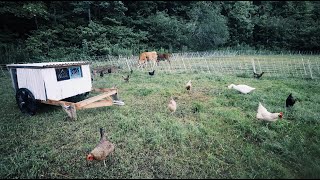
Can you believe it? I can believe— I couldn't believe it. We're at the end of 100 days of growing food. Today is 99 days, so I'm actually going to give you guys a special tour of the farm, and we're going to talk about all the various whatnots. Thank you, Almanzo, for blocking all the various whatnots that we were able to grow and, and do right off the porch. A jammin', jammin' herb garden, or should I say sunflower garden. Now we've had like 4 inches of rain in the last 2 days, so some things have kind of gotten swamped. A beautiful flower garden outside the chickens. Oh, these raised beds— not raised beds, uh, container garden beds. These are spent, these are done. We need to do this. We just— oh my, look at that! We just haven't gotten around to it. But we will, and we like that. And these will be replanted, uh, next year. Raised beds, 6 of them, just jamming out. We've got a fall lettuce coming in, but we had a spring lettuce. Rebecca planted a lot of flowers in here. It's beautiful. It's our front yard. We want it to look nice. We didn't need it for like food production. We have crop gardens. We'll be to that soon. She did put some food production in here. Like our green bean trellis has done great. This was an accident though because these weren't supposed to be climbing beans, but then it ended up being nice. Look at that. They were supposed to be bush beans, so we think maybe a vine bean had gotten in there. Uh, persimmon— that didn't happen this year now that I think about it. Oh, It is happening, it's just going to happen a little later. Our persimmon tree, strawberry patch that was already here, mucho tomatoes. If you know the beautiful one, she loves tomatoes. Her little experiment with tomatoes being able to climb the trellis has worked out rather nicely. Look at them waiting on me. Okay, okay, I'll let you guys out. In here we ended up with a system that We buried the— we buried these woven wire— not woven wire, uh, hardware cloth, and little chicks couldn't get under this because they scraped the wood chips away. Did we build this thing during the 100 days? This, uh, I call it my bulletproof, uh, stationary fence. We finally built a permanent fence. We've had chickens here for 8 years, I think it's safe to build a permanent fence at that point. We figured out that we could hold a lot more chickens inside of a chick shop, 4x4 coop. It's really my main coops now. I don't even do the 2.0 right now, which is like 6x6, because I don't need it. I'm putting 30 chickens in each coop. That's the max we're ever gonna have, 60. Um, why are we gonna have 60? I don't know. Every year we're gonna raise 20 to replace 20 of the oldest. Here's our 20 replacements. Hey, you think I got something for you? And these gals are super fat. They're super fat. They're like bred to be big. They're big chickens. They're big breeds. Why? In case I don't speak to it when I'm over there. We want them to ultimately be in the pasture following, following the sheep in a sheep net. We want them to be able to stay in a sheep net. Skinny little troublemakers like that won't stay in a sheep net. You see the green band on there on her leg? That means she's jumped out of that sheep net and she's here in sort of a— well, our bulletproof posse. This little area here is only 1,300 square feet to typical yard, 3% of an acre. Yeah, 3% of an acre. I would say we would have jammed that out in vegetable production, and this is all we have, and we'd be getting eggs from this every year. We'd be getting, uh, if we replaced our old hens in this with new chicks, every year we got some meat chickens, 20-ish meat chickens, and then we'd be getting eggs. Dozen-ish or more a day in a typical front yard. So during the grow— growing season, easy, most of a family of 4, 6-ish, most of their, uh, food if they eat eggs and fresh vegetables and a little bit of chicken. One super win for this year is we've had grit. I haven't been disciplined about grit in the past. I like to call it rust, uh, rooster teeth. Just little tiny rocks. We get it from the, the creek, but you can buy grit. And, uh, that's key because it— they get that in their gizzard, and that— it's a muscle that moves that around, and that becomes their teeth. That's why I call it rooster teeth. That becomes how they digest their food. And I think it's really made a difference in the chick growth, definitely the sea monster growth, the meat chickens. Incredible. Okay, while we're here, notice, notice the greens in there. This is why you always want chickens next to the garden, because the garden feeds the chickens. These are just scrap weeds, extra. What they don't eat, they'll scratch into the surface and turn this into compost. They'll poop on it, they'll scratch on it with these wood chips, and underneath there is compost that will what? Feed the garden. So the garden feeds the chicken and the chicken feeds the garden. Give you some perspective here: the herb garden, the chickens, the raised beds. Still in our front yard, we have kind of a big front yard, a runes garden, which is a crop garden. It's 50 feet by 14 feet and produced, oh, so much. We have some kale still frozen from this garden. What are we doing here? Cabbages. We have cabbages in the cool room from this garden. Carrots and beets. Hopefully I remember and show you guys those, how we're storing them. Right next to Arun's garden, the instant garden that did absolutely amazing. I mean, look, we haven't touched it. Look how few weeds are coming up through that. Look at the soil that this instant garden is building. All we did was put 2, 4 chickens over this for 2 weeks. Then we put down— what do we put down? We put down a weed barrier. Then we— oh no, we put down 3 inches of compost and weed barrier, then wood chips. No, not wood chips, grass clippings. And this is what has come. This one which had a pumpkin, the pumpkin died, but it did grow a volunteer. And, and with the wood chips, it may have a little less weeds, but it seems like grass clippings work just as good for weeds, and I think are a little bit better because they break down a little faster and they have more, uh, available nitrogen. Right next door to the Instant Garden, Kathy's garden. Big garden. Potatoes. What else? We— I think we had some— we had carrots in here. I guess we didn't have carrots up there. Mucho comida in here. Still have growing, still have our watermelons, they're coming in. A row of cucumbers, harvested lots and lots of cucumbers. Green beans, have harvested a lot of there. These bush beans is neat, you can harvest from them 3, 4 times a year. Rebecca's tomatoes, one of you guys wanted to see an update on Rebecca's tomatoes. Well, they're jamming. Actually, we need to come out here and get some, it looks like. Look at that, mucho tomatoes. Oh, and our most heartfelt sensitive crop, sweet potatoes. Why? Because my dad last year said if he gets better, he's going to plant sweet potatoes. Dude hadn't had a garden in 30 years. He said this when his back was broken at 86 years old. And here's the sweet— so we planted sweet potatoes in, in honor. He did not make it, he died in November, but the sweet potatoes to remember to never give up. Butternut squash. Whoa, I haven't been down here in a while. And you don't need to after these things get started, they take over. And really, there's not that much weeds going on. And pumpkins, look at our pumpkin score! Look at that butternut squash right in there. And mucho pumpkins. Guys, we grew this. We may have started some of this before. I don't, I don't remember exactly when we started this, but the key is the, the thing of the 100 Days of Growing Food is just to consistently do something every day, really, no matter what. Even if it's just 1% change, 1% change, I mean, you've doubled in like 72 days. Oh, a little bit of food security here for our fridges and freezers. A Cummins generator. We did not grow this. Hopefully the electrician is coming to hook this up. We just got this delivered, uh, been long awaited. Electrician's coming to work on this. Hopefully next week we'll start this. So you see the crop— oh, I should show you what we did to the pastures. So here's the end of our crop gardens. Our house. I'm just trying to give you guys perspective here. People often come here in real life and they're like, whoa, that's where that is. So I'm trying, I'm trying to give you perspective. So right here, our crop gardens. Right here, this has been a wonderful experiment. I mean, the pigs were— these used to be gardens like this. We had pigs come in, level it out, and then we planted a pasture crop from Nature's Seed, a southern crop for southern climates. For dairy cows. And this is what come up. This, this is clover, this is timothy, this is alfalfa. Mucho clover in there. We're bringing the cows down here today. Hopefully I remember to get that shot. They love this, uh, orchard grass, rye. Almost half is fescue, which is really thrives here and is a really good winter grazing grass. But I was so happy how this came out. And the cows and the sheep love it so much that we started sowing behind— the pigs are out working the pasture, and we sow this behind the pigs now. I mean, just look at that, look at that, it's lush. Crazy. So, you know, we did give up 4 garden plots for that, but we're finding that this is enough. Well, I kind of voted for it. I kind of like animals more than vegetables. I like my meat more than vegetables— my lamb, my beef, my dairy. Rebecca kind of likes the vegetables, but I think she was in agreement. This, this times 2 was just too much. As I'm walking away from that garden, in these lanes, this was probably one of our biggest time savers, game changers, is we put water line, half inch poly pipe through the lane, and I'll show you. And every 100-ish feet, we connected a water connection. We just got a quick connect there, and we can connect the hose. And that's enabled us to get water to the sheep instead of having to carry buckets. It's also what we're doing more recently is taking— this is nasty because they haven't been here in a month. We need to come clean this. They're coming today, but, um, we can actually move this trough. It doesn't have to stay here so cows don't have to backtrack and come to the same place. We can move this out and connect to a different place and get water in different places way more easier. And so there's not them mudding things up. Walking down the lane, I'm going to pan around here. Boom, boom, wood boiler. We're going to talk about that more in the future. Got one of those guys with a generator and a wood boiler. Wood boiler using wood that we've cleared from our pastures to heat our house, heat our water. Generator if the power goes out. We're gonna not need as much power in the winter anyway because that wood boiler is going to save us a lot of money. In heating bills. Right here under the shed, we built this handy dandy onion garlic drying rack. It was amazing. It's kind of an upgrade from our screen doors slapped together, and, uh, but it's worked. These are the white onions. We cured a whole 2 racks of purple onions. It worked out great. Somebody's vacuuming. Oh, look at that guy! You tidying up in here? Yeah, it's nice. On the other side of the house, there's where we milk. Boom! Look at this, Rebecca's greenhouse. Oh, the key to starting plants in the summer for fall and winter is that shade cloth and ventilated— our— this is Anna White greenhouse. For those you want to know, you can get the plans, Anna White. The only thing that we did to it is we made it a little longer And we added these automatic solar vents. These things heat up and this comes— now we didn't, we didn't build this greenhouse this year, I think that was last year. Hey, do you need something? You're just along for the tour. So fall garden, look at all this. Tables full of fall crops like, uh, broccoli, lettuce, more lettuce, probably collards. And I don't know what else you got going in here. Turnips, kale, more lettuce. And this is basically what it looked like in the spring. And then in the middle we had summer crops like tomatoes and cucumbers and squashes and pumpkins. Yeah, we use this 3 times a year to start, start plants. Little hardening off station. A week before they go out, we start putting them outside during the day. See that shake off? It, it blocks the heat but not the sun. I don't know how it does it. It does it. It's worked. The plants haven't gotten too hot. They haven't got too leggy. They look good. Rebecca planted this flower garden in front of the greenhouse. Don't you think that looks amazing? And her ice tub bath. You know, some of this is getting— I don't know if we did all this started all this during 100 days, but I'm pretty— it's this season that we did this at least. And hopefully this is an encouragement to you guys. Maybe you can't do all this. Guys, we're only 2 and a half years from the Great American Farm Tour. I mean, we're 2 and a half years from the Great American Farm Tour, basically starting with 3 chickens and, and some gardens that had been wood chipped. What? You can go see the creek. It's rained. She's interested to see if it's flooded. Asparagus and strawberries. I'm thinking we got more volunteer tomatoes in here. It's got to turn into a jungle garden. We're gonna need to do something about that. But mostly asparagus. This is asparagus and there's strawberries. It's already run its course, but that's a perennial. We'll never have to do that again. We'll just have to weed it. Obviously, periodically. Gosh, we did a lot, guys. We did a lot. Um, we buried this line so that we can get water And not electricity, electricity, little, little electric to power the electric fences. It's not nothing like crazy. We put it through that 2-inch pipe. We, we did that curve there to prevent water from going in there, and then in case it did, we still built it at a slope, and that goes under the road. No more driving over water lines, no more driving over power lines, and it connects here. And goes down our lane system. Actually, while I'm talking about that, let's go move the luchadors and the ducks. I'll demo this water system. Turn it off here. We gotta— we're gonna move this down to do the luchadors. Do you want to drag this down for me, Lily, towards the luchadors? So we have this portable hose a water right hose, and we're going to go down about down 100 feet and connect to a different area which is closer to where the luchadors are right— all right now. So there's one, supposed to be zip tied up. I don't know what's happened there. Oh, it's being used. That one's going over to the— okay, so that one's going over to the ducks. Just connect right here, super easy. Turn it on, we've got water. At the end of the hose I have a turn off And let's move these guys, then we'll refill their water. Nacho, by the way, our ram, it's gotten huge. He used to be smaller than Escalito, our wither. Escalito, he's not shedding. He's had frequent diarrhea. He will probably be replaced by one of Nacho's offspring. It's just to keep Nacho company. Plus, Escalito is kind of wild. You go in there and he's like— but anyway, Nacho gets to go with the ladies October-ish. Not long, my friend. Lily is going to get me a brush to brush out that water, to brush out these ducks' water. But let's talk about the ducks while we wait. This first time we're doing meat ducks, they've been amazing. We've put them in the meat shawl just like we do with the sea monsters. It works out great. I think it's perfect for ducks, really. Honestly, ducks— well, we have some geese in there too. We have some meat geese raising a Christmas goose. I think that they eat so much grass, we could theoretically move this every day and feed them very little. But this is my first time with ducks. I want to make sure they get to weight on time. There's a window that you want to harvest them. You need to harvest them before 8 weeks or their pin feathers start coming in and it's hard to get out. Or you wait until their pin feathers are in, I guess, and it's like 16 weeks. So I wanted to get that front window and harvesting them early, and so I wanted to gain weight. I wanted to make sure they gain weight. Maybe next year we'll do an experiment raising ducks maybe on just grass, bugs. They might bring the brush, we clean this out nice and clean. Let's put it in. I'm gonna eat it and then I'm gonna put on my walkie-talkie. Luchador's house. Let's go through it real quick. Turkeys aren't there, but we can just reminisce. They were right up there at the end. Our turkey system, the turkey shawl inspired by Joel Salatin's Gobbly Go. Those dimensions just made, uh, his dimensions for like 500-600 birds Pelled it, scaled it down to 20 birds and shawled it. Everything must be shawled. Anyway, put them in a sheep net inspired by Jordan Green, Farm Builder. We have a feeder that Jonah built, which is— we didn't really get a chance to try it. He built this towards the end, but I think it's got some potential. Keeps them from going in there and perching. They can reach their head in and get all the feed they want. Reach ahead and get the grit. We end up doing feed pans at the end instead of King Feeder automatic feeders, just socking it to them. They were just able to get that a little bit easier. Turkeys don't work as hard as a chicken for their feed. They can get 50% of it from the land. So we were actually moving this every day, I don't know, for half their life once they got to a size— you know, you could tell when they wear this out, um, the clover's gone, it's bare, they're not They're not pecking, they're not getting down. You can just tell. But this worked out great. Turkeys were super easy. I think we only had one die, uh, out of 20. Got them from McMurray Hatchery. Thank you, McMurray Hatchery. McMurray Hatchery actually sponsored us our, our turkeys, our chickens, and our ducks. And I found their service, their customer service, great. Oh, I should have said this about the Sea Monsters. Guys, we switched over from, um, or Reedy Fork. We were trying to support Reedy Fork being that they were in Charlotte, local organic feed, but we found that our chickens were not performing as well as on that. Almost— we started to suspect it, uh, you know, did some tests, and yeah, they just performed better on the New Country Organic. For us, we didn't have a problem with any of the Reedy Fork's other stuff, but for us, the New Country Organic feed getting them from McMurray Hatchery, putting down, um, grit all the time made a big difference because we would get 5 pounds in our freezer from those sea monsters in 2 months, guys. In 58 days, 5 pounds, 100 of those. We only lost a couple the last time. That's like over 500 pounds in our freezer. That's crazy in 2 months. That would— that's not even a steer, guys, and a steer would take 2 years to raise. A steer would be like 400 pounds in your freezer. A pig, like 100-ish, 125. So 3, 4 pigs in 2 months with chickens. I just emphasize that because I hope you catch that. That's like nuts. And like, it didn't take much, maybe a quarter of an acre. What did you say? It's taking such a long time now. She's saying, why am I talking? Why am I talking? I'm just trying to— I'm just trying to complete my joy, honey. I found something nice. Found something nice. Just want to share with the these lovely people. Maybe I am rambling. I, I tend to ramble when I start talking about, uh, the efficiency of sea monsters. Don't get me going again, okay? Let's go do the pigs, check on the cows, and I think that we'll soon wrap up our tour. Our yard, our house. Before we go out to the pigs, this— I believe we did this in 100 days. We put in a large turnaround so tractor trailers can come. They deliver our feed. We bought that, guys. That's a hack. If you have enough, maybe you can feed all your chickens starter, and you can buy it by the thousand pounds. You save a lot of money. That's one way to afford organic feeds. But anyway, we had to make a tractor trailer turnaround, and this has been working out just great for it. We sawed up those woods when we cleared the forest. Oh, actually, that's clearing from Grandma and Big Daddy. Some of that is from us. It's firewood for us, but it's also— we're gonna build, we're gonna build a shed Grandpa Henry style. Really nice wood, metal roof. So that— I never even met my Grandpa Henry. He built that barn by hand and we're still using it, still enjoying it today. And I'm going to pass that on legacy on. We need a shed for all our firewood, all our wood chips. Tractor, keep that kind of as a learning center, butchering area, that type of thing. So right next to Grandpa Henry's barn, zone 3-ish if you want to talk permaculture, we have berries. Raspberries jammed this year. Blueberries, I don't know, we just haven't ever had whole lot of success with blueberries. We have some now. There's some right there, you know, not a whole lot. It's kind of hard to keep this— I don't know, is that crabgrass? Keep that off of it. But we've been keeping it off. We don't talk about this much because it's kind of like mulch it once a year, weed it once or twice a year, and be done. Same thing with our orchard up there. We have many fruit trees planted throughout there. I'll be honest, my back is hurting. My back's hurting. Uh, I might walk up there, but I tweaked it when I took off running the other day. I forget what I was running for, but it wasn't like— it was after, you know, I was in just a normal attire, wasn't warmed up. 40-year-old man now got to warm up before he runs. Game-changing access road, gravel. With the inches of rain we've had the last few days, it's a must. Look at these guys. Idaho pasture pigs have really enjoyed this. This is a breed we tried out, and, uh, our experience is they're wonderful pigs. I think they'd be great homestead pigs. I think where they would be strong is if you need to keep it on the permanent situation What we're doing here is we're taking what was forest— there's no grass— we're using pigs to till it up. So these guys have been bred not to till, to be more pasture pigs. And guys, they haven't done like a crazy plow job in here, which could be a good thing. Now, when you're wanting to plant pasture behind them, this is a little bit of a shallow till, so it's going to come up a little more brambly instead of grass. So we probably actually want something that actually tills a little bit. I mean, they're living up to their reputation. And that's why I say, if, if maybe this is what you had and you weren't turning it into a forest, this is great because this is going to recover fine. You could bring the pigs back to this in 80 days. So, and you know, behind the cows— we tried them behind the cows instead of chickens, but they would till. I mean, they, they are pigs, so they did till. And it was a little too much for our— what we're looking for in our pasture. Our, uh, I don't know, I'm kind of crazy when it comes to our cows' pasture. And, uh, moving them behind the cows— sometimes the cows cover this land in 15 days, it's more often 30 during the growing season, and that's just not enough for it to recover. But if you just had a pig system and, and they were on pasture and you didn't really want to tear it up because look That's about the extent of their deep tilling in here. So if you just wanted to run pigs and only pigs in the past, that's where I think these guys would be strong. Wonderful. They're a good blend of— they don't grow too fast, they don't grow too slow. Like, they're, um, I forget their mix that makes them an Idaho pasture pig, uh, but a good medium-sized, unintimidating pig. You guys have been great, haven't you? You guys have been great. You guys have been wonderful. Hammer and Diesel. Now speaking of pigs, Rebecca and I are thinking about going pro with pigs. People often ask, how many acres do you have? Well, we're way out here, the house is way back there, so we're probably using 8-ish, 10-ish acres for our grazing. That's it for we having pastures. But we have 75 acres of woods. So what likes the woods? What thrives in the woods? Pigs for everyone. So we're going, we're going pro. We're getting 2, 3, 3, 3 sows like November-ish. That's the plan, guys. Plans change, especially this far ahead, so don't, you know, let's just go with it. 3-ish sows plus a boar. That means 3 ladies. We plan on having 2 litters a year, 10-ish each. Guys, what is that? 60? 60 pigs a year. So maybe we're gonna sell breeders, maybe we're gonna sell cuts, uh, maybe we're gonna turn them into pork sticks. I don't know, we're gonna explore it, we're gonna explore that. Maybe we'll sell feeders, pigs for everyone, like like sell, sell the little guys when they're 2 months old so you guys could, uh, raise out a pig for yourself. I am kind of rambling on, aren't I? But, uh, anyway, there's a lot to cover. But anyway, these guys have done a good job in here. Oh, we've, we've come behind them with our straw, our organic straw. I want to make sure straw's organic, not been— like, you wouldn't want to put— if, if that straw had been sprayed with— you just wouldn't want to put that on your pasture or garden. So here it is, and I like straw. We've been using unsprayed hay, and that's fine before them, but straw just seems to spread more evenly. We've, we've planted pasture seed, and let me show you what this will come to be like. Remember, we had some overlap from Diesel and Hammer. We had Bacon and Sausage here. Remember them? During the 100 days, they, they, they came and tilled. They're great tillers. They had these really long snouts. Oh, the breed we're getting, uh, uh, I should learn how to say it. I'll just say Old Spots. Worcestershire. Oh my gosh, let me learn how to say it before I get them right. Uh, anyway, they're, they're a more fast-growing breed but not like crazy big. I think the boars gets like 600 pounds. Crazy, 600 pounds, 600-pound pig. Uh, anyway, we got grass coming up where they were. See that? And that's edible. We've already had the cows in here and they've already eaten some of that. Thank you, bacon and sausage. All right, so hopefully we can talk and drive. Maybe that'd be a little more interesting than me just talking. Okay, so we're at the end of 100 days. What's, what next? What next, Justin? Well, we've been putting up daily vlogs since like November-ish, the first for the quarantine type stuff. Give you guys something to do, you know, it was spring, everybody's interested. Now we're in the 100 days, but, um, so we're going into the weekend Tomorrow we're going to give you a milking time with Joel Salatin. Joel Salatin's coming here. We're doing an interview that will be very— that will be a more inspirational interview. His story and, and some of the sacrifices he's made to get to where he is, and some encouragement to us in this, in this, in this time that will also be relevant really for the rest of our life. It's gonna be golden nugget information here, guys. But anyway, after that Um, that'd be a Monday for you guys. Normally we post on Monday. I mean, long term we post Monday through Friday and we take a break on the weekend. So this Monday I don't got anything planned and, and we're gonna take a rest and probably Tuesday. So what I'm saying is I guess we're gonna take a couple of days off from vlogging, so there will be no show on Monday and Tuesday. Then we'll just pick up with our regular 5-day-a-week program, bonuses on the weekends periodically. Not promised, but often. The chickens and the sheep. So see what is going on. I remembered, I remember to talk about this. The sheep were here yesterday. We already put that net up for the sheep, so why not just try to bring some chickens in behind the sheep. Why? Because the cows were here before the sheep, and the chickens go around scratching the cow pies. If I've said this once, I've said it a million times. They scratch the cow pies, spreading the fertilizer, eating the cow larva— the, the fly larva— breaking that pest cycle. And we've only had to set this fence up once. It's housed sheep, we've moved them up, it housed chickens, we move them out, we take this fence up and make it our next net for our sheep. See, they'll take that and just spread it to smithereens. They put their food on it to encourage it a little bit. So that was a big game changer, using sheep fence on chickens for so many reasons. Two species in one area, one setup. It also was a bigger— instead of using poultry net, which we could have only encompassed some of this which we've done before, we did last year, was just you're setting up too many things and it's harder to set up, so you can't cover the entire area. But look, we've covered the entire area and chickens will get it all. Another game changer: adding a hitch, modifying Chickshaw to add a hitch. I can just pick it up right there and walk it, or I can pick it up right there and put it on Sally. No folding anything down, no uh, setting anything up. It's ready to go either way right there really quick, and that comes in handy because right now we're on a 30% grade. That's steep, and I might be able to pull it with chickens in it. I might not. Say I want to go up there, I might want to get Sally and just drive her up there. When we go from there all the way across the farm, across the road, definitely hooking her up to Sally. Look, those chickens are going at it right now. Look, they're spreading it, looking for those fly larvae. Yes, you're seeing it, guys, in action right there. Look at that. 1, 2, 3, 4, 5, 6, 7, 8, 9, 10, 11. 11 less flies just from that one chicken, just from that one moment. This patty's next. Look, you can see all the holes where the fly larvae have gone— or the flies have gone in there and planted that. All right, I got 45 minutes to milking time. Let's get some mowing done. That's a big game changer. After the animals move out, we mow down what they didn't eat. Levels everything out. Edibles tend to grow faster than, uh, weeds and brambles, unedibles. And so it just improves it so much, like Dennis at Full Circle Farms says. Just, just think of it as fertilizing, because what you're cutting too— we use mulch blades, so it cuts up the grass really fine, and that just decomposes and becomes organic matter, feeds the soil, food for, food for the soil. All right, well, it turns out we've come over here anyway. I'm done mowing. We got to come get the cows. I don't see— oh, there they are. They're way up there. So let's check out some fruit trees. Dead. Alive. Dead. Kind of alive. Very much alive. Probably worth pruning it this winter. Dead. Very much alive. Very much alive. Dead. Dead. These are our fruit trees. We're gonna get rid of this. We've had to protect them with electric wires to the source. We're gonna do what we did to my dad's tree down there. Put a cattle panel around it with T-posts. And then I'm going to run the sheep in here because it's too hard to pick up a net. Then we'll be able to run sheep through here. Very much alive, doing good. And that's what we want. We don't want to baby these trees. We want the strong to survive. We'll graft off those strong, we'll plant seeds from those strong and use those in other places. If you can't make it this far on its own, we don't want it. So we got about half. I'm pretty happy with that. Pretty much sheer utter total neglect, half of them have survived. Jonah, this is only Phyllis, which— have you had your baby? She's due. Oh, there they are. She's officially due yesterday. So are you kind of being alone? Can I sneak off and find a place for your baby? Well, thank goodness we're getting you down towards the house. We'll have a better chance of catching that and seeing that. All right, bring them on, you guys. Look how big this guy is. Gosh, hey, you're gonna be a papa soon. Well, you're gonna at least see the calf. I guess the calf's already there. It's gonna be a beautiful one, a mix between stud muffin and Aunt Phyllis. I hope it's a girl. Why do you hope it's a girl? Then we can sell it. Well, I'm thinking we might. Look at that, he's taller than you, Jonah. All right, we're on a roll now. Oh no, no, no, Jonah, they're going the wrong way. Go stop Stud quick. Oh, he's going the right way. That's funny, he knows better than Phil. Flossie, and we've been taking you down, honey. You know better. All right, you get her, I'll get these guys. Jonah, that's actually okay because I can go ahead and get these guys out to the to their pasture, and then we can put Flossy in the stanchion. Well, she caught up to it. All right, so we've got everybody in here. We need to get Flossy in the stanchion and these two out through there, through the field. So how are we going to do that? All right, John, you want to go man that gate? Yeah, I know, that's why we, we shut that gate, that handy dandy gate I think we installed during the 100 days. No, we didn't. It was not during the 100 days. We also installed this gate, which is coming in very handy right now. Uh-oh, don't go too far, Phyllis. Somehow we got to get Stud out of the way. Hang on, maybe he'll go in the shed. Nope. There you go. Now can you do it, Jonah? Good. Open it, open it. She won't get you, just open it. She'll go right to that stanchion. Good deal, good work. Now all we got to do is open this. Is this open and ready for him, Jonah? Hey, come on, stud. Jonah got Aunt Phyllis back. Where was she going? All the way back up the hill. See if she'll go through there. Yeah, yeah, she likes to be alone. They kind of pick on her. All right, come on. She's the— she's the bottom of the herd. All right, Johnny, you got to go open that gate for them so they can get out there, and then they'll be happy. Ready? Let's do it. Get me back though. He's squirting me. Oh, sorry. I've squirted you, squirted me. Lily, tomorrow you don't have to Joe Salatin's gonna milk for you. She's asking me if he's ever milked. I think he has milked when he was younger. I mean, it's probably been a while though. He's now beef cows and has been for as long as I've known. It seemed like one of his books he mentioned milking when he was little. I think this would be very nostalgic for Joe. We're also going to ask Joe We're not gonna tell him. We're gonna ask him what this is. Do you think he'll know? Oh, I'll give him an easier one. I'm gonna start asking all my milk and time, guess this. Do they know what this is? Oh, this is a good one. What's this? What's this? What else could we show? That's good. I think that'll be fun. All right, anyway, milking time with Joel Salatin tomorrow. You nervous? No. Well, that's it. I'm gonna, I'm gonna close out this tour. Hope you enjoyed the tour of our farm. Boy, thanks for coming along with us on the 100 Days of Growing Food. Didn't we have fun? Didn't we grow a lot? Hopefully you guys did your own 100 Days of Growing Food. And the thing is, we're still hungry. It doesn't end. We just keep on growing. We'll likely take a break from posting videos Monday and Tuesday. We'll see you in tomorrow's video, Milking Time with Joel Salatin, 100th day of growing food, and then beyond.
More from Justin






If I had to start my Homestead all over again, it could only pick one animal… 




