What's Wrong With Grandma ? We Didn't Want to Say
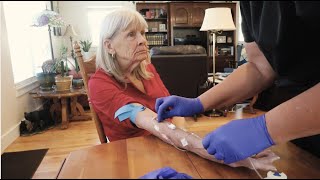
Two family members discuss their grandmother's bulbar-onset ALS, diagnosed in 2021 after tongue symptoms. She's had an unusually slow progression and tried experimental treatments like exosome infusions and hyperbaric oxygen therapy, costing about $30,000 so far. They've raised $36,000 on GoFundMe and wrestle with sharing her story publicly while protecting her privacy.
Chapters
Grandma and Grandpa have not been with us the last couple of weeks because Grandma is in an intense 2-3 week quarantine. Yeah. For treatment for ALS.
Bulbar onset ALS.
For people that don't know, tell them what the world that is. That's serious.
ALS is Lou Gehrig's disease, and ALS stands for something that I cannot pronounce. It is a motor neuron disease, and it basically— the motor neurons are dying in her brain. It started with her tongue. So that's the bulbar onset portion of ALS. And so it started with back in September of 2021. She was like, my tongue just feels like it's big. It feels like I can't enunciate. It feels like I'm having a hard time talking. I, at the time, did not hear a difference. Like, I was like, you know, oh, I didn't know what it was. She went to several doctors in our area and they couldn't say anything.
A dentist finally figured it out, didn't he?
Yeah, so she did—
It just kept getting worse.
Right, so it just kept progressing slowly, very slowly. Mom said that when she was telling him about her problems, like, he went white. He was like, like, you need to see a neurologist. At that same time, my mom was also getting in with an ear, nose, and throat doctor because The primary care physicians weren't listening. The ear, nose, and throat doctor did an MRI, maybe a CAT scan. I can't remember. She had a bunch of testing done. She had blood work done, a brain scan done. It was conclusive that it was not MS. They ended up referring her to a local neurologist. That local neurologist did an EMG and said that he thought that it was ALS, but he wanted her to go and see a an ALS neurologist, like a specialist. So it all started in September. This is now like March of 2022, so like a year ago. And so then we were—
but she's still physically able.
Yeah, so she is.
A lot of people are telling us that's crazy because, uh, this is usually— is usually when ALS gets to your mouth, it's a very quick onset.
It's very quick.
Um, and it hasn't been—
correct. So my mom's is very slow progressing. And it's, you know, and it's been going on for a while. Like, right now in April of 2023, it's been 20 months that she has had this, and it's progressed but not really. Like, she doesn't have a hard time swallowing, she doesn't have a hard time breathing, like, she doesn't have any of anything else really to do with ALS like symptoms. So it's super slow. This is not an aggressive form at all. So then summer of 2022, um, she was seeing the neurologist, the ALS specialist neurologist, and he was saying, yes, it seems like it's ALS, but it's very slow progressing. And he has another patient that is also like this, very slow progressing. So, um, then my mom ended up, um, going to see a functional medicine doctor that specializes in ALS. They went to Houston and did an infusion, a PK infusion, to see if that would help, and it didn't.
It's just slowed it down or just kept it maintenance?
Correct.
At best, like 180 turnaround?
No, so it has not reversed it. It may have slowed progression. All of these treatments that she has done— she's doing a ton of different treatments that have been recommended by doctors. Fall of 2022 is when she went to Houston for the for the PK infusions. My doctor actually met with another doctor about a new medical breakthrough. I don't know what you call it. Anyway, something new and has seen with ALS turnarounds, reversals, and progression slowed remarkably. So it's an IV. Well, it depends. So it's exosomes is the name of the treatment. They deliver the medicine differently for different illnesses. So for ALS, they did an IV. Then she also nebulizes the exosomes, um, and she's done 2 treatments so far. So 2 weeks ago she did a treatment, and then she did a treatment 2 days ago. And, um, so we're in the second treatment. Come here. Did you fall down? Okay. It's gonna be okay. My mom and dad have been in quarantine now for 2 weeks, and they have another 10— no, it's 12 days. She's also doing HBOT during this time, the hyperbaric oxygen therapy.
Is it working?
It seems like it is. So the person who administered the IV, she administered it 2 weeks ago, and then she also administered it 2 days days ago, and she said that she felt like it was, that my mom's speech was better because she hadn't been with her. You know, I think when we're with you around the person, like the slow decline of her speech, I didn't really recognize it until it was really bad, I think. So I think it's, you know, with the type of illness that this is, that it's going to take a while for the stuff to recover, the nerves to recover.
She said she can't understand her, but seemed like you could.
Yeah.
And, and most folks I think would understand her in context.
Yes.
But it's getting to the point where she probably wouldn't be great on the phone.
No, it's— it is hard to hear on the phone. Texting has been a good thing for us.
So one thing that has happened here is that's been happening since September of 2021, and Rebecca seems to think maybe at the birthday blessings you can maybe see the decline over time with you all, but it did get to a point where we didn't even film the birthday blessings because Grandma didn't want to offer one and it'd be on, on camera. We still did the blessings.
We haven't talked about it, and I think really I didn't want to talk about it because if I talked about it, then that meant it was true.
Yeah.
And I didn't want it to be true. There's been a lot of time to process this, and I don't cry about it as much as I used to.
Mm-hmm.
And I have hope that maybe this is gonna help her.
Mm-hmm.
And at least slow— you know, I mean, nobody wants anybody that they know to die of ALS. Like, it's a terrible disease. I wouldn't wish this on my worst enemy, you know? So— Then it's your mom. You don't really want this to happen at all. So there's been a lot of processing to get to this place of— I mean, I was surprised I was able to talk about it for so long without crying.
I think sometimes when we shoot, when things happen in our real life, like when Jonah got in his dirt bike accident, uh, we just thought it was a bruise or sprain or something.
Well, we hope that it was easily fixed.
I didn't even film any of it until— not until like just getting to like the hospital. Not— I think I did it at the— sure, yeah, the hospital.
The urgent care.
Yeah, around the urgent care. We hoped it wouldn't turn into anything and we wouldn't have to even tell this story.
Yeah. And I think—
but when Jonah's hip was gonna be a thing and gonna be a big part of our lives, we're like Okay, we have to tell the story.
There's just a delicate balance between sharing.
We hoped it would go away.
Yeah, I think there's also just a delicate balance of sharing. Like, this really wasn't our story to tell. You know, it's my mom. And I didn't, again, like, I didn't want to admit that it was happening. And I felt like if we, because we talked about this, we probably talked about it last year, I think. We talked about it, like, do you want to talk about this? You know, should we broach that subject with your mom? And I was like, I don't want to talk about it. Like, I think there's a lot of times times too. Like, not, not privacy. I mean, like, all of our friends know about this, you know? Like, I've talked to all, all my friends know. Um, and so it's not like we're like hiding this from everyone. It's like kind of like a private life thing as opposed to like the public life thing.
Yeah.
Um, the other thing is too is that there's lots of— and, and I know that this comes from a place of love from people They want to diagnose and fix and, you know, give us all these suggestions. And like, we have researched and we have looked and we have gone to specialists and we have gone in our own circle.
And oh my God, if I would have posted something and some idiot in the comments would have said something ugly, yeah, because yeah, Grandma moderates and reads the comments.
Yeah, we're very protective of mom, and, and we want— we don't want people to say anything negative.
I mean, you say ugly things about me, I've put myself on there, but the guests in our vlog, we've got to guard.
Yeah, because they didn't ask for it. Um, so yeah, I think that was something that we were wanting to just protect and just kind of— I almost cocoon with it, you know. And obviously, you know, it's still very painful to think of my mom suffering in this way. But at the same time, I feel like a lot of healing has happened. What we can control is this treatment, the exosomes treatment. I had someone tell me if this was their mom, they would do this. They would pay the money.
It's money. It being $8,000 treatment.
It's $15,000 a treatment.
And we're wanting to do— she's doing treatment.
So we did, we got enough.
Maybe 3 if you feel like they're gonna— she's getting footing.
Correct. So there's potentially most likely going to be a 3rd treatment. It just depends upon at the end of the 2 weeks after this week's treatment, they're going to reassess. The team is going to meet and kind of figure out like, well, what is— do we need to do the 3rd treatment now? Do we need to wait? At this point, we've already put up $30,000. The two treatments. No, nothing. No, no insurance covers this. If it was your mom, you would do it. You know what I mean? Like, it doesn't matter. It doesn't matter how much it costs, like, to not suffer.
Everybody's chipped in at this point. Your sister, you, and—
My sister and I, and my parents. We all put in money to get to the $30,000 for this, these first two treatments. My aunt did go ahead and do a GoFundMe for my mom to, um, for people who want to help.
Some people know it.
Yeah, my aunt, she's been on, um, so she did do a GoFundMe for, um, my mom. Talked her into it.
Talked your mom into it?
Yeah, to doing the GoFundMe.
And how much have they raised?
Um, as of now they've raised $36,000. $600. Yeah, I mean, so there's, you know, honestly, it doesn't matter how much we raise. It's a blessing at this point because we've paid for 2 treatments.
So that was all Anne's initiative. We knew nothing about that. And that kind of brought the subject— and then brought the subject up of us, of, you know, could she put it on Abundance Plus? I think it's already been put up there, and— or has it not? I think—
I don't know.
And then she's like, she wanted to put it on Abundance Plus. Well, we haven't even told— we haven't shared this with a broader audience. So, so then it, then it put us on this, oh well, we need to think about sharing this then, because sure, we should like and do that. Many people knew Grandma.
Many people— yeah, if people want to help, we don't want to rob them.
We're like, uh, it, it brought it up. We had to talk about it. We had to broach—
and it felt peaceful. It felt peaceful to talk about this at this point for me. Like, film it.
Can we share this story.
Yeah. And so I asked my mom, um, is it okay if we share this story? Because that's really what it is. And at this point, I feel like we've all come to some sort of peace with this, I think. And then for me, for me, you know, it's just, it's so close to your heart. You don't want to share things like this. At least, you know, it's hard to be vulnerable with this stuff.
When my dad was dying, Now fortunately he went fast. Yeah. And I say fortunately because you don't want anybody to suffer long.
Yeah.
I would ask him, are you still watching the vlog? Not to like get assurance that he's still watching the vlog. It was more of like, if you're still watching the vlog, I feel like I need to be careful what I say. I don't want you to see me being sad.
Yeah.
But that's, you know, that's maybe not the Maybe that wasn't the best approach. Maybe it's okay to pull a Tuesdays with Maury and embrace illness and sickness and possible death and embrace it together and let each other see each other.
Well, I feel like I've done that in person with my mom. Doing it with this—
Yeah, you have done that.
—is very different than doing it in person.
You didn't have that struggle, I don't reckon, like I did.
Well, I think that for me it's been I just didn't want to admit it. I think, like, sharing it this way means it gave it a voice, I think, and I didn't want to give it a voice. And, um, I feel okay about giving it a voice now. I feel like it's been long enough, and I feel like you guys, you know, you're invested with my mom as well, um, and you guys care. You'll pray for her and us. That can't hurt anything. If you want to donate to the GoFundMe, thank you, and we appreciate it. And if not, that's okay too. Like, just commenting your well wishes is, is enough for us. Like, we are— we're gonna make these medical treatments happen for my mom regardless of the GoFundMe. We're making it happen. We're gonna make it happen. We're gonna figure out a way to make it happen.
I feel like this community has come through Yeah, over the years we've come through for them, that, uh, this community has come through for other people. Oh yeah, the Needy Homestead, K-N-E-A-D-Y.
Yeah, Nick and Christina. Um, we did a, uh, a Rooted episode with that. She lost him. Yeah, Nick passed. It was the husband died. You guys really have come through for all these people. The McLambs.
Oh my goodness. It's good to not be alone. It is. Anything, we've just spoke it. We've got the word out there. You can say it, kind of comment. Knowing we're not alone is very special. Thank you.
More from Justin






If I had to start my Homestead all over again, it could only pick one animal… 




