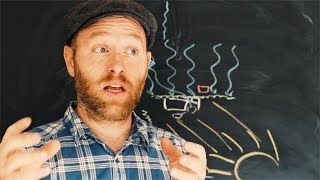
In this instructional video, Victor Justin Rhodes (Speaker A) introduces viewers to the foundational steps for creating an optimal homestead using permaculture design principles. He promotes a free three‑part mini‑series (with a fourth paid DIY Abundance membership option) and walks through three essential design techniques: (1) zone planning to determine where every element belongs relative to the house; (2) a visitation‑frequency calculation that quantifies how often a homesteader interacts with an element (e.g., chickens vs. an oak tree) to decide placement; and (3) leveraging natural energies such as wind, rain, and slope to enhance efficiency. Using a concrete example, he shows that chickens are visited over 700 times a year while an oak tree is visited only a couple of times, illustrating why high‑visit elements should be positioned close to the home. The video concludes with a call‑to‑action directing viewers to the full series and the optional DIY Abundance member area.
Chapters
Guys, your best homestead ever has to start with a plan. I'm going to teach you how to do that with permaculture design. As you may know, I've released an entire series, a 3-part series. Today is the 3rd video, so they're all out and you can access them all from the same link down in the description. It's totally free. Check it out. There's no obligation. Now this is 3 of eventually 12 videos that I'm leaking out into my Do-It-Yourself Abundance member area. You'll have opportunity to be a part of that if interested. There's no obligation, but if you're interested, and you'll get more info for that after you've signed up, you've consumed the free content, then we'll send you out more info if you want more. In today's video, I talked about 3 must-have design techniques to maximize your homestead. I talked about how to lay out your homestead for maximum efficiency. I teach you zone planning so that you can know exactly where anything, everything should go on your homestead. I end the confusion, the mass confusion of where do I start my homestead. Start right outside your door. Start with a kitchen garden, then expand to chickens, And then, well, in my case, I'd get chickens to prepare the garden. So start with gardens and chickens, and then, then you begin to expand into livestock and bees and unpruned orchards and things like that. You'll walk away with a no-guess formula of how to actually sit down and calculate something so that you know where each thing should go, at least where it should go on your homestead in relation to your house. To calculate where an element is Let's take chickens for example.
How often do we visit chickens? Chores.
How often do we visit chickens a year?
Chores. Twice a day, 730 visits. Weekly project, 52 visits.
Harvest, twice. How many is that?
782 visits. In comparison to an oak tree, how many visits does that get?
Harvest.
Maybe you harvest the nuts, acorns.
1.
Maybe you harvest the leaves for your gardens, your bedding. 1. 2 visits.
Which are you going to place closer to your house? You visit the chickens over 700 times, and you visit the oak tree twice. So which does it make sense to be closer to your house? Ah! You're getting it. So the point is, don't plant the oak tree in your front yard. And put the chickens as close to your front yard, as close to your front door, as is socially acceptable. If you can rig up a chicken pen that's right outside your kitchen window, you throw scraps out, and your chickens can be out there, go for it. If it's socially acceptable for you. And lastly, I'm going to talk to you about how to use wild energies like wind, rain, things like that, to your advantage. And also slope— how to use the hills for your advantage and not disadvantage. You can get that full video and the other two in this little micro series on your best homestead ever down in the description. Got the link for you.