Your Burning Questions Answered ;)
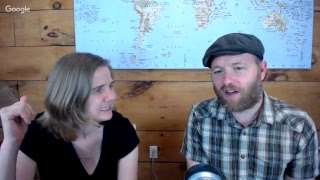
In this live‑stream replay, Justin Rhodes (host) and Rebecca Rhodes (co‑host) field over 100 audience questions about their homestead, covering a wide range of permaculture and small‑farm topics. They discuss practical chicken management (space requirements, breed choices, roosters, feeding, butchering, coop design, and snake‑proofing), composting methods (including worm bins, temperature control, and a deep‑bedding compost corner where chickens can process garden waste), odor control by adding carbon sources such as wood chips, leaves, and straw, garden planning (tree guilds, cover crops, mulch, soil amendment, and seasonal planting), aquaponics ideas, pest and health control (ticks, bugs, snake barriers), and broader farm entrepreneurship (online member area, premium webinars, merchandise plans, upcoming livestock additions like guineas and bees, and resources for making a homestead financially viable). The session also addresses a rare issue of beak‑less chicks, offering a cautious, nature‑letting‑run perspective. Throughout the session they promote their "Permaculture Chickens" ebook, the Do‑It‑Yourself Abundance membership, and various recommended products and books. The tone is conversational, enthusiastic, and supportive, with occasional technical troubleshooting. The content reveals the Rhodes’ hands‑on experience, their emphasis on community interaction, and their business model for sharing knowledge.
Chapters
Good evening, everyone. If you're seeing this part, you're probably tuning this— you're tuning into this as a replay. Uh, you want to give us— you might want to fast forward 3-5 minutes. We're going to work out the technical difficulties. You might want to fast forward 3. Okay, sorry about that. The other computer was on. We're just going to work out some tech glitches here. Okay, good. Almost 400 people on here already. You guys let me know if you can hear me in the chat. We're going to have a good show. It's going to be a fun evening. Let me pull it up over here. Here, Rebecca, I turned that computer down there so that it was creating echo. Turn my volume down. I need to see somebody say— okay, good. Hayden says you can Let me hear some more. A lot of people on here, a lot of people excited about this. We got a lot of questions. Oh my gosh, they're pouring in. Looks like you lost me on the screen though. Hey, uh— Rose, thanks for coming. Everybody, I do— it does look like you lost me, but looks like I came back, so just hang in there. Boy, the comments are flying in like crazy. Oh no, lost me again. Let me see if I can slow down some things on my— I wonder if you guys can still hear me during that. Okay, Cindy, I will add you as a moderator. Goodness, keep saying something in there, Cindy. I missed you. You just flew by in the chat. Try to make you a moderator there. I think you probably said something. Just bear with me, guys. Few technical difficulties to work through. Then we're going to get this show on the road. There you go. All right, Part Time Permi, Cindy, I just added you as a moderator. Thank you so much for doing that. Okay, we're gonna just go with this. We got a big show tonight, gotta get going. There's like over 100 questions that you guys submitted. So first thing we're gonna do is, uh, live, live question and answer. We're gonna look at your questions that you guys are chatting in on the— over there on the chat. Hi, Texas Back— Texas Boys, glad you're here. I got your question. And, um, we submitted a form for everybody to ask some questions. Got your question. We're going to answer that. It was a great question. So we'll do some live interaction answering questions, but we also got a bunch of questions. Like, what are some questions? You have long or short-term plans for your property? Um, one of my ducks is sitting on chicken eggs and it's a mix. I think there's a duck in there, chicken. Is that okay? These types of questions. How do you size your chicken tractor or meat shaw or chicken coop? Like how much space do chickens need? These are great questions and there's many more just like it. We're gonna get to those. Then we'll take a break. And I said that I would give you guys Permaculture Chickens, the ebook, just for attending. I'm still gonna do that. I'll let you know about that about the halfway mark. So you don't even have to wait till the end to get that. But hang in there to the halfway mark. Then we're going to go into more live question and answer, answering questions that are submitted in the form. And then I want you to hang in there all the way to the end because we got something really exciting at the end. Just wait for it. And then I'll give you some info on how I can help you. You want to grow more of your own food. You lack some knowledge. You know stuff. But you can always learn more, and you lack time and money. That's the story across the board, and I think I can help you with that. So hang on, I'm going to tell you how I can help you with that, and then we're going to go and do something I've never done before. I'm going to pick up the cordless phone, and I'm actually going to call some of you guys. Uh, what I want you to do is I'm going to call premium Do It Yourself Abundant members who text me. My premium members have text access to me, and if they text me during the show. I think I've already gotten one. Somebody's telling me the sound's good, so thank you. So they, my premium members, can text me. They can ask me quick questions. They can just say hello, whatever. I'm their uncle, okay? If you guys want to be a part of that, I've got a link in the description where you can become a Do-It-Yourself Abundance member area. Videos, private Facebook group, access to me via text, and 2 webinars a month. You can get in on that now. Text me a question. I'll answer it by the end. We'll answer 2 or 3 questions at the end. So hang on for that. Even for the people who, who aren't calling, I think it'll be fun. It'll be a live interaction. I don't even know how that's gonna go, so we'll just see. So let's jump right into the content, shall we? Let me check and make sure everybody's still with us. 700 folks on here. 700 folks in this living room. Isn't this exciting? Like A lot of people are watching prime time right now. And one of the great appeals about YouTube, what I like so much about YouTube, is you can actually interact with your entertainment or education, right? This is a community. This is a real thing. You guys are real people. And we're here. You're interacting with the guy you watch, the woman you watch on the blog. You're going to interact with us tonight. So thank you for spending time with us. You guys ready? Do I need to treat and amend my alkaline soil before laying wood chips? Yes, that's exact— oh wow, Lee Bent, you contributed $5. Thank you for that. Um, do I need to contribute, uh, amend my soil with alkaline? Do I need to amend my alkaline soil before laying chips? Yes, that's exactly what you need to do. That's a good point. You know, I run the chickens, the chickens are done, I move them out. That's the time to spread the amendments. That's the time to broadfork. And then you put down the wood chips. It's much easier to put it down first than the wood chips. Okay, we're getting some questions into the chat. Some people are going to be getting some phone— or we're getting some questions on via text. Some people are going to get some phone calls later. I'm going to do these like Rapid fire, okay? What are your best tips for someone starting out like you guys? Cheers, really love the show, keep it up. For starting out, if you're talking about growing, get a terracotta 6-inch pot, get some potting soil, plant some basil seeds in it, put it in your windowsill. I live in Ohio and my city chickens aren't allowed unless you have 2 or more acres of land. "I have 1 acre. Do you have any tips for me?" Yes, it's called— Rebecca, do you remember Pat's website? Chickens and You. I think it's chickensandyou.com. Hey, Cindy, would you put that in there? Would you? I hope people will. The chats are going by so fast. Somebody put chickensandyou.com. I believe it's chickensandyou.com. Pat Foreman is a wealth of resources, especially with legalizing chickens, getting chicks and chickens in your neighborhood. She has all kinds of different strategies. Check that out. Composting is supposed to be easy, but I'm failing 2 years in a row. How long for it to break down and a good temp for it to break? How long to bake? Composting, I don't know, that's probably a myth. It's not easy unless you're patient. I mean, anything will compost over a given amount of time, but if you want compost— thank you, Cindy, I see your link to Chickens and You. If you want compost fast in Wow, people are contributing with this Super Chat. I appreciate that, Jennifer. Thank you. So I will move the cute pigs at least once a week. Composting— OK, so it's not easy. You have to get it real hot. You have to get it up to 130 degrees. And then you have to let it be that way for 2 or 3 days. And then if you want it fast, you have to turn it every so several days, and even then it doesn't always work out right. Composting can be very tough. If you're having a hard time getting it to break down, you need to add more nitrogen, which is like blood or manure, and water. If it's, if it's getting too hot, you need to add more carbon and turn it, like move the pile from one area to the other. That turns it. You guys have a long and short-term plans for your property? Absolutely. In the short term, we've got guineas coming, cats coming, dogs coming, two more pigs coming. That's our short term. Lauren, thank you very much. And long term— oh, Beauty wrangling the kids. Kit Chappell in the house. Hey, hey, Ken. Beauty's joining us. If somebody does that, Rebecca, let me know and we'll answer that question. Okay. So, and you kind of— I'll be answering these questions if you kind of help with the moderate comments and kind of note if you want to answer any, some of those. I'm just going to do these rapid fire. So long-term plans, swells, ponds, food forests. Bees, goats, clearing goats. What else for long-term plans? Ashley, can you tell what she said?
She just said thank you.
I think you are welcome, Ashley. See what The Raven 59 said. Yes, you just— congratulations on your 6-acre farm. I hope you go far with that. And do we ever plan on getting silkies? You know, maybe, because silkies are great broody hens. Although we got a couple broody hens right now, we just need some roosters to be fertilizing some eggs because we need to extend this line on our farm. They're doing great. Like, those chickens out there, Rebecca, in our front yard are only eating scraps and they're producing just as much as the chickens that are eating grain. Yeah, we need that bloodline to stay here, right?
Yeah.
Okay, do you plan on getting dogs or horses? We're getting dogs next week. Horses, no. Closest thing we're gonna get to a horse is a donkey. To guard the sheep, and they're a lot safer for the boys. What do you say regarding Jonah coming up with this great idea for your homestead and taking on responsibility? Jonah, over the last few days, is already becoming the boss, and I'm more than happy to do that. I didn't think it would happen at my age, at 40. I thought it might be maybe 50, but that's cool. The sooner he takes over and becomes the boss And he's implementing it, right? Yeah. I want me a Daniel Salatin. Joel Salatin's got him a Daniel. And so far right now, it's Jonah.
Yeah.
We had so fun tonight moving the sheep. We had to move them through a fence. So we had to make a Brazilian gate. We held it up with like a broad fork. The fence—
that's pretty jerry.
Like a Brazilian gate is holding up, lifting up the electric fence with an item. And the animal can then go through it without a gate. And he and I did it, man. I've planted my first 3 fruit trees. I'm in a subdivision. What can I plant in companion with 2 apple and cherry tree? This is a good question. Don't just plant an apple tree. You know what's good to plant around an apple tree? It's what you call a tree guild, is autumn olives, which is like a berry. So you have your Why can't I— canopy layer, which is the apple, and then you have the sub-canopy. Make note of that question. And then, then you have underneath the sub— so sub-canopy would be autumn olives or berries, any kind of berry. And then the shrub, um, the herbaceous level would be comfrey, rhubarb, artichokes, And then the ground level would be strawberries and onions. You could plant all that around your apple tree. Isn't that amazing? You have this apple tree, but look what Paul Gautschi did on the Great American Farm Tour apple tree. He spread his apple trees a little bit further apart and planted his crop garden stuff in there, stuff you plant and don't come back to for a long time, like pumpkins or potatoes. He planted potatoes right under, underneath apple trees, zucchinis. Just try stuff. Yeah. What do you do to keep going when you get bad results from your effort and you feel like giving up? So do you think we're getting great results from your tomatoes in the kitchen garden? It's not the greatest results. So how do you go about not giving up? Like, why don't you just throw in the towel on those?
Because we will— we'll get something out of them.
Hey, Ashley, and anybody who's super chatting, we're going to jot down your questions and we'll give you priority there. And how do you size your chicken tractor meat shaw if the chickens are being moved every day and they don't get to free range outside of it, meaning the square footage per bird? Jill Salatin puts 75 chickens in 10 by 12 pasture poultry pen. Thank you, Wade. Was that his name, Wade?
Thank you, Brian.
Thank you, Brian. Sorry.
I'm sorry, y'all. It's his last name.
We're trying to keep up with all these chats.
It's going so fast. I'm like, I had to get a piece of paper.
So Joe Salatin does 75 chickens in 10 by 12. That comes out to, I think, about a foot and a half for meat chickens. Now, if you're talking about layer chickens, they're a lot more aggressive with scratching. Thanks, Ron Boots Farm. They're a lot more aggressive with scratching. So I would recommend at least 3 square foot a day for a day. For my meat show out there, they probably have less than 1 square foot underneath that shade. But underneath the meat shaw, but they're free to roam outside in the netting. So they have actually plenty of square feet. And then that gets moved. Even if you think Joel Salatin's too tight, like a foot and a half per square foot per bird, think about it though. He moves them every day. So over their lifetime, they're getting like hundreds or thousands of square feet over their lifetime versus the conventional model where they get the exact same square foot the entire 8 weeks. So I think we're energized to keep going when we have a failure because we got diversity. We plant so much more. The sheep are doing good. The chickens are doing good. The geese are doing good. The potatoes are doing good. There's a few things doing bad and we don't even have time to worry about it too much.
Honestly, I'm just like, if my tomatoes don't produce, I'm going to go to the farmer's market and I'm going to buy a ton of tomatoes and I'm going to just make tomato products from from them. So that's my backup plan. That's why I'm not stressed, I guess.
Do you use heirloom seeds to plant? That means seeds that will reproduce themselves. Absolutely. Why? Because it just seems like the absolute right thing to do. We are not saving seeds yet, but we want to one day. But it seems the most pure thing to do is to keep pure seeds. Let's try to get through one more sheet and then we'll take a break. We'll talk— we'll give out permaculture chickens. This is a lot of fun.
So, oh, somebody wants to know about aquaponics. If we're going to do the— this person, the Killian— okay, 2,000-gallon aquaponic system growing tilapia. I would love to see your family grow food through aquaponics.
That would be fun.
Yeah, I think that there's like so much to do. I think that that is like, once we get more established— I mean, we're already talking about winter, like what we're going to do this winter to, to streamline things here to make it so that when we are having a lot of animals on the property, that it's gonna be—
Thanks, Wendy.
Way, it's gonna just help boost production and make it so that it's super smooth to get through. So I feel like we're gonna be building. I mean, we already like hit the ground running so much, but I mean, aquaponics could be something that we do. I don't know if, is aquaponics where you grow it in like a container, or could we do aquaponics in the pond? 'Cause see, we have a pond.
I'm pretty sure it's the container.
It's a container?
So I'm pretty sure that we're gonna wanna utilize our pond. Pond first. Our water features that we already have before we expand into something we don't have. Keep up with what we've already had. Okay, The Learning Homestead. Our sheet mulch garden first year has a bit of grass. Solutions? Absolutely, easy solutions. Weeds, grass coming through your sheet mulch system, more sheet mulch. Grass clump is coming through.
Just do more cardboard.
Put a piece of cardboard on it. Put wood chips over it. You don't have to do a thick layer of it. Some weeds and stuff around it that the chickens didn't get, we put our cardboard around it and then our wood chips.
Yeah.
Okay. Let's get through one more sheet here.
Gosh, there's so many questions.
We love you guys and thank you.
There are so many questions.
There's no way we can answer all these questions, but We're gonna try our best, and we'll hang on. We'll hang on here for a while. If you had room to plant 6 fruit trees or nut trees in zone 6, what would they be? I would plant what you love. Yeah, so I don't—
apples, pears, peaches.
We're in zone 7, so we're in the same zone as you. Best way to convert husband to no-till gardening? Tell your husband, say, hey, can I just do like one little section? Like, even if he'll give you just one square foot, do an experiment. See which one outperforms. He might outperform you and you might change your mind. And he might be, you know, it might go the other way. He might be trying to convince you. Texas Boy says figs. So if you already have a flock of chickens, can you introduce a guard goose or do you need to start them both as hatchlings? That's a tough one, and I'm not sure I know the answer on that. It's best to get them together as chicks. You know who might know that is Part-Time Permis. Can you, can you introduce a goose to grown chickens? I'm gonna say that you probably can. I'm gonna say it might be worth a try. I couldn't see what would be the absolute worst thing that would happen. I really want to raise my own meat. I've got the land. I know I'd be good in raising the animals, but I know I wouldn't be able to kill. Looking at bear already makes me sad. I know it's hypocritical of me because I still eat meat. Any thoughts on how to get the right mindset on butchering? This is a healthy fear. Rebecca, catch their question. This is a healthy fear. It's healthy to be uncomfortable with this. I think as soon as you're not uncomfortable with it, and it becomes this everyday thing, I think that's then when it can become scary. And there's another guy, George. And thank you, George. For me, I insist on doing the killing because I think that if I'm going to raise these meat and an animal is going to take such a sacrifice to energize me, I, I insist on being the one to do it. Or at least supervising and teaching the person that's going to do it. And we're gonna, as hard as it's gonna be, we're gonna, we're gonna have those proper tools and we're gonna have the proper training. We're getting trained by HandHewn Farm for the animals like the sheep, and, and, and then we'll eventually do Stud Muffin and things like that. And you better believe it's going to be me because I feel like I need to take part in that. It's— I feel like it's only fair.
I will say this, like, I don't, I don't, I don't do the killing and I still eat meat. Yeah, I don't feel like it's hypocritical at all. Yeah, I mean, I think that, I think that you can be like Primal Pastures does this. They allow people to come and attend a chicken butchering. So that then puts those people into the mindset of what it is to, you know, take an animal life. They might not necessarily— I don't know, you've been to a butchering at Primal Pastures. Do they— do the people actually kill their chicken, or does somebody kill them and then they just do the gutting?
They let you kill if you want to.
Okay, so I mean, so you don't have to kill, but you can kill, but they let you kind of be— it's— you get more connected with your food. So don't feel like just because you haven't killed your own animals to eat them that you're being hypocritical. I think that it's hard. It's a hard mindset. I mean, we have harvested many a cow, chicken here. The first time we harvested our first cow, it was hard.
You'd never kill— and if someone's alone, you kill them alone.
I don't even go out.
You would hire it out. You would send— you would—
I would be a part of the process, but I wouldn't necessarily do the actual—
you would, you know, people will come and work and help us in the chicken processing and get paid in chickens. Pay them $15 an hour, but pay them in chickens. This is what a chicken's worth. This is how many I'll give you. So don't feel shame if you can't get over it. No, do it. Hire it out.
Don't stop eating meat because that does serve a purpose.
Okay.
Um, hey Ken, do you— he's at work.
Do you think your kids will hold on to the farm or they'll choose the city life? We want to support our children in whatever they do. We do let them know you are always welcome here. You're always welcome and part of the business. Run your own business on this farm, run your own business from home, uh, go off, go to college if that's what you want to do. We're going to support you. And we're gonna go to where you go, and we can't wait to be in that role.
Yeah, I mean, I think one of our kids will stay. I mean, we have a 1 in 4 chance.
I know, I think we got good odds. Uh, if you already have a flock of chickens, can you introduce— oh yes, we are. Okay, I live in a rural setting with, with raccoons, rabbits, deer, and birds of prey. Love your portable electric fences. Question: what portable electric fence do you recommend in the secrets to success setting them up. We like the Premier 1 48-inch tall electric poultry net for the chickens. I wonder if Cindy, if you would link, or Rebecca, you gonna grab that link? Okay, Cindy, grab that link. Go to the Premier 1 electric poultry net for chickens. We like the 48-inch tall one, and I actually like the 164-foot length one. But if a lot of— if some of you have a hard time picking up and moving that electric net because it can get heavy and cumbersome, I would then suggest the 100-foot length. And if you need more length than that, get two. Like, we have our sheep fence and they're the 100-foot length, and it's so easy to move them. How do you afford— a lot of people are asking these types of questions. Run needs constant— really, you need to be an entrepreneur, right? Yeah, you need to create your own business. There are some businesses or things you can do, like in the afternoons you could drive a school bus. Yeah, there's teaching Spanish online early in the morning.
English.
Sorry, teaching English to Spanish folks or Chinese folks, right?
Yes.
Okay.
Yeah.
Hey, I'm just throwing ideas out there for you. Otherwise, you got to be an entrepreneur and you got to come up with a farm business or you got to create content like we do. I would say you could start with— we have some resources on online business at Abundant Permaculture. Listen to this, Rose, and maybe you can post this. Abundantpermaculture.com/sustainable-entrepreneur.com. Did you catch that, Rebecca? Maybe you need to type that one in. And that's some free resources on how we make a living online and afford this homesteading lifestyle. Others, um, Joel Salatin's book You Can Farm. It talks about different cottage industries on farm, like you could have a sawmill. Type in the Sustainable Entrepreneur link. Do you remember it? It's abundantpermaculture.com. Okay, 180 Degrees from Average. Hey guys, what's the best alternative to using wood chips for your garden? I would say cover crop. Absolutely cover crop. And I would actually like in the long run to even switch to cover crop because think about it, it's more sustainable. You could grow cover crops Save your own seed or something like that. Get that land prep using chickens or something. You grow your cover crop up and then you bring an animal in there, chickens or pigs, or you go in there with a scythe and you cut it down yourself and you plant in that. You can do mulch bombs. You can— you would have grown starts for yourself in a greenhouse. You would have grown plant starts. When they get to be about 4 weeks old, they're about 4 or 5 inches. You need me to pause? I don't know. Yeah, I'm just going to keep going through. I don't know what's going on. Maybe it's because there's so many people on here. I don't know. I'm just going to keep pushing through. Sorry for the technical difficulties. So then you transplant your starts into the mowed-down cover crop, do a mulch, which could just be cut grass. You could scythe-cut grass like Jim did up in Maine. You can see that on our Great American Farm Tour playlist. You can search my YouTube channel for— is there something wrong?
No, some of them know if you use grass clippings.
Yes, you can absolutely use grass clipping. That type of stuff is sustainable. Okay, part-time permies, you got it.
Okay, no, okay, so it's abundantpermaculture.com/sustainable-entrepreneur.com.
so Jim would go out and like right now we've got this really tall grass. If I had a scythe, I would go out there and mow it in a row, grab that grass and use that as my mulch, my little mulch bombs around these newly transplanted plants. So I am excited about that, working on that going into the future. So stay tuned to our channel, stay tuned to our member area. Okay, we're going to take a quick break here. I'm about to give you Permaculture Chickens, my ebook, 300-page ebook. Real quick though, while we got folks' attention, I want to tell you— why are you laughing?
I'm so bad at this.
You're looking something up. Oh, is that not it? Oh, you don't do a.com at the end. You already did.com right here.
Oh, okay. I know. I thought that was—
Okay, so my Do It Yourself Abundance member area, we've got, I've got some good things to tell you about it. We're doing a spring enrollment right now. It's an area, if you haven't heard about it before, where it's private, it's off of YouTube. The entertaining vlogs, educate, you know, I call them edutainment vlogs, are good and fun, but if you're a person who wants to get down and dirty and really wants to implement some of these stuff you you see me doing on my blog, you're going to want a how-to type of area. And we did that with our Abundant Permaculture members group. And that's been going strong for a year. And folks, we've got over 100 videos in there. How-to, quick wins. Get in there, learn something quick. We've got long wins in there, too. We've got a 12-part intro to permaculture series in there, folks. You can— on top of that, we have a private Facebook group that everybody can be a part of. People are getting so much value from that. I've had folks tell me the member group is worth it just for that. People getting in there and brainstorming, people getting in there showing off, people getting their answers fast. And then now, for the first time, I'm adding a premium members where you can come in and twice a month we do a webinar just like this, but it's going to be much more intimate, like only letting 200 people in this membership area. So there'll probably only be 25 or so at a time on one of these webinars, answering everybody's questions. The chat is going much slower. We can really give everybody a lot of attention. I kind of become your uncle. I'm even giving you text access to me. If anybody is on that premium membership, go ahead and text me now. Somebody just texted me. Yes, I got a question, and I'm going to make a phone call, probably 2, maybe 3, at the end of the show. So you guys hang on to that if you want to ask If you want to ask me a question, possibly get a phone call from me, grab the premium membership. The link is down in the description. Speaking of link down in the description, the link for the member area is down in the description. The link for Permaculture Chickens ebook is down in the description. You don't have to give us your email either. You just click on that link. There should be a button there. Cindy, you might want to double-check it while I'm talking, but I've tested it. I believe it's working. You guys can just click on that link and go right to it. It's like a Google Drive and you can download it. Hello from San Diego, a premium member says. So guys, premium members, if you're texting me, make sure you sign your name because I won't necessarily know your name unless you sign it. Basically, for the premium members, I'm becoming like the uncle and I'm limiting that to 200. I feel like it can only have like 200 nieces or nephews. What do you think? I'd be able to handle it. It's almost halfway full and I have no doubt it's going to fill up by Sunday. We close cart on Sunday. No more spring, no more registered registrants after Sunday at 10 PM. So there's permaculture chickens. There's info on my member area. Let's get going.
Ken says my younger uncle.
Yes, Ken, my nephew. Okay. How do you— I did that one. How do you start a compost with worms?
Okay, this is what I did.
You're the worm lady.
He already dug the hole.
Water.
He already dug. We have like a 4x8 pit, if you will, in our basement. In our basement we have dirt floors in the stalls, so Justin just built— dug out this pit. And so in it I just put like some manure, paper plates, like wet paper plates shredded, the compostable egg cartons, um, some sawdust, some food scraps, and I bought 2,000 worms from someplace.
Uncle Jim's.
Uncle Jim's Red Worm Wigglers or whatever they're called. It's a website. I bought 2,000 worms from him, and when they got here, I just put all that into one side, just one little area. I poured some water on it to get it moist. I put the worms in it, and then I covered it up with some wet cardboard. And then we have a 4x8 sheet of plywood that sits on top of it. And the worms, I mean, they're just multiplying. It's crazy. I went down there with, I think, Gideon today, and we were looking at the worms. And I just like to check on them at least once a week. And add water if I need to and stuff like that. And yeah, I mean, it's, it's, it's working. So that—
actually, there's a, there's a member video on that.
Oh, did you do that?
Yes. And so you want to answer the next question? Yeah, I'm gonna show.
We keep a snake around our garden for field mice. We are building a stationary chicken coop next to our garden. What is your favorite type of chicken coop border for snake snakeproofing.
I would say if you have to snakeproof something, you would have to do 1/2-inch wire mesh. I don't think it's going to get through 1/2-inch, but if it gets through 1/2-inch, your chickens are going to eat that snake, not the other way around.
Can it get— well, unless they're small chickens. Well, remember we did— we lost that one chicken because it went down its head but it couldn't—
yeah, yeah, but we didn't have— we didn't have— I'm not saying— I shouldn't have said— what did I say? Half-inch mesh? Yeah. Yeah, but that snake, that snake that big would not have gotten through a half inch.
Can it go underneath if it's like a structure?
You're gonna have to make sure there's nothing more than a half inch opening anywhere to keep the snakes out.
Okay, um, this is—
hey, we got a lot of premium members texting in. I can't wait to give you guys a phone call.
Would you ever be interested in bees and produce honey? Yes, we are very interested in bees. Actually, um, Jim Castro— is it Jim? Bill Castro. Bill Castro from Maryland. The video that we did We visited the bee guy in Baltimore, Maryland. He's an urban beekeeper. He is going to come and set us up when we give him the okay. We have not given him the okay yet because we are not ready for bees yet. But we do want to do bees. We do want to produce honey.
Thank you for that.
How many roosters do you need for hens? One rooster for 10 hens?
One rooster max 15. Can service 15 ladies. If you want to maximize efficiency, 1 rooster for 8 hens.
Okay, magic water recipe is a half a gallon of warm water, a half a cup of honey, 2 tablespoons of apple cider vinegar, and 2 garlic cloves. And I like to press them with a garlic press.
Yes.
And that makes the garlic— it gets a lot of the juice out, and then it makes the garlic real small. So it's great.
There's a video on that in the member area.
Okay, do you have chicken— do you have to give chickens apple cider vinegar? Why do you give it to them? What happens if you don't? You don't have to give it to them. We give it to them just because it helps with health. It helps with like keeping, um, them dewormed. It helps with just ailments. It has a lot of minerals in it. I mean, if they have like any sort of illness, this is going to help them kick it. It's just great. It's an immune booster. It's great. Um, do you keep— do you clip the chicken wings to keep them inside the poultry net? Yes, if it becomes a problem. And it only becomes a problem really if we don't keep the electric net on, or if we keep the, uh, chicken tractor too close to the fence, and then they can hop up on the chicken tractor and then they usually can get out that way. Our country does not allow chickens. Do you have any recommendations for bug control in our garden?
Okay, what we did for bug control is you can set a trap for Japanese beetles. You can physically go out in the morning, morning's the best time. Yeah, the bugs are idle, and physically kill those bugs by splashing them into a bucket of cold water.
That—
Shackley H, uh, spraying Shaklee Basic H. Jennifer, thank you.
We can also—
Jennifer, when you became a premium member, you should have gotten an automatic email with info on how to text.
Okay, someone wants to know where they can buy non-GMO, no-drug Sea Monsters. They live in Columbia, South Carolina. We purchased those They supposedly feed non-GMO food and keep some of their breeding stock out on pasture. Of course, I haven't visited there, so I can't verify all of this, but when I was reading on their website, they just— they, they donate all their roosters and that they can't sell to a local food pantry as meat. I mean, I just got behind their mission. Their chickens are no more expensive.
Rebecca, we froze. They want you to repeat where we got the sea monsters.
Thepoultryhatchery.com is where I got them. The Poultry Hatchery. Did everybody get that?
Why don't we link it? I'll go link it. The Poultry Hatchery?
It's The Poultry Hatchery.
I'll link it, folks.
Okay. Do you have a solution for me?
Excuse me. Island Homesteader in the house.
Hey, buddy.
Thanks for moderating. This is fun. This is fun.
Do you have a solution for me on how to get organized and all the plants I need to plant?
You know, Cindy recommended this at our first— was it at our first webinar.
It was at some webinar with our group.
It was an intimate group. What's the book? I'm gonna go get the book. I'm gonna show it to people.
It's awesome. We have a vegetable— Justin went and bought it. Um, Elliot Coleman has a book, The New Organic Grower, is also a good way to get organized.
We've been going by that, but this book so far is awesome. It's, it's Vegetable Guide week by week. So you, you plug in your fro— your last frost date, and it tells you what you can plant and how every single week. So it takes out all the planning for you. You just have to figure out your last frost date, which is pretty easy. You just ask Mr. Google Maps.
Um, that's awesome. Are you planning to, to add breeding sheep in the future or just feeder lambs? I think we will eventually. Add breeder sheep. If we do, we want them to be, um, like really tame so that we can get close to them. But I think that let's just get through this season with feeder lambs. What's your favorite winter, winter kill cover crop?
Remember, are you gonna get the list? Rye, winter rye, peas, barley, fenugreek, flaxseed, clover. Did you do the— okay. Are there any table scraps you would not feed your chickens? Yes, I would— sheep, pig, geese. Chickens, turkeys, cows, sheep are the easiest. They, they're requiring the least amount of time every day. So I hope you guys can hear me. Well, the questions are flying in. What do you think? What do you think about setting up a fodder sprouting system But I should say this about chickens. People will scare you and say, oh, don't feed them avocado pits, or don't feed them oranges, or don't feed them onions or garlic. That's all— I haven't had any problems with any of those. Oh, if they eat the shell of the avocado pits, it's toxic. Well, they don't eat the shell of it unless that's the only thing you feed them, and then that's a problem. So as long as you give them other choices and you're not forcing them to eat all oranges system for additional feed and nutrients for farm animals? Absolutely love it. Go for it. We don't have time to do everything, and we'll probably do that one day when we can. So, you know, Curtis Stone has an excellent sprouting system that we saw in Canada. We're gonna implement it like crazy. Why not grow microgreens for the chickens? Yeah, it's a winter thing. They've got plenty of greens right now. They get plenty of live food right now. That's totally a winter thing, and we'll be less busy in the winter, and we're going to totally do it. Um, we are interested in soaking our chicken feed to get benefits of that. I was wondering though, can I just Soak regular layer crumble or does it have to be mixed grains? Do you know the answer to that?
So the problem—
A lot of people are asking that.
So we do, we do soak like a commercial feed. It's not a pellet. So it's a little different. But try it, just try it and let us know because we would like to know. We don't feed a pellet, so it's hard. Like, we— I don't want to buy a 50-pound bag of pellets to try this out, but just see what happens. I mean, it gets mushy and weird anyway, so I don't see why it wouldn't work because it's just ground up and then smashed into pellets. Ours is just ground up and then left in a bag. So would it really be anything different? I don't know.
I got a saying. It's okay.
I think it would be fine.
You know, we soak our starter feed in its powder and it's actually better because that powder when it's wet, they can actually absorb it all. They actually catch it all instead of just being powder.
Instead of it blowing away.
Greg, my heart goes out to you. You're trying to convert your farm from a conventional farm to permaculture and not let your family down. You know, relationship is more important. But if you're thinking this is going to be best for the entire family, I encourage you to stick with that and press into it. If I were you, I would study real hard Joe Salatin and Greg Judy and think about and study them from the angle of the profitability because they are making some serious money, more money than you can make in conventional farming doing it this way, selling directly to the consumer, quadrupling your land production.
What is a row farmer? I don't know if I know what that is.
Is that—
I'm assuming that's like corn, peas, big-time grains. And I'm suggesting even considering a switch. When he talks permaculture, I'm thinking, okay, you're willing to diversify, you're willing to think about other things, and then not necessarily just switch to organic grains. I don't think that's what he's asking. I don't think he's asking how to switch to organic grains.
I think that also diversifying in like the market gardener Curtis Stone, Jean-Martin Fortier, he does a large-scale market farm.
Yeah, so if you're wanting to stay in vegetables, well, Jean-Martin Fortier.
Well, but he also, he's on that, the farm that we visit, like a way to do it.
But I'm saying study these guys, learn their numbers, they share their numbers. And maybe you can come up with a plan that proves that you can actually make more money this way. And, and, and to them, it might not matter what you're doing as long as you can prove that it's going to work from that angle, since that's what their chief concern is. Their chief concern is not saving the earth and, uh, uh, doing better by their bodies. Let's just face it. So we have to go at a different angle with them, get them where they're at. It's all about relationship. How much feed poundage does the chicken actually need per day? That's easy. It's kind of counterintuitive. So Make sure you restrict it, and they will eat more. They're like pigs with feathers. They'll eat all, all that you can give them. If you don't believe me, I got a video on YouTube putting that— putting this fat hen out of her misery. That Lily was overfeeding the chickens and they got too fat, and one of them got so sick it even— it died. Did you want to address something?
Um, no.
Okay. We got, uh, how, how can I keep my chickens from pooping on their eggs? Clean out that nesting box. Also, chickens stop laying eggs about 11, 12. If you're around, you can put up a nest blocker so they can't get into the eggs, and that keeps them— and that trains them and keeps them out of the, the nesting area. Some people shut the door to the coop so they can't even get back in there, and you can maybe get away with that for a couple of weeks and you train them. And then you can remove the nest blocker. You can start, you can start leaving their door open all the time. Now, if you shut their door at, say, 11 or 12, you got to go back before it starts getting dark because they're gonna be wanting to get back in there.
Also, I've read that that could also be a sign of worms. So you could use some diatomaceous earth in their feed or use some garlic in their feed or in their water to kind of help deworm them.
What made you decide to become a homesteader? We were on a health journey. We had got convicted about our health. We're starting to eat better, starting to eat organics. It's— and then starting to eat more whole foods, meats, vegetables, stuff like that. If you're doing that organic, you realize that stuff is very expensive. Organics can be 40% more expensive than conventional. And but it's also when you look at it and we had this family property, we're thinking, well, we have this property. These things, these whole foods that we're buying in the store that are so expensive are the very things we can grow at home. And that's where it started. And now, as you—
I'm sorry, a little bit earlier before that. I mean, I think we were like, we, we did a garden one year, we got chickens, you know, like we had 4 chickens, we had a goat that was no good for anything. But I mean, like, I think we just kind of started dabbling in it. And then it just took off. It just, it was, it was, it was family-friendly too, because that was something we wanted. We wanted to do something with our children that we could all do together.
Yes. I'm 14. How would I start slowly homesteading? I would start with container gardens on your porch, in your bedroom window, something like that. By container gardens, I mean get some sort of container, an indoor planting pot. At a garden store and get some potting mix again at a garden store or Lowe's or Home Depot or somewhere like that and plant some of your mom's favorite herbs. Plant some basil for her or something like that because you got to get your mom and dad excited about it. When you had her— look, the premium members are rolling in the questions. I can't wait to call you guys. We're going to call you guys very shortly. Let's answer a few more of those questions.
And, um, did you answer the filter in your milk one?
No. Do you want to show them the stuff?
Or, I mean, how do you filter your milk? What actually have you read on permaculture and farming?
Don't we have a kit on that?
Yeah, we do. So we have a filter.
I'll get you a link to that.
I think it's called Milk Processing Kit on that. And, um, what books? We've read a lot of books on farming. So we've read a lot of Joel Salatin.
We need to make a member video on that, all the books.
I would say there's a lot of people he's read, but I've read like The Family Cow and things And 9th month is when they're like, what, 16 weeks old?
They barely start crowing. When they start—
when you can identify that they're a rooster, it's time for them to leave. Um, what do you think about ticks? Do you spray yourself or the kids? So obviously we just—
a lot of people are asking that.
Um, we use a spray from Montana Pharmacy. It's, um, I'm gonna go— oh, we're frozen.
Give them this link. I'm gonna go check on the kids.
Are we back?
Come here.
All right, we're back. Okay, where did I leave off?
Okay.
Oh, okay, so ticks, we use a spray from Montana Pharmacy. It's by Stephen Buhner. He made up the essential oil mix in it, and Montana Pharmacy is the one that produces it. It's Montana Pharmacy, P-H, no, it's F-A, R-M-A-C-Y, Farmacy. And you just can buy it, I buy it in the 8-ounce bottles. It is expensive, it's like $95 for 8 ounces. And, all right, we still there? Okay, it's $95 for 8 ounces, so it is expensive, but it does go a long ways. Like, I buy a couple 8-ounce bottles at the beginning of the season, And we don't spray ourselves religiously, but we do spray ourselves, and I usually don't use all 16 ounces by the end of the year. So, and it does last a long time. And it really does work. We used it with amazing success on the tour last year in some really tick-infested areas, and we did really good with it.
Um, ah, let's see, let's, uh, take one more. Why don't we take one more of these live questions? I'm going to talk more just real briefly again about the member area just one last time, and then we're going to get on the phone with some of you. So I'm going to give you a heads up, I'm— there's so many of you premium members who have texted in, I'm so happy about it. Thank you. I'm going to answer all your questions Regardless if I call you tonight, I'm gonna call some of you, but I'm gonna at least text you tonight and answer all your questions. Just call me uncle.
Okay, so Violet is doing great. I mean, she's, she's not like, she's not sick. She definitely has some something going on. We obviously haven't got the results back from the vet. I don't know when We will, but when we do, we will definitely share those with you guys and let you know what our plan of action is. Christie is doing great. Um, one thing that we knew about Christie, even when we hired her way back when, um, she didn't want to be a nanny for the rest of her life. So we knew that going in with her and, um, You know, we were just kind of like staying in communication with her about that. And she decided that she wanted to move on and do some other things. And so we fully support her in doing that. And she's doing great. We still keep in touch and talk and, um, hopefully she is going to come out and visit us soon.
Okay. All right. So I'm about to call. I'm, Go ahead. We're not getting—
I don't think we're gonna get turkeys this year. I think we're gonna take a break, um, and, and go from there.
All right, why don't you answer one more? I'm giving the people I'm gonna call a heads up. Okay. Okay.
How do I juggle it all? I don't. Yes, you know, I mean Things don't get done. We don't get it. We don't do everything. We don't, we don't get everything in the ground that we want to get on the ground. We don't get bees. We don't, you know, we don't get school done some days, but it gets done. I mean, we pretty much just do school all year round and then we get in enough days. Yeah.
I would think that we schedule our time. We're guarded by that time. We go to bed at the same time. Same time every night. We get up at the same time every morning. We work on the farm in the morning while it's cool. We come in and get our business work done during the day, our editing done during the day. We eat dinner at the same time. After dinner, when it's cool again, we go out and work some more, and then we put the kids down. We— you and I have some time, and then we go to bed. And if it's in that time or it doesn't, and we learn to prioritize and get the most important work done during that time, what counts the most?
If we didn't respond to an email, please just send it again. Yeah, it just got mixed up in everything. It's— we're not trying to ignore you.
Yeah, it's a little bit like this text. We get so many emails. We have an assistant helping us in the emails. She's been on vacation, so—
well, and I noticed too that there was like a week where I don't think anybody looked at emails, and it could have been in that week, and I haven't had the energy to go back and go through all those. So we really aren't trying to ignore people, we just missed it.
Okay, let me— I'm gonna get on the horn and call some people in just one second. Real quick, I'll make it super fast. My Do It Yourself Abundance membership area spring registration open until Sunday at 10 PM, then it closes. We're keeping it intimate, so there's no more registration. You cannot join until like the fall. And we're gonna have to raise the prices in the fall. I'm so sorry, but there's so much content in there. There's already over 100 videos. We're adding one a week at least. There's the private Facebook community, and then now there's access to me in the premium area with texting. People are texting me left and right right now to get some attention. And then the webinars every other week. So it's amazing. We had a lot of fun on the last webinar. It's really good. Quick way to learn things, save time and money. Yes, link in the description.
Someone wants to know if it's bad to give their chickens feed all the time. It's not, it's just expensive. It's not bad. Okay, they'll just eat a whole bunch.
Wing and Faith Farm, turn, turn your volume down on your computer. I'm about to give you a call.
Do we need to turn down this? No, we don't.
We are on mute.
I'm gonna answer questions.
Oh, please do, but this question is for you, Becky. Oh, oh, okay, this is fun.
Hey, Justin!
Hey, Wing and Faith Farm, how's it going?
It's going good.
Oh, good. I did not catch your name though.
My name is Christina. My husband is Andrew.
Christina, okay, you want to ask us your questions?
I'm nervous.
So we have 8 Golden Comet hens. We believe one of them is laying like double yolked eggs. So we're kind of curious if that's going to be a problem when we breed them next month.
That is a good question. I'm not gonna see that as a problem. Rebecca's gonna do a little— are you researching a little bit?
Mm-mm.
I would think—
What was the question?
Can you have twins?
So, okay, I've researched this before actually. And the thing is, is that it's not gonna work out. There's not enough room in the egg for them both to grow. Like when a woman has, when a human has twins, the babies usually come early and that's okay because we have artificial support. Sometimes for them. With chickens, it doesn't work like that.
Okay.
It could, it could happen, but it's most likely gonna be a no-go for the chickens. They're gonna develop partially, and then there's not gonna be any more room for them to grow. The egg's just not gonna be big enough, the eggshell.
So go for it. She's got a double in there, it won't get, it won't work. It won't hurt anything.
Yes.
Your other question is, she's wondering, Rebecca, I'll just let everybody know. When are you going to start back up your YouTube channel?
I've been thinking about it. And I'm— okay, I was like feeling really good a couple of weeks ago, feeling like so normal. And then I got hit with anxiety again last week. And I've even had another panic attack, which I have not had one in a really long time. So it's kind of been— it's been a blip on my health journey. My health journey. I'm trying to get stabilized back to where during the days I'm fine. Mainly I'm too okay. I do have some anxiety here and there, but at night I'm not sleeping good. I'm having some insomnia. So until I feel like I get a little bit more balanced, I feel like I need to hold off. But I'm trying to really do some good self-care to get me back on track. And I want to talk about this. I want to talk about all this health stuff on my channel. All you talk about, because I've been really, really, really just doing so much research about my health, and I've learned a lot. I have, I have a test out right now to see if I have a certain viral infection, so that I'm going back to the, to my doctor in Asheville in 2 weeks, and then in 4 weeks I see a functional medicine practitioner, and I'm doing a ton of testing with him. I'm doing a poop test, a urine test, a saliva test, and a blood test. So we're gonna have a complete picture, and hopefully I'm gonna get better, and I'm gonna stop talking about my health because that's all I do. I could talk forever.
Oh, you got her started. We're gonna have to do show number 2.
Sorry.
Okay, does that answer your question? Yeah. Okay, good. Thank you. Thank you, Christina.
You too. Thank you, guys.
Okay, bye-bye. Okay, Jenna, get ready. We're gonna give you a call next. It's a goat question. Oh boy, we'll do our best with this goat questions. Jenna, turn down your computer. When we getting our dog? Our dog's coming next week.
No, or maybe the next week.
Hello.
Hey, Jenna.
Hi, how are you?
You're live on the Justin Rhodes channel. I'm doing good. How are you?
Good.
Good. Okay. You want to ask your question for everybody to hear?
Yeah, so I am— so right now all the only animals I have are chickens, and I'm thinking of expanding to goats for milk, cheese, and meat. I don't have enough land to do cows.
Okay.
And I was wondering what you would suggest for a newbie who's never done goats before, some tips.
I'm gonna throw Rose from Wholesome Roots a plug right here, wouldn't you? Go to the Wholesome Roots on YouTube. You got another plug?
Weed 'Em and Reap.
Weed 'Em and Reap.
So one thing that—
these are two YouTube channels, Weed 'Em and Reap and, uh, Wholesome Roots. Now you tell your opinion on goats.
Um, okay, so Weed 'Em and Reap told me this. She said her suggestion is to get a goat with really good bloodlines, one that isn't like just bred with whatever but like has like a good lineage. Um, and it's gonna cost more, but her, her experience has been when she has gotten a good goat from a reputable breeder that she has not had the issues that she had from, say, a goat that she got for really cheap. So as far as like hardiness and like, because that has to do with parasites, I mean, also Art and Bri, I don't know if they would call themselves goat experts, but you can at least watch their experience of what they've gone through. And I mean Bree has really done a lot of research and she talks to Rose and Donnell. So both of those channels have helped her and I think that they could help you too.
Okay, thank you.
All right, thanks, Jenna. You have a good night.
You too.
Okay, bye-bye.
Bye.
Okay, let's take another one in here. Rebecca, you want to answer? Okay.
What?
Excuse me, guys, give me one minute. I don't want to lose the person that I'm trying to look up who I was gonna call.
Okay, someone wanted to know if we consider perimeter fencing to assist with the primary one. Yes, perimeter fencing is just really expensive. We, we'd love to put our animals out in the, in the one field that has the perimeter fencing because it is so good to have that extra barrier. So we are getting kittens tomorrow. I went shopping today. Cindy put the Wholesome Roots Facebook page down in there in the, in the description, so you can check that out.
Somebody texted in and said it's hilarious that my son was taking over the job because his son is now saying that he wants to take over the farm. That's beautiful. So I'm just reading through these texts and gonna call somebody. Here we go. Okay, good. Let's call Elena Clark from California. If you're on the show still, go ahead and put your volume down. Last phone call. And we are going to— Cindy said that we need to repeat the question because they can't quite hear, so maybe I'll just speak the question. Question for him. That's hilarious if they're not gonna answer. The phone's just ringing. Okay, we'll go to the next one.
We bought our sea monster— sea monsters at thepoultryhatchery.com.
Hi, thank you for calling Alina Clark.
If you had a new homestead, what would you look for? I think for us we would look for to make sure that the laws in the state are what we want, that there's clean water, that there's not a lot of like conventional farming going on around, that it has privacy, that there would be enough area for pasture, but then also enough area around the house for gardens and raising, you know, animals. I think that the biggest thing would just be to make sure that, like, for me personally, it would be like the homeschooling laws and Like the zoning, like how, how heavy is the— is the county or the state involved in building things?
So, all right, I got it. I got— we got the next person to call. They said they're standing by for the phone call, so they're, they're gonna answer.
I am having a vitamin D blood test done for all those people saying get that done. He's doing like 15 different tests in the blood test. So, and I am taking adaptogens.
Hey, how's it going? It's the whole family there, huh? Are you saying hi to Becca?
Hello!
Can you hear us? Oh, hi, Uncle Justin! Oh, that's awesome! Hi, my new nieces and nephews.
That's hilarious.
A bunch of nieces.
Yeah, okay, a bunch of nieces. All right, you guys, I'm going to read your question because folks aren't being able to hear through the phone, if that's okay. These folks, Denise Oliver, my new nieces, they have a very small yard and 3 hens. There's no real space for a compost area. Besides, we have a ton of squirrels and raccoons. Would putting a coop bedding directly into our garden beds be too strong and damaging for our veggies? We only have 3 hens. Okay, so the answer to that first question is unfortunately yes. It's unless you just put the chickens in there for like 10 minutes, like seriously, they're dinosaurs. They're gonna rip those veggies to shreds. We usually only put our chickens in with veggies if it's monitored and for a short time if we don't want to get rid of the veggies. So sometimes if you're maybe done with that garden bed, you could put chickens in there. If you have a small area and you can fit like an 8-foot by 40-inch chicken tractor, you could run 3 chickens in that chicken tractor and just keep them in one spot. And then say when you're done with your little veggie area, you could put the chickens over it and let them have at it. And if you're keeping chickens in one spot in a chicken tractor like that, you would just you know, every day, at least once a week, go in and add some, which you call bedding, like some hay or some leaves or something, because they're just gonna manure the place and you need to balance that out.
So, well, what we did over the winter months is we had them in the garden area, and then so they kind of prepared that area over the winter months.
Cool.
And then we put, and then we we moved the chickens out of there and have planted our garden. But now the area, the run that they're in now, is basically the last space we have left in the backyard. And the bedding from the coop, we're not quite sure where to put it when we clean it out, which doesn't need a lot of cleaning. The coop is fairly large for the number of chickens we have, but it is immobile. We can't— we built it like Fort Knox. That thing is so heavy, it won't go anywhere.
Okay.
There's no other room to put it, so.
So your problem is you have bedding in your chicken run and you don't have a place to compost it. You don't have anywhere to put it. And it's time to clean it out because it's built up. Now, okay, so could you— let me ask you, so could you go in? How deep is the bedding?
Oh, it's not deep. I mean, we don't let it go— in the winter we do deep bedding, but right now in the summer we just replace it enough to keep it dry and less smelly.
Okay.
So maybe about an inch. Couple of inches, maybe 3 inches max.
And with the winter bedding, you say you plant into that?
Well, yeah, what we did is we pulled it out in the early spring and spread it out, and since then I just have just been dumping it into the garden part that we haven't planted yet. How long does the chicken need to sit before it's safe to be around our veggies?
Oh, oh, so you've You've left your chicken bedding, it's in a place, and you're wondering how long then is it, how long does it need to sit before you plant vegetables into it?
Right, yeah, because if we can't put the bedding directly into our garden where there are veggies now, we can keep an area for it to let it kind of compost, break down. How long does that take before we can use it?
Um, I mean, some people say 3 months, but yeah, so I'm just trying to think about a solution here.
You were saying like because you're needing it, a metal trash can would allow it to sit and compost.
Well, I wonder if, I wonder if you could continue adding bedding even in the spring or summer in that one spot. And then as it gets too tall, say, I don't know, how tall is too tall? Like, how tall can the deep bedding get before it becomes a problem?
Well, I mean, in the coop, there's plenty of space. We can just let it go. But I also worry about odor. Is there something—
Okay. Okay. This is good. So if you start getting odor in there, ammonia or manure. It just needs to be— you just need to add more bedding. And this is what I'm going to suggest. After, after a time, after you continually add in there, say you get to the 3-month point, and if you can, as you add bedding, put a little moisture on it. If you can get a hose to it and just kind of spray it down, that's going to help break it down a bit. The chickens are going to scratch in there. And then as it's getting too tall, or you get to that 3-month mark, you can always dedicate that one area to deep bedding and chickens. Then instead of harvesting it all, just pulling it all out, you, you rake. Let's say you go in there, you rake half of it, just the top over until you've gone down deep enough to find composted material, because the stuff on the bottom will compost. I imagine if it's in contact with the ground— is it in contact with the ground or is it on concrete or something?
In the coop, no. But now with your advice, what I think I'll do is I'll pull the bedding out and create a spot in their run, like their little fenced-off area.
Yeah.
And I'll just try to create a small area there where I can pile it up high.
Yeah.
Rather than worry about spreading it out.
Ooh, I like this. It's like if you spread it up high, you— like Harvey Ussery teaches in his book Small-Scale Poultry Flock Paul Gautschi does this in Back to Eden. It's like a compost corner. We, we did it for a season. If you have an area that you can dedicate to throw all your garden refuse in there, your kitchen scraps, everything, and the chickens have access to it, it can be a big old pile that the chickens have access to it. They will naturally scratch it, till it, shred it. And what happens is it builds up over time and the layer on the bottom becomes compost, and you just move the stuff off of the top and harvest from the bottom and put it on your garden when it's ready. And you'll know it's ready because it'll be black, it'll be powdery-ish, it'll smell really good, it'll smell like just good soil.
Excellent, thank you so much.
Yes, you're welcome. Is that all?
I think—
is that all, or do you have another question?
Well, I was looking about odor when the chicken run area— Yes. Yard. Okay, after rainfall.
Yep, I would always say if it comes— if you have a smell in an animal area, all you got to do is add more carbon. That's what it's saying. You got to either move the animals, and if you cannot move the animals, it's no problem, just add more carbon. And carbon is leaves, it's wood shavings, it's wood chips, it's straw, hay, dried grass, anything like that.
Beautiful. Okay, we're getting our first load of wood chips.
Okay, you're getting your first load of wood chips. Congratulations.
Thank you. All right, guys, so much for everything.
Okay, take— bye-bye, guys. It was good talking to you.
Thanks for calling.
Welcome to the family. Okay, bye-bye.
Bye-bye.
All right, that was fun. I have so many texts. And this is so fun texting with you guys. It's a great way to reach me. It's much better than email. Because even I was out moving the sheep and I had a moment today. I was waiting on Jonah to go get me something. And a text came in. I answered it. And it was, it was quick. So that was fun. And I'm able— it's so fun to be able to help so many people, isn't it, Rebecca?
Yes.
So do we need to add anything before we close up the show?
No, Anna Banana wants to know if we're gonna sell merchandise, and I don't think we are.
I'm sorry.
It's, um, yeah, it's a labor of love.
Our DVDs are coming in. Yeah, we might— she wants clothes.
I know, we might sell shirts like next year or something when things calm down and we have time to like think about it, and I don't know.
Maybe when the anniversary of the Great American Farm Tour or something. I don't know.
Oh yeah.
Sorry.
Sorry. I just— we can't do everything, unfortunately.
Okay.
We are getting guineas in a couple weeks, so yes.
Bees. Bees, Ken Chappell, we're getting next year. Thank you, Ben Chappell— uh, Ken Chappell for hanging out. Rose, uh, Ken from Island Homestead, thank you. Uh, Cindy, We appreciate you guys very much. If you want more— Farmer Brad, thank you for your testimonial video the other day. Guys, thank you for joining the member video area. It helps us do what we do. We create content for a living that allows us to continue to put up YouTube videos and to keep on creating instructional videos and putting out this content, helping folks just like you grow more of their own food, be together as a family, know where their food's coming from, find freedom and health in that. And so we appreciate you guys very much. Thank you, thank you, thank you for all that.
One more question.
Sure, one more question. We just can't go away.
This guy's chickens were— his chicks were born without beaks.
Oh my.
I know.
I'm terribly sorry.
I know. He said, do you know any— do you have any advice? I mean, honestly, it seems like it might be a birth defect that's incompatible with life. I mean, like, if they don't have a beak, how are they gonna eat? I don't know what that looks like. I don't know.
If it was me, I would just let nature run its course. I certainly wouldn't breed those guys. We wouldn't want that genetic to be passed on. So I'm sorry to hear that. I've never heard of it, but it doesn't surprise me. No.
Thank you, Lee Bent.
Have you guys ever seen the movie The Natural History of a Chicken? Is that the name of the movie? Something like that. It's a PBS movie.
Oh, Part-Time Farming. Cindy says it's too much back breeding.
Oh wow.
That's why they have it. Or someone said there's a mineral deficiency.
Thank you, Cindy. So we have 2 votes there.
All right.
All right. Rebecca, we better get off.
Yes.
For our health and everybody else's. Thanks. This is fun. YouTube is so fun. Doesn't this beat TV any day. Isn't YouTube killing the TV star? Because what you watch every day, you can actually interact with us, we can interact with you. It's so good. So we had so much fun with you guys. I hope to see you guys on the, the other webinars. The next one is coming, it's on the first and third Sunday of the month in the premium membership area. Yeah. So, and we'll do this again with all, with everybody. So our heart goes out to everybody. No matter where you are financially. We're going to continue doing the free vlogs every day. We're having a blast vlogging every day, and we enjoy entertaining and educating you guys. We love you and thank you very much. We hope you have a wonderful good night.
Yes, good night.
More from Justin






If I had to start my Homestead all over again, it could only pick one animal… 




