YouTubers Ask Joel Saltin Anything | Hollars, Sow the Land and Bri
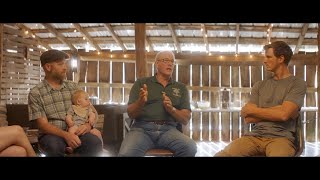
This content was created by Victor Justin Rhodes. This content was uploaded by Victor Justin Rhodes. This is a YouTube Q&A/talk titled "YouTubers Ask Joel Saltin Anything | Hollars, Sow the Land and Bri" (published January 17, 2022). The excerpt records an informal, diarized group interview/AMA featuring Joel Salatin responding to questions from hosts and attendees (labeled SPEAKER A, BRI, SPEAKER D and others) — likely the YouTubers referenced in the title and their community. Topics covered include intergenerational mentoring, lifestyle choices for aspiring farmers/homesteaders, dealing with critics, rest and Sabbath practices, delegation and hiring, building apprenticeships/stewardship programs, family roles (Teresa's household role), and sustaining a farm business. The tone is conversational and community-focused, with practical anecdotes about Polyface Farm, entrepreneurship, and maintaining vision to avoid burnout.
Chapters
This Rooted episode is about the importance of intergenerational relationships, mentor-mentee stuff. And so we're trying to mimic a little bit of what Joel attracts, where if you go to Polyface and you go eat dinner with them, it's— he's surrounded by young people. And that's something I think that is inspiring. And I think tonight what we'll do for the content for Rooted is I I've been asking him questions all day, and we'll ask him more tomorrow. So how about you? I'm gonna put it in front of you guys to ask questions. And I'm thinking more along the lines of lifestyle. I mean, he's been married 40— how many years?
40, almost 41.
He's been married 41 years. He has sons that— which both of his children are involved in the business in some way or the other, you know, has ran business, his own business for decades. Put, puts out content, has lovers, has haters. So let's kind of go there with, with lifestyle type questions. But I'm gonna let you guys have at it. You got 30 minutes with Joel Salatin. Let's do it.
If Teresa were here, she would say that's enough time for about one question.
Yeah. Okay. So, so if y'all don't ask questions, I'm gonna start calling on you. Brianna, I know you, come on. You've got really, you have really good insightful questions.
Yeah, give me a minute.
I already was already questioning him a minute ago.
Alright, Ben. Meg has one.
Oh, here we go.
How do you deal with the haters? How do you deal with the haters? Well, it depends on what they hate you for. I mean, well, no, it's true.
You—
so we have haters who think we're murderers because we slaughter animals. So there's the real militant vegan militant vegan crowd. And we don't argue with them. I mean, that's a spiritual thing and it's an urban disease. It's an urban disease and we just don't fight with it. Yeah, generally, I mean, The quick answer is don't fight back. Just let it be. Because—
What about when someone attacks your character? Yeah. Do you ever feel beaten down?
Well, if— I mean, one of the common ones is, well, you're not really a farmer, you're just a writer, you live off your books. And for somebody like that, I would simply say, well, you know, we were farming for 12 years before we did the first book. And it was farm savings that paid for the printing of the first 2 books. And so, You know, initially the farm subsidized the books, and now the books just give us some nice wiggle room that we've leveraged our experience and storytelling ability on. And it gives a little bit of wiggle room to do some things we wouldn't have done otherwise. But, you know, the farm is still very viable. And of course, that's a big deal for Daniel, our son, who runs day-to-day operations, because he doesn't have books under his belt. So he's, he really feels the whatever the pressure of making sure the farm is still a credible, a credible thing, even with our presence out there. So, you know, you know, pushback comes from different, different directions like that. You know, a lot of it's attitude. You know, somebody is just wanting to tear you down. We just, we just don't respond or don't say anything. There's no point in it. But if somebody asks, you know, in good faith, why can't I get soy-free birds from you? Well, then we love anybody that's a true seeker. We love those and answer them in full. But there's no argument. They're actually seeking. They're not just, you know, bagging you. Generally, the ones that bag you, they just don't get a response. It's not worth it. You can't reason. You can't change their mind. You know, they've read something, seen something, heard something, and they just want to be negative.
Two questions in one.
Okay.
Okay, so I'm seeing that my generation, the younger people— I'm 26— we're tired of congested city life. We want to get out there. I want to have more freedom, more, more real life type stuff, not just packaged everything. We want to have— want to be able to see our food from, you know, seed to harvest type of thing. And there's like this gap there inside. But also I'm seeing that because, because I've kind of experienced that growing up on a farm, I'm seeing that that's not the, that's not the, the, uh, end-all be-all. Like, you can, you can go from city life to having a homestead and everything to do with healthy food and healthy living, but what are the things that you've seen are like more the internal health, like internal fulfilling things that beyond, you know, growing your own food and that kind of stuff. So maybe to narrow that down would be what are the top 2 things that you would recommend people do to be fulfilled before they even have any kind of farm or whatever, but then also the top 2 things to get towards working towards more of a healthy lifestyle, if that makes sense.
That's pretty wide open. I guess the first thing I would say is get rid of your TV. That would be the first thing.
Or phone. Nowadays it's phone.
Phone, whatever, your iPhone. Yeah, unplugged. I mean, the average American male between 25 and 35 spends 20 hours a week playing video games. So I think, I mean, think what you could do for 20 hours a week if all the average male in the US put 20 hours a week in something productive other than video games. We're losing a lot of whatever innovation, labor, ideas. Things in that. So, yeah, get off the electronic highway is certainly would be very, very top on my list. And you're looking at a guy that doesn't even have a smartphone. You know, I've got a flip phone. But, you know, fortunately I have people in the farm business that do have an iPhone. I'm glad somebody does because they're pretty, they're important today. But, you know, it's like I heard a gal say, she says, if you don't have one, you're really missing out. But if you're on it all the time, you're even making a bigger mistake. You're really missing out. Yeah. So I think there's something said for that. And the next thing I would say as far as, so that's one, just the electronic. Highway. And I would say the second thing would be to find and support the alternative tribe. And by that I mean whatever is unorthodox. This is farming, health, education, investment. Whatever it is, that the orthodox position is suspect. And the thing is, the unorthodox position is not going to come knocking on your door. You know, by definition, it's the orthodox that's going to come knocking on your door. That's the one you're going to see, you know, the ads for on YouTube. That's the one you're going to see all this other stuff for. So, You have to invest time and energy in the unorthodox view, whatever that is. And generally, the unorthodox view has more truth to it than the orthodox one. But it's not on the front page of the newspaper. You know, it doesn't get the advertising, it doesn't get the play. And so, you know, the biblical principle of the narrow way and the broad way is very, very real. And you've got to seek the narrow way. It's there, but you have to seek it. We deal with people all the time that want the world to change. I want the world to be changed, but I don't want to make any changes. And, you know, I always tell the, like the the folks, the climate, the rabid climate changers that we're all going to be crispy critters in 50 years, you know, because of climate change, that if that were really true, you wouldn't be driving your kids 3 hours one way, your 5-year-old 3 hours one way to a soccer game. If that were really true, you'd rip up your yard, be planting vegetables in it, having a compost pile, and you do everything possible to not even put garbage on a trash truck. You know what I'm saying? And so, you know, these are— people want a different outcome without changing anything. And people want to know, they want to know the real scoop behind X. Well, you gotta put some time and attention on behind X to find it.
We're used to quick fixes and ramen noodles.
Right, right, right, exactly, exactly. So, you know, convenience is a real problem. And you have to appreciate that truth doesn't come knocking on your door. You have to want to seek truth. Untruth is what comes knocking on your door. That's what comes knocking.
Brenna?
Speaking of unorthodox views, I think an interesting one is rest. I think that's a really unorthodox thing to go after. Because I think, at least in my world, I'm surrounded by people who hustle, which is fine. Especially in the mothering world, it's a big thing right now to have a side hustle. And you see all these women retiring their husbands even. So there's a lot of pressure right now in my generation on women to stay home, homeschool, and have a side hustle. Not only a side hustle, but one that— one that retires their husband. One that makes enough money so that your husband doesn't have to go out and work another job. Yeah, and you see— I see women accomplishing that very, very often. So that's partly where I'm coming from. I'm also surrounded by people who hustle, who work very, very hard. You've obviously worked very, very hard raising a family, starting a farm, basically changing careers early on, right, because you were a reporter, being married for 40-plus years, writing books. You've obviously—
That's a real hustle.
You've really accomplished a lot. Where I think an unorthodox view that isn't really ever brought up is one of rest. And so where does that fit into your life?
Does it?
It's okay if it doesn't. But where does that fit into your life? You could even maybe give examples of specifically, or not. I'm just curious what you think about the idea of rest.
Yeah. I'm a big believer in memory commas of life. And what I mean by that is, again, in our segregated culture, we think that we've got to go away. I mean, even vacation becomes a hustle. We got to go, we got to get plane tickets, we got to you know, go somewhere. And, and I'm suggesting that, that some, some in-home or at-home comma memories, 2 hours at a, at a fire pit, you know, outside. I mean, we— well, I mean, we, we just spent— because we have a big community of 25 of us living on the farm, it's a pretty big deal. So we splurged and spent $1,000 on illegal fireworks. You can't get fireworks in Virginia. We went across the border in Tennessee and got $1,000 worth of fireworks and had a community free party with our staff and extended friends, church stuff, to come out at the farm and have a fireworks display. Well, you know— That's a church friend. Yeah.
Illegal fireworks.
Yeah, illegal fireworks.
Sounds like somebody I know.
Yeah. Yeah, and of course, you know, the kids are running around with sparklers. It was a great time. One guy read the Declaration of Independence all the way through. We sang the national anthem. You know, and then we had these fireworks. And in fact, Daniel was in charge of the fireworks. And so when we sang the national anthem and hit the rockets red glare, he sent off fireworks right on that phrase. It was the coolest thing in the world. It was like the Blue Angels flew over. At a millionth of price.
Yeah, new goal, man, new goal.
Yeah, so all I'm saying is be creative, be creative at creating memorable commas that are cheap and self-created. The kids can do theater, you can cook hot dogs, we call them yardniks, in the yard. You don't have to go anywhere. And when you look back at your life, you know, you look back at your childhood, isn't it those kinds of things you remember? You know, and so, so that's, that's one. For me, two things I'll say. One was Dad always said, he said, you cannot spend more than 4 hours a day doing chores. So chores are things that you have to do every day at the same time because you need time in the day to recharge, whether it's to innovate, construct, think, read, whatever it is. And so that's one reason why dairy farmers are so non-innovative because they spend so much time every day on chores, there's no energy or time left to think, creatively. I think it's one reason why as you go north, more innovative farmers are in the north than in the south, because they don't have a winter. They don't have to stop. So in the south, your season's longer. Goodness, in Louisiana, Alabama, South Georgia, you never have to stop. And so I can tell you, you can look at my speaking tours over the 30 years, And I've probably spoken 5 to 1 north of the Mason-Dixon line rather than south of the Mason-Dixon line. And I think a lot of it is because in the South you have a longer season and so you just don't have to stop. Whereas the North, blizzards and stuff, you know, they drive people in and you have to sit and, I wonder why we're doing this? You have think time. You know, it's an imposed rest. And so, you know, you've got to think about that. Finally, I'll just say for me, I'm pretty direct about taking Sunday off. And so one of the things I've started a couple of years ago was Saturday night I turn off the computer, the laptop, everything, and I don't look at it again until Monday. I mean, I turn it off, off button, off. It rests too. And I have just found that very, very liberating. To take that imposed, you know, no electronic position on Sunday.
I love what you say about the memorable comments. My husband is so good at that. He is so good at that. It's because that's the way he was raised, too. I bet your family was good at that, too. I love that. That's something that I have found I found over the years is very hard for me is to actually enjoy the labor of my hands. Um, especially like the first 4 years on our farm, just going, going, going, going, going. And then sometimes we'd sit down in the evening and look around and be like, this is the most amazing thing in the world. Or people come over. Yeah, this is amazing. And you're like, oh yeah, yeah, it is amazing. But because Arthur, my husband, is often talking about we need to take more time to just enjoy our land and our place. Like I said, he's way better at that. He's way better at stopping and playing with the kids and, you know, making a bonfire for the kids and getting hot dogs and not worrying about their vegetables. I'm always like, what are we gonna eat? It's just hot dogs, you know.
So I love that.
I think memorable commas in And like really, that's something that's been on my heart for a long time is like weaving rest. Because we take a Sabbath. We take Sundays off pretty religiously. Or we take Saturdays if church is going to be next, the next day. But I've always felt like it's not quite enough. It's like when, like the big self-care movement. Not that I think anything's wrong with that, but I'm always like, but when you get back from your massage, it's all still there. So like, for me, I've been on kind of this, this intentional seeking of like how to live in a place of rest. And I love the Memorable Commas. That's cute. That's a cool name for it. I think that's a good way to do it.
Good, good.
We all are entrepreneurs and beginner farmers and homesteaders, and, um, I guess I'm just trying to figure out my role in the helping my husband be an entrepreneur and navigate, um, sowing the land and also turning that into a business. Tell me about your wife Teresa and how she supports you through all these years with like just different ventures that you've taken on.
It's a good question. Great question.
Just something to add to that, that I hope Teddy She worked, didn't she? She was a teacher?
That's my mother.
Oh, okay.
Mm-hmm. Yeah. Teresa taught for one semester after college.
So she was— I'm just curious because I think that context is helpful too. Was she a stay-at-home mom?
Yep. Okay, great. Yep, for the whole time, except before we were married, she taught for one— right out of high school, I mean right out of college, there was a home ec teacher that had to take maternity leave in the high school and they called Teresa. She didn't have a teaching certificate. They said, look, we desperately need somebody. She said, well, I'll do the semester for you. And so she did the semester. And that was a one and done deal. She knew. I'm sure she was a wonderful teacher, but that wasn't her. She didn't like it. She didn't like it. But no, no. So she's so— so we got married. And she still worked a part-time thing down at the local— down at a fabric store that used to be there. Of course, we don't have any fabric stores anymore. And then, you know, as soon as— Daniel was born, and she was at home full-time. And that was, you know, a little less than a year after we were married. So he came early, which we're really thankful for because we're young grandparents. And so, so how she has helped—
who?
No, no, yeah, yeah. No, I knew the question's not— yeah, because she She didn't have the financial, but what she did, she— and does— well, we say, we say I run outside, she runs inside. So the house is her domain. So I don't ever have to worry about being embarrassed about having somebody that's come to see the farm and they trail into the house with me. I never have to worry about being embarrassed about what the house is going to be like or what what they're going to find, or that she can't whip together a meal or a plate of cheese and pickles and some refreshment. You know, she just, she can cook. She now with the stewards and apprentices, you know, she's a top-notch seamstress. So somebody's getting married, she alters the wedding dress. They come to her with sewing projects. I mean, she's the go-to. She's the— I mean, she just runs the house. She just has every— she cans. The young people love to come in and can with her. She cans, I don't know, 800 quarts of stuff a summer. And so she'll have the kitchen full of these young people learning how to can applesauce and crank the food mill. Run the Miyamaya to tease out the grape juice. And I mean, she's just that nest builder. That's a really great thing that I don't— you know, it's the Proverbs woman, you know, where she keeps everything in place, in order, whatever. And I don't have to worry about Do we have food? Do we have clothes? So I never have to worry about any of that. And so that frees me up to use my energy and creativity to be what I'm supposed to be. And so that is— I mean, she's— She's amazing. You know, she's— you know the song, "You are the wind beneath my wings"? That's Teresa. She's the wind beneath my wings. She's not in the limelight, but of course Wendy, who's my personal assistant, she says, "Joel might be the head, but Teresa's the neck." And she turns his head everywhere she wants to turn it.
We're all thankful for Teresa.
Yeah, yeah.
I do have a question to kind of add to it. So you're the creative, you've got all this creativity obviously, and entrepreneurial ambition and energy. Have you always managed that yourself, or have you needed people to help keep you directed before you go on to other projects, before you have to more ideas? Is Teresa a part of that, or have y'all always kind of kept these more distinct roles?
Yeah, we've kept some pretty distinct roles. And fortunately, she just, you know, she gives me so much freedom to just go and do and be, and I don't have to worry about— I don't know what. She just takes care of me. That's all I can say, you know. And so, and so I don't have to worry about any of that stuff. So as far as creativity and projects and things like that, I have always said I'm not that smart. I just have to figure out who to hook my, who to hook my wagon to. And, and so I'm constantly looking for collaborators, relationships that can, that can push me beyond what I would do otherwise. So for example, you know, we had a guy, a customer who pushed us to start selling to restaurants. I wouldn't have done that probably on my own, not necessarily. Thing yet, you know, a lot of people think entrepreneurs are just— they just like to jump off a cliff. I like to jump off a cliff. If I'm gonna jump off a cliff, I don't know there's a parachute. Okay, so, so, so I'm not— I'm entrepreneurial, but I'm not necessarily foolishly intrepid or foolhardy. And there's a, there's a fine line between courage and foolhardiness. And so, for example, another— our first apprentice, Ty, a guy came to me and he wanted me to lease his farm. And I said no, we'd never done it. And he came to me and he said, if you'll do it, I'll run it and we can split the profits. And I said, okay, if you want to be in charge of it, that's fine. And so we did it. And now, you know, we lease, I don't know, 12, 13, 14 properties in the area. And it's a, you know, it's huge. And they have become the germination tray for these young people that come through our program. And, you know, Jimmy, you go run this one, and Amy, you go run that one. And, you know, and so they're these these germination trays for young people to be able to go from zero to full-time farming with no debt in a day. That's kind of cool. So, so there again, that was a case of where I said no, but somebody else said to, you know, to do it. So I, you know, even though I'm very creative, I think I, A, have a, have a whatever, a gift for finding and nurturing collaborators who are strong where I'm weak. And that's a really good partnership. And by the same token, I'm strong where they're weak. So it's a dual thing. And the second thing is I love delegating. I love delegating. I love seeing somebody step up, take over something, and I can just step away and go do something else and they can continue to do it. And so I have no desire— I'll say this too, I have no desire to be rich. Or to amass a fortune. I'd like to go to the grave as a pauper with a loyal team than go rich with a team that thinks I'm a miser or selfish. And so we have chief lieutenants that make more than we do. That's fine. We have the joy of ownership. And that makes sure that we've got this tremendous team around us. So I run ideas by them. I trust them a lot. And I mean, I enjoy listening to counsel of others before I make a decision. Now there are some things that I just know are right, but anybody that's spent any time at Polyface knows it's no dictatorship. I'm very much a team player, and I just want to keep pushing those chicks out of the nest, you know, pushing those team players into places where they can excel. And do well.
Was there a certain point when you were, I guess, I don't know, first starting farming or your business that you said, okay, I need help or I need to start hiring somebody?
You know, what was that point?
I guess like what made you say like, okay, let's make that leap and like, I can't do it all.
Yeah. Yeah. So, so Let me say this right off the top. I've never been alone. I had a very interesting car ride with one of our former apprentices. He was trying to launch and do his own thing. And he wasn't married yet. And he was frustrated/depressed that he said, you know, I just— I'm by myself. I can't do this. And in the ensuing discussion, it dawned on me for the first time because he, you know, broached the topic and brought it up, I realized I'd never been alone. You know, I grew up there. And then when we— when I got back from college, then, you know, we stayed there. Teresa and I got married. We made an apartment in the attic and lived very, very frugally. We had an apartment in the attic. And so, I transitioned directly from, you know, mom and dad and then Theresa and then Daniel came along and then dad passed away. But at that time Daniel was 6. And the point is, and Theresa was my tractor driver and we had a good neighbor and we traded work together. He worked in a factory. And so, since I was on the farm all the time, I could go and, for example, rake hay so that when he got home from work, then, you know, we could bale it. And then he helped us unload hay early in the morning before he'd go to work. And Teresa unloaded her share of it too. But, you know, so my first answer is, I've never been alone, and I'm a big believer, I'm a big believer in partnerships. Marriage is the basic one, and then you have others beyond that. But as far as when did we, when did we as a family, or when as a family business, when did we branch out and hire somebody beyond the family? All right, so that was about I don't know, 20 years ago, 20, not 10, maybe 15 years ago. I can't remember when Wendy, Wendy was our first one. And what happened there was Daniel and I both realized we were starting to be reluctant to go in our houses like we're out working, and we started not wanting to go to the house because we knew we'd have so many phone messages. By the time we got here, we were done with phone messages and You know, I'd go in, every time I walked in the house I had like 6 or 7 phone messages. By the time I dealt with all those, I'd have 2 more on the phone that tried to call me while I was dealing with the 6 or 7, you know. And so we decided to audit that and take a day and tick down how many phone calls we got in a day. And at our house we got 50 and Daniel and Sherri got 50. And we looked at each other and said, Yeah, said we got to do something about this. We can't have this. And so we actually put an ad out for somebody to answer the phone. And we interviewed a couple people and we hired Wendy on salary. She was a young single mom. And she could do this from her home. She didn't have to come out to the farm to do it. She just, you know, punched a button and routed the phone that phone number to her phone, and she was living in Richmond at the time. And so that was our first one, and then since then it's just been one after another after another, you know, as we see the need and kind of get pushed into it.
That was when you were 49? So you'd already been working for a very, very long time.
Oh yeah. Oh yeah. But we'd already had, I mean, Daniel and Sherry were married. Well, that added a lot of hand, I mean, Sherry and Daniel and then Rachel was a big help, especially butchering chickens. And Mom worked with us, not the heavy work, but some. Dad had died in '88. But, you know, we started, we started the apprenticeship program 25 years ago. And so we had, we had apprentices, a couple of them. And that started— we had turned them down, turned them down, turned— we had people wanting to come and apprentice for a long time and we turned them down because we thought we didn't have enough work for them. And so this, this fellow I mentioned, this customer that got us into restaurants, He was a quintessential entrepreneur. He like started and sold 6 businesses in his lifetime, was independently wealthy. And we backed into that. What happened was we had a lady ask us to raise her some pullets. And so she didn't feel comfortable raising the chicks. So sure, we'll raise them. When you come and get them, we'll, you know, when they start to lay, we'll call you and you come and get them. So, I don't know, it was 200 or 300. And so we did, and they got ready to lay, and we said, okay, come get your pullets, your birds. And she said, oh, I changed my mind, I don't want them. Well, you don't tell women to cork it, you know. I mean, they're going to start laying eggs. I mean, that's just the way it is, right? And so they just started laying eggs, and what are we going to do? So we started running, you know, buy 10, get 1 dozen free, you know, all this stuff. Well, this guy came in while we were doing that. He says, this is immoral. You've got the best eggs in the world and you're, you know, it's like giving away gold, whatever. So he bought 30 dozen on the spot. And 2 days later he came and said, can I have another, can I have 60 dozen? And we said, well, sure. And 2 days later he came and said, can I have 90 dozen? Well, we knew he wasn't eating all these. You know, we said, what in the world are you doing with all these eggs? And he was taking them to restaurants up into DC, taking them back to the chef. Now this guy was the quintessential entrepreneur. He could sell a hat rack to a moose. And he was going back in the kitchen with these eggs, showing it to these chefs. The chefs are going, where did you get these eggs? I got to have these eggs. So he came to us and said, how soon can I get 600 dozen eggs a week from you? Well, we're going to go into business together. Dozen. That is a lot of eggs. Yeah, it's almost 100 dozen a day.
Well, which is 1,200 eggs.
600, that's 7,200. It's 600 dozen times 100 dozen is 1,200 eggs. Yeah, per day. That's right. That's a lot of eggs. Per day. Okay. But my light bulb went off and said, ah, okay, there's a huge expansion enterprise. And we've got all these young people wanting to be apprentices that we've turned down. But we don't have lodging for them. And so, that was, you know, a business never goes in a nice straight line. It's all, you know, it's steps like this. We call that a step year. So, that year we put in the apprentice housing for 2. And we started enough pullets to expand our layers, 100 dozen a day, and start the apprenticeship program. All in the same year. Now we got enough work. Now we have another enterprise that can support it. You know, blah, blah, blah, blah, blah. And so, so that's what we did. And so that's when we started. That's when we started the apprenticeship program. And then 10 years later, we started the stewardship program. And so now we have stewards and apprentices. Apprentices are— stewards can become apprentices, so the apprentices come out of the stewardship. But it's a formal program.
And you had a question, and that would be it.
I think you already kind of answered this in a roundabout way. How do you deal with burnout working in the farm environment?
Burnout working in the farm environment? Oh my, no. Goodness, no. Burnout, I mean, there are times when you're frustrated. You know, you're scheduled to go to a— it always happens on Sunday afternoon, you're supposed to go to a potluck dinner at church. And the cows are out. That's frustrating, but that's real different than burnout. No, I've never—
How have you prevented your burnout? How have you prevented not being burned out?
I think how you prevent burnout is to have a vision big enough. The problem is most people don't have a big enough vision. And, you know, and so our mission statement is to develop economically, ecologically, and emotionally enhancing agricultural prototypes and facilitate their duplication throughout the world. So that's our mission statement. That's a, that's a, that's a big vision. That's a big mission. All right. And so I think if you're if your vision is precise, measurable, and doable— of course there are people who say if your vision can be done in your lifetime it's not big enough— but the point is that if it's noble and sacred and righteous enough, it will propel you forward. To accomplish that vision, that mission. Most people, let me just say this, most people are too afraid to create a mission statement because they're too afraid they'll fail. And we, we, let me say something really specific here, we grow up pleasing people. We want to please our parents, we want to please the teacher, we want to please the Sunday school teacher, we want to please the preacher, we want to please the college professor. We want to please the employer, right? We grow up wanting to please everyone, and too often we've never stopped long enough. Maybe this is a bit of rest, okay? But stop long enough to say, who am I? What would please me? We don't allow ourselves the freedom to dream because we've never given ourselves permission to dream for me. We've been, we've been a part of somebody else's dream. And I believe this is one of the single biggest hurdles as we come to adulthood, because children, they live in this world of fantasy. They can build castles and marry knights in shining armor. And right, they can do. They can do anything. They dream. Adults, we don't give ourselves permission to dream because by this time we're concerned about what other people think. We're concerned about what other people will say. What's culturally normative? What's accepted behavior? I mean, you know, name your— so we got all this. It's like we're in a corral, right? We're in a spiritual, emotional, mental corral, physical even. Oh, you're dyslexic, or you don't speak in front of people very well, right? We got all these corral— I could never speak in front of people because, you know, they told me I don't speak very well, right? And so we have all these— I mean, I'm almost tearing up here, but this is the guts of life, right? This is real. And so what happens is we come into adulthood stricken corralled, bounded by all these things out here. And we've never looked in the mirror and said, "I love you just the way you are. You're good enough. And what would you like to do with your life if money or time were not an issue and nobody cared at all? What would you do?" And we've never given ourselves— when I left the newspaper and came back to the farm full-time, there was not a single person in my life, including my in-laws, including people at work, including friends from college, including relatives, friends, except Mom and Dad, and I think mainly Dad, but who, who thought it was a wise decision. Every single person thought it was the stupidest decision in the world. Leave that paycheck? Leave that nice paycheck, you know, and jump off a cliff? But I was a dreamer and I had a big vision and I had a supportive wife who was okay to go along. And who was, who had enough faith in my ability to make sure that she didn't lose her nest if push came. We had plan B, plan C. All right? I mean, you know, I had a bit of rappelling rope in my pocket and a little parachute. But we had some plan B, C. I mean— That's valuable, though. Well, it's absolutely valuable because women are— I'm going to be very sexist here— women are nest builders. They don't want their nest all torn up.
Be as sexist as you want because I think that the fact that you recognize that's valuable to your wife and therefore gives her the ability to support you is wisdom. And it actually makes me almost cry because I think it shows how much you love her.
Yeah, that's right. That's right. That's right. And respected. Respected her need, her need to know that I wasn't going to tear up her nest on a crazy idea or whim or whatever. And so, yeah, so that was a big deal. But anyway, I'll stop there. But listen, I think the dreams, giving yourself freedom to dream big and nobly and sacred sacredly, is that a word, sacredly? If it's not, you know what I'm saying, is a profound thing. And that's why I tell people, don't come to this because it's cool. Don't come to it because you read a cool book. Come to it because it's down in here and it's noble and sacred to do. And that will take you past the cows that broke out at 4, and you're late to the potluck, and you know, blah, blah, blah, blah, blah. Yeah, you have to have something, not money, but something in your heart that moves you past the daily frustrations to where you can look out there and see a goal, see a dream, something that's big enough for a legacy for your kids and your tombstone. That's where you need to head.
What's your tombstone going to read?
I would like to think that it would say, "He healed things." Relationships, the land, community, dreams.
Yeah.
More from Justin






If I had to start my Homestead all over again, it could only pick one animal… 




