Building the Future of Digital Asset Management for the Unexpected, with Maika Isogawa of Webacy
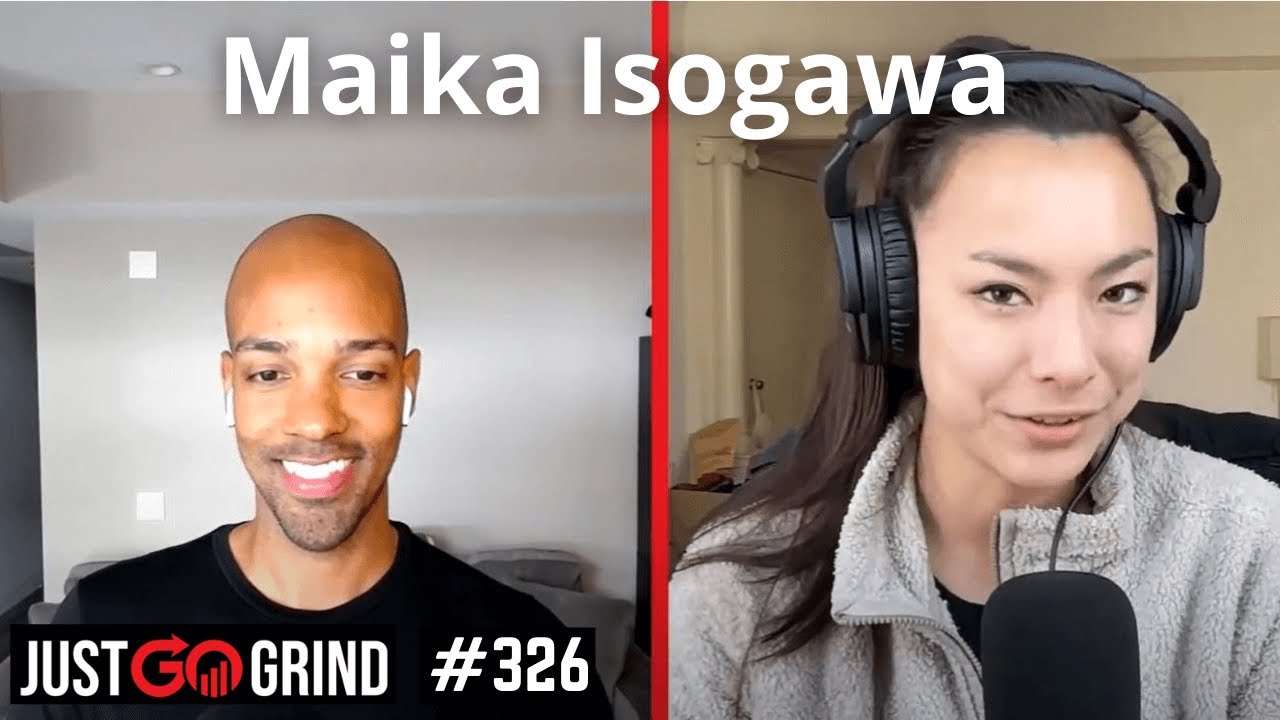
Maika Isogawa, founder of Webacy, built a digital asset management platform after a family loss showed her the gap in crypto estate planning. The company uses smart contracts to let you set up backup wallets and designate beneficiaries for your digital assets without exposing seed phrases, launching the backup wallet next month.
Chapters
Micah, welcome to the show.
Thank you. It's good to be here.
I appreciate you taking the time. And for people who don't know, Webassy, what are you doing with this company? What does it do?
We do digital asset management for the unexpected. So this could be loss of access to your crypto wallet. This could be what you want to do with your social media after you pass away, all kinds of stuff.
Why this company for you? Why start this? Why start this company? I'm always curious why entrepreneurs decide on this particular thing when they could do anything in the world. Why this?
Yeah, I think I've always been the entrepreneur type, but nothing had really stuck in my mind to the point where I thought I could work on it every single day and believe in it until the end of time, until this idea. But it comes from not like a super exciting or happy story, but my cousin had unfortunately passed away quite young during COVID not due to COVID, but other things. And I had a firsthand look of what happens to you when you pass away, all of the assets, all of the management that goes on, both traditionally And in this whole digital asset world that we now live in, and our digital estates are becoming more and more big over time, it's just going to continue to grow. So I knew that there had to be like a tech-enabled solution to deal with it.
For you, had you started other companies, other tech companies before? Tell me more about that.
Yeah, I've interned at different startups before, kind of one in the cybersecurity space, one in the fintech space, one in like traditional research, kind of heavy research area. But actually, most of my professional experience comes from Microsoft. So I was a cybersecurity engineer, worked at big corporate for a while, but this is my first real full-time venture on my own.
How has this been so far? Just with— I just talked to an hour ago, actually, a first-time founder, first-time tech founder, and he's just like shakes his head the first time I bring it up around how challenging it is and everything. For you, what's the experience so far been like? I'm just curious.
I've never had more fun doing something before, which is odd because the actual thesis behind the product is kind of like it's a mortal concept, right? But we're doing a lot more than that. But it's just every day I learn so much and I love learning. I feel like I'm one of those lifelong learners as everyone likes to be. So yeah, just every day something new, something challenging. I'm learning a lot.
With that too, so tell me about your co-founder and finding them and deciding to work together on this problem and then actually building out the product itself. Take me through that as well.
Yeah, I think people say that the co-founder relationship or the founders-team relationship is one of the most important things you can find for the relationship and future of your company. And I feel like that is true. totally true. So lucky enough, I've been friends with my co-founder for years. We met in Japan, actually, completely non-work circumstances, and just stayed friends over time. But the team that we've built around us has been one of the most exceptional parts of the journey, right? And we're still very early. The team's very small. It's 5 of us right now, but it's only going to continue to grow. And it just comes from the core skill set and amazing people that we've Take me through that conversation though with your co-founder deciding to launch a company.
You already had known them before. You'd known them previously for years and years, but deciding to actually pull the trigger on this company.
Yeah, I think it was something like, my co-founder, we've been friends for a while and he's a previous founder and so on. So he's always been telling me, what are you doing? Because I came from a different background. I wasn't an entrepreneur before, but even during school, I took some time off to be a performer. I did something very exciting, then went back to school, and then I would join Microsoft. So he thought it was odd that I was just doing something so regular and so normal. He's like, you got to do something else. And I just pushed it off year after year until this. But it's been an incredible journey so far. And you got to have the right people with you if you're going to take on something like this.
And with building that team of 5 as well, how did you end up convincing them or getting them on board? Because that's early on, especially hiring is throughout the whole lifecycle is challenging. It's difficult. But those first few people, what got them on board?
Yeah, recruiting and hiring is one of the toughest things I think I've ever done before, and well, it will continue to be a struggle, as everyone knows. So the people we have on our team are mostly all just friends or previous people that we've worked with. And you have to find, especially in this space, you have to find people who believe in the mission, because especially in like crypto, Web3, there's so much money being blown around that like you have to find someone who actually cares about what they're building, or else they're just gonna hop ship to the next place.
We're going to definitely get into that in a second, but for people who don't have the context, I have to bring this up. So former professional acrobat leading to then you being a startup founder. Tell me that experience, how that was. Yeah. I looked at a lot of research. You have done a lot of different things, a lot of different interests, but let's start with that, with the professional acrobat. How was that experience? How did that lead to today?
Yeah, it's a little bit of an odd path. So I was a Cirque du Soleil performer for a show called Totem for about 2 years. I also performed for Spiegelworld's Absinthe. So, if you've ever been to Las Vegas, they have a green tent in front of Caesars Palace. It's that show, but I did that in Australia. So, a couple different circus shows, a long enough circus career for someone my age. But, I like to laugh and joke that the skills are very transferable to what I'm doing today and people laugh along, but it's actually quite true. You learn a lot as a professional athlete. There's plenty of examples of professional athletes turned business people or great employees or builders as well. So, it's discipline. It's things like— Being able to act under pressure, all these different things. But I did Cirque for a while, decided to go back to school. Stanford has a really great 2-year leave of absence program, and I hit that 2-year mark. That's when I went back to school. And then that's, you know, then Microsoft and then Webassy now.
Yeah, I've interviewed a number of people who are former athletes in some capacity. And again, the person I just interviewed was a professional, like trying to be a professional soccer player, but that level of soccer player, and you can just see the drive and determination and like, It's just much easier to navigate the day. Or you've gone through that type of training and that kind of discipline, you know, day after day after day. And I played college football, so I have that same kind of context where like, this is not the same as those workouts and 2-a-days and all of that. Like, that was harder. For you now with this Web3 space, with, as you mentioned, it's kind of crazy. How have you navigated it, learned and grown in the space? Because there's so much to kind of take in and like the angle you want to approach it with. Like, Just take me through how you've gone through that process so far.
Yeah, this space is wild. For anyone who is like, I think there's a lot of people who are tiptoeing around the edges of it, kind of unsure, kind of questioning it. But if you decide to take the dive in, it's so much and it's so deep. It's like a giant new universe to enter. And there's a lot of information out there. It can become very overwhelming very quickly. So like my first couple weeks, even getting into the space, I was kind of taken aback. Like, this is an entire new Like, it's not even tech anymore. This is beyond that. So I think it's more of a step-by-step thing. And the thing about this space is that it changes so rapidly every single day that one day in Web3 is like a week or a month in the real world. It just changes like this, and the information overload is ridiculous. So it's important not to get overwhelmed by that kind of thing and just kind of learn what you can, pick a topic, dive in, find what interests you.
With that then, and starting on WebaSeed then, how do you look at it in terms of the customers you're going to go after, making this a viable business? business model, like that side of things as well, because there are so many ways you could go about it and approach it. And everyone's trying to, you know, enable some type of blockchain or something related to Web3 within their product, even people who are not typically going to— their business model not even aligned with that necessarily, they're trying to weave it in some capacity, maybe because investors are kind of clamoring for whatever. But for you, how have you gone about at least on the customer side of it, and then also kind of the business model behind it as well?
Yeah, I mean, customer size from the very get-go, it's going to be pretty like obviously people who have assets in the crypto space. They're our initial target, but we see a way bigger vision for Web3. So we know crypto's still early. What is it, like 1% of the world has crypto or whatever that number might be right now? But, uh, we're seeing more of a shift of more and more industries starting to leverage blockchain technology or see where blockchain could possibly go. So places like real estate, the music industry, they're all starting to shift towards that because it just makes sense the way the tech works. There's a history, there's validation, there's like transparency, all these things that make it so appealing to all— it's like so many different kinds of people. So we're making this bet that a lot of our digital or our real life estate, things like your house, your life contracts, your marriage certificate, anything that are big agreements in the life that you have could be represented on blockchain. And so Web3 thinks that, like, assuming that that pans out, That we want to be the tech that handles all of like life's heaviest things for you, right? And so we're starting with beneficiaries, we're starting with backup wallets, all kinds of things that are currently applicable to the blockchain. And we're going to move on and grow as more people onboard to blockchain.
With that too, then what has been kind of the go-to-market strategy with that in terms of approaching customers? Obviously, you mentioned a few different things there with the verticals potentially, but like, going to market with this problem. It's funny, because I actually mentioned I had someone in like business school mentioned a very similar like product. And this is a couple years back now, but like around saving your assets or saving your profiles, more specific profiles, and like Facebook, Instagram, whatever, uh, when you, when you die. But like, this is coming back again for you then. What has that looked like in terms of like actually acquiring customers, going after them that way? I'd love to hear more.
Yeah, we kind of have a hybrid platform going on because it, it's reflective of our lives. We are living in a very hybrid world, as we all know, because of COVID We've kind of been pushed into there. But even with Web3 now, that's also like a third dimension that we have to, uh, integrate into our lives as we— if you're someone who's in that space. So our hybrid platform still deals with social media because all of our lives are currently on social media if you have those accounts and you choose to do that, as well as the people who are starting to have assets in the crypto space, right? So we have the social media side that handles all of that, just your directives there, and the crypto side. So we have a little bit of a split go-to-market strategy. So social media is up and running. We're doing the traditional Instagram, Twitter, all the, all the good things.
Yeah.
Crypto side, we're definitely taking a Web3 approach. So we're actually doing an NFT collection as access tokens. So we don't want to do a boring NFT collection that just looks like something and doesn't actually do anything. This has real utility. So you have our NFT access token, you get access to the product. And actually, only the people who have the access token get to access the Web3 crypto product from the beginning. So that's going to be great. You also get a waived subscription fee, all these features that come with it. We know that crypto taxes and estate planning in the crypto space is very sought after. So we do have lawyers that are going to be on our Discord channel for holders especially. But we're starting with that Web3 marketing to a Web3 product.
I love it. With that too, so with anything obviously Web3 looking at safety concerns or privacy, anything around that, for you on that side of things, looking at that, how we approach that, because there's just been so much BS out there in terms of Web3 space. So I'm just curious on how you look at protection and everything where people are hesitant to get into any company because they're like, well, I don't really know where's the trust there, all of that. How do you think about that with Web3?
Yeah, totally. I mean, safety is one of the biggest questions in crypto, right? So it's kind of funny how, like, transparency and history and validation is all part of the blockchain, like, system, and yet we have to deal with these giant security flaws because the tech is so new and there's not validation behind it, right? So, um, it's the biggest question in crypto, and it's also the thing that's least handled. And so Web3's approach is strictly, like, from— all we want to promote is crypto security, and we want to inform people about what you should be doing, the basics of it, from, from ground zero, because people aren't taught that coming in. They just come They just come in excited about the space. They have some FOMO, whatever reason they came into the space, right? So we're starting with that. We're doing Twitter Spaces, we're doing Discord channels, like holding Discord channels of educating things about this. But it's a group community effort. You need to inform each other. You need to make sure that if you're in Discord channels, that you're telling people about hacks that are coming up. And we see a new hack every single day, right? So this is really unfortunate, but it's also one of the things that we're trying to solve at Web3Sea. So our very first product is a backup wallet. It allows you to help back up your, uh, your NFTs or whatever's in your wallet. So in case of an emergency, or in case you sign something that you thought like was a little bit malicious, you have an option there if you're using Web3. So there's all kinds of things you can do. One last thing I'll just pop in there is I think that projects that where the, the founders dox themselves, like you're putting your life, you're putting your entire reputation on the line, right? Because there's so many projects where people are just hiding behind a picture. You don't know who it is. You can't trust that.
Yeah.
And our team is completely doxxed. So it's, there's a, there's a level of trust there too.
Yeah. The trust part of it is huge within this. And then just being in this space a little bit and starting, I'm also like kind of peering on the edges. I feel like one of those people as well, but as an investor as well, we kind of have to be looking at it. You can't not, because we invest in future of work at Vitalyze. And so we're always looking at, you know, what are the applications going to be? When we look at things like the creator economy and what's supporting that platform, supporting that. You can't ignore Web3 either, obviously for those reasons as well. So it's an interesting space to be a part of and see what people are building within that. And even more recently, I went to Launch House and people are building some interesting applications off of that, off of Web3. And like, I find it fascinating within it as well. You mentioned the Discord. Tell me more about the community side of it, how you're building that, growing that along the way. I would just love to hear your thoughts on it so far with Web3.
Yeah, I mean, community is a really big, um, factor of draw when it comes to Web3 because I think there's a, there's a whole thesis about, you know, community-owned projects, like having the community vote on things. And the, some of the DAOs that have come up, there's obviously hundreds of DAOs now that exist, but some of them, like, quote, they say that they're like a democracy where people have voting, but then you actually look at the token split and it's actually, it's just not like that. It just appears to be. And you don't really know, like, hey, what am I voting on? You're voting for things that don't actually matter to the actual cause of the DAO. So like, one thing about that is you need to make sure that you're structuring your community correctly. And right now at Web3Sea, like, to be upfront, we're not focusing on building the community right now. We're focusing on building the services that are useful for people, right? The community might come just naturally if people believe in the product and they enjoy what we're building. But 100%, we're heads down building actual services that individuals can use to feel better and safer about their digital assets.
With that too, just take us through more of the experience. Uh, someone just getting started with Web3Sea, what's it look like from the beginning to then as ongoing? They're just Take me through all of that. I would love to hear.
Yeah. So I was at Microsoft when this idea kind of came up and we started moonlighting it. I started working on it at night and on the weekends and started drawing my attention. And it came to this point where I knew that I woke up every day more excited to work on Web3 than actually whatever work I was doing at Microsoft. So I knew that I wasn't doing Microsoft justice and I just needed to pursue what I was intellectually curious about and intellectually committed to. So I ended up leaving in October, did this full time. Everything from like creating the paperwork to actually make a corporation, to putting the teams together, to, you know, contracts, all of that was new to me. So, as a first-time founder, I learned a ton there. Had a lot of good help, had a lot of good legal help as well. We have a great legal team.
Important.
Super important. Like, you can't let these little things fall through the cracks in the beginning because it's like you just want to set yourself up for success down the line. Had our first fundraising. So, we raised a pre-seed last year, which went really well. Have some amazing angel investors and some funds. Yeah, it's just every day from product to team management to culture building during the pandemic when everyone's remote, it's all stuff that you're just figuring out along the way. No one's really an expert in this. And especially with all the new changes, you just have to take it step by step.
How was that pre-seed? I'm curious what the pre-seed raise was. One, angels you were targeting specifically, take me through that because there's a lot of founders I talk to who are at the earliest of stages. Looking for feedback and any experience that people have around this with you raising a pre-seed so recently. How was that experience? And also in this Web3 space raising, what was the feedback you were getting? I'd love to hear more about that.
Yeah, we actually weren't going to raise. So I'm a technical founder. I did CS at Stanford. We were just going to kind of build it on our own. And I built the first product and we started iterating on it and started adding people to the team because we were bootstrapping it at that point. But the more people we talked to, People started to want to give us money because they could see the potential and they wanted the product. So like, we have some whales that have angel investors in the product. They're like, I need something like this. Like, I need a backup wallet. I need to figure out how to give this to my kids someday. And so we— I don't want to say it like this, but we kind of accidentally raised our pre-seed and it came together really well. But like, this space is very expensive, so I'm glad we raised. SaaS quickly becomes expensive when you start paying for volume and paying for servers and stuff. So I think we got really lucky that the idea hits home with a lot of people. But in any case, raising is hard. And that's part of the startup process if you choose to go that route.
Diving a little bit deeper on that, with the angels you got and everything as well, what did you want from those investors just in terms of people you wanted to work with? Because even it is very difficult, obviously, yes, to raise funding. And a lot of times that you do have an option, obviously, you're choosing between multiple ones potentially. What did you want from your investors? I'm curious.
Yeah, I mean, some investors, we don't really— like, some investors don't check in with us very often, but some of them are very helpful, right? So it's not like we were looking for people who are exclusively— we're asking them to, you must bring us one lead every month and things like that. We didn't have requirements like that. But the best angels that we've had have been ones that either send us new information, they'll send us articles that they read, they'll give us advice, particularly in the Web3 space. I'm not Web3 native. There's no way because I'm not old enough, for one. But that's just an excuse. No, I'm a traditional software background kind of engineer.
Yeah.
And so I'm new to the Web3 space. So having people who are Web3 native, who have built entire companies, entire giant systems on Web3, be able to give us insight onto what we're building wrong, what we're not looking at from the right perspective, that has been invaluable. Yeah, it's hard to, hard to say what's been like the best thing that we've gotten from our angels. But some of our best angels have been very helpful in providing us with, you know, advice, information, connections, and so on.
Interesting you mentioned that with having the experience of already building things. It seems obviously like such a new space, which it is a new space, but people have been building for years already, already within this in some capacity, depending on where they're at, which is interesting to get those perspectives from them on like what What was working, how they built it, how they went about it, like different issues that come around because of Web3. Like, I'd be curious to hear more now that you have that experience of going through that pre-seed. Obviously, you're building now heads down with that, but I imagine that you're going to need to raise again. So what are you thinking about in terms of getting to that next round of funding?
Yeah, totally. And back to the point about like the age, it's funny enough, I went to this Web3 and women like mixer the other night and like Half of the people were like in their teens. I mean, their late teens. Where are you coming from? You just came out of high school and you're like in Web3, you're like head of X at whatever company, but it's like age is not enough. Age is just a number nowadays.
Yeah, it's crazy.
Yeah, our seed is definitely more strategic, right? And so we're getting to the point where we have product, we're going to market, we're launching very soon. So we're looking, you know, we want to put together a good team of funds that both provide value, but also have good insight and will challenge us and challenge our design decisions moving forward, because we don't want to be in this bubble where everyone's just hyping each other up, because we're not going to see the, the pain points, or we're not going to see other perspectives from people who are more Web2 who are just coming into Web3. So it's good to have a good balance of both. I want to hear someone who agrees with us and someone who doesn't, and I want to hear why. So it's going to just improve the product, improve the company so much.
Yeah, absolutely. And with this too, have you seen competitors doing anything similar to what you are doing, or anything, you know, adjacent to what you're doing in the space as well? Or what have you seen on that side of things?
Yeah, if I didn't see competitors, I'd be worried, but this is a good, important space. Yeah, there's a couple that have come up, and there's either ones more on the traditional will planning side and they haven't really gotten into Web3, and that's great because we're not tackling like traditional assets at all. So that's great that they're fulfilling that need. Um, and then on the Web3 side, there are some competitors that have popped up specifically for like dead man switches or, um, you know, inheritance planning and so on. Which is awesome as well because we get to learn from each other and the space is definitely early right now. But I think with Webasea, we're seeing ourselves as the technology that we're building kind of goes beyond just estate planning. So we're starting there because it makes sense and it's something people don't want to deal with, so tech can do it for them. But there's a lot more to it. And so we're really excited to kind of launch and put ourselves out there.
Wait, I want to hear more about that. Tell me more about the differentiator just in terms of how you look at Webasea being different from Competitors and like standing out in the market?
Yeah, so the way that we've built things, um, when you, when you go to wallet security, there's 2 main like groups of advice. So one, one way to secure your wallet is to write your seed phrase down on a piece of paper, rip it up, and Horcrux model it into the wind and hope that someday like it'll be all, be all okay. Um, that's number one. That's what most people do. Uh, and then another one is to use something like Gnosis Safe. And Gnosis Safe works well, or like something built on top of Gnosis in general. But that works really well. I think it works better for things like DAOs or things like just companies that have multiple people running it because it's more about how do you want to actually approve a transaction, how do you have security over the funds of like a bigger pool, right? And it doesn't work exactly for an individual contributor or an individual wallet per se with someone's things in it because then you have to believe that you're— the second person signing isn't going to lose their access or like isn't going to pass away too. There's all kinds of issues. So the way we've tackled this problem is we're doing a totally no access, no seed phrase, no private key methodology. So we don't take anything, we don't take any access. Another note to the security side is you don't actually ask users to enter any kind of password. And I think that's one big moat that we're creating around us. So we use pre-approval smart contracts. So you go in, you deploy the smart contract based on how you want it, you get to own the smart contract as well. So if you want to go back, And do stuff to it later. You're the owner of your smart contract, you get to do that. Um, so I think there's a couple different notes around it, but the tech is like we're creating a conditional trigger system of smart contracts, and then that can be applied to not only that, but let's say marriage or crypto prenups, crypto trust funds that are tax advantaged that get unlocked when your kids are 21, whatever you want to do, right? So there's a lot you can play around with it, and you can start to see where the vision goes up, and it can be applied to all kinds of life things.
Where'd you have the insight for that, to do it that way? Was that always from the beginning, like, we know we have to do it this way? Or was it something that you're like— I'm just curious on how you came to that.
I wish I had the vision to have this from day one. Like, oh yeah, oh yeah, life— this is gonna do everything for life. No, in the beginning it was just like, what happens to your crypto when you die? That was it. And then we realized technology can do a lot more than that. And so this is where we are now.
Tell me about just— okay, taking a step back from, from this as well. Obviously with running this company, everything you're doing, I saw like on your personal website, all the lists of interests you have. And then like, let's just name a couple here: writer, painter, consultant, musician, designer. And then you just talked to me about like coffee and space travel and poker. Like as a founder, obviously you have your company, which is a massive part of what you're doing. But I always like to tell founders and talk about, yeah, you shouldn't— you should diversify your identity and not just be strictly, you know, given to that one thing. How do you balance other things in life? Not even balance. I wouldn't say balance. How do you incorporate other things in life? As well as being a startup founder?
Yeah, I think having hobbies is really important, right? Because I am someone who could work all day if you don't stop me. And I— but one thing that I'm grateful for is like my need to work out. So that worked well in Cirque, but in Cirque, I wasn't using my brain because I was working out all the time. And so that's when I started getting into AI, and that's when I started getting into coding and math and all kinds of stuff that drew me to my major at Stanford and then into my career and so on, right? And so You never know when these little hobby interests are going to turn into something bigger. And the list on my website, like, I've written a poetry book, I've released a small EP. It's terrible. Don't go find it. Just like all these things that you can do when you have downtime. So for example, like, some of the art projects I've put together, have done, is because I had surgery for my leg, so I couldn't move for like 2 months. So like, I just didn't want to do nothing, right?
Yeah, of course.
So just finding time in these little pockets has been good for me.
With that too, so I— that drive is obviously echoed by a decent number of founders as well. How do you actually rip it— rip yourself away from work? Like, is it just you structure it? Because I'm like, I'm curious because I have the same issue. Do you structure it where you know you have things scheduled that you're like not working? Do you— like, you want to work because you like what you're doing, obviously, which is what everyone has this conundrum for. But for you, how do you manage that?
Yeah, so for me, I do plan my breaks around necessities. So like, one thing for me is like, I have to work out every single single day. So I'll take a break to go rock climbing, to go to the gym, whatever. That's time away. And then I have to eat. And I try not to work when I eat. Sometimes it creeps up. But yeah, I take mealtime seriously. Dinner, I try to eat with other people. Other meals, I try to at least not be on the computer. Sometimes it happens, but you just take what you can get.
Yeah, absolutely. And what's next for Webacy? You mentioned a little bit about the product. What's next? What are you looking for help for in the future? Tell me all the things.
Yeah, Web3, it's good timing actually. So we're launching our Web3 crypto product next month. We're starting off with the backup wallet and the kill switch. So that's very exciting. The Grimmies are coming along with that. So the Grimmies are the NFT access token project that I mentioned. So I think they're like little cartoon Grim Reapers. It's a little morbid, but we wanted to make it fun, lighthearted. They're pretty cute in my opinion. So we're launching that. The beneficiary stuff is going to come probably middle of Q2, end of Q2. And we're just going to keep ramping it up. So expanding the team, releasing more features, building out the product and the tech as we go.
Maika, where's the best place for people to learn more about Webacy and also connect with you if they would like to as well?
You can find Webacy on Twitter and Instagram at @mywebacy, W-E-B-A-C-Y. And then me personally, I'm @maikaisogawa, M-A-I-K-A-I-S-O-G-A-W-A, on basically everything.
Perfect. Thank you so much for the time today. I really appreciate it.
Yeah, thanks so much.










