Creating a New Media Business with Naomi Shah, Founder and CEO at Meet Cute
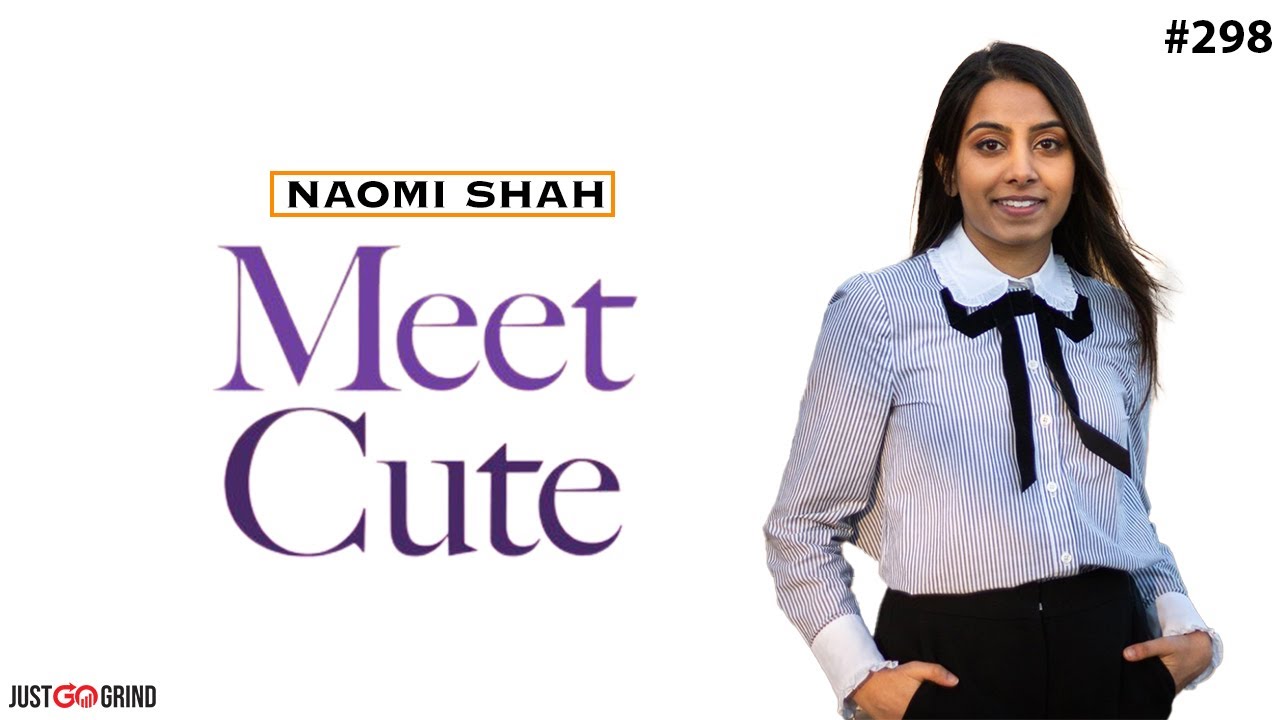
Naomi Shah built Meet Cute, an audio-first company that produces 15-minute scripted rom-coms for podcasts. Her shows hit over 100% completion rates, and she's expanded into video and raised Series A funding during the pandemic by building a remote team of freelance writers, producers, and voice actors.
Chapters
Naomi, welcome to the show.
Thank you. It's so nice to be here.
Yeah, I appreciate you taking the time. And with Meet Cute, so much to go through as we're doing some research and everything. I love content. And so diving into all the details, we'll get there in a second. But for people who don't know, what is Meet Cute?
Yes. So Meet Cute is a new entertainment brand. We've been around for about a year and a half. We make short scripted original romantic comedies. And we do that all in audio. So you can access Meet Cute Stories on any podcast platform. And really what we're trying to do is show that we can create many incredible stories in this specific genre repeatedly so that people have access to these stories every single day if they want to listen to them. And it's like taking the traditional entertainment model, which is normally hit-driven, And converting it into a very consistency-driven model, which we think builds trust with listeners. And so that's what we're proving out by creating hundreds and hundreds of rom-coms that we think will make people's day every single day.
And we'll come back to where you're at now. But in the beginning, I know you were on the investment team at USV and ended up starting this company. How did that go? How did that process of actually deciding to start a venture-backed startup go for you?
Yeah, no, it's a really good question. And when I was younger, I saw both my parents running a company and I always kind of thought like, that'd be a really cool thing to do one day, but I never really visualized myself in an operating role. I had always kind of been more on the finance side. And then I studied engineering in school. So really hadn't put two and two together to say like, I think I could be a founder one day. But at USV, I interacted with so many founders every single day at the earliest stages of their company and was hands-on with them when they were raising money, when they were figuring out a marketing strategy, when they were struggling to organize their finances and figure out how they would budget for the next quarter. I would— I really liked the days where I could roll up my sleeves, sit next to someone at the company, and work through them. Work through that project with them over a day or two. And realizing that that was what I was drawn to when I started looking at the entertainment industry as a potential area to invest in, because we didn't really have that many investments in media and entertainment. It's kind of an underinvested-in category in VC, to be completely honest. I was excited about the idea of finding something super unique. And so I started putting together a business model for when I see this company that makes scripted content in a repeatable way, here's what it looks like, and I'll be able to identify it, and I'm going to go get that deal for Union Square Ventures. And in the process of putting together that deal, I didn't end up seeing that company out there that I thought had a really specific conviction around a genre they were excited about creating in, had a a model to create these stories consistently, wanted to build a brand from the beginning and really like hook a community around the content. So I was looking for a lot of these attributes and eventually started spending so much time on this business plan that a couple of the partners at USV sat me down and were like, it's like you're working 2 jobs right now. You're on the investment team and you're working on building out what what eventually became Meet Cute. Actually, at that time, I was calling it The Rom, like the rom-com. A whole different story. In that process, I was like, wow, I'm doing the work of founding. Like, I'm trying to find experts in the field and learn from them. I'm trying to figure out how much time each of these would take. I was really going through the experimental process of what a founder would do when they start working on an idea. And so once I saw that, the jump to operating became a lot clearer to me, even though I had no idea what I was getting into at the time. I was like, all right, let's do this. So I ended up leaving the investment team in November of 2019 and starting Meet Cute. Okay.
With that beginning story, there's a lot to get into in terms of what the initial kind of product was, what you launched with, the team you launched with. Take me through that, starting with the team. Did you know you were going to have XYZ people join you to start with? Was it going to be you just like in the beginning? I want to hear more about that.
Great question. So I originally, like I said, was on the investment team at USV. The first 2 people that we brought on while I was still on the team at USV is today our head of content, Webb, and our head of development, Rob. And the reason that they were so incredible at the beginning is The 3 of us were like, we have no idea what this company looks like, but we know we want to build something unique that no one has seen before. Let's start with one story. And so we came up with this idea that like 15 minutes was a really great place to start. It was this idea that a romantic comedy could be broken down into 5 unique sections every single time. It's the meet cute, the conflict, the journey, the resolution, and the happily ever after. And so Rob set out to write the first Meet Cute and Webb found the people that we could start working with to produce this Meet Cute. And when we first heard it and we started sharing it with our friends and family, the 3 of us and our investors at Union Square Ventures, we were like, I think this is something really unique. Like no one has seen this before. And the amazing thing is we shared it with people who were like, this will never work. No one can tell a story in this amount of time. You can't develop characters. You can't form an emotional connection with people. And then we'd share it with people who would literally start crying because it was such a moving story. And so we were like, it's almost as if like the traditional industry was saying no to something because it was change. It was new. And we were saying, let's just try it and let's put it out in the world. And I think that like, we had to have a lot of confidence in our team and in our idea to keep making those stories, even though no one has done that before, even though it's something that, like, the industry kind of rejected at first. It was like, no, you have to make a 90-minute film that feels like a hit, or you have to make a 22-minute TV show that feels like a hit. We were saying, let's start with the container, which is this format, which is this time constraint, and let's fill it with really unique, characters and ideas that people haven't seen before. And so with that first story, we kind of started laying the groundwork for, okay, what is— what do the next 10 stories look like? And then Rob started building out a network of writers, all freelance that we work with. Webb started building out a network of producers and sound engineers. We started working with a bunch of voice actors. At that point, we were bringing them into studios in New York. A month later, COVID hit. And so we had to reshuffle our plans. But as we started doing that, we not only saw that we were growing a creative network around Meet Cute, people who wanted to work with us because we were defying norms in the entertainment industry and saying, yeah, break those rules. Like, let's get creative with these stories. But also, we were enabling so much diversity in our stories. So you know, people who normally their voices aren't represented in traditional media, or it's really hard to break into it. We were saying, oh, you have an idea, write a 15-minute rom-com. Let's go get that made. Let's put it out in the world and see how it performs. And we can double down and invest in those characters more if we think that people are engaging with it, people like it. And so we started to see this like network effect form of people wanting to work with Meet Cute, more diversity filling our container, leading to more stories. And then that's when we started like growing our team a little bit around us, bringing on more people full-time to help us with development and production. We just started a few months ago working on our marketing team. So now we are actually working a lot on branding and rebranding Meet Cute to make sure that we're building a long-lasting entertainment brand that people will want to tell their kids about and share with their future generations That doesn't just feel like a blip in time. We really want this to be the next Disney of entertainment.
One thing I want to go back to you mentioned there, which is really interesting with the traction and also the network effects as well, is like, you have more writers, you have more voice actors, they obviously will share it with their friends, their networks, whatever. And then you have this effect, as you mentioned, that you can just grow almost exponentially from there. But what kind of traction were you seeing in those early days that gave you the confidence to keep going with the model? Because I heard about the format and 15 minutes and saw all that. And it It's like you could do 10, you could do 20. If it's not going well enough, do you change it? At what point do you change it? Just how have you thought through that in the early days as what traction you needed to validate almost and then keep going with the same concept?
Yes. So the biggest indicator for us that this format was working and that we did have traction around this new idea was looking at our engagement numbers. So when I say engagement, I mean How long do people listen to each story? And with a lot of audio content, it's really hard because people don't know how long something is going to be. You start listening to The Daily, it could be 45 minutes, it could be an hour. You know, you start listening to an audiobook, it could be 8 hours, it could be 16 hours. And so you do see a lot of drop-off in audio because it's not like the usual 22-minute TV show or 90-minute film or, you know, short YouTube video where you can see the time at the at the bottom and know exactly what you're committing to. So what we were trying to do is flip that and say, every single meet cute, you're only going to listen to it for 15 minutes. And at the end of that 15 minutes, you're going to feel happy or you're going to feel optimistic because that's the point of a rom-com. And what we felt like was happening were that people were listening to the entire story. And then we would go to our Apple Podcasts and Spotify analytics pages and we were like, Why is that number over 100%? Like, there must be a glitch in the system. What was happening is that people were re-listening to parts of the story that they resonated with. So we were actually seeing 103% consumption, 102% consumption. And that was really interesting to us because we really hadn't expected that we would change the listening behavior with scripted content in audio. We just kind of thought, okay, you know, the first few chapters, like the first half of the story will get a lot of listens and people will drop off like they do in a lot of podcasts. And that's okay. We'll just keep making content, keep engaging with people. What we didn't expect is that like the 15-minute format would suck people in so much and give them that emotional, you know, that emotional peak at the happily ever after or at the resolution. Mm-hmm. That they'd want to re-listen to that. So that was really our first indicator that something was working here and that we were engaging audiences more than we even expected we would. As we started putting, putting more and more content out and really being one of the largest distributors of rom-com content on a lot of these platforms, we started getting a lot of promotion and, and kind of coming up to the top of the charts, at the top of the fiction charts a lot. So people were discovering us more. In the early days, discovery was really difficult on these podcast platforms because there's such a long tail of audio content. It's like, yeah, like you ask any podcast person and they're like, discoverability, one of the biggest problems podcasting. And to your point, us working with a network of, of voice actors, talent producers, writers, they were also proud to share their work and so proud to be working with Meet Cute that we found that They loved talking about it. And we wanted to bring those budding artists to the top of the industry as well. So we would talk about them and they would talk about us. And it resulted in this like really symbiotic relationship where at the beginning we didn't actually even need to necessarily work with a ton of celebrity talent because we were just working with so much talent that we saw those network effects in and of themselves. And now we're starting to work on more talent deals. So we just did a story with Julian Huff. We did a story with Daymond John, who was on Shark Tank. We did a story with Lisa Loeb, and we're starting to build that into our library. But by no means was that our business model from day one. That kind of happened organically as we started making more and more stories and building our network and finding these people.
You led me right where I wanted to go, the business model. What is the business model behind this? How does this all work from a business standpoint?
Yeah, great question. So most podcasts monetize through ads, either pre-roll or mid-roll ads. What's a little bit difficult with our content is we really want people to lose themselves in these stories. We want them to be immersed. And so it's really hard to put an advertisement in front of a fictional scripted story. And so what we were thinking about at first is let's just put all of these stories out there. Let's let people engage with it and grow our community. And then start focusing on monetization. What ended up happening is we started growing, scaling, and seeing listeners. And we realized that there were really 2 separate paths for Meet Cute. One is we wanted to be a direct-to-consumer entertainment brand, we wanted to be engaging with our community, creating shoulder content for them, creating events for them, putting out stories that they could engage with us on, All of that user-generated content. And so with that model, as we deepen a relationship with our listeners and our audiences, that leads us to, okay, what exclusive content can we provide our super fans who are so engaged? And then that leads us to subscriptions. So people can opt into subscriptions if they feel like, I need access to that exclusive content. I wanna listen to one rom-com every week.
Yeah.
So we just launched on Apple Podcast subscriptions and put our entire archive, our library of stories behind the subscription while keeping a lot of our premium content in front so that people can find us and engage with us. And we can continue to grow that top of funnel. On the other side, we've started seeing a lot of interest from some brands that want to start working with us on incorporating into feel-good content in a more organic way. And we're starting to see a little bit of interest on the Hollywood side, which is kind of funny because like what we're doing is, you know, goes against the grain in some ways with traditional film or TV or kind of more like what you would think of when you think of like old Hollywood. But a lot of people are interested in doing new things, getting creative, being innovative with their content. And something I've learned is that right now, especially people want more feel-good content. So there's a huge demand for licensing and selling content, especially in this genre, because We just went through a really tough year this last year. Everyone wanted more comedy. Comedy was the largest category of podcasts. I think 43% of podcast listeners listened to comedy podcasts or something that had to do with humor. And we're seeing that people just want like an escape from their day-to-day. Maybe it's not necessarily something that teaches them something. It's not meditation. It's not prescriptive. It's just, I'm making lunch for my kids, or I'm walking to my classes in the morning. What can I do to escape for 15 minutes into a different world? And so if we're that engine of stories that allows people to do that, we can rapidly test stories to say, is this working? Is this not? But then we can also be that constant source of feel-good for people that, you know, are super fans of Meet Cute.
I want to dive deeper into how the sausage is made, per se. I know you have so many different creators and writers, and as well as obviously the talent that you mentioned, and now branching off into celebrities. What is the process for creating a series? I mean, how long does that take from like idea to launching a new series? I'd love to hear more about that. It seems so interesting.
Yeah, definitely. And it's definitely a process that we've, we've worked on over a long period of time. At the beginning, it was It was a lot more drawn out. We didn't have a lot of efficiencies built in.
Yeah.
And over time, and as we scaled up the number of productions we were working on, we actually found a lot of that efficiency. And honestly, even being a remote production company where we're working with a lot of talent in a completely remote way, and that was a whole pivot in March of last year, that enabled a lot of operational efficiency as well and even opened up a lot of creativity 'cause we were able to work with talent that we otherwise wouldn't. But going back to your question about process, so, we accept a lot of pitches from writers that really span the entire gamut of, like, imagination when it comes to rom-coms. We have rom-coms that take place in outer space, rom-coms that take place in the fall of the Roman Empire, rom-coms that take place in a New York prep school, rom-coms that, you know, the main characters are drag queens. We really greenlight things that we haven't seen before in pop culture and media to try and bring that novelty to Meet Cute, that freshness. Once we like a pitch, we'll start working on the script. Our head of development works with a massive network of writers and teaches them our format because we kind of have learned over the last year and a half what works. We know where the cliffhangers work. We know where intros to music work. We know all these nuances that every single story teaches us as we put it out into the And after that process, we start production, starting with pre-production and casting. We spend a lot of time making sure that we really are casting talent that makes sense for the story. So we're not, you know, if we have Asian American characters in the story, we want to cast Asian American actors. If we have drag queens in the story, we try and find authentic drag queen voice actors to take those roles on. And I think— That's not only a company value in that, like, we want to put our money where our mouth is and really work with a lot of diverse talent, but we actually think that makes the stories sound better and more interesting because these people understand the characters, you know, like they understand the trials and tribulations that the characters are going through. And as they're voice acting, it comes out in the acting itself. Then we, then we produce. So we're, we're live with a director or a producer who is coaching the talent, making sure that they are hitting all of their marks when it comes to, you know, you know, we have scripts written out, but obviously things change in the moment, music is added. Then we go into post-production, which is probably the longest part of a remote production because there are so many disparate audio clips and sounds that need to be added in, like things that need to be smoothed over. It's actually incredible to see how many voice actors have created rigs at home. Like I'm using this podcasting mic, but it's not very expensive to get access to a really great rig. And you'll see, we sometimes get selfies from our voice actors from around the world. They'll be in their closet. They'll be like, they'll have like— Clothes around their rig to like keep everything really soundproof. And it's just, it goes to show that like a pandemic can't, can't take away creativity from people. Like people will always be creating in the pandemic. And sometimes those constraints make us even more creative than we were before. And then after post-production, we, we create an editorial calendar. So this is where our marketing team comes in. Our head of marketing, Steph, really focuses on what are the elements of the story that will resonate with certain events in the year. So say for instance, we're doing something around a story around climate change or a story around like a climate change protest. We'll try and launch that story near Earth Day so it like resonates with the largest audience. Or right now for Pride Month, we did a series called In Real Life Meet Cutes, where we actually took real couples, interviewed them, turned their stories into rom-coms, and then released them during Pride Month. And so we really like doing things that kind of fit with the times and feel like Meet Cute is the most modern romantic comedy company out there, rather than one of the traditional ones that just makes the same rom-com over and over again. And that's totally baked into this process that we've created and continue to refine. It's just part of, part of the way that we do business.
Yeah, and it almost seems like a competitive advantage at some point where you just have so much experience on what works and the data behind it as well. And it just lends into what you do and continually getting better again and again. And we had briefly touched on distribution. I'd love to hear more about how you think through distribution. Obviously, discoverability is difficult on podcasting platforms. Typically, you have a very unique business with the rom-com you're focused on and what you do with scripted, scripted content. So how do you think about distribution for the show? And also just looking at like other potential platforms and other formats? I'd love to hear more about that.
Totally. So the way we think about distribution is we want MeetCutes to be as accessible as possible to people. We think that part of our mission statement is to inspire the full spectrum of love. And the way that we do that is by enabling as much of the world to listen to these stories as possible. So We are on every single podcast platform. We have wide distribution there so that no matter where people are in the world, what platforms they use, they should be able to access Meet Cute. And to be completely honest, like, that goes outside of audio as well. So we want people to be following us on social, seeing all of our character profiles and creator profiles that go up there. We want people to be following us on TikTok to see our mini movies that we create there. We want people to come to, you know, Meet Cute events one day when the world opens up and we can do live events. We want to do that. We want people to— one day Meet Cute will be making movies and we'll be in movie theaters. We want everyone to go in droves to watch those movies together. So part of why we distribute on every platform is we think that we don't know where— we don't know exactly where the right platform is to capture the entire realm of people that could be listening to Meet Cutes that could fall in love with these 15-minute rom-coms. Right now, our demographic tends to be Gen Z and millennial, kind of like in that 18 to 34 range. So younger, very digital forward. But we really think that like this, these stories are for everyone. And so because of that, we kind of go wide with distribution. As I mentioned, we did launch our subscription product product. So that allows us to start testing content that can be more exclusive, either shoulder content, it could be additional stories that people haven't heard before outside of the subscription. And I think that that's a really cool test for us to say, how do you take the top of funnel people that just know about MeetCue and listen every now and then, like light listeners, and pull them into being Everyday listeners and super fans, people that want to pay for the subscription. And then with your, with your question about like other platforms, we definitely did think about creating our own app, but that creates a lot of friction where people now have to go to the App Store, download something, remember to click on that app to listen every day, or like get a push notification around it. Yeah. That user experience felt like a lot of friction in this phase of the company where our number one goal is to create brand awareness and just be everywhere. So we ended up pushing that out, you know, maybe one day that'll happen, but right now we'd rather focus on the actual story creation and story production rather than building out a product that, that will take a lot of time and energy to maintain. Our number one goal is to be the storytellers and to be that incubator of stories for the industry as well.
And obviously, you're starting with audio, starting with these podcasts, but that's gonna potentially change. I mean, how are you thinking through that in terms of when that may happen? That you're looking at being either longer form or different formats of the actual content you create because there's a lot of IP that you have that you can distribute or create other formats. How are you thinking through? Like that side of things too.
Yes. Our strategy has already kicked off in video. So we are making something on TikTok and Instagram Reels called Meet Cute Moments, which is our way of testing our IP in a very different format. So Meet Cute Moments are these 30-second mini movies that are meant to elicit the same emotions of listening to the 15-minute story, but in a much tighter constraint of being within 30 seconds. And so we started putting out meet cute moments into the world and seeing people engage with them. That's the precursor to us doing, you know, short-form videos and the precursor to us getting into TV and film. With a lot of that, you know, we just kind of poked our head up from being heads down building an audio to start looking at that. So I think that we're just at the beginning process of seeing, okay, what are other formats and mediums that we can take audio content into. It's really cool right now in the industry, we're seeing that people are taking IP from any format and converting it into any other format. And the people who are really good at that are the ones that are winning. So going from books to audio, from books to movies, from movies to podcasts, we're seeing Netflix, HBO Max, Amazon Prime, take all of their existing IP and video and convert it into podcasts with in-house production companies. So there is so much movement. Every single day when you open one of the trades like Hollywood Reporter, Deadline, Variety, you see a new acquisition in the podcast space or a new company announcing that they've opened a podcast studio. And I think it's because there is a lot of interchangeability happening right now. But people are still figuring it out. It's like super, super early days for How do you adapt from one format to another? And one thing that I feel really lucky about is that Meet Cute started in scripted audio really early compared to a lot of other people in the market. And so we kind of get to say, okay, let's try this, let's experiment with this, because no one has done it before. And that allows us to approach a lot of this with a beginner mindset, rather than approaching it with, okay, that worked, let's just do that again. And so it really feels creative and innovative every day, because We're saying we have no idea what that looks like. How do we take this story and convert it into a 10-minute video or into a 90-minute film? And that's the— those are the conversations that we're having right now. And they're really, really fun.
That's— yeah, so much creativity going into the business and what you could potentially do, which is the joy of obviously starting a company, especially in the media space. And I want to go back to your story though, because in terms of running this company, everything, obviously you have this idea and you've researched it beforehand at USB, but then take me through actually raising funding because it's one thing to be on the investor side of it. And there to be on the founder side of it. How did that go raising funding? Obviously you raised a Series A as well. So like $9.5 million total in total, but like, how did that go for you?
Yeah. So the first fundraise that I did was very unique in that I was sitting across the table from people that I worked with every day, people that I knew. And it was such a funny experience because I walked into that room, which at USV, it's a conference room where I sat on the other side of the table and I ended up being in presentation mode. And I realized exactly, I had so much more empathy for all the founders that walk into that room every day to raise capital because it's even when you know everyone, your job in 60 to 90 minutes is to walk people up the mountain and help them see the vision that you see. And The best part about that meeting was that it—I didn't even get past slide two because we were just engaged in conversation around what this market looked like, how Meet Cute was going to shape that, what the first stories looked like, what our business model looked like, which at that point was nonexistent because we just—we hadn't even made a story yet. We were able to speculate about it, and it was such an incredible conversation. It felt like. We were just having lunch with each other. And like, there were 15 people in that room. And it didn't feel like someone just talking with slides. And I think that that really set the stage for me for what a successful pitch looks like. And I was really seeking that out when I went into fundraising with people I didn't know, where does it feel like a conversation instead of— Just me talking at someone and then being passive. Because the moment I see someone who's passive, not leaning forward, not asking questions, I wonder, what is that person going to be like when we need help? What is that person going to be like when I need introductions to other companies? Are they going to lean back or are they going to lean forward? And that really helped me figure out who I wanted to work with in the next fundraise that I did as well. So that was our, that was our seed round. Series A, I did completely over Zoom in the pandemic. So we started raising last fall. And completely honestly, it was maybe like the hardest professional experience I've ever had. The reason why is that I think so much of early-stage fundraising is about personality. And it's about, are you the right person? And do you have the right team to build this company? And a lot of that comes across in the way that you carry yourself in a room, in the way that you engage with the investors before the meeting and after the meeting, in the way that you sit down and stand up. Like, it's just like these subtle small things that over Zoom are really hard. And instead, what happens over Zoom, unfortunately, is that things come across a lot more transactional. It's like, here's the data, here's how much I want you to invest, will you invest in this company? And that conversation feels like what I watched on Shark Tank growing up, where it's like pitch, ask, yes or no. And that's not really the relationship you want with your investors. You want them to be people who understand you as a person and will ask hard questions and will expect you to stumble and say, I don't know, but I want to go research that and spend the next week researching something. And if they see that in you, they're more likely to invest because they're like, that person's curious and cares about this industry. So, so those few months that I was fundraising over Zoom, I was feeling, wow, I really wish I could just jump on a plane, go meet these people and have them, have them see who I am. What ended up happening is I went through so many different pitches and met so many people that I zeroed in on this group of investors. That really sat at the intersection of technology and media. And when I found these people, these were the people who leaned in even in a Zoom setting and were like, you know, texting me after to say, hey, have you thought about this? Or this thing on your slide made me think about this. I'd love to jump on a call and talk to you. And when I saw those reactions to what I was saying, I was like, wow, I put together like a 10-slide slide deck. And if that made someone think, then imagine, like, as we're building this company, how much they're going to be a part of this journey with us. And that was really important to me. I didn't want investors that were— which is totally fine if some founders do want that, but I didn't want investors that were just purely capital. I wanted them to be hands-on and know what's happening at the company, especially as a solo founder. I think that was really important to me. So that was a little bit about the fundraising journey. It was a hard process, but really a fruitful one. And I think we have a slate of investors around us who care a lot about the company and constantly are emailing me to figure out, you know, let's talk about this. What do you think about subscriptions? How do you think about this? And I think I couldn't have imagined a better outcome from a remote fundraise process.
So yeah. And yeah, from talking to so many VCs in the show even, and like them being like, I would never do remote investing, whatever. But obviously we're forced into it because of the pandemic, and you have to. So you figure it out and you find a way to make it happen. But in that process too, like, that's daunting to raise funding, especially like you said, as a solo founder. What was most helpful along the way in terms of going through that fundraising process and coming out the other side with obviously what you wanted with Series A? Like, what was most helpful for you?
What was most helpful for me was, this is gonna sound funny, but like putting blocks on my calendar to reflect on what that 5-year vision was like. Really what people cared about is what is the impact that this is going to have 5 years or 10 years in the future? When you think about the relationship between founder and venture capital, it's people describe it as a marriage. You don't know what, like you have to work on it for 8 years. You don't know what the outcome is going to be for many years. And so that's really what I found to be the most helpful is having conviction in what that vision looked like and not faltering on that vision. Because as I met with hundreds of people in this process, like not all investors, but people who were operators that would introduce me to investors and all of that. Everyone had different ideas of what would make Meet Cute successful. And it was really important to me to take notes, be an active listener, and then sit down and say, okay, I actually don't agree with 50% or maybe even 70% of these ideas. And I respect that person. I know they're smart. But that's not the company that I'm trying to build. That's a separate company that someone should go try and build. And in that process, I solidified the company that we were building at the time. And I got really good at clarifying and, and talking about it. And I think as a founder, that's such an important piece of, of the puzzle, which is you have to not only be able to communicate to investors the company you're trying to build, you have to communicate it to your team every day. You have to communicate it to new hires every day to convince them to join your team. You have to convince partners why they should work with you. And so I think that was probably the biggest key for me is that I went in and I am a younger founder. So I went in with a lot of respect for people and saying like, oh, that's a really good idea. Let me figure out how I can incorporate that. But I learned through that process that you don't want to incorporate every idea because then you have this amorphous idea that doesn't mean anything. Instead, like narrowing the scope, having conviction in it, saying this is the company I'm trying to build. If you are on board for this journey, then let's go. That was part of the process that I had to learn and was really important. And I think that just comes with experience, obviously. Like as you've worked in the workforce for ten, twenty years, you get really good at having that kind of conviction. And for me, it was a learning process in the last year and a half of. How to communicate that this was the idea that we were building around and not their idea and not someone else's idea, while still taking feedback and making things better and learning.
Yeah. And you talked about that vision and obviously you're convincing lots of people of that vision as you go through it. And as a startup, you're competing with other bigger companies for talent as well. And I want to talk more about that side of things, especially as you've grown, especially if you raise more funding, because then one of the biggest challenges of startups is the team side of it, like growing the team. What's been helpful for you in terms of growing your team, or how have you kind of approached building your team? There's so many things to go, like, I'll dive into, but I would love to hear more about how you build your team now that you've kind of also raised more funding.
Yes. So team building is extremely important. And one of the main pillars of Meet Cute is that, you know, even in a remote world, we function as like a unit. We have these separate verticals within the company, but there's so much cross-collaboration. Because we're— it's a creative endeavor. We have to make sure that the development team is talking to the marketing team, is talking to production, is talking to distribution, all of that. So as we came out of like the heart of COVID because in COVID, transparently, we were— we stayed the same size for a long time because we didn't know what— how long this was going to last. We didn't know, you know, what fundraising was going to look like in the fall. So we stayed the same size for a while. And I think what that really did for us is that meant that each person at Meet Cute did put multiple hats on and did multiple jobs. And then now as we're hiring, we have managers who have done the jobs of the people that they're bringing on. So they have this really clear idea of what that person's job is. And I think that that's unique for an early stage company. To create so much structure for new hires while still being really flexible. Like, we're only an 8-person team now. We actually are in a hiring spurt right now. So, we're doubling our team. We were 4. Now, we're going to 8. And in that doubling, we're learning that, like, all right, like, now we have to start creating documentation so that when people are onboarded, they feel like, you know, that first week they have an idea of what their role is. They're not just figuring everything out. When we were in our first phase of hiring, we were growing to 3 or 4 people. That phase was really like people came into work and we're like, all right, let's figure out what we need to do today.
Yeah.
And now I think we have to have a lot more of these individual goals set out for each team member, which funnels up into vertical goals. So like what are marketing's goals? What are production's goals? And then those have to funnel up into the company goals. And I think that that hierarchy, especially at an early-stage company, sometimes falls to the back burner. It's like, okay, we just have so many things to do. Let's go. Like, let's get tactical.
Yeah.
And for me, it's really important that we put in the time and effort to build out that hierarchy of goals so that a new person joining the team is like, I know exactly what I'm supposed to do. I know exactly what my goals are for this quarter. That's how it supports MeetCute's goals. And I think That in the hiring process really goes a long way because people are like, all right, this is really clear. It's like, yes, there is risk in joining a startup because you have no idea what the outcome is. You have no idea if this is going to be as successful as Disney or not. But I believe in the team. I believe in the vision, and I know exactly what my role is. And I think that for the right type of person, this environment is the best thing ever. It's so fun because it's creative. You get to own a lot of projects. You get to Honestly, have ownership in the company in a way that you wouldn't at a large entertainment company or a large technology company. So we really look and vet for a person who's okay with a lot of, um, like, you know, like not strict coloring lines, but also can operate in a way that's really collaborative and communicative with the team, especially in this remote world.
Yeah. In that, have you— I mean, leveraging your networks obviously is part of it. But then also looking at like, I'm sure there's tons of— oh, there's tons and tons, but different media execs who are later in their career who have different experience that could in theory bring some help to you in some way. Like, how do you look at that of like young talent versus like, you obviously want diverse talent too? Like, how do you think about that people side of things and where you source kind of people to potentially come and join Meet Cute?
Yes. So with Meet Cute in particular, even though we're an entertainment company and a lot of entertainment companies kind of poach from each other, we actually have taken a slightly different approach where we said we're an entertainment company, but we're doing things differently. So let's find people from different walks of life and from different backgrounds and bring them into this vision because they're going to think about our goal and our mission statement differently than just pulling from the traditional places that people would go recruit entertainment talent for. And I think that stems a little bit from the fact that I don't have an entertainment background. Like, I studied engineering and then worked at Goldman and then worked at Union Square Ventures and I'm now working on this. And it's part of our company culture that, like, you know, you can be from Bleacher Report or from— you can be a novelist or ex-teacher. And if you have the right mentality and the right mindset and care a lot about the mission, You'll figure out how to problem solve in this environment and come up with new and creative solutions that someone who's been in this environment forever can't see because they're so strict about the way that things are done, the way that things have been done. So a lot of what we do is, you know, we recruit with through our networks. We actually recruit a lot on Twitter. So we like Twitter, LinkedIn. We did like an open process, allowed a lot of people to apply. And I think part of what was so cool about that is we had lawyers applying, we had ex-MBAs, or like, you know, post-MBAs applying, we had people who came from art school, people who wanted to go into film, we had such a wide range of people. And the questions that we asked them in the interview process aren't, okay, what is your experience? And how does that directly apply to Meet Cute? It's, here's a creative problem that we work on at Meet Cute. How would you think about it? And how would you solve it? And honestly, in that recruiting process, we find so much information about a person, the way that they think, the way that they'd go about finding information. And for someone that doesn't have any experience in entertainment, in the entertainment industry, a lot of times the first part of that is, I would go find experts who know about this and ask them for advice. And I think that is something that we've done really well is Even if we don't know at the beginning, how do we produce a podcast? How do we, you know, create, do sound engineering? We went out and found experts in the field who then were bought into what we were doing and wanted to help us and wanted to help us build towards our vision. So I think that is something that's pretty unique about Meet Cute. And when we meet with other people, when I'm in meetings with other people and I talk to them about my background, people are like, Oh, that's different. Like, I haven't seen that before. Talk to me about that. And it's almost this like unique experience to, to be able to say we're building an entertainment company, but we're all beginners. We have— we're blank slates coming in.
Yeah, that's so unique. And yeah, it's such a different story to tell. It gets people's attention for sure. And with that too, so obviously you have like the internal, like the team that's full-time, but then also so many different contributors. How do you, what's that mix of that? How do you balance that and like decide, do we wanna have people in-house? Do you wanna just have a project basis? Like how much part-time versus that? 'Cause that can be a lot, I imagine. I'd be curious to know more about how you think through that.
Yeah. So at the beginning we were like, let's just build an in-house writing team and an in-house production team. Like that felt like the way to do things. It was operationally a lot easier 'cause you build it out and you're like, All right, like, let's go create stories now. You have a process and it's very standard.
Yeah.
What we realized is that with that route, we wouldn't get as much nuance and diversity in these stories. And, and I'm using diversity not just in the traditional sense of diversity, but also in the style of production and the style of voice acting, the style of writing. Like, all of those things you can't You can't manufacture that. That just has to come naturally. And so because we started working with this, you know, small group of freelancers at the beginning, we were like, huh, that story sounds so different than that story. And those 2 stories will cater to completely different audiences and allow us to grow our audience in a really unique way that doesn't feel very standard. And so even though it was a little bit more operationally complex, because we had to work with so many different people, we said, let's go build those pipelines. Let's have a smaller core team that understands how to work with a large network of creators. And let's start building out that large network. And honestly, I think that that is a really interesting, like, platform that MeetCute is creating where it's like, You know, we not only have it on the audio side, but now we're starting to build on the video side as we work with different video producers for Meet Cute Moment. So if you go to like our TikTok and you start watching videos, you'll say, oh, that's— that one is an animation, that one is a claymation, that one is found footage. And I think that that adds a level of— a level of like, I don't want to use the word diversity again, but a level of like nuance in the way that we create these stories. that people haven't seen before. And people are used to, okay, I know what's coming out of The Daily every day, it's going to sound like this. And it's the same, which is perfect for The Daily. But for us, because we're creating unique stories each time, we want each story to be created by the right creator for that story. So when we think, okay, let's do a superhero rom-com, which we just did, Mm-hmm. there's going to be a different producer, a different director, a different voice actor assigned to those stories compared to a high school rom-com that takes place in a school. So I think that one of the most important things in the first 6 months to a year of Meet Cute was figuring out how do we create more operational simplicity in working with a wide network of people. And that was really one of the questions we were asking because It wouldn't work to work with 500+ creators if each one of those productions was so bespoke and we had to do something different every time. It wouldn't work to be a lean team of 5 at that time. We would have had to be a much larger team to work on that. So—
Yeah.
I think that's a pretty unique element of Meet Cute that I'm proud that we made the decision to take on a larger creative network. Even though it meant putting in processes that simplified it for our team, I think that that's that was a really good decision looking back.
Yeah, something I'm just really top of mind for me in a different in a different way because we're launching an angel community that's gonna like be like a thousand people and it's like how do you put the processes in place to be efficient with managing a thousand people investing and it's like the same type of thing. I'm like I'm trying to figure all that out. Like what what do we put in place so it's like automated. onboarding automated, how you make sure they're comfortable and they're happy with it. There's so much that goes into that. So yeah, I feel for you. I'm trying to figure that out. That piece of it out.
It's a really, really fun challenge to work on because you'll find that you'll try something, it won't work for some people, and then you'll say, okay, now let's get more creative and build on top of that. And that process of building feels a lot like what a product company, a Twitter or an Etsy or any of these product companies, that's the process that they go through when they iterate on their product. So it almost takes a completely different space, like investing in your case, or like entertainment in our case, and says, how do we bring product-type thinking to that space? Which I think is super fun.
Yeah. And the interesting thing with you having so many contributors and so many different types of stories, there are categories though where you can tell what's really performing well versus others because you have the constraint of, And so you can see all of those details around like what stories really resonate, which is fascinating to just think about that from like, oh yeah, these ones are, if you see something that these are really doing well, these are not, like the timing throughout the year of when they release and all of that, which is just really interesting. And I know we're almost outta time, so just to wrap things up, as you kind of think back to the last year and a half, 2 years it's been here with MeetCute, like what has been the most impactful thing been the biggest challenge of this all? Like, there's a lot of them that go into this with founders, but I'm curious, it's like, what's been the biggest challenge for you? And how have you kind of overcome that as you build this company?
It's a great question. I think one of the biggest macro challenges was navigating an early startup through the last 15 months. Yeah, there was a moment of panic in March where I was like, Wow, I need to go into contingency planning mode. I did not plan for our entire team to be in 4 different states. I did not plan for people to not be able to come into a production studio. I had just raised a seed round a few months ago and I was like, how do I be a good steward of the capital I raised? How do I make sure that I'm creating value for the investors, make sure that I'm creating a space that the team feels like they can grow and be creative at this company when we're going through a pandemic. And I think that the operational complexity that I talked about felt like an extreme burden at that time, but we navigated through that. And that was one of the biggest challenges was just putting in place the steps to get through that and to work through those things. And I am so lucky that I have the team that I have around me and that I have the investors that I have around me because I think their support was invaluable, kept me sane through all of that, kept me putting one foot in front of the other. But I would say bringing an early-stage company that barely was standing on its feet yet because we were just born—
Yeah.
Was probably the biggest challenge. And then personally feeling like I need the responsibility of making sure that I was giving the team the right resources that they needed during that time to continue to progress in their careers and progress at Meet Cute. I think that a lot of times what I end up thinking about at 9:00 PM or 10:00 PM before I'm going to bed are the people side of building a company. It's like—
Yeah.
You know, what does feedback look like for this person? Or how could this conversation have gone better? And I think that that's just a personality thing where some people are really good at just like detaching from that and saying like, like, okay, I'll deal with that tomorrow, or let me compartmentalize that. Those things really sit on my mind and I spin on those things. And so figuring out the processes to work through that. And I think, again, it goes back to having like an incredible support system that can, that can work through a lot of these things with you. Is, was probably one of the biggest challenges. And like, as a first-time founder, as a solo founder, I think that these are challenges that like are universal. So it's not specific to me. But I think that navigating, I would say, a macro challenge in the world with a global pandemic and a micro challenge of starting to learn what being a founder is, having those 2 things collide at the same time. Was super unique, super challenging, and I think like I'm gonna tell this story to my kids and grandkids for years to come. Like yeah, the last fifteen months now feel like a blur, but as I was going through it, it was like every day one foot in front of the other.
Yeah, and it's it's different. It's interesting because like as you move forward too, it's just there's different challenges. Like having talking to people on the show that have been from you know from really early stage to IPO'd already, like there's so many different challenges then. Changes into like, you have a team of like 100 people, 200 people, then you're like, how do I manage that? And really, that's all you focus on the entire time. And then it's always different. And so it's like, you've gotten past that, gotten to this point, which is wonderful. And then there's gonna be a whole different exciting challenges ahead, which is— yeah.
Absolutely. I think that's why people go into founding. It's— yeah, they crave that. Like, okay, finish that one step. What's the next step I can start climbing?
Exactly. And, and where can people go to learn more about Meet Cute and connect with you as well if they'd like to?
Yeah, so the best place to learn about Meet Cute is find us on our podcast feeds on Spotify, Apple Podcasts, wherever you get your audio. Listen to a story, tell us what you think. We love feedback. You can also connect with Meet Cute on socials. We're very active on Instagram, on TikTok, on Twitter. And then connecting with me, feel free to reach out via Twitter DMs, LinkedIn DMs, everything is open. Yeah, I'm super open to connecting with anyone.
Perfect. Well, thank you so much for taking the time to come on the show today.
Awesome. It was so fun. Thank you so much. I had a really good time.










