DAOs, NFTs, and Approaching Transition with Conviction, with Alex Taub of Upstream
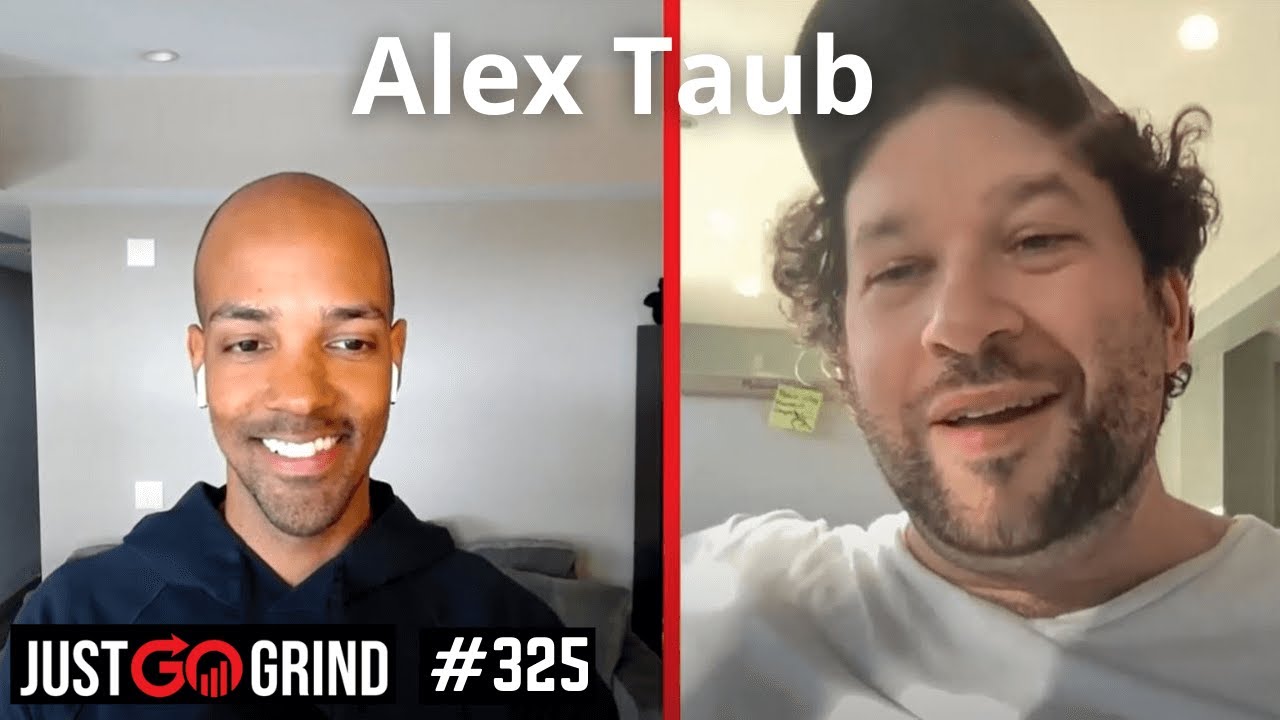
Alex Taub, co-founder of Upstream, built a no-code platform that lets anyone launch a DAO without juggling Discord, Aragon, Snapshot, and Juicebox. The company raised $12 to $12.5 million in Series A funding and is targeting investment clubs, NFT treasuries, universities, and gaming. Taub compares the current DAO market to 1990s website building, expecting it to become a multi-trillion-dollar space with many leaders.
Chapters
Alex, welcome to the show.
Thanks for having me.
Yeah, appreciate it. And for people who aren't familiar with Upstream, what are you guys doing today, Alex?
So we built a sort of like really like a no-code full-stack DAO in a box that lets you spin up a DAO really easily. So I don't know how familiar your audience is with DAOs and just the general concept of building DAOs, but It's sort of like building websites in the 1990s. Like, you know, small group of people knew how to do it and you had to pay them a lot of money. There was no like Wix or Squarespace or Shopify in existence, not even like WordPress. Similar now, like, you know, it's costly and there's no like, you know, no-code solution. So we built that. And then right now, like, to run a DAO, it's really fragmented. So we built a sort of like You know, full-stack, one-stop shop to do it all in one place.
With that too, so take me through that in terms of the product, getting to that point of understanding. You're looking at the ecosystem, you're seeing what's out there, you're like, this is a problem we need to solve. How'd you get to that point? I'd be curious.
For those that don't know, like, what does that mean, full-stack? Full-stack means right now when you want to run a DAO, it's very fragmented. So you're using— I'm making a ladder for you. You're using Discord for community and Aragon for governance and Snapshot for voting and Juicebox for treasury management. And sort of the list goes on and on and on. And essentially, the idea around this is like, you could do all this stuff in one place.
For you then personally, just in terms of what you're doing upstream, and even the beginning with kind of letting these communities create the infrastructure for communities, Why then go this route, upgrade, as you mentioned before we chatted? Why go this route with supporting DAOs for Upstream?
So the big belief is DAOs are going to have a pretty big year. But even before that, it's like, what is the Web3 community play? Upstream, we started off as a professional community, professional groups product, but really community product was always what we were doing. So it's like, what is the Web3 community play? It's pretty obvious that that's a DAO. So we figured, and there was no leader in this space, there was no leader in this space. So we decided like, okay, and my co-founder and I basically a decade ago worked at one of the earliest crypto companies, a company called Dwolla. So we had some like, you know, bona fides and some expertise that led us to go and sort of focus on this.
So with that too, so what you've seen already, you launched in beta last year, so in 2021, in terms of working with people already, the most interesting DAOs you've seen, ways people are utilizing this on your platform. I'd be curious to hear anything from your stories of what you've seen so far with Upstream.
Yeah, I mean, there's a few really interesting use cases. Investment clubs have been an early one. I think that's pretty niche, but investment clubs, people want to pool money together to buy NFTs. or digital assets. I think one interesting one that's going to come out is like NFT projects putting aside money for like the community to decide. So like a DAO for the community, which is different from an investment club. It's like, I sold $1 million worth of NFTs and I want to put 100, you know, 10% of it into a DAO for the community to decide what to do. That stuff is not super popular yet, but I think will get popular as the year goes on.
Yeah. For you then too, with this and with Upstream and even this ecosystem in general, just for you, what has your process been in terms of learning about what's going on, what people are working on, how you want to build things? I'd be curious because there's so much out there and for people who are just getting into it, it's kind of overwhelming around like, where do we begin? For you, what's been your journey for that?
I'm always pretty like strong conviction. Once I— once my co-founder Michael and I, we like have strong conviction on something, then we just like rally the team around it and say like, you know, listen, this was a big change. A lot of the people on the team are not Web3 native people. Um, and it was sort of like, you know, a lot of the content on Upstream started becoming a lot more crypto related as, as NFTs got more popular and just crypto in general and We put it on ourselves to educate the team and we felt really strongly that this was a massive opportunity. And we decided to move that direction in like June of last— not June, like summer of last year, July, August, and launched the product in November. And then, by the end of February, we had raised a Series A. So it was clearly the right move. I don't think we would've been able to raise a round in such a fashion if we were still doing the same stuff. So we had strong conviction and then we sort of moved the pillars in the right direction or the— I don't know what a good analogy there is, but we sort of went to our lead investor for our seed round and explained what we were thinking. Had the support there. And yeah, we just made it happen.
At that time, so back in June, July 2021, when you're thinking about that decision to shift to this, obviously then build it out and go launch everything, your conversation with your co-founder, with your investors, just, I wanna double-click on that. What did that entail? You're just like, we very strongly believe this is the direction it's going. It's better for the company. I was just curious 'cause people have had pivots before and how'd you go about that?
Yeah, so we never call it pivot, we call it more of an upgrade.
Okay.
It's like, no, the reason why is because we're— it's still the same vision, it's just an upgrade. And everyone's gonna upgrade to Web3, and like, you're either gonna do it or someone else is gonna do it. I think we sort of painted a picture of like, this is the future of community, we're building a community product, and we know what it takes to get there because we've been in the space already. And there's no leader in this space. And a lot of people think this is a multi-billion, if not trillion-dollar market. So it's like, can we be the first or the best? And that was how we sort of went to our lead investor. It was the board, 'cause it's me and my co-founder and that person on the board.
Yep.
And then once we got just the blessing, we could do whatever we want. My co-founder and I own majority of the company and And the board, but we didn't, um, we obviously wanted the team to get bought in on it. We didn't want to like force people to do it, but we also knew this was the right direction to take.
Yeah. And then to that point, that, so going that route, obviously building it out, getting enough traction to that point where you raise a Series A, which you said you may not have been able to at this point in time, at least that you raised this year in 2022. Take me through that, that raise, who you wanted as investors, that dream, that vision that you saw at that point. You've obviously alluded to everything already so far, but just take me through raising that Series A.
Okay, so how do we get to the Series A? When we basically had a pitch down, we got like the general story and we knew what we wanted to do. We knew what the general pitch was. We got put together a deck and then we went to our existing investors and advisors and said, hey, we're gonna go fundraise in the next week. Here's the deck. Here's a list of who we want to talk to. Here's like our hit list of investors. Mark if you know them, like mark it on the spreadsheet. And essentially what we did was we— I sent that out on a Thursday night. Friday morning, I got a text from one of our existing investors, Ed and Elliot from Boldstart, and they said, hey, You shouldn't talk to anyone.
We wanna lead your round.
And I was like, okay. And Ed and Elliot are really great seed investors, and they've done so well that they now have an opportunity fund that they can invest in future rounds. So they're like, Wilson, we closed our opportunity fund. This is perfect. We've done a lot of infrastructure crypto plays. They did Fireblocks, Blockdaemon. This is right under in our wheelhouse. And we've been getting investor updates for the past handful of years.
Yeah.
Because they were investors in our last business. So, you know, we can get this done really quick. Ended up deciding to raise $12, end up at $12.5, but, and they put in, you know, half of that. And then once you have the lead and the terms, it's really easy to raise a round of funding. That's usually the hardest part is finding the lead, getting the terms in place. Once you have lead and terms and there's like a, you know, a legitimate investor who's leading it, who set the terms, it's very easy to do the rest of it.
From that point too, then, so raising obviously that Series A, that different expectations moving forward, obviously you're hitting growth targets and everything with that. How are you thinking about scaling Upstream? You know, kind of what's next in terms of the journey for Upstream?
Yeah, so it's really like people right now. And it's how big, how much money is in all the treasuries? So how much money is in the collective wallet on Upstream. And, you know, the idea is to grow that number every month. You know, when we were fundraising, we were growing at 20% week over week. Now we're hiring a bunch of people. So yeah, I mean, the play here is in the next 6 to 9 months, someone's gonna emerge as the leader of the space.
Yep.
And like, are we gonna be that player? Honestly, I don't actually think it matters that much. I mean, we want to be, but like, someone will discover the scalable DAO thing. The DAO opportunity. And then it's such a big space that as long as you're a fast follow and do it as good, if not better, like, sky's the limit here. So I don't necessarily think that there's going to be one— it's a multi-trillion dollar space. Like, I don't think there's going to be one player. But can we go in and grow this thing really quickly? It's going to require a, you know, raise and more money.
When you say that you don't think there's gonna be one player in the industry, why do you feel so strong about that? And I guess I'm just curious from other, you know, think of other founders' perspectives in different markets, but for this market in particular, why do you think about that in that way?
Yeah, it's a handful of reasons. I mean, it's replacing the LLC. So it's like, it's companies, it's organization. Like, okay, think about like how big Wix and Shopify and Squarespace and WordPress are, right?
Yeah.
Yeah. But think about all the dev shops that people have used over the years to build websites.
Yeah.
Now think about that market space. That in and of itself is trillions of dollars.
Yeah.
So similar.
Okay, similar type of thing. With that too then, so looking at, obviously that's where you're headed, that's where you want to get to. How are you going about even growing this business in terms of the acquisition, finding the people who want to either create DAOs? It seems like something where obviously you have a lot of people who are into it now and understanding what this is, but is there a side of it where like, You have an education component on top of like an acquisition engine. Like take me through like that thinking as well.
Yeah, I mean, we're definitely continuing to do events and those events are a lot about education. And then on top of it, like we have a lot of inbound right now, more than we can handle, but eventually we're gonna have like really clear use cases. We already have a few and then we're gonna just go after similar things and go out and basically You know, okay, we have an investment club and we have like a structure. Someone wants to start a university in the metaverse. That's a structure. Let's go find more universities in the metaverse and bring them on. So it's like, it's basically like doing it once and then repeating it multiple times.
Do you already, to that point, I mean, do you already have places you're like, okay, these are gonna be clearly gonna, these are gonna be pillars of our business moving forward. These are just massive. Like, I'm just curious on how you're thinking about that as, as well.
Yeah, there's definitely some use cases that are starting to emerge where I'm like, all right, that's big. Like, Like, investment clubs are big, but they're still niche, but they're big. You know, NFT projects with DAOs, I think, are going to be huge. I think there's like a whole play around participation to earn. There's like play to earn. I think participating in a community, you can earn. I think no one's really figured out like the model there yet, but there's something big there. I think there's a lot of different things that we don't 100% like I also don't wanna tip our hand on too many things.
Yeah, yeah, for sure. I understand. I think it is interesting to think about that cuz we have a community at Vitalize, Vitalize Angels, and we've thought about, you know, how do you incentivize people when you run a community for a while? You realize, you know, in some ways we want people to invest is the main thing, right? Like we want people to invest in deals, but also it's like if there's more engagement and people are facilitating and if they can help do more diligence on deals, people wanna learn this stuff anyways, it becomes interesting. We've talked about briefly exploring some other routes, whether it be a DAO or some capacity and what that might look like. So I can see the use case obviously in that capacity too. With this too, so I know this worked on a couple other things as well. Tell me about the Illuminati NFT. I wanna hear more about what you're doing with that project and how that came about.
Yeah, so it was me and 3 friends came together. We brought together a really great group and the idea initially came around what would a DAO look like? that was like an NFT project. Um, I think it's evolved into a lot more now, and there's a lot of like really big opportunities here. Um, I think, uh, I think, um, well, there's a few things. Like, number one is that there's— I was like dogfooding our own stuff. We were building the DAO product. I was like, what would a cool DAO NFT project look like? And then I basically Came up with the idea, hit up my friend Caesar, he hit up his buddy who goes by Process, and then we basically came together and put together this NFT project. The DAO is actually gonna be, uh, like launching in the next week or two.
Amazing.
We're gonna release the DAO token. Yeah, it was like dogfooding, dogfooding what we're, what we're doing. Yeah. And then, um, and then that's how it came to be. And so it's like imminently coming out, and I'm pretty excited. I mean, it's like, it's a DAO of like $3.5 million. Um, I'm pretty excited about it. There's a lot, there's a lot there.
For people who are new and curious about this and obviously, you know, trying to start their own things, obviously using a platform like Upstream would be great for this. Take me through that process, even for like setting up a DAO, obviously even with Upstream. Like, take me through that process, how long that could take, what are some of the key, uh, factors of that. Obviously make it easier with Upstream for people who want to start launching this. Obviously it's helpful if people know how to, how to go about this because I imagine they don't know a lot. Take me through just that process, maybe specifically with Upstream if it's helpful or more broadly, whatever works for you.
So this one specifically, we had to spend some legal time to figure out the structure. And it was a combination of, okay, what does it look like for— so we spent a lot of time on legal for this. I think going forward, we'll productize that experience for other people so they can copy it. But We ended up deciding it needs to be a UNA, an unregistered nonprofit association seeking 501 status, which is specifically a foundation. And the idea here is it's not a for-profit entity. That doesn't mean you can't get value from it, but we need to make grants and donations and scholarships and things like that. And have a mission. But yeah, we basically came, came up with a structure that made sense because the things we were thinking about is like, one, we didn't want any of the members have to dox themselves. So we're being taxed as a corporation. That was one. So no issuing K-1s and all that. And then two is, so we didn't want— if you don't get the entity, if you don't get an entity set up, there's like just— personal liability. It's a general— just viewed at— viewed as legally a general partnership because DAOs in and of themselves aren't legally anything. So you basically would be looked at as a general partnership, which is just unlimited personal liability. So if people wanted to go after each other, they basically would, um, be able to sue each other and go after their houses and their cars and whatever. So we want to make sure those 2 main things, uh, protected the members.
So in that process, so even in setting this up, yeah, obviously you mentioned you're about to launch in a week or so. This will go live, so it'll probably be live already by the time this happens. But take me through it beginning to end. Like how long did that take to set this project up? Obviously the team working on this a little bit, like take me through that side of things.
We just had a general idea of what we wanted to do, but we didn't have the exact structure set up in place. Once we sold out in January, we started to put it in place. So that was, I would say, is taking us basically like A full 3 months of legal to just figure out the structure. And then now everything's basically in place. And now, so like going forward, if people wanna do this, we have the structure, we'll share it, we'll like open source it really.
Yeah.
And it should take people like a week or 2.
That's awesome. No, that's amazing.
But it was definitely like a month or 2 of like just legal back and forth of all the different pros and cons of all the different scenarios we could You know, and trying to build like a bespoke thing that could potentially be repurposed.
What other projects have you been involved with? I know there's Zed Run, which I heard you talk about on Pom's podcast.
I just bought a lot of like, I've just bought a lot of NFTs. So I own a bunch of Zed, I own a bunch of— I own 2 Bored Apes, I own a CryptoPunk, I own an Invisible Friend, I own a Doodle. Like, I'm just involved in the NFT space. Yeah. Company-wise, I was at a company called— started a company called SocialRank with my co-founder, Michael. We sold it in 2019. Before that, I was at a company called Dwolla with Michael. Uh, that was one of the early crypto companies. Before that, I was at a company called Aviary. It was a photo editing company, and, uh, that sold to Adobe. And just generally involved in startups.
For you, with these different projects, what is it that gets you want to get involved? I know there's a lot of different ones out there, and there is a lot to go through in terms of looking at which ones you want to get involved with. Well, for you, I'm just curious personally, what What gets you to pull the trigger?
NFT-wise?
Yeah, NFT-wise. Yep.
NFT-wise, I look at like, is there any special IP here? Like, if there was no NFT, would this still be a collectible? That's the first. The second is like utility. So like, I can make money off this thing. I can, like Zed, I like can race my horses and I can breed my horses and I can actually monetize that.
Yeah.
Another one is, another one is, what's it called? Like access. Like that was Bored Ape. It's like, I got access into a special community, which has turned out to be a windfall. And then I would say the fourth is like art. Like, I would say like crypto art. Like, I don't really know I don't know who the Picasso and the Rembrandt of crypto art's going to be, but I know that they're going to exist. I know there's something there. I just don't know who it is.
For you then, for this, how much of this is, you're going to place a percentage of short-term bets of sorts? These are interesting. These are cool short-term. This is like, I'm going to hold on to this for a while.
How do you look at that in terms of your own Uh, I look at things now as like there's blue chips and there's everything else. I want to own as many blue chips as possible. I have a list of all the ones I want to acquire. I'm basically selling off all my non-blue chips to buy blue chips. That's how I look at it now.
Yeah, you just want to collect the best you possibly can and as many of those.
Yeah, and I think long term, like metaverse, when that comes to be, I'll be able to take my blue chips and be there and be like, you know, legit and bona fide. And I've made enough money off all my blue chips so far, like meaning the ancillary things that I've gotten from them, that I do not need to sell them. Yeah, you know, I could sell them and make a nice pretty penny, but I don't need to.
Yeah, which is a nice luxury. Then you can just see what— see what happens in the future then, obviously. As we kind of wrap things up here, I'm just curious, what else are you most excited about just in the overall kind of Web3 ecosystem as we have so many different things going on? Obviously DAOs, but anything at all, things you're working on, projects, anything else?
Yeah, obviously I think DAOs are exciting. I'm sort of betting my career on them.
Facts.
Otherwise, I mean, I love NFTs. I think they're a lot of fun. I think there's a lot of crap, but I think there's also like, I think there's a lot of like blue, you know, like big potential long-term plays here. I think just like, you know, in the '90s when the internet bubble, a lot of crap, but also just Google and Amazon came from that, you know? So I'm into that. I think, what else? I think gaming's gonna be really big towards the end of this year.
Tell me more.
I think play-to-earn gaming and just like, if you want to make like 1,000x in the next like 18 months, it's gaming. Something that's like the AAA games are gonna, are gonna explode with NFTs. And I think it's just gonna be, you know, just really exciting.
Yeah. Where's the best place for people to learn more, connect with you as well if they'd like to?
Twitter, I'm AJT. You know, I tweet out a lot of stuff with stuff I'm doing, whether I'm going to an event or virtual event or whatever. So definitely there. That's the best place to find me.
Yeah, Twitter. I appreciate that. Well, Alex, thank you so much for your time today. Really appreciate it.
Yeah, no, thanks for having me. And apologies for the guest speakers.










