Disrupting the Cannabis Market with JP Fatta & Bryce Petty of Kush Klubs
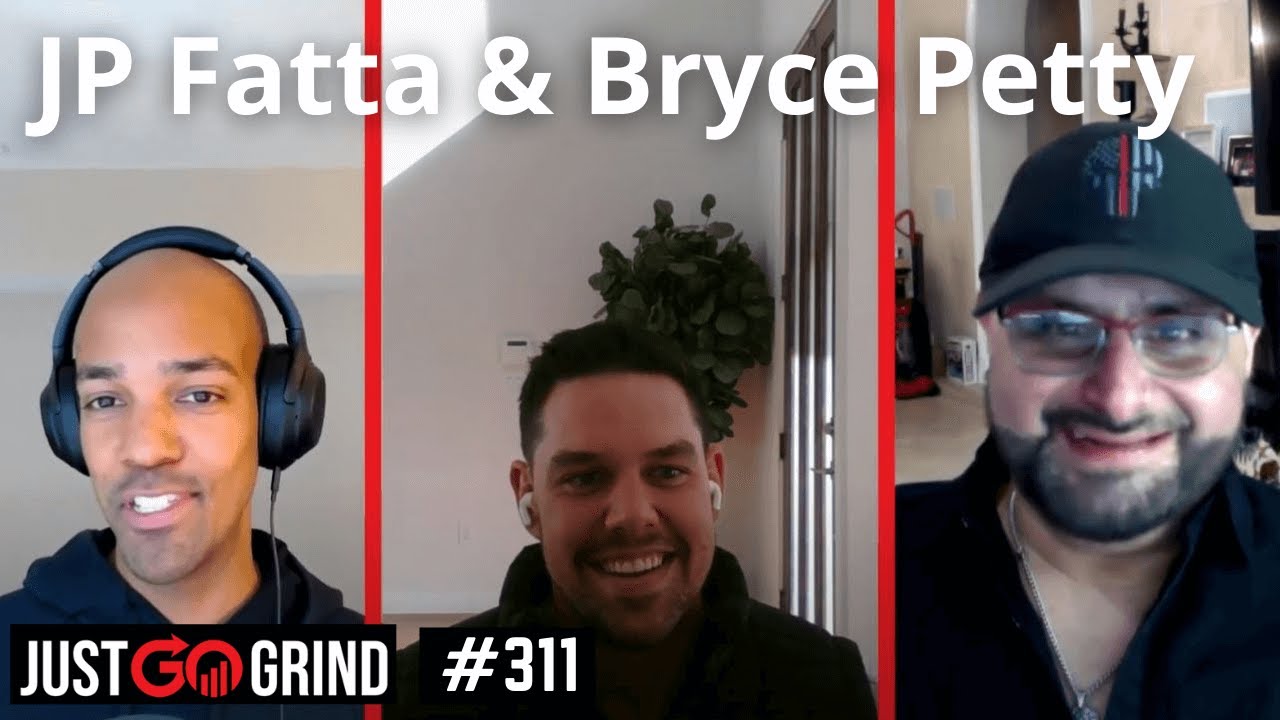
In this interview‑style podcast/video, host (referred to as Speaker A) talks with JP Fatta and Bryce Petty, co‑founders of Kush Clubs, a subscription‑based cannabis platform. JP explains how a chance encounter with a Caribbean blockchain team sparked his interest in the cannabis supply chain, leading to multiple company iterations before landing on the Kush Clubs model. They discuss the fragmented regulatory environment, their strategy of building a B2B‑B2C ecosystem that leverages subscription economics, and the challenges of operating in a market where traditional advertising is restricted. The conversation moves to their decision to raise capital via Regulation CF crowdfunding, why they selected WeFunder over other platforms, and how they plan to use the campaign to build a community of early‑stage investors. JP details the beta‑test of the platform, highlighting consumer behavior insights (high spend, frequent purchases, low brand loyalty) and the value proposition for dispensaries (customer retention, higher ROI). Bryce adds a consumer‑focused perspective, emphasizing the “blue‑ocean” opportunity, the importance of team execution, and the synergy between crowdfunding, DAO/crypto trends, and community‑driven growth. The interview wraps with a discussion of brand positioning, community building, and where listeners can learn more (WeFunder page).
Chapters
JP and Bryce, welcome to the show. What's up?
Thanks for having us. I don't know why I'm on here. I know why JP is on here. I know why you're on here. So I'm just happy to be here. I guess I offer the best credit of any of you guys.
You know, you're the icon.
Whatever.
Exactly, exactly. It's a video show too. For all the listeners, video show and podcast now. We've changed in the last like 30 episodes. So, gotta check out on YouTube as well. I'm excited to talk about Kush Clubs. There's a lot of questions I have around it, you guys' involvement, obviously. Let me know first though, JP, how did you decide to start this in the first place?
I was, you know, off of a bender of crack.
Oh geez.
And no, I'm kidding. No, no, no. I was, we were coming off of a project building out a streaming platform. And I was sitting around with the guys and I brought in some guys from overseas because we were looking at blockchain at the time. Um, and these guys are from the Caribbean to develop blockchain. They wanted me to take them to a dispensary, so we went to the dispensary. They freaked out. We came back, um, because they got the experience. We were sitting around the table and we were sitting there thinking, and I'm— and they're like, you know what, the— they're starting to ask questions about the cannabis industry. Um, and it started to get my attention that night. And I was sitting there thinking, you know what, I'm interested in investing in this, you know, potentially. Um, and that's where it kind of began. And as I started to look for opportunities to invest in the supply chain, I realized that it was a convoluted mess. Um, and then I was like, you know what, we're technology guys. I'm not a supplier. I'm not a grower. I'm not a cultivator. I'm not a retailer, right? But I am a technology guy. I build. I believe in subscription-based economies. I was like, this entire industry is screaming for something like that, and that's kind of where it began. That was the job.
There's always so many different ways where you see problems in the market or problems in marketplace, and some people, if they're entrepreneurs, you know, find opportunities within that. A lot of people just kind of go right past it with this industry. I think a lot of people saw that there's a huge opportunity within cannabis industry. Obviously the regulation's a thing that's always gonna pop up now. How did that play into your mind? What do you think around that? You think it's just a matter of time before, you know, regulated federally? Like how'd you think about that when you started?
Oh yeah, yeah. So interestingly enough, you know, so I said, okay, you know, we went through about 3 different iterations of this company before we got to land on Kush Clubs. We started out looking at a box and kind of how do we create this custom box that's curated, right? And then we actually started with Kush Clubs with a thought or an idea. We went to the box idea. We got really kind of like cut off, um, before we even could make it out the gate because of regulations, right? Off the bat, you know, delivery, you know, you have these ideas and you don't understand yet what's going on. This has been such a huge learning curve, learning experience, but I think it's made us more robust and more powerful now, having gone into this industry, dived into it, examined all the challenges, look at where it's— where the genesis of it, look at where it's going. But to answer your questions, you know, we had multiple iterations. We looked at a CBD, all CBD line, um, to kind of penetrate into the market. All of this to us was entry points. How do we get into the market? Because once you're in, that's it, right? You can figure out where you're gonna, you know, maneuver, how you're gonna capture a market share. And then it took us to Kush Clubs. It came right back to where we started in our thoughts. But along that journey, we saw the regulations and the restrictions by the state Then at a federal level, we saw what is going on, but we also saw kind of where the shift is going to happen once regular federal regulation opens up, right? Once they're allowing legalization at a federal level, and we tried to make a determination of what that landscape would look like then, and then we kind of built our platform to be a solution in that environment and then worked our way back to where we are now. And how do we capitalize those different phases that we see are going to happen? And then how do we assist in those challenges for our partners and for the consumers along that same pipeline, if you will?
Yeah.
If I didn't confuse the shit out of you.
No, I love it because actually I love the kind of picks and shovels businesses. and business models around industries. Because if you look at something like cannabis, look at other industries too, who's building the infrastructure behind that that's going to support that? Because obviously more businesses get built off of that, which becomes massive markets, right? So people who often make out a lot with that is people who have built the infrastructure behind it. So I think about Web3 now and crypto and all that. Who's building infrastructure behind crypto that's going to allow for other people to build on top of it? They are going to come out huge in terms of how this kind of plays out. Same thing with cannabis. And I'm glad we have Bryce on here to kind of talk a little bit just in terms of like why you're interested in the space at all, Bryce, getting involved with kind of investing around cannabis companies.
Yeah, well, I think first off, I can't really talk about my interests without talking a little bit about JP and just, you know, getting introduced to him, I guess, a couple years ago now. I was always interested in it because of, I guess, my background, you know, playing in sports, Um, you're just, you're kind of thrown, hey, these are the, you know, pharma, you know, this is, this is what gets you right. And, and, um, you know, undoubtedly most of that stuff actually ends up breaking down your body more, um, kind of being a bandaid with a hole in it as opposed to, you know, something that actually helps you. And so, um, you know, in my own kind of research and, uh, enjoyment of what I've, you know, kind of seen and heard about the cannabis industry got me introduced to JP. And then, like I said, you know, just getting introduced to JP, learning how he thinks, thinks about, uh, the business in and of itself, because like anything else, it is a business, um, that it was something that I felt like we could kind of disrupt the market a little bit and, and offer something that, that wasn't out there. And so, um, I've again kind of going back to, uh, the passion project behind it. It's just something that I feel like guys, um, and, and girls rather too, uh, can, can use to actually help and be a benefit to your lifestyle as opposed to being seen as just this, you know, recreational gateway drug and all the, like, the little things that us, uh, you know, Southerners like to say, um, just, just because we don't understand something. Um, not that, not that all people are, are like that, but, you know, that's, that's generally what you see is when people don't understand, uh, things, they just kind of go by what everybody else says. And I think there's so much to what cannabis can do for, you know, for your, your body and, and, uh, the things off of it that I've really found to enjoy from a personal side, also to a business side.
Yeah.
And it seems like we're seeing more and more as time goes on, we're seeing more and more use cases, more people get comfortable with it, opens it up more. And as you say, progressing to federal regulations allowing this to happen as well, it seems inevitable with it. And so with what you guys are doing, and I'm curious what Kush Club's then going the crowdfunding route, JP, Take me through that decision, why you decided to do that. I know a lot of entrepreneurs I've talked to have considered that. There's drawbacks obviously, but take me through that decision with you and going crowdfunding route.
Yeah, we, um, so I, I invested in a company, um, that was a kind of a social Yelp app a few years back. And, um, the guy that, that, that runs it, owns it, um, did a Reg CF. Campaign. And, and what he told me, I was talking to him one day, it was about maybe 4 or 5 months ago. He had done 2, one in last November and then one in January or February of this year. And he had raised about $2.5 million doing it. But aside from that, he built a huge awareness for his company, um, in the process, right? And so he was telling me, he goes, if you want to kind of get the best of both worlds, Reg CF can help you raise capital, initiate a B2B awareness campaign, and then as well as, you know, find your end users, which You know, you get a few thousand people that are, you know, tethered to you through an investment. They become, you know, 30,000 and then 300,000 by just vocalization and word of mouth. So you kind of find your first champions, if you will, and your early adopters. So he said the benefits far outweighed the drawbacks. So we decided if we were gonna go the route of fundraising outside of our group, it was something worthy to try, right? And there's successes and failures, and we have no expectations about it other than it's kind of, it's a cool process to go through. It's kind of really cool to see if it works. for us, then we would be ecstatic. If it didn't, we have other instruments that we're putting together right now, a reggae and other things as well. But it's all— you know what? Also, it's been bringing me out of this shell that you're like behind the scenes.
Yeah.
You're in the trenches. It's kind of making you more in the public eye as well, right? So it's given me the ability to talk to intelligent guys like yourself, share experiences, start to network a little bit. So it's actually been cool from that point as well.
Yeah.
And we're hoping we raise some capital. Of course. Of course.
Of course. Let's not forget that part of it. You need the capital as well. And, you know, we're using WeFunder to power our backend for our angel community, which is something different. People aren't doing before because it allows non-accredited investors to invest, which is something that's another part of it, like allowing non-accredited to join in crowdfunding. So through Reg CF, you can do that. How did you choose the platform in terms of WeFunder? There's a couple other ones out there. How'd you settle on that one?
He, he used WeFunder. So he connected us to, uh, I guess a WeFunder consultant that he used, um, introduced us to him. And then we started to look at other platforms. We looked at Republic, you know, and StartEngine, I think it was. We went through the whole process with them and they were— Republic's team was incredible, by the way, but WeFunder's team was just like a class above. Anybody that we talked to.
Shout out to Johnny, Johnny Price at WeFunder.
Yeah, 100%. The attentiveness that we got, even now with us going through that, but the entire day held our hand literally the whole way through it. And they introduced us to everyone. They like took us around, like almost like took us around the office virtually, so to speak. Um, but they were just incredible, incredible. They were knowledgeable, they were supportive, they're just— they were a class act. So that's why we chose them. At the end, it came down to WeFunder and Republic, um, and there were pluses and minuses on both sides, but because of the team at WeFunder, they separated themselves from Any platform. Yeah.
And this is not a paid endorsement, by the way. Also a big fan of WeFund. I've used them for a few different things actually. But with that too, so understanding you're on crowdfunding route, you get this community of investors involved, which is a huge benefit for any company, especially a company like yours in terms of what you're doing. How have you gone about the growth side of it in terms of getting people interested in the campaign, the company itself more broadly, especially with having the regulation federally How have you gone about growing this whole thing? I'm really curious about that.
Yeah, so great question. You know, because it's cannabis, we are pigeonholed or our hands are tied from a lot of the conventional marketing that other WeFunder companies can actually endeavor into. Even WeFunder can't actually expose us generally the way that they do to other companies by buying traffic, buying ads. So it's forcing us to have to get creative. And obviously we're back to back with 2 holidays, so that's kind of slowed it down. So we got introduced and are looking— and I don't want to say their name just yet— to a company that has run about marketing for about 200 crowdfunding campaigns. In addition, they have case studies on a couple cannabis-related crowdfunding campaigns, and they put together a proposal that we reviewed. And then now, because we need— so I'll preface it by saying we have a small team, but our team can move, uh, like 10 people can move like 100 people can. And I know a lot of people say that about their team, but my team can run circles around anybody. They've been exposed to startup culture in multiple different ventures, so they know how to go in and micro-dissect every nuance that you want. So if you want to do a marketing, they'll go in and they'll determine, okay, We need community-based, we need social-based, you need, you know, digital ad-based, you need communication protocols set in place, you know, one step, 1, 2, 3, and they'll go in and they'll create an entire flow of what needs to get done. But it's all theoretical, right? Um, from an executionary standpoint, they can execute, but because they've never done a reg CF, they've never looked for that type of audience. Right? The rules of engagement are a little bit different. Um, I decided to bring in somebody from the outside that has that execution experience to help us.
Yeah.
So we've sought out, and now we're bringing them into the fold to start to execute, um, on the campaigns that we've envisioned. And, and together we would You know, expand.
Yeah, I think that makes a lot of sense. And having that killer team is everything, especially the early stage company. Anyone kind of just getting started, even in this industry as well, being able to be flexible and nimble within this is really valuable, I imagine, especially in the cannabis industry. And with working with dispensaries and what you guys do inherently, how have you gone about finding the customers that you want to work with, the organizations you want to work with, with Kush Clubs? How's that gone for you so far?
Yeah. So when we first launched the beta test of Kush Clubs prior to us envisioning this 2.0 version, as we call it internally, which expanded out the scope of what we're doing based on the learning experiences that we had during that beta test. But when we first launched the beta test, We were looking to create a hook for a B2B player and a B2C player to come into and become dependent on our ecosystem. So it forced us to examine the challenges on both sides and how to create a value proposition to attract both people in. And we knew on the consumer side We wanted to get— we wanted to know if somebody would actually pay for a cannabis subscription, number one. Number two, we wanted to see if we could actually create incentivizations to incentivize the consumer behavior once they're on there. And we wanted to see the data we could extract from them. But the value proposition for the B2B side would have to be compelling enough in the early model that we had that somebody that's a retailer really sees the, the, the long-term benefits of what we offer as that, you know, um, as things progress towards federal legalization, as the market and climate changes, as restrictions ease up. but still benefit from it presently. So we really spent a lot of time focusing on the B2B client and evaluating those needs that they had. Right. And then when we launched that beta test, it was a subset of what we're relaunching now. But we had a tough time convincing these Dispensaries to give up something to gain something long-term, right? Which is, hey, you got to give up profit right now on on certain products. Forego that profit because you want to build repetition of a customer, right? You want to build loyalty of a customer, which will in turn increase your ROI and will start to create a sort of a compelling event. For that customer to then go out and, and bring more people in. So we created this whole kind of this business model and value proposition for them. And we only got 4 dispensaries early on to even, you know, we had multiple meetings. Um, we didn't have a magnitude of meetings, but we had, you know, 20, 30 meetings and we found 4 dispensaries that said yes to it. And that was challenging. In and of itself, but it gave us enough of a base to start to run that beta test. Um, so it was tough getting them. Fast forward to what we learned, which we could go into after— we learned a lot from both sides during that beta test, and I think that's gonna make this iteration of this 2.0 lower that barrier to entry for them, for both sides, right? So they don't have to give up as much at the beginning, right? But then once they get into it with us, then, and when we forge that trust, because it comes back to trust, right? Once they trust us, then they'll listen to us, right? But you're not gonna trust a guy coming off the street saying, hey, you know, your product's selling for $30, go sell it for $10.
Yeah.
Right. I promise you I'll bring all these people to you and they'll become your best friends. Right. But lowering that barrier to entry now, um, which is what we're doing, um, to get them in, you know, because one of the things we learned from both sides is on, especially on the consumer side, once they came into the platform, they stayed. They didn't leave. Once they had a subscription, they weren't going anywhere. And second thing we noticed is they would upgrade themselves naturally. So they came in for this notion of getting a $5 gram or access to a $5 gram, but they weren't getting $5 grams. They were going for premium and exotic, and they weren't getting grams. They were getting eights, and they weren't on the bottom 2 packages. they were on the top 2 packages. So they weren't spending $85 a month, they were spending $350 a month. And they would— they were also increasing their frequency. They weren't going 2 to 4 times to a dispensary, they were going 10 to 15 times because we created that incentive for them to have to go multiple times in order to receive that benefit. And then we also realized that we increased that ROI. We doubled the ROI. If they're spending $100, they're spending $200. If they're spending $200, they're spending $400, right? They, on average, they spent an additional $100 to $200. So we realized what we set up worked. Yeah, it was really kind of interesting. And then we also realized that the consumers don't trust— there's no brand loyalty. They're not— the consumers are moved by price. They want the best quality for the cheapest price. They, you know, very few people are going in and understanding the genome sequencing of the plant or what it does, or, you know, just give me something that achieves what I wanted to achieve and give it to me at the best price possible. And then the next thing we learned from the consumers too was that, you know, their recommendations come either from 2 ways, either from the budtender at the location Or from somebody recommending it, their peers recommending a strain or a product or something to try. Very few people do the research, are looking to see, you know, and educating themselves on the plant and making a conscientious decision based on all of this compiled data that they've searched on. No. All right, budtender, tell me what is the best thing here. Or dude, what are you smoking these days? Oh shit. So JP, right?
So we work in this, you're in this all the time, of course. So you have this, this view of it from being deep in the weeds, talking to customers, everything with that. Bryce, maybe a little bit more removed in terms of that day-to-day necessarily, but tell me more about from Bryce, your perspective as well with like what you see with maybe your friends or other people in industry and your outside perspective, willingness to obviously invest capital because of JP. But what do you see from your perspective as a consumer, as a user having gone through this in terms of the opportunity that exists in this industry?
Yeah, no, I think there's a, a lot of blue ocean, to be totally honest with you. And I think that there's blue ocean if you're, if you're attached to the right people, right? And I think, because I think that, um, again, anytime that you evaluate any opportunity, and we've already kind of spoken to it a little bit, but it's about the team. It's about, you know, who's leading it, who is day-to-day. I mean, you listen to JP talk, he knows the ins and outs of everything about, uh, you know, the, the cogs and, and Um, uh, you know, the, the gel to make it go. And, and that's so important to know 2 things. One, how your team operates, but then 2, really what the end user and the consumer wants. Um, especially in this type of business where there's a subscription model, you are talking about 2 different players. There's, there's a, you know, the dispensary and the business owner is wanting something out of this, just like the consumer is wanting something out of this. So to, to be able to mesh the 2. There's really just— there's nothing like it out there in the market. And I think that's why, you know, and I know that you asked a question a couple minutes ago about the crowdfunding, that's so unique about the crowdfunding model to this type of opportunity, um, is, is, you know, you can go and put money into Apple stock and be, you know, one gazillionth, uh, you know, percentage of, of a company that's there. Or, you know, this, this crowdfunder and this angel investing movement that I think you're starting to see a lot more of. You mentioned crypto. To me, this wealth pendulum is changing a little bit because of what crypto and what the younger generation are able to do and to see based on the computer and based on the web and the blockchain and all this out there. And so I think that this type of crowdfunding, angel investing, you know, world that we're living in, it gives a lot of opportunity for guys to invest in things like, you know, Kush Club to where not only not only can you use it, you know, um, as a customer, but you can also be a part of it. Um, and that's what I love about, you know, the DAO and blockchain and this is just, you know, this, this movement of, of smart contracts to where not to get— that's, I know that's a totally, you know, different tangent and rabbit hole there. But the idea, and that's what I love about talking to JP, is just how do we make it better? How do we make it to where, you know, I'm incentivizing you to tell me what you want? And I, and I think that when we you know, eclipse that piece, um, of, of the end user, the consumer, the business, the leadership, all of that together is working to incentivize the betterment of the company. Um, that's, that's when, man, this, this thing takes off and everybody gets to, to have a piece of, you know, the victory, which is, which is, I think, anytime that you get to invest and have an opportunity to do so, um, you know, it's a knockout.
Yeah, I just, I know we're out of time. I have one more, one more question quickly if you're okay with it. Uh, JP, just curious, how do you think about the the brand and standing out in that regard? Because you mentioned, you know, users don't really care that much about brand, they're not loyal yet, I should say, until to one brand. How do you think about that though, as being a leader in the space with Kush Clubs and having people know your name, know your brand, want to work with you guys if, if there is no necessary brand loyalty yet? How do you think about that?
Yeah, for— so the brand loyalty that I'm talking about are like the actual cannabis brands themselves, but I guess it It loosely applies to us, but what we bring, what we, what we bring to the table is value for the consumer. Um, so we want to be the go-to. If you're, if you're consuming cannabis, then you have to have or use our Kush Pass, Kush Clubs, Kush Pay, because the value that we bring to you, it almost is to be foolish not to because of the savings that you get.
Yeah.
Um, and I think the challenge for us, it's a kind of a double-edged sword, is that this is a, a communal— more than anything that I've ever been exposed to, cannabis is probably the most communal-like, um, um, you know, product, right? Meaning that I think it transcends color, race, creed, socioeconomic. You, you can consume it with whoever and there's an instant connection. So it gives, but the community, because of legalization, because of the taboo, other thing, it's, it's completely fragmented. So the challenge for us is How do we really advance our brand to create a community within this space? Because I think if we can create and manage that community and really cultivate and nurture a community, then I think that we can win. at becoming sort of a, of a, of a brand recognized brand. So, you know.
Yeah, no, I think it's, it's great we mentioned with that. There is like, that's what you'd be known for. It's a matter of, in my eye, I've been in marketing for a long time. So I always think about, you know, what is the story behind that then? What is that value prop you're communicating to them? It's like, you know what it is. How do you communicate that to others? So then they know, oh, Kush Club's like, that's a no-brainer. They're the best quality, whatever. And that's what we always think about too with the companies we work at. worth advising that we invest in. It's like, you know, how do they stand out? And ours are more B2B software, but it is like if they have multiple options, like what makes you unique? How do you have a moat to stand out in the market? And so I love hearing about that, talking about that as well. I know we're out of time. What's the best place for people to go learn more about Kush Clubs as well?
Yeah, they could go to, um, wefunder.com/kushclubs with K-U-S-H-K-L-U-B-S. So if they wanted to learn, there has a wealth of information that we put together. Even if you're not an investor, but you just wanna learn more about what we're doing, um, it has a lot of information you could consume there.
Perfect. I'll be sure to link that in the show notes as well. justgrind.com. Bryce and JP, thank you so much for your time today.
Oh, brother.
Thank you so much. Thank you. Appreciate it.
This was awesome.










