Finding Great Founders with Caroline Casson, Partner at Vitalize Venture Capital
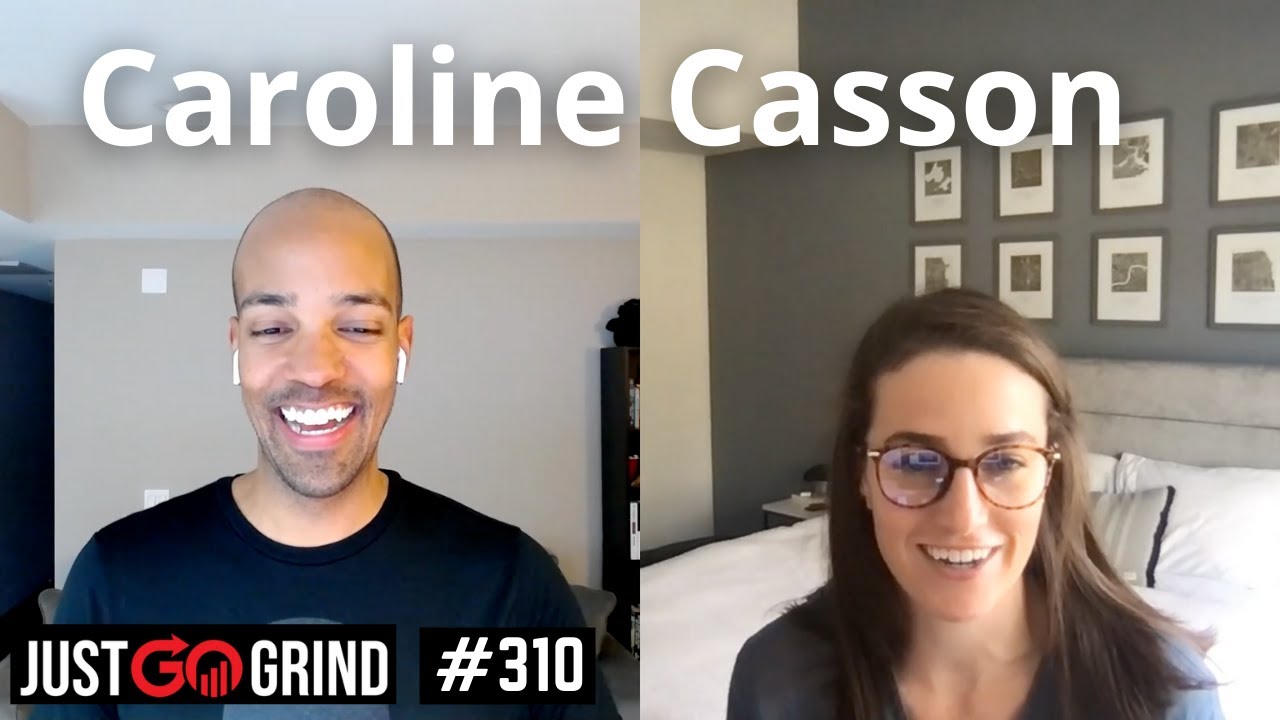
In this episode of the Scribegrind podcast, host Justin Gordon interviews Caroline Casson, Partner at Vitalize VC, about her unconventional journey into venture capital, the diligence and deal‑screening processes at Vitalize, and what makes a "rockstar" founder. Caroline shares how she transitioned from corporate finance at GE and a cross‑country bike ride to joining Vitalize, outlines the firm’s criteria for evaluating pre‑seed and seed deals (market size > $1B, competitive landscape, product traction, and especially team quality), and explains how they filter hundreds of inbound pitches (US incorporation, early traction). She discusses her personal angel investments in The Mom Project and Avive, emphasizing the primacy of strong, visionary teams. The conversation delves into the traits of standout founders—clear vision, specific milestones, data‑backed plans, and strong interpersonal skills. Caroline also describes the creation of Vitalize Angels, a community that opens angel investing to non‑accredited investors while providing education. She reflects on her growth as an investor through pattern recognition across many deals, shares metric benchmarks for early‑stage startups (10% month‑over‑month revenue or user growth, team stability), and offers practical advice on cold outreach (personalized, warm introductions, clear value proposition). The episode concludes with Caroline’s social media handles for listeners to connect with her.
Chapters
Caroline, welcome to the show.
Thanks, Justin. It's great to be here.
Yes, I selfishly just want to be able to talk about things we haven't already talked about. Like, I know so much about your background from obviously working together at Vitalize, but now to share more of that for founders and everything is going to be— it's going to be fun. So what I wanted to start with, though, just for the context of everyone, how did you get into venture in the first place, Caroline?
Yeah, so I kind of fell into venture, I think, like many people unexpectedly. So I had started my career in corporate finance. At GE, where I had the opportunity to live around the world in many different cities, London, Atlanta, Chicago, San Francisco, and ultimately ended up at GE Ventures, where I helped incubate a startup in the drone space, which was a joint venture between GE Ventures and GE Aviation. And that was a really cool experience. Did that for just over a year. And then ultimately what ended up happening is GE Corporate shut down GE Ventures. So I took that as an opportunity to look for something else. Having been within GE Ventures, like I said, I was working more on the operating side of a startup, but was still in the environment where I was like attending investment committee meetings and just learning a lot from the folks around me in the office. And so I wanted to try being on the investing side of a venture fund. So I At the time, I just coincidentally had met Gail and her team back in 20— it was early 2018, and ended up joining the team with her in mid-2018. And so I've been at Vitalyze for about 3 and a half years now.
I'm really curious. I don't think I've ever asked or I've known, were there like, specifically other ones you're looking at, other venture firms you're looking at, or like other opportunities at that time? Like, how did you narrow in on Like Gail's team, obviously, and us at Vitalize?
That's an interesting question. I really didn't know. I wasn't really looking at other venture funds. I could have stayed at GE, like in a different GE business after GE Ventures shut down. So I was just kind of loosely looking and I actually randomly wanted to ride my bike across the country unrelated to work. So I was like, you know what, I'm just going to do this bike ride and then figure it out. And it turned out that I had met Gail right before I did the 3-month bike ride across the country. So she offered me the job. I took it and told her I couldn't start till after this 3-month bike ride. So she kindly let me do that. And then I started after. So it just kind of fell into place. I wasn't really looking elsewhere.
Okay. I've never heard that before. That's incredible. Oh, by the way, Gail, I'm going to join, but like, I have this 3-month bike ride I'm going to do. Like, that's insane. How was that, by the way? Selfishly, I have to know.
Yeah, it was amazing. I rode with a group from New Hampshire to Washington State, coast to coast. It's an organization called Bike and Build. Highly recommend if anyone listening is interested in biking and also building housing for low-income families. So, we would stop along the way and build housing in different cities and we'd sleep in like churches and schools on the floors. It was a really, really great experience and made lifelong friends there as well.
That's amazing. And yeah, it kind of ties right into venture in terms of relationships. Like everything is relationships in this industry. And like people who— some people don't understand it, they think it's all about the numbers. And especially if it's later stage, maybe it is a bit more, you know, digging into the data, the numbers, etc. But where we invest, you know, at Vitalize, with pre-seed and seed, the angel community, and as well as the fund, it's It's a lot more relationships for sure. For you though, when you started at Vitalize, and obviously it was Irish Angels and Vitalize at that time, I'm curious, you've done so much on the diligence side of things, like what goes into that? Take me through your process for doing diligence on a company.
Yeah, diligence is one of my favorite parts of this job. It's super interesting because every company we look at is so different. And you really get to dive in and learn something new every single day. So what our diligence process looks like is, we dive into pretty much all the key aspects that you can think of. So everything from market size, we really want to make sure that the market is greater than $1 billion to make sure that there's room for one, for the company to grow within that market. But 2, there should be room for multiple competitors to play in the same space, for multiple companies to be able to essentially become unicorns in that space. So market size is something we really dive into. The competitive landscape is important. You want to make sure there are some competitors, but that there isn't a player doing the exact same thing the exact same way. We obviously look a lot at the founding team. I think team, in my opinion, is the most important part of the diligence process at the stage that we invest. So for the listeners who may not know, we invest at the pre-seed stage out of our Vitalize Angels community and the seed stage out of our Vitalize Fund. Both are super, super early stage. And so it's really important that the founder is a rock star who has a huge vision, who can execute and who can build a great team around him or herself. So team, I think, is super, super important. We do a lot of reference checks as well around the team. We talk with all the key employees, the management team members, we talk with investors, customers, anyone that we can get in touch with who might know something about the company or the team. Oh, were you gonna say something?
I was just curious with that. So I know about our process, just being at Vitalyze a little bit, but in terms of that diligence process, so going through that, we get pitched a lot, especially now, I think, as we launched Vitalyze Angels and have been doing some more with Gail's Twitter following growing and kind of exploding over the last year. It's like 20,000-some followers now. I think we're getting a lot more attention. So with that, that funnel of people pitching us through our founder application to then, you know, the companies that either end up coming to Vitalize Angels or the companies that are potentially a fit for Vitalize the fund, take me through that when you're like seeing those first companies, like let's say it's 100, whatever, like what are those things that like you check off right away to be like, not a fit, not a fit, not a fit? Because I know we get so much. How do you start filtering that?
Yeah, we get asked this a lot. We do see hundreds and hundreds of deals each month. And so it is a lot to filter through. We do, we do actually try to talk with every company just so that we're giving everyone a chance. We're actually hiring some deal associates right now to help take those initial deal screening calls, because we really do want to give every company a chance. But there are a couple of ways that we can filter companies when we're looking, you know, first taking a look at them. So, for example, we can only invest in the US, but we, for whatever reason, get a lot of applications from companies that are not incorporated in the US. So that's one first thing that I look at and can filter out companies that are not incorporated as a Delaware C corp. Other things, I mean, We don't really do like truly pre-product, even our angel community, which is at the pre-seed stage, we do like to see a product at least being developed and some type of traction, whether it's like some, there's some beta users and they're testing it or whatever it might be. There doesn't have to be revenue, but like some type of early traction, we do like to look for that. So those are a couple of the early indicators. But like I said, we do like to take a call with every single company just to make sure that we're not missing anything.
One thing too, I've seen all these different companies, we now have YLAI's Angels, as we mentioned. So we, you know, anyone can invest, non-accredited investors as well as accredited investors. For you personally, I'm curious, what are the— what is it about the deals that we see that you want to invest in yourself? Because we obviously have community members can invest in them, we have, you know, later stage, the fund can invest in them. You know, I've invested, I think, in 3 of our deals out of YLAI's Angels. But for you personally, what is it about them that you like about deals you want to invest in?
Yeah, this is a good question. I honestly look for a lot of the same things that we at Vitalyze look for. So I've learned from pattern recognition, you know, what makes a great company. And like I said before, a lot of it has to do with the team. I've made a couple of investments myself over the last couple years. I can share— I'll share 2 examples. But with both of those examples, it was really the team, not necessarily the product that made me want to invest. Well, it was a combination of both, but more emphasis on the team. So my first ever angel investment was in a company called The Mom Project, which right before I joined, Gail had invested in out of Irish Angels and Vitalize Fund 1. And I had an opportunity to invest in their next round personally. And just having worked with the team already through Irish Angels and Vitalize, I was just blown away by Alison and Greg. They're a husband-wife duo. They're rock stars. I've just never met anyone like them. And the problem that they were solving was so massive. And it was one of those things where, and for anyone who doesn't know what The Mom Project does, it matches moms who have taken time off to be moms who want to go back to work with potential employers. And so it's this marketplace model. And I just think it was such a huge vision at the time where hiring moms wasn't really a thing back then. And now it's huge. And they saw that before it was a trend. And so, yeah, I was just really inspired by the team. And so, that was why I made my first ever angel investment in The Mom Project. My second ever angel investment was randomly in a medical device company called Avive. And I am no medical device expert. My background is in finance. I know nothing about medical devices, but they're building a next-generation AED, a defibrillator for anyone who knows what that is. They're like all over the place hanging out walls. If you walk into like a school or a church or any kind of like office, you'll see an AED hanging on the wall. They're building a next-generation one that's much smaller. It's almost like the size of an iPhone. And it's very user-friendly. It walks you through on a digital screen step by step how to bring someone back to life. So obviously, I thought that product was very revolutionary and very exciting. But The team again was just one of those teams where I was like, this team will figure it out. Like no matter what, they're gonna figure it out. And so that was my second ever angel investment. But really what I'm looking for is similar things to what we look for at Vitalize. I want to back rockstar teams where no matter how far along they are in the product, I know that they're going to be able to figure it out even if they have to pivot.
I know that founders have heard this before about obviously like. VCs want to invest in really good teams, especially early stage. And for anyone who's maybe heard a couple podcast interviews or seen anything on Twitter, like, you know that. For you, let's go specific examples. So we have the Mom Project, for instance, with Allison and her husband as well, like, with them. So seeing them so early— now, if you see them now, they just raised like, was it $80 million or something? Like, they made— they raised tens of millions of dollars. And seeing them so early, and it wasn't really being done with, with, you know, having hiring moms in this, this way, at least. Was it their background? Was it how they spoke about it? Was the detail that they spoke about their vision with? Like, take me through that because I know other founders listening are always wondering, like, what does that mean to be a rock star? Like, I'm just starting a company for the first time. Like, how do I portray that I'm also the same talent? Like, take me through some of that with that one.
Yeah, I do often get asked this. Like, how do you explain what makes a rock star founder? It's hard to answer because, like, it's definitely more of an art than a science. After just talking with so, so many founders, you get a feel for The good ones for like the strong ones versus the ones that need some more work. And I think what it was like with the Mom Project, one, they had a huge vision. And they had clear steps that they were planning to take to execute on that vision. They had very clear milestones laid out for what they wanted to accomplish and exactly how they were going to do that. So I think like specificity is very important. I think organization is very important, just being personable, like, and I enjoy talking to them and catching up with them. And there are some founders where, like, they come across as more arrogant, or, you know, just that conversation doesn't flow as easily. So it's kind of a combination of, like, the soft skills, and then having this clear grand vision and how, how they're going to execute on that vision and being very specific and having data to back it up. And having steps to get there. So I know that's not like a very clear answer, but it's more of an art than a science.
No, it is. It is helpful, I think, because I actually thinking about— so I interviewed Allison for the Vitalized podcast as well. So I don't know what episode that was, maybe like 8 or 10 or somewhere in there. Interview Allison, definitely blown away by how she thinks about things and how she articulates things and just everything about it is just like, yeah, she's gonna crush. And then I just interviewed Andrew Gluck from Eleven. VC, a lot of experience on digital marketing side of things. His portfolio with his rolling fund has done really well. That is an episode on the Vitalize podcast as well, that depending on the timing of this release, we'll see which is out first. But he mentioned some something similar in terms of the founders that stood out. It's like they're so specific with where they're going to get to and how they're going to get there with like actual metrics with oh I'm going to go to market we're going to reach out to influencers which influencers how many of them how are you going to reach them it's like When you see that level of detail, and they thought about all that, and there's a reason behind all those things. For the founders who don't know like what it means to be rockstar, like the ones who are rockstars are those types of founders. Like they know where they're trying to get to. And to your point, it's like they paint the picture so clearly that as an investor, you're like, oh, I can see the path. Like it's not like, oh, they have this massive vision, but they're no no idea how to get there. They can see the path, which I think hearing that from Andrew yesterday too, as well as what you were saying here in the other interviews. definitely now hits home more and more around it, like the details with the plan for what they're going to do. And one of the other things I wanted to kind of discuss around that, so we have that on the founder side. With us at Vitalyze, we get some great ideas from Gail around different things we're going to do. I'm just curious from your perspective, when she first mentioned doing an angel community in this capacity, what were your thoughts around that? Excited for that? Didn't know what it was going to be? I'm curious in just how you thought about that.
Yeah, that's a really interesting point. I think, you know, I've worked with Gail for 3 and a half years now, and she's very much like a founder. Like, we— I mean, we're a 3-person team, we're very much running a startup, and she thinks like a founder. She has this grand vision, and that's why I enjoy working for her and why I will continue to work for her and will follow her. I mean, I say this all the time, like, I'll follow her wherever she goes because she has that vision and she has steps to execute on it and how she plans on getting there. And that's what I really like. But yeah, when she first mentioned her vision for this angel community, I was immediately on board. I was like, yes, this is something that doesn't exist where non-accredited investors have access to invest in angel deals and they have education around it. And it's this whole package of like, not only are we giving them access to deals, we're teaching them how to think about investing in deals and how to form their own investment thesis. And I think think that's something really unique that no other group that I'm aware of has really done so far. And so when she initially told me this idea, I, like I said, was immediately on board. Would love to hear what, what your initial thoughts were too, Justin.
Yeah, no, it's funny, like when you've been thinking back to it, so I always tell people this. I interviewed Gail for this, this podcast, episode 240, Just Go Grind Podcast. And, you know, she had posted this position and I saw it and I think the interview released in November of 2020. And she posted a position and I always tell people like, I retweeted it for my network originally. I was like, this is a great role. It seems amazing. As I thought about it for another week or two, it was just like, why don't I take this role? Because I was doing the podcast full-time at the time. And it was kind of what you mentioned around one, like the person, Gail, leading the way on this being like having this big vision for it, operating differently, and then seeing how I could impact and bring my skillset to help in that capacity made it really intriguing around this. And also to your point of, you know, non-accredited investors as well, that was always a big pull. I know we talked about it many times over the last number of months. It's like, oh, well, it's just too hard to get non-accredited. It's like, no, we have to figure out a way because it's that important. And that was what was intriguing in the early stages of it for me. It's like doing something different, a different team in terms of operating-wise and everything was intriguing. I think the reason why I wanted to dive deeper into this and why I was curious is because For other founders listening, I mean, how do you get people to follow you, people to want to join your startup? It's the same stuff that we following Gail with now, and that you know these founders we see like Allison from the Mom Project have. It's like people want to be a part of what they're building, and especially in this talent war that we have now, it's so difficult to have to hire people. It's like you well you have to have something that helps you stand out. It's like that vision with how you're going to execute on it. With doing something kind of audacious is what pulls you in. And that's what pulled me in originally.
Yeah, no, it makes sense. I, I, I remember initially thinking she was a little crazy when she mentioned the idea.
Yes, there it is.
But I was like, if anyone can figure out a way, it's her. So like, I'm in. Yeah.
And I know she's brought up things we can't talk about yet on this show, but like, as well, we're like, oh, what do you think about that? We're like, interesting. In our Monday calls, never a dull moment, I will say. And one of the last things I wanted to chat about, just As an investor, so you started with, you know, it was Irish Angels at the time, now it's VitalEyes, back in 2018. What's helped you kind of learn and grow as an investor, you know, as you've gone through the last number of years? And a lot of people are kind of thinking about the investor side of it too. But for you personally, what has helped you progress as an investor?
I think the biggest thing, and I mentioned this briefly, is pattern recognition. So looking at hundreds and hundreds of deals and just I'm constantly comparing one to another. They're all so different, but yet there's similarities across all the deals. And so just, yeah, developing this pattern recognition of what financials should look like at the early stage and what the projections should look like and, you know, what, how to size the market and like how to think about scaling with sales and marketing, like just every aspect of pattern recognition from looking at so many deals has really, I think, helped me become a better investor over time. I used to be a little bit hesitant in the early days to, like, give advice to founders because I felt like I didn't quite, you know, I operated the drone startup for about a year, but that's really my only experience as a startup operator. And so I was previously a little bit hesitant to give advice. And now after seeing so many companies, I feel very confident in giving advice because I've seen what works, I've seen what doesn't work. Helped shut down companies that have failed. I've seen companies become unicorns and exit. And like, I've just now seen a little bit of everything. And so I feel a lot more confident in myself as an investor and in giving advice to founders.
In that pattern recognition and kind of pattern matching that you mentioned there, like, what are some things you've seen? And I always think of early-stage founders constantly, just with, you know, in terms of like revenue milestones, milestones, or anything metrics that you've seen that are kind of typical, or like, you would want to see at a pre-seed or at a seed stage? Like, anything you can say around, around that, that might be helpful for founders who have really no idea or aren't sure about that?
Yeah, so I will say it very much depends on like the company and the industry. So I'm happy to go into more specifics with founders. But as like a general rule of thumb, at the pre-seed and seed stage, consistent— so if you are generating revenue, consistent revenue growth is very important. So I would say like at least 10% month over month, you want to be seeing that growth every single month. If you're pre-revenue, you want to be seeing that same level of growth, but with like users, if maybe you have beta users who are testing the product and signing up for the product pre-launch, you want to see that same type of consistent like 5 to 10% month over month growth of your users, even if you don't have revenue. Those are some, I think, early indicators that where I've seen those companies become very successful later on is when they have that consistent growth, and it never really dwindles, it just kind of like takes off. There are other things too, like more soft things, like you want to see somebody who's really good at building a team. I think I mentioned this before. But if you see consistently like people leaving the organization while it's still in the early days, like things like that might be a red flag. Whereas if you see folks just kind of wanting to join the organization consistently. Clearly, that founder has built a really strong culture. And so like, that's another indicator of a company that I think is going to be successful. So there's a couple of more soft things like around the team, and then there's more actual metrics like around the revenue growth.
Yeah, there's so many things that, you know, people have numbers on these things, everyone has kind of their opinion on what they want to see. Some are similarities. And also some are individual, you know, investor by investor basis as well. One thing I'm curious about too, I know we obviously source a lot of deals and at Vitalize and get a lot of outbound and everything. But even with looking at like the cold outreach, tell me about how that's gone over time, maybe how you've seen that progress in terms of being open to cold outreach, but also been like ones that are good versus bad. I mean, I get DMs and messages all the time. And like, some are terrible. Some are just have no thought put into them. Some are great. And like forward it to you or Gail, or like, have a call with them. But for you on the cold outreach side of things, for founders who are trying to reach out, they don't have the networks yet. Anything on that that might be helpful or that you like to see from founders that when they're reaching out is useful and easy for them to get a call with you or our team? Anything on that?
I will say if you're going to do— obviously the best route is to try to find a warm intro because the chances of the investor taking that call are just higher. We get a ton of cold outreach and we just can't review everything. But if you are going to do cold outreach, I really recommend adding some type of a personal touch. I get a lot of— I'm surprised by how many cold emails I get from founders that don't even address me by name. It just says like, hi, comma, and then it's clearly a copy and pasted email that they've blasted out to a bunch of people. Those I just immediately delete. If they say something around what they like about Vitalyze, why they want Vitalyze to look at their opportunity and what they think Vitalyze could add to their company in terms of value. Those are the emails that I'm much more likely to set up a call. I would say I set up calls with at least 1 to 3 founders a week who have done cold outreach to me. And it's those ones that are thoughtful that I set up the calls with.
Yeah, no, I appreciate the context. I know there's a lot of founders who have reached out who just have never heard of it before. And you can't blame them. It's just some things are not as intuitive to everyone. And also, if you're not in this industry and not seeing it, you don't really necessarily always understand how this goes or how many companies that VCs see. Like, if you saw the number of inbound requests, I think maybe founders would have some more empathy as well, empathy as well for investor side of things. But it's crazy, like finding some way to stand out is definitely important. And we go through the same thing in our way as well, like with podcast guests, for instance, for me, or like, you know, trying to get into, reach out to LPs or whatever it may be, you're always trying to find a way to reach people and like being thoughtful with it. It's really important. And as we kind of wrap things up here, I'm just curious, where's the best place for people to find you online, connect with you as well, Caroline?
Yeah, please follow me on Twitter. I believe my username is @CarolineCassin_. And then connect with us @VitalizeVC on Twitter. If you are interested in learning more about our angel community, we welcome both accredited and non-accredited investors. So check out more about our angel community on our Vitalize website. And yeah, look forward to getting to know many of you.
Awesome. And also your Instagram, check out— which one is that?
Instagram, it's Venture Caroline. I'm trying to build that up. And so it's in the early days, but would love to get a follow from, from you all. Perfect.
I'll make sure to link that in the show notes for scribegrind.com. Caroline, thank you for coming on the show today.
Thanks so much for having me.










