How 43North Built a $5M-Per-Year Startup Accelerator in Buffalo
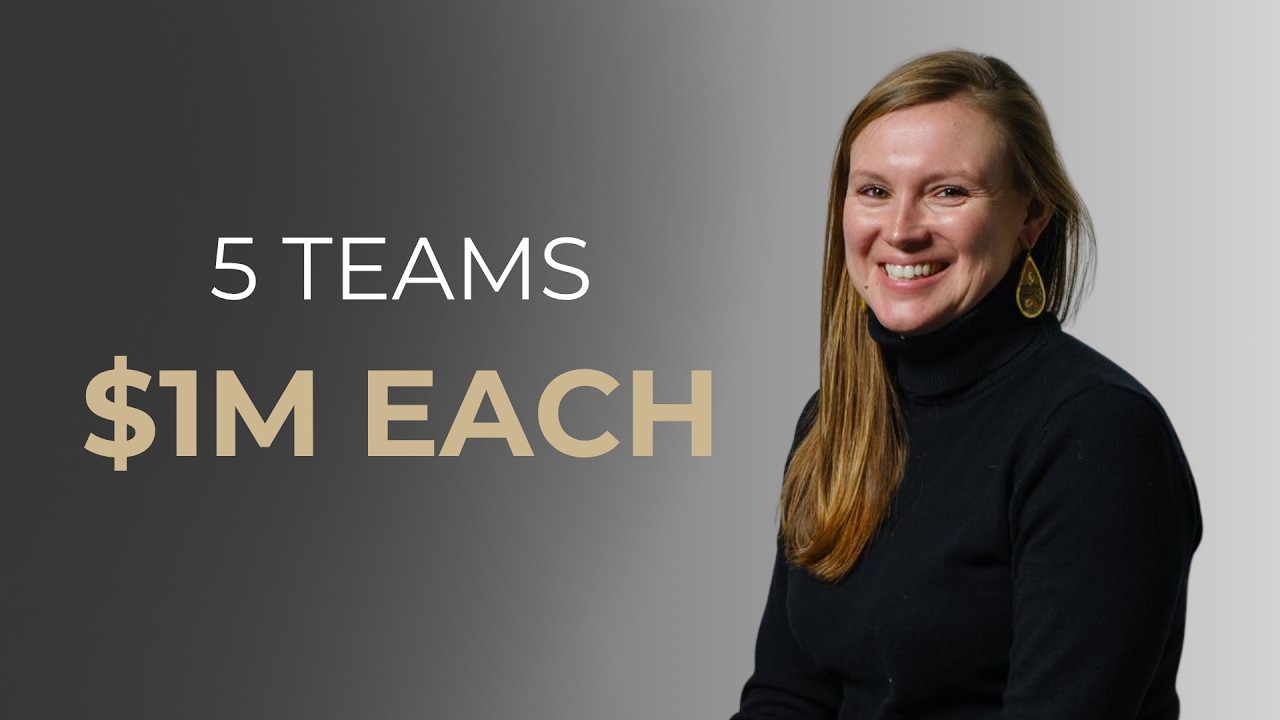
Colleen Heidinger, president of 43North, explains how the New York-state-funded accelerator grew into a $5 million annual operation that has created over 3,000 jobs worldwide. The program started in 2014, evolved from giving $250K checks to awarding five $1M prizes, and now has a 30% female-founder portfolio with nearly half founders of color. One graduate, ACV Auctions, went public six years after winning.
Chapters
From a top-line perspective, as you said, 3,000 jobs have been created around the globe, 1,000 of those in Western New York. We had the first IPO in '21. We have incredible— 30% of our portfolio are female founders. Nearly half of it is diverse founders of color. Like, we are here to build a city. We are here to create jobs. We're here to change mindsets about what you can do in Buffalo on a local and national scale.
Welcome to Just Go Grind. I'm your host, Justin Gordon. On today's episode, we have Colleen Heidinger, the president of 43North. 43North runs an accelerator program and invests $5 million annually to recruit high-growth companies to Buffalo, New York. Since 2014, they've invested $5 million every year into growing Buffalo's startup ecosystem. With a unicorn and publicly traded company among their ranks and several others on the rise, they're co-investors with VCs like Bessemer, Iconiq Capital, and Rise of the Rest, to name a few. 43North's mission thrives with the support of their dedicated sponsors, including New York State. Empire State Development, and the Ralph C. Wilson Jr. Foundation. Let's get to the episode. Colleen, welcome to the show.
Thanks so much for having me, Justin.
I am very curious about all things 43North because I heard about you guys a while back and then I'm like, I had seen that. And then I think I got reached out to about doing some collab with you guys. I was like, this is perfect because I think it's an interesting program. I also had another person on the show who started an accelerator in SF called HF Zero. They do the same terms as 43North, but you guys are doing something so unique and different. Tell me more about broad strokes. What is 43North?
Sure. So we are an economic development vehicle funded by New York State based in Buffalo, New York. We've invested $5 million annually the past 10 years, and we'll do it again this year. We have a mission to attract companies to Western New York. So we invest in companies that then have to move to our area, and ideally they stay there beyond our 1-year accelerator program.
You've been at this program, involved with this program for a very long time. What drew you to it in the first place?
For me personally, I moved home from Los Angeles, California, and departed from the film and television industry after a decade of my career in that arena. I honestly fell into it right, right before I moved home. Governor Cuomo at the time had dedicated $1 billion to Buffalo called the Buffalo Billion. And as part of that, he hired McKinsey and the Brookings Institute to do essentially an assessment on how he should allocate that money. One of the things that they encouraged was a business plan competition. And our local stakeholders said, okay, great, love the idea. But this is Buffalo in 2014. We've had a large amount of brain drain, right? People like myself running away from the city. So we have to make it the world's largest. We have to do something really splashy here. And that's where the $5 million comes from, right? I believe, and we just had a group of interns check it out again for us, I believe we are still the world's largest in terms of the investments that we make through the competition model. And so I moved home not for this role, but it opened shortly after I moved back to Buffalo. And it was like the perfect culmination of my education from Babson in the entrepreneurial arena, as well as a passion for Buffalo, right? I was very clear in that I did not want to, you know, be working for a large corporation in Western New York when I did move home. So it really checked a lot of boxes for me, and I was blessed to start as, I think my title was like Director of Events and Programming.
What was the program like back then? Because it's, I've seen like the pitch day, like the huge event you have at the, like the end of this process. We can get into that in a second. I've seen that, but I always am curious about the early days of these types of things because it's like, how do they start? Like, what does it look like in the early days? Like the first version? Because you were there. Tell me more about that.
Yeah. I mean, we did a lot of reflecting, particularly last year around our tenure and, you know, you're in it. So it's, it's, it's, rare that we lift our heads, but I mean, we really didn't know what we were doing, right? It was largely trial and error. The first year we had, I think, 7,000 or 8,000 applications. The second year we had 12,000 or 13,000 from all over the globe, every province of Canada, every state, you know? So, the marketing engine was certainly working. It was obviously low barrier of entry to apply. We've changed that quite a bit, very purposefully, but— We were largely building a brand, right? We were trying to put Buffalo on the map and this little competition that was named after the latitude line of our city as an outlet for founders from around the globe to consider. So a lot more, I'd say from like a budget perspective, a lot more money on the marketing side, on the branding side, and the larger mass outreach side that we've certainly tailored now to do things like this. But yeah, I mean, just thinking about the platform that the application was collected on, the people that we had judging, we've iterated that whole process time and time again. And we've always done the show, the big show at a theater in downtown Buffalo. I will say the first few years, there were not thousands of people. And now we have, you know, over 3,000 every year. So—
I mean, that's the crazy part of starting anything, right? It always starts from zero, like everything starts from zero. So you have to, you have to build it over time. And From those early days as well, like there's so many things to dive into with this. I'm curious about was it always the same terms? The starting point was it still a million at the time? Yeah, even the very beginning. So it was always that ambition.
There was always one one million.
Okay.
And then we had five hundred thousand K checks. And in the early years, years one, two, and I think three, we had two hundred fifty K checks. What we found out was that somehow those that were receiving the two fifties. Did not feel like winners.
Oh, and you could— they're like, we lost out on the million.
You want to watch through some tape in your spare time? The facial expressions of those that were winning the $250K were not what we wanted to see. We also saw with retention that it was not enough of a carrot, right, to come to Buffalo and really want to put roots down. So we eliminated those. And then it was always— it was one $1 million and $500Ks, 7 of them. We kept $500K for follow-on for a few years as well. And then In '21, we went to 5 $1 million checks.
That's interesting to hear the progression, because I was saying before, like, I interviewed this other accelerator, and it's like they started with like $25K checks or something as like a starting point. And now it's $1 million, same terms, like $1 million per person. It's like, it's interesting how that progresses over time. It's like you just have to start something that has the intention of obviously helping founders.
It's very interesting you say that, because that was actually the recommendation from the consultants that were helping Buffalo and the governor's office, that they wanted to kind of do a spray and pray model in that It would have been a lot of smaller checks. Now, San Francisco is obviously a very different market than Buffalo. And I don't know about their, their relocation as part of their package, or the commitment. But we were never going to get high-quality founders to take a $25,000 check and move their lives to Buffalo. Like, we knew that upfront. So that's why we had to go big.
It makes sense. I mean, it makes sense. Obviously, it worked out. So you switched in 2021, you said, to then that model. Right before that, though, I think it's COVID. What was that? You obviously have this in-person thing. What happened during that time? What was the team thinking about? Tell me more about that.
Yeah. So I can lay that one out for you. So in January of 2020, I, I was not president, but I got a call and was asked to be president in late January of 2020. We were moving our offices. We were the first tenant to help resurrect a big skyscraper in Buffalo. So we moved the first week of February. 25 companies across, you know, a mile away. It's not New York, but, and opened up a whole new office. And then the first week of March, you know what happened. So, for me, as like a young new president, it was like, here's my MBA, live, fast-tracked, you know, for free with a lot of stress. So, it was obviously a very unique time. We actually did have a company, I would argue, that thrived in that time. Hi Operator, one of their customers was Chime Bank. And they actually obviously needed support. And so that company hired a lot of folks and they were interested in folks that were coming from customer service. So a lot of the waitstaff in Buffalo or folks that were doing that type of work came and joined their company and were in person on our floor. So as kind of the lights across Buffalo started to go dim in the world, arguably, We had, we had some energy and momentum despite the difficulty of the time, but we did have a company that was hiring and for security purposes all had to be in our office. And so there was a bit of a silver lining there.
That's crazy. Yeah. I mean, I imagine the in-person stuff, it's just such a different world. Obviously that wasn't like seeing what, what things started, what companies had to go through that in terms of how they adjusted and like still maintain their quality for what they want for their program, the impact they want to have, especially Given the whole mission is like people coming to Buffalo. It's like, how do you think about that? Which is crazy. But also you've had now 5 years as president. So I'm curious about one of the things you mentioned earlier in the interview already. It's like the selection process in terms of these like judges and who's filtering and who's like judging basically the founders that come into the program. Let's talk about that process because I know there's multiple steps to this. There's like the application, which is now open. So everyone can go to 43North. Like the applications are open. What's that process like in terms of evaluating these amazing founders that are going through the program as well?
Yeah, sure. So typically, and I would expect the same, particularly because of the larger macro venture climate, right? We'll get about 1,000 applications. We, they will submit a written application that, that's quite lengthy. And I would, I would just remind listeners that this is not something they should be starting the night or the day that it's due. We ask for a lot upfront. And also, you know, we don't need 12,000 applications. We need, you know, so that was one of the major changes we did across the years. So there will be a written application that gets submitted. We'll have venture capitalists, industry experts, largely from Buffalo, but we also have a virtual component there as well that allows folks in our network around the nation to help us determine. We typically go from 1,000 to about 100 that we'll invite to a virtual pitch. So that pitch is in a room, same thing, with folks that we think will help us make the best decisions on behalf of Buffalo as well as the company. And that is typically, that this year will be in late July. And about 100 or so companies will go through the virtual pitch to a room of about 4 or 5 people that again are venture capitalists, industry experts from Buffalo, people that we want to have a look at the company. From there, we'll go down to about 40. So between, across August, our team will be doing some diligence to get it down to about 40 that go to our investment committee. So the investment committee is a subsection of our board and are all leaders in venture capital from Western New York. And so they help us determine the 15 or so companies that we invite to Buffalo for finals week. So that will be announced right around Labor Day.
Okay.
One month before the event. And then I actually get on a plane and I go to visit as many of the 15 as I can. just to get to know them as a human, right? Very important piece of this considering they come in and move in with us and we share a kitchen and we share bathrooms. We, you know, essentially live together. So, as well as the team does further diligence on the 15. And then those folks will come to Buffalo the week of October 13th. And during that week, there's 2 pitch events. The first one's in front of like 200 people. Usually it's right in our office building. We roll through 15 pitches. We bring in VCs from across the nation to help us to determine the top 8 coming out of that round. And so that's on the Wednesday. And then the Thursday evening is the big show, and the top 8 pitch there to what we call our, you know, celebrity or finals judges. Those are leaders in venture, friends of our board. You know, we like to get Buffalonians or folks that have ties to Buffalo, and they work with our investment committee to make the decision on the top 5.
There's so much to dive into with that. Okay, so one thing I'm curious about, So 1,000 applicants, because you change the process, obviously it's more work. So it's not like anyone can just like apply in 2 minutes and like you don't want that anyways. Because it's like people are just spraying, praying, applying to accelerators. That doesn't help anyone. You're like, we can't go through 20,000 applicants. Like it's just not going to work. Okay. So from that 1,000 applicants then. So this whole process is like 4 months basically, right? Roughly 4-ish months.
It'll close July 9th and winners will be announced October 4th.
Is that on purpose? You just have to have it be 4 months? It's not— I guess I'm curious, like, why 6? Why not 6 months? Why not 2 months? Why not 1 month? Why not 5 months? What's the operational, or what's the reasons for that?
Yeah, I mean, it at one time was even longer.
Oh, really?
I'll say. Right. And this is a piece of feedback that we get as an organization of just the time, right? If you want a high-quality company that's raising, a lot can happen in 4 months.
Yeah, for sure. Yeah.
And, you know, they're seeing their first check in January, to be really candid. So a lot of it is just, you know, we have to have an application window. It is the shortest it's ever been. There were times when it was 8 weeks long, at least. We've also added in elements using AI and further technologies layered on top of our selection process. So we've gotten that down as well. We are also, you know, utilizing state funding. So there's elements from their side that they ask for in terms of background checks and time that they need to look at the companies as well. And we're investing, I mean, candidly, you know, a lot of money. So, it's not a process that I certainly want to rush.
For sure.
We've learned a lot over the years in terms of what we're looking for and what works best. But yeah, I mean, every minute of every day in those 4 months is largely accounted for. And I've pushed the team to try to condense in a healthy way. Yeah. Quality in that review process is not something that I'm willing to, you know, stress any more than it already is.
Yeah. Yeah. And it's funny because like, yeah, I know, I know for accelerators, like how much work obviously it goes into, especially with this big of a check size and you're trying to get them to move to Buffalo. There's just so many components of it where it's like, yeah, you can't just do this in a couple of weeks. There's no way that would ever be possible. Like that's just not going to be the thing. But then it's also this founder perspective of like, okay, well, I'm gonna apply this program and like, let's say by the end of July or by July's date, and then it's like, okay, so capital could be 6 months. So it's like, how do they run their company to adjust for that? It's such an interesting like mix of things of like—
It is. We get a very diverse in every way set of applicants. Yeah, right. And what you can imagine we're really pushing on, right? Proper diligence and what you'd kind of consider normal, of course, but is why 43North's check considering the larger macro environment, right? And why Buffalo?
Hmm.
Like, we are here to build the city. We are here to create jobs. We're here to change mindsets about what you can do in Buffalo on a local and national scale. And so I'm— when I'm in these coffee meetings and I'm doing my piece of the diligence, it's a question on kind of the humanity side of You know, how does your— I like, I use the word organic fit. How does your company, you know, organically fit into what we've built? How do you see yourself helping us move Buffalo forward? Right. Those types of questions is what I'm particularly interested in.
Well, yeah. And I think I saw on websites, like maybe its numbers are off, but 74-ish portfolio companies and like 3,000+ jobs, which is pretty crazy. Like that obviously all from, hey, this ambitious idea of like what Do we do as like a pitch competition thing? Like, it's pretty insane. You said the you've got like better, better judges, better like VCs, like diligence and all that. Like, how has that process gone? Like getting partners involved and wanting to like look at these companies and help out and all of that. Because I imagine it's gotten a lot better over the years because then you have a thing that's actually working and you're investing in all that. But how's that been to find the right partners as well? To like, hey, like we need you to judge. We'd love to have you help us out. Like, how has that been? For you guys?
Yeah, I mean, you can— so I was a large part of this in the early days. So you can imagine, you know, like year 2, reaching out to, you know, the usual VC circuit in New York, and you're this little competition in Buffalo, New York. And people are like, what are you doing? Like, your taxpayer money? I don't have time to meet with you. Like, the rejection was so high. But let me tell you, Justin, as soon as we had our first IPO, and that news broke, a switch literally went off in that people all of a sudden either knew about us, they were in on that deal, a friend of theirs was in on ACV, they, whatever it was, right? You know, we could email people and we can, you know, get meetings largely with most, right? That want to hear more or are just as you are inquisitive as to how this thing's working. And so, and you're, 5, we started to invite some of our kind of friendlies in the VC world to come and help us judge. And it's not that we had to beg people, but it was certainly an ask, right? To come up for 3 days, to leave, you know, you have to largely be with us while you're here. And so we'd cobble together friends of friends and, you know, people with buffalo ties and they'd come in and we'd show them, of course, a really good time. Right? And to see Buffalo and all that we have going on. And now we're at a point where more want to come than we have room for. Right? So, we've kind of flipped it on its head. And those that come love it. You know, we've had a ton of organic collaboration amongst the judges that, you know, from an LP perspective, deal flow perspective, some have co-hosted events together across the nation, like, just as a result of coming to Buffalo and helping us out. We've also in a very organic way had folks that come judge that invest in our companies multiple times, right? So it's becoming an opportunity for judges to come in and have deal flow, right? And we have a whole actually new piece of that week where we're working on to make it even more of like a showcase or demo day, not just about our finalists, but about the community.
Well, that's actually something when you mentioned, and I looked online about the process and everything and seeing that you know, 5 people are gonna get the actual $1 million from this, but there's always venture capitalists and everything that are around this. And like, there's people, there's 15 people that come here. It's like, they are getting attention on their company. It's not like it's like, okay, bye, see ya. Like they get nothing. It's like, if they're just clearly getting attention, I imagine they also potentially get investment from these investors that see them.
Yeah, you're, you're absolutely right. And it's, you know, there's always those that don't move on, right. That, don't want anything to do with 43North, and that's okay. I would argue the more open-minded ones stick around for the rest of the week, show up to finals, right? They sit with the VCs, they know who's there, and they take full advantage of it. And great things have come as a result of it.
Yeah.
So, you're absolutely right. Like, the experience is certainly about us and the potential of receiving our investment. But I think if you come in with an open mind, knowing you're surrounded by VCs this year more than ever, There is plenty of opportunity outside of our money to raise while you're in Buffalo. Yeah.
And that's something I was, I'm always thinking of founders, like what founders, why are they going to join something? Their time is so precious. Like they're building a company every like moment matters. And it's like, obviously with this process, like they're still meeting people along the way in terms of getting help on their company or getting feedback on their pitches anyways. Cause it's like, if they're pitching their company for this, it's like, what are they hearing from you guys? Well, I still need to grow my company and build this regardless. So there's an opportunity to do that. And the other thing you mentioned before about the IPO, what company was that?
ACV Auctions.
And like how long after beginning the program was that? Or like what was that?
They were our million-dollar winner when we only had one in year 2. And they went public. And so that would have been 2015. They went public 6 years later. Okay.
6 years later. Interesting. Yeah, that would be huge.
Almost 600 people working in downtown Buffalo. They are now onto other continents with their technology. And it was an idea from a UB graduate whose family, you know, was in the used car dealer business. And he walked into what the only like technology accelerator in Buffalo at the time and said, I have this idea. I don't know how to put the tech around it. But, and that's where he met his CTO and co-founder, Dan.
Dan.
And off, off to the races they went. Yeah.
That's wild. Yeah, that will help get some— put you on the map a bit. You need to have— yeah, your companies do well. That's a huge part of it. Okay, so in that process, when they're getting to like the finals, for instance, you have all these people involved. One thing I have to ask, because I, I'm from Wisconsin originally, I know what the October, November, December months can be like in Wisconsin. I imagine Buffalo, I can look at where they are on a map. I understand. Is it purposely that it's going to end up in October always in Buffalo, or how did that timing come about?
Yeah, it's interesting. Um, largely because of our funding cycle with the state. You know, we've looked many times at overlap, moving something forward, uh, but then it becomes a space issue in our office. So, so we've highly done our diligence to see if it works. So yeah, it will remain in October. It could be 75 and sunny. It also could be 40 and, you know, sideways rain, which we've had. But I will say Buffalonians come out, right? They're there no matter what. They fill that, that theater. So it's not intended— it's also the theater schedule, to be really candid. We have to slide in between the national touring shows. And it's usually only one week in the, in the kind of between September and year-end that they can, can welcome us. So that for us is a very important part of our work. It's a free night in the most beautiful theater in Buffalo, equivalent of a Broadway theater in New York, free and open to the public. And so there really isn't another venue that we want to be in, candidly.
Yeah.
And it's one of the very few events at that theater that's free and open to the public. So it's important for us as an organization and kind of with our mission in building a better Buffalo to have that opportunity for the community.
Yeah, I always had to ask. I know there's always logistics behind the scenes because I've hosted events and done things too. And it's like, well, why is it here? Like, you understand, like, there's always more details to it. But I also thought about Buffalo in October. I'm like, Wisconsin in October can be way different, like you mentioned. So you never know what you're gonna get.
Yeah. Yep. All part of it.
Fair enough. All right. This is all of this part of the program, getting into it, going through the process, et cetera. But once they're in the program, you have 5 teams. How does that work? What are they doing? What are they getting after that?
Yeah. So on the kind of continuation of the weather theme, they moved to Buffalo in January.
So, well, it's only getting better from here.
We highly encourage A winter coat to be on your Christmas list or holiday gift list. So they moved up to Buffalo in the months of November and December. We're helping them find apartments, find doctors, find daycares, like all life things we assist with. And so that's really what makes us unique from an accelerator standpoint. So when they come in January, they hit the ground running. All work from our office. They all are given individual offices on our floor at Seneca One, downtown Buffalo. And then the programming starts. So it's highly individualized. It's obviously 12 months. They'll receive an individual mentor based on industry as well as, you know, what they tell us they want the most help with. We have a monthly fly-in of venture capitalists program. So every month we fly in a VC to spend time with our companies as well as the fireside chat, podcast. So that's kind of one of the tentpole events of the month. We meet with them individually. So our team, you know, wraps our hands around them as much as we can. And when I say our team, we extend our skill sets and strengths that we have on our bench to our companies as they need. So that could be anything from videography to crisis management on the PR side to investor relations, business development. photography, marketing. We have a recruiter that sits on our team to help hire folks. So, all of those skill sets are lended to our companies as they need.
That's amazing.
And so, we have a monthly meeting to keep a cadence on where we can be inserting ourselves in a helpful way. And yeah, there's kind of organic things that have come up amongst the founders themselves, but that's, you know, really the gist of our work. Right. It's highly individualized. We recognize they have companies to run. We recognize that every founder is not in the same place. So they don't all need, you know, how to hire your first salesperson or how to raise your Series A at the same moment. So we, we support them as they're, as they're moving forward.
How has that like evolved? Because even you've been obviously been with the company for a long time, but also president for the last 5 years. How has that on the year-long program side of things? Evolved for you as well?
Yeah, it has a lot. Like back in the early, early days, the quality of the companies were much more immature from a stage perspective, right? So they were just getting going. We often, you know, they were giving us decks that were not at a quality that could be even presented on stage. You know, like everyone was just kind of figuring things out. Of course. But, but we— and that was very kind of cookie cutter programming. We had a partner that, that did it with us from the university. And what we found over the years is not everyone, and especially in the early years, we had classes of 11 or 13 companies. Right now we're down to 5, but never is everyone going to be at the same place where the same content is applicable. And so we don't need to waste people's times. So now it's more individually based on what a founder identifies that is a problem or where they want some support, and we'll go find the person if we don't know them ourselves. So that's really been A major shift, right? Instead of forcing in the cookie cutter and the kind of textbooks, textbook chapter by chapter, now it's become, okay, you have a business that's running, right? You have a product, you've raised money, you have a team. What is it now that we can help you with? And then we'll, if we don't have the people on our team, we'll find, we'll find them to support.
To that point with having 5 teams. So it's not like you have, I mean, there's a CEO and 50% of the company. Will be there at least, right? So there's there's that. But depending on how big these companies are, it's not that insane amount of people. But it's also a question I always have. Like okay, you mentioned the million dollar check is enough to be significant for people moving to Buffalo. Has this program ever? I mean, is it like why five teams? Why not ten teams? Why not? You've had more teams before. Like there's always the numbers in that side of things. And also it's like well, for the impact we want to have, it's like well, what if we did ten million a year? Why don't we did $20 million? Why did we start— what if it was only $1 million total for the year? Like, how does that even play into this as well? Because this government as well, it's so interesting.
Yeah. And that's really the simple answer is just the, the restrictions and the extent of which the state's commitment allows us to invest. So that number has held steady, the $5 million, you know, over the years. The state is interested but willing to let us make the decision on how we we divvy that up, and very respectful of the last pivot to the $5-1 million.
Yeah.
I will say, to manage 5 versus 11, from a bandwidth perspective of our team, is much more manageable. Now, we're taking bigger bets. Those jockeys better be really strong. And that obviously leads not only to the diligence process, but to how are we attracting companies, which is what the team is working on now. So, right from the get-go, how are we identifying high-quality applicants? applicants who will come in and, you know, do perform well with the investment on behalf of us in Buffalo. But it's, yeah, the whole process has evolved over the years, right? And in that the state's commitment has been there through and through, but we haven't been able to add any more investment dollars. So that's why it still remains, you know, the $5.1 million.
And it's, it's like 5% of the company, right? So it's like, okay, also, as you have more and more acquisitions, in theory, then it's like you could recycle that, or how does that work?
Yeah, and that's exactly how it works right now. So if there was to be a transaction, that money would come back to the operating competition, which is what we run.
Gotcha. It's gonna be interesting.
And it's interesting to note, we are the— we are one of a handful of competitions that are New York State funded. So we're kind of, I like to call it the grandmother. We've been around the longest. We've had the most significant IPO, but there are other competitions across New York State. We are the only industry agnostic one. So if you have listeners that are in the drone technology space, that are in agriculture, that are in photonics, there are individual competitions across New York State funded just the way we are that invest in companies that move to those regions as well. So, but we are, we are the largest, and we kind of share that pool of innovation dollars with the rest of them.
How does that play a part in terms of the actual industries and types of companies in that way? Like, as you're picking, because obviously you're gonna have, you're gonna have great founders across different industries and different, even stages, potentially a little bit, but like, how does that play a part?
Yeah, for those that I just mentioned, they're all They're all led by former industry of those cities. So Rochester Kodak was there, Lautschenbaum was there. You know, Grow NY is based in the largest section of our state's farming and agriculture industry. And then the drones are out in Syracuse. So it's largely just based on industry expertise that's ingrained in those communities.
Okay, gotcha.
And then for us, we're— and just so your listeners know, we are agnostic and obviously shy away from true life sciences after learning kind of the earlier years. It's not the best investment for us from an economic development standpoint.
Yeah.
But we're, we're again, we're looking for the right companies for Buffalo who, and founders who are committed to coming and growing their business in Western New York for whatever reason. Right. I've had founders tell me, oh, my grandmother grew up there, or I grew up going to visit my aunt and uncle there, or I went to UB and left and now I want to come, like whatever it is. You know, we want to, we want to feel some passion for our region and the opportunity that founders have.
What have you seen on that kind of that note as well, like the impact piece of it, what this has done? Because this is, I mean, now it's like 10 years in. So it's like, what has this done? Tell me more about that. Because I imagine there would be other cities, people thinking about something like this where it's like, okay, how do they do this? What was the impact? What happened? Because now you're 10 years in, you have all this data. What is, what have you seen at least?
Yeah, I certainly take, and I'm an open book in terms of how this thing has worked largely. A lot of different municipalities have wanted to do something or inquisitive as to how it's worked. They typically though do not have the investment pool at a size like ours, right?
For sure.
And that's typically where things differ. And so from an impact perspective, I'm actually doing a large assessment on this now by external support. consultants to really allow me to have, now that we're through 10 years, to really have some impactful data on a lot of things. So, but from a top-line perspective, as you said, 3,000 jobs have been created around the globe, 1,000 of those in Western New York. We had the first IPO in '21. I like to say our first. Yeah, first of many, hopefully. We have incredible, 30% of our portfolio are female founders. Nearly half of it is diverse founders of color, which I'm very proud of. And Justin, what the other piece of this and the reason why the state believes in our work is a bit harder to measure, but it's what we call a mindset shift.
Right.
And shifting the way the next generation, those that are away from Buffalo and the way they look at it, we're here to create a mindset shift. and to create a sense of optimism around what can be done in Buffalo. And so certainly harder to measure, harder to quantify. But I think based on the media attention we've gotten, based on the other tech companies that have come to Western New York as a result of the energy and the ecosystem, I would argue, and with the state's further commitment, I believe it's true that we have shifted the way, not all, there's always work to be done, but the way that— Buffalonians perceive Buffalo to be a place of opportunity, as well as those from outside the region, right? We increasingly more have VCs wanting to come and take a look at what's going on. I take more calls now than ever of expats who are outside the region but want to somehow find a tech job in Buffalo and want to come back. During COVID I mean, you know, it was like a complete flip on people wanting to come back and have a backyard and no traffic and a much higher quality of life. So I think that mindset shift is what I'm hoping will come through in the report I'm leading right now. But that too, I think, has a lot to do with the work that we've done.
I think you lost me at no traffic. That's so— I mean, that was just seeing how bad that can be in other places like where I'm at in Los Angeles is huge. But it is such an interesting model. It's like you need enough capital to make it significant where people want to do that. But obviously there could be different cities that this could this could happen in terms of like stamping out this type of thing. Like I said before, I'm from like Milwaukee, Wisconsin. So again, I think Buffalo said was 275-ish thousand people or something like that. And Milwaukee's maybe like a million with metro, but like less than that without metropolitan. And like you see like generator in the north. I think it's in like the Midwest. It's done different things, like trying to take a different approach. Like Seeing like different organizations trying to approach like startups and like innovation in a different way, they all fascinate me. And this is the one that also does because it's like the government, pros and cons. Obviously, you have the funding from it, but it's maybe a little bit slower because their process. But they're very, very incentivized to make this work, and they can take a longer-term view in many ways, some capacities. Where does this go from here? I guess is what I'm curious about. 'Cause now you're 10 years in, you're kind of evaluating the numbers and the impact and you know it's done a lot already, but you're always looking forward. So it's like, where does this go, you think, from here? Where'd you want to go, I guess?
Yeah, so we, we have further commitment from the state. To your point, they, I would argue we've exceeded expectations. I mean, we were funded annually in the beginning when I jumped in.
Don't be nervous.
And, you know, we didn't know if we'd have a job the next year. It was all based on, on results. and how the state felt. So—
Yeah.
The last commitment they made was a $30 million commitment, and that was by far the largest. And so we'll be stirring up those conversations again very soon. But the large, you know, it's been heavily implied that they want to see us continue. So it becomes a question for us of, you know, are there modifications that we make to the competition model? We'll be in conversations with those other competitions as well across New York State. So for a larger look at the state's commitment to innovation and the economy. We also have a federal— we were one of the arenas or areas dedicated to or committed to a federal tech hub by the prior administration. So that will also be layered on top of us and we're We're playing in the semiconductor arena with Micron's many billion-dollar investment coming to Syracuse, New York. So I think some of that may also be in play at some point as the state looks at it through a wider lens. So that will be very interesting. We also have the 43North Foundation now, right, that sits alongside us to complement our work. So the proceeds from the IPO sit in the foundation and they have a brilliant approach to how they're going to complement our decade of work. And they've identified 4 pillars around storytelling, around talent, right? Particularly that of our own between K-12, corporate connectivity, which is actually, I think, something that really could use some strength in our region, right?
Yeah.
Corporates understanding our work, as well as they started a venture studio. And so as a continuation of the opportunity to create within Buffalo and help them grow and grow our own. So those are the 4 things they're working on to literally complement our work, right? And continue to fuel the ecosystem forward. So that's very exciting as well for the region. So, you know, the kind of short answer is we're going to turn this thing on. You know, it's back on now. We'll have the big event in October. And at the meantime, we'll be in, you know, I'm already speaking with the state about what's to come in the future, but highly— Intended for us to have a few more cycles of this program.
Yeah. And it's, it's so interesting, like how I would say the timelines on this, because I was at a venture firm before and knowing the timeline on like a venture fund, whatever, 10 to 12 years, and you have these like extensions on that. So it's like a 15-year maybe. So, okay, that's what they're trying to invest in and get returns from for LPs. Okay. So anyone in the ecosystem, like in terms of returns for like exits, IPOs, etc., take so long. However, then if you Just staying in the game long enough, then you start to have those acquisitions that feeds it. Then you have more IPOs that feeds it, and for building an ecosystem, but then you also need that. So then those people have money to angel invest into the more companies, which feel more innovation. Like that is something that takes time, which is why it's like, let's just make this the hub. It's like you can't just make it the hub immediately because you need to have all those things in place. But obviously what you've done, you've like laid the foundation for that, and it's like starting where then it's like, can those people then reinvest back into? through the community of Buffalo in terms of the innovation startups and all of that, which will be— yeah, it just takes time, I guess.
It does. And I think if you were to ask our founding chairman, did he expect this thing to be successful? Absolutely he did. But the time in which it's, it's had its success is probably what surprised us, particularly with, with, with the IPO. I think, you know, it's a bit unfortunate the IPO happened during COVID because I think the news was just so full of COVID Yeah. That the IPO and its impact on the community, what it means for all of us, for those that were invested and not, could have been told in a different way. I think it was a bit of a miss, but people are catching on, right? And understanding, you know, the angel investments that are now happening. The CTO that I mentioned that started that company is now leading our venture studio. Like, like, I couldn't— we couldn't ask for a more perfect person, right? So you're seeing it. Interestingly enough, of our 8 finalists, all 3 co-founders of the company that IPO'd were on their cap tables.
Ah, yeah.
So from a flywheel perspective, you're just seeing it time and time again. So, you know, I have interns that were with me in years 1 and 2 at 43North that are now working for our companies. It just happened again last week. So some of these small little signals of success are what allow me to believe that this thing is going to continue to move forward. But it's going to take time, to your point. And we've always said this is a 20-year commitment.
Yeah. Well, yeah, if you have a long-term view on things, then you realize, okay, well, day to day, we just keep evaluating to try to find the best companies every, every, every, you know, thing. And then like, can we help them better in other ways for that year they're here? And then it goes on. Do we get better, great partners involved, etc.? Which it seems like you have. One thing you said though before, I had to kind of dive into it because I can't let that slip. You said it went like faster. It's maybe more successful than he thought originally, or they thought originally. Why do you think in the last 10 years it has maybe had more of an impact or been more successful than maybe originally thought by this timeline at least?
I think the IPO came earlier than maybe. Yeah, just generally earlier. And I think the success of of the— therefore, the success of the program just came sooner than we thought. Right. There was true belief in this work because those that were committed to it don't fail.
Yeah.
So, you know, having them on our, on our backs. But I think just the momentum and the way that that all came to life with the IPO really accelerated our reputation, the respect that we have. the rooms that we find ourselves in now, right on the venture kind of circuit that, that allow us to be respected.
That's, that's so fascinating. And we'll see where this goes as time goes on. Because the— now the application is open. Anything you want to leave founders with who may be listening, who are thinking about applying, who like maybe just hearing about it for the first time, anything you want to tell them as they're kind of thinking through this?
Yeah, it's often Even if you're not even sure, I would encourage you to take a look at the application. I've had plenty of founders over the years complete the application with their co-founder as an exercise to allow them to think about things that they haven't yet. Right. So they have used the application as a prompt to really sit down and talk about the future of the business with their co-founder. So even if— use it as an exercise, right, for you and your co-founder. And maybe through it, you'll find that this may be something you want to consider. You know, fully. But even if not, it's going to force you to talk about some things that maybe you haven't yet, or you haven't yet thought about with your co-founder. So I think it's a great exercise no matter what your thought is. But I would, you know, for those that are serious about, you know, coming to a non-coastal city where you're a big fish in a very small pond, where folks are accessible and want to help you, I would highly encourage you to consider our work.
Amazing. And if anyone wants to reach out to you, whether it be anyone trying to start an accelerator, people like, I know your time is precious, you're also busy, but how can they reach out?
What's the best way to do it? Yeah, no, I'm happy to talk. I give everyone a half hour of my time. So I'm Colleen, collen@43north.org. It's also right on our website. And I'm happy to chat to potential founders, or if you're thinking about building something like this, we've now got a decade behind us, and I'm happy to share the learnings because there's quite a few.
I love it. And I'm looking forward to seeing the, uh, the stats once you have the full report from the first decade, what that looks like and everything as well. But Colleen, thank you so much for coming on the show today.
You're very welcome, Justin. Thank you.










