How to Actually Scale a Startup (From a Founder Who Did It 3x)
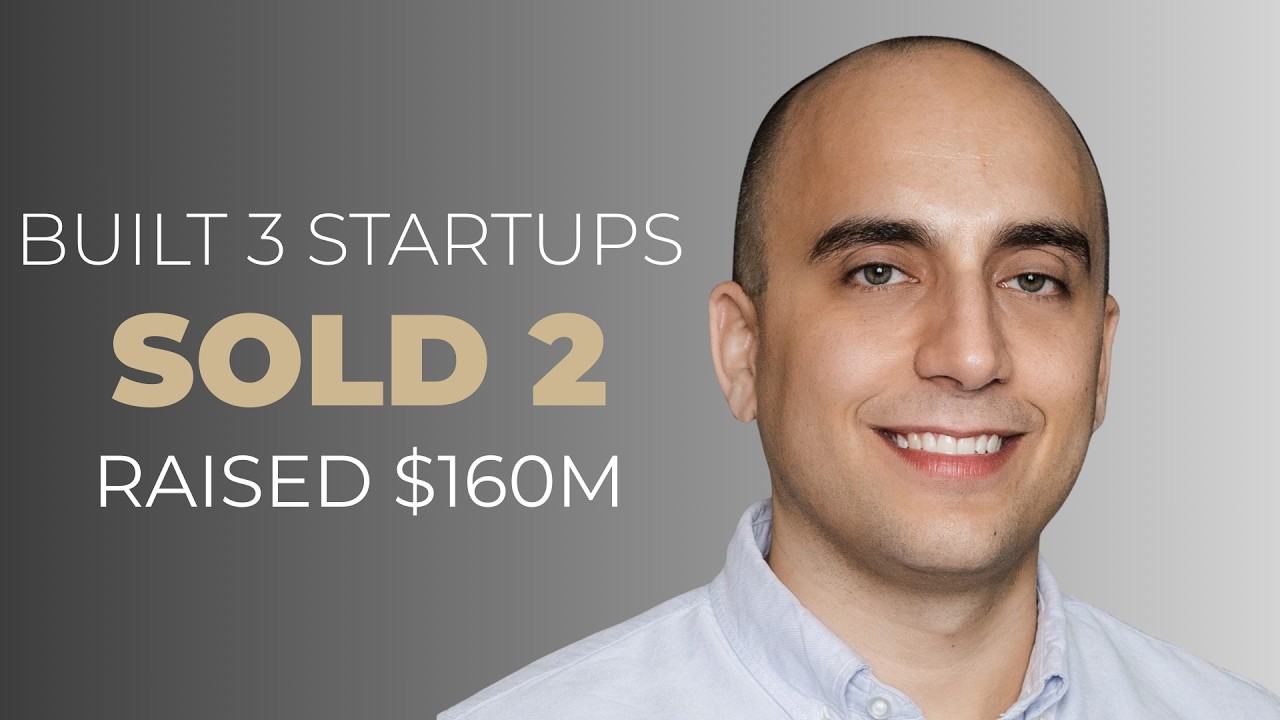
Wasim Dahir, who founded Pilot three times, built his accounting startup by manually doing bookkeeping for the first three customers. He shares how founder-led sales, a niche focus on tech startups, and the annual Founder Salary Report drove growth, plus the hard shift from hands-on founder to managing managers.
Chapters
The hard part is not getting started. The hard part is operating at scale. And you will wake up one day and see many years later, did I actually do the right things?
Is it working? Or, oh crap, like, no, I didn't. Like, it's starting to fall apart.
You don't need everyone to like it. You just need one person to like it. The playbook that is really going to work for your business is unfortunately probably fairly specific to your business.
Welcome to Just Go Grind. I'm your host, Justin Gordon. On today's episode, we have Wasim Dahir, the founder of Pilot. Pilot.com offers accounting and tax prep for startups. They've raised $100+ million themselves, have been around since 2017, are going after a massive market, and have grown a ton over the last few years. Today's sponsor is Ro, a company also serving startups and small businesses. With Ro, founders get a single pane of glass they can use to run and scale their business from day one. That's bank account, corporate cards, expense management, bill pay automation, and accounting to help them move as fast as they scale. Row is trusted by thousands of companies ranging from 2-person YC startups to brands like Perplexity, Cal.com, Splitwise, and more. The big thing with Row, every customer has a person at Row, 24/7 customer support, phone, text, email. Actually reminds me a lot of Pilot and how they operate with having a person for each startup they work with. And for Row, they will be with you at every critical milestone in your startup's journey. To learn more about why startups choose Ro, visit ro.co today. That's rho.co today. Let's get to the episode. Wasim, welcome to the show.
Thanks for having me.
There are a lot of angles to take with this interview and looking at your background. There's so many things. One of the things I'm always thinking about with what you've done already, at least, is like, why can you not stop starting companies? It seems like you have always continued to start another, another company. What is it about starting companies for you?
Sure. So, I've thought about this a lot because there's a lot that is amazing about starting companies and there's a lot that honestly really sucks. And so, it should not be a decision that you make lightly.
Before starting Pilot, which is our 3rd company, I did a lot of introspection about, well, why do I want to start a company?
Or maybe more generally, what actually makes me happy when I'm in my work life?
And it was a combination of I want to work with smart, talented people who challenge me to do good work every day. I want to work on a thing that customers love where you show it to them and they're like, wow, this really solves a problem I have. And I wanted to work on something—
and this third one kind of sounds like a low bar, but it's surprisingly not.
I wanted to work on something that was not obviously societally net negative. I want to make something you want and I should believe that in consuming it or buying it that I'm actually helping you, not harming you. And if you take a look at those 3 requirements, the startup is actually probably one of the best vehicles for achieving them, which is it's probably the most efficient method for getting together a smart group of smart talented people who want to work hard on a particular topic. And it has the advantage of really giving you a feeling of agency and impact. You know, my first company was acquired by Oracle.
My second company was acquired by Dropbox.
I think one of the things that was very interesting about our time at Oracle was on its best days, it was as fun as the startup, but on its worst days, it was miserable. And it was miserable because it just didn't seem like what you were doing really mattered, right? It's like it was never going to move the needle for Larry Ellison. And so, it was just like, it was hard to get motivated on stuff that you didn't actually want to do. Whereas in the startup, like, yeah, you need to take out the trash.
You don't want to take out the trash.
It's not fun, but you understand that like you need to, why it's important, that your team is depending on you to do it, et cetera, et cetera.
With all the companies you've started already, we could probably do a podcast on literally each one and there would be hours of content. So, we're gonna focus a little bit more on Pilot, but for people to understand Pilot, not knowing your background, they have to know how you got to this Why start Pilot in the first place?
Sure.
And it's like, I'm not an— so what is Pilot?
We do accounting and tax prep for startups. And it's actually a service, meaning we're not selling you a piece of software that does accounting. We're pairing you with an accountant who's a full-time employee of ours who sits in our office in Nashville. And we do, you know, we've written a bunch of software to help make that experience kind of really good, really solid, really polished for you. really high quality, really efficient for us.
And I'm not an accountant by background.
I'm like almost the opposite of an accountant by background. I mean, I studied computer science. I'm an engineer through and through. But the kind of consistent thing among all of our startups is that they were solving problems that we had.
And the problems we're solving at Pilot are the problems we very viscerally had in our previous companies. You start a company because there's something you want to do in the world.
There's You know, some tech you want to make, there's a product you want to provide, there's a service you want to get out there.
That's the reason you start the company. And when you do that, you quickly realize there's a lot of other stuff you need to do that is not just the work of providing that product or service. And that work is important, right? It's hard, it's tricky, it's like important to get right. This is why big companies have enormous teams to do this stuff. But you, you know, the startup founder who's just getting going, like you don't.
And so we saw Pilot as, well, let us do all of this heavy lifting for you so you can focus on the reason that you started the business in the first place. And we did that because that was a huge pain we ourselves had.
Yeah, this reminds me, knowing that you're going after a bit of a bigger swing with Pilot, given that your TAM is absolutely massive, it reminds me of Dharmesh at HubSpot. Like, they had some success beforehand and he had already created another company. And then I came to his co-founder, Brian, they wanted to go massive with this huge swing. They knew that from the gate. We're not gonna go anything small. This is not a single or double. We're going huge. What was that conversation like with your co-founders' thought process around knowing that you're gonna start Pilot and it's gonna be, we're gonna go for a really big thing, huge market, all of that? What were those conversations like? You had worked together before, but this is obviously a new idea. Tell me more of that as well.
I mean, it's exactly what you said, which is I think our previous successes, each one kind of emboldens you to think bigger.
to aim bigger.
And you can do that because you know in some ways that there's like a little bit of a safety net for you, which is like, well, we're gonna swing big, and if we miss, we're gonna be sad.
Like, we'll be very, you know, I'll be bummed, I'll be disappointed that we let down our employees and our investors, but, you know, I'm not gonna end up on the street.
Yeah.
We have the kind of like cushion or the safety net.
And so, I think that lets us be basically structurally with this company, make a bigger bet, which is the bet here is we want to do this for every business in the US, right? We want to do it for tech companies.
We want to do it for coffee shops.
We want to do it for consultancies, et cetera, et cetera. And that's a big ambitious problem. It's a hard problem. But I think the intent is exactly as you've said, which is like, this problem sucks. We know it sucks. We've had it ourselves twice now.
Yeah.
And the only way to solve it is to solve it at scale.
We want to do it for every business out there.
And that's not a small undertaking. And so, I think, you know, my co-founders and I were very aligned on this point because of our previous experience.
I talked to John Andrew on Twisted Wheel from Wander, and they have grown like crazy. They're a Series B company now, and he's also a repeat founder. He had this entire document he used to kind of evaluate the idea of Wander before launching. 'Cause he's obviously had the experience, he's learned a bunch, et cetera. For you, what did that look like in the time before starting Pilot? I know you had a gap there between, obviously, before starting it and your last company. More tactically, strategically, like what were you thinking about? How were you thinking about this next idea? I wanna dive a little bit deeper into that.
Yeah, so 2 things.
First is I took 6 months off between when I left Dropbox and when we started Pilot.
And in those 6 months, I actually literally did nothing.
Well, I mean, I didn't literally do nothing. I slept 8 hours a night and went to the gym and spent time with my friends and family, but it was intentionally a time to recharge because actually between the first company and the second company, we got to it right away, which is the first company was acquired by Oracle. We were at Oracle for a year and a day. The day after that, we were in my co-founder's apartment thinking like, okay, what's the next thing?
Oh, yeah.
And so, there was actually for me, for this company, an opportunity to say, well, let me just take a little bit of a breather.
Let's make sure I'm really recharged. Let's make sure I'm really up to the task. And then like I had set a deadline for myself and said, okay, 6 months, I'm gonna spend 6 months kind of tending to me. And then like, we want to get back to it.
And yeah, we thought long and hard about, okay, fine.
We want something that has a large market size, that has a really compelling why now. Like, why doesn't this business already exist if this idea is so good? That has something where we thought we had a unique edge, like where there was good founder market fit.
Like, those were the kind of criteria we tried to evaluate the idea on.
And then, of course, obviously, that like, it's a real problem that people viscerally have and are willing to pay money to have solved.
Why wasn't this already solved in this way beforehand?
Sure. So, I think the question is, why now, right? Like, we didn't invent accounting.
We didn't invent doing accounting on computers. Like, those ideas are not new. They're actually quite old.
And so like what enables Pilot to exist now? And in some ways, actually, the answer is a little bit different in 2025 than it was in 2017 when we started the company.
So I'll give you the 2017 answer and then we can kind of revise it for 2025.
The 2017 answer is 2 kind of like big developments allowed for the existence of Pilot. And at its— this is a very simplistic way of describing Pilot, but like Pilot Pilot is your external accountant. And importantly, we're remote.
Like, you interact with us over the internet. You don't go to us with a shoebox of receipts, like, in your local town.
And the 2 things that enabled that are, one, the back office has increasingly, like, moved to the cloud and has APIs and stuff.
Like, when we started our first company, like, Stripe did not even exist. Gusto didn't exist. Brex and Ramp and all those folks didn't exist. Plaid didn't exist.
Like, you would have had to build all of these things. To only then go and build Pilot because we get data from all those systems, right? So the existence of a robust ecosystem of online with API kind of services or kind of like pieces of software that you use in running your company is a prerequisite to our doing what we do. So one is like the data is newly electronically available and that wasn't the case even 10 years prior.
The second is that consumer behavior had really shifted, which is, I think the like next generation of entrepreneurs were fine with the idea of like meeting with someone over the internet and not going down the street, or maybe they even preferred that.
Right.
Yeah.
And that like, that's a kind of societal change. And that was, that was actually accelerated by the pandemic.
Right. So it's like 2017, that was the thesis. 2020, very accelerated by the fact that, well, you actually just couldn't go and see the person in person anymore. So you sort of had to, We all got used to doing stuff online.
And then 2023, LLMs, ChatGPT, all that stuff, even further enhanced the thesis because the thesis has 2 components. Component number one of the thesis is a lot of the work that goes into doing the accounting and tax prep for a business is work that the computer wants to do, that the computer should be doing because the computer is actually better than the person at it. Because if you think about accounting very simplistically, and accountants don't like it when I describe it this way, well, what is accounting? It's like, how did money move in and out of your business? And think about the inputs and the outputs. The inputs are highly structured data like dates, amounts, a memo, and the output is also like a highly structured entry as well.
It's a journal entry. It's like, I debit this account and credit this account.
And the rules of determining that entry are like very well codified, like accountants— really geek out about this stuff. They want to write down all the rules. And so, okay, you have a system with highly structured inputs, highly structured outputs, and well-defined rules. Well, what is really good at operating in that context? Well, let me tell you, it's not a human. It's a computer. Computers are really good at this. So, part 1 of the thesis was computers should really be doing this work because computers are better at doing this work than the person.
Yeah.
And then part 2 of the thesis was I have never, ever, ever talked to a business owner who has said, oh, I really want to buy accounting software. Like, I can't wait to get my hands on some accounting software. It's like, no, you want the problem solved end to end. And that was like the pretty weird thing we did. And it was like weirder in 2017 than it is now where we said, you know, we're going to be a tech-enabled service. We are going to be your accounting firm.
But then when I close my eyes and if you look at kind of how the company is organized, we're a tech company.
Yeah.
Like we employ a ton of engineers and designers and product people and all that stuff.
And so, yeah, that's really the why now.
That's why I think Pilot could not have existed a decade ago.
And it's obviously grown tremendously and we'll get to the scaling side of it and all that for people who don't have context. I mean, you've raised $150, $100+ million, whatever dollars, like it's obviously a massive company, hundreds of employees, all of that. But early days is always the thing I wanna dive into with people because it's so fascinating to get something from an idea and zero to than this thing that exists in the world, which is why I love talking to founders. Tell me about the early days in terms of getting this off the ground, first customers. Take me through more of that. Even obviously you could make the product, you had that experience on the team, but getting these first customers, proving out this kind of, this is our thesis, we have people who actually pay for this now. Tell me through more of that.
Sure. So, I'll tell you what we did and then I'll— then maybe we can talk a little bit about whether I think it was the right thing or not. And I do, but it's like a little bit subtle.
Okay. Because we're a tech-enabled service, literally the first thing we did on day one is I called up 3 founders that I knew and I was like, hey, who's doing your accounting?
And they're like, well, I don't have anyone yet. And I was like, congratulations, I am.
And my co-founders and I literally like bought some copies of QuickBooks Online and like my co-founder Jeff and I just literally did the books for these first few customers while my other co-founder Jessica Wrote the first lines of code to say, oh, okay, okay, let's see what these folks are doing. Like, let me write code to begin to automate it.
And so the nice thing about that is actually on day 1, you're able to validate a bunch of stuff.
You're able to validate, okay, this is the price point that these folks are willing to pay. Like, this is a pitch that's compelling to them. Like, yes, in fact, you can actually generate revenue on day 1. There's a lot to really like about—
it's like the ultimate MVP in a way.
Yeah.
Yeah.
And, and that kind of checks out, right? Which is the alternative is an accountant down the street. They don't have any software. Like you start out with a copy of QuickBooks. They have a copy of QuickBooks too. There's like, you are feature complete on day 1. You don't need to spend a ton of time building all this stuff before you can sign up your first customer. And like, that's really cool.
And I think that's awesome. I'm glad we did it that way. Now the challenge, and I have a whole Substack post about this, it's called Don't start a tech-enabled service.
And one of the points in that post is like that the challenge of what I just described is like, well, think about what we're validating. What we have validated by getting those initial customers is that customers want to buy accounting. And like, that's not exactly a hot take.
Like, of course they want to buy accounting. They're like legally required to buy accounting.
Yeah. And of course, with sufficient effort, you could start a small accounting firm. Like, I believe that you could do that. In some ways, that's actually not the interesting part of the idea. The interesting part of the idea is that you can do it in a tech-enabled way and that you can do it at really material scale in a way where actually the service quality is higher than if you had just done it in this kind of like old-school manual-by-hand way. And so the thing that's tricky about our business, and that I think I didn't fully appreciate until we were really in it, And that I think there's like a new crop of these like supposedly AI-enabled accounting companies that seem to start every year. I think what they don't appreciate is actually the hard part is not getting started. The hard part is operating at scale. And you will wake up one day and see many years later, well, did I actually do the right things?
Is it working?
Or, oh crap, like, no, I didn't.
And it like, it's starting to fall apart.
Well, what were some of those things then in terms of that? Like, were they the right things or not the right things that allowed you to scale? Because obviously this thing scaled tremendously. What were some of those things that you did right or that you wish you would have done differently?
So, I think what we did do well is we were very focused on gross margin from the early days. And that's a little bit like counterintuitive.
It seems like, well, why should I care? Isn't that like a thing that like accountants or late-stage investors care about?
And In a way there, you're not wrong.
Meaning I don't think it makes sense to hyper-optimize the gross margin profile of the business in the early days because like, who cares? You're operating at subscale. Like your long-term gross margins matter, your short-term gross margins don't.
But— Okay, just a simple definition.
Like gross margin is like, okay, you pay me $500 a month for the service or $150 a month for the service or whatever. And it costs me $75 to serve it. It's like, that's the ratio you're kind of concerned about. And the reason we wanted to make that number go up was not to improve the profitability of the business or for anything related to what your CFO might care about.
The reason we wanted to make that go up is in some ways it's proof that the computer is actually helping you. If you are getting more efficient, you should be able to do the same amount of work more cheaply, or you should be able to do more work for the same cost. And if that's not happening, then what you're doing is not actually working. And so, I think we were right to kind of identify and look at that in the early days.
And if anything, I wish we had done more of that in the early days because it's sort of like you can't game it.
It is the ultimate thing that keeps you honest.
It's like, well, this is how much work you're doing and this is how much it costs you. If the efficiency there is not improving with time, something is wrong.
Now, the downside of that is that actually it's not that helpful in telling you what is wrong.
It's like the check engine light.
It's like, okay, there's a problem, but good luck.
You don't know what the problem is. It's like, well, is it X or Y or Z?
It's like there are a bunch of inputs that cause the metric to be good or bad. And so it's not as prescriptive or it's not as predictive.
It's also trailing, right? You find out after the fact, like, oh, Gross margins were bad.
So, I think we were good. I think we were smart to focus on that in the early days.
And that was one of the things we thought kind of deeply about, about like, well, is this actually working? This number has to be trending up.
With this hypothesis of building the company at all, obviously you had 2 other exits beforehand. Founding teams worked together before. Excuse me. All good signs of things that you think would be easy to raise capital. Take me through a little bit of that because obviously to build this idea, you have raised a bunch of capital to be able to do it with a grand ambition and, you know, taking this massive swing. How was that capital raise process for this in terms of convincing investors and going from the seed round to even beyond that?
Sure.
So, 2 things are true, and this is a question we get a lot. It's like, oh, you've done a good job raising a lot of money.
Like, tell me your secrets. And the secrets, I gotta say, are like a little bit disappointing, which is that for our first fundraise, for example, like, you know, our seed round, it was literally we called people up and we said, okay, we're getting the band back together. We're doing another company. Like, do you want in? Yes, no? And of course they said yes.
Like that's not really unfortunately that's like not really very applicable advice.
It is a function of the fact that like well we have other companies and the companies like had reasonable outcomes. Yeah.
So that's I know that's not that helpful. Here's a thing that actually is helpful, which is you some people think okay you must have had a super easy time of it then.
It's like oh everyone wanted to invest. Oh it's like a bunch of MIT engineers with previous exits doing a huge TAM thing. AI, like, of course, money will just like start flowing at these folks. Sure.
And it's like, it's not, it was actually not that simple. Meaning with the exception of that initial seed round, every round we did like almost didn't happen.
And maybe that means we priced it correctly, or maybe it means just like, you know, actually even when you have a lot of like structural advantage, that it's still hard.
And what I would say as kind of like reassuring words to folks that are out there trying to do this is like, you don't need everyone to like it. You just need one person to like it. And there are, you know, there at every round there was someone who looked at it and passed and usually they passed because they didn't like the gross margins.
They're like, oh, the gross margins are bad. I don't believe that these folks can get the gross margins to be good.
Now it turns out they were wrong.
The gross margins are now good. And so like, No, they probably should have invested, but it doesn't matter that they didn't invest.
What matters is like there was a firm at each of these rounds that said, okay, I see what these folks are up to. I'm a believer in the team. I'm a believer in the TAM. I'm a believer in the track.
Like, I think these folks can actually do it.
And you need n equals 1 of that. So, just because you have a bunch of conversations where people say no, like, that's okay.
And that is expected. Even the best businesses Like, probably should have skeptics.
If everyone thought it was an amazing idea, that would kind of freak me out because, again, it kind of goes back to like, why now?
Like, if everyone thinks this is so good and people are willing to throw money at it, why doesn't it already exist? There's actually probably something wrong with it that like, it would be a little bit weird. So, you know, I think it's okay for everyone not to fall in love with you. That's kind of not the point. You just need the like one firm at every stage.
When you're in that process for other founders, I mean, regardless of round, like you said, I've talked to so many of them now. It's always still challenging. I mean, it's all even like, I think about like even like Tyler at Beehive and getting rejected from different people as he's like growing like crazy. It's like you still get rejected from investors at different rounds. Like, take me through more of that as I know you had a crazy experience with your Series A as well. Like, tell me more about how you mentally kind of overcome that as you're building this company. Are you just like, the reality is we need to raise capital, we just make it happen? Like, what is your mentality for that? And how do you kind of overcome those challenges with it?
I think your view has to be, one, fundraising is a necessary evil, not the goal.
Like your success as a company and your worth as a person, like, are not— it doesn't matter whether, you know, firm XYZ invested in the company. It's like, that's actually not the point. The goal of your company is to build a thing that customers want and want to pay for. Ultimately, or to make money in some way.
And VC interest or VC investing, maybe like, there's probably some correlation, but it's like, it's actually not the game you're trying to win.
So like, don't, just don't get too concerned about like, you know, well, they didn't like me. It's just like, that's not what you're— it's a necessary evil.
Get some money in the bank and move on with your life. Or even better, like run a company that doesn't need to raise money.
That's even better.
But if you do, like the goal is to efficiently get it done and get back to work.
And so I think that allowed us to like, in some ways, take it less personally. It's like, okay, we're doing this thing because the business needs some capital and like, let's get it done. Let's make it happen. It doesn't matter if everyone likes it or not. Like, again, what matters is like, is there a partner who like feels, has enough conviction to kind of make this happen?
With even that round, the initial capital of raising this for pilot, like being repeat founders and you said you hit up a bunch of people, you had options clearly. How are you thinking about that even that initial Raise around like who you wanted to work with? Because you have a little more flexibility in that being repeat founders, like you said, all the criteria and background. How'd you even think about that? Because some people are in that position and they're like, okay, like how do you then go about it in terms of who you want to work with, why you want to work with them? Like, tell me more about that.
Yeah.
So, for our first round, it was almost entirely angels and it was almost entirely angels who just like were these awesome folks that we had deep respect for and had worked with, you know, over the prior decade or whatever, I guess. Yeah, probably decade at that point. Where honestly, like, I would have paid them to get their advice. And so, the idea that they would like give us some money and also be on the cap table and you can call them occasionally like that seemed obvious. And I actually am a very, very big believer in, I think some of the best angel investors we've had have been these kind of former founders or current founders because they just like get what it's about.
So, our initial seed round was predominantly angels, and then there were small checks from 3 VC firms where we knew the partners and we liked the partners.
And in some ways, that was like an audition for like, okay, who should do the Series A? Like, let's test the waters together.
Because I think the thing people don't appreciate about raising your Series A from a firm is like, you're going to spend a lot of time with these people.
Like a lot. And you're going to talk, they're going to talk to you all, they're going to text you all the time. They're going to email you.
You're just like, and so hopefully you like, like them or like have a good working relationship with them. And I think people underestimate the kind of like importance of that. And it's like, you know, I text with our Series A investor like probably weekly still. In, you know, year 8 and a half or whatever the company—
like, you're gonna be in very close contact with these folks for a long time. So, we thought, well, okay, let's kind of test the waters of like, what will it actually be like to work with these folks? And that was kind of one of our design goals in the construction of the seed round.
That makes sense. And then for your A, what happened? Because I know people don't know this story. Tell us more what happened with closing this A round. The craziness of that with this company is too. Sure.
This is a long time ago, so I probably am going to be a little rusty on the details, but it's a good reminder that you have not really raised the money until you have the cash in the bank, which is for the Series A, there was a firm we had been talking to and there's a guy there who actually like we thought was awesome. And I still, I think he's a great guy. I still have a lot of respect for him. He kind of came to us around the time we were going to do the Series A and he came to us a bit early. He said, you know what? I'm a big believer in you. I'm a big believer in the company. I just want to preempt this round. Let's get it done.
And we're like, okay, cool. That actually sounds pretty good.
Let's do it because then we can just get back to work and we appreciate your deep conviction in the business.
And so, we spent a bunch of time talking to him and hammering out the terms and all that good stuff. And then he said, cool, cool. Well, come to the partner meeting on Monday.
He didn't literally say this, but the implication was basically like, look, this is a formality.
Go to it.
We'll just hand you the term sheet immediately afterwards. You'll sign it and we'll all celebrate. And so, we went to the partner meeting, we presented, and then they put us in a little conference room and we were waiting there because our expectation was that he was going to come back with the term sheet and we'd sign it. That was also his expectation. And 5 minutes go by and nothing happens. 15 minutes go by, nothing happens. It's like an hour later, we're still there and we're like, this is weird.
The fact that we're still here, something is wrong.
This is not like what's supposed to be happening.
And basically like he came back and he said, listen, you know, I'm sorry to say this. There are some other folks in the partnership and like, they don't, they're not believers essentially. And like he had some reasons like, well, they're concerned about XYZ.
It like kind of doesn't matter.
The point is we thought this was bankable. We thought it was a done deal.
Like we were sure that it was a done deal and it actually wasn't.
And And I think that was like humbling and a good reminder for us, which is like we assumed that like for us, like given our track record and our trajectory, like, okay, fine, this is—
we'll just like get this done and we'll move on.
And this is kind of what I mean. At every single round, it like, even for us, it like almost didn't happen.
Hmm. That's so crazy. Is it? It's crazy you have a dartboard with their faces on it. On the on the wall as well.
Well, again, I don't think about them at all. We don't think about them at all. As I said, there's no bad blood here. Well, and this is the thing people need to remember, which is this is like it is a very human business, right?
Yeah.
And it's like the the dynamics at a given firm matter. And it's like well, some people thought they could get it done, and maybe like when all their partners just had a bad day, or they like the you know it's like. rising and falling tides, or they just made a hot investment. And so people are like more inclined to listen to that. It's like there's a bunch of stuff that goes into this that you don't see or control. And so I think you probably like shouldn't get worked up over it, but also you can't bank on it either. Like it is not for anything, for M&A, for fundraising, for a sale. It is not done until the cash is in your bank account.
And so don't think that it is until the wire has landed. I like have been burned. By this many times over the course of my career, it's like it's not done until it's done.
And it's funny how the market conditions too can just dictate that because when I was in venture, I was a venture firm for a couple of years, and like they're talking about even like Series A metrics, like okay, a million ARR for this type of company. Now it's like oh, more like two million, three million ARR. It's like wait what? The goalpost just moved again, and then it will always evolve. So like you can't control that either when you're going out. It's like there's so many aspects of that which is insane. And one of the things I want to go back to though, you're talking about kind of those first initial sales with Pilot and. Whether it be the right way to do it or not, but like, tell me more about the founder-led sales side of things. I think you talked about this in First Round Capital, has an article on this, but like, you're very much a believer in founder-led sales, but I'm curious about the timing of that, how long you decide to do that for, like what that looks like. Like, can you take us through more of that and getting Pilot off the ground? Sure.
I mean, I probably personally sold the first 100 accounts at least, and then it's, it's not like I pressed eject after that. I was still very in the weeds on the sales process.
And I think it's really important. It's really important for 2 reasons.
One is like sales are your periscope into the world of what's happening with your customers. Do they like what you're selling? Do they not? Why do they? Why do they not? Is it the price? Is it the feature set? Is it like the positioning? Is it there's a new competitor emerging and they like their stuff?
It's like, that's your contact with reality.
And I think if you don't engage with it, you start to drift away, like your mental model of the world and the actual world like start to diverge and that's a big problem. And so, one of the reasons I think founders should always be deeply, at least one founder needs to be like really involved in this stuff is to kind of like remain anchored to that ground truth.
Now, the reason not to delegate it too early is kind of the same, which is let's say you did and let's say it's not working.
Now, you don't know why because you like are not really getting that information dump. It's like, well, is it not working because like the product is bad or the pricing is wrong? Or is it not working because we hired the wrong rep? And all of that stuff will get filtered through the rep. It's just like you need that kind of firsthand, like visceral knowledge of what is happening on the ground.
And so I think basically people want to divest from this stuff too early. It is tempting to be like, oh, I just need to hire the salesperson and like they'll just go crank on it.
It's like, no. This is an important part of your job. You actually do need to do it yourself.
And the time to stop doing it is, well, when you're overloaded. Like there's so much, like the company is not selling as much because your calendar is too full and you're not able to get back to prospects in a super timely way.
Then it's like, fine, now let's fix that. Let's start to add some bandwidth to the team so that we no longer have that problem. But until like you're up to your eyes in demand and you like can't service it well, like, no, you should probably be the one doing it.
How did you approach that in terms of what were you feeling or how long was it into the business even that you're like, you said you did the first 100 plus and obviously you're still involved on sales side of it. Was it for you that, that exact thing of like it was 6 months in, a year in, whatever, and you're just like, okay, I cannot handle this. And then what did you do in terms of that next hire?
Yeah. So probably my, my litmus test is like, are you overloaded or maybe better?
Because are you overloaded? It's almost too late.
Yeah. Is, is this really, have you honestly, and you have to kind of, you know, be frank with yourself. Is this really a repeatable process at this point?
Like, have you heard all of the objections at this point?
Like, is it now, or are you just turning the crank?
Like, if you have figured it out, you know what resonates, what doesn't, what you need to say, like how, what you're going to hear and how to counter those.
Like if you've really nailed the process and it is repeatable, Now it's time.
You can bring someone on to help you out.
If you're still figuring it out, no, you got to figure that out yourself.
And so the first thing we did, I think it was like, okay, we got to a point where like, okay, this is a repeatable motion. We have figured that. I figured this out. I know how these calls go. We do them well. We win at acceptable rates. Now it's time to like help out. And the workload is starting to increase. Like now it's time to kind of like pull someone in to help out.
One thing with that, I'm curious too, because like your ICP, you start this company, it's like, okay, we can work with like every business in the world in theory, like whatever. You can narrow it down by geo, you can narrow it down whatever, but you can work with literally everyone needs accounting help and there's different levels to that. And like we see different companies like, okay, I'm only going to go enterprise, we're going to go SMB. Like we mentioned HubSpot earlier, like they went very pure SMB type of thing. What were you seeing in the early days? Like, was it being pulled out of you which direction you went? Was it, we see opportunistically, this is the first one you need to start with because that will lead to the next customer? Like, take me through more of how you were thinking about Yeah.
So our perspective was like, you know, there's this like Paul Graham or like Brian Chesky advice about it's like better to have 100 people really love you than have, you know, 1,000 or 10,000 people just like kind of think you're so-so. So like I encourage folks to like get pretty niche in the beginning. It just makes everything easier because like you can tailor messaging better. They probably all talk to each other. You develop expertise in it.
It's just like the more niche you are, the better.
And sometimes you kind of know the initial niche and sometimes you have to discover the initial niche.
And for us, we happened to know in this case, the initial niche we were going to target was startup founders because one, we knew, we knew viscerally, twicehand, that this was a real problem that they had.
And we had a good network and we had credibility. It's like there were structural reasons why it made sense for us to initially sell to kind of technology startups.
And we found that our ability to sell technology startups was very, very good.
What we also found is like if you were a property management company, no, like we were not kind of very credible on the phone with you.
It didn't really seem like we were going to do a good job because ultimately, like for our customer, the business owner, they generally are not accounting experts.
They don't want to be accounting experts.
That's kind of like why they're hiring us.
Yeah.
And so they want to know that you are for them, that you work with businesses like theirs, that you speak the language. And the cues on this are very, very subtle. It's like, oh, did you call it a client or a customer?
Like different industries use like different terms for their person.
And if you say the wrong one, it's like, oh, that's not like, okay, this person doesn't actually really get what we're about.
So I'll probably just work with the person that does. So I definitely encourage folks to kind of like specialize.
I think it is dangerous and difficult to try to boil the ocean on a, we're going to be everything. This is for everyone needs accounting, therefore we do accounting for everyone. Even now it's like we do serve a very broad base of small businesses, but it's, there are definitely pockets where we are like very deeply entrenched and where we have great adoption. And there are pockets where I think we still like don't really speak the language that fluently and it, you kind of see it in the sales data.
How did that evolution of kind of your go-to-market, your, your growth strategy evolve over time? I'm just curious about that. Cause like obviously going to market initially, it's like maybe just reaching out to customers and you're kind of cold emailing, whatever. But as you evolve, like companies can take many paths to this, obviously, right? You can have an SDR, you can have a sales motion, you can have more of a community-led growth. You can, there's so many different ways to go about this. How did you approach go-to-market growth and like, why did you choose that route? I'm curious. Cause I know today you also do some events and stuff too, but I'm curious on how you've kind of approached that.
Yeah. I still honestly don't give us an A+ on this.
Meaning I think the blessing and the curse of our go-to-market motion historically has been that it has been very inbound and very organic. Meaning, and this sounds like I'm like a, oh, I'm too much of a perfectionist. Like, it sounds like I'm trying to like compliment our business and I kind of am, but I kind of not. Like, the service is good and customers like the service and they tell their friends. Yeah.
And that is the biggest driver of like how we grow. And now the reason that's great is like, okay, you're doing good work.
Like, yes, good.
The reason that's not good is like what you actually want In some ways is the crank that you can turn to generate more demand.
And if you need more demand, you just turn the crank more. And if you are at capacity, you just turn the crank less.
And the challenge is actually, it took us— I'm not even sure we have the crank today, but it took us a very long time to get to a point where we were getting meaningful contributions from channels we could control or really influence because on organic, it's like, The way you influence is you do a great job, but that's like, you know, there's like, that's pretty, you know, delayed.
Like the, you see the effects of that kind of well after you did the work. It's not like, oh, I, you know, I have capacity for X more customers next month.
Let me go be extra good at the service this month.
That's not really how it works.
Yeah.
Um, so we like had a lot of good organic word of mouth, which again, good things to have. And actually if you don't have that, you probably should be concerned. Because if you don't have that, in some ways what that means is you like probably haven't really nailed the product market fit and that will eventually come to bite you.
It will come to bite you probably in like your retention being bad. Even if you can get enough people in the top of the funnel, if like they don't actually really think you do good work, eventually they'll all churn out. You're kind of fighting an uphill battle.
And then we just tried a mix of stuff, right?
We did like try some paid ads. We tried some events. We tried some outbound email. We tried some community stuff. We tried some social, just like a little bit of a, You kind of have to.
I think it is like the playbook that is really going to work for your business is unfortunately probably fairly specific to your business. And I think it's not impossible, but it's pretty unlikely that you can just copy and paste someone else's playbook and have it work.
I think it's really a function of like, okay, who do I sell to? How do they buy? Where do they hang out? Why do they buy? What do they care about?
And like that stuff tends to be like pretty product and pretty company specific.
Yeah, it's kind of baked in your DNA. I remember talking to Everett, CEO of Ro, and they did a lot of community-led growth basically in the early days, and they still do today because his background, he was doing a bunch of like event stuff. His background is that. So it's kind of natural. And they were in New York. It's like, it makes total sense why Ro was built that way. Whereas other companies, they take a different approach to how they're going about it as well. And obviously you guys built a product that was good enough, you had that experience to be able to do it. Okay, you have great word of mouth, tremendous. But then as it evolves, even the channels you're choosing, like, okay, let's say you start with SEO. Well, SEO has evolved a ton. Let's say you're doing organic social. Well, yes, you get less and less views from organic social typically like every year, then depending on how you're going about it, like your pages and all that. As you've gotten to scale now, because now you've You've raised $100+ million, you have a bigger company. Like, tell me more about what that looks like today in terms of what you even want from these channels, what makes it worth continuing to use versus, you know, we'll test a bunch of stuff, but like, how do you think about today in 2025 where you're 8 years into this company, you've grown into a much bigger thing. Now, how do you look at growth?
Yeah, I mean, the way that we sort of think about it, and I mean, this is probably true kind of regardless of the size of the company, is The way the buying decision works for accounting or for tax prep is it's kind of hard to sense from external signals that you are necessarily in market. Hmm.
And so I kind of need to know, I kind of just need you to be aware that we exist and then trust that you will raise your hand when you're actually like, interested in buying because some percentage of our customers are brand new companies. And so they're fine if I like see that you've just incorporated, like, yeah, you're probably a good fit. I can like, there are signals for that. I should go target you and I should like be helpful and then hopefully get you to buy our stuff.
Um, but a good percentage of our customers are switchers.
They like have an existing accountant, they were DIYing or they have an existing accountant they're unhappy with and they finally decide like, ugh, I'm done with this guy. Like I'm going to check out Pilot. Yeah.
Like it's actually, it's very hard for me to tell that.
So what I need is for you to have had some good interaction with the brand at some point historically so that when you're shopping you say, well, I'm going to call Pilot and I might call these other folks too, but like I've heard of them, they're in my consideration set.
And so we do a lot of like very tip-top of funnel stuff. Like one of the things we did very recently, and we do this every year, we've done it I think now like 4 or 5 years in a row, um, we released this thing called the Founder Salary Report.
Which is we do a survey of a bunch of startup founders and a bunch of geographies and a bunch of industries, you know, and we say, what are you paying yourselves?
And the reason we do this is twofold.
One is actually, I think it is like a problem that we ourselves struggled with as founders, which is how do you set your own comp?
Like, you don't want it to be too low.
You don't want it to be too high. You want it to be justifiable to your investors. Like, there's like the presence of more data here just like lets you make better decisions.
But the second is like, it's of interest to our buyer, right? Our buyer is the founder and like, no, we don't literally help set compensation.
It's like, you know, there are companies that do that.
That happens not to be what we do, but it is something that is relevant to our buyer that makes us seem like we know the industry and makes us seem credible.
And to be clear, we do know the industry.
We are credible. Yeah.
So, it's like, it's not just that it makes us seem that way.
So, we've tried to do that kind of thing, which is like, what is useful tip-top-of-funnel things we can do to add value and help you run a better company? And then when the time is right, we're giving much more than we're getting and we're trusting that when the time is right, like you're going to come give us a call because you have a positive association with us. And I think that has been pretty key.
to a lot of the stuff we've done.
Like for outbound email, you can send outbound email.
It's like, hey, I saw that you just incorporated.
Like, do you need accounting? And like, it probably works because like they do need accounting. Yeah.
They're required to buy.
So it's like, yeah, you're going to get conversions from that. But if you instead are like, hey, I saw that you just incorporated and like, here's our checklist of like 5 things that people get wrong when they're just starting their company. Like, that's much more powerful because we're giving you something of value. Or like, we do a campaign around Delaware franchise tax season, which is—
Delaware franchise tax is a thing that like all Delaware corporations have to do. For C corporations, it's due March 1st. There's always a scramble and Delaware does a really confusing and scary thing with how they present the numbers.
So, you think like, oh my God, I owe $85,000 and you only owe like $450.
But there's like a founder rite of passage of like having that heart attack.
And so actually we like can reach out to people in January, February and we say, hey, listen, this thing is due. You're going to get— I can see because it's a public record that you haven't paid it yet.
When you log in, you're going to have a heart attack because it says you owe $85,000.
You don't. You only owe $450 and we will do it for you for free.
Like click here now and I'll just like, I will personally get it over the finish line for you. Like that's a fairly compelling Outbound email because it's like a problem you have and we are helping you and it costs you nothing.
It's like, and you are left feeling like, oh, these folks did me a favor. Now, that's not to my earlier point, like, you know, another company can't copy and paste that play.
That's so specific to like, well, I target Delaware C corps and I do them in January and it happens to be a public record where I can check that it's like, you know, it's like all of those elements were needed To craft like a thing we do that is useful and that resonates with the ICP.
Yeah, I love that. And I remember I did like a tweet about founder salaries and it went like crazy viral because that exact point, like people want to know, they are curious. It's like, what if I'm a pre-seed company? What if I'm a seed stage company? What if I've raised X amount? What if I've raised $300,000 more than that? Like it's all variables and people have very strong opinions, which is probably why it went viral. Uh, VCs and founders included have strong opinions. Some people are like, Pairs up nothing all the way from nothing to like six figures depending on what yeah it's like a crazy thing so that salary report is very interesting and the other part of it like what you mentioned too it's like I remember someone saying like we like to think of it as a customer funnel top of funnel they kind of go through all nice and clean whatever it's more like an orbit they are seeing you you're paying from different directions they may see a social post their friend mentioned this whatever and now I need accounting help now I need help it's like okay oh yeah pilot I have heard about that it's not like this clean thing that goes through which is always like It's a nice visual, but it's never that way. And so all the things you do, the interactions, people find Pilot through different ways, then they may want to work with you guys for different reasons. Like, that's really how it goes.
Definitely. And the attribution on this stuff is basically impossible.
And my marketing team is always like giving me a hard time about this because I'm like, show me the ROI.
Like, why do you want to spend this money on this campaign? Show me that it like turned into sales. And like, you rarely— it's like rare that you can do it very cleanly because you get all this like, oh, you either do first touch attribution or last touch attribution.
They're both like kind of BS. us in different ways differently.
Yeah.
And so there's a certain amount of like, yeah, the ROI math in aggregate, this is what we're spending on marketing.
This is what we're getting in exchange. Like that has to tie out. But there's also just, you need to have some conviction around, well, okay, listen, I have confidence that my customers are here and that this resonates with them.
And to go back to my earlier point, how do you develop that confidence?
The only way you have conviction about that is if you've actually spent a lot of time with them.
Because then, you know, like, oh yes, no, this is what they care about.
I know, 'cause I like have been at events with them and I've been on the trade show floor with them and I've talked to them and like, I understand how they think.
If you're just trying to like in the abstract think like, oh, what do I think like a startup founder might want to know?
It's just like, you're, you're going to write something that is like not native, that is not authentic, that's not going to resonate. And so there's a certain amount I think in marketing is like, you just kind of have to sometimes do stuff.
Where you have high confidence that it is a bet worth making. And the math won't lead you there.
You just have to kind of like go for it and see what happens.
Yeah. And you never have all the numbers and nothing's 100% certain. And all these things, you're obviously taking educated guesses and this is entrepreneurship, right? Like you're always, there's risk involved in everything, but you're making educated bets essentially. One thing I'm curious about is one of the last things before we wrap up here is just, this is your third company. This is the company that Has been most successful so far, correct? Definitely, yes. Yeah, so like it's gotten the biggest all things like great. Where's like where's your psychology at now in terms of like what you're thinking of problem-wise or how you're thinking about like what you where do you spend your time? I'm just kind of getting into your mind now that you've gotten you've basically gotten farther than you've ever gotten with a company before. So now you're probably more of a like manager of managers. It's a different thing. Just say anything more of that experience and how you're. How you manage that day to day? Because I think there's Aman Abuzid from Incredible Health who said like the job of founders is like managing your own psychology like day to day because that's that's what you're doing. How do you think about that?
Well, I definitely agree with managing your psychology day to day, which is like you know sometimes running out of money kills the company and sometimes just like giving up kills the company and they're both like very real existential threats.
Like the thing that I think people don't appreciate.
about what it's like to run a company is you never feel like you have made it.
Like even at our stage, it's like, oh God, I think about all the things that like we're not doing well or that could be going better. Or like, it's like, because the, yeah, you've achieved a lot, but the goalposts are now even higher too. It's like, okay, how do I continue my exponential growth trajectory?
Like how do we continue to do, and the things that got you here, like are not gonna continue to get you there. Like, There's a quote from Greg LeMond, who's like the American Tour de France winner. He's like, you know, it doesn't get easier. You just go faster. It's like still super hard to pedal. It's just, you're going a lot faster than you were going before.
Um, and I think that's very true.
And I, you hear Patrick Collison or whoever talk about this. He says the same thing.
He's like, cause you think Stripe is like, look, those guys have made it, right? Surely Patrick Collison is like living the life. Like, no, he's sweating it. He is definitely sweating it.
And it's like.
It does not get— it's just the— there are still problems. The nature of the problems are very different, but they are problems nonetheless.
And you still feel that kind of like anxiety and drive to resolve them.
And to your other question, it's like the role changes a ton as you grow. And actually last year, my co-founder Jessica, who used to be our CTO, became our CEO and I stepped back into an IC role. And that's actually been very, very— it has caused a lot of introspection for me personally about like, oh, you start the company because you like building, you like making the product or talking to the customer or whatever. And then look, in year 7 or year 8 as CEO, that's not what you're doing. You're doing other important work, which is you're building the machine that builds the machine.
I think it's the thing that Elon likes to say about the factories.
It's like you are building an organization that is going to to point you in the right direction to do the things that will make the customers happy. But it's like, there's a lot of indirection there and it's like, okay, how do we think about OKRs and how do we think about like performance management on the team and how do we make sure everyone understands the strategy? There's like, there's work of building the organization. And I think the thing honestly that I found is like, I was okay at it. I think okay to good maybe, but it like didn't give me energy. It was not as fun for me.
As talking to the customer or writing the code or crafting the marketing campaign.
And that's a very personal thing, which is I think Jessica is exceptional at that work and also gets energy from it.
And for me, it's like, oh, I actually am very excited to be back in the weeds of like, oh, let me—
can I think of the clever way that something we can do that appeals to the so-and-so? But yeah, you have to kind of like Have the headspace to actually just pause and think about, well, is this the intersection of stuff that needs to be done, stuff that I do well, and stuff that gives me energy?
And if it's not, what does that imply about what you should be doing?
Which is quite the irony of starting a company. And obviously, people start to solve problems and stuff, but they also want the autonomy of running their company. And then it becomes this beast that they don't have really autonomy. It's very interesting. Yes.
I mean, The fact— I strongly agree with it.
I mean, what's interesting is like you do this because you like want agency and you want impact and you want autonomy.
And then it's amazing how real the inertia becomes as the company grows and you have to fight, fight, fight, fight, fight to like stop that from being a thing. And it's just like, it's wild that sometimes it feels like there are parts of this company when I was CEO and definitely now, but even when I was CEO, that like, I feel like I almost can't control it. It's like, oh, actually like a lot of work is required to keep this on course or to keep it pointed in the right direction. It's very interesting kind of how that happens.
Well, yeah. And as it evolves, I remember I've done a lot of like deep dives of world-class founders and did one on Sara Blakely at Spanx. And she said that was her job as the founder is to set the rudder basically. Because every, you know, 1% off and then your company's in a way different position. And her main thing is like always set the rudder. That's what she mentioned. It was like, yeah, that makes total sense, especially at that size. As you continue to scale, it's like, are we on the right course? Because if we're not, we see companies go bankrupt or fail even after being incredibly successful. It's like, how does that happen? You stop innovating, you stop serving customers, all of that. And you have to continue to kind of do that over time, which is a fun challenge.
And the analogy is exactly right too, which is like the small boat versus the very heavy ship.
Like, you know, there's like aircraft carriers.
It takes like a lot of time and fuel to turn them around, like, or you can't.
And so you have to kind of be like, okay, let me like, like, let me slowly nudge this in this way so that like the downstream impacts of your tiny corrections end up being very material.
Yes. Well, Sam, this has been great. Uh, any asks of the audience, things you're looking for, things you need at Pilot? What do you got?
Well, obviously folks need help with accounting and tax. Give us a call.
Um, if you're curious about the founder salary report, check it out.
And then, you know, I'm pretty robustly posting on LinkedIn and all that stuff. And so if you liked what you heard there, like here, please do check that out.
Perfect. We'll be sure to link it in the show notes as well, the Founder Salary Report. So my editor will do that. Thank you so much for the time today.
Of course. Thanks for having me. This was fun.










