How to Build a Successful CPG Brand with Sandro Roco, Founder & CEO at Sanzo
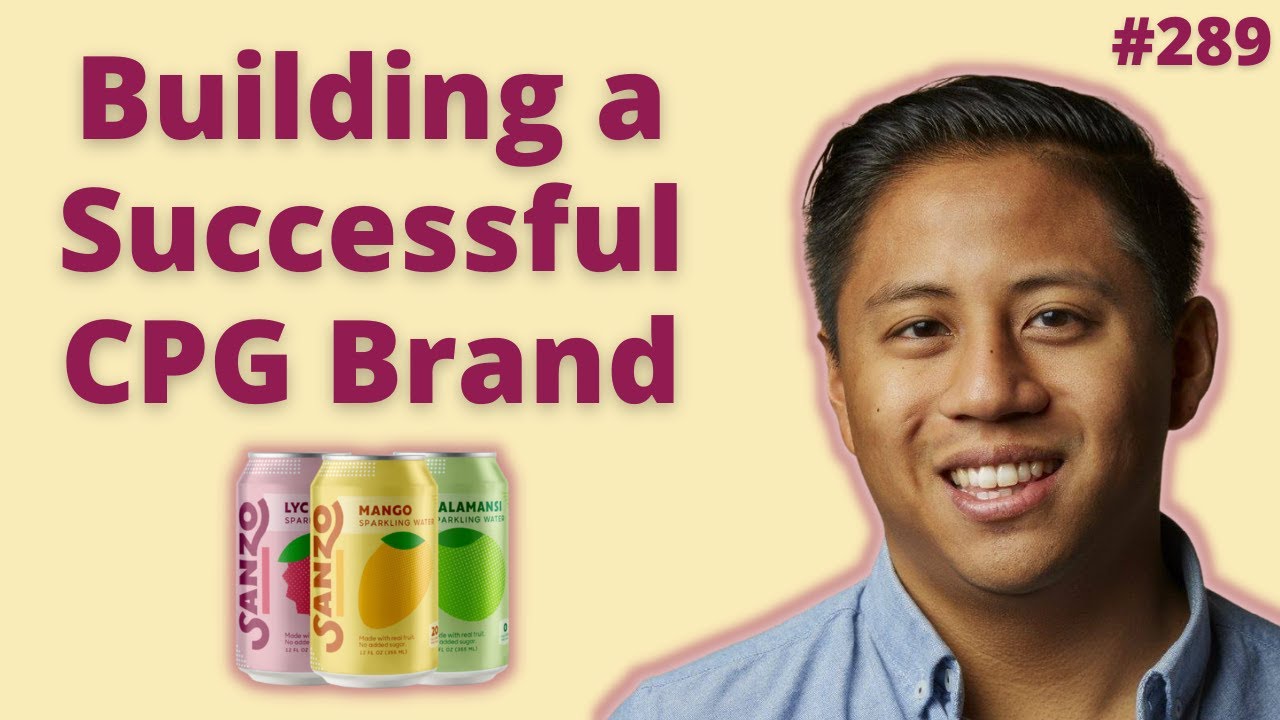
Sandro Roco built Sanzo, an Asian-inspired sparkling water with real fruit juice and no added sugar, starting solo in 2018 with DIY formulation and farmers market testing. He raised $1.3M in seed funding from investors like Scott Belsky and Jen Rubio, then scaled through grassroots retail before landing Whole Foods, targeting Asian-American consumers and restaurant partnerships along the way.
Chapters
Sandro, welcome to the show.
Thank you so much for having me. Great to be here.
Yeah, I appreciate you taking the time and excited to talk about Sanzo, your company. I would love for you to tell people what is this company, what are you doing right now today with it?
Yeah, so first off, you know, thank you so much for having me. Really appreciate the opportunity. So I'm Sandro Rocco. I'm the founder and CEO of Sanzo. And we're the first Asian-inspired sparkling water using real fruit plus no added sugar. So If you're used to drinking, for any sparkling water fans, you most likely have a beverage that has a natural flavor. So, if you pour it out, it's clear. Ours actually has color because we're using the real fruit juice. And specifically, our fruit inspirations are coming from the Eastern Hemisphere representing 60-plus percent of the world's population. You know, you don't see it on— you don't typically see it on mainstream grocery shelves. So we're trying to— we're trying to change that.
And I always have to go back to the beginning. I think it's fun to kind of go from the early times. So for you, where did this idea come from in the first place?
Yeah, so it was around the middle of 2018. And I live in New York City. And at the time, it just felt like a lot of Asian things just kind of became cool for A very simple way of putting it. You know, Crazy Rich Asians was, you know, the number one film at the box office. But then even if you kind of dove deeper than that, though, it was, you know, there were a lot of restaurants that were, you know, perhaps a bit more Eurocentric-inspired flipping over and becoming more, you know, like Asian concepts were opening up. When you read more food media, or even if you were on your, you know, your streaming devices or streaming services, Netflix, Hulu, heck, even Spotify. If you just looked at a variety of, I'll say, like consumer products, and that could be physical or digital, there's just so much more of an Asian inspiration. And yet what I found was there was nothing really in the beverage space that I felt was adequately representing that. And so, you know, I'd worked— I was working at a technology company at the time. Our fridges were stocked with A lot of sparkling water brands, but felt like, hey, there's some room here to do something, do something fun and, you know, innovative, at least as far as the beverage industry goes. And so that's kind of where the journey began.
From that then, so did you decide to start this on your own? Did you get a partner right away? Like, how did that go for you?
I'm curious. Yeah, no, and it's a great, great question starting like all like the really nitty-gritty there. So, you know, I am the sole founder. You know, I did end up kind of going at it my own, you know, my own path. Had actually self-financed the business and moonlit for you know a year while at my day job before actually you know leaving and starting the business on my own. You know, did talk about it with certain friends, certain other folks that I thought just might have been interesting to work with. What I eventually learned though was just I don't know if it was my own personality or whatnot that like it just kind of needed to be me, or either that I just didn't find the exact right. Right co-founder fit. And so, yeah, it was me. And actually, I talk about how the original idea came in 2018, incubated and actually launched the brand the summer of '19. I was the only employee until October 2020. So really did the solopreneur thing for quite a bit. But fortunately, we do have a bit of a team now starting to support us.
In that year or so, you're moonlighting, you're working your job still. And this is something a lot of entrepreneurs like, do you take the jump right away and kind of go all in? Do you kind of work on the side nights and weekends? For you in that year, like what were some of the things you were doing? Like how far did you get in the business before you ended up going full-time into it?
I mean, one of the things I found interesting about CPG, packaged goods, is that there's actually quite a fair amount of R&D that needs to get done before you really go to market. And, you know, a lot of that R&D time is, anyone will tell you, it's a lot of waiting. You put out specs or even you might test out a formulation, but then you don't get that feedback for a little bit. For myself and for this brand as well, even if we had a formulation, I would take that to farmers markets on nights and weekends. So, times that didn't have to coincide with a regular day job. Yeah. You know, there's actually quite a bit that you could do in, I'd say, you know, the first like 6 months to maybe, you know, I probably stretched it going a full year because at the time we already had, you know, about like 15 or so, you know, clients, you know, like retail partners, you know, restaurants and independent food markets. And, you know, I would spend my mornings taking the subway or taking Uber Pools at like 6 AM to deliver the product before going to work. So, you know, I definitely stretched it a bit. A lot of it, frankly, was I knew that this industry, or, you know, when I started talking to folks who did specifically beverage, you know, they did talk about how beverage can be a bit more of an expensive business, right? So, you know, unlike, you know, potentially a fully digital product, you know, we're not just spinning up, you know, AWS instances and going from there. You know, manufacturing a product actually does take a bit of capital. So, you know, it was really trying to be as scrappy as possible in the early days, just because we knew it was going to get expensive very quickly.
Yeah, of course. I've talked to a couple different beverage people on the show, and it's just like, it's a lot to deal with in terms of obviously the product side of it, but then also distribution. So let's start with the product side of it. How did you approach then who you're going to have actually create this product? How'd you go about that process for other people who are wondering, you know, trying to get into CPG? Like, how'd you even go about that?
I came in with a true beginner's I wouldn't even just say mentality, like, like I'm a beginner and this is my first time ever launching a food and beverage product. So actually, I mean, I did what I would hope, you know, a lot of your— whatever your listeners are thinking that I did, probably did. So, you know, ordered purees off of Amazon or found other third-party websites. The initial— the first few recipes, the first recipe iterations were actually my own. Off of a Google Sheet and a scale that cooks would use in a kitchen, just like a mass balance that you would use in a chemistry class. So it was as rudimentary as that. One thing you do learn, again, pretty early on if you are getting into this space, is if you're going to have a product sit on shelf, you need what's called a scheduled process, which Long and short of it is it's a food scientist who signs on your recipe saying that this won't harm anyone from a food safety perspective. It won't rot, it won't cause anything crazy like that. And so, you work hand in hand with someone there with that scientist to get the process to the recipe to a point where they can sign it off. And, they're actually very cheap resources. I mean, not to get too thick into the weeds of it, but Cornell University runs a food lab if you're located in New York. And, just to put some dollar figures out there, I mean, a recipe sign-off is as cheap as $200 to get that level of— yeah. So, I mean, you can go if you're paying a formulator, if you're really going to commercialize it, that can get you into the thousands of dollars. And, I would argue when you're ready for prime time, it's actually worth, it's really worth actually paying those expenses. in the earliest days, you know, you can— there are resources out there for folks who are trying to really scrap it because as much as the industry can be expensive as you're scaling, in the earliest days, you know, it is a lot of— I'd actually say it's a very diverse founder set. I've actually found it to be very encouraging. You know, it's a lot of folks who find maybe had, you know, a 4-year college degree and worked in the technology sector, but it's also a lot of folks who may be, you know, high school educated, just have an idea. You know, they're making a salsa or some kind of sauce or something that— Or a cookie that their friends and family loves, and now they're just, you know, selling it and building out from there. So it's kind of a fascinating industry in how— yeah, and just how diverse it is.
When you say ready for primetime, that's the point where you may spend thousands of dollars potentially on someone. Like, what do you categorize that as? Like, how big do you look at that? Like, when someone would potentially want to spend more than the $200 you mentioned instead of going thousands and going kind of all out on that, like, what— at what point you think would that be? Sure.
I mean, I would say there are certain retailers that if they call you, you do not probably want to go to them with, you know, with something that can't scale is probably the best way I'd say it. So, you know, for us it was Whole Foods. So Whole Foods and there are 13 regions in the United States. You know, us being in New York, our home market was the quote unquote Northeast region, which encompasses New York City and the surrounding area. It is, as you might imagine, the most competitive region. The good and bad, if you do well there, you know, it can kind of cascade into other regions potentially if things go well, you know, a national distribution relationship. You know, a Whole Foods level retailer also comes with them a, you know, the nationally reputable distributors. And in the food and beverage industry, you know, your distributor is in many ways just as, if not even more important than the actual retailers that you're working with. And so the problem, what I would say is if you go to these kinds of, you know, folks with recipes that don't scale or operations that are not, you know, locked tight a bit more, it can literally end your business because if there are product deficiencies, if there are quality assurance deficiencies, you know, Certainly the worst thing you can do is actually cause harm to a customer. You know, you are selling food and beverage products. And so, you know, if you don't have that buttoned up and you're doing it at that level, you know, it's basically a death sentence for the business. So, you know, at that point, you know, that's why the industry can get a little bit expensive because you do have to take a bet, you know, at a certain point that we are going to be a bigger brand. And so you do have to put those resources in to, you know, commercialize your recipe.
At what point then for you did you end up quitting your job and going all in? How long was it? You said 15 months or a year?
Just about, yeah. And for us, I mean, it was— there were a couple of things that made it a little easier. One, the company that I was working for, you know, we had hit a bit of a rougher patch. And so, you know, candidly, I was probably going to get laid off anyway at some point just because of, you know, headcount reduction necessity. As well though, it was coming at a time and it did just kind of work out this way where we were starting to gain more distribution. I found that 3 out of my 5 business days were up at 4 or 5 AM to make these deliveries before I was going into work anyway. And then I'd say the biggest thing was just was getting to a point where I was like, okay, I either need to start putting more time into this because I can get more sales that way, or I need to not and figure out like something else to do. And yeah, I think for every entrepreneur it's different. You know, some folks, and I don't think there's a right or wrong here. I often tell other entrepreneurs, oftentimes tell other people who are going through this, it is likely one of probably the— it is possibly the hardest decision you'll ever make professionally because it's the one thing that's not rooted in logic. A lot of times, whether it's choosing a certain job opportunity or for certain folks who went to certain institutions like certain elite institutions, you could kind of compare US News and World Rankings. Or if it was a bank, it's like, okay, there's an objective thing that says you should go to Goldman Sachs or JP Morgan over the other banks or things like that. This is the only time where it's actually completely illogical. Like, if you actually try to apply logic and know what the failure rates are on startups, you just, you would never do it. So, you know, at some point it's just kind of what works for you. And for me it was, yeah, I need to work myself to the bone, like get myself to the very last inch of the cliff and finally be like, okay, I now have to jump. Otherwise, like, you're just in, you're just, you're never going to do it otherwise.
Like, you can't do both anymore. You've done, she just worked herself too much to handle basically 2 full-time jobs essentially.
Yeah. Scary. I mean, you know, especially for folks who might be listening to this, like it's not like we had enough revenue to float even my rent. You know, we weren't even at that point. So you and I think the thing that I've learned again, it may be different for food and beverage versus other verticals, but you know, for food and beverage, like you don't usually get that. You don't usually get to a point in revenue where it's that strong to feel that good. Like you actually have to make the jump typically. at least in beverage, a little bit earlier because it does require, it tends to require a lot of like fieldwork, like being at stores, shaking hands and, well, not shaking hands anymore during the pandemic, but in general, yeah, like being out in the field. So yeah, it can vary for a lot of people, but that was my path.
Yeah. And I definitely wanna go through the distribution side that you've kind of alluded to a little bit, but With that, your first customers, taking to the early days, we're still we're going to progress till today. But in the early days, getting your first customers, your first sales, what did that look like? How would you go about that?
I mean, it's still how I do a lot of it today, which is cold, like cold outreaches. In it's a little different now that we have some distribution, but in the earliest days when you have nothing, the best thing you can do is literally just walk into a place, especially and I'll say specifically for food and beverage, and you're targeting like a boutique market. A lot of folks will try to email in, and I've seen firsthand in this industry, this is very much an in-person or phone call driven business. Yeah, like email obviously huge for bigger accounts, but the easiest way that entrepreneurs can validate their their product is by walking straight in, and frankly, it's something that a lot of people won't do. So, you know, probably the easiest thing that I would just recommend is just. Getting out in the field. After that, it's, yeah, talking one-on-one. I mean, again, it's a lot tougher now during the pandemic. But for us, and for me, it was, you know, when we did get a couple of first customers who did just buy in, and literally what that means was, I showed up with samples, asked to speak to the key buyer or decision maker, and pitched them on the spot. And then they said yay or nay. And obviously, Got a lot of nos, but got you know my first couple of yeses. The product goes on the shelf, and then the key is not just getting it on the shelf, but getting it off the shelf. So supporting that with in when you could do them in-person customer demos. So literally, there's a market in in Chelsea on 22nd and 22nd and Eighth Avenue that I would go into on a Monday and Tuesday night and pour samples of Sanzo. And they would sip it if they liked it. A lot of them went, a lot of it because they were talking to the founder and there's some social pressures there that you can take advantage of. And they would go and physically buy the product and you just kind of create initial momentum that way. It's as unsexy as it sounds in the earliest days.
With that as well, so how did you decide then which Which retailers you're going to go into or distribution partners you're going to work with? Because that's something where again there's so many different options potentially, but it's a little more of a niche market. So how did you think about that for your company?
Yeah, I mean we didn't we knew especially with what I kind of talked to you before about the need to be very buttoned up when you're approaching a Whole Foods type of retailer. You know we wanted to frankly make our mistakes at the you know at the smaller independent markets and a lot of these folks. I mean, they're the lifeblood to the food and beverage industry because they see it as their jobs to take chances on new food and beverage brands. And their customers go there to discover the very newest and earliest brands. So part of it was just kind of walking around the city. And then I'll tell you one thing that I did was I would go into one of these markets Look at the brands that were already on shelf and just cold outreach those Instagram accounts. You know, most of them had way less than 10,000 Instagram followers. Most of those brands, you know, it's the founders who are running it. And a lot of these folks are down to talk. And in many ways, if they're on that shelf, that means that they also probably started within the last, I'll say within the last 3 years. And so we're just definitely more open having these kinds of conversations. So, um, I would recommend that to folks who are getting into it. And if you wanted, like, you know, developing basically an early lead list, um, you know, I got that from one of these outreaches and they were like, yep, I'll give you, you know, 3 to 5 stores that I think you should target and kind of go from there. Um, it's the same 5 to— same 3 to 5 stores that I tell other people when they hit, hit us up. So, um, it is a very, um, as much as it's very competitive, Because you are literally, I mean, it's a fixed amount of shelf space. This industry actually does tend to be quite collaborative. And that is one thing that I actually do really like about the natural food and beverage world is that a lot of folks are quite collaborative. But I think it is worth folks knowing like, you know, where to start, you know, asking the right questions.
Yeah, get the foot in the door at least.
Exactly. Yeah.
From that point then, so the early distribution, obviously getting your first customers, your cold outreach, and you still do cold outreach. But how have you shifted the distribution as you've grown? So have you gotten kind of that first validation and then grown from there? And so it's still pretty new, but I'm curious as how the progression of kind of distribution has gone for you as time has gone on.
Yeah. And again, people will take different paths. Frankly, a lot of people probably— what I have done is probably step-like. Like people just bypass it altogether. They may raise more money upfront and already get a distributor on board. I went the very build it brick by brick type of approach. But so how it worked for us was we had our first 10, 15, 20 doors at this point, I guess, with that method, me just walking in and also self-delivering the product. At some point, which worked out well for us, each of those stores was selling through a good amount of product every week. So I was spending my time, you know, in the mornings like doing more deliveries than I wanted to. And so when you're doing deliveries, you can't sell because that's, you know, you can only be in one place at one time. But what that does though is you can then approach a distributor saying, hey, we already have this book of business if you want to take it on. You get like, here it is. This is free sales. You're already going, you know, to these doors delivering, you know, these other products. We're just giving you revenue. And distributors like that. Distributors like when you do their work for them. So that's how we got our first distributor. And in many ways, that's kind of how it still works. You're just going, you're just leveling up with each, with each one.
In saying your approach, you know, going brick by brick though, to that point, why did you decide to go that route versus another? Because there's always like many options. There's 1,000 different decisions you make in a business, which way to go, bigger VC money, not— you could go self-funded, you could do— there's so many different ways. And I'm always curious with different entrepreneurs, like how, how you personally decide, how you decide to go the route you did.
I guess I just, you know, it may be, you know, I'm a child of immigrants. My parents immigrated here from the Philippines in the '80s. And gosh, I learned like really the value of a dollar. And so for me it was, I don't feel comfortable asking folks for money, especially not having grown up in, you know, super, like super privileged circles. I ended up going to a pretty privileged, you know, college, but, you know, my own network was not, you know, crazy like that. And so before I could even ask those folks for money, I was like, well, I better put my own skin in the game. Because folks would feel it. You know, the earliest supporters would feel it if I asked them for money. So it's just kind of what I could afford or was even willing to do. I just, I didn't feel comfortable even pitching or asking for money unless I knew a little bit more about what I'm doing. And I do think that that's actually made me, you know, better. Just, I mean, both business owner, fundraiser, all of that now because I went through that. And again, some people, that's not their journey and obviously it's fine, right? Like, No judgment. People grow their business the way that they need to. I just felt like for my own path, my own journey, I wanted to know, I wanted to learn. So yeah.
Well, and then eventually you raised $1.3 million last year. Take me through that process then, fundraising, how you decide who to bring on board in terms of your investors. I'm curious about that. Yeah.
What's interesting was my goal was to actually only raise $600,000. And I feel very fortunate that I was actually able to raise the $1.3 million because we've needed— yeah, we definitely— it was definitely advantageous to have it, especially during the pandemic. So I'll say, you know, that round got published, I guess it was Forbes in like July or August of 2020. Truthfully, that round took probably about 7 to 9 months to put together. So, and it's interesting because, you know, I started out trying to raise $600,000, was doing very terribly at that. And then all of a sudden it got, the round got hot and I raised $1.3 million in about 6 weeks. Just to kind of show you the volatility that can occur in a fundraising round. So, you know, I was still going in the earliest days, just my own very like, yeah, kind of bootstrap self-financing type of mentality. But, you know, got to a point where I was starting to be stretched for dollars. And so opened up, you know, we did it through a convertible note round. Fortunately had some friends put in the first, you know, maybe like $50,000, $75,000. And then we did get a, basically he was an early customer. His name is Scott Belsky, Chief Product Officer at Adobe. Yeah, very prominent angel investor. At the time, I would literally look up all of my customers. So, you know, when I got a Shopify You know, get the ka-ching. I'm like, just curious. You know, we weren't getting a ton of orders, so I'm always, and it was my first time running a business, so I'm like, hey, this is cool. Like, who is this person? And obviously, no, I mean, I knew who Scott Belsky was just because I'd been in technology. And so reached out to him. Silly me, like I didn't find his investment website. So I actually asked him, hey Scott, do you invest? invest? And now it's like, that was the dumbest question ever because obviously he invests. But so he came on, that brought in a couple other folks. But we actually, I mean, I'll be honest, we did hit another lull. The biggest thing that really spurred it on was around May, I want to say. And this was in the middle of the pandemic. It was really bad times. Jen Rubio came on, who's the co-founder of Away. And between her and Scott, they both just have a lot of trust and their networks, fortunately, the switches started flipping on on the networks and then the round just got— I'll tell you this, the first maybe call $200,000 maybe took me 5 months. The last $1.1 million took me 6 weeks. And probably could have even happened quicker than that. The problem was like I was still the only employee, so I was still like having to like run the business and put up the numbers that we needed to you know validate you know what we were doing, and then also go fundraise. So quite a stressful time during the summer. It was that was like yeah, I had to really kind of dig deep on that one. But it was. We got, we got through it.
And, you know, what type of feedback were you getting from, from Jen and Scott when they obviously became investors? They've done a number of investments, some higher profile. Like, what were they saying about why they invested in you?
It was brand and brand potential. They were like, we think this product basically like it hits. And also they saw where I was going with building community and building community and that that community itself was already that a significant portion of that community had high purchasing power but was significantly underrepresented. So basically, long and short of it was us being an Asian-inspired product. If you look at just how much the API purchasing power plus how much of it we spend, our demographic spends on brands, and how much we over-index on social media. So essentially you're creating your initial word-of-mouth flywheel. The early rumblings were there if you created the right product and then marry that with the macro trends that we all had seen and that I talked about with Crazy Rich Asians and all this other stuff. It just kind of created that That marriage that we weren't that we we both had an initial tribe of Asian Americans, but that the broader American populace was also it was open to that population as well. So, and then look like ultimately, you know, I had to convince them that I was a good that I could be a good steward of capital, that I could build a good team. You know, we're going especially through the team building process right now. Actually, we're wrapping up another fundraising round right now. So especially in beverage, you know, one of the things as well is, can this person just continue to raise money? Because you do need to raise a decent amount of money to keep the lights on. So yeah, I mean, if you want other specifics, maybe, you know, maybe you could ask, maybe I'll get you to ask Jen and Scott. But I think those are the primary things.
No, it's good to provide that context. I think it's for other entrepreneurs. It's like, why did someone, why was he able to convince them to invest because it's such a difficult journey. I've talked to people who have taken a few weeks to raise funding and I've talked to people who've taken 10 months to raise funding. And it is, for the most part, it takes months and months and months and a lot of nos along the way to get funding for any company. Whether it be a smaller pre-seed or seed round, whether it be people even raising Series A, Series B, it doesn't even get easier necessarily. It's just different. Because once you get to Series A, then it's like, okay, well, are you hitting your metrics that you needed to hit to get there? You know, so it's all these different things. It's still difficult and regardless of along the process. So I appreciate the context. And a couple of things you said there stood out to me. One being the community aspect of it. How have you kind of thought about community, building community within as you're building your company? And how does that play a part into it? You kind of alluded to it already, but I'm curious as to anything else you've intentionally done to really build community around it.
Yeah. I mean, so as you might imagine, you know, the first logical tribe for us to try to build is the Asian American demographic, which I kind of alluded to the dynamics there. But for us, it's not enough to just create a product and sell it to this community, right? I, growing up, actually worked in the food service space, and I've always had an infatuation and such a respect for people who work in the industry. And so one of the earliest things that we did, and I mean, it was both a business decision and also a brand and brand marketing decision, was really trying to partner up with the Asian-inspired concepts and restaurateurs in New York City. So on the business side of it, it was, hey, we can sell our product here and we're not having to compete on the shelves of Whole Foods that can cost, you know, that can have more marketing dollars needed to pump up sales. You know, you're sitting in an environment where people are more naturally predisposed to consuming your product, and that's awesome. And the other part of that too is, you know, there's cross-marketing potential, right? So, you know, restaurateurs, the actual restaurants themselves, people love following, you know, if you look at these folks' feeds, You know, chefs are generally going to be much more famous than beverage entrepreneurs, and I'm totally cool with that. But how do we? But then, you know, these folks are also looking for other ways to cross-promote. So, you know, tapping into that early was a very, was a very deliberate decision. And also, on a personal note, again, being so, I love the industry and. Once COVID hit and we saw how that industry got struck, we did make a very intentional decision to invest even more heavily into the industry. So I do like to say for our team, we were among the first to start really contributing to employee funds when those folks were furloughed, especially especially the back-of-house employees who are typically undocumented immigrants. You know, we wanted to make sure that, you know, that their families, you know, could still, you know, rely on them for even just, you know, rent, food, things like that. I mean, during the months of March, April, and May, it was pretty rough. And so, you know, we're really proud of what we, you know, of the investments that we made there. And I'll say coming out of hopefully the pandemic in the next couple of months, you know, we've seen that community give it, you know, give it back to us, both the restaurant community, the Asian American community, and then other folks who just like support those, those communities as well. So it's, it's been incredibly heartwarming over the last year just to see how many people just, you know, resonate with what we're doing. And, you know, we're committed to kind of continuing to pass it, pay it forward.
Yeah. And that's, that's one aspect of brand really is the community that you actually built around that. But then also with, in the beginning, even thinking about how you differentiate yourself as a product, especially looking at limited shelf space and how do you stand out to someone who's just passing by and gonna pick up this product? How did you think about the actual brand from that perspective? Like visually how this would look and what do you want to portray as people are seeing this? Like, how'd you think about that side of things for the company?
Yeah, I mean, you are— I'll say you're seeing it even more now that folks are developing. I mean, I had a— I like what I call like the 0.3-second test, that if you're scrolling on your Instagram feed, you know, very likely someone's attention you might have for 0.3 seconds. And can you get that person's thumb to stop when they hit your photo before they keep scrolling. And so, you know, I will say I'm actually surprised there are still so many, I think, food and beverage brands who miss this. You know, you see an ad on Instagram and you're like, oh, I can't read that or whatnot. And then that translates to a shelf also. I mean, I will also say another test that I employed was There was a store down in Tribeca on Canal Street, and I wanted to— the little test that I had was if I'm walking on the sidewalk and the place had like a glass door so you could see straight into it, my test was I should be able to look in and whatever I need to associate with, I need to be able to know that that's mine. And so, for us, those are deliberate decisions on the orientation of our wordmark going more vertical versus the traditional horizontal, making the fruit illustration, you know, a little bit larger, obviously going with like more pastely colors. And then even from a font perspective, making sure the font was big enough that you could read it. But then overall, just like, was this an image that you could just see as being unique enough on a shelf? And at least right now it's so far so good. But you also see a number, I mean, we're not the only one. There are a number of brands that I would already call, if not already there, then very much on the border of iconic in their packaging design. And I think pass those same eye test rules and is, in my opinion, why you're, at least part of the reason why those brands are doing so well because brand discovery, even for As much as we all talk about, you know, our Instagram feeds and creating communities, so much brand discovery is still happening at the store when you're just going through the aisles and you're like, that thing looks interesting, and you pull it off the shelf and put it in your cart. It's for many, for many people, it's still as simple as that.
With that as well, then what type of like testing or how often have you tested the different as the packaging evolved where you tested before you actually obviously roll it out because you can't you're gonna make a certain number of quantity, a certain quantity of the product, and you can't just change it. But like, how did you test it, or how have you tested along the way, or has it evolved, uh, since you first started?
Yeah, so actually our very first iteration of the, of the product was in a glass bottle. Um, a lot of that was on purpose from an operational perspective. So I mean, not to get too into the weeds here, but, um, typically a, typically a minimum, um, canning run, if you're going to run a product in cans, tends to be somewhere in the neighborhood of 10 1,000 cans per SKU, per unit, per flavor. And if you're doing glass bottles, it could actually— you can actually find contract manufacturers who will do as little as like 500. So yeah, so if you're looking to truly like, you know, MVP your idea, you know, glass bottles are typically a good way to start. Now, a couple things that we learned. One, the product in a glass bottle while interesting, made people think of sodas because we had color. So, a lot of questions that we would get were like, hey, is there a lot of sugar in this? So, for multiple reasons, that being one of them, it's a good thing that we were able to get to a scale enough that we knew we wanted to get the cans pretty quickly. But, one of the other things there too that we learned was in our very first iteration, we did not actually have any functional callouts. So, if you look at our can, on the front face, it says, made with real fruit, no added sugar. Both of those callouts were directly from customer samplings. So, oftentimes, those would be the more than— and I was surprised, this is my first time doing it, even more than calorie count, folks would ask, is this thing real fruit? And, is there any added sugar in here. And so, you know, those have still been actually some of the biggest costs we get on digital. You know, when again, we don't do any in-person demos, but, you know, when we get like emails that come in, like those are still the questions that are asked. And so by us putting it on the front of the can, you know, it does allow us to address it, you know, like upfront, which I think has also helped with, I don't know, conversion rate or however you want to measure it.
Yeah, and from that too then, so looking at you went from retail and then going direct to consumer, it's a little bit different. I mentioned Instagram ads and everything as well with that. At what point did you decide to sell direct to consumer? Was that from the beginning?
When we got into cans, we were, we had like all website. I did not invest super heavily into it because, well, one, it's like kind of crazy to say this, but like a year ago or sorry, like a year and a month ago, month ago, buying beverages direct-to-consumer was still not that big of a thing. I mean, you know, maybe companies like Recess got away with it, um, you know, because of their type of offering and, you know, and whatnot. But for the most part, like a, like a, a traditional, um, even upstart CPG company, just a beverage company, just wasn't really able to do it. Um, so yes, I would pack orders in my apartment for people who place orders, but I wasn't really advertising that much. Also, we didn't have that big of a budget. But then once the pandemic hit, so in my last job, I used to be a head of growth. So spent a lot of money on Facebook and Instagram ads. Noticed basically overnight, once New York City hit shelter in place, CPMs just fell off a cliff because of how much ad budget was being pulled. And so if there's one thing that my last job did teach me well, I was like, ooh, okay, we have a good read on CPMs. This might be a really good arbitrage opportunity to acquire new customers very cheaply. And that did prove to be pretty good for a lot of us who were able to take advantage of it. But, and then now again, we're super fortunate that these consumption habits have persisted, whether it's on Amazon or your own owned and operated direct-to-consumer website. Folks are now willing to spend more money on groceries than they did before the pandemic. It has fallen off from the peak pandemic levels, but the new baseline is still significantly higher. So if you're looking for that first million dollars in revenue, that's actually a channel now. And that is wild to say that was not there literally as recently as 14 months ago. Yeah.
It's insane to think about how fast things can change. Well, with a once-in-a-generation global pandemic, but things can change quickly. And one thing is we haven't really discussed yet is with the product itself, you mentioned the different SKUs, which are different flavors. How do you feel about that? Just in terms of like how many different flavors you want to offer at the beginning? And then, you know, how do you want to expand on those? Because again, that's looking at a minimum order per SKU. I mean, that changes things. So how have you thought about that side of the business?
We knew that For a flavored sparkling water line, the minimum you needed to go out with was 3, was really 3 flavors. And, you know, there are reasons why I picked the specific fruits that I did. Basically, the calamansi, which is, if you've never had it before, it's like a Filipino lime. For your listeners, imagine a lime and an orange having a baby together. It's literally lime on the outside. You cut it open and it's orange, but it's so tart with a little bit of sweet. The lychee was more floral and then the mango was sweeter. So, as far as the initial launch, yeah, you need 3. At the same time, to that point, you don't want to— I didn't feel like I wanted to create more operational difficulties by having so many SKUs. And fortunately, all 3 of our SKUs sell quite well. They sell well in different channels, but we're actually— we usually produce pretty close to equivalent amounts during each run. And what I've come to learn is usually folks go into R&D and release new SKUs early on when one or multiple SKUs are just completely falling flat. Fortunately, we don't have that problem. And, you know, when I think about the business, a lot of how I've thought about it is, you know, that marginal dollar right now is probably best spent on us either gaining more distribution or, you know, continuing to boost sales of our existing SKUs versus the R&D that goes into a new SKU. Now, that said, as we're penetrating retail, that is changing a bit. You know, we actually just began R&D for 3 new flavors. And then there are retail-related reasons why it's important to continue to invest in flavor development. But, you know, I would really caution entrepreneurs who are, you know, I would say sub-$1 million in revenue to really stay focused on their core 4 SKUs before expanding too much. And even for us, when we think about new flavor development, you know, we view each of these flavors as a card to play with a retailer. So, you know, if we want to launch with so-and-so, it's something we can give them either some level of exclusivity or just novelty. What we've learned is buyers just really like to feel like they're being given something new. And so if you just come out of the gate with And so, we've been pretty deliberate about how we're releasing new flavors.
And, that's something I remember talking to the founder of Health-Ape Kombucha. We talked about how they were developing new flavors and over time, obviously, they started with a few and then expanding. You're always going to expand even different types of drink options as well, which is interesting to see how evolution of that company has gone. They're like a $100 million revenue company now. Yeah, they're just crushing it. It's funny to see the evolution versus a smaller company. And even like then I've seen other retail, other companies getting into retail with, with a cookie dough company. It was another thing where it's like looking at how they expanded to different, different regions and different stores and everything. It's just kind of fascinating to me, the whole food space. Something that's, yeah, even on the investor side, we're investing in tech and B2B tech software, I should say. say. But like, it's still fun to hear like the consumer, like CPG companies and everything as well. And one thing you mentioned with, with growth, you've grown a bit already, obviously looking at raising their funding round. But you mentioned the hiring side, something you're doing now. So on the hiring front, it started with you for a long time, like just you basically for a significant amount of time. How has the hiring gone for you? What's been helpful for you along the way as you've been building the team?
Sure. I mean, in the earliest days, I will say, The methodology that I applied was basically around pain. If I'm feeling pain and like, you know, my first few hires were just like, I can't, it was literally a point, I can't do this anymore. I'm like, it is like detrimental to the brand, to the business, to my own personal self to keep doing all of this. And so what are the things we can first, you know, handoff? Or I'll even say this, like, what are the blind spots that I'm missing that could actually set me up for failure down the line that I can't see yet? And I think especially one of the lessons I've learned in CPG is, and it's probably similar to the companies that you may fund in enterprise SaaS, the bigger the enterprise, the longer the sales cycle. And in a similar way with CPG, Everything has a very long cycle, manufacturing, sales, and whatnot. And so, a mistake you might make right now, you may not know until a couple months down the line. That's kind of daunting. And, that actually multiplies as you get bigger because when you're going from, if you think about it, independent natural foods to one region of Whole Foods to let's say at the biggest level, a Walmart, a Costco, whatnot, like those take like a lot, an even longer period of time. And so where I'm going with this is that like in the beginning it was solving for pain. What do I most, what do I feel most acutely now, especially as we now have investors, it's now solving for like opportunity. So where am I actually like sub-optimized as a founder CEO where someone can come in and either do it more professionally or just like, or they're perhaps a bit more rote tasks that I should just get myself out of the business of doing so I can focus on strategic sales, strategic marketing, fundraising, helping my head of ops and finance lay down the operations pipeline. And so it's an interesting focus change that I can feel. feel the change that's occurred. It's wild because I literally raised this round last summer. We're raising the other round now. So it's only been like 6 months or so, but like literally already feeling— yeah, sorry, we started raising at the beginning of the year. We just kind of finished up. So yeah, like 6 to 8 months, like just how quickly that focus can shift. So We're at 5 full-time, but we currently have 8 open positions that we just posted. We just posted a week and a half ago. 4 of them are full-time, 4 of them are for summer interns that we hope a couple of them may turn into, can convert into full-times. But yeah, it's going to be, it's wild. As we're wrapping up fundraising, we're now gearing up the recruitment process. So it never stops.
Of course. Yeah. Keep growing more and more. And for you then, Like you mentioned, not having experience in this industry, came in kind of fresh, but having that, having like immigrant parents, the work ethic, and really trying to be frugal with the money and make it last. Like, what's been helpful for you as a founder? Like, who have been either your mentors or how, you know, it's— there's so many unanswered questions as you're starting a company. For you, like, what's helped you through this last couple of years of growing the business?
Yeah, I mean, it is both. So I'll say this. I mean, once we finished raising the round at the recommendation of people that I very much trust. I got advisors on the sales side of the business and on the operations side of the business. And I'll be pretty candid. One of them is more on a retainer basis. The other one, it was a slight equity deal that vests and all that kind of jazz. The 2 best investments I have made, they have taught me the industry from both a sales and operational perspective in a way that I could not have gotten otherwise. And it certainly would have not been— maybe the better way to say it is I don't think I could have deployed capital, whether it's cash or equity, in a more efficient way that multiplied my knowledge base as a founder than to get the right advisors. And I would recommend, and that's a big recommendation that I would give to other aspiring entrepreneurs is like, and it depends on your cap table. I'd say certainly if you're a solo founder, like the way I was, equity is the best tool that you have. It can be a moat to attracting the best talent and certainly, yeah, getting the best advice. And so I would say that, but what I would also say is For myself, being in the field allowed me to ask, I think, really good questions. And I have very much kept a beginner's mentality and mindset when I hop on the phone with them. Even this, I will say that we have a salesperson on our team who is a bit more experienced, I will admit. And so when we talk about certain distributor relationships or retailer relationships, I will straight up ask him for his thoughts and his opinions because he will have worked with them before. And hey, that's why we brought him onto the team was because he can give that kind of guidance. And so yeah, it is the balance of knowing how to trust people, but then also challenging them too, asking them questions because it's important to not just take anything at face value. So I don't know if that answers your question, but yeah. Basically getting the right advisors.
Which is huge. I mean, like I said, equity is something you can deploy to help that in terms of getting the right people on board. And that's something I think about at Vitalyze in terms of why people accept— for instance, we have right now at least Irish Angels, which is an angel group and as well as a fund. And so it's like, why does someone want to work with an angel group? A lot of times it's depending on who those people are in the group. If you can get the right people, it can be really helpful for them versus also getting individual angels can be really helpful in the early stages as well. And then you look at even some later rounds where people still are bigger rounds of fundraising, they'll bring in or have an allocation for some angels who are strategic and can help them and advise them in some way where they don't already have that expertise or that knowledge, which if you're taking a smaller check can be worth it too. Like, it all depends on what you're looking for out of it. And with this, as we kind of wrap things up, what's been most helpful for you in terms of helping you unwind and kind of step away, make sure you can kind of play the long game and continue this company?
Yeah, I mean, I feel very, very fortunate, very blessed to have a very loving fiancée who, yeah, who, I mean, for anyone who does startups and has a significant other, I mean, you know that they're the ones who keep it together while we're often, you know, kind of going crazy. And then I'll say too, like, if I'm being honest, the last year, you know, going through this pandemic, I think if it hasn't given you the proper perspective on what's like really important in life, then you'll have missed out on, I think, a pretty key lesson. And I'm not saying that, you know, the pandemic serves to be a lesson for us all, but, you know, if you can take any, if you can try to create, make anything positive out of what's been just a very terrible time. I think that's one thing that I would say I've taken away. So I've gotten a little bit better, although I think they would probably dispute this, at calling my parents, talking to my family, talking to close friends. Fortunately, also, I'm 33 right now, and a lot of my friends during the pandemic are married and just recently started families of their own. And so just having that perspective to just realize that, you know, I think, I think when we're all in this game, we all know and I think we all have to, we all, we have to go like, I think if you're going for it, like you have to go for it. Like there's, there's no, you know, it's really hard, I think, to create anything of substance this quickly if you're not working very hard and at times very long hours. I think it's a hard thing to accomplish. At the same time, being able to just have people around you who can give you that kind of perspective on what's really important in life is big. The opportunities that I get to have now as an entrepreneur, the conversations I get to have, sometimes looking at the bank account that we have as a business, I'm like, I've never even fathomed of us having that kind of that kind of capital. I mean, it's still a pittance compared to what even certain emerging brands have, but it's important to just keep everything in its proper perspective is probably the best thing that's worked for me. And then, sure, at times, it's, I don't know, getting a good workout in, punching something like some kind of, I don't know, pillow or punching bag or something can be super helpful too, especially with the weather getting better, that's a good thing.
One of the last questions I have is just what is next for Sanzo?
I mean, I'll say this. So, our mission long-term, not to get too philosophical again, but our mission is to bridge cultures by connecting people with authentic flavors. Sorry. I really believe my whole— my thesis is why I've decided that this is what what I want to pursue in life is that whether it's— I believe this beverage should be both in New York and in Shanghai and in Los Angeles and also frankly in like the center of the country. And so, you know, as a— from a distribution standpoint, from a brand storyteller, from a brand and storytelling standpoint, I am just very like fired up about the idea that we get to educate folks about these new flavors or for folks in the API community, help them quote unquote feel seen. And so whatever those actual financial metrics finalize at, we obviously have things that we're trying to get to, but from a more qualitative standpoint, it's like, can we actually make a dent in bridging cultures, especially at a time right now when you're seeing increased incidents of anti-Asian sentiment and hate crimes. I still remain honestly pretty optimistic about where we're going long-term. I think there's still a lot of pent-up frustration or negative sentiments, but overall, what I go with is Brands like Sanzo could not have existed even as recently as like 5 years ago. And the reason I think my brand can exist now is because of a lot of the work that's been done by folks before us, whether they be activists or creatives in TV, film, the culinary arts, everywhere, what have you. And so I do believe that, you know, the folks coming, you know, after us will have the same dynamic because of, you know, the brands that, you know, like myself and other folks who are in my, like, class of new CPG brands have created. And so, you know, it's a— I stay very optimistic on that. And so what's forward, you know, what's next for us is just, you know, trying to continue to push the ball forward, trying to make the CPG industry a more inclusive one, trying to make the shelves that you shop at a more inclusive one. That's— and yeah, I mean, I don't— the great thing about it, honestly, why I'm excited about this is that like, I'll wrap up on this. Sorry, I'll shut up. But like, I don't think we will— I don't think I'll actually accomplish it in my lifetime. Like, I think we're still going to be fighting this For still generations to come. And for whatever reason, like the masochist in me, that gets me excited and like, and gets me inspired to do this every day. It's like the knowing that I will probably not get there is just like interesting.
Yeah. But what if, but what if you do at the same time? Yeah. And Sandra, what's the best way for someone to get in touch with you if they want to?
I'm just curious. Yeah, probably Probably I would say on a personal level, my Instagram handle, it's @alessandrorocco. That's A-L-E-S-S-A-N-D-R-O-R-O-C-O. That's my handle on both Instagram and on Twitter. LinkedIn's also pretty good too. I tend to be pretty— I tend to be weirdly active there.
I love it. Love it. And for people who want to check it out online as well, I'll link everything in the show notes as well, justgrind.com/podcast. But Sandro, thank you so much for taking the time to come on the show today.
Thanks for having me.










