Leveraging Technology to Democratize STEM Education, with Nhon Ma of Numerade
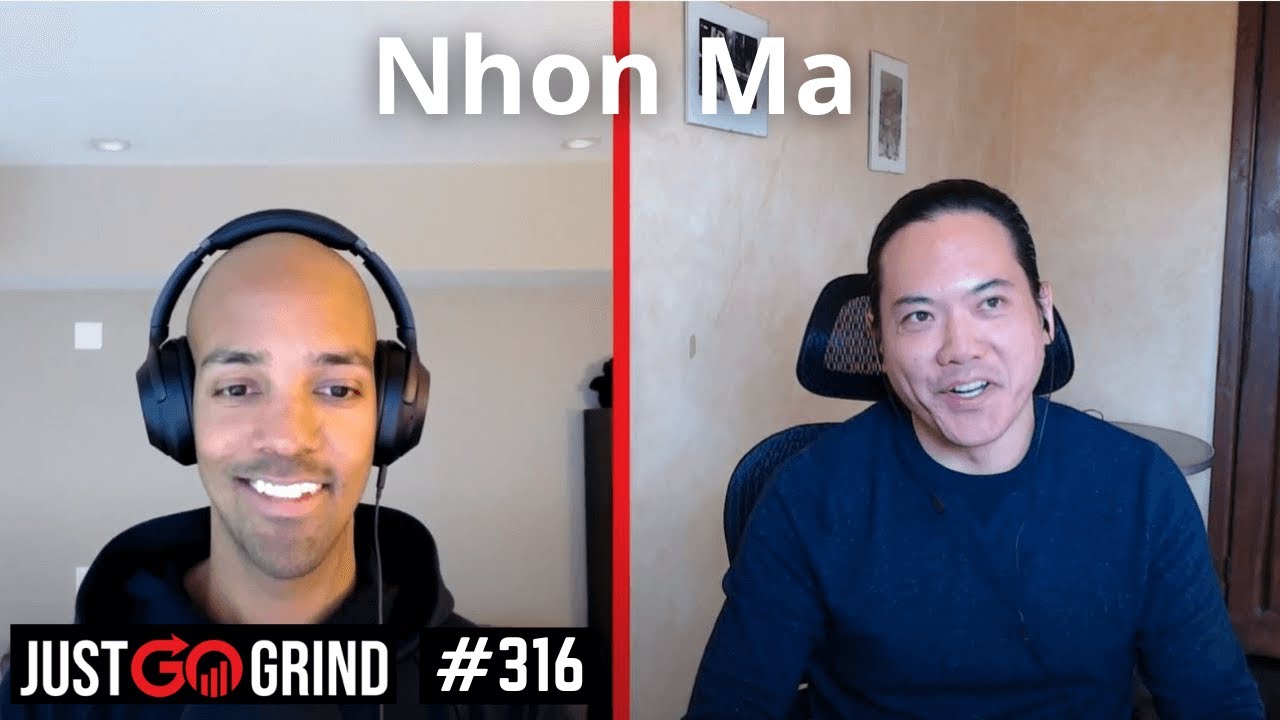
Nhon Ma, CEO of Numerade, built an AI tutoring platform with 1.5 million short-form video lessons from 40,000 educators. The platform uses algorithmic personalization to match teaching styles to how students learn, blending videos, AI-generated quizzes, and student profiles into a personalized tutor.
Chapters
Nan, welcome to the show.
Thanks for having me, Justin.
There's a lot that's going on with your company, you know, another recent raise as well. And I love it being in the edtech kind of space. So what you're doing, for people who aren't familiar, just give us like an overview of what the company is, what you guys are doing right now.
Yeah, definitely. So Numerade, we are a team that is committed to providing equal access to STEM education. You know, we're on this mission to elevate humanity, right? It's a very lofty goal. And the way we want to do this is by graduating more students into the STEM fields from elementary school, all the way, all the way on, and to provide them the help and support they need in the form of an AI tutor.
There's a lot I want to unpack for sure. One of the things I'm wondering, so I've listened to an interview or two, kind of done some research on it. I mean, at one interview, you said you had like a million and a half video clips or forms of videos, like we're gonna get into that. But how did this get started in the first place?
Yeah, definitely. So this started actually 8 years ago, right? So this has definitely been a slog, uphill battle. And Numerade, the company, is less than a 3-year-old company. But this started 8 years ago when my co-founder Alex Lee and I, we had a different company. We had a company called TutorCast.tv. And during that time, what we wanted to do was actually, it was a very similar mission about creating equal opportunity towards educational resources. In this case, it was actual live tutoring. And so we had a synchronous tutoring platform. You know, when, when Alex and I met, we both had similar passions for education. You know, Alex actually went to USC for his undergrad. He got his comp sci degree there, and he was a, he was a tutor and volunteer tutor and teacher to the students in the neighboring South Central area. And through that experience, he realized that, you know, he realized the discrepancy of access towards educational resources. manifested in a lot of these students and have the foundational math skills. And on my side, I grew up in South Central LA. I went through the LAUSD system, was fortunate to get a scholarship into an elite college preparatory school out here in LA. And that opened my eyes towards this discrepancy of access. A lot of my friends, peers, you know, colleagues then had access to tutors, great resources. And, you know, for me, it was always, you know, how can you actually use technology to bridge that gap. And, you know, I spent some time, 7 years at Google, and that was a huge transformative experience for me that told me and taught me that, you know, technology can be leveraged in a way to really bring about this type of access to the masses. And so when we came together, we created TutorCast, which is a synchronous tutoring platform that we sold to independent tutors and tutoring agencies. And what we quickly realized was that it was really hard to bring the price down. Your tutors on TutorCast were still charging hundreds of dollars per hour for their SAT tutoring. And so that was just inherent in that type of approach because it was synchronous, you're dealing with time. And so we couldn't really scale that to a point where we wanted to get to. And we realized that we were actually perpetuating the issue that we wanted to solve. And then the TutorGuys platform allowed for easy recording functionality as well. And so you can record the lessons and tutors will be able to give that back to their students as value-add. And what was really interesting during that period, and when we looked at the user behavior, was that, you know, what's key to learning was, you know, space and time and non-judgments, right? And so we saw students going back to these replays multiple times, digesting information and getting the reps in where, you know, in a synchronous tutoring situation and even in a classroom, students feel judged, right? They feel like they're put on the spot and it's hard for that learning process. And then, you know, when we looked at the content, a lot of the content was of tutors going over problems step by step, providing explanations. So we thought, hey, what if you can take this concept and content and scale it out to every single student in the world? And perhaps the benefits of tutoring can be scaled to every single student in the world. And so right now we're on this Act 1 of the business, which is really to create this, you know, what we believe is an AI tutor by trying to capture the knowledge of every single person in the world that has some mastery Over any academic STEM subject topic or way of explaining a problem. And so we've amassed 1.5 million short-form videos as we saw it.
So thus far. Incredible. That's incredible. And I also saw you had like 40,000+ educators with them, with you guys. That's insane. Okay, take me through that side of things, because obviously making all this content, you have to do it in an automated way to get people on board. How are you going about getting the educators working with Numerade? I'm curious about that side of things.
Yeah. Yeah. So my mom was a teacher back in the day in Vietnam and my parents escaped. So my dad was an entrepreneur. My mom was a teacher, a math teacher, and she was able to get into high school at that time where, you know, women in Vietnam— and she's Chinese-Vietnamese— didn't go to high school. And so, you know, she left a huge mark on the education side. But teachers for us, they are the lifeblood and educators, they are the lifeblood of our company. And so when we think about the educator community, our mission here on the educator side is to try to uplift their status in society to be on par with doctors, lawyers, engineers. Unfortunately, what you see today is, you know, they're not— the value in which they create in the world isn't correlated with their earnings. And so we're providing an opportunity and really helping them create more income streams. So you actually see a lot of teachers leaving the profession. So, you know, those 40,000 educators you mentioned, about 70% of them are actual teachers. So right when COVID hit, we saw a huge spike in teachers coming on board to really help out. And we come at it with, you know, from a mission-based approach where we align with these teachers and we build a community to then help them help every single student in the world with their knowledge, right? And so, but it starts with that, like that foundation of starting with the big why and why it matters and giving them the love that, you know, frankly, there's not as much love for them as we would like. And so they'll come onto the platform and through our process of curation. So there's a pretty hefty kind of interview process. Our platform allows them to create videos with ease. So it's a seamless process. And our QA process uses machine learning to QA a lot of the videos. And to, for students.
With that too. So, I mean, I think of this and think of all of that content. And one of the things that's always a challenge, I've been creating content for like a decade around a number of different things and bringing to the top the best things, the most useful things, and also having a path of learning, not just like, oh, here's a bunch of stuff, check it out. How do you solve that problem? Make sure the best stuff rises to the top, but also that, yeah, figure that piece of it out.
Yeah, yeah, definitely. This is definitely a big focus of ours. And so, you know, what we want to do is get to a point where we can digitize teaching styles, right? So a student or a teacher or a professor articulates a concept of derivatives very differently, and it resonates well with certain types of students. And so for us, that ranking system that you talked about is very nuanced in how we think about it because You know, we believe the future of education is one that is modular, that's one that's highly personalized, that is based on content, but that content will be highly personalized to the way one learns, right? And so the curation of it from an algorithmic standpoint is really understanding various teaching styles, codifying that, and then pairing that to the way students learn, right? So it's not so much of popularity as much as it is about, you know, how can we drive deep learning into the student? In terms of how he or she learns best.
Is it all— I know you mentioned the video portion of that, but how much of it is the video side as well as like exercises or other things of learning? I'm curious on how that kind of works with Numerai.
Yeah, so we do have, you know, definitely the interactions within the video are great data points. Your average video is 2 minutes, but your average watch time is 7 to 8 minutes. So students are going back in time to understand key moments within that video. various steps. And, you know, we're building out a student profile, which is a detailed accounting of their learning, their weaknesses, and their strengths. And, you know, given that we have a lot of information about the students in terms of how we infer it, but then also we do have an AI quiz that does drive assessment to whether or not the student actually understands the material or not. But I would say, you know, the best way for us and how we think about the delivery of our content, and this really gets to What our current AI tutor is, it is predicated on 2 types of content courses and also practical videos, which are the 1.5 million videos. But we have a collection of 17 actual courses that is constantly getting refreshed with multiple educators, right? So the best type of, you know, calculus content will continue to be created. But that, that serves as kind of conceptual content. So as a student goes through a calculus video that is a part of a problem tutorial, we'll understand, okay, he or she may need help with a higher-level concept of derivatives, and we'll push that to the student in a very personalized way. So we come at this from a very pedagogical standpoint of really the oscillation between conceptual understanding with practical, you know, skill-based learning content.
How— I mean, to that point then, how are you growing the student side of it in terms of obviously getting more students to use Numerai? Like, how does that side of it work? I know you obviously just raised like $26 million to help grow the business, but I'm curious on how on the student side you're doing that, because obviously you want as many students as possible to solve this problem and impact their lives. But how have you gone about that?
Yeah, I think we've been very fortunate from a growth standpoint in the sense that the vast majority of our growth has been organic through educators flipping their class and sharing the content to their students. We do have a class feature that allows teachers to digitize their own courses, stitch together playlists of our 1.5+ million pieces of content to align it with their curriculum and push that to their students. So we do have teachers distributing our content to our students. SEO is big on us as well, but also social virality has been humongous for us.
With this then, so I know that you said the teachers side of it as well, and there's different— I know it can be like it's an AI tutor essentially. So what are you seeing in terms of the ages this goes from? And then also how the students are just like, are some just learning it on their own using this, or are they guided by someone else? Like, I'm curious on how that works.
Yeah, yeah. So the age demographic is middle school right now, middle school through late college, early grad school. You know, we were, you know, we have a project underway for younger kids. I have a 7-year-old right now, and, you know, he's learning a whole bunch of new math and stuff. And so we have plans and a product and a strategy to go further down because we need to make sure that students especially in elementary school, as they're going into middle school, that they have the confidence and competencies to continue on that track. Right. Unfortunately, during middle school, you know, the majority of students who love math end up falling out of love with math and science because they just don't have the support they need.
Yeah. And from that too, so they fall out of it, they just need the support. Like, what is the accountability baked into that? Diving more into that aspect of it. Because I know there's a lot of self-paced learning that can be tricky and challenging. Like, how do you keep it engaging and everything? How do you think of that side of things?
Yeah, yeah. I think accountability and motivation is extremely important. It's like a student will have the DNA to just truck through this math problem. That's great. But that's like 1% of the population, right? Vast majority of students will not have that intrinsically, right? And so for us, it's really community, student community, right? So we have a very big Discord server right now. It's going on 40,000 students. They're going in there with their authentic selves, asking each other questions, holding each other accountable. And so, you know, we see that as an interesting, big force of driving accountability and motivation.
With that too, so in terms of building all this out, obviously you have a lot of educators you're working with as well, but in terms of your team at Numerade, how have you gone about building your team? And I can imagine that types of experts you need on your own team for this. How has that side of things gone for you as well?
Yeah, it's been going amazingly well. I think there is a tide shift in terms of what people want to do with the time they have, which is finite in the world, and that they're looking to do something with purpose and meaning. And as a result of that, we've been fortunate to build an amazing team who's committed to what we're doing. But when we think about this functionally, prioritizing the pedagogical understanding, so we have a— our head of content is a former physics teacher, and she's done amazing curriculum. And so we think about building in that teacher DNA into the team. But then the other piece of it is on the engineering AI talent, machine learning talent that we're looking to continue to build onto the team. So really the collection of deep educational understanding with the technical chops to scale that out to the masses.
Diving a little bit deeper into that more tactically too, there's this war on talent for all startups because of the remote work environment we are now in. It is insane to hire. I talked to someone on a podcast that I think they're looking to South America. They can leverage that because different talent there was being underutilized and The US, for instance, or like, I don't know why this is, but they're looking there. Like, how have you gone about, you know, location, looking at who you want to target? Like, how— who are you going to bring on board? Any tools that were helpful for you? Because it's just such a hard problem.
It's super hard. I think it's extremely hard right now. We are a remote company, and so as a result of that, you know, we, we are able to cast a very wide net. I would say that, you know, your top engineers, your top machine learning folks, your top, you know, content folks, They have a lot of opportunities. And so, you know, there's only so much cash you can, you can, you can, you can provide. Yeah, exactly. And right. And you're not going to win out against the Amazons and Googles of the world because they're just going to overpay. And so it has to be something more meaningful. So you have to speak towards the Maslow's hierarchy of needs, which is, you know, the actualization piece of it, which is, you know, the time in which you have here. What are you, what are you doing with that time? And the act of you putting in this work, how much would that grow you as an individual, both professionally and personally, right? So tapping into that is extremely important, right? And so I would start— that's how we've been working. That's worked for us.
Yeah, I think that you're seeing that trend from a lot of companies that are mission-driven in many ways. And those that aren't as mission-driven are trying to figure out a way to be more mission-driven and weave that story because it is that point that people are kind of reevaluating what they want from a career, from a life, And I see that all the time with all the people I've talked to on podcasts and these founders, it's like they are able to hire because of a certain mission and vision for what they want. And people are kind of aligning into that in the kind of remote working environment that you're working in too. So how does that work for your team at Numerade? How do you operate with that? I just talked to someone recently, uh, just like an experiences company for, for other companies that help curate experiences for corporations. How are you like curate the culture of what you want Numerade to be and the communication between everyone? I'm curious how you've kind of approached that at Numerade.
Yeah. You know, we, we've taken an approach where we're not very prescriptive with the day-to-day, you know, um, we, we really, and this is, this is actually one very tactical thing that's worked out very well for us is, um, this came out of Jason Calamity's podcast, which is the start of the day, end of day thing. I'm sure you heard of that one. Yeah.
Yeah.
That worked very, very well for us. Right. So in the first, you know, in the beginning of the day, whenever we realized that every human has their own circadian rhythm, everyone has their own energy levels. Right. And so, as a company, we should adapt to those flows and that's rooted in their own DNA. And so, for us, we don't really have set times. It's really, we have standups, but we manage the business through OKRs. So, one of my biggest takeaways from Google was that the OKR system works very well. So, we have monthly OKRs, we have daily start of days, end of days, right? So, what are the top 3 things that every one of our folks are doing to really move the needles on their OKRs. Everyone sees it, everyone comments on it, managers see it and the like. And every week we have weekly recaps as well. So what are your reflections of the week? What are you going to do next week? And so everything's really asynchronous for the most part. We try to have at least monthly get-togethers for the folks who are in LA as much as we can.
Yeah. How else has Google impacted you? I talked to someone else recently, Hunter Walk, who was at Google for a number of years as well. Then obviously he started Homebrew and he was mentioning how that impacted his thinking and everything as well. I'm curious for you, and a lot of people have been impacted by Google. How has that impacted you in terms of how you're operating Numerai today?
Yeah, I would say many different ways. Google was an amazing company. I love Google. I still have my— I'm a Google boy through and through. I have my Pixel phone that keeps on blowing up right now. I need to turn it off somehow. I would say it is 10x thinking. I think that was the biggest thing. I remember when I was at Google, I was part of the team that then acquired YouTube, then DoubleClick, which then ultimately became what it is now, which is amazing. And I remember the conferences that we would go into, and the theme was always 10x thinking. I was like, how can you actually 10x even more? But it gets you into this frame of thinking of like, oh, wow, You got to get outside of your regular thinking habits and become more creative with it. So I think it's culturally thinking of the impossible and how, you know, what you can do to expand that. And then more tactically, stuff like OKRs, very helpful in terms of, you know, the how-tos of how to operate a company. But definitely, I had some great leaders that I've worked Yeah.
The impact of seeing that and thinking about how they do insane projects at Google, obviously they have the funds to be able to do that, but also they're thinking about those types of things, which I think is really interesting. And I think there was someone else I interviewed, Rob Mather. He's the founder of the Against Malaria Foundation. And it's like one of the world's leading charities every single year. And they, I think, raise hundreds of millions of dollars. But yeah, he also said like 5-minute things. So he was like thinking about how he could call all these people to get like a million people to swim for charity, for instance, was how he launched his company. And he did that. He looked at these different people he would reach out to who had a massive group of people that they could reach out to. And he's like, well, if I call all these people in honestly only a few minutes, I get all this massive impact. And I was just like blown away by that, that working. And it just gets you thinking. I'm like, oh, wait a minute, how should my time be spent? In the best kind of maximal way, to your point where you don't have much time on earth, and we're trying to figure out what the best use of it is. And, and taking a step back to you, what fuels you today? How has that maybe changed from, you know, early on days with Numerai and every other company today in your career? Like, what fuels you?
I think my first companies in kind of the early days, you know, it's definitely been a shift. I think the shift in thinking that I think has really been the biggest unlock isn't really, you know, it started from just more of, you know, what is our growth? Like, what is the numbers? Like, how do we continue to achieve, achieve, achieve? And how do we generate more revenue? The shift and what I realized was the biggest unlock was to really focus on the why more so, like the service and the impact you're trying to have in the world. And just to focus 100% on that. Once you do that, everything actually falls into place. And you unlock so many different things because at the end, It's really about the core of your essence of why you're doing what you're doing to push you or actually pull you along, right? And so, you know, you still gotta hit your numbers, your milestones, but that should be secondary to why you're doing it to begin with. So I think it has been a shift of thinking, and I think a lot of that was just probably having kids too, and you realize, man, you know, like, you know, it's just a part of maturity. I think, I think it was a big piece of it too.
Yeah, yeah, yeah. It's something I love asking that question because everyone has something different. And also it changes as time goes on. I mean, we evolve as humans, we learn things, we have conversations with people, and that evolves into what you want to do. I mean, even if I think about like us at Vitalize, like we have an angel community called Vitalize Angels, which is non-accredited and accredited investors. And like we wanted to unlock access to startups to everyone because that was like our— that's our mission. Like we want to be able to do that because for so many people to build wealth and build lives, to your point, it's like They have we need access, and so we're doing that same type of thing because that was what we thought about. And it was like thinking about taking a step back of like, okay, we if we allow non-accredited, you can allow everyone basically in the world to do that. And we I bring up a story where I I rode into Uber and talked to a lady about what we were doing with Wise Angels. The next day she joined, and I was just like, it's just wild. Like anyone can do that type of thing, especially with Reg CF and how we kind of have these different crowdfunding models for for you guys too. So that that's That's your why, that's your mission. Obviously we know how impactful you want to be with Numerai. Where does this company go? How big does this get? What does this get to? What's that vision you have?
I'm curious. We have 3 acts of the business, but I'll start with the— I'll talk through the first act, which is we want to arm every single student in the world with our own tutor. There's 2 billion students in the world. Every single one of these students should have an AI tutor. That's highly personalized to that student in a very human way, in a way that that student understands how to ingest that information, internalize it, and then make use of it. Because we want, you know, the trajectory of students graduating to the STEM fields to be at the maximum highest, because the rate of innovation would just increase as a result of that. And unfortunately, today that opportunity isn't really there for every single student in the world. And so That's what we want to do.
I love it. Where's the best place for people to learn more about Numerade and also connect with you if they'd like to?
Yeah, check me out on Twitter, @non@numerade. Definitely go to our Twitter handle. We're on Twitter, Instagram, TikTok, all the socials.
Yeah, I'll be sure to link it up in the show notes as well, justgrind.com. Thank you so much for taking the time to come on the show today.
Of course. Hey, Justin, appreciate the time.










