Managing a Community Marketplace, the Rise of Web3, & Partnering with NBA Teams, with DP of SoleSavy
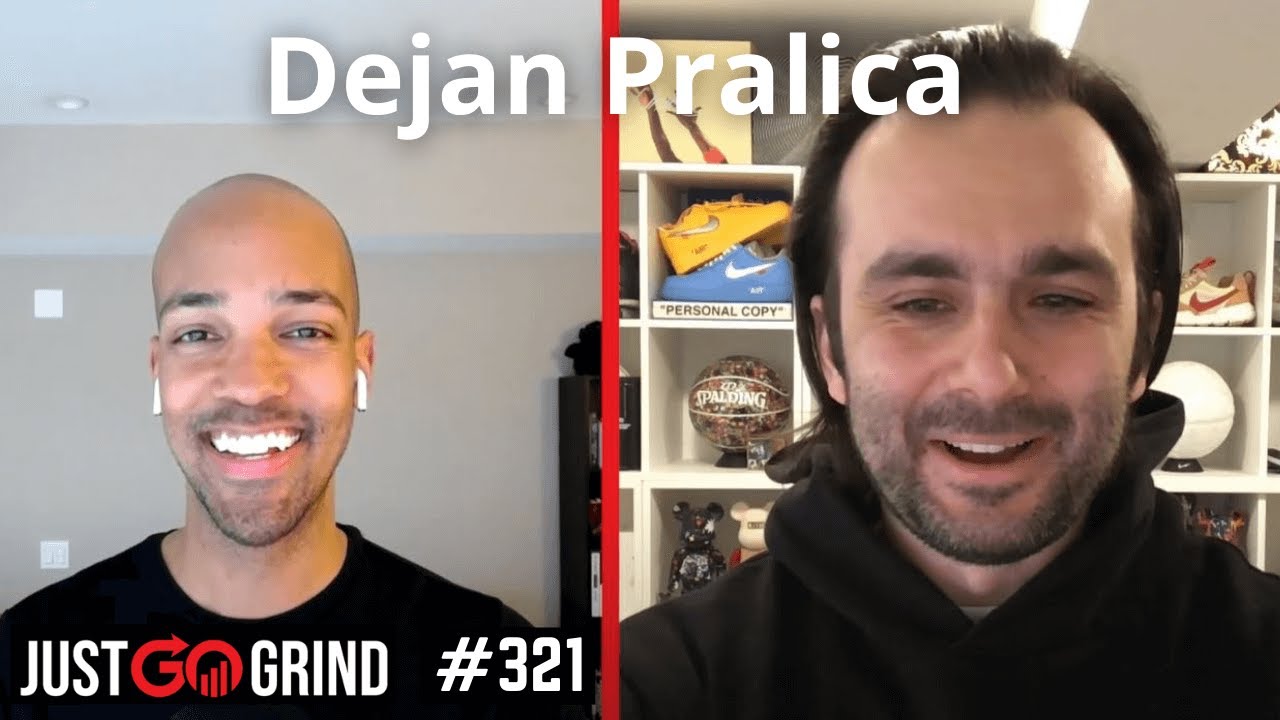
DP, founder of SoleSavy, grew the sneaker community from 2,000 to 7,000 members and raised $12.5M Series A. He built Collect, a peer-to-peer sneaker marketplace, in under a year, partnered with the 76ers and Trail Blazers, and launched sneaker-backed NFTs with Crypto.com that grant holders physical shoes and marketplace access.
Chapters
DP, welcome to the show.
Thanks for having me back, man.
Oh, it's exciting to be back. And I'm gonna start in a little funny, funny place here you didn't know about. So I listened to the old episode we did about a year and a half ago, and you said you had 400 sneakers at that time.
Yes.
A year and a half. How many are you up to now, Dan?
Shit, is my wife gonna listen to this? Um, the, the official number I've been throwing out is 500, but that's like a blatant lie. Um, I think honestly, I think I'm up to 600. But part of that has been, I've been buying things to hold on into my collection for, you know, our marketplace, which we can talk about. But I'm at an easy 500, which is silly to say in a pandemic when you don't leave your house very much that I added another 100 pairs of shoes to my collection.
I think it makes the most sense though, right? And in a pandemic, I mean, what other time would you add that many shoes?
I'm wearing sneakers in the office right now.
Do you like switch every hour then? You're just like, it's about time.
No, I need good standing shoes. And, you know, these haven't, these haven't set foot outside yet. So it's good to give them the house sneakers.
Obviously, from that, people know you are very, very, very much so passionate about sneakers, which makes so much sense for Sole Savvy. People have a little context from the intro I'll do for this as well. But Sole Savvy grew a lot in the last year and a half since we chatted, raised a $12.5 million round. Take me through the growth just in the last year and a half. What's been the growth of Soul Savvy? Where are you at today?
Yeah, we are, man, I'm trying to think when we talked how many members we had, but it was maybe 2,000, I feel like, if it was in the summer of 2020. Right now we're at 7,000 members across North America and Canada. It's been a crazy journey just learning as a CEO. CEO, a founder running a team and having that many customers put us through the fire. I think through the majority of our growth around the Series A, we had 10 employees. We're now at 50. So we're like, we're staffed up from a community standpoint, a customer experience standpoint, onboarding and building out our product engineering teams. It is hard work, but it's very rewarding. And we've been building Building, building, building since the A now for seven months, and we're kind of we're getting ready again to you know pour a little fire on the on the growth engine and show people what we're made out of.
You know, being on the venture side of it, I'm always aware of that every single time now. I'm like, okay, where we are in the cycle? They announced it here, which means they raised before here. So we know they're coming back to another another time to obviously raise and like you know grow if they want to. And obviously, it's great to have that that growth. The numbers are you know doing well with that. You mentioned the team thing. I know I'd heard in our show you said fifty fifty members on the team. Just take me through that growth thing. Hiring is like one of the hardest things founders do. For you, how has that been? Take me through more of that side of things.
You know, I learned on the fly, right? I hired my first 20 employees without someone in people and culture. And I will give a shout out to Sherb, my chief people officer, who's been a blessing to have on the team from that perspective to guide me, guide the company through through that team growth. But the first 20 was really on myself and my COO. And you hire, you make mistakes, people leave, people go. That's just the evolution of a company. And again, we had to learn on the fly. We hired a bunch of great people who are now just coming up on their first year. Those shares are starting to vest. It's a great experience to be building that team. But ultimately, from the beginning, the approach I took was Finding people that I really believe wanna be here for the long run, who aren't looking at it from the perspective of like, hey, they just raised a bunch of money. If I stick around for 2 years, this, this, and that, maybe they'll sell. Like, I didn't want that to be the driver. So we were really looking for people who aligned with us. And I learned very quickly to start scaring people off in the interview process. Like literally, if we thought we were gonna hire them, I'd sit them down for the last 30 minutes and just be like, so let me give you a dose of reality. And because people, they want to be at a startup. They think a startup is what's for them, but not everyone's built for that, right?
Yeah.
And that's why I say by scaring them off, right? It was a litmus test of like, are you built for this? Are you built for this journey? Because I saw someone tweeted this. It was something like, working at a startup is the founder jumps off a cliff without a parachute and you're attached to his legs trying trying to build the parachute so you all don't come crashing down at the bottom. And I love that analogy cuz like it's very extreme. It's, uh, it's obviously not exactly like that, but it paints the picture of like, this isn't a place to come sit and put your feet up. Yeah. And just clock in, clock out. Like we are building, we're getting shit done and you need to be ready for that battle. Otherwise you're just gonna drown.
With that too, you mentioned you're building shit. Obviously you have some funding, you can do things, you can branch out and expand. The marketplace you have, the peer-to-peer marketplace, take me through that, the evolution, even thinking of that in the first place and more about that too. Yeah, yeah.
So, you know, what we wanted to build at Sole Savvy was an end-to-end experience, right? For someone who's passionate, interested about sneakers, we wanted to have the whole experience done, which is content, community, point of sale, and how we help you purchase product. And at the end of that is a peer-to-peer marketplace. We didn't have that marketplace when we spoke. It was something, you know, I've been talking about for a while. I wanted that whole thing because if you're a fanatic of sneakers, you can join and find value at different points. You might value community today. Tomorrow you might value the fact that you can buy and sell and trade a sneaker. So I wanted to create that for the fanatic. But then for someone who's more of a casual consumer, you know, you can find different entry points and then we can nurture you and really show you what the whole industry is made out of. And Collect is really a big part of that. To simplify it, it's a peer-to-peer marketplace. You can buy, sell, and trade sneakers, which no other marketplace really does. But also on top of that, it's supposed to be a social experience, right? You can show off your collection. So you can upload shoes to your profile that you don't even— you're not even selling, right? So I can say, hey, you know, you can see my office wall, my sneakers behind me. These aren't for sale, but here's my SoleSavvy profile. Here's what I have available. And, well, not even available, it's not listed for sale, but this is what I own. This is who I am as a collector, right? Because too many, obviously almost all marketplaces, I think decision-making and success is defined by GMV. And I want to build something that's, again, that's more social. And it's about maybe it's just daily active rate through a subscription.
How long has that been in the works? Just for context, for founders who are thinking through so many decisions and they wonder, I always wonder in the backend, like, How'd this come about? Take me through that.
Yeah, yeah, absolutely. So we kicked off the project in basically April of 2021. So we've been building like crazy, coming up on a year now. We had to cheat a little bit. We had to design and code at the same time to meet my deadlines, which obviously has its trade-offs and speed and go-to-market is important for me. I wanted to prove that this is something that works, that our audience wants, and that makes sense. And then let's polish that. Let's improve upon it. We have a community, we have a feedback loop, we can use it. I think normally it probably would've taken most companies maybe 16, 18 months, and we're going to get it done in 9 to 10. So it was a rush.
Now, for people who didn't listen to the first one, first of all, listen to the first episode we did because in there, I know you mentioned around No-code tools you're using in the beginning, testing it super cheap and easy, not having to spend half a million dollars to develop a product before you even know if it has demand. That ethos, I imagine, takes it to now where you have some resources. Let's move quickly. Let's just build it and get the feedback because you have so many customers already, as you mentioned. And one of the things I'm wondering about too, because you mentioned in the beginning that 7,000 or something customers, members now, what are the complexities on the community side in terms of managing that? nurturing that, all that? Is it the, you know, is it the same as when you had the 2,000? Is it like slightly different? Is it, you know, step magnitudes more? I'm just curious on that too.
Yeah, it's only slightly different, right? And, um, it's because we do cohorts, so we don't actually have 7,000 members all in one chat talking. That is the worst imaginable idea. I, I just— the idea of doing that right now makes me, um, cringe a little bit. Um, it's just too many people talking. It's not a fun experience. Um, I've kind of likened it to a Reddit that you're not a part of that you try to get into and there's too many people talking.
Yeah.
And you don't know how to find your voice and find your, how you're gonna fit in with that community. So, we've done cohorts. So, it hasn't been challenging, but we have to learn along the way of how do we go from onboarding 100 customers in a month, which easy, to 1,500 in a month at peak growth, right? So, You know, we've learned a lot, we've tested a lot, and some of that is just human mechanics. I think a lot of people look at community and go, oh, we'll automate it. It requires bodies. It requires people on the other side of that who like actually give a shit.
Yeah.
And can, you know, engage with those people in an honest and real way. And yeah, we just had to learn on the fly, but it didn't change too much again, 'cause everyone's in their independent groups. So we kind of operate that way.
What are the mechanics of that? You know, are they able to at all communicate with the whole, you know, membership? Are they— every month you bring on more people? Like, just tactically, more of that I would be curious about.
Yeah. So prior to January, they could never communicate outside of their cohort and their community. It was just them within. And we started doing more events and people would meet across community and be like, hey, that guy, like, who— where's this guy that I could be friends with in New York City or in LA? We just made the jump to Slack Enterprise Grid. So, the whole community is on a grid. You can think of it like a city. And ultimately, we're figuring out the mechanics of how do we open up some of those things, right? So, one way we've done it is if you live in Los Angeles, you have a shared channel across all the communities where you can connect with people.
Got it.
in LA and in New York. And then the other one is just in your size, right? You are— I'm a size 11. I would love to talk to other people who are my size because inherently we might trade or buy, you know, things will happen. It's a good place to be. There's a, there's a sub— there's a shared interest in sneakers, and then there's the shared interest of like where we live and what shoe size we are.
Yeah.
Um, that's where we're experimenting. We've tried some larger— we tried a giant chat with everyone and it did, uh, it didn't, didn't go too well. Um, so we reverted back. Um, but we're treading carefully, right? Community dynamics and scaling that, I don't think there's an answer for that. I don't think anyone's truly done it successfully. And I think we have the formula, but we're trying to test the boundaries of what we can do.
Okay. We rarely talk about things that don't go well. You said having everyone in one chat was terrible. Was it like a day and you're like, this is just fucked. We can't do this. Was it like a month, you're like, oh, maybe we should stop it. Take me through that.
It was about a week. It was a week. And the premise was just transparently, it was a shared links channel where all members could share links across sneakers. We thought, hey, the more people sharing links to things that are relevant, the better off we're going to be. But what happened was every community has a different feel and interest in the way they interact. So, when they all came colliding together, it was a collision and they just didn't work, right? It wasn't a common interest of like, I'm a size 11. from LA, it was like, here's a bunch of shit I like, here's a bunch of shit you like. And it just, it just didn't mesh, right? And we had, we had to try that to just see what the dynamics of community would be like in that situation. But, um, yeah, we gave that a week and we just, we just went right back.
DP, I imagine this being like you throwing some like Portland Trail Blazers stuff in a community, me throwing my Bucks stuff in a community. It would be like, what the hell? Like, I don't care about—
Yeah, it's even like Canadians and Americans, East Coast and West Coast, and It was honestly, it was a funny nuance to community that even someone listening to this might be thinking, what is this guy talking about? Just shut up. It's not that serious. It really, you have to see it to understand it and feel it. And that was one of those things, the team, we all felt it instantly. We're like, yeah, this is not gonna work. But we're like, let's give it a week and then we'll hit the revert button.
No, that makes sense. I appreciate you sharing that context as well. And this is all, obviously this is online, you're communicating there and then you've built this huge community. These are real sneakers we're talking about. I want to know about more about this Web3, NFTs, the things that are going on are really interesting in this space, especially in the last year and a half. I mean, since we chatted, that wasn't really a thing. So talk to me about how you guys are involved with that. How are you even thinking about that at Soul Savvy?
Yeah, I've been following the space pretty closely since February 2020. Sorry, February 2021. The years and months, the last year, is just a complete mess to me. No, I've been following the Web3 NFT space since February 2021. It's always caught my interest because I could just see the value it offered and the innovation that was going to come from it. So NBA Top Shot, I'm a big fan. It just modernizes trading cards that it's just perfection in my opinion. And now other things have been popping up, et cetera, et cetera. So I've just been watching and I realized through those months that SolSavvy is a Web3 company just transitioning from Web2, right? We're community-based. We're about people who who have a shared interest. They want to build together. They want to see a new future in sneakers that they can be a part of. And what they want to see built is what we want to build for them right now. It's not a DAO specifically, but the idea of that is there, right? So we're trying to figure how we can— I think a lot of people are jumping into the Web3 space butt naked into the pool.
Yeah.
And I'm like, let me just dip my toe and make sure it's safe, right? Because I think that transition can be dangerous and it's appealing to a lot of different new founders, current companies, like, hey, it's the hot topic, right? Um, but what we're doing is we have a— I can't show you yet, it's on the ground, but we have a, we have a sneaker coming.
Okay.
Um, I'll show you offline. We have a sneaker coming. We're gonna release it as an NFT. So the, the utility and the mechanism in the NFT is you can claim a physical sneaker. Alongside that, we're gonna do some events, New York City, LA. You'll get access to our marketplace. We're, you know, we're doing the whole shebang, but I wanted to bridge those 2 worlds and not just say, here's a picture of a shoe that you can hold in your whatever account. Here's an actual shoe we're going to ship to you, and here's the utility and the value that comes with that. And I'm excited to launch that for our community, for the people who've never heard of us. And, you know, we're partnering with Crypto.com for that release. So it's going to be a lot of fun.
That's the one piece of it in terms of NFTs that people, I think, if you don't get it, But then you said that exact thing you mentioned there, like it has utility for something else as well tied to it. Then people start to get it, it seems like, because once you have that, you're like, oh, okay, I get it now. Like if you look at like Bored Ape Yacht Club on the, you know, this, the surface, you're like, what is this? It's like monkeys or something. Like you don't get it, but you realize the events you can get into or other things that could tie to a community.
Yeah. At the surface, it's, it's a JPEG picture of a monkey. Yeah. Um, but it's also the coolest membership card currently in, in tech, arguably. And everyone is buying in to be a part of that because they get access to the mobile game, the event, whatever it is that the Bored Ape crew is doing. And that's, I'll also say there's so much crap out there that anyone listening to this is going, NFTs are a scam. There's definitely a bunch of scams. You just gotta be smart about what you're navigating.
For sure.
But there's a lot of thoughtful things and a lot of innovation that's gonna come from it. And I'm excited to figure out how we can be a part of that, but also learn from companies like Royal, which is doing music licensing and owning a piece of Nas's song to me is just the fucking coolest thing ever. Yeah. So there's a lot of good stuff happening and we're gonna take our foray into it with a sneaker NFT.
Yeah, I'll give a shout out to my friend Harrison who runs a company called Unblocked. They just raised another like $10+ million for their NFT company, doing interesting things in music. I think they have Dapper Labs behind them as well, I wanna say. So huge ones on that side. And then also my cousin Travis, who has a, their company in terms of sports figures is what they have. And so they're also thinking about NFTs and what they can do with that. Same having physical products like you mentioned, So I'm always curious about that. I should connect you two, I feel like, actually. But it's always an interesting thing when you think about that physical to then digital and how that connection is.
Yeah, we're humans at the end of the day. As much as we're enjoying the meta and the digital and the avatars and all that stuff, I'm still gonna go home and kick it on my couch and I'm gonna want a feeling. I'm gonna want things that make me feel like a real person in real life, right? And again, events, things I can touch. taking their Top Shot cards and, and, or Top Shot moments and then having displayed in person. Like, we're never going to get away from that. The PFP projects with toys now are— or sorry, the PFP project that looks like toys are printing toys. Like, it just, it makes sense. It's a great bridge. And, um, I'm excited to see where things go.
Yeah, I know we're almost out of time. One thing I have to ask about is partnerships. You have 76ers, you have the Portland Trail Blazers, you have FanDuel. Take me through getting some of those partnerships. You can specifically talk about Trailblazers if you want and what that kind of entails and what you're doing with those as well.
Yeah, it was one of those things that, you know, sports and sneakers go hand in hand. It's the right audience, right? And as far as building a brand with longevity, cosigns from 2 storied franchises are super important, right? That alone can bring value to who we are. On top of that, there's massive digital rollout across social media, Facebook sweepstakes locally that we have access to. It was really a brand, brand building opportunity for us. And I think you'll see a lot in the sneaker space. There's not many companies that get to partner with these NBA teams. It's very limited. And for us to be able to do that, you know, as a young company, it says a lot about what we're building and what we're striving for. And, you know, again, having that cosign is super important because It all started with MJ, right? And this space is gonna be, it's gonna be like this forever. Basketball, sneakers, sports as well, obviously football, just in general, right? It just makes a lot of sense for crossover and audience building. And that's what drove that decision-making.
Diving a little deeper, 'cause we can't just gloss over the fact that you're partnered with the 76ers and the Trail Blazers. Did you target them specifically? Was it like, we're gonna blast a bunch of people and like every team and just see what happens? Like, yeah, I need to know more about this. Yeah, yeah.
So it was, it was strategic. Um, we looked at Eastern Conference, Western Conference, and we looked at kind of the cities and the regions, the teams, what made business sense, what made audience sense. So from the, you know, from the 76ers perspective, winning franchise, star player, great history, great sneaker culture as well, a lot of great stores there. Um, but it's a, it's a hub, right, to the tri-state area. You know, we get the attention, uh, of of New York and Boston and Brooklyn. And like, it's not direct attention, but we're close enough in the region, right, that it does matter, right? So that helps with— that was part of decision-making there. And then with the Blazers is Nike and Jordan is the home of Portland. I am a Blazers fan. I told the partnerships team when I sat them down, I was like, you guys don't need to convince me. You need to convince my team. And it was just a matter of like, you know, building out a package that made sense for both sides, right? And again, Portland with Nike and just the history there is so important to us as a company and business development and all that fun stuff. So, it was really just rooting ourselves on both sides of the coast that made business sense. Like, obviously, the Lakers are awesome. I am a Series A founder, not Series C. So, we don't have Lakers budget.
Yeah. Well, wait until that comes full circle, right? Off of the beginning of the company when you're like in LA for the All-Star Game, right? Like, that's gonna happen eventually. It's gonna be a—
Yeah, yeah. I mean, we're going to Cleveland for All-Star Weekend next week. We're throwing a big party and viewing party. We're partnering with Baron Davis and his company. We're doing a bunch of fun stuff for the culture, for the locals, and again, just putting on for the community.
Okay, last thing real quick, because I know it happened today. The trade deadline NBA was today as we're recording this. Take me through your thoughts on Ben Simmons trade, and then you're also— you're Portland Trail Blazers with McConnell.
I, I, I support what the Blazers have done as a franchise. It was, it was time to kind of rebuild. Um, I know I've made bets. I said Lillard ain't going nowhere, but, um, You know, rebuilding around him right now while he's in his prime is important. I think, I think the team will get that done because they know what it means to the city. From the 76ers perspective, Joel Embiid is crushing it. And I just don't think you can look at a situation where the team is that good missing a star player that you're gonna, I feel like, squander that season. So making any trade is a good trade. And if you're gonna bring in James Harden, I mean, Let's go.
Yeah, I, I immediately saw that and thought, yeah, the same thing around you never know what Joel Embiid in terms of injuries. Obviously he's had that before. Their team, how good they're playing without, again, like a top player, which should be. And as a Bucks fan, I'm just looking at like, shit, like it's not— that's a little scary, uh, to have him then come.
Yeah, I think both teams made up pretty good. I think it's a win for the Nets. I think it's a win for, for the 76ers, which you as a Bucks fan It's gonna make the the road to the finals again a lot tougher.
It's gonna be fun to watch. Let's put it that way. D.P., where's the best place for people to find you online and connect with you and learn more about Soul Savvy?
Yeah, you can find me D.P. sixteen one six literally everywhere on social media. But more importantly, Soul Savvy, S.O.L.E.S.A.V.Y.com. One V again website social media is all the same. Soul Savvy. If you're into sneakers, curious, interested, come check us out. We're building a great platform that again, like end to end, we'll help you through that, through that journey in the sneaker world.
Perfect. Thank you so much for your time today, DP.
All right, man. Thanks for having me.










