Modernizing Direct Mail Marketing, Optimizing for Efficiency, and Why Not to Raise VC, w/ Dave Fink
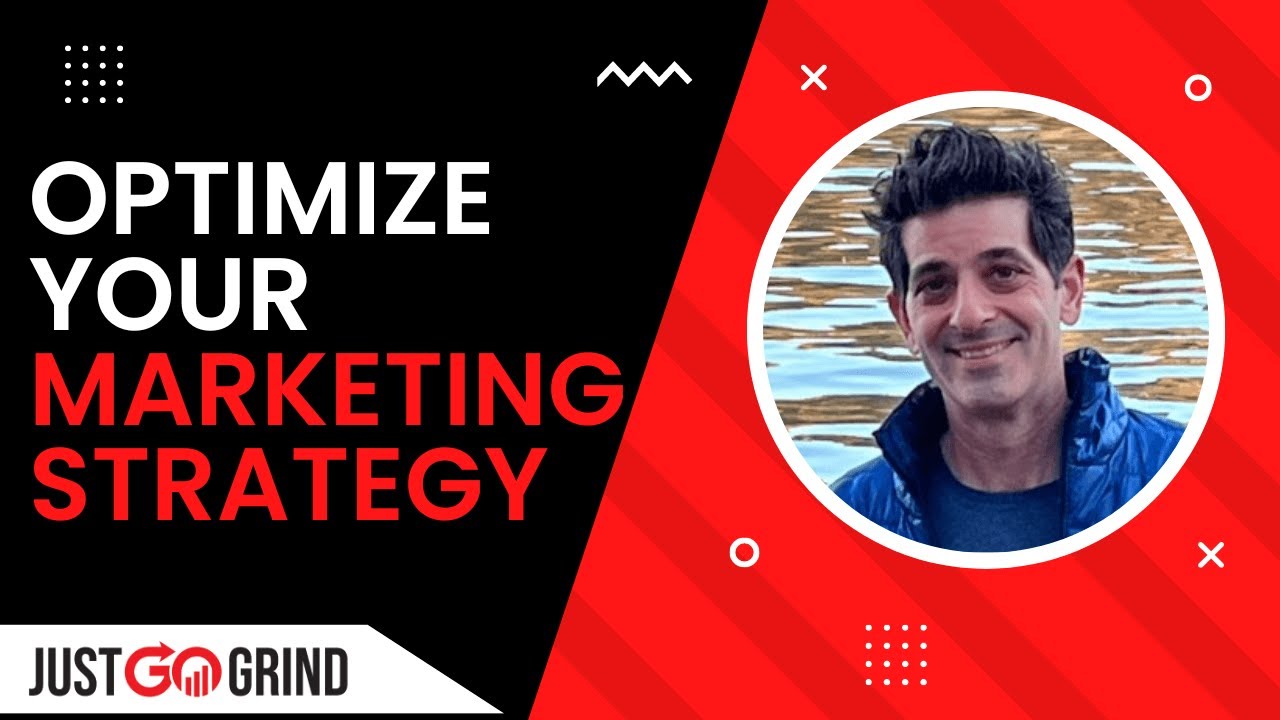
Dave Fink built Postie, an ad-serving platform for direct mail, after seeing how fragile relying only on Facebook and Google ads was. The company cut campaign lead times from 60 days to a few days by automating production across a network of printers. Fink chose to stay bootstrapped and avoid big VC funding to keep the company sustainable.
Chapters
Dave, welcome to the show.
Thanks for having me.
Yeah, this is going to be fun. I'm excited to talk about all things Posti, your journey as well. To set the stage, what is Posti? What are you doing with this company?
Sure. So, you know, we think about Posti as a, you know, kind of really the, the, the first and only real, um, kind of ad serving technology solution specifically dedicated to the direct mail channel. So, so not email, but actual management of your marketing through the U.S. Postal Service physical mail. And the idea was, you know, really stemmed from the, this, you know, the, the love of omnichannel marketing. Yep. The love of digital marketing and kind of the, the expectation that, that, you know, technology and data and efficiency and insights are all packaged together in these emergent channels that we've all gotten our hands on over the last decade and a half, 2 decades. And the power that you get when you have technology for efficiency and targeting and measurement and performance on top of really big scalable channels. And direct mail is an enormous channel. We always kind of tease that it's 20% bigger than Facebook and Google because anyone with a physical address is reachable through their mailbox. It's just historically been a very manual channel to execute, and that was frustrating for us. And so we thought maybe it's possible to leverage all the learnings that we've had in these emerging digital channels like programmatic display and search and social and email and innovate the way that brands and advertisers can engage with the direct mail channel.
We have to connect this story and go back a bit though. So with this company, everyone, I'm always curious on how people start companies in the first place, 'cause there's like anyone who's like smart, driven, and like wants to do something and they have infinite number of options in theory, right? Of things to work on. So I'm always curious how people start. And you were at Science Incubator in Los Angeles. for a number of years. And then the link from that to starting Posty, just take me through that progression of like, right, being in this incubator, and then eventually starting Posty. How'd that happen?
Sure. Quite frankly, it's super organic. It was just an authentic path. So at Science, we built this platform whereby we provided seed capital to consumer internet entrepreneurs working on very early stage concepts. And we also built lots of technology and workflow platforms to help support these early-stage companies and oftentimes typically first-time entrepreneurs find initial traction, success, trajectory, etc. Each of us, each of the partners at Scions brought a certain area of expertise, and my area of expertise was marketing. So I was the partner that got to engage with each of our brands as they thought about go-to-market and customer acquisition and retention and monetization, all those fun kind of data-driven attributes that all companies need in order to be successful. And to me, Science was a blast. One of the probably most advantageous elements of that experience was the ability to engage with so many different companies and see pattern recognition.
Yeah.
And so everything that we really focused on was moving fast and engaging directly with consumers and building technology and innovating and disrupting categories, adding value, et cetera. Really with everything we did, certainly was in the tech world, whether it was direct-to-consumer brand building or it was marketing technology solutions or two-sided marketplaces. And one common thread, if you rewind back to when we started 2011, that was the era when YouTube was just becoming YouTube and Facebook was really just becoming Facebook and ad technology was just being layered onto social media and big data and marketing was becoming big data. And we all got to ride that wave that was Facebook and eventually Instagram and YouTube, et cetera. And for a while it looked like the advantages of those channels were never going to disappear. They were just going to grow forever and it was going to be easier than ever to acquire customers and grow businesses really fast and big. And lo and behold, eventually by the time I would say 2016 rolled around, we were reminded that All channels have a ceiling.
Yep.
And in marketplaces like Facebook or Google where you have advertisers bidding for impressions, as demand flows into those channels, it's basic economics, right? And so ad rates go up and as ad rates go up, it becomes harder to manage those channels profitably and rely on them for the type of growth and the efficiency that you need. So Posty, you know, did not stem from this idea where one day I woke up and said like, hey, we need to go out and, and, you know, solve some problems in direct mail. Posty really was bred out of this, this pain that all of our portfolio companies were feeling against really having Facebook as their singular fail point and waking up every day with a knot in our stomach wondering, is Facebook's algorithm going to behave today or is it not going to behave today? You know, Are we going to have really great trajectory and all of a sudden holiday ad rates are going to go through the roof and we're not going to be able to hit our Q4 numbers, which are obviously so incredible for any consumer brand? And so we spent a lot of time looking for other emerging digital channels and there just wasn't anything. Snap at that point was an emerging social platform. It didn't have an ads platform or a robust one at that point. There wasn't a TikTok. There just wasn't anything else scalable. And so we started spending more time with offline media. And in offline media, direct mail had a lot of components that were really interesting. And the scale, the ability to target, the visualization, direct measurement, the ability to test and optimize to us looked a lot like the way we engage with digital channels when we set out to actually start you know, testing direct mail, we learned really quickly that executionally nothing had changed in 30 years.
Yeah.
And it was just a really painful channel to engage with. And so that, you know, led to this idea of like, hey, I wonder if it's possible to build the Trade Desk of direct mail or the DV360 of direct mail or the DoubleClick of direct mail. It really was a super organic Yeah. Uh, story.
Yeah. One of those things I wanna go back to. So I felt that pain in like 2015, '16, Facebook ads and like I was at an e-commerce company and so running the ads for them. So I felt that pain directly. Oh, these prices from when I started in 2015 and 2016, 2017, seeing them go up and creep up and having that exact feeling of like, well, we do half our business or whatever it was in Q4. Are these ads gonna perform or not? Like, that's a huge issue. And then it's only gotten obviously worse as more people climb on there now. That's crazy to go through that.
It's legit. And I know that because the minute we had the idea for this business, as you know, pretty networked through the consumer branding world and started having lots of informative conversations with CMOs and VP of Acquisition and CRM, and everyone was crying the blues on Facebook, right? I mean, I was hearing Over and over again, dear God, get me off of Facebook. You build this, like here's test budget. Please, like help us crack another channel. Yeah, it just it just wasn't working. And and look, fast forward to today, right? We you know we have you know dozens and dozens of brands that you know had their had a freakout moment last year or earlier this year when iOS 14 rolled out, and all of a sudden, you know ad rates went up again. Inventory you know. went down. Google's been talking for years about deprecating the cookie. It got pushed out another year, but that's likely coming. Those are real problems. It's not just like, oh, that's okay. We'll figure it out later.
Yeah.
Some brands are spending upwards of $50 million a year in Facebook, and now all of a sudden they can either spend that $50 million and get annihilated from a poor return on ad spend, or they can cut that budget in half or down to a third. You need to find an omnichannel approach. You need to have diversification in your media stack. You need to figure out the right channel mix for you so that you don't get caught into a position like many brands did where a big change to Facebook algorithm or to the measurability across device Um, you know, that Apple interfered with and, and, and, and all of a sudden not be able to grow anymore as a business.
When you started this, so back in 2017, so you obviously had this insight around this is why it kind of happened organically in terms of solving that problem. What did you do in terms of which customers you want to work with, what kind of results you were seeing early on, how that informed what you were going to build? Because even, you know, having this idea is like, okay, well, it's a massive market. It's like, we're like, just take me through the early days of even thinking about that and getting those customers and what you were seeing at that point in time?
Sure. Go-to-market was pretty easy for us. We had been in the direct-to-consumer brand ecosystem for almost 2 decades at that point. Gosh, I hate dating myself, but— I didn't say it. No, no, I did that myself. So yeah, I mean, we had relationships with with many, many, many, many entrepreneurs and marketers at, of course, you know, across all verticals in direct-to-consumer commerce. And so that's where we started. That was just the natural place for us to start. You know, we had the network, we understood the pain points and how those businesses thought and behaved and what their needs likely were. We understood how their P&Ls worked. And so we knew we could we could provide value, quite frankly. Similarly, those businesses that kind of emerged during the era of social and fast-paced digital media tend to be run by really savvy marketers, right? Or at least the marketing teams are run by very savvy marketers. They understand data, they understand technology, they understand predictive analytics, they understand measurement, they understand segmentation, they understand creative optimization and testing. And those were all components that we knew, you know, were valuable in any channel. And so the brand set that we wanted to work with as we were, you know, testing the initial platform build and, and learning and figuring out what features made sense to, to focus on, you know, we really wanted to engage those type of advertisers, those type of deep thinkers, those type of innovators. And so for us, you know, the first part probably 2 years were definitely spent mostly engaging, not necessarily the small digital natives, but all the way up to some of the biggest digital natives, disruptive brands, challenger brands, what have you. So for us, it really wasn't much of a challenging go-to-market. We had product-market fit. We had a virtual sea of excited, willing participants that were looking at engaging in testing and just feeling the same pain that we were. So that's how we got started.
With that too, what were you seeing in terms of the mix then? You mentioned obviously omnichannel approach and they were spending a lot on, let's say, Facebook and everything else. But were you seeing these companies like, let's spend half with Posti, let's spend a quarter of our budget for Posti. How are we progressing on that? What should it be? I'm curious on how they thought about that, what you've seen, 'cause it's obviously a really interesting product. I'm curious what you saw even back then.
Sure. Look, in the early days, it was all test budgets, right? As we matured, we ended up building out a view on our ICP, our ideal client profile or customer profile, that was an XY axis or grid that so many businesses use to visualize their customer bases. In our world, There were kind of the you know one axis was you know upstart brand on one end, biggest enterprise brands in the world on the other end, and we started filling in across that entire spectrum. And then the other axis was direct mail is a huge component of their marketing mix already. In some cases spending hundreds of millions of dollars a year, all the way down to doesn't remember what a postcard or an envelope looks like, has never touched direct mail. And and we have clients that fit all four of those those boxes. Right? Big enterprises that that are relying on direct mail, that don't do any direct mail. Emerging brands that that found direct mail really early. Emerging brands that had have no idea how to execute direct mail. Depending on where they sit will determine you know how how the engagement starts and and where it goes, right? And so if you take either an enterprise brand or a digital native brand that's that doesn't have any experience with direct mail. We wouldn't, as much as we want to be impactful in their businesses quickly, it just wouldn't make sense to go and convince them to allocate 50% of their marketing budget to this new to them channel. It would make sense to carve out a reasonable budget that gives them big enough monthly budgets to have statistically significant results from their experiments and gives them enough runway to be able to to go through a number of series of optimizations. And so those budgets range all over the place. They range from a few hundred thousand dollars up to millions of dollars. It just really depends on where they sit in that XY axis.
Diving deeper into that point of the product then itself. So obviously they're gonna have varying amounts of budget allocated towards this particular channel. It's kind of a new channel 'cause it's a new way of doing things. What does the product look like from their perspective? So from the customer's perspective, like, what are they able to see with Posty? Take us through more of that, because I think that'd be an interesting part of as well, but people were like, even like, wait, what? I can do direct mail now through this? Like, explain, like, just dive deeper on the product. I'm curious.
It's a great question. It ties back to your previous question on, you know, who, you know, how we got to market. So if you think about the original go-to-market, you know, several years ago, knowing that we were going to have very savvy, hands-on quantitative marketers in the platform from day one. There's a lot of pressure to build an interface that is usable and simple to understand, intuitive, but also very robust in capabilities because you take someone who's been buying on Facebook or Google for years and you drop them into a platform that's too simple or clunky, They're probably going to get frustrated really fast. So the product that we brought to market looks like any digital ad server. The difference is that when you hit send, approve, et cetera, all of a sudden the production work begins and logistic work begins. You don't have to think about that as an advertiser. You're thinking in terms of connecting your CDP or your CRM or your backend database with your Postie account. You're thinking about, you know, looking, using cluster analysis and machine learning to understand insights into your customer base. You're kicking off lookalike model builds using different datasets attached to different segments within your CRM file. You're setting up rule-based campaigns tied to behavioral data. You're uploading and improving creative in the platform and assigning A/B and multivariate creative tests to your different audiences. And the feedback that we got from the very start was, first of all, were things like, wait, this is direct mail? Like, it was like they were blown away. Like, they couldn't imagine that there was all this software and technology that felt just like buying display ads or newsfeed ads.
Yeah.
And that the media that came off the back was actually really nicely rendered direct mail. So that, I mean, that everything that we do with the product is designed to driving performance, but it's also to be intuitive to individuals who are used to working in very robust and scaled digital media platforms.
So obviously you needed all those capabilities for that exact reason. You're targeting savvy marketers, but inherently it's mail going out. It's different on the backend in terms of that. Take us through that side of things, what they do, how these customers use it in terms of that, because obviously if you've done this for a while, like you can See instant results. Someone clicked on this, they went through whatever. Mail has to get sent out. It feels like it's different. Take me through that side of things then.
Sure. Well, first of all, the difference between direct mail and digital channels are that every time you're creating a campaign, there's complex manufacturing and logistics that's going into it, right? When you run a digital campaign, it's pixels and there's a distribution network and there's complexities associated with building out the supply side of the network, but it's still all pixels, ones and zeros, it's digital. With direct mail, from a user, all you're thinking about is building audiences, training models, uploading creatives, approving those, QAing those creatives. And as soon as you hit send, Posty's built out of what we call the Posty Print Cloud. And it's a network of dozens and dozens of printers that have different geographic diversity, which helps with speed and efficiency to the mail stream and to home. Each printer has different equipment. Different equipment is more efficient or less efficient at executing different volume campaigns, different paper types, different size campaigns. So all of those kind of variables go into the backend software that makes real-time decisions based on the attributes of a specific campaign on where, which nodes of the print cloud are gonna actually execute and distribute that specific piece of mail. But you can imagine you're running a 2 million reach campaign with 3 or 4 different ad formats, number of different creatives, different audiences that are hitting different regions of the country. The complexity with how to actually execute that, how to produce that, how to then use, you know, literally, you know, logistics. So, so, you know, shipping containers and trucks to move mail to different parts of the country, and then how to liaise with the U.S. Postal Service seamlessly so that you're maximizing efficiency on cost and efficiency on speed to get that campaign distributed to literally 2 million different households. And all that's done in a matter of a few days. Historically, there was a long lead time. It was the typical, like, I think agency took about 60 days to execute a direct mail campaign. With technology, you can now turn a direct mail campaign same day and you can be produced and on your way to home within a couple days. Yep. It's, you know, 3 days versus 60 days. Yeah, technology is a pretty amazing thing.
That is incredible. Well, I mean, to that point, you hear that and you're like, logistical nightmare. Where do you start with that? Just take me through executing that on your side of actually pulling this off.
Yeah, well, look, there's, there's kind of, I think, 3, 3 types of 3 core components that, that need to work harmoniously to pull this off. One is you need the internal knowledge. And so we have an incredible team that has deep print operations and logistics experience. That team is kind of the vision behind how we've built innovation, how we maintain the highest level of QA, of quality assurance, how we constantly optimize towards speed and efficiency. An example being our head of ops comes into weekly meeting where we review the data in every single campaign and in aggregate. And where are we? We're recording on a Thursday. So 2 days ago, he came in and was all excited because this month we saw a 1/10 of a day decrease or increase in efficiency, decrease in time it takes to get a campaign from the time a client approves it to in the mail stream. So if you think about that, right, we're celebrating in aggregate from tens of millions of pieces of mail, thousands of campaigns being deployed every given month, and the razor focus that team has in optimizing to where they're celebrating a 10th of a day improvement. Now, part of why it's only a 10th of a day is because we've been very optimized for a long time. It's hard to shave off, you know.
Of course, it's 5 years in, 5 plus, almost 6 years in.
Exactly. So that's piece one. Piece 2 is you have to use software and technology. And so the Print Cloud is run off of a brain, right? The same investment in data and user interface and software that the front end, all the marketing software, is built on. The same teams are working on the backend print cloud optimization integration with all the different nodes of the printer— print clouds— of the— sorry, the printers in the print cloud, the logistics providers, and the US Postal Service. So you have technology. And then the third piece is we're doing things differently than has ever been done before. And so the print industry has been around for a very long time. The logistics industry has been around for a very long time. The US Postal Service has been around for a very long time. And so we need really deep, meaningful partnerships. We need to be very transparent in our vision and what we're looking to accomplish. And we need to build those relationships so that you have individuals on the other side of those nodes that are open to, instead of dictating to us how we have to behave in order to work with their systems, they recognize that we're doing things to improve the workflow. and are willing to build and integrate the way that, you know, that we need them to in order to drive improvement back to the advertiser, which is all that matters. So you have those 3 things, right? Team with deep industry expertise and deep skills. You have deep investment in software and technology. You get deep investment in partnerships with each of our print cloud partners.
With this as well, Dave, so you mentioned early on, you obviously had deep relationships already built up in the industry from knowing all these companies, working at Science, working your own companies, etc. What has fueled the growth since then, though? So 2017, you launch, then now we're recording at the end of 2022, basically, in September here. What's fueled the growth at this point in terms of Posti?
Yeah, first and foremost, it's a product, a quality product that delivers on its pitch. That yeah, we deliver results. Everything's measurable. You know, time and time again, advertisers are finding performance in the channel leveraging Posty, and and they're they're enjoying the simplicity of the technology. They're enjoying the depth of knowledge of the services team that engages with them as clients, and at the end of the day, they're getting results. So when you get results, we're now you know not quite a six-year-old company, but we've been around long enough that we've had the cycles of. marketers that worked with us at one company that end up taking us with to their next job. And sometimes I think we're on even third generation, you know, individuals at this point. And that's just, that's word of mouth and that's delivering a great product and service. You know, we're getting better at coming out of our shell a little bit more and making an investment in telling our story. Hence, you know, having this conversation with you. Here we are. But also building our own, you know, demand gen funnel, which is something that we just didn't do for a long time. We very much focused on putting all of our efforts into building the greatest product that really solved the pain point that we were out to solve, learning how to service accounts at a very high level, driving performance, building our data moats and data pipes. And then we relied on a very consultative sales team. As time goes on, we've gotten better at telling our story, helping advertisers discover us so that by the time they have a pain point, they actually know there's a solution out there and are excited about learning more. Yeah, it's, it's, yeah, we gotta drink our, you know, drink our own Kool-Aid, eat our own dog food, I guess, as they say, right? Um, and, and we believe in marketers. We're marketers by trade, and we're certainly at a scale in time where, where, yeah, we should be supporting our sales team and we should be feeding more amazing brands into, um, into the platform so that they can get I'm curious with that, to that point, like you mentioned, okay, well, now at the time we're telling our story and why we're doing that now, but like, what was it about this being the time or even more recently being the time?
Like, what was it that switched in terms of that? 'Cause like, obviously you focused intently on the product for a very long time, still do, but you had that piece of it and like validating that and you have customers on, et cetera, but like you're almost 6 years in now and you're still building the product. You know, it could have been 2 years ago, you could have started telling your story 3 years ago. Like, what was it about the timing? And like, why? How do you think about that? I'm always asking for other founders who, like, you know, are going through building their companies and listen to the show, and like, why did they do what they do? So I'm curious for you, what was it that now made it the time?
Sure. I think part of it was finding— we're very slow to hire. Quite frankly, we care very much about culture. We want really special people. We want to enjoy the people we work with. And we want people who are going to push us to to be better and more innovative in all regards. So finding some very special marketing thought leaders that were appropriate in the B2B world and in the sectors we go after who fell in love with the problem that we were looking to solve just takes time. And to be fair, we did start this marketing journey about a year and a half ago. So it's not that we just started today, but we went a solid 4 years, 4 and a half years before making that investment. 2 is it's just the business is working. Yeah, right. And so I think—
It's a great place to be in.
Yeah, I think for the early years it worked, but we always felt like there was so much more in our product vision that we wanted to get built before moving too quickly, onboarding too many customers. Now we're at a point where the the technology is fully elastic. The platform is fully elastic. We could handle, you know, today 1,000 advertisers could sign up and we wouldn't skip a beat.
Yeah.
So, you know, I think the confidence in your product, the willingness to put yourself out there like that, that too many companies market first, sell first, and then build later. And, and there have been a couple in our space that we've seen and they've stumbled and they've raised lots of capital and they burnt lots of capital and didn't end up putting a great product forth because they raised a bunch of money to tell their story and try and onboard as many clients as possible and didn't have a very good product. We've just taken the opposite approach, which is build an absolute game-changing technology and product and then invest in sales and marketing.
Did you have— you have investors, right? VC-backed or not?
We do. We have some great investors, but very, very lightly capitalized. We have taken a different path than most of the companies that I've been involved with, which is, you know, we did a seed round of capital when we were first getting started, or about 6 months in or so in 2017. And that was the only capital in. We've run breakeven or better Every year since.
All right, I wanna dive into that 'cause that's what I thought was the case. Was that always the intention? Thoughts on doing that versus more growth? 'Cause there's so many entrepreneurs I talk to on like a week-to-week basis, it's like they have all these options out in front of them, like which, what do they do? And they have this pressure from like VCs to obviously raise. But like for you, take me through that decision and I'm curious some more about that.
Sure. I would say our decision wasn't to, we never made a conscious decision to not raise money. Sure, we just never made a conscious decision to raise money. We, you know, oftentimes quarterly, like reevaluate where we are as a business from a trajectory perspective, where the risk lies, where the opportunity lies. And there have been many times throughout our journey that we said, hey, I think we should go out and raise money. And, and then we, we took a step back and did a more, you know, in-depth analysis. And we thought about the upside compared to the potential you know, challenges and risks. And there is— there are real risks in raising money. And while that may be antithesis to the general perspective in the world of venture-backed companies, look, there's— I'm reading a book right now. Oh, gosh, I'm blanking on the name right now. But it's going through a number of kind of like microfinance topics. And one of those topics talks about the long tail. And, and what they mean by, by the long tail is everybody points to these successes, right? Points to the Elon Musks of the world, the Jeff Bezos of the world. When they look at venture, they look at all these wins, all the logos hanging on the wall and signage of these, like these marquee venture firms. What they don't talk about is that 1 to 5% of investments out of any fund returns the entire fund. 10% or so, maybe 15% of a typical fund, you know, are profitable investments. And 70% of those investments go to zero. Nobody talks about how when you look at publicly traded companies over, you know, the last 30 years, 70% of those companies that were publicly traded, profitable, like big market cap companies go to zero. But yet the market, you know, over the long haul always goes up, right?
As a whole, yeah.
So if you're a business and you're like, hey, we're gonna go out and raise venture, well, just by definition and, and based on historical data, there's a 7 in 10 chance that you don't make it. That's crazy, right?
It's wild. It is truly wild.
Yes, that's fact, right? Like, yeah, like that data is out there. Yeah. So, you know, one thing that I know for certain is if you optimize a business with the same principles you do your personal finance, which is you always want to stay in the game, whatever you do, just don't go out of business. Yeah. And, and if you, if you're able to successfully do that, you are always have the opportunity to grow and build something of value and scale. And, and, and yeah, build, build a profitable company. And that's not the venture model. The venture model is you raise money for the sake of spending that money, burning. They use the term burn, like literally lighting money on fire. For the goal of hopefully Yet creating some disproportionate return at some point. And if you make it, like, totally different perspectives on running businesses. One is like the goal is to not go out of business so that you're always alive to be able to fulfill your vision. The other is raise as much money as possible to burn as quickly as possible to get as big as possible or go bust. Where 7 out of 10 companies in that position do go bust. Yeah, so we— most businesses do require capital. Uh, we found ourselves, you know, pretty early on in a position where the financial model allowed us to, to take profits and reinvest in the growth of the business— more innovation, more product, more data, more data science, etc., bigger teams. And, and as we started seeing that, that pattern, you know, emerge, that, you know, we started pulling back more and more from this let's raise more capital, because we knew that if we get into a partnership with more growth venture capital, the expectation is that we're raising that money to burn to get to an exponentially higher level where we have a 7 in 10 chance of not being in business versus if we continue to operate the way we do, which is always make at least $1 more than we spend. We'll be in a great position forever.
Yeah, it's funny. I love that you bring that up because I think more founders need to think about that and I like to highlight it whenever I can. I remember having Rand Fishkin on from SparkToro and he was at Moz before that and he mentioned around, he had an opportunity to sell Moz back in the day for like tens of millions of dollars or something like that where he had a very meaningful exit for himself even, but the pressure was to raise money and do more of that. They did that, ends up not having the same opportunity to have the same exit, which would've been very meaningful for the founder. Not the same for investor, but for the founder, which person started this company, uh, was huge. And then he decided with SparkToro to totally take a different approach to that point. Like not have to raise in the crazy rounds. Like it is a very specific path you're going on with that. And I just love to highlight those things whenever I can for, so founders just know the options they have in front of 'em.
Sure. Look, I, I have a friend who sold a company for a billion dollars. And his growth stage venture investors thought he gave up and that was a miss. I mean, it's crazy, right?
Oh my goodness. Yeah, I, you know, we're an early stage investor at Vitalize. So obviously, we see the returns on that and like how later stage, obviously, you still need more returns. So like, it's different at that point. And you're hoping for even bigger. But it's so crazy to think about that. I don't think A lot of founders I've talked to, I mean, some get it, some don't. But like, to understand the numbers you truly need to get to, to make your investors whole in terms of what they need for like your upside returns is kind of—it's just wild. So something to think about as you're building your company. So I like to hire people who have done a little bit different path as well. But I know we're almost that time. I want to be able to make sure we end have plenty of time. I'm curious with with posting then what you've done already in the last six years. Like, what are you thinking about in terms of what's next? Because you already have—you may talk about one tenth of a day optimizations now. Like, what's next for you and Posty?
Look, it's always the same. It's, yeah, first and foremost, it's continue to build a culture that people love to work at. Like, that's probably the area I spend as much time thinking about. And I think if you had asked the vast majority of Posty employees what their experience is, I think they'd they'd say, I really hope that they'd say they're empowered, they're challenged, their opinion matters, they can contribute, they're adding value. So I think about that daily. Jonathan, my co-founder, thinks about that daily. Then it's product. It's always how do we get better? How do we continuously put tools in the hands of marketers that make their life easier, that help them get returns, that help them grow their business? Um, you know, and then it's, it's, it's, you know, our own demand gen. It's, you know, knowing that we have something special, um, that provides a ton of value. How do we get more brands to recognize that, to understand it, um, to engage with the channel, to engage with us as a, as a, you know, technology provider? Yeah, then there's certainly the— so yeah, a little bit less time in every day these days to spend just Pure innovation, pure innovation. But we do spend a little bit of time constantly thinking about leveraging our technology, our knowledge, our expertise to add more value in the ecosystem. And we can't help it, we're entrepreneurs. So we're always thinking about—
Of course.
Bigger and brighter and adding more value and working on cool product.
Dave, where can people go to learn more about Posti and also connect with you if they'd like to?
Sure. So we work hard to publish great content, informative content, insights on our website, postie.com, P-O-S-T-I-E dot com. The platform, my platform of choice is LinkedIn. LinkedIn Messenger is a really great dynamic way to chat. And then I get to kind of see who you are and what your background is, why you might be interested in talking to me. And so I believe my handle is David L. Fink. But certainly if you, if you search Dave Fink and Postea on LinkedIn, you'll find me.
Perfect. Dave, thank you so much for the time today. We appreciate it.
For sure. Great conversation.










