Pioneering Orthodontic Care of The Future, with Meghan Jewitt of Uniform Teeth
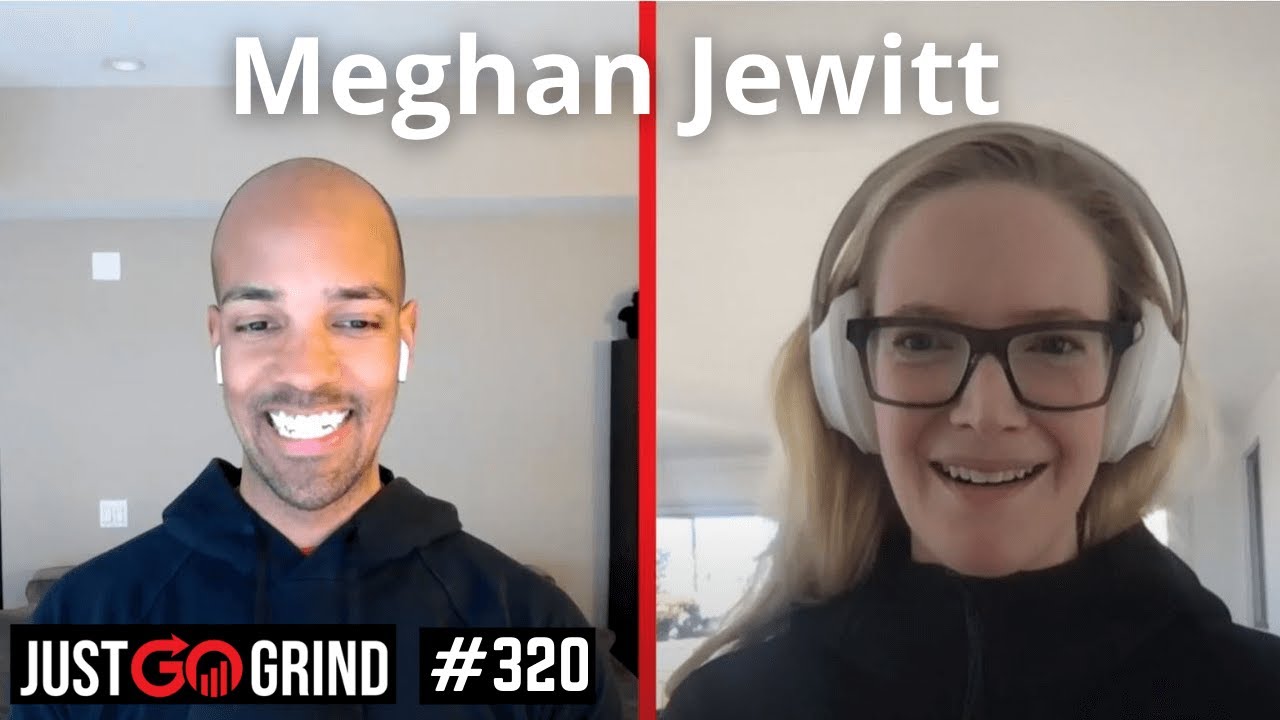
In this interview, Justin Gordon talks with Meghan Jewitt, co‑founder and CEO of Uniform Teeth, about the company’s mission to modernize orthodontic care through a tech‑enabled, patient‑centric model. Meghan outlines her personal journey from biomedical engineering and healthcare consulting to founding Uniform Teeth after a chance meeting with a UCSF orthodontist. She describes the early prototype clinic run out of a rented space, the scrappy acquisition of the first patients via friends, family, and local outreach, and the evolution to multiple locations backed by tens of millions in venture capital. The conversation covers the challenges of raising capital for a hybrid brick‑and‑mortar/tech business, the need to prove unit economics, and how Uniform Teeth differentiates itself from direct‑to‑consumer aligner companies by offering full clinical oversight and a broader treatment scope. Growth strategies are discussed, emphasizing paid marketing, word‑of‑mouth referrals, and dentist partnerships to drive organic awareness. Hiring is highlighted as a complex mix of clinical, engineering, and growth talent, with a focus on employer branding, sourcing, and even exploring a 4‑day workweek to attract talent. Finally, Meghan cites Uniform Teeth’s patented orthodontic movement algorithms and robust software stack as core competitive advantages and shares how listeners can connect via LinkedIn.
Chapters
Megan, welcome to the show.
Great to be here, Justin. Thanks for having me.
With Uniform Teeth, lots to talk about. I actually have gone through a company before to get teeth aligned. I'm very aware of this issue and this problem and like the different like nuances of that. Today, like what is Uniform Teeth doing? Tell us for people who don't know.
Yeah, Uniform Teeth, we're a modern orthodontic services provider. So If you need to get orthodontics done, we're amazing for that. And I think the cool part is like all the technology that's under the hood of the car that enables the experience and makes it really seamless and smooth. We kind of think about ourselves as kind of a One Medical, but in the orthodontic space. But yeah, if you've got something you want fixed, we can fix it for you. We can make sure you have straight teeth, a great bite, all those great things.
You have a lot of operating experience. I've seen that before, just on LinkedIn and everything else. Why start this company in the first place?
Yeah. Oh gosh, why start everything? I, it's so funny too, in hindsight where I don't think I realized the degree and commitment and like years and blood, sweat, and tears that goes into something. So I think it was, the decision was made in so much more of a cavalier way than I think I would at this point in time, now realizing just you're the ultimate responsible party. But yeah, how it was made. So I love healthcare. I was originally a biomedical engineer, went healthcare consulting, got my MBA, joined One Medical, which was one of the early fast movers in tech-enabled care, helped start an urgent care group, worked and did a turnaround in a territory at DaVita. And every step of the journey, I've always been really focused on making healthcare better. And that could be chronic care, dialysis, urgent care, but I just love making healthcare better. And so I was at this point in my journey where I was looking for, well, what do I want to build or what do I want to make? I was really ready to return to startups. I just finished a really awesome and very rewarding stint at DaVita, which is a really large, very well-run healthcare group. But I was just kind of ready to get back in builder mode. And this orthodontist out of UCSF, who's my co-founder, had reached out and said, hey, I've got this great idea. Dentistry's changing, the world's going digital. I think we can remake orthodontics and make it better. And I got super intrigued about that. And that was the genesis of Uniform. So that's why we started. Okay.
I want to go to that conversation and your co-founder talking to you about starting this company, because I've talked to so many founders and that decision to go for it with someone, I mean, it's huge. It's so big. What convinced you? What got you over the top? How those conversations go? I'm curious.
This is where I was laughing around the risk-taking and the thought. And I thought I did all the analysis on the market and I really liked him personally. He's just this wonderful individual. He really is just warm-hearted, kind, academic, you know, also like a fabulous like surfer and can like play the guitar. So just like a genuinely really cool, lovely person. And like, so I thought I did all my homework and all my checks and all those things. And in hindsight, I I think I actually am just a real risk taker. I've done things like move to new states and new cities sight unseen. I've jumped kind of head into stuff that I had no experience in. And so in some ways, I don't think this is so different for me, which was, you know, in some ways I had done the homework, but really it was an emotional decision and a gut decision. And I felt like it was the right thing to do at the right time. I got kind of emotionally just caught up in the story and the transformation, and I wanted to build something in this space. And I really liked him personally. So I would love to say it was this like really academic, well-thought-through, appropriate steps to be taking. But in the end, it was a heart choice, I think, for me.
Many times too, with the big vision we have at the beginning of starting something, you can see where this can get to and how large it can get to. But at the start, you don't have the resources yet. You haven't launched anything yet. It's just an idea. What was kind of the first iteration of this to test it or to figure out this was going to be a thing?
Oh, totally. I mean, we were definitely doing kind of a prototype mode to start, which was— so what we have, just to provide some context, is we're providing orthodontic services and we've got this technology to kind of enable the experience. And then we're really focused on a great patient experience. So if you're a patient, you might be coming in and doing like an initial assessment, but then we're interacting a lot through our mobile app. We're streamlining through our medical record. We're getting you in for a couple visits, even if you're doing really complex work and you're on your way with a beautiful smile. So it should feel very seamless. It should feel really delightful, really easy, and just very modern and fresh. And so We started with, you know, a rented space. It wasn't— it was like a Breather, which was like a temporary office rental. And that was like where we set up a prototype clinic. And then like our small team, which was like a couple engineers and like software engineers and like myself and like one person on CSS, we're all like in sharing the back break room. And, you know, we were on site and You know, Shell, who's my co-founder, was seeing patients. And sometimes if somebody called out, I was helping and assisting in the appointments. Like, it was just, you know, 8 people sharing a couple rooms, seeing if we could provide care in this novel and different way. And so it was very, very hands-on. Like, I definitely answered all the support tickets to start, which— It's always funny when you have someone who's like not so happy and They're like, I wanna speak to the manager. And you're like, oh, well, let's have that conversation, shall we? Like, here I am. Yeah, exactly. It's like, we really wanna make you happy. How do we do that here? So yeah.
With that too, in those early days, how are you getting the first few people in? I mean, it's always so hard to start, especially in something like this. How are you getting those first few people?
Yeah, I mean, I think especially for a first time with a company, actually. Like, now I feel like it would be so easy knowing what we know now, and we'd be much more adept at getting press or driving initial marketing or getting that first contractor so we could drive volume. But at the time, it was super scrappy, like our friends and family, word of mouth, you know, posting on Nextdoor, shamelessly talking to people at the coffee shop. It was very, very scrappy. Scrappy. And, you know, making our first marketing hire was a big deal. And like, so I would say like, yeah, the initial customers, it was like our friends, our family, like everyone's got beautiful teeth now. Everyone has a stunning smile because we've just gone through our personal networks. And that was the initial seed to get things launched. So yeah.
With that too, did you always think it was going to be a venture-backed business? That was the scale you wanted to get to, you were going to have to raise funds in that way? There's obviously many ways to go about raising capital. Talk to people on both sides. I'm at a venture firm, so there's always that, but that's a small percentage of people. You ended up going that route. I'm just curious on, was that always part of the plan?
Yeah, that's such a good question, Justin. It was part of the plan. I think in hindsight, I think in hindsight, I'd be curious to do more bootstrapping for like a future company initially and then taking like capital a little later. just for ownership and dilution and those types of things. We're lucky to have fantastic investors, so thankfully we don't have any issues there. Like, they're amazing. I recommend them to anyone and do on the regular. But I just think, like, you know, during especially that initial testing and iteration phase, It would not be like, I think in the future, I'll probably just bootstrap it just so we can test and learn really quickly and without some of that overhead actually. And then if we say, hey, this is going to be really big, let's do venture, then just raise the funds to go for it at that point.
I'm glad you bring that up because it's definitely a thought that, especially because in the media, you see all these people, if you follow anything startups, you see All these companies raising constantly, it seems like, and the other side of the story isn't really told as much on the bootstrapping side. People who are, you know, it's not always possible obviously to bootstrap and every company shouldn't bootstrap or go that route, but a lot of companies can either bootstrap, go the debt route and actually be better off, especially what you mentioned. I think Gail and our team at Vitallize just mentioned this around ownership, the exact thing you're saying. Like we've seen founders come through where they even in like a seed round or even like a seed round-ish, they already have given up so much of their company. It's just a mess in their cap table. So it's like founders need to think about that when they're going through this and how much capital it's gonna take for them to get to where they wanna get to. And on that point, 'cause you brought up the investors, raised somewhere around $14 million, Founders Fund being one of them. There's a lot of great investors on there. How is that fundraising process for you with this type of business model? I'm curious.
Yeah, we're actually in the 30s, just as an FYI, but Which I— so we're a little later, but we do have a number of locations and locations in the works. I mean, I think if someone wants to do a tech-enabled business with a brick-and-mortar component, you better really love that because it does make raising harder. And—
Yes.
There will be a lot of questions on your capital efficiency, on your ability to grow and grow quickly, on your ability to execute payback periods. And I also think you get a examined much more rigorously because some of your investors will be more comfortable with kind of a PE mentality around brick and mortar and unit performance than would be common as early on. And certainly when I talked with peers or other CEOs early on fundraising, I just noticed like a round or two earlier, I had to speak in some pretty specific detail around our unit economics and performance that if you're a software business with a subscription recurring revenue situation, you can be quite a bit more visionary and I think hand-wavy, and for good reason. I mean, it is a much more capital-efficient business to be in. So, yeah, I mean, These businesses are being built all the time. There's a huge wave right now, which I'm sure your listeners probably are very familiar with, around tech-enabled services businesses, whether it's veterinary care or fertility or behavioral health. I mean, the list goes on. So, we're certainly on trend, but I mean, it is certainly harder to raise than other businesses, is my belief anyways.
It's funny you mentioned those. I think I've interviewed people in every category that you mentioned with those different tech-enabled kind of service businesses.
Yeah.
I'm already thinking of like Fuzzy being one of them. I think of all these different ones. Yeah, there's a lot of them that are doing that exact thing. For you guys too, did you— I know there's different options out there in terms of, uh, orthodontics that people are going, the kind of go to the office a couple times versus no office at all. And there's this full spectrum. Take me through that decision for what you wanted to do in terms of that.
Yeah, well, it's funny right now, like the timing of this interview is very specific because we're seeing Some of these large direct-to-consumer, no-visit-necessary groups actually pivoting out of that business. So I would say like our underlying thesis was always that, you know, there is a need for quality orthodontic care that is modern, that's accessible, that's a great experience, that's not so cumbersome to receive or experience. Like that is Like, that is true. None of us wanted— I guess the acid test is none of us would ever have done the orthodontics we had as teenagers ever again. You know, like, there's just no way. So we thought there's absolutely this need here. And we also saw as we were starting things like a heavy move towards direct-to-consumer, which for folks that are less familiar is just where you might do a bite mold or go in for a scan. You get a set of aligners in the mail. And you self-treat. And I think what's interesting, and our view was that would always serve just a small fraction of the market, which it appears to have borne out actually. It's just really that those companies have grown a lot, but they really only serve a very, very small percentage of the market. I think something like 5% combined, although I would need to double-check the stats there. And the reason for that is you can only move teeth in a couple directions. with just aligners. What's not widely known is you actually need things like attachments or interproximal reduction, or, you know, sometimes it's like elastics or other things to really get aligners to move your teeth the way braces do. And you can only get that done by a licensed clinician. So they're only gonna be pretty, they're only gonna be good for simple stuff in the scheme of things. And then on top of that, there are legitimate dental health checks that are done before getting treated with orthodontics, which I'm the type of person that's so ironic. I go like 2 years without getting a dental cleaning, which is like a total no-no, obviously. So like, I'm totally the type of person who will just be like, I do what I want, I ignore those warnings. And I, and I empathize with that mentality. I would counsel folks to be, to be careful about it because we do see patients every day that if we move their teeth, they would lose a tooth. They might have some permanent, you know, they might need a gum graft. I mean, if you actually have stuff going on in your mouth, it can be a pretty big deal. And at the same time, I totally understand where folks come from. But these 2 things are real limitations of that model. And we're seeing that in the market right now with, you know, the certain public players not maybe having down revenue or other, other groups pivoting outside of the direct-to-consumer space, it's a hard model to make work.
I just want to say I feel seen because on my calendar right now it says schedule a dentist appointment literally this week, and I haven't had one in a couple years. And my mom, if she's listening, will, will probably call me again to remind me to get a dentist appointment. But I understand that people do that. And so the value of that is definitely there. Megan, I'm curious, you mentioned in the early days, family, friends of yours, anyone you talk to at coffee shops, the first people. You've grown to multiple locations, raised tens of millions of dollars. What has fueled that growth in the last few years here?
Yeah, I mean, for us, it's really like, as we build and open new locations, like we can drive more patients. So it's kind of an if we build it, they will come situation, which is a little different than other businesses that might have like, you know, a different product market fit situation. But the reality is with services, like people need these services, you're just designing a better mousetrap within existing markets where people are already used to purchasing orthodontic care. And now it's just a better, easier, more pleasant, you know, faster way of receiving that care basically. So I think for us, it's really just opening up new locations and figuring out ways to grow as quickly as we can. To make that happen.
I have to dive deeper because I'm on the marketing and growth side, so I'm always curious. I mean, is it spurring referrals? Is it paid acquisition? Tactically, whatever you can share, I'm always curious as to how companies end up growing.
Yeah. Oh, so totally. Sorry, we could absolutely go a little level or two deeper. Fair question. So when we open a new market, often there are a number of things to do, and I would say we're still relatively early on our journey. So we're getting more sophisticated and better continuously. We've got, you know, a long way to go to just nail our playbook when we open a new location. But examples are like often seeding with paid marketing. One of our biggest channels is actually friends and family word-of-mouth referrals. It's one of our absolute top channels. And so for us, it's often building enough volume and awareness so we can really Tap into that referral engine and that, that gives us a really lasting benefit. So what we wanna do is get up that acquisition curve as quickly as possible to, to basically being kind of what we consider full capacity. And then we start to see things that are really helpful, like friends and family referrals, and then also dentist referrals in the community to us. And we refer to them for patients who have, you know, as you mentioned, they need their cleanings, they need their— You know, there are cavities to be filled, like other things that just come up when people are seeking a beautiful smile. We want to help them have great whole dental health as part of that process. So the paid marketing is really important. It's an important layer, but it ultimately shouldn't be the dominant engine for a business. That's where, you know, if it is, then it actually becomes a really inefficient business. So for us, it's a lot about How quickly can we move to driving organic awareness and channels as quickly as possible when we open a new location?
It's interesting you mentioned that. I think because the things we're working on right now, like at Vitalize, we're the venture firm, we have an angel investing community called Vitalize Angels. And like, we're thinking about growth for that community. And anyone can join because open non-accredited. And we're thinking of that referral engine. That's what I've been building is trying to figure out the referral engine for that, because especially in that type of thing, like, yeah, everyone, if they have the experience of it, they experience uniform teeth and they have a great experience. Obviously they're going to be a very powerful driver of other people learning about it. So it's like, how do you facilitate that and continue to find different interesting ways to incentivize them to do that? We think the same thing with our community. And I'm curious too, with, with the things you've done with the growth, as we kind of have talked about, and with the complexities of physical locations, as well as the tech side of it and what you're doing, How has the hiring side of it been? Because hiring's already automatically hard regardless in any tech company and tech talent, but it's like a mix of tech and like in-person. How has that been for you?
Well, I think we're very fortunate to have an amazing head of people who started out by being our senior director of recruiting and is now our VP of people. But what an credible person to have on your team because, as you said, it is a lot of work to hire for these different positions. And some of the positions, like hiring for an orthodontist, is very different than hiring for a software engineer, is very different than hiring for, uh, orthodontic assistant and/or customer support for that matter. Um, you know, I wish she was on this interview because I'm sure she would have a lot of really thoughtful and pointed things to say about this. Um, But my, I would say like the set of tools we use and the principles we follow, which is, you know, good sourcing, good outreach, great candidate experience. All of those things are very universal. And we, so maybe just to tell you a story. So one of the things that I got questions from, from our investors early on was, how are you possibly going to be able to recruit clinicians? Like, how are you going to be able to recruit orthodontists? This is impossible. Like, it's going to be this gate to growth. And the ironic thing is, and we have incredible clinicians on our team, but we were able to do that. And in some cases, finding an incredible clinician is so important, but they're not even our most difficult hire. Like, they're a— and in case any of our orthodontists are listening, they're a precious and extremely important hire that we have to spend a lot of time making. in a really thoughtful way.
Absolutely.
There's no question. But we were— we thought that was going to be this huge issue. And it turned out thoughtful outreach, great sourcing, like doing maybe some university presentations to develop your pipeline early, like all of those things work just fine. But we also have stuff to do to level up our employer brand, to level up, you know, like, I think right now our focus is we want more inbound and we're having to drive a lot of hires through sourcing, and that is, that is a challenge to scale. So that's, so maybe to answer your question a slightly different way is we've been very effective recruiting for our current scale, following like standard best practices, but to really take it up a level, it's really more about leveling up our brand as an employer and making sure that's exciting and appealing and people are aware of us as well.
Yeah. Building the place that attracts people to you where it's like, yeah, they want to go join Uniform Teeth because they're amazing. I'm sure you obviously are, but like even making sure people know that Already. I can't pass over what you said though. You were like, they're not even our most difficult hire. What's your most difficult hire?
Oh my gosh. Where do I start with that? It is such a competitive talent market right now. It's insane.
Yes, Megan.
It's so challenging. Yeah, it's so challenging. I mean, I think So we've been looking for just a rockstar director of growth. And I think, and we've spoken to so many talented people, but for our type of business, we really need a unique thinker. Like, we're not just an e-commerce, you know, standard cookie-cutter playbook. And so we've got offline channels and online channels, referrals, and, you know, things that folks do in industry that is very different than other businesses. And Finding someone who can really think uniquely about growth is really challenging, and the exceptional candidates are unbelievably oversubscribed right now. So that's been a challenging one. And then, of course, incredible software engineers are always unicorn rare resources, folks that we're always thrilled and lucky to have on our team as well. So those are a couple that come to mind, but Yeah. Every hire is so critical, actually.
Yeah. I'm just thinking about the founders I've talked to who are everyone, everyone at like a venture-backed startup is dealing with the same issues of hiring and you're competing with the likes of big companies where they have options at that, but you have a mission and equity and your assets as a smaller or venture-backed at an earlier stage than like a Google and Facebook, for instance. Everyone's going through that same type of thing. And I've heard Some creative ways. Some people are hiring internationally, more so focused on that. One person has a background, they're hiring, they're like, they moved their headquarters to like South America there. He, I think the guy has some background there, so he ended up moving the whole company there. He's like, well, we can do this and like source engineers from like South America and we're gonna crush it that way. Like, that's interesting. And like everyone's trying to think different on that spectrum. So I'm always curious as to how founders are thinking about it cuz it's so challenging.
Yeah. I mean, one thing we've been Exploring just from an idea standpoint is, could we move to a 4-day workweek as a venture-backed company at our stage? And like, would that be possible and how to do that? Anyways, it's early days. It's something we're noodling on. But I mean, the war on talent is real and the war on lifestyle is real. And so, you know, things like that can give a really differential edge and, and are something freaking I think everyone on the team would really like, but it's just that type of thing has a real tension, right? Yeah.
I have to double-click on that. I literally, okay. So today I, we have a newsletter at Vitalize. We're focused on the future of work. So we invest in future of work companies at pre-seed and seed. And so we're always thinking about work. And so today reading an article on, is the 4-hour work— 4-day work week, is it overblown? It's gotten a lot of hype. We've seen companies like Bolt and a few others, like Big notable ones do 4-day work weeks.
I think Signify just did it. Yeah.
So as the CEO, as running this company, what are you thinking about in terms of that 4-day week? Like, what are some thoughts that come to mind or, you know, pros, cons, et cetera?
I'm curious. Let's see. Pros, retention, culture, talent attraction. Cons, top-line revenue and investor stress. Is that the soundbite? That works. That works. It's in that range. I think the more reasonably— ultimately, the reason why we're thinking about this and looking at it rather hard is just generally wanting to create a really great sustainable place for our team. And actually, healthcare services is exhausting. I mean, you're really on You're caring for others, which is wonderful, but also can be rather draining for individuals. And we want to create sustainability in our business and with our team. And so that's really the focus. I think the fact that other companies have been able to pull this off successfully just means that it's possible and we should be able to figure out how to do that. So it creates the possibility of that.
I know we're almost out of time, Megan, but what makes— I know we've kind of talked about a lot of different things, but what makes Uniform Teeth stand out special and why you're going to ultimately get to where you want to get to?
Oh gosh, I think we have to just give a nod to our incredible engineering product and design team and our amazing technology. One thing we don't talk about a lot is we actually have a bunch of really amazing patents on how teeth move. And it's just so impressive and a really incredible software stack for our phase and stage. Like, it is how orthodontic care should and will be delivered in the future.
That's so exciting. Where's the best place for people to learn more, connect with you as well if they'd like to?
Let's see. I'm just laughing because I'm totally an introvert. And so I try to like—
So don't connect with Meiken. Okay. No, not at Not at all.
Probably LinkedIn is a good one right now. Instagram I keep for mainly personal reasons, but LinkedIn, I'm always happy to chat. And certainly for fellow founders, always happy to be helpful or vice versa.
Megan, thank you so much for the time today. Really appreciate it.
Thanks, Justin. I appreciate it too.










