Problem Identification, Product Hunt Launches, & the Power of No-Code, w/ Jonathan Anderson of Candu
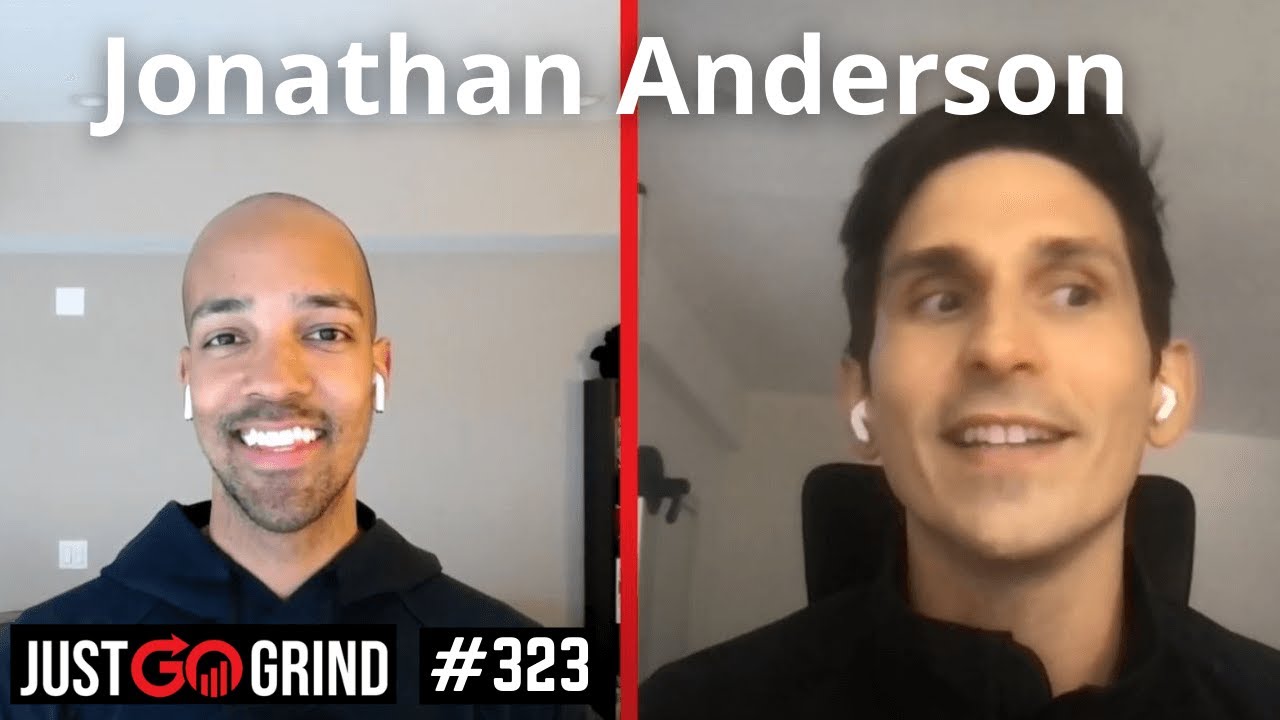
Jonathan Anderson, founder of Candu, built a no-code UI tool for SaaS products after struggling as a non-technical product manager. He launched twice on Product Hunt, pivoting from low-code SDK to copy-paste integration, and scaled to 16 people after raising seed funding. Anderson emphasizes identifying the real problem first, not jumping to solutions.
Chapters
Jonathan, welcome to the show.
Thank you so much for having me.
Yeah. With Candoo, for people who aren't familiar, just give us a little overview of what the company does.
Yeah. So Candoo is a no-code UI builder. So we let non-technical people like myself, I can't code, create components that you can use to enhance a software product. So if you want to upgrade your onboarding experience or build a splash page or an integrations page, we would say before turning to a developer, Try doing it with no-code. We're the first no-code builder for existing products, and we hope to make that into a category that anyone can use. Grab a template off the UI, make it as, and get started. So.
I love it. There's so much that there's such a need for that. I see it every day, honestly, on Twitter and people like looking for technical help. People understand like how are they gonna build the product? And for a lot of these products, you don't need a super advanced solution, especially in the beginning. And so with this though, how did Candoo get started? Where'd the idea come from?
Yeah. I think the genesis of the idea for me was twofold. One, I was actually working in a SaaS company and I was not able to do everything that I wanted to do, unfortunately, because that's the way of product managers. You filter down 100 good ideas into 1.5 that actually get implemented, I would say. And I think the second thing was I was actually building my wedding website with Wix and I was like, oh wait, hold on. This is the easiest thing in the world. I can literally drag a button onto the canvas and hit publish. For something like a new product launch or an onboarding checklist, like, why can't I just, like, these are solved problems, right? These are existing components. I would love to be able to change the UI, you know, as I think of things that work. So yeah.
With that too. So going from that as an idea of like, you know how you have this ease of use for that, but people have these problems, they don't start companies. This is what I'm always curious about with founders. Why start this company? You could have just like, oh yeah, that was easier, but there's probably a solution for it out there, whatever, who cares? Like, why did you start the company?
So I am so glad you pulled on this thread. I love when founders are like, I found this problem and I needed to solve it more than anything in the world. And I'm like, well, like you could have just not solved it also. Yeah, exactly. Like, I think that founders are a crazy breed of people that actually just really wanna start companies cuz we got in our heads at a young age that's like how we can become a person in real life. And at least for me, I spent a year writing down a startup idea every day until I had something that, and actually I was traveling for a lot of it. It was a lot more travel-related ideas, which is not what I should have been doing. But I was lucky enough to actually join an accelerator, Entrepreneur First in London, where I met my co-founder. And he built this amazing A/B testing platform. And we kind of got to chatting. And we went back through the Rolodex of horrible ideas and tried to find some thread of something that we could do to make into a business. But whenever anyone says to me, oh, I needed to solve this problem so badly that I started a company, I'm like, that's super fair. But like, what's the real motivation there? Sorry.
First step is admitting you have a problem, right?
Yeah. It's okay to say, hey, I wanted to change the world and this is how I'm going to do it. You know, I think that's a completely reasonable thing to say. I don't know why we're afraid of saying that.
So I agree completely. One thing I want to go back to, you mentioned meeting your co-founder at this accelerator. That's another huge part that's so difficult for people. How do you find a co-founder? How do you decide that's the person you want to work with? Take me through that process, how that went for you, at least.
Yeah. So Entrepreneur First is an amazing program because you find other people that are also trying to start companies at the same time. And that's actually the hardest thing is like you often work with amazing people that just are not in that place in their life and they want to do that. So it removes like a little bit of that friction, I would say. I would highly, highly, highly recommend working with someone that you've worked with before, if at all possible, because you can rely on that relationship. Because ultimately your co-founder is— that's a sacred relationship and that is really— it's immutable, right? As soon as it's formed, unless you literally backing out of that is impossible. I would, if anyone here has ever gone through a pivot, That is probably one of the hardest things to ever do. And you and your co-founder need to be so aligned on the problem that you're solving that it's, yeah, it's very important. So I wish I had a good answer for you, but it's a hard choice to make.
Yeah, it is. And from that too, though, deciding to launch Candi, like what was the timeline for that? What was the timeframe just for people who have the reference then?
Yeah, so we started it about 3 years ago. We probably tinkered with the idea for about a full year before settling on the product we have today. And then we've been building that for about 2 years. We actually launched it last year with a great, really funny marketing video and then had a lot of product work to do to actually make it fulfill the needs that we decided on. And then we actually just did a relaunch of it last week because now we can confidently say to both the world and to my mother that it does work.
So. Okay, we have to go back to that. You said you tinkered on it for a while and then you finally launched. Like, take me through that process of getting to like the first version of Candoo. And eventually I want to get back into what you have today, but take me through that tinkering to get to that first version and launch.
Whew. Okay. Putting on my thinking backwards cap. So I think the original version was basically a little player that would pop up in a piece of software that would provide kind of educational content as you kind of move through it. And it would then suggest for you like relevant pieces of information. Um, almost like a, a Clippy, if you will, if you remember Clippy from Microsoft Office back in the day. Um, an animated character that would tell you how to format your letters.
Um, oh yeah.
Yeah. A paperclip.
I remember the name of it.
Yeah. It turns out actually this is not a good idea, in part because people actually don't have that much micro video content to start. So they didn't have a repository of things to show. And then also video as a popup is actually really problematic because it blocks part of the screen. And so it's actually not conducive to deep thinking or learning. So we both were wrong on the problem and we were wrong on what our customers were looking for, or our future customers were looking for.
It's such a hard thing to even get to that point. So you obviously figured that out from there and launching that, the iterations and along the way to get to this very recent version that you just launched like a week or two ago here. Take me through that then. What, like, here's the thing, founders are going through obviously lots of feedback and data from customers and people, all different sides of things. How'd you narrow down the focus into, okay, this is actually what we want to launch with? Product Hunt in February of 2022 here.
Yeah. And keep in mind, this is the second time we've been on Product Hunt. So we're relaunching the product with the—
Second time.
Yeah. Now that we know that it both creates value and works beautifully. So like, those are the two things that anyway, that we had to think through. So, okay. As a founder, I would be super, super, super crisp on what problem you're solving and what does it feel like when your customer solves that problem? I cannot express enough how important problem identification is as opposed to solution identification, because I think solution orientation, if you get, if you're on the wrong path like we were, you don't get to wipe the slate clean and then try again. But because ideally customer discovery is super iterative, you can always return back to the problem because you can find another way to solve it. So I would really recommend thinking about what is the problem that we're solving. And for us that was, okay, I work at a SaaS company. I don't code, how do I meaningfully contribute to user outcomes like onboarding activation? And that's how we kind of settled, came to Candoo. But yeah, I would just say like, just be so clear about the problem. The solution will come to you. You'll think of a million ideas. And again, one might stick.
Take me through a little bit of the product itself in terms of someone using the product, the use cases, who it's really ideally for. I'd love to hear more about that too.
Yeah, we are a, like a jobs-to-be-done product. So we help solve the the job of user onboarding and activation. In particular, we help companies that have been traditionally a little bit more, I'd say, like sales-led or customer-oriented led, move them toward the product-led path by including these like no-code blocks. So what are we really good at? We're good at like user onboarding checklists. We're really good at dynamic announcements based on where you came from. We're good at like micro content that helps you learn about a product before you actually decide to go and use it. And I cannot remember what the rest of the question was, but that's basically what we do.
Yeah. So no, yeah, it's all, I'm curious, just curious about what that looked like, sort of narrowing that focus. And then also one thing that's interesting, especially what I wanna talk to you about, because you did just launch on Product Hunt again for a second time, from launch 1 to launch 2, differences, things that worked for you, things that were beneficial. I know a lot of people obviously launch on Product Hunt. It's very popular. What did you change or what was different?
Yeah, so in terms of, I can only hold one question in my head at a time, so we're gonna just answer the second part of that. Perfect. The, just, Just being as honest as possible. The big difference between us, between launch 1 and launch 2, was that we were building a low-code tool. So you still needed developers to help you set it up basically. And in the interim year, we've just been abstracting away and making it as easy as possible for someone like me to actually fully create the thing. So for example, before you needed to have your developer install the React SDK. Now I can copy some code and then paste it into my browser or use Google Tag Manager. There's a lot of things like that, that we like basically, once we figured out who our core person was, how do we then build an entire product just for them? Which in our case is like a no-code doer who works at a SaaS company and wants to have an impact. So.
With that too, so I know people who've gone through prior times have had mixed reviews, right? Like you get a spike, but then it's like afterwards, like how much do you actually continue on? Like how much does the growth continue? What is kind of that ongoing growth thought strategy around— obviously you start with Product Hunt, but then what does that look like kind of moving forward here?
Yeah, I love Product Hunt because it's a pull-up point. And it's also a time for the team to just like enjoy what they've made. Building product is so hard, takes so much work, that it's just nice to be able to pull up and say, this is really impressive. You know, I, I'm so proud of the work that we've done. But it's hard when you're in the grind of it, especially remote and COVID and like, it's just, it's just, it's a startup grind. So I think launches actually, we talk about them a lot from a, from the perspective of, okay, we've, we've launched, let's get new customers, but it actually has a big impact, I think, on us as feeling like we've made progress along this path and that we should celebrate that. So. Yeah.
What has been coming, some of the feedback from that? So since the launch, you know, it's very recent, pretty fresh in your mind from customers and everyone else. What has been the feedback around that launch so far around the product?
Oh yeah, sorry. This part is super important. I'm glad you brought this up. You need to be tracking your funnel analytics more than anything. You need to know what are the 3 things that need to happen for somebody to be successful with your product. And in the time since our last launch, really what we've been working on is making the editor really usable. So actually what we're tracking super carefully is how many of the people who came in in the last launch, how many of them were actually successful to build a component versus today? And that is really, again, the traffic is just a blip, but use the traffic to learn what's working and what's not. It's basically like a great experiment. Separately, as a founder, it also is a reintroduction, right? You're able to meet the— who's on Product Hunt? It's a lot of product marketers and it's a lot of investors. Those are the two, I'd say, cohort of people there. And then hopefully some of them can filter your kind of your message out. So it's great for awareness, but I wouldn't kind of treat it as more than that.
With that too, so you mentioned the we, obviously, is it still just you and your co-founder? How's the team evolved over time? Really curious about that.
Yeah, so no, our team is, I think, 16 people now. We raised a pre-seed and then a seed, which really enabled us to pull the team in and build it up from there. It's about half engineering, half go-to-market. And I think one thing that I learned is the go-to-market side of the house is I actually wish I had hired the people I work with today about a year ago. And by that, I mean, like, I'm a perfectionist and I really benefited from having other really smart people that could help me think through these go-to-market challenges and problems. And I had this idea in my head that all we're doing is building product for the first year, so don't worry about it. But I actually think I should have spent a little bit more time on the go-to-market side. And so I think one, I guess, recommendation I have for founders who maybe have just closed a round is actually, this is your opportunity to bring in some smart people sooner to help you work through the problems. It's not that you're gonna figure it out yourself and then pull them in. It's quite the opposite.
So you would have hired sooner. So you would have hired that person, had them start to work on that as you're building out products.
I mean, like, absolutely. Yeah, I wish I— so now we have a phenomenal marketing team, customer success, support, sales. And I just wish I'd started that process earlier so that we could have solved more of the problems along the way.
And with that being one of the hardest aspects of building a startup, growing the team, like anything around that, that was helpful for you in finding team members? Like, I mean, it's just every startup I talked to, it's everyone's like the war for talent. How do we hire people? For you, anything that was helpful for you?
How do you hire people is such a difficult question. I do not have a perfect answer on this one. And also, as a startup, you know, you're asking people to take a risk, right? You're saying basically, you know, don't go work at Google or whatever else great company is thinking about hiring, like come work at our Where we are. I could— my strongest recommendation is to have a really fast hiring process, to be really clear about what it is that you can offer people, which is growth, which is to be part of your story, which is people who believe in the product. And then also, by all means, hire a recruiter. Oh my God. Like, do not spend your days on AngelList going through, combing through profiles. Like, find someone who's really good at it, who gets your vision so they can get great candidates in the door. 'Cause you've got other problems you gotta solve.
So that's a hot topic, Jonathan. Recruiter, people go back and forth on that all the time around, do I use a recruiter? Do I not use a recruiter? In-house recruiter? Not like, what were you thinking about that? And you said you got one. I mean, you said you recommended it. Like for you, what went into that decision to be like, yeah, we just need a recruiter.
And I should say also, we've tried every method imaginable. We use, I think we use hire.com. We have an amazing recruiter that we work with. We've done it in-house. It's gonna be different for different roles. All of that said, like recruiting is the most time-consuming thing I can imagine other than finding, you know, product market fit. And so I would say if you can delegate that out to someone you trust, like please go ahead and do that. So, okay.
And yeah, I mean, everyone's, everyone's different. Every, every, every position's different too. It's obviously progress along. It's like if you're looking at different executives you're bringing on the team versus entry level, You know, engineering talent, it's just such a mix of things, especially at each stage of the company, it kind of evolves as well. And I know you mentioned, you know, the pre-seed and seed round, the funding side of things, how has that gone? That's also one of the hardest parts of building the company, depending on where you're at, especially if you're a first-time founder versus a repeat founder. On the hiring front, how'd you approach that? I would be curious to know more about that.
Sorry, you're referring to how do you approach getting investment? Or how do you decide on who you're getting investment?
Yep. Yeah.
So we had a very difficult pre-seed in part because we're trying to build a new category and we weren't really crisp on what that was. We actually probably didn't even have conviction around it, around the vision for what it was. And then we went to go out and raise the seed. It was literally almost nothing had changed. Maybe we had better Figma files. We didn't have any more customers. We didn't have any more proof points, but I was incredibly clear that this is how the world should work. And that level of belief, I think, came through and made it much easier for someone to say, oh, I can see how this fits into my investment thesis, my world. So highly, highly, highly recommend being—
I don't—
you need to find other believers. And to do that, you need to believe yourself. Which is why that like early co-founder pivoting, finding the right market fit is so important. Because if you're not super clear in your own heart of hearts what you're building, It's really hard to bring anyone else along.
One of the things I'm always curious about with founders, especially venture-backed founders, you know, you've raised capital, you're hiring people, you're figuring out the product side. How do you take care of your own mental health and kind of balance everything that is building a company with taking care of yourself? For you personally, Jonathan, how have you gone about that?
Whoo. Well, I've delayed having kids, that's for sure. That's actually, that's actually true. Okay, so first of all, I'm so lucky to have the co-founder that I do. Yeah, being able to lean on someone else when your conviction lags or when you get bad news from a customer. Like, we had our first churn. Oh my God, that was like, you know, unbelievable, right? It's really, really important to have that balancing with someone else. I should also mention that my husband's actually also an entrepreneur. He founded Cann, a cannabis soda. Our company's Cann Do, like you can do it. His cannabis soda together, it's a Cann conglomerate.
Amazing.
You got to use the puns. You got to use the puns. But we have such stressful jobs, right? We just do. And they're also, I'm just gonna be honest, being a founder, it really exposes any insecurity or difficulty you have. For example, I'm actually fairly introverted. I can turn it on at times, but when you're trying to sell your employees and you're trying to sell your customers and you're trying to sell investors, you have to put so much energy into the world that that was the area for me that was really hard. And so I think like, just being realistic that like, it's okay if you stop working at 9, it's okay if you stop working at 6, and don't beat yourself up over that. Don't judge yourself for that. Because it is absolutely a marathon.
So. Yeah, the long game. I know on the VC side, us at Vitalize, we, you know, we work with a lot of founders, obviously, and like now talk with a lot of founders even outside of our portfolio and the different struggles that people have. And it's like, okay, like, just relax for like one second. Like, if you're gonna do this thing, the startup, startup world and raising venture capital and all this, it's like a decade thing you're gonna do at least. Like, this is just a lot. So like, take care of yourself, otherwise you're not gonna make it to year 2, which doesn't really help anyone involved, you know, which is interesting.
And I feel so bad for all the burned out founders, and there are a lot of them, cuz this, it really, this thing, this is a little monster that will just take as much as you're willing to give.
It's also like, even on the VC side, like we're, we, we have an angel community, so like we basically have a startup within a VC, which is different. So like, we're growing an angel community, but then also on the other side, like investing in founders and like the burnout for that. And like, it's a lot to handle all of those things. So we definitely empathize with the founders and being a founder is way harder for sure. But one thing I'm curious about too, though, you mentioned your husband being a founder as well. How's that dynamic between like 2 high-performing like startup founders, how you manage relationship versus like business? Because I am really curious selfishly for that as well, around how people do that. So I would love to hear your perspective as well, Jonathan.
I can recommend an amazing couples counselor who can help you through some of this stuff. No, I mean, I don't know. It's hard, right? Because you're— I remember when Luke, my husband, got his, one of his big rounds of funding, it was right after, it was when I couldn't, right? And so it was actually like one of those moments when it's impossible not to do the comparative, you know, how come this isn't clicking for me the way that it is for him. And, but then you need to like reframe your thinking and say, no, actually hold on. Like my, like lack of success at this moment in time is actually not really a problem because my family is doing really, really great.
Right.
And I think like having that mindset helps even it out a little bit, but honestly, like I wouldn't recommend that to anyone. You know, this is tough.
It is. But this is why, this is why I love having these conversations, cuz it is so difficult and everyone has a different situation. And like you have some people who are like power couple, both entrepreneurs, some like super supportive, but other ones the entrepreneur, like it's just so many mixes of it. And it is, it's not like obviously one scenario, everyone has their own kind of unique situation in some ways, but drawing on the, like the experiences of other people, I always love trying to share those, just any context for other people. So I think it's helpful at least to know it's like, oh yeah, wait. Jonathan has the same situation I do. That's interesting. How does he handle it?
Like, the level of understanding is really nice with another founder partner. The ability for them to empathize with you with your problems is limited somewhat because they've got really big stressors in their life as well. So it's important to keep that in mind.
Very, very, very true. And with this too, so with Candoo, obviously you just launched on Product Hunt, you had raised some money already. Like, what's next? What's the big vision for that? I'm curious.
Yeah. So the thing that we were actually launching is, in addition to just the relaunch, was actually our creator showcase where you can literally go in and see what other people have built with Candoo, which is like the first time that it's not just like me saying, hey, no-code really belongs in enterprise applications. Now you can actually see like, how do these amazing other customers actually do it? And I think for me, that's probably what I'm most excited about, that a lot of our customers are obviously super proud of what they've made. They've had these amazing outcomes and that now they're kind of sharing it. And so for me, it's like we're Because we're creating something new, this new category of no-code UX, I need people to start to want it and start to say, oh wait, wouldn't it be cool if I had Shopify's onboarding flow? Or wouldn't it be nice if I had AWS's help center page? And we can provide that for them out of the box, which is something that I think, how do we get awareness of that this is not just something that How do I say? For us, really, product is about awareness, right? How do I activate people into saying, oh my God, this could be me. I could be the one making this stuff. It's not just in the world of developers. I could do this myself.
So. Yeah. It's a mix of like, it seems like you're creating the demand and also trying to capture at the same time. So it is a tricky thing to have that with Candeo, but there's obviously advantages to leading the market in that way, which you guys are trying to do, which is amazing.
That, or we're off on the reserve, like off, you know, off the reservation, just like, you know, doing the crazy thing.
True.
We think that it should exist. in the world and we want to get the word out, obviously. But yeah.
One of the last things I'm just curious about then, with the rise of no-code, I mean, if people have paid attention at all, you've seen a lot of different tools. Where do you see this going, evolving more broadly in terms of no-code and how that impacts people?
I love no-code. I love it. I love it because it activates the rest of us. who are maybe don't have the technical chops to like actually be full participants in our, like at our, at work or in our personal lives.
Yeah.
I would actually argue that no-code has been around a very, very long time. There's been so many things in the past that have been abstracted away from development. So a good example is like Marketo with email, right? It used to be that developers hand-coded every email. Now that's not true anymore. Does that mean that email is no-code? I would argue absolutely. That's what it is. Data analytics, the same thing came for it. There's a million more examples that we can have. Popup tools would be another great example. Things that had to be done by developers, but are now able to be done, accomplished by people who don't have those skills. And we think that trend toward no-code has come now for standalone apps, which is very exciting. I think the work that Retool is doing, the work that Bubble is doing is fully changing how we think about the power of these applications. And all we're saying is let's extend that to the front end of the applications you're already using for work. So what is the blended version where you code some things and then there's some no-code components embedded in as well?
Yeah, I just had a friend of mine actually who built his MVP in Bubble, just raised his pre-seed off of that. That's amazing. I love that it's taking place. And the fact that you can build these things with these no-code tools is amazing. And it's going to open it up to more entrepreneurs, which Which is incredible. Solving different problems in different ways and all different people, different geographic areas and everything as well. I think that's what's exciting about no-code and I'm pretty bullish on no-code as well. And Jonathan, where's the best place for people to learn more about Candoo and also connect with you, even though you're introvert as well?
I think I'm probably like an, what's an omnivert? What's ambivert? What's the middling path? There we go. There we go. Yeah. No. Oh my God. Yeah. Go to candoo.ai. Uh, candu.ai, uh, and browse through our templates, browse through the creator showcase pages, um, and see if something appeals to you. Because you know what, maybe a developer can definitely make it, but so can you. So.
I love it. I love it. We'll connect everything in the show notes as well. justforgordon.com. Jonathan, thank you so much for your time today.
This was amazing. Thanks so much for having me.










