Raising $150M & Coaching World-Class Founders - Julien Smith
Julien Smith raised $150 million for Breather, then built Practice to help solopreneurs. He coaches founders on hiring lean, making 5-10 year bets, and becoming their mirror rather than their boss. His father was a coach, which shaped how he thinks about trust and consistency.
Chapters
Julian, welcome to the show.
Yeah, thanks for having me.
There's a lot to talk about, man. There's so many things we could go to, your background, like which way to take this in terms of the angle of it. Let's just talk about first, what are you working on now with Practice? Because I want to set the context for people to understand what you're doing currently.
Yeah, I try not to give too much background on that. I will just say that when you're in venture, you got to make big bets. As far as you're concerned, my first big bet was real estate and tech and the convergence of the two. I happen to really care about that. I had spent my career in cafes and so on, and I started a company, Breather, ended up raising $150+ million over that history. And I was— that's really where I learned to be a CEO, to tell you the truth. It really makes you realize that your bets, they can't be like 2-year bets. When I was an author, you can make 2-year bets. I'm going to write a book, see if it takes off. If not, I'll write some book on some other subject or whatever. Bets in venture have to be 5, 10-year bets. And so Practice, the company, which has raised about $10 million today from Andreessen Horowitz, one of the best investors out there, Tony Robbins, a bunch of other major angels, is really taking a bet on serving the solopreneur, what we would call a business of one, and giving them a stack. Like, a stack in tech just means a suite of tools to be able to serve their business and see their business in one pane of glass versus like otherwise they would be like Evernote for notes over here and then like PayPal over on this other side or Venmo or something.
Of course.
And then there's like 5 or 10 different tools and we try to give them kind of simplicity and and synchronization internally and then professionalism externally. And that's, you know, back to the 5, 10-year bet that you really gotta care about these people.
That's for sure.
When you go after a financial, when you go after a certain market. My father was a coach. We started with coaches and now we serve other types of virtual assistants, all kinds of different solopreneurs. But you really have to care about like, that independent spirit. You kind of have to have that independent spirit the way that your customer does. And so really naturally, like, I don't know, there's something— sometimes I use a metaphor. I say, um, uh, what you— what we try to build is we try to build a well. And then if that well has water in it consistently enough, then what happens is, is someone would go to the well again and again. And maybe if we are doing a good enough job, then they might even build their house next to the well. And so given enough houses that are built next to the well, if we are good enough at our job, a whole— a little village will develop around us, right? And so I kind of like think about this idea of being trustworthy and consistent in being able to give value to people. So that they can, you know, so they can do the work to building their families and supporting their families and all these other things. And, and I don't know where this well metaphor came from. It just hit me one day, maybe a video game. Yeah, but, uh, but I use that internally as a way to kind of like keep the team aligned.
You mentioned your dad was a coach, so that would lend some like, okay, I could see where this, this goes in this, but like, let's just take a step back. So Breather obviously did really well. You had optionality to do whatever, you know, you had optionality. Why this? Like, what were you— what else were you considering? Because I always find that fascinating, because especially if you've had a company before, your options are all over the place for what you could have done. That's true.
Yeah. So you're totally right, Justin. And the danger is that you can start some bullshit thing.
Yes.
And then no one will tell you. No one will say anything.
Great idea.
And you'll just Yeah, yeah, yeah. Super great. Thank you so much for the excellent candid feedback. And so you might even raise tens of millions of dollars if you're a good pitch dude before someone finally tells you, I've always thought this was dumb and can you move on? And so first of all is my answer about this idea of 5, 10-year bets. There aren't a lot of places where you can consistently care. By year 5 at Breather, having been a CEO, and if you've never used it or if you've never heard about it and you're listening to this, Breather allowed— it was the first time that you could have this network of spaces that you could unlock with your phone that were all commercial spaces. And so they were in dense areas of cities. People used them primarily for meeting and office space, it turns out. And it got to pretty gigantic, tens of millions in revenue, all these other things. Pandemic affected that, obviously. But, um, but what you realize by, by year 5, if, if you don't care about the model, if you don't care about the market, like, that year 6 to 10 is going to be really tough on you. And so, um, so I, I started building a product that I was very excited to build, but I ended up in an industry that I didn't really want to spend every day in, which was real estate, commercial real estate, which is super hardcore.
Yeah.
And while, by the way, I have a respect for real estate that I didn't really have because I just didn't know it back in the day, what you realize is, is you got to make bets on things you, you care about. So I did, I did a, I did a, a check. I looked back And I said, what are the things that I cared about, like, when I was a kid? And what are the things that I still care about today that I cared about when I was a kid? And there's actually not that many. This is actually a good lesson for any entrepreneur, right? And, and so you could actually take those from a market standpoint, and you could probably, you know, course— take a point of course towards the things that you're going to be building. And then And then when you look at the market, then ideally what you should be able to do is you should be able to just listen. And if you truly just listen to enough people, like we interviewed, like at the time it was just coaches again. So it was like 100, 200 coaches. I still have them on a giant mind map.
Hmm.
And I looked at every person that every person had introduced me to and what conversation they had. And I took notes and all these other things. And I became an executive coach as well. I'd always been advising founders for a long time, but then even today, I coach always a small number, 5 or less. I have 4 today, executives, CEOs, founders of tech companies that have never been a CEO before. And so I really understand these people and I sympathize with the challenges that they have. And then the other side of the question is, why venture? A lot of people, Think I would never want to do venture again. The trauma I was on—it sounds like you listen to a podcast. I'm on, of course, Second Time Founders, which Joe Fernandez is on, and he is—he was the CEO of Clout, and he's describing what during his during his his time at Clout, he says he has PTSD. You get PTSD from crazy hard things. We describe it as PTSD. It manifests itself as probably some form of anxiety or. or something, you know, because you're doing crazy difficult, really hard things. And that doesn't come without kind of physical consequences if you don't manage them well. And so looking at it, I was just like, well, I do. I was very excited by the idea. I knew I could raise money by that point. I'd raised a lot.
Of course.
And I was like, that means I can get a good team together. That means I can choose my team. I could be really choosy about it. And I had noticed in venture that you work with incredibly smart, driven people. And that is just so compelling. I'd spent years in social media when it was first emerging as a business, as an industry.
Yep.
I'd spent years writing books and being among authors and speakers. And I had spent a bunch of time with those people. I actually just had lunch with a bunch of old school kind of author types just now.
Nice.
The, uh, the, the craziness and the kind of ambition and then the, the, uh, the, I guess, attitude or something of founders, especially venture founders, is just crazy. Like, it's, it's like, it's nuts.
It is.
And so it is just so compelling to have that, that kind of merging of, of roads. Of one is cash, if you could raise it. Second one is talent. And then the third one is alignment towards wanting to build something. Oh, my whole team today is like, oh yeah, we all love like independent solopreneurs. Some of them are dog trainers on the side. They do this at Shopify as well. They all start kind of side hustle businesses selling like soap or whatever. We have a version of that where we sell ourselves because it's all services, right? And so it's just, it's a compelling combination of things and you only get a couple shots at life.
Yeah.
To be able to do things. Right. So you really gotta choose those shots carefully. But I found that my skills were really suited at this. I've been a CEO for 10 years and I'm like, you know what? I think I might be good at this. This is crazy. Which is kind of a funny thing. Not what I expected I would do.
What'd you expect you to do?
When I was young, so if you have weird professions that you might think, I, you know, I asked my nephew the other day, he was like, I wanna be a professional soccer player. And I was like, and if you can't, someone around the table says, And he's like, then I'll be a professional basketball player. So I never had that phase. I want to be a psychologist. It's a very intellectual and abstract thing to say if you're a kid. Then I want to be like, I want to investigate ghosts for a while. So that's like a kid thing.
Naturally, of course.
Yeah. Now instead I watch Unsolved Mysteries. And so then I just went through, but I was never given a path because my father was a career coach, as I said. So the openness that it allowed you is your father— the downside is you were never really pushed to do and excel at any given thing. The downside is— the upside is no one ever chooses your path, so you have an open view of what you can do. And I became an entrepreneur, I guess, I don't know, because it's the nature of who I am and how I do things.
From that. Okay. So you chose this path, obviously building companies. You had some success already with Breather, and then you're now doing practice. And you mentioned the Coaching thing on the side. I want to talk about that real quick. I looked it up. So you said you do less than 5 clients at a time or 5 or less clients at a time and you're doing that sort of thing. And you mentioned some of the things in a blog post, making like $100K in 18 months from coaching from a few hours and how you broke down kind of how you did it and everything in terms of like how you actually coach people and what that looks like. For people who are curious, what does that look like? You working with other founders, what types of things do you help them with? Let's talk about that real quick.
Yeah, so I built a coaching practice and I was fortunate. It's, you know, I've had other things that I've done, so people know my name and they know the names of the brands that I built. So I can't say that this path is typical, but I will say that there are, and actually there's, if you look it up, if someone listening to this wants a whole debrief on essentially all my lessons on how to build a coaching practice of about $100K a year, doing not a ton. Um, the, um, there was a whole, I want to say, webinar on it that you can look up, and I think it's public still. And so there's a few things that I did. First is I, I used my lessons from startups.
Yep.
To be able to figure out what was the model that would drive the most success. And the first thing that I realized is that almost all coaches— this is just coaches now, Now, still, there are coaches in Silicon Valley that work this way. If you are not familiar, you might know, you might not know Silicon Valley and executive coaching. I was just, I'm in the Andreessen Horowitz CEO mailing list. And recently there was a thing about who has a coach and what do you use? All of the answers, I have someone, I love it. I can't believe I went without this, but it's like kind of like a secret a little bit. I think that started with Bill Campbell, who was the CEO for Steve Jobs and Larry and Sergey, I think, actually.
I think so.
Of Google. And, but it's kind of a secret, an open secret that people don't often talk about. And you just assume that there are these people and they're on their own, right? But they're not. They actually have tons of people surrounding them. So I was familiar with this, but the way in which most coaches sell, and they sell in a package form, And what a package is, is maybe 4 sessions and 2 hours of synchronous calls and then 2 hours and then 1 like accountability call a week or whatever. They put together some fucking thing, right?
Yep.
And by the way, this is what CTI, the ICF, all these coaching organizations kind of to a degree teach you to do. They more teach you about the practice of actually coaching than the business. But I said, I'm not going to do this. I said, I'm going to sell on a retainer-based model, which I had seen in a few places. And essentially, I'm going to drive a business with low churn. And churn is a name that someone listening to this may not know. And what that means is really a customer that sticks around and continues to pay. And on a package basis. Like, if you're going to a Tony Robbins seminar, like, you're not paying over and over and over and over again for that Tony Robbins seminar. And, and so what, what I said is, is I— coaches are— CEOs are unique people. They constantly have problems.
Oh, yes.
And, and, uh, and so since they constantly have problems, they probably will last a long time.
Yep.
And that has played itself out. So one of the things is, hourly or monthly retainer price aside, I drove towards a long customer lifecycle. And even today, there are coaching clients that I have that I've had since the beginning of my coaching practice. I wanna say 2 and a half years, right? Another one is I continuously tested price over and over and over again. In order to be able to ensure that I was driving value. Now, executive coaches, different types of coaches at different price points.
Sure.
I started what I thought was aggressive, which was around $300 an hour, which was what my exec coach at Breather charged me back in the day. And actually, as it turns out, this is the lowest of the low, low, low end for executive coaches, especially in Silicon Valley.
Sure.
People in Silicon Valley charge on a per, let's say, company stage model. And so I still actually don't do this. I actually just charge a unified price across all my clients. But what you really wanna do is you wanna charge, oh, if you're a Series Seed company, I charge X, $2,000 a month or some number, I don't know.
Yeah.
And then if you're a Series A company, you've probably raised $10, $15 million. And so I charge this stage. And then if you go up this, you know, there are people that are charging even a lot more than that, like absurd amounts of money. I am very humble. But in short, what you do is you optimize towards long value retained, towards the type of client who's constantly gonna be able to need assistance on a consistent basis.
Yeah.
And you become their mirror. You can never solve all of their problems, but what you become is you become a person who will optimize for minimizing the mistakes that they're going to make. And I have done this, and I might— because my father was a coach, I just felt that I could do it. And then I started taking courses and I learned how to do it properly. And I believe that there are people that are really, that really can thrive with an executive coach a lot more than there probably are that have them. And a lot of people feel isolated when they probably don't need to, it turns out.
It's interesting you mentioned that, like, I think of the same thing. So I was a personal trainer out of undergrad, had a windy career, career journey. And it's like that same coaching. The thing I liked about that was always the mental side of it. The sessions were like, okay, like in terms of the training, like they'll progress if they're doing stuff, but the mental game was everything. It was like, how do you get them to be consistent with it. And like, over time, obviously, even, even as they get more fit, then it's like, well, then they can do other things. So it's not just like losing body fat or something. Then it's like, well, I want to get stronger, more flexible. There's always like a constant thing you could do with them. And then even looking at now, like, I have a founder community of like 90 founders, mostly early-stage venture-backed founders. And like, having these one-on-one sessions with them in that community, having these like office hours in that community, you have those same discussions around like the problems they're facing. There's always different problems. as they progress, it'll change. But like, it's not like I don't, I don't have the answers, but I can like ask the questions. And to your point of mirroring, you can ask the questions, check them on things. Have you thought about this? Why are you thinking about it this way? And like, I just love doing that.
So I feel the, you know, and if you're drawn to it, you find that in a lot of cases, people that do do this, they do it as a second career. They never start this way. Nobody's gonna teach them outta school to, to go and, and to become like this type of facilitator or coach that you're talking about here. Sure. But some people are just drawn to it the same way often people are drawn to physical therapy, they have some injury that they have.
Yeah, yeah.
And, and, and they're like, oh, it hurts. And then they meet someone. There's a famous story. Dr. Stuart McGill is a very famous sort of back injury dude. And you might— yeah, definitely. Yeah, yeah. And, uh, I had the good fortune of meeting him. He's in Waterloo, Canada, so it's not that far from where I am. We trade postcards. And he worked with one of the top deadlifters in the world. And this person had broken their back and it was considered suicide. The book that they wrote together was called The Gift of Injury. I forget the name of the guy.
We can look it up and put it in the show notes.
Yeah, yeah. And so then after his career of professional deadlifting, he was able to heal his back successfully. And then of course he goes out and he becomes this type of therapist working specifically With powerlifters that have fucked up their back because they're overdoing it, probably. Well, of course they are. And so it's just, you have these people that have this calling, right? They don't want to be on the front lines anymore. Sometimes they were not even— I work with one of the top executive coaches in Silicon Valley, but who's worked with very, very good founders, but who has never been a CEO, hasn't been a CEO since the '90s. His name is Ed Batista. And so you have these people that they're just like, they just love doing that work, connecting with people, being able to help them advance their stuff that they do. I'm happy that it's becoming common. It definitely wasn't the case in like 1978 when my father started, that's for sure.
A little bit different. With you then, in terms of working with these founders, you've already had a company you raised $150 million for in terms of Breather. Obviously now with raising again for a second company, so you've gone through the fundraising side of it. Do you find that like, what types of things are you helping founders like see around the corner for, or they have issues with the most with, with you? I know someone asked on Twitter, like what kind of mistakes you would talk about from your first company or lessons from your first company, but anything with that, like that you see it comes up again and again.
So it is so common, first of all, that people try to replicate the type of business that they see out there in the market. And so, and the stuff that they see are the big brands. And big brands often have produced outlier outcomes that are consumer-based outcomes, right? Netflix or something, right? But underneath that infrastructure of Netflix, you have fucking probably, I don't actually know if AWS is used by Amazon, by Netflix, but you understand the example.
Yeah.
This infrastructure, like shovels types of companies, we sell shovels to miners.
Yeah, picks and shovels. Yep.
And people— so it is so common that someone is like, we're in a new category, is one of the first things they say. And you'd be like, God, please no. And then another one is, and we're B2C and we're going to sell to consumers. It was anonymizing all my stories, of course.
For sure.
With a specific founder in this case. And they were running a relatively high-profile but seed-stage company that lots of people know the name of. Maybe even audience members here. And they recently kind of came to grips with the idea. And of course you can never decide for them, but you certainly are able to— some people would say advising is not coaching. When you're a CEO, you've been a CEO and the person has limited runway to a degree, they start asking you questions, you give your feedback. And there was this conversation about B2B versus B2C. When this person switched their model to be to be, and now all of a sudden there was a financing that needed to be done. I also help people out on financings because people don't know how to do it, and and they were like, "Oh yeah, I was gonna start fundraising." Is it's like a recent call? Like I want to say three weeks ago, and it turns out actually I actually just did like. $300K in annual deals out of nowhere. And turns out people are just— are eating this up all of a sudden now that it's a B2B business.
Yeah.
And but they, you know, you can spend 2 years in this B2C space, as an example, just like really grinding at stupid shit.
Yeah.
And it is not stupid when you're in it. You believe. That's important to believe as a founder. But at the same time, there's a set of these best practices and it's like, let's have that conversation because you're not gonna want to have wasted 2 years of your life. I certainly don't want you to waste 2 years of your life. Right? Like it's, it's, and so those are 2 kind of examples. I certainly help on the, and you certainly see that example on the B2B, B2C side. Another one is, is people raise money. Made often a seed round, and they think that subsequent rounds like their Series A, B, C will be equivalent in ease. It is not. It is much more difficult. The pressure is so much higher. All these other things, the stakes, the standards.
Actual metrics. Yeah. A lot of changes.
Actual metrics, right? Yeah, exactly. Yeah. I benefited from the fact that Breather was so out there as an idea that people Like, I was just never a cool company. Over time, just lots of people used it and it was a good product, but I was surprised by it afterwards when people were like— I had a fundraising conversation in 2021. Someone was like, oh, you started Breather? I was like, yes. They'd never heard my name before. The guy's like, I'm in for $2 million. That's it. Because of the brand that I had established without knowing it.
Yeah.
But during fundraisings, I was never cool. And so I had to grind not being in the Silicon Valley elite and fucking showing up at Keith Rabois' house and all this shit that they do. And, and so like, so I, so it's, you, you can never presume, oh yeah, go talk to these A-level investors. You know them, go talk to them. Be like, I don't fucking know them.
Yeah.
How the fuck would I meet them? Right? How outlier? How? Yeah, where do I start? There's so many, there's so many missing pieces that don't get discussed for people to get to a baseline level of, oh, I have a shot at this. Well, we're okay.
So we're recording this at the near the end of 2022. A lot of founders I talked to now are gearing up for raising in the new year, as things are kind of slower now. Anything else in terms of helping them with fundraising? How should they think about fundraising? You obviously work with a lot of first-time founders, which is very relevant for them. Anything else in terms of the fundraising side of it? Things that maybe would be helpful for them to hear?
Yeah. Well, first of all, I would be remiss to not say— is that how you use the expression? I would be remiss to stop, to not say. I need to say that You probably have too many people on staff. And the first time, if you have never— this is— I feel kind of shitty saying this on a podcast, to tell you the truth, dude. I— but, but I can't help myself but do it. I— and I would do it in private, so I might as well do it in public.
Yeah, might as well. Here we are.
It's like, it's, it's like you probably need to fire some people.
Yeah.
And if your crew, your crew for your Pyritia, is too kind of— if there's too many people working on things, probably your burn is too high, your runway is too low, you don't have enough time to hit your milestones, and you should seriously consider doing that. And so how lean can you make your company? There's got to be— you've got to figure out what the right thing is for you, right?
Sure.
But how lean can you make your company in order to get it to survive? I think lots of people have forgotten. We were at— we had Sarah from winnie.com on the podcast recently.
Yeah.
And, you know, there's a reminder just as a female founder, she was pregnant during all her financings that she did. That it's just like, there's a standard to which one holds himself when you are a, I want to say, some form of a marginalized group or something like that. And all of a sudden, the job is so much harder for you. And so you got to hold yourself to a standard. There's a set of these founders that have just had a fat life forever.
Yeah.
And so they're going to need to cockroach To the max. And so that's another super important one that I think a lot of people learn. They give people too many chances. They wait too long before they go, oh, this person is actually not that good. Often I go through a lesson with some of the companies that I— who are the CEOs that I coach. And I'll say, let's go through your team and you have 2 choices. And those are the only 2 choices for each person on your team. And it's either fire Or promote. Fire or promote. There is no keep. And so, is it promote? If it's not promote, then it's fire. Are they that good, in other words?
Uh-huh.
Right? I love that. And if you go through that exercise, you will be able to see, okay, who are the people that are really outstanding? You know, who are the people that sometimes I would— sometimes I refer to them as pseudo-founders. They take on founder-like weight. Hopefully you disproportionately comp them in some way. You really give them the value. Either this is an amazing fucking thing for their career, plus this is good equity, plus you would know, whatever, whatever it takes really. And if you can have just kind of a set of pseudo-founders like that, Keith Rabois, speaking of which, calls them barrels, not bullets. Which means that you have more bullets that you can fire at any given time because of the power of a person like this, then often that's kind of just what you need, right? Just that type of person. And so that is definitely, yeah, I mean, I could go on, but there's a number of things for founders, especially first-time ones, where it's like, please don't make the mistakes that I did.
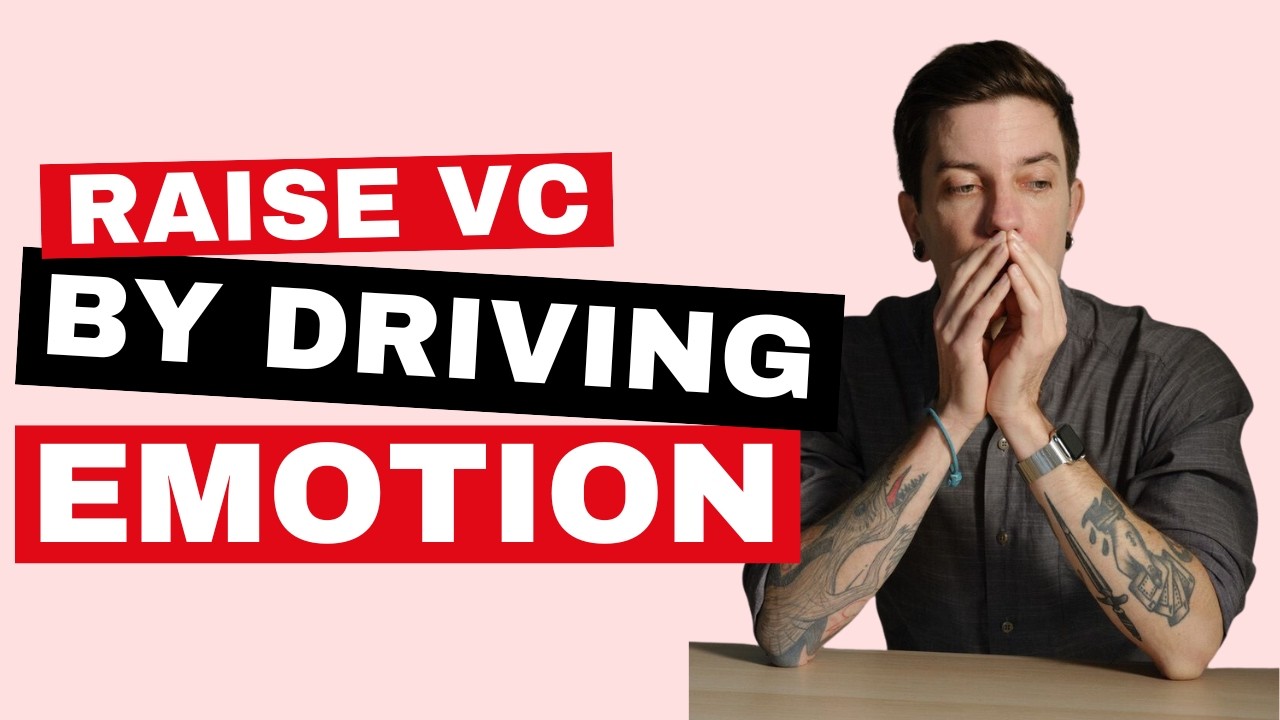
Before you raise. Yeah, there's other things to think about first. I think one thing you mentioned in a— it might have been one of your podcast episodes. You said first meeting, you have to get them to fall in love with you, referencing investors. Second meeting, you have to get them not to fall like out of love with you, basically. And it's all about driving emotion, not rational decision-making. Let's unpack that. How does that play its role, its part in fundraising?
So yeah, so gratefully, when you work with— there are good and bad things when you work with various types of VCs. I have worked with with a lot of VCs that were very strong financiers. They themselves were good fundraisers. And so when someone is a good fundraiser, you learn from them. If they're on your board, they're going to help you fundraise. This particular one that I think that I heard this this one you're talking about this quote comes from Venky Anaisan, who was at Menlo Ventures. I think still is today at Menlo Ventures. Used to be at who had found like Palo Alto Networks and a couple, a couple other companies like that. And, uh, and it's— it is so true that emotion is what drives financing this. So, so what that— so what does that mean for 2022/2023? So there's a baseline of fear, okay, versus a baseline of excitement.
Sure.
Which might have been last year. And so the first meeting is all about driving excitement. That's it. It's like, give— and another version of this from another very good financier that I know, different one who's an investor in my company today, is a pitch needs to be only one of only 4 types. If you don't know which type that is, then you probably need to clarify it more. And it's just about where you're going to lean. And so it's either going to be a product pitch, Sunrise. If you have to be in— I've been in the game for a while. Mailbox. That's a product pitch. Our product is just unbelievable. Amazing. Another one, market pitch. This market is just so unbelievably big and untapped. It's so exciting. Maybe Web3 or something, right? Or whatever it is. Another one is like the founders or the team Type of pitch, which is like, this is the founders of Bitcoin, you have to fund this. Or these fund— these founders previously built, uh, um, what's his— what's his name that built diapers.com and then built Jet? It's like, well, we have to fund him.
Lori. He— Mark Lori or something.
Yeah, he, uh, he sold— he built diapers.com in a category that they thought Amazon would kill, and then it was bought by Amazon. Now he's competing with Amazon. Oh my God, we have to fund this. You don't even know anything. Frank Slootman, if he was a founder, right? Just an amazing type. And then the 4th is just, it's really simple. It's traction. It's just like, it's up and to the right. It's very clear that this is succeeding. So if you don't know which type you are, you have got to lean your pitch in a certain direction to be able to really drive all of your arguments towards This one point, right? Like the same way on fucking TikTok where you see the guy with the axe, probably with no shirt on, and he's just, he's just axing this insane log and he's just hitting the log. Boom, boom, boom. 3, 4 shots to do it with stones as well. And, and the log splits in half even though it's gigantic and it looks impenetrable. And so it is really about driving to the central kind of like weakest point, or in the case of a financing, the strongest point in order to be able to make your case to get that excitement in meeting 1. And then you're right, the subsequent meetings, it's all about making sure that you do not lose that engagement or lose that excitement.
One thing you mentioned too, in a different, I think it might maybe your podcast again, I listened to some Couple other things. Talking about like VCs who will work hard for you on your cap table. Like, take me through how you've thought about the VCs you want on your cap table for practice. I'm curious. And maybe we can talk about that to other founders and relate it to them too, because I'm curious.
It's so interesting. I think the way that I think about it today, I have a crazy cap table that obviously began before this. But that really started, uh, that were— that started because of my history with Breather. But then, then Andreessen led a round. Andreessen Horowitz is like a good firm, in case you're listening to this, you don't know.
Yep.
And, uh, and then, then people just line up behind that type of financing. Oh my God, this guy. And so, um, so what happens is you really get to see a set of founders, Often founders or investors or angels or like people with cool audiences or whatever. And what you see is you really see a ton of them line up. So I have a gigantic number of these people, probably too many on my cap table today.
I was gonna ask about that.
Versus I only had like a few cool people at Breather that were on my cap table, right? And what I had at Breather were people that made big bets, VCs that made one gigantic bet, often the biggest bet they'd ever made. Right? And so, and so what you notice at practice is there is, there is a, there is not a clear correlation between I am super cool and high profile and I will do a lot for you. It's really not connected. I often find that the people who write the smallest checks and Maybe it's even their first one or something, right? Those people, like, they will get on the phone with you every month. They will, like, get into your paid ad campaign or something, and they'll, like, literally just work, work on it with you.
Yeah.
And then, but if they're really cool and they just sold some company and they've got, like, 500K fucking followers on TikTok or something, they're just like, you might not even get an answer, even though when, when the round was led It was like, oh, please let me into this round. Oh my God, yeah, I'll absolutely help you. And then they're like, they might not reply.
Come on.
And so it's just like, it's wild to see in this ecosystem. I guess if you've spent enough time kind of in it, you see behind the curtain to a degree. And what you really get to see is, is, uh, so there's so much optics and versus, versus real kind of like value. And you get to see the distinction. And that said, when, when you do have firms like Andreessen Horowitz, Andreessen Horowitz literally has like, I want to say 20 general partners or something like that. And then like literally 600 other people that work there.
Yeah, it's insane.
And the 600 people that work there, you're like, oh, I need help with a— to recruit. They're like, oh yeah, let's put 20 people on the phone. Is what they do. And it's just so out of proportion with what other venture capital firms do. Sure. Especially at the early stage, it's huge. It has a huge effect because you could just call anyone for any reason and get a global world-class quality piece of advice or something.
It's definitely an advantage. It's interesting hearing different strategies to your point of like what venture firms even do. Like I just had Pejman Nazad from, from Pear VC on, and like they, for instance, will make your first 2 engineering hires to help you with your first 2 engineering hires with in-house recruiters to get your first 2 for every like company. And they're like pre-seed and seed. So like obviously a huge value add. You have Benchmark who will basically invest and then they'll help you with the partner level. Like as them helping you, not like a huge team, like Andreessen. Not good, not bad. It's just different. It's like there's all these different models for that. I think it's interesting for founders to understand like what you're getting into when you do work with the firm and how they actually help. Uh, which is important because yeah, there's so many ways to go with that. One thing I watch, I just want to switch gears a little bit and get into before we kind of close here is just practice. How are you, how are you growing practice? What do you think about in terms of this company becoming obviously the big vision you have for it? Because I love the growth marketing, all those things. I'm just curious on how you're kind of thinking about or happening so far. Yeah.
So actually, so we have a team of people on what I would refer to as the go-to-market side that do a combination of sales and marketing early stage. And so I think Justin Kan from Twitch, and has done a bunch of other things, did this tweet once. Well, the tweet is, first-time founders think about product, second-time founders think about distribution. That's the tweet. It's sort of well known across all the people that have made that mistake.
Yeah.
And so it's not quite universally true, but it is very close. You're like, when you have a second or third time repeat founder, you're like, what is the product? But also what's the channel it's going to succeed through? And so you look at companies that have certain LTVs. For us, serving a solopreneur or serving maybe a business of 2 people, not 10, Not 100 necessarily. You're going to capture— there's a certain LTV to that customer. It's a little inside baseball sort of having this conversation, but there's a certain LTV to this customer. So for example, you're probably not going to drive a sales team at this. So instead you have to say, well, what are the channels going to be for these people? Right? You know you're not selling a fucking baby monitor. One of my buddies sells a baby monitor. And so So then it's not a 1x transaction. You know, you're going to need a long transaction. How are you going to get that long transaction? So basically you run a financial model, another thing that I would never have done in my last company. And then you're like, and what are the consequences of this financial model? How are we going to get this number of customers? And the conclusion is, is you must build a gigantic email list. You must drive through SEO. You must drive referral. You must drive some element of virality, right? So there's, there's only— there's not like that many channels that you can really do it from. And so what we did then is we went after people that could do— that could probably be ahead of marketing, but that were ready to go and do the work at the ground level again.
Yeah.
And sometimes you catch people too late. So we actually just did a head of product search as well that we ended with, I think, on a very good basis. And you have to find the same type of person, someone who is ready to and who's managed a lot of people or a certain number of people and who could be a head of product, but who is also ready to write PRDs and do product work At the groundest of ground levels. In marketing, it's even more important. You reach these people, it's— I'm sure you've seen them at marketing events or whatever, and they're just like, I talk. And I'm just like, that's not fucking helpful.
At this stage for you. Yeah.
And so, and I know a lot of people that are at that stage and they're just not ready to grind. So you got to find people that, uh, are ready to grind, to learn, to be at the early stage and really essentially kind of learn how to run a whole business, right? And that's what we built our team with. And those people are obsessed with our customer type. And they— and like our customer success, we don't really have a team. It's like 1.5 people. And shout out Ahmed, who's one of the people on the team who's amazing.
Awesome.
It's just like, these are They respond so fast that if you go at our like our Capterra reviews, it's like they are so fast. And so it's you just have to be you have to you have to impress people with how dedicated you are to them at the early stage, right? And that's how that's a little bit how marketing help starts to do their work and be successful at it.
I love hearing about that strategy because like I I'm always bringing this up with Ruben Harrison Career Karma and they. Made a very concerted effort to go after SEO for their, their company. And now they're getting, you know, a million plus whatever visitors a month. And it's like, that isn't— they knew the strategy they wanted to go, they thought long term about what they had to do. And like, they obviously have been executing on that very well to be able to do that. But like, you got to choose, like, you have to choose based on who your audience and everything is too. And I just love—
you do. Yeah. You also, you want— I think, you know, if you're going after a small business, customer that you have to go super hard on education.
Yeah.
It's one of the reasons things like templates work so well in this space. And so if you go onto our site, it's at practice.do. And so if you find yourself there and you're looking, you'll see that there's tons of templates, contracts for this type, this type of, you know, all kinds of different templates that exist. And the reason is because you are alone running this type of business.
Yeah.
And being alone and running a consulting business, a dog training business, like whatever, is super difficult. And you're like, where do I even start here? Right? And so, so much of it has to pass through education, which we have a big dedication to education on my team. And that is, Education and SEO definitely for sure go hand in hand. They help each other.
One thing I want to make sure we cover as the last thing, Second Time Founders Podcast. Let's go through that. How did this podcast of yours start with your homies? Take us through that, the genesis of that, and why do that in the first place?
It started with a CEO group is the way that it started. Markle, excuse me, I took his name and I I put 2 names into one name. His name is Michael Karn, the guy who started Skillshare, also started Odesse, started a CEO group, I want to say a year and a half, 2 years ago.
Okay.
And we did them in 6-month, 9-month cycle or something like that. The group disbanded. We recreated another one. This was composed of a set of people, including some of the people on this podcast, which is called Second Time founders. And we had just started it. I podcasted very long ago in 2004. I started one of the first podcasts ever.
OG.
And so many of us have a number of different episodes under our belt, either as guests or as hosts or both. And someone said, there's no view. There's these views from investors. There's a view from rich people, There's these views from like armchair quarterbacks that have not really done the work in a long time. And so you need this view by these people that are grinding. And importantly, second-time founders often have a previous thing that they've done and they're willing to go dirty on the thing that they did previously. And so if you listen to the podcast, you hear like Kevin talking about how Leonardo DiCaprio like took him out for dinner. because he wanted to invest in SHIB and like what that meant and like, and, and how he thought he was God for like 6 months or whatever. So you hear these crazy stories that you normally would only hear literally like at a party.
Sure.
And, and so that's actually what the objective is. It's for a set of people who are kind of— I'm not saying we can't be touched, we certainly can be, but, but where, where we've— we're far enough in our career, and we bring guests on, we just started bringing guests on, that are like, oh yeah, I'm willing to talk about 10 years ago, no big deal. And they'll just share trauma, whereas I really didn't feel that when I ran my first. When I ran Breather, I was not ready to talk about it to outsiders, right?
That's fair.
But when your second or third one comes along, that first one, it's kind of like, Whatever in the can or whatever it means, but the expression is, and you're willing to talk about it and and just open up about what all the lessons were.
It's interesting because I've listened to like two of them doing research, and like to your point, easier to talk about ones that are like failed because they're not running. I know Andy can't talk about like Nanit much because it's still going, so he doesn't want to talk about it, which I find interesting because it's like we would love to hear more about that. Andy's like, "I can't really say." Respect the CEO. I was like, "Okay, Andy." Yeah, don't.
Don't share, whatever. But I don't know. You're right. Luckily, luckily Andy can share about his time grinding as a VC before he became an operator. So it's like what you want, it's, uh, it is so hard. Everything is, everything is so public these days that it is really hard to get a private perspective. And the private— you can get the one-on-one fucking advice from Y Combinator that's like how to raise your first million dollars or whatever. available. But you're, you're not going to get the advice of how do I go from 10 to 40? And what do I wish I had done? Well, and so that's what we're really looking to drive.
I think the interesting thing too, when I think about this podcast, I'm doing podcasting for probably 4 and a half years now. It's like, to your point, it's like, yes, the general information a lot of times is out there. That's the cool thing about podcasts too. You can find someone who's been like in your space or has done something very similar to what you're doing, like, and get that advice in a public forum. That is also more helpful. Like, go to 10 to 40 employees in B2B software, this in consumer with it, like that is even more relevant, which I love podcasting for. I know we're just about out of time. Julien, where's the best place for people to learn more about what you're doing, connect with you as well if they'd like to?
Yeah, you can go to twitter.com/julien. It's— I've been there a while. And so Julien spelled the French way, J-U-L-I-E-N. And then the other is you go to practice.do, check out my thing that I'm working on. But I'm all over the internet. You can Google me, a lot of interviews, a lot of different things. Thanks for the time that you, you spent. I had a good time chatting.
I appreciate it, man. Thank you so much. Have a good one.










