The Future of Data Ownership with Gal Ringel, CEO at Mine
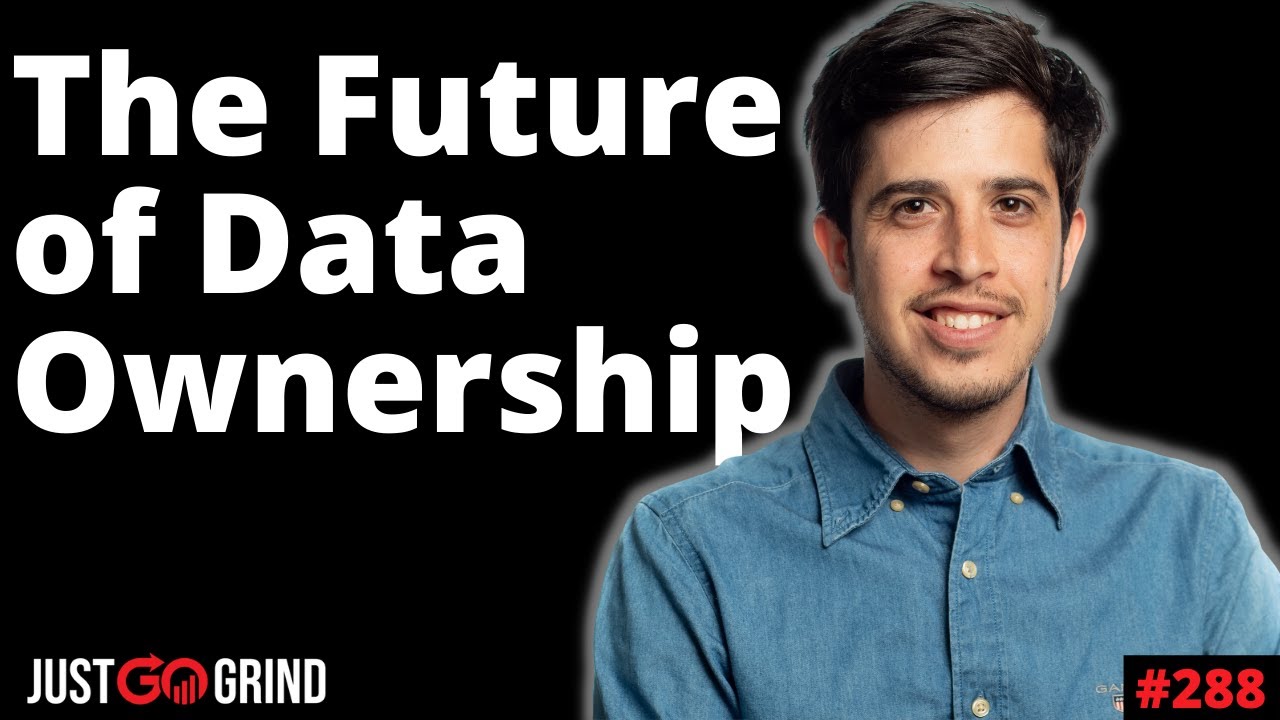
Gal Ringel, CEO of Mine, explains how the average person's data is held by 350 to 500 companies. Mine helps users find and delete it. He raised $9.5 million in 2020 and is building toward a future where users set their own privacy rules that companies must follow.
Chapters
Welcome to Just Go Grind, a show all about building and investing in companies, featuring interviews with startup founders, investors, and operators sharing the best insights into the world of entrepreneurship. I'm your host, Justin Gordon, and in this episode we have Gal Ringel, who is the founder and CEO of Mine. This is a company that helps users take back their personal data. When I had gone through the software, used it, I ended up finding I had like 200+ companies that controlled my data. And not that I'm that concerned about always like the data side of it, especially if it's just email, it can be very concerning. And a lot of people care about this. They've raised more than $12 million in venture capital. And in this episode, we talk about how this company got started, what Gal's doing to grow the company, talk about personal data, talk about how companies can help increase the privacy and data security of their businesses. All of that and more in this episode. Without further ado, Here's Gal Ringel, founder and CEO of Mine. Gal, welcome to the show.
Thank you for having me, Justin. I'm really excited to be here.
Yeah, I appreciate you taking the time. Excited to chat all about your company. And for people who, you know, aren't as familiar with what Mine is doing, what are you doing today with the company?
So we are here with a huge vision of helping you and millions of people worldwide to take control of their data online. And as you probably know, in an era where we all use the internet on a daily basis, and we sign up to new services, we purchase things online, we travel in days without COVID-19. And through these personal or daily relationships online, we have to give our personal data all the time. And we're here to basically provide transparency into that problem and help you enjoy the internet while being in control, while being empowered. But always know where your data is and what is the risk, the digital risk that every digital relationship is causing to your life. And then to let you have the power to remove your data from any company whenever you want. And we're doing that by making privacy regulations accessible with the click of a button.
I love it. I love it. I tested it out too. So I played with it and I think I had 230-something different companies, which I think is low compared to what you said in a different interview around how many like different companies have your data. So give us like a little background on that. So as of now, like what's the average user seeing from like how many different companies have their data? What does it look like today?
I'm curious. Okay, so this is a really good point. So to date, after having more than 200,000 users worldwide, I can share that the average worldwide digital footprint consists of 350 companies. So it's 350 companies that have your sensitive information. And what do I mean by sensitive information? I'm excluding all the newsletters. So because newsletters usually only have your email address and that's it, and it, uh, it is concerning, but it's not that concerning. So when I'm saying, when I'm saying 350 companies, that means that companies that have your email plus your Social Security number, your credit card, your physical address, your date of birth, like sensitive data points. Uh, in the US, by the way, it's 450. And in Europe, it's around 500. So it's quite a lot. And that would get even more bigger as time goes by because, for example, since COVID-19 started last year, we measured from March last year, we measured an uptake or a spike of 55% in new signups, in new places that have our data. And the reason is simple, right? Because we were all locked up and had to move our entire offline life to online, right? That means that we had to give our data to much, much more companies that we didn't have any relationship before that.
With this as well, so people understand this, it's been the news for a while around the data privacy, all this stuff. How'd you decide to start this company in the first place then, Gal? I'm really curious.
So this is actually a really great story. So as I said earlier, so for years people said that privacy is dead, right? And accepted the fact that they can't do anything about it. And in most cases they're right because privacy was always about putting fences around us, keeping us from sharing our personal data with others. But by doing so, we miss all the fun, right? We wanna use the internet, we wanna leverage the internet for our benefits. Honestly, we believe that stop sharing is not the solution. It's only avoiding the problem. And we believe that people should use the internet without worrying, right, to their personal data. So the story begins that when we're 3 co-founders that founded Mine, and the 3 of us come from a really strong background of cybersecurity offensive in the military, in the Israeli military. But also strong consumer and product experience. And when we thought on what problem we wanna solve, we knew that we want to do a consumer company, but we also knew that we wanna help people be more safe online because the 3 of us really understand personal data and how valuable and precious is it on our personal life. But the flip side of it is that we truly know how easily our data can be exploited against us. In many different ways. It can be identity theft, reputation damage, financial loss, manipulation in the case of Cambridge Analytica and Facebook. And so at the end of 2017, we saw that the GDPR, which is not so new, but a new privacy regulation that gives us, the citizens worldwide, a lot of power over our personal data. But we knew that without the proper technology that would take that amazing regulation and would make it accessible to people, no one would really use that. So what we did, we went to Europe and we literally stopped people in the street asking whether they want to manage their personal data online, whether they heard about the GDPR, and if they do, whether they exercised any of their rights. And the simple answer was no, right? They wanted to do that, they heard about that regulation, but they didn't know how to use it. Um, so this is how we connected the dots and wanted to bring a product that fits the mainstream, the everyday person, people that are using the internet, that they are not tech savvy, they are not cybersecurity experts, they're using the internet on a daily basis, they know that something is wrong there, but they don't really understand how things are operating behind the scenes. So this is why Mine is We wanted to bring a product that is very simple, friendly, to give you peace of mind and to really help you be the owner of your data and without intimidating you, without putting fear in your face. So the whole experience should be quite friendly. Yeah.
With that as well, I'm just taking a little bit of a step back. So with your co-founders, how did you decide that you guys wanted to work together?
So obviously every good startup, I guess, starts from their founding team, right? I think that the team is the number one thing that startups or entrepreneurs should put a very large focus on. So the 3 of us know each other for quite some time. So myself and our CTO, we served together in the military in the 8200 unit, which is the cybersecurity offensive unit of Israel, which is the equivalent of the NSA or the MI5 in the UK. So we served for 6 and 7 years together in the same team. And since then, we're friends for 17 years, and his name is Gal Golan. And we always knew that we want to do something together. And you know, life took each one of us on different paths until mine, but we knew that we have to do something together one day. And the third co-founder, Kobi Nissan— so Kobi and I worked together as venture capital investors. So, um, I changed my career after 12 years of hands-on engineering to the business side. And the way I did that career transition is by working in the venture capital community in Israel, but I was working for 2 large US corporations, so Nielsen Ventures and Verizon Ventures. So I did early-stage and later-stage investments for them in Israel. And through that experience, I met Kobi, which worked in another VC here in Israel. So we know each other for 6 years. We tried to do deals together. We exchanged deal flow. We helped each other evaluating startups. And Kobe brings a ton amount of experience around product and consumer products. So, so yeah, so we came together as a team and thought what we want to do and we came out with Mine.
I love it. How did, how did that experience in venture— so you're on the other side of the table with venture capital and you decide to take the founder route. had obviously then talked to so many founders prior to that in the venture capital world. Were you concerned or like about coming into the other side of this with the founder side? Were you nervous about that? Like, how are you feeling about that? I'm just curious because you have both experiences, which is unique.
So it's a very good question. So yes, the VC is called the dark side. I'm familiar with that. I must say that for me, for my personal career, I used my VC career and my VC experience to pivot my career, to change my career from the tech side to the business side. And personally, I'm a tech geek. I'm writing code since I was 10 years old and I hack stuff. And for me, doing that career transition to the business side was really difficult because all I knew is tech, right? So I had to go and do and study business skills like product and marketing and biz dev and sales and finance. And how can you do that? So, uh, I mean, I didn't wanna— I didn't want to do MBA at that time because, uh, uh, I had other things that, uh, I was involved in and I couldn't, uh, go on an MBA at that time. So for me, the venture capital experience was a practical MBA. So I used that experience to learn as many business skills as I can and to help startups and see everything from the other side. And when I felt that I'm ready, I left that career to open my own startup, which that was my original goal. So I wanted to learn as many skills as I can, and I was fortunate enough to invest in 22 companies in 4 and a half years from seed stage to early growth. And since— and through that, I learned product and marketing, and I worked with the founders, and I sat within board meetings. So for me, it was an amazing experience. And now, as the company CEO, I can always put my VC glasses, right, uh, and check whether my strategy or my thinking or the goals are really, uh, can really articulate good on the other side.
With that then, so going into the founder side of things, 2018 roughly is when it started with Mine. What was that in terms of what this business was going to be? You had an idea of what the problem was you're going to solve, you know about the data. What did you see as the business model for this in terms of how this would actually make money? How would this be a real company? Because to your point, you had evaluated companies for a while. What did you think about the business model and how has that business model kind of shifted over time with Mine?
So this is a really good question. So we started Mine with, I would say, defining a new category. In the market, which is something that is really difficult. Most of the companies that I got to work with or I get to see usually operating in a known category, right? In a known market, whether it's enterprise software, cybersecurity, AI, you know, most of the startups are operating in a known environment. In our case, we had to, you know, create a new category. So we call it data ownership. So although we operate in the data privacy space, We wanted to create a new category. So in that sense, we couldn't really look to the side and say, hey, this company is doing something similar, let's see what business model they have, um, and we can copy or test it, right? We had to invent that. So in, in that sense, when we started, we knew that we want to charge money, uh, a monthly subscription on our product. So basically our ability to help you on an ongoing basis to understand where is your data and to delete it to avoid digital threats. So the first thinking, and it's still there, is to charge a monthly subscription. And we are going to do that soon. So a few dollars per month. But I must say that as we developed, like during 2020, we discovered so many new opportunities on how to make money. on our product. So, for example, one of the things that we are exploring right now is to offer a new consumer cybersecurity insurance because we can measure what is your digital risk in every relationship that you have online. We can actually predict what are your chances to experience any kinds of risks. Another business model that we're checking right now is to help the companies that receive all these requests. So just to put it in perspective, so our 200,000 users have already generated more than 2 million deletion requests to different companies.
Wow.
Yeah, it's quite a lot. And a lot of companies, like hundreds of thousands of companies, received these requests on the other end, and they started to approach us directly and asking whether we can help them It's called to streamline and automate the privacy request on their end. So basically, essentially to help them close the loop faster. So to find the data, delete it, and have a workflow within the company. So right now we are offering a product to the companies, and our revised vision is to help both companies and consumers and to provide a better privacy experience around their data.
With that as well then, so One thing I want to go back to, because you started this company in 2018, and then last year in 2020, end of 2020, you end up raising a $9.5 million round. What was that experience like fundraising at that Series A during a pandemic, remote? I mean, all that, how did that go for you, Gao?
So that, I would call it an interesting experience. So I was, I was on the other side, right? I was a VC for 4 and a half years. And I never thought that VC deals or investment deals can be done without meeting the founders in person, without looking in your eyes, right? Without sitting in the same room with you and feeling the vibe, right? It's a different feeling. But I guess COVID-19, and we were the first companies worldwide to actually raise the round within the first worldwide lockdown. So if you remember during, uh, let's say March to June, the entire world, uh, were, um, you know, adapting to the COVID-19 and trying to understand how to deal with that. It was a new thing. And most of the VCs worldwide got into a lockdown or a shutdown, uh, on new investments because they want to assess the new reality. They wanted to help their current portfolio companies. And we talked with a lot of VCs during that phase. And most of them did go into a freeze situation. But luckily for us, we kept talking with a few amazing VCs. And the VC that led our Series A was one of Google funds in the US. So it's called Gradient Ventures. And they— it's Google's AI fund in Silicon Valley. And they led our Series A. And I guess that it's all about relationships. We managed to create a relationship with them a little bit before COVID but we never met in person. So we closed everything via Zoom, A to Z. It was a lot of Zoom calls into the night, and we really had to provide a lot of data and metrics and insights. But I guess luckily for us, COVID-19 was really increasing privacy and actually put privacy in the front stage. You know, all the contact tracing and location data, and Netflix even released a few movies around that. So I guess for us, privacy became like a hot topic, a hot sector, and we were the leading player in the consumer space.
One of the things you mentioned there along the lines of relationship building, I wanna dive deeper into that because I think that's a huge part of any founder obviously trying to raise money, trying to grow a company. You understand very quickly your job is to raise capital pretty much constantly. And that's relationship building. So how have you gone about that? You mentioned with Gradient Ventures, you knew them before, you had a relationship a little bit before COVID But how do you go about building relationships with VCs, investors? How have you gone about that for other founders who are curious as to that process too?
Yeah, it's a really good point. So in my perspective, and, you know, it's from my experience, So don't take it for granted. So I learned that since you mentioned that a CEO is always raising money and venture-backed companies need to raise money every, let's say, 18 months, you need to build the relationships in advance and not saying, okay, I want to go and raise money now and only now start speaking with companies, with investors. Sorry. So you need to do that in advance because Investors like to see how you progress over time. They like to speak with you today and see in 3 months how you— how the metrics got improved, how the business got improved, how the hiring increased. So they want to see all the metrics go up and they want to see that the business is running. So my advice is always to plan ahead. I know that the average time of raising money, if you read on the internet, is 6 months. But if you prepare for that in advance and if you have this relationship in advance, it can be much shorter because you wouldn't surprise the investors and it wouldn't be in a rush. So in our case with Gradient Ventures, so when we came out of stealth, we did We did a huge product launch on Product Hunt, which I'm sure you're familiar with that platform. So we were lucky to win product of the day, first place product of the day, and first place product of the week, and second place product of the month. And that gave us a really big exposure. So with that exposure, Gradient found us, and we started speaking with them, and we were not raising our Series A, right? It was a few months after our seed. So we were not raising at the moment, uh, and the relationship was, hey, let's see, let's, um, let's show you what we have, let's explain you the product, let's show you the metrics. And a few months after, we kept— I kept keeping them in the loop, so sending them updates, uh, about the new features in the product, about new metrics, anything that I felt comfortable sharing. And after a few months, when we did decide to start raising, it was quite easy for me because I already had the relationship, right? And I didn't do it only with them, I did it with a few other VCs. So another advice is when you plan your next round, try to come up with a list of VCs, of prospects, uh, that you want to raise money from. And even choose the specific partner within that VC that you want to work with, because it's really important, because that partner would eventually sit within your board. So it's really important to know who are you getting in bed with.
That's something where I haven't interviewed so many people now that are raising venture-backed, are venture-backed companies, some of them have taken 10, 12 months to raise funding. And to your point, it's these people who Our first-time founders, a lot of times you don't have that network in venture, and so it can take a very long time to raise. But then others, to your point, I mean, they've raised in a matter of weeks because they've built that network up and it can be that fast of a process, even though, you know, we do hear it taking months and months to actually get to a close for your round, but it can be a lot quicker if you're, if you're ahead of things. And to the point of the Product Hunt launch, like that is, I've talked to a couple people who have gone on Product Hunt, had great success with that. Take me through that. Was that always your plan to launch on Product Hunt? Did you, what other channels were you launching on and how did you kind of fuel that growth for other people who want to use Product Hunt as a channel potentially for customers?
So we were definitely planned to do a Product Hunt launch. So it's funny because, you know, I'm coming from a strong tech background. I'm not an expert in consumer product. And this company, mine, is the first consumer company that I'm building. Although as an investor, I did invest in consumer companies, but I didn't actually, you know, was part of the in and out of a consumer company. So we did huge research internally on how you should launch your product. So we were speaking with a lot of experts in big consumer companies in the Valley, in New York, in Europe, and we tried to learn how to do that right. And everyone said that One of the biggest things that you should do as a consumer product, if you value yourself, is to launch on Product Hunt. But if you launch on Product Hunt, you have to bet on everything. I mean, you have to get the first place because if you want to get the right exposure from Product Hunt, if you're not getting the first place, it doesn't really worth it. So in terms of the Product Hunt, we were planning that I think 3 months ahead, and we were also writing a blog about it on our website at sameind.com. If you go to our blog, you can see a piece of all the campaign that we did step after step and all the things that worked for us. So we wanted to give back to the community, but in that sense, we prepared the content in advance. We built the network in advance of people that would be an early tester and start using Mine in advance. We built all the assets, we found the right hunter, we chose the right date. I mean, you have to make sure that you wouldn't compete with tech, big tech companies that are doing a big launch, right? Because you want to get all the exposure to yourself. So there are a lot of bits and bytes, but I can say that for us, Product Hunt was A huge, huge jump for the product.
With that, how did that fuel the growth afterwards and how'd you have to adapt after doing that? Because I talked to some people who have done that and it can be a huge bump and then it just goes back to not zero, but very little. And it's like managing that and taking advantage of that while you have it. How did you look at that after the fact, after you did the Product Hunt launch?
So obviously you can think about Product Hunt as a PR effort. It's a big spike and then it goes down. But then it really depends, to your question, what other efforts or what other marketing activities you are doing in parallel. So as a company, we knew that we want to build our growth organically. So we didn't want to be the companies that pour a lot of money on performance marketing and spend a lot of money on that to acquire users. We want to prove that we can grow organically, and this is what we did. So just to mention the metrics again, so in just 12 months since we launched our product, we got to 200,000 users, and almost 90% of that growth was completely organically. So the marketing activities that we did was a lot of thought leadership. So we wanted to build a brand which is trustworthy. We wanted to build a brand which is that have brand authority in their data privacy space. So for doing that, we had to do a lot of content, thought leadership, SEO, media relations. We are working with a lot of reporters and we give them insights about different industries and what data is being collected there. We recently launched our Real-Time Privacy Index, so you can start seeing in real time how companies are dealing with privacy requests, what data they collect. So you can get some sort of information about companies. So what I'm trying to say is that we are trying to put a lot of efforts on growth hacking and organic growth to fuel our growth. And by the way, something that happened to us which is really unique is word of mouth. I think that's something that is really sticky with our product is that a lot of people are curious to know what is the number of companies that have their data, right? It's crazy to know that you have 400. Personally, I had over 800 in my footprint. Yeah, it's a lot. So the curiosity plays a really nice driver here, and somehow mine got carried word of mouth to many other geographies. So today we have users from Canada, Australia, India, Japan, South America, Central America, a lot of places that we haven't done any marketing activity, right? So yeah, so that's what worked for us.
With that then, so how are you then on the more active side, non-organic then, how are you looking at growth in terms of Mine? So how do you look at different markets and then also kind of leveraging the paid aspects as well in terms of growth? How have you looked at that side of things?
You mean how we think about applying our business model?
Yeah. And then like the growth on that, you said most of it has been organic, but on the non-organic side of it, then how has that kind of gone for Mine?
So obviously as a data privacy company, we are not going to retargeting, right? To do retargeting because this is what I'm trying to avoid, right? So I'm not going to follow you within the web, but most of our users are using Facebook and Google Search and these platforms. So we are starting to do performance marketing tests without retargeting. So to go broad and say, hey, we want to present Mine to, let's say we want to do it in the UK. So we want to present Mine in the UK to an audience from 25 to 45, but we are not leveraging any of our data to target people. So we are doing that broad. And today what worked really good for us in our initial tests is that we're doing influencers campaigns. So we're going to YouTube and we are working with different influencers that share Mine and basically show how to use the product in their channels. And so far it worked really good because they have their— this is a trustworthy channel that decided to work with us and has its audience and it's very targeted. So in terms of performance marketing, that worked really good for us.
Yeah, I was curious because the whole point of what you said of what you're doing in terms of the data, it's like, yeah, if you had the data, you could retarget, but that's not what you're trying to do. Obviously, that's the opposite of it. And so I was really curious on that side of things for growth and for you as well. So with, again, kind of these 2 things of the venture side versus the founder side, on the founder side, we talked about fundraising a little bit. There's that whole thing. And then it's like building a team, which is something you're not really doing on the venture side. You're mostly just investing in companies looking, you know, evaluating companies. How has the team building side of it gone for you, Gal? And how has that process been for you?
So we're still relatively, I don't know, a small company. So we're currently 25 employees, we're currently hiring, we're in the process of hiring 10 more. So the plan is to reach 35 during this year. So we are hiring a lot of people in terms of our size. And so far what worked really good for us is word of mouth. So basically our own employees are leveraging their network to bring friends from their previous employers, from their previous jobs. So currently we're doing everything word of mouth and that worked really hard. So the company is divided into R&D, product, marketing, and sales. And so far in the R&D, we're able to bring people that worked with each other in previous jobs. Same goes for the product and marketing. I don't know if we can keep that when we really grow because, you know, eventually your network would end, right? But so far, when you're a small company, it's really easy to leverage your employees and the network they have to attract their friends. friends, which really worked good for us. And by the way, something that I'm really proud of, we're having 50% female in our company, which is something that I'm working really hard on. And it's all across the divisions. So we have female developers, both backend, frontend. The entire product team is female. So product analytics, product managers, product designers, and I'm really proud that we are able to create that sort of diversity in our company. So yeah, it's really important.
What's been the biggest challenge in hiring and trying to grow the company? So it's all been kind of organic so far, but as you bring on more employees, that's more to manage. It's more to make sure people are doing the right jobs and allocating resources properly. Like what's been challenging around that gap?
So yeah, so this is something that I'm speaking with a lot of different CEOs Uh, like within bigger companies right now to understand how they did it, because it's a real, it's a real pain. I mean, to grow that fast while maintaining your culture and while maintaining everyone aligned on the vision and the goals that the company have right now, this is really, really challenging. So, um, what we're, what we're doing today, um, so one, one thing to deal with that is that we have a weekly all- So we have a weekly meeting where we divide it into 2 parts. So the first one, the first part is us, the founders, that are giving some sort of updates within different areas of our business. But then the other side, which is something that is really interesting, we give our employees to participate. So each time within our weekly all-ins, we give the stage to any employee from different divisions to present a project that he's working on. So in that sense, every week we give another, uh, to different employees to share what they are working on. So, so as the founders are giving their strategy, the high-level overview of, uh, of what is happening within the company, and the employees are giving the bottom-up. So basically, uh, sharing tactical or specific products they're doing. But I guess the biggest challenge is again, how to keep everyone aligned. And it's really hard. I mean, I don't think I have the— I found the secret answer to that. But something that I really am doing right now is to understand how it happened in big companies. I think it's, again, it's all about all hands and about the managers that are keeping everyone aligned on the goals and the vision.
With your network from VC and network now as a founder, you mentioned talking to these CEOs around hiring, you know, companies who They've done it before. They already have gone through kind of the similar things you've gone through. How do you look at now your own progression as a CEO in terms of how you approach progressing, learning, improving? Is it just like, I hit this problem and I talk to this person? Do you have like certain mentors you talk with weekly? Do you have a coach? Like, I'm curious because I've talked to founders at a lot of different levels and some of them have coaches, some of them have like set groups they're with. I'm curious as for you, what do you have, Gal?
Yeah. So, I think that, okay, first I would say that every day I learned tons of new things. I mean, I think that most of the things that I get to deal with every day are things that I never dealt with them before. So on the one hand, it's really amazing, right? Because your day is really, every day you have different things that you need to deal with. On the other hand, you need to know how to deal with them. Them, right? So to your question, uh, I'm— what worked for me, and I'm still working on that, is, um, a various of different things. So first, I have a group of, uh, peers, CEOs that I trust from either my previous life as a, as an investor or in my previous jobs as an engineer. Um, and that group of CEOs are companies from different stages, different industries, and we use this group to share needs, pains, and everything that we need to deal with. You probably heard the phrase that being a CEO is the most lonely job ever existed, so it's true. And this is why that group really helped us to create a discussion and help each other on daily Things that we need to deal with. The other thing that I'm doing, I'm using my investors. So for me, my investors are my co-founders, right? It's like getting, it's like my other wife, right? So I use them and their knowledge because most of them, I think in my case all of them, were entrepreneurs in the past. So they built companies. They were acquired by big companies, they worked in a big company, so they saw all the different, uh, chains, uh, as an employee, as a manager, as a senior manager, as a senior executive, etc. So I'm using my investors, um, as my co-founders to share ideas, to ask how to deal with different problems. And the third thing that I'm doing, I have a few mentors which are CEOs that already sold 2 to 5 companies, and I use them as my personal mentors. And these people will answer my text or my call anytime that I need them. And this is really useful because they saw everything, and I can consult with them about different pains that I have during my company Uh, involvement.
So that's, I'm sure, really helpful along the way with answering questions and getting feedback on things and everything. And with going through a pandemic, global pandemic, on top of building a startup, one of the hardest things you can do, how do you take care of your own mental health, make sure you're performing at your best? Like, you have a lot going on with— this is like the company plus family. How had you kind of personally approached that, Gal? I'm really curious.
You know, I'm still trying to figure it out.
Yeah.
I think that, that issue is something that is ongoing. I think it would never end, right? To be lonely as a CEO, that mental thing that you are going on every day. And, you know, startups are like ups and downs all the time. I think that most of the times are downs and you have a few events that are, you're really in like having really good days. But most of the time it's really hard because you need to manage everything, like the day-to-day, external events, your family, a pandemic, right? So every day you come up and you get slaps from different directions and you need to handle everything. So I guess I'm still learning how to do that. In terms of COVID-19, I think that what was, I guess, good in dealing with everything that was happening is that all the world is dealing with that together. Right? It didn't affect, you know, only one or two industries, right? It affected almost all industries. Obviously, some industries were benefits from that pandemic, but the reason is that when it started, it hurt everyone. So I guess that everyone was dealing with that in the same manner. So you had a lot of people to speak with and to see how they're reacting and how they approaching that. So in that sense, I was trying to learn and speak with as many founders and CEOs as I could. In terms of my family, so I guess we were all locked up like everyone, so we had to find a way how to manage our day-to-day and how to— so me and my wife both work in high tech, so we had to you know, split the day and you're doing Zoom calls during the morning and I'm doing Zoom calls during the afternoon. And luckily for us, when the pandemic started, I wasn't— I didn't have any kids yet. I was— I became a father 2 and a half months ago. So it's really new. So right now I'm trying to understand how to deal, how to manage 2 startups at the same time. Which is, and the baby is even tougher than managing your own company. So I'm trying to understand how to do that in parallel.
What's been helpful for that? Because I've talked to people who are in a similar position as you, just in terms of like they have young kids or they're like even people who are just recently married or are going to have kids probably soon, they're going to go through the same thing. Has there been anything that's been helpful for you in terms of thinking about the child plus your wife plus the startup and how do you kind of juggle everything?
Not yet. I'm still— yeah, again, it's still all fresh, so I'm still learning how to do that. Luckily for me, I have 2 amazing co-founders, and I think what works really good for us as a team is that we back each other all the time and we help each other with everything. So if I need to take a few weeks off, and by the way, In our company, we give paternity leave, and we want to give equal rights to everyone. So, so I took, as the company CEO, three weeks off to be with my wife and help help her with everything in all the beginning. And this is something that I'm not taking for granted. And I think that I was able to do that and to really disconnect from the company because I have. 2 amazing co-founders which would, could take my, uh, watch my back and, and take charge of everything that is happening. And we trust this, uh, trust each other blindly. So, uh, and none of us have ego, so it works really good between us. Uh, and the other reason is that we have truly amazing employees, which, uh, we built a really interesting culture within our company. So I think these 2 factors together really helped me while I'm trying to understand how to do both together.
Yeah, what a challenging time to be going through that. And props to you for doing it and bringing things kind of full circle. I mean, back to Mine, with your knowledge of cybersecurity, your knowledge in terms of what you're doing with Mine now, I mean, what are the actual types of threats, things people should be concerned about, whether it be personally or in the companies 'Cause it'd be, I can't just have you on here and not ask you more about that. Like what should people be concerned about or not be concerned about? I'm curious about that too.
So I have a lot to say around that because this is, we built Mine on top of these things. So as you know, every day there's a new data breach and every day there's a new privacy scandal. And at the end of the day, we the consumers are paying the price, right? Because our data is then eventually gets stolen, leaked out, and used against us in many different ways. It can be identity theft, reputation damage, financial loss, manipulation, et cetera. And, you know, coming from cybersecurity offensive background, I can tell you that no company can really protect itself. It's only a matter of time. And so this is why we believe in our company, in Mine, that people should be more proactive in keeping their data safe. So how do we do that? What my tips is that, Since we use the internet on a daily basis and we sign up to services and we give our data to many different companies, we need to monitor which companies have our data in the long term. And what do I mean by that? Most of the relationships, the digital relationships that we have online, are due to one-time-off interactions. And what do I mean by that? Let's say we have shopping holidays, Black Friday and Cyber Monday, right? So you would go online, search for the best prices out there. Some of the people or most of the people goes on a shopping spree, right? And you buy a lot of products from many different websites and you would probably not, after the shopping holidays would pass, you would probably wouldn't go back and buy necessarily in the same websites, right? But the problem is that these websites would keep your data forever. And going back to my previous point, these websites can be hacked maybe today, maybe tomorrow, maybe in a few months. So why you as a person would leave your data within a company that you don't get any value anymore from that relationship, right? In that sense, you are just increasing your risk for that data to get stolen. So the best tip of what I can give is to monitor your data and removing your data from companies that doesn't— that don't generate any value anymore. In that sense, keep your data only where you are— you actually need and you're actually using. So this is one tip. The second tip is to enable 2-factor authentication. So most of the people online use the same passwords for all the services they use online. I get it, it's very hard to, you know, generate long and different passwords for every service. You can use a password manager, but the reason I'm not saying that is that it's not a mainstream product. I tried to give it to my wife, for example, or my previous boss. They couldn't really handle that, and I'm not blaming them. These products are highly complicated, right? It doesn't really— Do you use a password manager, for example?
I don't. I do not. I've tested it to your point and it was complicated. I was like, oh, this is too much to handle.
Yeah, it's complicated and it's changing your day-to-day, changing your online experience, changing what you used to do. So this is why if you want to use a password manager, I'm truly in favor, but I know it's hard and complex. So what I would recommend is to enable 2-factor authentication because if you do use the same password and if some password get leaked and a hacker take it and use it, he would have to get to your mobile phone as well, right, to get that code. And that really adds another layer of security, which is really important.
Yeah. And it's something that people don't really realize or think about until something happens, right? And that's typically, I feel like, how it goes. And then you already hear about something again, then it's more relevant, or you have like, In my case, and I feel like my mom would just mention something where I'm like, are you securing, like, you know, even like looking back to when we were younger, like, are you going on chat rooms and like AIM or something? They're like concerned. So like, that's always the voice in my head that comes back to the security side of it. Um, what about then on the, so you said the company, you said a lot of the personal side, like the personal helping the companies. Are, are companies then in terms of like startups and other companies, like not really doing enough in this, in this case? Do you see that they're not doing enough to help? protect their companies and their company's data? Or is it like they should be doing more on helping their employees understand to protect their data? Because you've seen these stories of like the employee at the company gets hacked or something, which then hacks the company. Like anything around that?
Yeah. So companies are doing a lot, both on putting security measures in place and spending millions of dollars on security products. But I think there are 2 problems. First, if you take COVID-19 into consideration, a lot of companies had to go on fast digitalization and go from a situation where they only worked offline to a new era where they need to sell online. And in order to do that, in order to move from the offline world, from the physical world to the cloud, they had to do that really fast, like in terms of months. And, you know, pre-COVID, that digitalization process took companies months, if not years, to accomplish. And when you do that really fast, obviously, if you're a small or medium company, you don't have the budgets and you don't have the capabilities of putting the right security and privacy measures in place. And what happens in parallel to the growth of sharing data due to COVID, you could see an increase of data breaches and privacy scandals as well because hackers know that a lot of new companies are now operating online and some of them or most of them don't have the right security measures in place. So they leverage that. So this is one thing that I've seen. So small and medium companies would now start to invest in their security measures in order to be more protected. I think that the other problem, and you mentioned that, if you look at all the data breaches, or the majority of the data breaches, most of them occurred not because the company didn't have security measures in place. It was because of some employee within the company that clicked on an email, that got a link through another platform, And it's called social engineering. And I think at the end of the day, what hackers are leveraging is social engineering. They would go after a specific employee within the company that within a few minutes of moments, they could catch him in a spot where he's waiting for a package. So they would send him an email from DHL saying, hey, your package It's about to arrive. Please click here and fill out the form. And most of the employees don't know how to identify social engineering or phishing attacks. So to your point, I think that companies need to invest a lot in educating the employees around these matters and to do some sort of, you know, cybersecurity training. And, you know, in my previous company, Verizon, so we were a public-traded company, and a lot of the things that were happening all the time are cybersecurity tests that were sent randomly. So you could get an email saying, hey, please sign here, or please confirm here, and you would need to identify that and report that to the security of the company. And I must say that that did a really good job because it educated a lot of the employees around the different risks and the different dangers that are out there.
Love it. Yeah, it's a huge component of it. And it's something that's so important, especially as these companies grow and get bigger and bigger. And it's something that you can easily brush aside as you're smaller. And then as you get— as you grow, it's one of those things you just don't think about necessarily as much if it's not top of mind and being coming to the forefront. And like things like you're saying with this is obviously so important and the educational piece of it as well. And as we wrap up here, we're almost out of time. What's the big vision? What's next for Mine moving forward?
So the big vision is obviously to help millions of people to be digitally safer online. What does it mean? We want to, you know, provide transparency and choice into the data in the internet. So our biggest vision is to do something that we call dynamic consent. And what does it mean, dynamic consent? So imagine that today companies are dictating the terms and you and me and everyone need to click I agree all the time. Right? We need to accept the company terms and conditions. So when I say dynamic consent, what do I mean? Imagine that you can actually define your own privacy policy on your own data, and companies would have to accept that. So in that sense, you would be able to control your data and what you want to share with different companies, and companies would have to accept that and to you would build a digital relationship with the company where you decide what data you actually want to share. And by the way, I'm really in favor of using the internet and sharing data as long as you are getting value out of it. I'm really in favor of, you know, sharing my data for research, for example, or for health. So it's really different from person to person. So So our big vision is to, while allowing you to be more in charge of your data online, to give you the ability to choose anything that you want to share and to create your own dynamic consent on your data.
Gal, this has been a lot of fun. What's the best way for people to get in touch with you if they'd like to?
So simply go to saymine.com and the product is currently free. We will introduce the subscription. Subscription model, uh, probably later this year. So if you hit Get Started, you can, um, test Mine and experience the product and see for yourself for the first time how many companies actually have your data. But then you can also do something about it and take action and start removing your data from, from any services that you want. So yeah, saymine.com. We also have a blog which we write a lot of useful content of how to be safer online, how to avoid different things, and how we think about the new sector that we defined, which again, we call it data ownership. Yeah. And lastly, I think privacy regulations are amazing and we are here to bridge the gap between them to citizens worldwide.
Gal, thank you so much for your time today. I really appreciate it.
Thank you very much. It was really lovely and I really enjoyed it.










