Thousands Apply. 10 Get In. Dave Fontenot’s HF0 Explained.
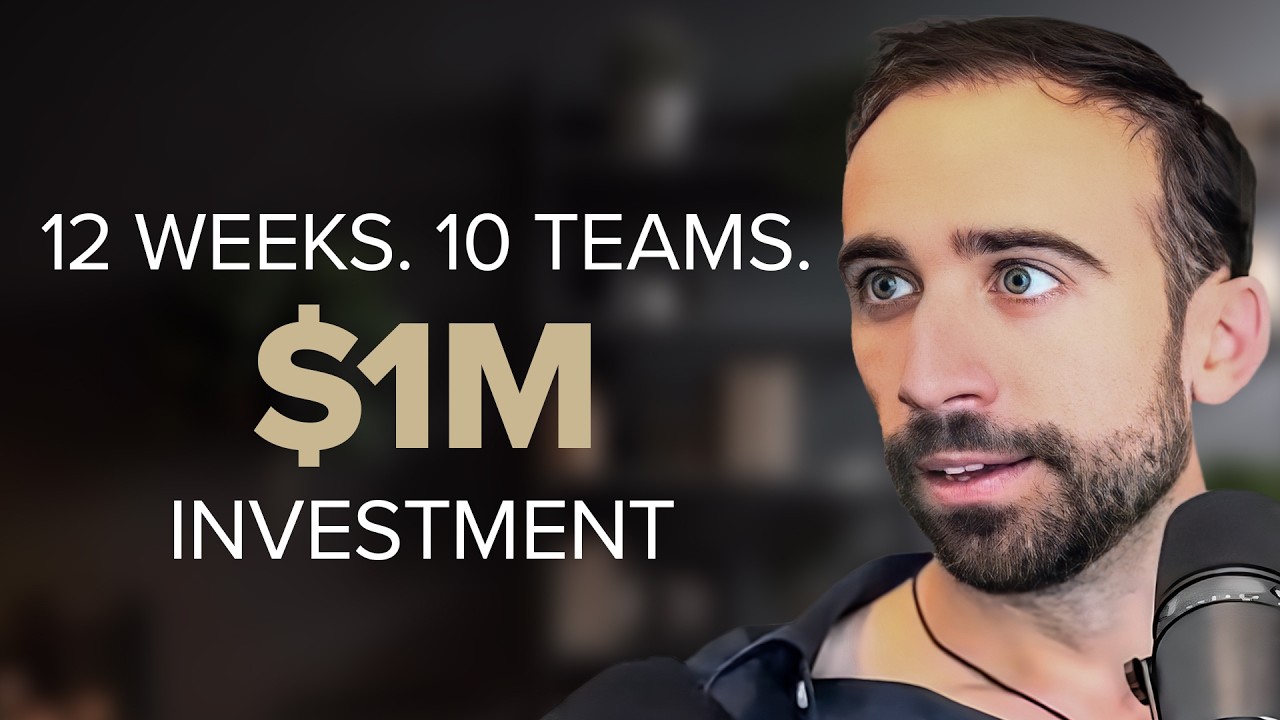
Dave Fontenot, co-founder of HF Zero, explains how the residency picks 10 founders from 35,000 applicants using human review and an AI bot called Bordy. Teams hit $2-3 million ARR by demo day through 12 weeks of intensive in-person work designed to strip away distractions and trigger what Fontenot calls "red button" breakthroughs.
Chapters
What I believe is that there's a missing institution in the world, and it's an institution for people to birth their life's work. Like, where do you go when you're ready to birth your life's work? When you're ready to take the biggest swing of your life? When you're ready to like drop everything and just go all in? When you're ready to just go grind, where do you go?
What was the ambition back then and what'd you want this to become?
Pretty much I started envisioning a world where people could just build and not have to worry about anything else. What the residency is about, even more than the 12 months of progress in 12 weeks, is transformation. Founders walk in, to HF Zero and walk out a different person. When this is done well, this is like some of the best 12 weeks of people's lives.
Was it challenging in the early days fundraising for it when it wasn't like clear what this was going to be necessarily?
It was sad. You get a lot of nos and like, it's this interesting thing where the stronger the teams are, the, for us at least, the less work and the more fun it is. And so we spend a ton of time attracting The best teams in the world to HF Zero. The only thing I'd be doing other than this, like if I wasn't doing this, I'd either be like living in a monastery or I'd be working on space.
That's quite the spectrum of things you could be doing. What are you looking for?
I can talk for a long time about what we're looking for, but I can tell you the one thing that I look for.
Hey, I'm Justin Gordon and welcome to Just Go Grind. On today's episode, we have Dave Fontenot, the co-founder and managing partner of HF Zero. This is the residency for repeat founders. I recorded this episode at HF Zero, which is located inside a 20,000-square-foot mansion in San Francisco, 2 days after their winter 2025 batch demo day. It was insane. The companies in the program are phenomenal, and out of thousands of applicants, typically only 10 teams make it into the program. These are just the type of high-growth companies that our sponsor, Ro, works with today. Ro is a business banking platform built to support ambitious founders and their teams at companies of all stages. Their customers include Perplexity, Public, Cal.com, among others. One thing among the many things that stand out about Rowe: strong customer support. It's just like how Dave and his team at HF Zero support the founders that participate in the residency, trying to make it as easy as possible for them to focus on building their company while attending the residency. Rowe does the same. Also, just like HF Zero's strong community roots, Ro has taken a community-led growth approach, which I love, hosting events for founders in multiple cities, and it has worked wonderfully. So if you're building a company like the one that would go through HF Zero Residency, consider Ro today. Head on over to ro.co, that's R-H-O.co, to get started. Let's get to the episode.
How are we doing, Justin?
Good, how you doing?
Wonderful, wonderful.
It's an event.
Still gotta get used to this mic, but—
Yeah, we'll figure it out.
About to have a great conversation, man. I've been seeing you on like Twitter for like so long. Yeah. Amazing to finally have you by the house.
Yeah, it's been years. I'm excited. This is going to— there's so much to dive into, Dave. There's so much to dive into. You just had Demo Day as well.
We literally just had Demo Day. You're like the first outside person I've talked to.
I don't know how I landed that.
Somehow.
Just somehow.
I mean, you talked to Jordan, right?
Jordan's the man.
Jordan is the man. Jordan's our creative director here at HF Zero. And so much of what you see about HF Zero from the outside is from the genius of this man sitting right across from us right here. We love it. We love it.
For the 3 people that don't know what HF Zero is, how do you describe it today? Because it's evolved a lot in the last few years.
Yeah.
When someone asks you, what is HF Zero? How do you define that today?
Yeah, I mean, definitely more than 3 people don't know about HF Zero. So HF Zero is a residency. And pretty much what I believe is that there's a missing institution in the world. And it's an institution for people to birth their life's work. Like, where do you go when you're ready to birth your life's work? When you're ready to take the biggest swing of your life? When you're ready to, like, drop everything and just go all in? When you're ready to just go grind, where do you go? And I think in 20 years, the answer to that question will be really simple. You go to a residency, and HF Zero is the first residency. And so it's essentially a 12-week residency. You actually live here where everything in your life is subtracted away so you can just build. You can kind of think of it like a monastery for code. It's much more like a 12-week monastic retreat than it is like any accelerator.
Yeah.
Or anything. It's a new thing. But I think, I mean, The results are kind of speaking for themselves, but it's so effective that as founders are realizing how effective it is, more and more of them want to do these residencies. But the only problem is there's only one right now, and we have no intention of scaling. So there's only going to be one HF Zero. We only back 10 or so teams at a time. But now we've had, I think, Jordan, we had like 35,000 teams start applications.
Oof.
since we moved to SF, since really this iteration of HF Zero.
Yeah.
We still need back 10 at a time. We have no plans of scaling that. And so the thing I've been thinking about is how do I inspire a whole wave of people to start their own residencies? 'Cause I actually don't think, maybe someone will figure out how to scale it up, but I actually think what you're gonna see is a bunch of small residencies like this. Where you're living with six to ten, maybe twelve other teams, and you are in the grind of your life. You're birthing your life's work, and there's something about the small cohort that's just so magical. Yeah, and so yeah, hopefully that answers your question.
Yeah, there's a lot to get into. Yeah, there's a lot to get into with that. And yeah, there's a few people that don't know about it. I've been talking about a lot with some of my friends as well. Just obviously Demo Day just happened, which. We'll get into that as well. I wanna take a step back though, 'cause I love the narrative journey of this all. How do you go from MHacks to you're then leading HF Zero a decade plus later? Take me through MHacks in terms of that experience for people who don't know what it is, and hackathons, and we're gonna get all the way back to where you're at today.
Yeah, so the origin story is like, you know, I grew up in Miami, or right outside of Miami in Hollywood, and I didn't have that much exposure to technology, but I ended up getting a full ride to the University of Michigan. And it was my dream school and that got me out of the state. I'd pretty much never seen snow before and like, holy shit, like I got hit in the face with like everything when I went to Michigan. I mean, it was like amazing meeting so many smart people working on so many different things. Snow for the first time for a really long time. Like the snow doesn't let up there. And then I went to my first hackathon. It's called Hack A2thon for Ann Arbor. And I didn't even really have a working computer at the time. I had like this like notepad for like taking notes.
Yeah.
But it didn't really, like you couldn't write code on it. Didn't really work for anything else. So I show up to this hackathon pretty much without a computer. And I was very entrepreneurial. I had all these ideas. I wanted to find someone to help me build like the website for them. And everyone was like, dude, you don't even have like a working laptop. Like, what are you doing here? But one guy took me under his wing. His name was John Grizzly Beals. And he was like, I won't, build this website for you, but I'll let you use my laptop and I'll teach you how to build it. And at the end of that weekend, I had built my first website ever. It was called door-k.com. K was for knowledge. And I still remember calling my mom in South Florida and being like, Mom, go to door-k.com. She puts in her email and it shows up in our Rails database in Michigan. I was just like, Mom, like what? And so fast forward, I got hooked on hackathons. There weren't that many. So I'm taking Greyhound bus, Megabus all across the country, and I went to all the other ones and then I was like, wait, there's no more. And I realized, no, we need to start, we need to start more hackathons. So I decided to start MHacks at the University of Michigan. And, and we pretty much, we rented a, one of like the startups in Ann Arbor rented a van and was gonna go do like a tour of the big engineering universities in the Midwest. And they invited us to go with them. They're like, hey, do you want to come and like talk about these hackathons? And I was like, yeah, definitely.
That sounds great.
So we'd just gotten back from, from Penn Apps at Penn. We're driving to Purdue, Indiana, Illinois, like all these big engineering universities in the Midwest. And we would show up to their CS 101 classes and I would ask the professor, I'm like, hey, we've been going to these— I was on fire about this shit, man. It's like, we've been going to these hackathons on the East Coast. We're bringing one to the West Coast. I want to invite your students to come. and like actually build things. And pretty much all the professors were like, yeah, yeah, you drove all the way from Ann Arbor.
Sure.
Midwest is friendly like that.
You know, there's like— Wisconsin. So I understand.
You understand, right? And so I pretty much told them, I was like, hey, we've been going to these hackathons. Oh my God, it's amazing. It's the best thing ever. Like, I was like high on it, you know? And then I was like, if you get 50 signups from your school, we'll send you a bus. And we ended up sending 8 buses like snaking through the Midwest all the way from Iowa. From the cornfields of Iowa.
Wow.
To that first MHacks. And it was the largest hackathon in the world on our first go. And at the end of that, I gave a speech where I was like, look, there's no good reason the largest hackathon in the world is happening here at Michigan. It's a good school, but it's not the best school. The only reason this isn't happening at your school is you haven't started it yet.
Yeah.
And so I gave everyone my Facebook link, told them, hit me up, I'll come to your school, I'll help you either get it started or if you already have a hackathon, scale it up to this size. And ended up getting hit up by like students from almost every school that attended, dropped out 2 weeks later and just hit the road, started traveling to all these different universities from Waterloo, MIT, Caltech, Berkeley, like probably 40 different universities and helping them scale up their hackathons, just really spreading hackathons. I wasn't getting paid at all. I just loved doing it.
Yeah. What was the ambition back then building hackathons? You weren't even paid, you said, but you loved it clearly. What was the ambition? What did you want this to become?
So the vision I had then is the same vision I have today. When I started going to hackathons, the magic of a hackathon isn't what's going on at the hackathon. It's all the things that aren't going on in your life.
Yeah.
When you're at a hackathon, it's that you're not doing everything else. And when you subtract everything else away and you just drop into like that creative flow, I don't like— pretty much I started envisioning a world where people could just build and not have to worry about anything else.
Yeah.
And I was like, if we were able to create that space, even for a weekend, for our most creative people, for our most creative young people in college, but for our most creative people in general as a society, what could happen? And I was just witnessing at these hackathons, like magic happening over and over and over again. At MHacks 3, The Third App Hacks, the startup that won was called Workflow, and code that was written at that hackathon is now on every iPhone in the world. Wow.
Right.
And look, hackathons aren't about the hacks. It's more about tapping into that flow, that other thing of building when you're letting go of everything else. Right. And so that's the same vision that we're still working on here at HF Zero. And it's still just the start. 'Cause like, I envision a world where people can just build and not have to worry about anything else, not just for a weekend.
Yeah.
You know, hackathons give that to you for a weekend. HF Zero gives that to you for 12 weeks. But I'm talking about like, for life, like in this post-AGI world, where are people gonna find meaning? Where are people gonna find purpose? In creativity and expression. And I think at the root of what it means to be human, it's, it, there is this element of expression. That's just so core to it all. And so I actually think the way that people are living here at HF Zero, where like, yes, it's a grind, but also it's a flow. The way that people are living where they're really in flow on the thing they want to be birthing into the world, I can just imagine a future where that's available to like most of humanity.
Yeah. And the in-person piece of it is very interesting as well with what HF Zero is doing. I just talked to Jacob Jaber, who's the co-founder of Philz Coffee, and he's now investing in brick-and-mortar businesses. And it's like, he's so bullish on everything in person and like investing in those businesses, especially with AI, because AI is going to do some phenomenal things. But the in-person aspect of building things, getting together, community, all of that is going to become even more important when you have this world of AI as well.
Yeah.
Which is having your residency in person. We're in SF right now. People are all here. The energy of that in person, it's like unparalleled. It's a huge advantage you have, it seems like.
Yeah. I mean, the way that I think about it is you only have one life to live. And yeah, getting a bunch of people in person is a lot of work. It's way easier to do stuff remote. But if you only have one life to live and you could be living surrounded by like the most legendary people that you've ever met who are all in their flow creating, that is the optimal state. Yes, it is a ton of work.
Yeah.
To get those groups together. Like we, we put in so much work so much thought in thinking about the 10 teams that we're going to live with for 12 weeks. Like, if you're like doing normal investing, yeah, you're going to be on the journey for a long time. We're going to live with you.
Yeah.
For 12 weeks. So we spend so much time thinking about how do we bring together the right group with the right chemistry. And my co-founder Emily is just incredible at holding the space. And creating that harmonious community. And it's a lot of work to get— good founders have strong personalities.
Go figure.
Strong personalities. And to get the right group together and to get them to live together in harmony. I mean, like average age of our last 2 batches, 34, right? Like these aren't, these aren't kids. These are adults. These are repeat founders. A number of these founders have built billion-dollar companies. Some of these founders have taken companies public. They have nice apartments. They were doing great before they joined HF Zero. And so one, they're choosing to drop into the zone of their life to birth their life's work, which is so beautiful. And they're coming in with a really big personality. And how do we get you to live together in harmony? It is hard to get that group together in person in harmony.
Yeah.
But when you do, there's nothing like it. This is the Like, I've never experienced anything like it. The closest product I can think of is college. And then, and then maybe besides that, it would be like cities. People are like, oh, do y'all compete with this? I'm like, no, that's not our competition. Like, I want to build an institution on the order of like the university system, but for people who are in the prime of their career and want to birth their life's work. And I think like when this is done well and it's hard to do it well, I mean, we pour our heart and souls into this, When this is done well, this is like some of the best 12 weeks of people's lives.
There's so much within that you mentioned that I want to get into. One of those things is Emily, who I know you talked about on a different show, and you're talking about how like, okay, residencies, you can't just start residency and think you're going to be successful. You need Emily. Like, we have a secret weapon, which is Emily. Tell me more about co-founding this, deciding who to work with on building HF Zero in the first place, and specifically Emily and her role and how she kind of came in and does what she does in terms of helping HFCR.
So pretty much at some point in the middle of every single batch, the batch will break if you don't make adjustments. And this is why I'm like, I know that we need to help other people get their residencies off the ground because the default state of having, even if it's your homies who you've known for a while, of having Like a group of 20 adults live together, the default state is not harmony. I will tell you that much. It is not harmony. And so, you know, like the, the, the first 2 batches. So the first batch, we started February 15th, 2020 in New York. Oh, amazing timing. Masterpiece of my life. I'm like, I'd lived in monasteries, I'd done the hackathons, doing venture, and I was like, oh wow, we can bring it all together. And we definitely hadn't quite figured out the harmony and all that stuff. We were like a few weeks in, COVID hit, and then things were getting really tense. And ultimately I made the right decision to shut down the house before COVID hit. You had 22 people living together, all this stuff.
Yeah.
Then I flew to Taiwan because it was the only country in the world that didn't have COVID, and I wanted to keep it alive. Spent 6 months learning Mandarin, built political relationships, convinced them to— someone to help me get visas. flew everyone to Taiwan and we ran the first full batch in Taiwan. And my co-founder at the time, Lucy, was really awesome, amazing at attracting founders, total force of nature. But neither of us had the skill set that Emily brings to the table. So Emily joined us when we started running the batches in Miami, and halfway through the batch, she like raised the flag and was like, hey, the batch is about to break. I don't know if y'all realize this.
Mm-hmm.
And we're like, what do you mean? No, we're just like, We're like, we're cruising, we're pushing them, whatever. She's like, no, no, no, we need to make some adjustments. And then we made some adjustments and the batch was amazing. I mean, like the outcomes from that batch were crazy. It was like the height of ZIRP times and all this. Yeah.
What a time.
Insane. We had like a little room for like 20 people for demo day thing. HF Zero was small back then. We hadn't really figured out it was just an experiment. There were people in the window and like every inch of the window looking through and stuff. It was like out of control, out of control. And so that's when I started realizing, oh, whoa, okay, like this is like crucial. And pretty much, I mean, now, now we're able to make these nudges ahead of time, but the default state in every batch is that you need to make adjustments to create a harmonious batch while you're like in flight. And no one does that better than Emily, but There are other people in the world who are incredible living community builders.
For sure.
And there's this interesting thing where, you know, folks like Emily who do this, like, love to do it and just naturally do it. It's just their way of being. Like, you probably have a family member who's kind of like this, where when you're around them, yeah, you're home. And, um, and I think outside of, like, the construct of family, society doesn't value these people that highly. There's not really a way where they can get, like, compensated. But I think we figured out the way for them to be like very highly valued.
Yeah.
And it's these, these residencies. So I think you're going to see more and more folks who have the, the kind of skill set that Emily has cultivated, who both have this like natural ability to make people feel at home and have cultivated that throughout their life. Residencies are going to be the golden era for those people. And to your point, of— you're talking about the guy who runs Philz Coffee.
Yeah.
Is that it?
Yeah.
Like him talking about in-person spaces. Like, I do believe that those folks who have that skill of creating a space that feels like home, that's like, if, you know, optimistically AI goes really well, we all are able to like spend more time with the people that we love. Spaces that feel like home That's going to be the kind of scarcest, that's going to be the thing everyone's looking for.
You know, we see where HF Zero is now. Phenomenal batch you just had in terms of the demo day you just had. This batch is phenomenal and you found a lot of them that are great, obviously. Even in starting this though, I want to like, where was your mind at in starting a residency? Like, how'd you get to hackathons and that to then a residency and how this currently looks of like removing all distractions, subtracting, subtracting, I just want to know how you got there in your head to then do this thing. And then, okay, it's not just going to be you working on it. Obviously you got to start this with other people. You mentioned Lucy. What was the switch or how did you get to that point of actually starting it?
So it was, it was actually a collaboration between me, Lucy, and Mike Swift from Major League Hacking. And Mike had been talking about something like a hacker fellowship for a while, actually. So this goes all the way back to the hackathons. Okay. The whole idea of subtraction, like That was really a lot of— I was trying to figure out why the hackathons worked so well because like we were just coding all the time at Michigan. We were just constantly building stuff. But like somehow in the weekend of a hackathon, we'd make more progress than like 2 weeks of, you know, coding pretty nonstop.
Yeah.
And at first I wasn't sure what it was, but, but I realized pretty quickly it's all the things you aren't doing. It's that you have like an excuse. You have like a social construct of the hackathon. where like it's okay not to be responding to your messages from your mom and stuff.
I'm busy.
Or from your friends or from your girlfriend or whatever. Like you're actually like, like, look, I'm at a hackathon and like, like you come out the other side of it and you're like, oh, I'm so sorry, I was at a hackathon. And like, it's just we created this, this kind of social context where it was okay to go all in. And then, you know, after that era of hackathons, you know, fast forwarding a bit, I took some time where I lived in monasteries. And for the better part of like a year and a half, I was just like looking for different meditation teachers and doing different monastic retreats. And they figured this out thousands of years ago. Like, this isn't like, this residency thing's actually not that new. It's new in the context of technology, at least applied in this way.
Yeah.
But like, but like in meditation, they realized this, like, You can, you can meditate anywhere, right? Like you can kind of code anywhere, but you can really meditate anywhere. And yet when you go to the monastery, you just, it's like not even close. It's like 10, 100, 1,000x deeper. And it is this subtraction. It's like, how do you just subtract and subtract and subtract and subtract and subtract until you get to the root? Oh man, the time in the monastery is like, so like, I miss, if I wasn't doing this, I'd be living in a monastery. Do you think you go back ever? I spend every other New Year's, I spend 10 days meditating. So I just spent 10 days in Bhutan meditating. And yeah, and it's so powerful that I was talking about this idea of home, these spaces that feel like home and stuff. But really, like, the deepest home is like a place inside of yourself. And when people are like, oh, how is that monastery or that monastery or that monastery? And the only thing I think about when I think of those different monasteries is like their ability to just subtract any sort of distraction, but like, actually I'm returning to the same home every time. It's like these monasteries don't all feel that different unless they like fail to subtract everything. But like, actually, if they're good at what they do at like, creating a space where you can just sit and meditate uninterrupted.
Yeah.
you're returning back to the same home no matter which monastery you go to. So that was the second piece. So the first piece, the hackathon, second piece of that. And then the third piece was really this collaboration between me, Lucy, and Mike Swift. That was kind of the origin, but we still hadn't nailed the execution of it.
Yeah.
We still— and that was where when Emily came in and started figuring out the ways to dial in the experience, like the experience design, because like, what is a retreat? What is a, you know, what is a monastery? What is a startup program? It's, it's essentially an experience that's designed with a very specific purpose, right? Like HF Zero is designed for founders to make 12 months of progress in 12 weeks. It's like really clear, like we say no to so many things.
Yeah.
Because they don't serve that purpose. Like a lot of other programs and stuff, they'll have like this speaker and that speaker and that speaker. Like if we have a speaker, one, they better be like super dope, but like they're gonna speak for like 12 minutes and then we're gonna like just sit down in the dining room and like have a conversation.
Yeah.
We're gonna do like a really small Q&A where it's just like, you know, like the 6 founders who are really interested in talking to that person. It's much more like a conversation. But we don't really even have many things where it's like one, one speaker talking and everyone listening. We have like a demo dinner on Monday nights and like maybe 12-minute talks or workshops, but that's like about it. Yeah. Because like it's all about how do you make 12 months of progress in 12 weeks?
You know, one of the things we talked about before we started interviewing, just was good context to have actually about you wanted to kind of grow this residency thing even, even larger than what it is in a different way and version. What's gonna be helpful for people in hearing that is how did you start in terms of what was like the first iteration of HF Zero? So you said it's February 2020, timing is insane. What did you think that was gonna be in terms of what that looked like for people, that first residency?
So actually the first concept, totally honest with you, was around people trying on different co-founders. Because what I realized hackathons were really incredible for, like I always, I always had, I wrote this blog post called Hackathons Aren't About the Hacks. And so for me, hackathons were never about what you build in that weekend. They were about the transformation you have as a person that weekend. But the second most important thing, the second most valuable thing that I thought hackathons did is they gave a really clear context where you could try out a co-founder. Because when things are flowing, being a co-founder with someone's like fine, right? And often we'll ask teams we're interviewing who met each other recently, we'll be like, oh, what was the last fight that y'all had and how was it? And often like new co-founders will very proudly say, oh, we've never had a fight.
Of course.
That is the worst answer. Yeah, that is the worst answer because you don't actually know if the relationship's going to work. Until you have conflict.
You haven't pressure tested it yet.
And so hackathons are great because when you're like not sleeping, you're grinding, you're like staying up all night hacking, it's the perfect conditions for conflict. When you, when you like don't have enough time and you're trying to build too ambitious of a thing and you need to like cut certain features and have arguments about like what you actually build. And so the thesis was that, you know, this 12-week residency could be a really great place to try on a co-founder. Now, challenge with this is that even if half of the— so we had like 20 founders, even if half of them end up finding a co-founder that they like or end up locking it in with the co-founder, the other half don't.
Yeah.
And so you can't consistently deliver an amazing experience to everyone. Just the numbers don't lend themselves this way. And especially if it's 20 people, it's not really a large enough set. It's not a large enough pool for everyone to find a good fit. So then I was thinking, okay, well, could you scale it up? 40 people, 100 people? That gets challenging. Getting 20 people to live in harmony, tough. More than that. But that could still work at scale. But I didn't, I didn't want to scale it. So that was the original concept, actually.
Really?
And some people did meet co-founders and stuff. But I think, you know, if someone can figure out a way to match co-founders really well, that is going to be super valuable. But I decided that dilating time was even more important and more tenable of a problem.
So then how did you shift into terms of that idea to the next iteration?
So the next batch was in Taiwan during COVID and I still wasn't fully onto it yet. Like, of course, from the hackathons, I had this concept of subtraction. And I knew that if people just like drop in the zone, like a 12-week-long hackathon, they would make more progress. But it still wasn't fully formed there. I remember the post I made then when I realized that I could, when I want to not even realize that I could bring people in. I mean, it was really a leap of faith. When I took the leap of faith and decided we were going to run a batch in Taiwan in the middle of COVID the post I I put out was that I love working with people in person. When you are surrounded by incredible people, like extremely high caliber, and everyone is firing on all cylinders, all of a sudden, like working like 100-hour week is just normalized, right? Like you are who you surround yourself with. And so I made this post about how much I miss the fire of working around other exceptional people in person. And that really resonated with a lot of folks. And so we ended up getting a ton of applications for that batch and people really missed working in person. I mean, it was COVID everywhere else. You couldn't really get together with anyone but your team maybe.
Yep.
In person. Taiwan was one of the only places, I think was the only place, I guess maybe by then New Zealand had zero, but Taiwan is the only place that consistently had zero COVID. They had 13 months of zero COVID. It's an island, right? They did an exceptional job. And so that was that second batch was about let's get back together in person, feel that fire. Then really it started crystallizing in, in the 2 Miami batches. But, but really, truly, it was after that we took one batch off and me, Evan, Emily, and James Tamplin, who's been a visiting partner and a lead partner, in some of our batches, we all went to Portugal and we just spent time really deeply thinking about what we wanted this to be. And we actually, before we even dove in on that, we really, we did a lot of inner work that summer and that fall, really thinking about like the impact we wanted to have in the world and what our values were. And then we spent like a bunch of time really designing the program from the ground up with that in mind, with our values in mind, and also like really engineered from the ground up to serve repeat founders. We decided that that was— if we're only going to— we're only going to back 10 teams at a time and we're never going to scale it up, who do we want to back? We realized we wanted to back founders who had the highest chance of building massive organizations with like a generational impact on the world. Because actually what the residency is about, even more than the 12 months of progress in 12 weeks, is transformation.
Hmm.
Is that like founders walk in to HF Zero and walk out a different person. And if we're gonna be putting this much love and this much care into it, then we want to have the biggest impact possible. And the way to do that is, can we help the founders who are going to be leading 5,000-person organizations, 50,000-person organizations in the future, the Apples, the Googles, Nvidias of the future? If those can be the folks that we have coming through our program, then, you know, there's the impact we have on them rippling out into Their entire organization, all the customers they serve and everything. And so we did a bunch of research on the founders who have the highest likelihood of doing that. And it's kind of bifurcated. It's about 70% of the founders we back are repeat founders who have built really serious companies in the past. A lot of them have built billion-dollar-plus companies. They want to start their next company. There's no other program that's been built from the ground up for them. They join HF Zero. The other 30% are first-time founders who have some sort of breakthrough, some sort of either like deep insight or like already have, you know, semblance of product market fit and breakout traction where it's like really clear that they have some insight or breakthrough. I think of Matthew, Matthew Dowd from this batch. Holy shit. This guy's like 20, but like his vision for the future, like if he's right, like it's going to change the fabric of reality. that like most humans experience. And so, so we're really, we're not trying to, you know, like billion-dollar company, like interesting, but that's, that doesn't really do it for us. Like, who are the folks who are actually taking the swings that are going to be like generational impacts in the world? Who are the folks who are like really going for the moonshots? Who are the folks who are like very likely to build, you know, a massive organization in the future? where like everyone who works at their organizations would be touched by the work that we did here at HF Zero.
There's one thing you mentioned there that I can't gloss over because I think it's super important. The inner work. You said, okay, we got together, we kind of figured out what was the go-forward after Miami batches. But you mentioned doing some inner work before then, and that probably led to what we're doing now in terms of what it looks like.
What did that look like?
Was it like, what questions were you thinking about? Were you going on long walks? It's just like, So anything more of that inner work that, that probably is the core of what you are doing today, then I'm curious, that inner work, what did it look like for you?
100%. So our, our kind of frame is that startups are just an outer manifestation of someone's inner world. We believe that for ourselves too. Like HF Zero is a startup, it's our startup. And so we do a lot of inner work. In fact, like I encourage the team to spend like 10% of their week doing inner work. And for me personally, this looks like meditation. This looks like I sauna probably like 5 times a week and cold plunge and do a lot of reflection in there. This looks like I have an executive leadership coach, I have a therapist, and I have a coach who helps me like plan out my quarters and my like personal life and everything. And so like I invest a lot in inner work. If you haven't, have you read the book The Artist's Way? So The Artist's Way is also incredible. We give this to every founder at the beginning of the batch, and most folks don't even make it all the way through the book, but they have— they get the result. Like, so every— I've opened this book like 6 times, and every single time I open this book, it's essentially— it's not really a book. It's like a 12-week retreat in a book. It's only like 10, 12 pages a week, but it asks you to do things. And it, in a very like subtle, gentle way, gets you on your like inner work journey. The most core concept is even just doing morning pages in the morning, just writing in the morning. So I don't do those every day, but when I do, things just start happening in my life. The other thing that's been like really powerful in this batch is 3 of the teams in the batch come from Muslim background. They wake up every morning and they pray Fajr. And so I've been joining like as many weekday mornings as I can this batch. And like, you know, regardless of what, you know, religion or spiritual belief that you ascribe to, the power of prayer, the power of communing with God, whatever that means to you, or with the universe or with flow or whatever you want to call it, the power of consistently coming in contact with That higher purpose is so powerful. It's almost like a tuning fork, like when you hear the sound and it tunes, like it's almost like that, but for your life. And so to kind of bring it in a bit, I did a jittery treat years back in Berlin with two very wise women. And one of the things that they mentioned is that doing inner work is kind of like brushing your teeth. A lot of people, when they start on the inner work journey, they're like, "Oh my God, I did LSD and I had this breakthrough, and like I solved all my childhood trauma and I'm good now." That's just not the way it works. That's not the way it works. It's like brushing your teeth, okay? It's like every morning and every night and like every day.
Yeah.
What are you doing? And so that's why I'm saying like 10% of my week is probably like different forms of, of inner work, whether that's even just like 3 deep breaths at the beginning. I start every check-in with founders with 3 deep breaths. Look, we don't even have to— it's not meditation, it's not breathwork. Let's just stop and take 3 deep breaths. And just like check in on what's actually going on. 'Cause after those 3 deep breaths, maybe this was what was gonna be the agenda. And then we realize, wait, there's actually something that's like way more important than that, that I'm actually afraid to bring up.
Mm-hmm.
But when we take the 3 deep breaths, it becomes like really, really clear. And then all of a sudden, like the whole session's talking about that because that's actually what's going on. So even like 3 deep breaths at the right moment, 3 deep breaths before you go on stage, 3 deep breaths before you go into that interview, 3 deep breaths before you, you start that meeting. Like inner work doesn't need to look like, you know, a 10-day meditation retreat, Vipassana, whatever. Those are amazing. Those are like, you go really, really deep. It can look like 3 deep breaths that we could just take right now. It's crazy. Even just 3 deep breaths, like, so good.
What was the clarity? So you had the batches in Miami. You are— we're in SF now. Yeah, beautiful house here now. Like, the clarity from that inner work to go from Miami to eventually getting to We need to have a place in SF. This is going to be the spot we go. There's a lot happening in AI here. What were you thinking at that time to even get to SF and this latest iteration even of what HF Zero is?
Well, we were thinking New York.
Okay.
Be totally honest with you. Yeah. So we were like in New York spending every day like preparing to execute on this plan we'd come up with, right? We did all this inner work. We wrote like a 40-page white paper that we haven't shared with anyone. that like really from first principles thought about like our audience, repeat founders and what they need and like how we like build from the ground up what they need from the terms. Like everything is engineered from that place. And so we're executing on this plan and we actually were just coming out to SF for an LP dinner. We would host LP dinners in SF and New York and Miami. And I'd probably come to SF like, like, you know, post-COVID SF was pretty dead even after the vaccine came out. It was sad. And I would probably come every couple of months. And this time when we came, we noticed something was different. We actually, on the Monday, we ended up at like, we ended up at like a catboy chainsaw party on a Monday night. And like, look, like, wasn't necessarily my cup of tea. There were like people with real chainsaws. I was like a little anxious and stuff. I was like, how did we end up here? But we left that party and we were like, huh, SF might be coming back. Um, but we still were like, you know, like, nah, not really. We're still doing New York. And then I actually was, um, I was staying here at this house. And Emily came to meet up with me to work on our deck for the LP dinner that Wednesday. It was like Wednesday morning and she came upstairs for us to like work and she like looked around and she was like, what was your friend's name? Who's, who's restoring this house? And I told her and she like immediately went downstairs. And when she came back up, she said, take New York off the slide.
What?
Yeah. Okay.
You were back in this. You were like this spot.
I mean, this wasn't my intuition.
This was Emily's. I mean, she was out there.
And Emily's intuition is incredible. Like the amount of times I've regretted not listening to her intuition.
Core lesson, just listen to Emily.
Core lesson, yeah. And so—
One thing before we go any further too, like just to again get more perspective on building this institution that is HF Zero, like I know you talked about a little bit on either a YouTube video or something about funding this thing.
What was that?
How has that been just in terms of thinking about like how much you're going to give founders? I think it started at $250K or something lower. It's now $1 million for 5%.
Yeah, it was $25K in the beginning.
Yeah, like the way—
We didn't have much capital, you know?
So $25K at the start for each founder. And then when did you have to raise like institutional money to then build this thing? have so much belief in?
So actually, you know, I think this is only like the second podcast I've done since we've been running HF Zero. And it was actually right after the first podcast I did. Like, I guess that was like a year. Wow. Just over a year ago. Yeah. And like 65 institutions hit me up after that podcast. I didn't even really— I didn't realize, like, like, I'm so grateful to Patrick for bringing me on. Like, I hadn't even heard of Invest Like the Best.
Yeah.
But I went on and we talked a lot about meditation, my time in monasteries, like all of this stuff. And at the end I was like, dude, like we didn't cover any of the bullet points I should have touched on. And he was like, no, no, you did great. You did great. And I was feeling so like, oh man. But I kind of like was talking about just like the kind of, you know, spiritual underpinnings of it, not really like getting into how it's going today. But like 65 like endowments and foundations and institutions hit us up and we kicked off our fundraise. And that's what's allowed us now to give this incredible deal where we give— we invest, you know, $1 million uncapped into every team. It's definitely the strongest deal of like any startup program. And I did have the vision that this would be the ideal deal to be able to offer because with, with $1 million, it's not, you know, like most of these founders could go raise more money if they wanted to.
Of course.
Many of them have already raised before they do HF Zero. But, but let's say you just like are a repeat founder. You just don't want to waste any time fundraising. A million is enough to like get things off the ground. Like for these 12 weeks where everything's dialed in, like a million lets you have a bunch of latitude to run experiments, to hire a couple, like a couple of the best people, you know, 2 or 3 of the best people, you know, and stuff. And so a million, at least for the 12 weeks, make it— makes it so you just don't worry about money at all. And look, a lot of these repeat founders, they've made a lot of money in the past, but like, but like, it's interesting to see When they are spending their own money, they're not necessarily that rational about it in a way. Like, they're actually too cautious. And of course you want them to be cautious. You don't want people spending money frivolously, but they like don't make the investments that they should. 'Cause there's just something about human psychology, especially a lot of the best founders came from like really humble upbringings. And so they work so hard to to get to the place that they are, and them just seeing their bank account go down, even if they've already made millions, even if they made tens of millions, like seeing like, you know, $10K, $20K, $30K out the door, like they like don't know how to spend money.
Yeah.
You know? And so that million uncapped, like really, I think in the way of everything else that we do, wins the founders back time because like, look, if you already fundraised, cool. No worries. But if you just don't even want to like deal with fundraising, like actually, like you could do HF Zero and just not even go the venture route at all. We could be the, like there are some teams where for like a long time we were the only folks on their cap table. They're just good. They just started making money and they had like a million to start. They were like really thoughtful. They're engineers themselves. And like with AI now, you like maybe never even need to raise again. If you can get like the kindling going, right? So Yeah, now there's like way more investors who want in on HF Zero than we have space for, and we're just intentionally keeping things small. And, you know, it'd be like every reason in the world to like scale, but we're just not going to. Like HF Zero, there's only gonna— there's only one HF Zero. There's only ever gonna be one HF Zero. And we're just gonna keep working with like the 10, 12 best teams in the world because that's, that's what we love doing.
Was it challenging in the early days fundraising for it when it wasn't like clear what this was going to be necessarily, or like?
I mean, like, it depends on what you call challenging, right? Like, I've actually, I love spending time with hackers. I love spending time with founders, but like, I've also met really incredible people through the process of raising for HF Zero. Like, some of the LPs that we brought on are now my closest mentors and stuff. And so yeah, when you fundraise, even if you have like a great company, like you talk to 50 people, you don't get 50 term sheets. You get, you get a lot of nos. And like human psychology is not really built for like, like a good fundraise is like what, like, you know, 50 conversations and you get like 5 term sheets and that's actually amazing fundraise. You have this super competitive process.
Yeah.
You got 45 nos. So like the getting rejected part, like that does kind of suck, but like it's fine. But like the, the people that I've gotten to meet, the kind of community of investors that we built around HF Zero is so dope.
Yeah.
Like they, the people who end up like, HF Zero is weird. There's not really anyone else doing it quite this way.
HF One. Yes.
Right. And so the set of investors who end up coming in like, like I'm a crazy motherfucker. Like I cut my hair now, so like I look a little normal, but like I have like, like the vision that I have for this, like this is just the start. Like I'm talking about a world where like where everyone could choose to just build, could choose to just be in creative flow all the time. I'm not stopping until then. And so the investors who come in buy in on that vision. And so when I am meeting these investors, some people don't fuck with that.
Yeah.
They're like, oh, this sounds too crazy. This doesn't fit in this box, that box. I'm like, cool.
No worries.
Actually, it doesn't even really upset me because the people who do get it, Like one of my mentors, this guy Riaz, like he has almost a crazier vision for this than I do. And when I talk to him, he's constantly challenging me to like take it to a whole other level. Like he's still like, Dave, you're playing small, right? And so like getting to meet folks like him has just been so incredible. And so when I do, spend the time getting to know folks who are considering investing in HF Zero, and I meet the folks who can feel my fire, who can see the look in my eyes of where I'm heading and stuff. And they might not see it as clearly as me, but they're like, oh man, I don't know if this is going to work, but if it does, it's going to be really impactful. It's going to really change the way this is done. when I get those folks on board, like, it's amazing. I'm like so stoked to make those folks money. Like, that's like, like, that's not the thing I spend time thinking about most of the time.
Of course.
But like, you have to be like really bold as a, as an LP, as an investor to invest in something like so different. Like HF Zero, like pretty much like since YC, YC is incredible. And since YC, like most every other program that started, like, hasn't really been able to like break out in the way that we, we have because YC has done such an incredible job. And, and so it's actually, it was, it's very contrarian for investors to back something like this.
Yeah.
And the folks who do are dope. Like we can't share who all our LPs are and stuff.
Sure.
But they're like, they're really awesome. They like actually get it and stuff. And so I like every time I meet up with them, like, you know, I definitely try to make as much of my time as possible spent with hackers and founders because that is, that's my, I always tell founders, you have to pick your audience and whether it tastes like Kool-Aid, whether it tastes like poison, like every day, You have to love your audience so much that you are there for them. These are your customers. If you don't love your customers, then like you're not building the right startup. I love taking care of hackers, man. I love taking care of hackers.
We haven't talked about those 10 or 12 teams and you're not going to go bigger. You mentioned that. And, you know, YC has done a phenomenal job, but they've played around with batch sizes. They played around all of that. There was levels when Sam Altman was leading the way where they expanded very quickly or doing all these different things. They had to continually fund all these different things. Phenomenal. But for you, you want to stay in that 10 to 12 teams.
I talked to a couple of the founders who are here today at HFC.
I was like, what should I ask Dave? And they were like, how does he get to those 10 teams? Because there are so many people that apply. They wanted to know how you got to 10 teams.
We use AI.
How do you do that? Tell me more. Tell me the process. Application, what is that process? How long is that process? Tell us everything because they're very curious about it.
Yeah. Oh man.
Dark Zero.
I mean, it's a constantly shifting process. This is, I mean, pretty much what we realize is the most important thing that we do. The most important thing that we do is select the right teams.
Yeah. Right?
Like if we select the right teams, the batch is way easier to run, right? Like, yeah. And if we You know, it's this interesting thing where the stronger the teams are, the, for us at least, the less work and the more fun it is.
Yeah. Everything's from that.
Yeah. And so we spend a ton of time attracting the best teams in the world to HF Zero. And so since we moved to SF, which I really consider the kind of moment that this version of HF Zero started.
2023, right? Is that when?
The first batch, January 2023. 2023 or 2022? Yeah, 2023. You're right. Wow. So recent.
That's crazy. I know.
I hadn't had time to stop and reflect on it until this New Year's when I went and meditated in Bhutan. And like, it was crazy to finally have 10 days where I was just completely offline, like reflecting. And I was like, oh, whoa, the residency works. Holy shit, it works. I was like sitting in meditation in Bhutan, like over a mountain. I was like, holy shit, this works. This like hypothesis that we had that we didn't know If we were like, knew we were a little crazy, we knew we were kind of onto something like, oh, whoa, the data is clear now. This works and it's going to continue working. Okay, what does that mean? And I still don't fully understand why it works. I have a hypothesis on it, but I do have clarity. It works. I mean, it's just every single batch we're getting these results. You shouldn't be able to pick this well.
Yeah.
You should not be able to pick this well. The magnitude of which startups break out in HF Zero and the speed at which they do so doesn't make sense. Like Sequoia is amazing at picking and I would, I would never venture to say that we're better at picking than Sequoia. We're really good at picking, like, and I'll get to your question on how we pick and everything. We're really good at picking, but like we're not better than the best firm in the world. But like the speed at which startups break out when we back them Like, I don't think anyone comes close.
Yeah.
Like, I was just— we just posted our Demo Day recap video, and like, if you watch this Demo Day, all of a sudden, like, $0 to $3 mil ARR no longer even like hits that hard. It's kind of like insanity. But like, I've been investing for 6 years, I've been in startups for like 12. Like, $0 to $3 mil, like, takeoff in like less than a year, like, that's like, that's fucking legit.
Yeah.
Like, yeah, there's every once in a while there's a startup that takes off even faster than that, but like, We're consistently doing that. It's like a third or like half of the batch, like this batch, last batch, like 4 of the 10 teams broke $2 million ARR by demo day. This batch, like 4 of them broke like $3 mil. You know, like it's like, it's just happening every single batch. Like, but I still don't fully understand why, but I do know it's working.
Yeah.
I do know the residency works and it's gonna keep working. And Yeah, I have a hypothesis on that, but we'll go into that later. I want to keep that— I want to keep, keep the audience hanging. You got to keep listening for the hypothesis. We'll round that back, back out at the end. But the question you were asking is, how do we pick?
Yes.
So since we moved to SF, we've had about 35,000 teams start applications for HF Zero, which is crazy. Like, most founders have never even heard of a residency, right? Because this like didn't really exist before HF Zero. Now, of course, You know, Facebook, when they started, they kind of had a residency of their own. They had a house. You know, Apple started in like a garage. Devin, Cognition, they had their own residency. So like individual startups have done this, but it hasn't ever been cracked intentionally in this way where it actually works like pretty much for like all the companies. Right. And, and so it's, it blows my mind that this many founders now Both know about HF Zero and even know that residencies exist, and like want to do them, or at least have some interest. Like start up, like have some interest in doing them. Because it's kind of pretty crazy concept. Like you're gonna like, like lean out of the place that you live in and move into this house with other founders. Now look, everyone has their own bedroom, bathroom, and workspace. Like this isn't like a hacker house. This isn't like a bunch of bunk beds and smelling this. Like we have like. chefs who cook every meal. It's dialed in to your dietary preferences, super healthy food. Like, this place is dialed in. It's the most like— it's like the Olympic training center for like top founders. And like, your life is more dialed in than you can get any way yourself.
Yeah.
But, but now, you know, we still have such a small team. We're having so many teams apply. And, and it was funny, like a year ago we were like, you know, we have all these startups and they're like, these AI-driven startups, and we think about AI all the time. We're constantly playing with these tools, and like Evan and I are both technical, but like we're not really using it that much. And then Andrew D'Souza, the founder of Bordi.
Yeah.
If y'all have heard of Bordi, this shit's crazy. If you have not spoken to Bordi, you're like missing out on life. Bordi is this like AI being where if you talk to Bordi for 7 minutes, Bordi will constantly think of you every single day for the rest of Bordi's life. And based on what you told Bordi you want more of in your life, Bordi will suggest people that you should meet as it meets them and what they're looking for aligns with what you're looking for. And Bordi is on a mission to meet every person in the world and it's like growing like crazy. And so Andrew hit us up. Andrew was in The Batch like a year ago. He was the founder of a company called ClearBank that at its height was like $2 or $3 billion valuation. He's one of the most visionary people I know in AI. And he called me one day and he was like, Dave, why don't y'all use Boredy for your applications? He's like, and I was like, oh dude, the AI's not there. Like maybe when GPT-7 rolls around. And he was like, no, no, no, no, it's there. You haven't tried it recently. And I love when I hear that from AI.
Yeah.
I love when you're like, you tried something and you're like, no, no, no, it doesn't work. And then someone, someone who you trust calls you and is like, yo, it's there now. And we keep having these moments like Christmas every time, but I still don't believe him. So I was like, okay, let me try it out. And he was like, before you try it out, let me tell you, like, y'all should be— y'all are on the cutting edge of this stuff. You should be the first to implement this. Within 2 years, every venture firm is going to have an AI on their front end. Because think about it, they like turn down so many first meetings and so many of the best founders are non-obvious.
Yeah.
At the outset. And actually, why turn on the first meeting rather than have AI do the first meeting? And then this is the crazy thing. So we tried it and we're like, oh wow, it is pretty good right now. But we still weren't sure. We still were more skeptical than anyone on this stuff, even though we're constantly playing with it. Evan knows every audio model. He knows every weird— he's constantly playing with every weird model. So we love it and we're skeptical. We have that healthy dose.
Yeah.
And so we said, look, You know what? Here are the set of applicants that we were going to turn down. What if we give them a chance to talk to Bordy first? And we're going to give you— so taking a step back, actually, and we're going to give you 6 of the 100 final round interview slots, and you can just pick, let Bordy pick, and we'll just see. And in our heads we're like, we went through the applications, we're really good at reviewing the applications. We have 2 people look at every single application. We've figured out most of the stuff that looks good. 6 interviews would probably be a waste of time, but no big deal. We ended up backing 3 of those 6 teams. We only backed 10 teams. Bordy outperformed every human interviewer on our team by far. And with the applications that weren't otherwise even making it.
Oh, what?
And that was the moment we realized, we're like, whoa, AI is actually better than humans at, at least doing like a first pass interview. And I think this is true almost across the board now. And we didn't realize until later why that's the case. And we're still trying to dial it in and figure it out. But I think part of it is that a lot of the best founders are actually humble. And when they're talking to a human or when they're writing an application, yes, you can train people to get better at writing applications and we should coach people on how to front load their best stuff and everything. When you're talking to AI, it's fine to brag to an AI.
Yeah, boast a little bit. Yeah. Yeah.
And so actually like this set of founders who are probably our favorite founders to back, who are incredibly competent, who crush it, who grind like no one's business, but who are humble start shining through. You find these diamonds in the rough. And, and so Bordy does a lot of our first pass interviews now. And actually, like, it might be the best way to get a final round interview is to like actually talk to Bordy. It's like you can write a good application and get an interview and everything, but like, you can also just like have a 7-minute conversation, blow Bordy away. And then, and then also if you want to let Bordy know that he can, like he also now he can help you with other stuff too.
It's great.
And so that's a big part of it. So pretty much, you know, we go from thousands and thousands of applications to probably about 500 to 700 Zoom interviews and even more Bordy calls, you know, 1,000 plus.
Teams.
And then we fly out the best 100 teams to meet them here in person because we think in person is so important. We get so much signal from meeting the teams in person. And I think it's really important for them to, like, they're going to live here for 12 weeks. They better come check it out. And when they come in the house, it's crazy. There's so many teams who are like, oh, we don't really know if we, you know, like 60% of the teams we back have kids now. It's like anyone who tries to tell me like, oh, I don't know if I can like live in a residency. I'm like, 60% of the teams we back have kids. If they— and they love the residency more than anyone else. If it's a good fit for them, it's probably a good fit for you. You probably just haven't experienced anything like this.
Yeah.
So they come to the house, 100 final round interviews, and then we pick 10.
What are you looking for?
I can talk for a long time about what we're looking for, but I can tell you the one thing that I look for is the fire in their eyes. I experienced this when I met Vitalik for the first time. I thought he was crazy. Biggest, biggest, biggest mistake of my life. I was thinking he was crazy, but I could just see in his eyes that he was seeing something that, you know, may or may not have actually been what the future would end up looking like, but he was definitely seeing something. And I realized the difference between crazy and visionary Is consistency, is that if someone is visionary, even if their vision may or may not be correct, but if they're visionary, they are seeing something. You see it in their eyes. They're seeing something that they're trying to describe, and they might be describing it in different ways. But there's this, when they actually are visionary, they actually have this felt sense of the thing. They're actually able to see it in their mind's eye every time. They're using an analogy every time they're trying to describe something. They're describing the same thing, even if it still seems abstract. And so that's probably the number one thing that I look for. And our team had constantly been asking me, like, but how do you know? What's like the question you could ask? And I think I finally found a good question for this.
Okay.
That's like a good heuristic, at least for the fire in their eyes. And it's this, it's how Scared would you be if you imagined trying to stop this founder? If you imagine getting in the way of this founder and what— and the goal that they're going after, how scared would you be if you try to get in the way of Elon and what he's doing? Like, I don't know, but like, for me, I'm afraid I might die.
Okay.
Like, and so you just ask yourself this question, like, how scared would you be to try to stop this founder? And the answer for most people is like, ah, not that scared. I could probably stop them. I could probably convince them not to do it, right? Not that you would ever do that, but if you ask yourself, like, but the founders who have the fire in their eyes, holy shit. Like, I start thinking about like Kirill and like my anxiety, like my nerve. If I think about that, I'm like, oh shit. Like, nothing's gonna stop that guy.
Yeah.
Nothing's gonna stop him. And so, Yeah. Yeah. I can go, I can go on and on about other things that we look for. Like we look, we look for product sense. We really think like, like taste in product is more valuable now than ever.
Yeah.
And then speed of iterating on product because like part of cultivating your taste is how many iterations you get. Right. And so, so it's like what HF Zero is really good for, if you are one of the fastest teams in the world, that's already incredibly productive, you get more out of HF Zero than anyone else because it just amplifies your productivity, 10x's your focus and stuff. So if you're not already productive, it's not like it's going to magically make you productive. But if you're already one of the fastest moving teams in the world and then you jump into HF Zero, no one can compete with you. That's—
Yeah.
In the future, like in 20 years, it's going to be irresponsible not to do a residency like HF Zero. It helps you move so so much faster. And like, as startups become more and more competitive in this, in this age of AI, they are like, if you don't do a residency and your competitor does and they start moving even faster than you, like, as a founder, you should be taking every advantage you can get. You should be trying to make every investment you can make where you can win back time and accelerate faster. And I think actually, like, nothing comes close to residency. This is like, yeah, look, it's 5%, but like the amount of speed and like how you pretty much hit like fast forward on your startup, whatever you were gonna do, no matter how fast you're already moving, whatever you're gonna do in the next like 6, 12, even 24 months, you end up doing in 12 weeks. And so, yeah, so I think in the future, like if you're actually serious about building a startup, Like, yeah, it's a big sacrifice to move into a residency, to let go of your normal life, like all of this stuff. But like in the future, if you're actually serious about doing a startup, it's gonna be irresponsible not to do a residency right now. The only problem is there's just one, there's only like 10 spots in it. But, but we wanna inspire a whole wave of people, whole wave of, of founders who have built really successful companies. Hey, don't go join like another multi-stage firm or whatever as like a GP.
Yeah.
Start your own residency. Start your own residency. Work with like 6 teams at a time, but really work closely with them and really drop them into the zone of their life and create this environment. And that's what we want to usher in is like, how do we convince that next wave of founders after they IPO, when they finally decide to leave their company, instead of going and being a GP, like, you don't want to be an investor. Start your own residency and like really work with founders. you love working with and work with them. I mean, here's the problem though, right? Running a residency is way more work than most ways of investing. Like we pretty much live with you for like 12 weeks and we do everything that we possibly can to help you move faster. But it's so fun. It's so rewarding. There's like nothing that cut— like the batch is about to end right now. And like, as I think about it, I almost want to like Cry because the batch that we just had was so special and every batch is so different and there's such a magic that comes together and praying with the founders in the morning. We just prayed this morning at 6:00 AM for the last time this batch. Man, I'm going to miss that. That was so special. That was so special. So there's just like, I mean, maybe, maybe there's other ways that are really rewarding, but there's just like no way I've seen that even comes close to, to getting to work with founders this way.
There's 2 things we have to talk about still. One is the hypothesis you mentioned that we don't want to leave the audience hanging. The second thing though is the next step for HF Zero and you, you're looking for a GP.
Yeah.
Tell me more about that.
We're looking for our next GP. So yeah, HF Zero is taking off right now. It's just like, it's kind of like out of control. Like I could have, I could have never dreamed that teams would be breaking out at this magnitude and this consistency. Like it just, it doesn't even make sense. It like actually doesn't make sense, but it's just, it's happening every time. It's happening every batch.
Yep.
And the volume just keeps, like the teams we're attracting are like further and further along and are better and better. And then they're like making more and more product. Like, so it's working. So it's time to add our— to bring on our next GP. But we're gonna be really thoughtful about this. Ideally, it's someone who's taken a company public.
Okay.
Be the most ideal state. We don't wanna bring on an investor. We wanna bring on a founder. Really like running HF Zero, like is much more like we are building a product for founders. Like, This isn't a fund. If you want to join a fund, this is not the place for you. But if you want to build the best product in the world for founders, that's what we're doing here. And ideally, we're looking for, for someone, a founder themself, who has built, you know, a really successful company that they've either taken public, driven through hypergrowth, like my co-founder Evan. His startup went from like $0 to $1 million a day in revenue in their first 3 years.
Wow.
Right. Or that they sold for like $100 mil plus. Someone who founders would be stoked to do check-ins with every week. And yeah, pretty much you'd get to drop in like to the best residency in the world and you'd get to just drop in. Like we've already figured, we've already figured a lot of stuff out.
Yeah.
And you would get to work with some of the best founders in the world. Like it's like, like I've worked with like 200 founders at this point. with all different types of founders, and I love the founders who are even like more of a challenge and everything. But like working with the quality of founders that we're getting now is like, these folks are driving Lamborghinis, Bugattis. These folks' teams move so fast. It's so fun to get to work with them. Oh my God. Like you give them like a minor suggestion, hour later they're like, yo, check this out. Right? So it's like, this is like the sickest, like working with these teams is so sick. So So incredible opportunity. Like, definitely if you wanna start your own residency, talk to us too. Like, that's, that's gonna be dope. And there's gonna be a bunch of these successful founders who, a lot of these successful founders, some of them, you know, they have that, they, they have that bug where they're gonna just keep starting companies. That's cool. We'd love to back you. Come talk to us. Like, this is the place for you. If you're a repeat unicorn founder, you wanna start your next company, come talk to us. But for some set of really successful founders, they wanna give back. They want to work really closely with founders. It's, it's the most rewarding thing. Um, and they want to do that in a really impactful way. And it's like dialed in here. Like it's Monday night demo dinners and Tuesday check-ins. And then beyond that, it's up to you. Now look, it's so fun that you end like, like at least I end up spending like as much time here as possible. Like when we're not in batch, I'm like missing the like fire. I'm missing the intensity of like, yeah. Because these teams move so quickly that from like Tuesday to Thursday, like all of a sudden there's like, They've solved that problem. Now it's like the next, you know, the next most important thing in their business that they're solving. But really, it's, you know, the commitments, Monday night demo dinners, which are amazing. Those are so dope. They're just like, you know, an hour and a half and it's like boom, boom, boom, boom, boom. Just like each team shares what they built or what they sold. No fanfare, no presentation. Just like, this is what I built, this is what I sold. And then Tuesday, you know, check in with each of your teams, usually like 4 to 6 teams. per partner. And then everything else beyond that is up to you. You can still be like, Evan still writes code almost every day, is constantly building stuff, and that makes him an even better partner. He's constantly at like the cutting edge of this stuff. But it's up to you beyond that. It really is this freeform, beautiful flowing thing because you just like when you're in the house, you're just like in it, you're in the stream of it. And then when you're not at the house, like, you have some space to breathe and explore and see what else is going on in the the ecosystem, be meeting founders who might be a fit for the next batch or the batch after that or the batch in a year. So I think it's a really, it's a really cool role. The only thing I'd be doing other than this, like if I wasn't doing this, I'd either be like living in a monastery or I'd be working on space.
That's quite the spectrum of things you could be doing, Dave.
Either working like going fully on the inner world or going fully on the outer world.
Do you already have I know we're almost out of time here, but do you already have in mind someone for that role, the GP? Because you have— I imagine you have access.
There is a bunch of folks who I think as they realize like what this is, they will inevitably start residencies. They will inevitably run residencies, whether that's like HF Zero or their own residency. But there's only like, there's not that many slots to run HF Zero. But there's a set of folks who I just like, Right now it's still such like a new thing. It's such a weird thing. Like, oh, that's like a— but, but, but right now the opportunity is like if we're the Harvard, the first university of this type in the US, there's going to be the Princeton, there's going to be the Yale, there's going to be the Dartmouth, the Penn, the University of Michigan. And what's really cool is right now it's the opportunity to start those.
For the right person, that's very, very, very exciting. Yeah, obviously.
Well, I don't even think it's like the right person right now seems like this, like very narrow set of folks, but actually the right founder who's built a successful company and wants to like work with founders closely and, and give back and everything paired up with the right living community builder, which we know a bunch of amazing living community builders already who would love to do this. They're just looking for the right like co-GP to partner with on this. Like that's the recipe. It's not that complicated. You need a GP who can attract a really talented group of founders all at the same time. You need a living community builder who's like really incredible at creating a home. And, and we've kind of solved all the other problems of this.
Is that the hypothesis of why this works? Those, those, those ideas? No, no, no.
Are we ready to get to that? We're ready to go there. Are you sure you don't want to hit anything else first? I mean, there's like 1,000 things I could hit, but I would smash any of them.
We got to make sure this is because otherwise I'll never get to any other question.
So I was, I was in Bhutan. I'm meditating for, for 10 days. Actually, on the last podcast I did, I talked about this mentor, uh, Susan, who HF Zero might not exist if it wasn't for her. When I was in Taiwan, she was the one who, who helped me like actually take that leap of faith and like keep the program alive. Um, Yeah, she passed away last year, and her parting gift to me was this 10-day spiritual journey in Bhutan that she, like, booked and planned and everything. And, and I was out there and I was reflecting on— I was reflecting on a lot of things, but, like, it was a big theme for me, reflecting on everything that's happened these last 2 years, um, with HF Zero. And, and, you know, I realized, oh wow, the residency works, but I, I still wasn't sure why. And I was reflecting on that. And this is just a hypothesis. I'm not sure that this is it, but, but this is my hunch right now. It's that when you subtract everything else, the rate of realizations increases. And early-stage startups, in a way, are actually a series of realizations. It's a series of realizations about Your customer. It's a series of realizations about your product, and it's a series of realizations about yourself. And whatever realizations you are going to have over the next 12 months or 2 years, somehow when you subtract everything else and you're in the residency, You have that set of realizations in 12 weeks. That is my hypothesis about what's happening here. It's less about the, like, yes, there's this unlocking concentration and focus that, like, even for the most focused people, like, really brings them to the next level. But more than anything else, it's this, like, clearing out, the subtracting of all the other things that we like to say the most insidious distraction Isn't this event or networking or that this, or it's the second most important thing in your business. The most insidious distraction is the second most important thing in your business. And in a residency, you're constantly subtracting all of the mundane from life. And even the, you're subtracting the sixth most, the fifth most important, the fourth most, third most, second most. And then when you've reached that point, usually it's not clear what the first most important thing is. Either there's some like fear that's blocking you from seeing it, 'cause it's the crux of whether the business works or not. And once you explore that, you might find out that the business doesn't work.
Yeah.
A lot of times those are where the best realizations come from and you make these like adjustments from there. But when you subtract all of that out, like the mundane, all the way, 6th, 5th, 4th, 3rd, all the way up to like the 2nd most important thing, all that you're left with is the most important thing in your business. That is the place from which You have realizations. And so if you were having realizations in like your normal startup life, you know, once every 2 weeks, once every 6 weeks, in HF Zero, it's like every 2 days, every day, multiple times a day. We call it the red button. We say that at any given point in life, and actually this is from Linus Lee, he's like one of the most prolific AI hackers. I love Linus. He's the one who first said this. about HF Zero. It's like at any given point in life, there's this big red button where if you press that button, it will progress the plotline of your life. And it is often scary to press that button, and it is often the blind spot for you as a founder. It's the thing that you don't want to see. It's the thing that's actually scary because you might fail.
Yeah.
And what we say at HF Zero is when you join HF Zero, you are pressing that big red button. And then once you drop into the HF Zero container, it is just a series of pressing that button as many times as possible in 12 weeks. And it is fucking scary. And all of your shit comes up when you're in HF Zero and you face yourself. And we're there, we're there to— we see you and we call you out on your stuff and we help you. You know, you're like wanting to turn away or wanting to work on the second most important— hey, You sure that isn't the second most important thing? Like, fuck, you're, you're right. And we're like challenging you to constantly stare in the face of that next realization that you might not want to realize, that your co-founder might not want to realize. And when you consistently go there, when you consistently make those breakthroughs that often are like some really deep thing, That's holding you back. Startups just—they just—it's almost as if they were just potential energy that is just like water built up at the dam, and as you pull those dams away, as you unblock, like it's a series of unblocking, the startup just zooms forward. Early stage startups—they don't have to move the speed that they're moving. A lot of them are already moving fast. they can actually move way faster. It's like in Star Wars when they do like their Star Trek, when they do like the hyperspace jump. If you have these realizations, you can hyperspace jump over and over and over and over again in your business. And the best startups are doing this. Cursor's like probably constantly doing this. Dev Incognition, the team there is constantly doing this. The folks at OpenAI have been constantly doing this, but it is intense. It is intense. And you have to be willing to go there. And that's why the selection bias of founders who drop into HF Zero, who drop into residencies, it's such a positive selection bias because these are the founders who are willing to go all in, who are willing to leave everything in their life for 12 weeks. 60% of these teams have kids. Like, at first we were like, should we even allow founders? Like, can we do that? Like, of course, like, we can't, like, you know, choose on that. But we felt like a moral obligation, like, should we even be trying to convince them? They rate HF Zero higher than anyone else, and it's because they realize the value of time more than anyone else. This is why repeat founders love HF Zero. First-time founders often don't, like they already think, okay, I'm moving so fast. They don't value their time enough a lot of the time, whereas repeat founders know that anything they can do to win back time, anything they can do to increase the velocity of their startup, to speed up their startup, They want to find every stone they can unturn to do that. And so that's, I think, like repeat founders, founders who have kids, like they value their time so highly. And at its core, what HF Zero is, is we win you back time in your life.
Yeah.
We allow you to increase the rate of realizations and move faster than you've ever moved in your life before. And it's just so incredible. to see what people can build in 12 weeks when they let go of everything in their life and they go all in. Dude, it's beautiful. It's beautiful because like at the root, I believe that hackers are actually artists, unshackled artists who aren't attached to any specific medium of expression. They're willing to pick up whatever tool is necessary to express themselves, whether it's Cursor or Windsurf, you know, whether it's React or Angular. This is like an older reference for those. coding for a while. They're just willing, whether it's, you know, code or a solution that doesn't require any code. And at the root is expression. And really when you like peel everything back and you let that expression flow through, I had a breakfast with this guy in Boston. And he wanted to grab breakfast like 7:00 AM. I was like, damn, that's early. I get there, I'm like barely awake. And before I even sit down, he's like, I get what you're doing because I'm a jazz musician. And in jazz, the best solos don't come from a bunch of preparing. They don't come from having read a bunch of music. They come from some other place where you get out of the way. Ego gets out of the way and you just tap into something beyond yourself and it flows through you. And he's like, y'all are building the space where people are in touch with that other thing that is flowing through them for as long as possible without being interrupted. And that uninterrupted flow where you're just like, I don't know what to call it. We're letting the, you know, the Holy Spirit the universe, like whatever it is, your highest self. I don't want to get too spiritual about it, but like where you're just letting the magic flow through you into code. That's, that's the conditions we create here. And as an artist, there's nothing better than being in that place.
Dave, thanks for your time today.
Thank you, Justin. That was, that was fun. Hell yeah, my man.










