Tyler Hayes, CEO of Atom Limbs, the World's First Mind-Controlled Bionic Arm
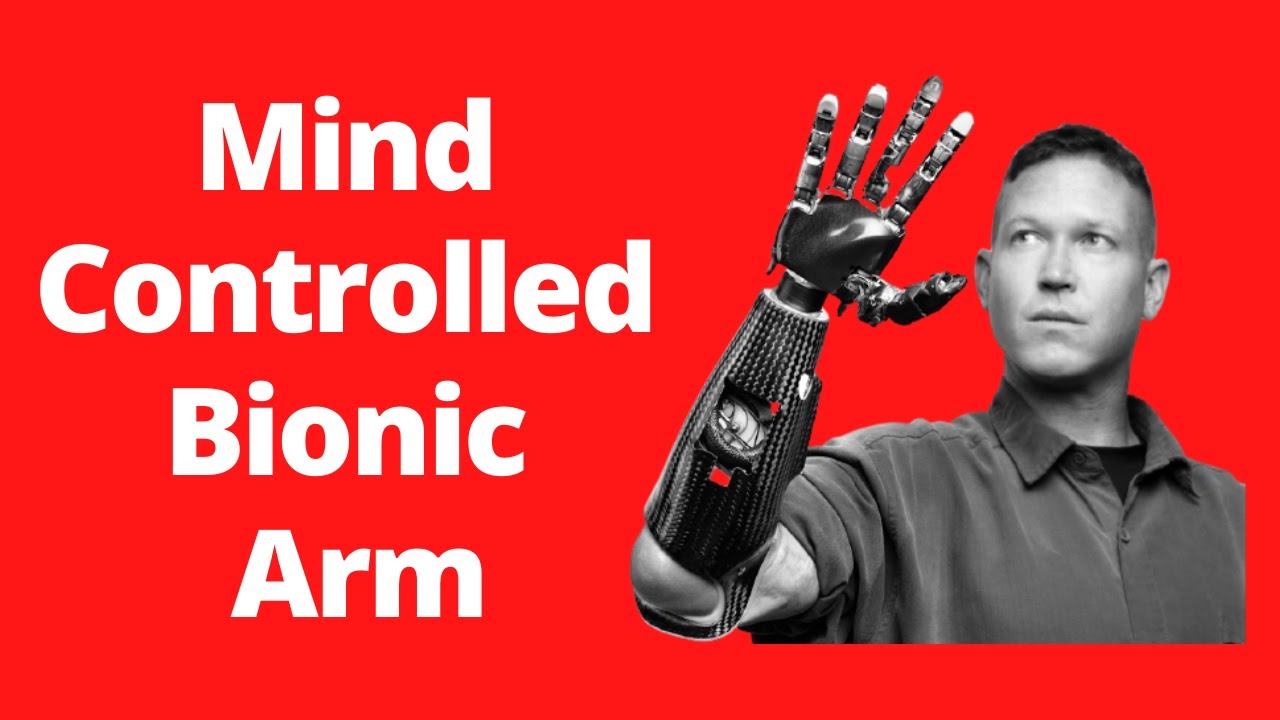
In this episode of the Just Go Grind podcast, host Justin Gordon interviews Tyler Hayes, founder and CEO of Atom Limbs, the company behind the world’s first mind‑controlled bionic arm. Hayes explains how his fascination with “reverse‑engineering the body” led him to discover a DARPA‑funded prototype developed at Johns Hopkins Applied Physics Lab. After a cold‑call to the lab and a brief stint at Amazon, he left to commercialize the technology. He describes the stealth‑mode period, the process of assembling a world‑class team (including ex‑Apple designer Doug Satzger, ex‑NASA engineers, and former Intuitive Surgical staff), and the decision to stay hidden until the WeFunder equity‑crowdfunding campaign launched. Hayes outlines why crowdfunding was chosen, introduces his concept of “collateral progress,” and details the marketing hook – “the world’s first mind‑controlled bionic arm” – that drives the campaign. The conversation dives deep into the product: a full‑arm prosthetic that reads residual nerve signals via a wrist‑band, translates them with AI into natural movement, offers individual finger control, 200 touch sensors (beta), and can lift 45 lb. He explains the path from prototype to production, covering tech‑transfer from Johns Hopkins, industrial design, supply‑chain, FDA approval, and insurance reimbursement. Pricing is positioned as a premium “Tesla Roadster of bionic arms” at roughly $100 k, with plans for mid‑market models later. Hayes also shares personal influences (Ender’s Game, American Colossus, Steve Jobs biographies) and advice about finding one’s community. The episode ends with calls to action: visit adamlimbs.com, follow the Instagram account, and join the private Facebook group for exclusive updates.
Chapters
Welcome to Just Go Grind, a show that focuses on helping you launch and grow a business and navigate the ups and downs of entrepreneurship. I'm your host, Justin Gordon, and in this episode we have Tyler Hayes, the founder and CEO of Atom Limbs, the world's first mind-controlled bionic arm. They are doing some incredible things there, and in this episode we go through how this got started in the first place, taking this technology that DARPA had developed, really building a company around it, some of the intricacies of that. Why they decided to go the crowdfunding route with WeFunder, why they decided to build in stealth and only recently came out of that and announced their WeFunder campaign, how they think about pricing, and really all things around frontier tech and how this is gonna revolutionize an industry. As always, the show notes are at justgogrind.com/podcast, and you can support the show by leaving a rating and review over in Apple Podcasts. This episode is brought to you by Hawk Media, a full-service outsourced CMO based in Santa Monica, California, providing guidance, planning, and execution to grow brands of all sizes, industries, and business models. Hawk Media is recognized by Inc. as one of the fastest-growing marketing consultancies, and their collaborative process, à la carte offering, and month-to-month fee structure give clients the flexibility they need to boost digital revenues and marketing ROI. Hawk Media, the company, has serviced over 1,500 brands of all sizes, ranging from startups like Tomorrow Melon, SIO Beauty, and Bottle Keeper to household names like Red Bull, Verizon Wireless, and Alibaba. And also I had the founder and CEO of Hawk Media, Eric Huberman, on the podcast in episode number 23. If you want to take a listen and to get a free consultation, head on over to hawkmedia.com and be sure to mention Just Go grind. Without further ado, here is Tyler Hayes, founder and CEO of Adam Limbs. Tyler, welcome to the show.
Yo, good morning.
Good morning. Glad to be here. And there is a lot to discuss with Adam Limbs. And what I want to start with, for people who aren't familiar, haven't even seen the video yet, what is Adam Limbs? What are you trying to do with this company?
Adam Limbs sounds exactly like what it is. Mind-controlled bionic arms. They are 100% real. You can watch the videos on our website on adamlimbs.com. I swear to God, they're real. We didn't doctor them. And yeah, it's, it's mind-controlled bionic arms. Every part of that is real. The mind control is real. The bionic is real. The arm is real. It's a full, you know, artificial arm. Moves just like a human arm naturally. And, uh, you asked what we're trying to do with it. I mean, what we're trying to do is Legitimately end, you know, permanent disability. You know, there's like hundreds of— yeah, right. There's hundreds of thousands of— there's millions actually of amputees walking around in the US, and there's tens of millions in the world, let alone quadriplegics and people who have nerve damage. And there's just so many people who literally, literally like right now need these kinds of things, and they're just not getting them. They get like this Civil War era technology. So yeah, that's what we're doing at Adam Lutz.
I love it. And I love having that because some people are gonna find out about the company through just audio and be like, wait, what are they doing? And then you have to watch the videos. You have to see it. I swear it's not deepfake. Tyler just confirmed it. Uh, they're actually real. And going back then, uh, for context as well then, how did this get started in the first place? How'd you start working on this, Tyler?
Uh, for a long time I wanted to just cure death. on, like, as a personal thing, which sounds like it might not be related, but to me, you know, I want to live forever. I want to cure death. And really, there's 2 simple things that you have to do under that. One is the simple thing of reverse engineering the brain. So simple.
Yeah.
And then the other simple thing is reverse engineer the body. Also so simple, clearly. And I have a neuroscience background, so that's what I studied in college. But I know enough to know that reverse engineering the brain is really hard. So, as I've been an entrepreneur over the last 10 years, I've sort of dovetailed in and out of this reverse engineering the body thing, starting healthcare software companies, starting other companies, investing in companies that tackle this stuff. So, the short story here is basically when I saw videos of this arm when it was a prototype when it was being R&D'd by Johns Hopkins, uh, which we can talk about obviously. When I saw those videos and I was thinking, man, I want to reverse engineer the body. And then I see these incredible videos of this prototype. I was like, I gotta figure out what's going on with this thing because this could legitimately make a huge impact, literally, in reverse engineering the body. We could, we could take, we could check off a whole part of the human body that is the human arm and then the leg and then It's pretty easy to squint and see how to reverse engineer eyes and ears and spines and everything from there once you see how this is done.
To that point then, Tyler, so when you saw those first videos and you see that, okay, they're building some incredible things with the R&D they've done already, what were some of the first things you did to actually decide on, okay, we are going to make a company out of this and what is that going to mean right away for the first iteration of this?
Well, yeah, so we should probably be clear about what even those videos are because if someone's listening and they have no context, basically, Uh, over the last 15 years, DARPA, as in like the Advanced Research Agency that's part of the Department of Defense, DARPA invested $120 million in this crazy project to revolutionize prosthetics, specifically arm prosthetics. And then that $120 million award was awarded to 2 organizations, one of which was the Applied Physics Lab. Johns Hopkins. There's a lot of names being thrown around right now, but what matters is basically over the last 15 years, Johns Hopkins, you know, researched and developed this crazy advanced bionic arm funded by DARPA. The videos basically that were released about 5 years ago, uh, were just showing the prototype of the arm. And I saw those videos on YouTube and basically just, just cold-called. Johns Hopkins one day. And I just said, hey, you know, I'm a serial entrepreneur and founder in Silicon Valley, and I invest and advise in longevity companies and anti-aging companies. And I could totally see how someone could make this and it'd be great. Is there someone that's making this that I can invest in or advise? And they just said no, like there's no one doing it. So I sort of began a process with them quietly where we tried to see if we could get a team for them that could help them commercialize the prototype, uh, not including me. Um, I would maybe just, you know, invest in it or something because we were still running Bebo at the time. And, um, just so happened that basically, you know, we couldn't find a team for it. And then Amazon and a few others came knocking about acquiring Bebo a couple years ago, and we went through that whole process. And then once that finished, the next day I just flew out to Johns Hopkins and said, I'm a free agent. I didn't join Amazon. Let's talk about this because I think I could actually be the entrepreneur who helps you take this to market. That's literally actually what happened.
That's wild. And from that as well then, understanding the problem you're gonna try and solve is clearly, it's not a business you can start with just one person only. How did you go about building your team around this and understanding like the massive impact you can potentially have with this company?
Yeah, that was, That was huge. You know, to your point, no, man, you can't. You can't just be like, I'm gonna go get some— like, no knock against these companies or these people, but I can't just be like, I'm gonna go get a couple software engineers from GitHub and Slack, you know?
Yeah, not quite gonna work in this situation.
So basically I ran this process. So Adam Limbs has been in stealth for a year and a half until we just debuted a couple weeks ago publicly. And the first, I don't know, I mean, the first 6 months of that were me just finding the right people. And it was, you know, it's not a quick, easy process. It was like me very quietly, carefully pinging my network. So, you know, just saying, hey, I'm doing this thing, please don't tell anyone. We don't want this revealed publicly.
Yeah.
But, you know, if you know people who can help, and then you know, get second-degree connections and third-degree connections. And sort of through that, over a few months, basically the craziest thing happened. So I got introduced to a few people who I never imagined I would have gotten introduced to. And one was Doug Satzger, who is our Chief Design Officer. And Doug basically, he wouldn't really say this publicly because it's not the Apple way, but he worked at Apple for a couple decades. And, you know, it was basically like running the design lab. It was like, you know, Johnny Ive was the guy that we all saw publicly, and then Doug was like running the design lab, you know, internally. I mean, he's an absolutely world-class, incredible designer, uh, and there's a bunch of crazy stuff online. You could Google him. He's just got all this stuff to his name. And he's, he's an incredible human being. He's got a great mind, and he's really given a lot of the personal human touch to the arm that you see if you go look at the videos of it, not the prototype, but the concept arm.
Yeah.
And then got introduced, you know, a couple more folks like, uh, you know, the rest of our team basically is ex-NASA, ex-Intuitive Surgical, who made the da Vinci robot arm, the surgical arm, um, also ex-Applied Physics Lab at Johns Hopkins. It's just an incredible team. And, and here's the— here's what happened, right? Here's what actually happened. It's really simple. It turns out that if you make something truly incredible and, and meaningful, people want to be a part of that. And so, you know, that became very clear to me very quickly. It was like, oh, if I just basically tell people we're making a mind control bionic arm, I actually don't really have to do anything beyond that. They're like, oh sweet. They're either in or they're out at that point.
You know what I mean? Right, right. It's not like convincing them. It's like, well, this is what we're doing. You kind of get it. Like either you do or you don't. With that as well, just take me through real quick the— I know you said you were in stealth until very, very recently. The thought process behind that or even just throw out to other entrepreneurs listening. Some entrepreneurs choose to go that route, like really not mention to anyone publicly versus having this big splash. What was your thought around that?
Well, it's funny, right? Because I like to build in public. It's like a thing I've written about a lot. Pretty much all of my previous companies we've built in public. In this case, we basically just frankly chose to not build in public because, you know, at first it was like we didn't even know if we were going to do it because it's really, really hard.
Oh, yes.
Yeah. And then second, it was Well, let's make sure we actually know how we're going to do this. And so, you know, I've been basically self-funding this over the past year and a half along with— we did take one check from Village Global right away. And, you know, Eric Thornberg and their team have been great partners. And it was really just like, let's be stealth because we want to make sure we do this thing right. That was kind of it. You know, this— I think if you watch the videos of this arm, you will immediately be like, holy crap. For sure, it looks incredible. But even then, you know, there's still so much work to be done to get this to market. And the analogy that I always use is, I don't know, do you remember what the company was before Tesla that invented the Tesla Roadster prototype? Do you remember what that company was called?
Fisker? No.
No. Close.
I don't then, no.
It's called AC Propulsion.
Oh, okay.
Yeah. And like, but like, why would you know that, right? No one, no one knows that. But basically, so Martin Eberhard and Marc Tarpenning, who actually started Tesla before Elon came in, yep, uh, you know, they had started this company called AC Propulsion and had written this white paper about how you could create, you know, battery technology that that could actually work in an electric car. They could give it decent range, multi-hundred-mile range. And then they made this prototype. Now, when Elon came in, that prototype was not a full production car. And we're sort of at the same point where it's like, this prototype we have is super advanced. It's been used by 20 people in clinical trials. One guy took it home for a year. I mean, he beat the crap out of this thing for a year. It's incredible. Jeez. You know, the thing has taken in tens of millions of dollars of funding and has been touched by hundreds of applied physicists and industrial designers and roboticists. This is an extremely advanced prototype, but it is not a production product yet. And so the work we have in front of us is to make it go from prototype to product. And that takes, you know, a couple years. And it's a straightforward process that anyone who's worked in the hardware industry could tell you. But we still need to give that 2 thumbs up over the past year to make sure that we really could do that in a cost-efficient way, in a time-efficient way, and then still deliver a successful product to market that, you know, that customers would want, that amputees would want. And this is a whole other hairy beast I won't even say, but I'll just drop the seed here now, which is like, you know, insurance ultimately reimburses this. And so we have 2 customers. We have the end customer, which is patients, amputees. And then we have the person who pays for it mostly, which is insurance.
Yeah, there's definitely— I've talked to a number of different entrepreneurs who have the same type of thing where your end customer is not actually the person who's paying for your product. And that definitely makes it a little bit different in terms of how you're approaching things and acquiring customers in that way as well. One thing to go back to, I know you said you self-funded initially and then backed by Village Global, early, early check. How did you decide then on That's a fair question, I think.
I think it was actually pretty straightforward and simple. You know, we— it was not always a guarantee we would do that. I think honestly my plan was to go the conventional route of go raise capital from VCs and family offices and institutional investors. That's my background. You know, I know those people. I love those people. They love what we're doing. But, you know, I think it was just a matter of, you know, there was this thing that happened where the WeFunder team found out about what we were doing. And then when they found out about it and they were just like, holy crap, right? This is incredible. And they were like, you know, they sort of rolled out the red carpet for us. And, you know, if that ever happens to you where someone basically says like, hey, can we give you, you know, distribution on our platform? It's like, you don't say no, right? And also it wasn't just that. I am very outspoken about how I believe that people, again, should build in public. I think there are way more advantages usually to building in public than building in secret. That doesn't mean you put everything out there publicly. Don't publish your secret sauce, but just get your army over to you while you're building the thing. You don't need to wait until your product is ready to start getting people excited about what you're doing even.
Yeah.
So the WeFunder thing was, you know, sort of half fundraising event, half marketing event. And I think that's what's really cool about it, actually. I think that— I don't think even most people in this tech industry have caught up with this concept yet. This is actually one of those few areas where I think that other parts of the world have really caught on to the value of crowdfunding, especially even equity crowdfunding like WeFunder, more than the tech industry.
Yeah.
Because what it allows you to do is get a ton of people who share your crazy over to your side. And like in the most legitimate way possible, right? Like this isn't an Instagram follower or a Twitter follower. They literally gave you money and invested in your company and then they get equity back for that. And as a guy who, you know, for me, I grew up, you know, building PCs. I'm part of the gap generation. So like, you know, I grew up before the internet was really a thing for, you know, about 10 years. And then, you know, AOL came out and really, you know, the internet started to take off in the US.
Yeah.
And like, you know, for me, I was like, I was building PCs, putting on the Arctic Silver myself on the CPU. I'm sitting on message boards. I'm pirating tons and tons of content, because that's what you did back then.
Of course.
Like, I love this concept of letting people share in the success of a company more than just having to be a customer. Like, I think that is a very old hat concept of the 20th century, is like, You know, the only, the only way you can be a customer, or the only way you can get upside in a company, is either one of two ways. You can either be a customer and then you get the products, okay, you don't really share the upside in that way, or you can buy stock when it IPOs. Like, that's insane. You missed 10 years of the company's history, right?
Wow.
Anyway, I'm ranting at this point, but I do feel passionately about this stuff, which is why I thought it was such a cool opportunity. And, you know, a few years ago, this wasn't possible in this way until Title III of the JOBS Act passed in 2016. and unaccredited investors could now invest in equity crowdfunding campaigns, it was like a huge no-no.
Yeah.
And now, you know, it's gotten better, and now the WeFunder team has really wrapped it up in this really easy package for founders. Like, you don't have 1,000 people on your cap table, you have one entity on your cap table. And it's like, there's no reason not to basically at this point, unless, you know, you don't want to do the work. You do have to do work beforehand, Yeah. Of preparing people for it. So, I think there's more upside, but you really need to know what you're doing at the same time too.
Yeah, and to that point, Tyler, I mean, there's a lot of work you have to do if you're not going this route anyways. If you're gonna go the traditional VC route, there's a whole lot of work. And I've told you before the show, I mean, so many people on this show have mentioned the number of months it takes to fundraise in the kind of conventional sense, if you're going to angel investors, if you're going to VCs and everything, and the amount of time that takes. But I'm also super bullish on crowdfunding and super curious about everything. That's why I had Johnny from WeFunder on the show, the director of fundraising. On the show to talk more about it and really thinking through like, well, what if some of these bigger companies that had IPO'd for, you know, multiple billions of dollars had been crowdfunded originally and that wealth being spread out amongst all these other people who could have had a stake in that? That's really intriguing of a concept of what crowdfunding could become. And even though right now there's a limit of like $1.07 million in terms of, uh, from unaccredited investors, and there's more with bringing on another million or so from accredited, I think as Johnny was mentioning, but that cap could be lifted to $5 million. But who's to say that doesn't get lifted again to even more, where then you have even more potential you could invest in terms of raising millions and millions of dollars for your company through crowdfunding. It's very clear that that could happen, obviously, which is intriguing.
Very early on in my entrepreneurial career, I kept seeing that kind of thing happen and I was like, wow, I need a term for this. There's this concept of like the sort of inching forward on multiple sides of a problem. And the term I came up with This that I use to describe this stuff, I call it collateral progress. So it's like, you know, you basically have 2 things happening here. One is the inching forward of, like you said, okay, it's like a, you know, first it's a million-dollar cap, then it's a $2 million cap, then it's $5 million, that's $10 million. And they'll keep increasing as both WeFunder and all these crowdfunding platforms push it forward and the government starts to understand it more and they, you know, release regulation on it a little bit.
Yeah.
And then on the other side, you also have all these companies figuring out a little bit more, and you have investors figuring it out a little bit more. And kind of as everyone gets more used to this concept and it inches forward on all sides, you get this collateral progress effect and it all compounds. Actually, that's kind of the cool thing. So like in the beginning, that's why it seems so hard in the beginning, and then it seems so easy in hindsight, is it's like in the beginning, you know, no one had inched it forward yet. So you don't have anyone Pushing it. And so, yeah, going from 0 to 1 is really hard, but then once you get all the parties pushing it just a little bit, and then the government inches forward a little bit, and then WeFunder inches forward a little bit, and then the investors inch forward a little bit in understanding and doing it, and over time it gets more and more and snowballs, and you get this collateral progress effect. And like, you know, you and I could have a conversation 5 years from now where we'll be like, man, isn't it crazy that some crowdfunding company just raised a billion dollars on WeFunder?
Yeah. Exactly.
Remember a time? Yeah, exactly.
And even think about that too. I mean, it's like even to get the JOBS Act passed, which WeFunder helped out with, and then 4 years later, I think it was, like you said, in 2016, to really get these, actually have it where people can really invest. Like there's so much time that passed through that, but getting through all of those years of that, we're actually now at a point where crowdfunding, like, yeah, you can do this in your company and it's a process to get, you know, to get up on the platform, whatever. But then once it's live, like, yeah, you literally can raise money from people and there's 180-some investors right now. guys have on that as well. And just one more kind of main thing I was curious about with as well. I know there's a lot of prep on like the financials and everything, getting the campaign live itself in terms of the, either like the marketing or thoughts of like how you're gonna run this campaign after it's live. 'Cause obviously you're live now. What has been the thought around that in terms of the marketing of it? That sort of thing.
It's pretty easy for us early on to know generally what our marketing is gonna be. The, I think that a lot of companies struggle to figure out what their marketing should be. For us, it was just so easy because it, you know, we can just say it's mind-controlled bionic arms, and that gets someone's attention so quickly that we— it's sort of a, it's sort of a hack. It's like a cheat, uh, and then, you know, we can assemble branding and compelling content and stuff around that. But the question you're asking, I think, is much more literal and like what's—
Yeah, it's a tactical strategy.
Yeah. Well, I think that if you know how Kickstarters go, it's pretty similar. You know, WeFunder or any other crowdfunding platform is 90% work beforehand and before the campaign starts. And so the marketing work that goes into that is like on all fronts. So A, what investors are you going to bring to the table and will they share your message? B, what message are you trying to push out there? And remember to keep it simple, as is true of all marketing and advertising, because people just need one simple message. If it's too cluttered, they won't resonate with it. And C, with us specifically, with Atom Limbs, because we have so many compelling things we can talk about, what's the one that we start with? So for example, you know, we had a lot of conversations around, do we start with saying that it is a mind-controlled bionic arm? Or do we start with the problem, which is amputees don't have arms?
Yeah.
Or do we start with a different problem, which is, you know, amputees can almost feel too medical and clinical in some ways, which can feel a little alienating to people who aren't in that, in that problem space, if they're not an amputee or not related to one. And we don't want it to feel too niche in that sense, because we're not just building, you know, arms for only amputees. Uh, and I think ultimately what we ended up agreeing on was, Well, it's just keep it simple. And if, if mind-controlled bionic arm, you know, were— if there were, if there was something that was more compelling than that, it would have made itself clear by now, basically.
Yeah.
We talked with hundreds of people behind the scenes about this by the time we'd started the WeFunders. So that was why we just said, look, let's just start by saying this is the world's first mind-controlled bionic arm. And then, and this is the really important part, let's just show it.
Yeah.
Just show videos and images. It's the same concept. Like, I don't know if you play, uh, you know, poker, but it's like, if you have the nuts, right? If you have like the best hand, uh, just play the hand, man.
Yeah.
It's the same thing here. Like, if we have the winning hand, like we have a literal mind-controlled bionic arm. If you have an electric car that's a luxurious, no-compromises electric car like the Tesla Roadster, the original, If you have reusable rockets like SpaceX, if you have a mind-controlled bionic arm, just show it, basically. And so that was, uh, I think it also, you know, has proven out that that was probably the right decision. You know, that's the thing that clearly people are resonating with.
Yeah.
And it's why guys like Nasdaq made videos about us. It's why investors email us. It's why we get checks. You know, every time I check my email, there's another dozen checks coming in through the campaign.
Yeah, it's just a slightly compelling concept. A little bit.
A little bit.
I know when I got the introduction, I'm like, yeah, I'll talk to Tyler for sure. I think we can talk about this thing as well. And there's a few different— go ahead.
It's funny too, right? Because you don't have— you have all your arms. You have both your arms, right?
Yep.
Yeah. So you don't need to have lost an arm to resonate with it.
Right, exactly. It resonates with everyone. You understand the concept and where this could take things in the future for humanity overall. There's a few different questions I have, one being around, I know, just taking a step back, you mentioned how getting the prototype is one thing, but obviously spending the time, investing the money to put this into production. What are some of those even things that that consists of? I know you mentioned that, you know, that's more straightforward, but what are some of those things for people who are wondering of taking some type of tech that is a prototype, but then putting that into full-blown production? What are some of those things you're working on for that, Tyler?
Yeah, there's a lot. If you— boy, this is a question I get asked a lot actually, which is like, if you wanted to do something in the frontier tech space, what's the best way to start it or to do it? And first of all, I, I think it's— I don't think there's one size fits all answer.
Yeah.
There's a lot that is very contextual, but I do think that the specific path that we've taken, which is what you'd call the tech transfer path, There is a fairly well-oiled path there, but nobody knows it. And actually, I am sort of working behind the scenes right now. I haven't really revealed this anywhere yet, but we are— I am personally working behind the scenes with a few folks to try to get something put together, whether it's a platform or a series of educational videos or something that basically says, you know, this is how you do the tech transfer process because it's so opaque. to people. And, um, so literally, like, what we're doing is we have to do a few things. One, get the technology actually transferred from Hopkins over to our organization.
Yeah.
And we started that, you know, a year ago. That just takes time. That's things like moving IP, patents, copyright, know-how, relationships. It just takes a long time to do that stuff. That's one thing. That's a literal tech transfer process. The second thing is, how do you identify what's actually improved in the— or improving the prototype and make it a product? And so that's things like industrial design, it's things like advancing the neural networks, it's things like laying out the clinical pathway. So, you know, do we work with prosthetists? Do we work with clinicians? How do we work with them to try to get this product in the hands of their amputees? It's things like the regulatory pathway. Uh, which is the FDA approval process. And, you know, arms like ours, prosthetic arms, do have to get approved by the FDA. So that's a conventional process. Like every prosthetic device you've ever seen, whether it's a leg, arm, or otherwise, has been approved by the FDA. Uh, so we know how to do that, but it just takes time.
Yeah.
And then there's the reimbursement pathway, which is if you're making something, whether it's sold through insurance or not, you need to figure out how are people going to pay you for that thing? And typically with frontier tech, you're probably not selling it direct to consumer.
Yeah.
So, you know, unless you have like a, I don't even know, like an over-the-counter, you know, therapeutic or drug, and even then you're probably still interfacing with insurance or somebody at some point. But, you know, with us, we have to figure out how does, how does health insurance reimburse it? And that's things like gathering data beforehand. So not a lot of people would know this. Like, you don't just make a prosthetic or bionic arm and then go tell insurance about it. And then like, cool, we'll reimburse it. Right? Like, you actually need to show a ton of efficacy and outcomes through data first so that they will feel good about it. And then you also have to show that it's better than what you call standard of care, which is like exactly what it sounds like. Yeah. So today there is a standard of care, SOC, around prost— amputees and the devices they use. So, you know, how much does it improve their life? How much does it improve their work? How, how much, you know, value do they get out of it? And does our arm— is our arm better than that? And now I think intuitively and obviously, yes, it is, but we still have to prove that.
Yeah.
So there's all that kind of stuff. And like, again, to the Tesla analogy, I mean, they had to do a lot of the same stuff. You make a, A car, you have to get it approved by all sorts of regulatory agencies. You have to test it, you know, for years before the government will approve it and let you sell it. And then Tesla, you know, they did a crazy thing, which is kind of the Apple model that Apple actually didn't start with but morphed into, which is they don't sell their cars at dealerships. They sell them at their own dealerships, but they don't sell them through other dealerships, which is what every car manufacturer had done.
Right.
And that's actually what all prosthetic companies do today too. So today, if you make a prosthetic arm— and by the way, we don't call ours a prosthetic arm. We will never use the term prosthetic unless someone forces us to. We call it a bionic arm or an artificial arm because it is way more than just a prosthetic. So prosthetic arms today have a problem, as the companies who make them have a problem. They sell their arms through a third party that's a person called a prosthetist. Now, without getting too in the weeds of all this stuff, this is very wonky stuff. Basically, this prosthetist is a person who is sort of a car salesman and car mechanic. So they, they work with you as an amputee to help you buy the device, as well as then fit you for it and custom mold it for you, and then repair it after you've used it. So the manufacturer, the company, the people who design and manufacture and deliver the product— Actually do not interfere interface with the customer, the amputee, which is insane. It's wild. Like, that's crazy, right?
Yeah. How is that even possible? I mean, yeah, that is, that is crazy because the people with all the expertise and are actually making the product and can do these things of adjustments and everything aren't actually talking to end customers.
That's crazy. Yeah. So, you know, to me it's like these prosthetists are great people. They're well trained. It is good that an amputee has a person they can regularly go to and work with on this stuff. But, you know, the companies should really be much more involved in this process because first of all, like, you're gonna have a better relationship with your customer and you're gonna build a better product if you do that. But also, you know, just, it's like the right thing to do. Like, yeah, people who are buying your product should have the ability to be in touch with you and work with you regularly. But, you know, all that is to say too, you know, I'm talking very deeply about the innards of working with amputees in the clinical system right now. You know, by no means is that what we will be doing. Kind of getting back to your question before.
Yeah.
That's, that's not the only thing that we're doing. I mean, we are very legitimately making artificial arms and limbs, right? We will— we already have— can't really talk about this, but like, we definitely have other things in the works, uh, yeah, on— in many ways, you know. And I think it would be natural to assume that we make an arm and then a leg and then a spine and all sorts of stuff.
Yeah, when you have the technology and the team behind it as well, because like the team who has built the technology and understanding, you know, what that type of thing, that's like, okay, the applications of that can, can go even farther and wider if you have any vision at all, of course, as to what this could be. And then one of the things too, just on the idea of, I know you've mentioned earlier as well with who's gonna actually pay for this and everything, but then even thinking about this type of kind of revolutionary technology, how do you even think of Pricing and that side of things? Because it's frontier tech and it's something that's like, where do you even start in terms of this?
I mean, you basically just price it like other products price it. You know, there's a playbook for this stuff. Like, if you invent a new car, like, you roughly know how to price out a car. You know what the parts are, you know what consumers will roughly support paying, and then you say like, you know, what, what part of the market do you want to come at? Do you want to make a premium sports car? Do you want to make a luxury exotic car? Do you want to make an affordable mid-class car? Do you want to make a super affordable mass market car? And then you just, you know, work backwards from that. And for us, we just said, well, you know, we, uh, we have the world's most advanced, you know, first mind-controlled bionic arm. That also means that some of it's still a little pricier, uh, in making it, you know. So Let's, let's not— let's acknowledge that basically, and let's make this the Tesla Roadster of bionic arms. And we will make a Model S and a Model 3 after that. You know, we will absolutely make a mid-market and a mass-market, more affordable arms as we go. But the first one does have to be the, you know, no compromises, shows the world what's really possible here arm. It has to put the stake in the ground and say, this is what we're trying to do. We are, we are not going to make something that settles for anything less than greatness and that really gives someone full function of their arm and their hand and their fingers back and is easy to use and is intuitive to use, is just as easy to use as your organic regular arm.
Yeah.
And it's as strong and light and as fast as that. And, and so to do that to start means, you know, we do have to come in more around like a $98,000 price point, closer to $100,000. Versus something that would be like a low-end or mid-market arm, which is like $20,000 to $50,000. But, you know, even just for people listening, like, to be super clear, that's not breaking the mold. Like, I was just talking with an amputee yesterday, for example, who was like, hey, I'm buying a hand and it's cost— it's costing me $100,000.
Whoa.
Like, and he's getting the most advanced hand that exists today, which is called the TASKA hand. It costs $100,000, and that's not the arm, that's just the hand.
Jesus.
And his— so a hand costs $100,000, and by the way, it only has 10 grips that it goes into. Like, it doesn't have individual finger movement like our arm and hand does. That's the standard that exists today, right? So he has like this pinch grip, and he has a key grip, and then there's 8 other grips, and that's it. So you expect, like, this is what people are paying for today. It's insane, right? I know I sound like the crazy person sometimes being like, really? Like, is this, is this real? Like, I'm like looking around, I'm doing like the Bugs Bunny, you know, wiping my eyes twice. Like, what? Like, how is this $100,000? This is insane. Now we'll come in, you know, we'll be, you know, up on the upper market side of things too. But, you know, we do want to bring that curve down and it is absolutely possible. The reason That it hasn't been done today. The reason that no one has been able to accomplish this today is the most damning reason of all, which is amputees don't use— arm amputees don't use prosthetic arms today because they suck.
Yeah.
Like, they can't do anything. So you get in this negative feedback loop where companies make bad products, so no one uses them. If no one's using them, no one's buying them. So then the company doesn't have enough money to reinvest in making a better product. And it turns out that, you know, that, that can get you stuck, right? So you have these billion-dollar companies that make prosthetics today, but they're not really advancing the state of the tech. They're basically only innovating through acquiring companies.
It's so crazy to think about that. It is such a problem with that. One thing we haven't done then to that point is really talk a lot about the product itself. So, tell me more about the actual kind of products you're developing, the ones you have that you can talk about, what they do, what their capabilities are, how they work. And obviously, you have 20 people trying them right now. Take me through the product more.
Yeah. Okay. So, you've seen the videos, right?
Yeah.
Yeah, yeah, yeah. And if anyone just like watched the videos, you see right away what the arm looks like, what it can do. But what you'll see right away is, you know, this is a full arm. Uh, the prototypes don't look like a human arm, they, you know, they look like sort of black cylinders.
Yeah.
But they, uh, they can do everything a human arm can, basically. So it's— imagine this, you know, imagine you lose an arm, you lose your arm, okay? So now you're thinking, well, I want an arm back. And someone comes to you and says, well, we'll give you an arm back, but it can only, you know, go on— it can only grip things in a couple different ways. Uh, you know, you can't type with it, you can't play a keyboard with it, you can't write with it, you can't really shake someone's hand with it in a natural way, you can't, you can't communicate with it. Like, you can't do the most basic things. And that's what they— that's what, like, all the products do today that amputees would buy.
Yeah.
Um, or quadriplegics. And what ours does is restores everything. So it gives you full finger individual control. You can play a piano with it. You can pick up a cherry tomato. You can shake someone's hand in a more natural way. And that's because it uses AI. And specifically, so what happens here? So I'll tell you basically 3 things real quick. So like, how literally does it work? 1, 2, what can it do? And 3, what's gonna like, What's, what's happening next with it that's pretty amazing. So first thing, how literally does it work? It's mind-controlled bionic arm. It's, it's pretty straightforward actually. Mind-controlled sounds really sci-fi, but it's actually just simple. We tap into the systems your body is already using. So you and me right now, when we think to move our arms, you don't really think, right? You just subconsciously, it just goes.
Yeah.
Now you're consciously controlling that, but it's just natural. The feedback loop is natural. Uh, and that's because When you think you want to move your arm, a signal gets sent from your brain to the muscles in your arm using the nerves, which are just like electrical wires in your muscles, and then they actuate the muscles. So then the muscles sort of, they move. So when you're an amputee, you know, your musculature gets cut off, but the nerves are still there. They're still sending the electrical signals. So all we do basically is we put a band around your arm It's like a big bracelet. We put it around the stump of your amputation, and when you think, the signals still get sent along your nerves, and then the band hears those signals emanating through your muscles and then sends those signals over to our robotic arm, which then uses AI to move, to interpret it and move naturally just like you would. And it's— it really is— that's literally how it works. It's not more complicated than that.
Yeah.
Now, that's obviously very complicated in the literal How does it work, the AI?
Yeah.
But we just basically create a snapshot of how it works. And so one of the things people always ask us is, like, how quickly can someone pick this thing up? And it's like minutes.
Geez.
Yeah. Like, you put the band on.
That's insane.
Yeah. You put the band on, and we basically say, all right, Justin, basically put on the band. And then we're going to say, think about Closing your fist and opening your fist and moving each one of your fingers and flexing and extending your elbow. And after a couple minutes, we basically train a snapshot of what you look like, and now the arm knows how to process your movements. And, you know, it might take a little bit longer than that to sort of master it for an amputee because their muscular— musculature changes and it atrophies and it grows and stuff like that. But, you know, they can use it within a couple minutes. So that's how it works, literally. One. Two, what can it do? What it does is it's as strong and light and as fast as a human arm, and it can move just like a human arm. So it has all 26 joints of the human arm, so the elbow, you know, open and close, the wrist movements, rotations, all of your finger digits, you know, opening and closing and moving left to right and all that kind of stuff. And it can bicep curl 45 pounds, which is more than I can bicep curl. It, you know, the fingers rotate at 360 degrees a second, which is comparable to the human hand. Um, you know, it, it's— it weighs about 10 pounds. The, the early prototypes weighed about 10 pounds, um, which is about, uh, the average adult male's arm weight. Um, and then 3, like, what's, what's incredible about it that's coming next? Well, you know, one thing I haven't even said this whole time is like, it restores your sense of touch too. So like—
Wow, you left that little detail out there, Tyler.
Yeah, right? So like, to your point about like marketing messages, right? Like we say mind-controlled bionic arm, but the first thing we say after that is it also restores your sense of touch. Uh, now I want to be clear here. So the sense of touch feature we have is in beta. Um, literally, uh, the way it works is, you know, you, when you and I touch things, you know, you press your fingers down on something, you sort of get like the on-off pressure. You get the gradation of it as you move your fingers across the surface. You get things like temperature, heat, and And cool. Um, and then, um, you get like position and things, you know, like where is it in 3-dimensional space? And so there's about 200 sensors in the hand right now, in the arm. Uh, excuse me. And that's, uh, it's about 2 orders of magnitude more than the human hand today. Or sorry, than, than any artificial hand has today. So basically in, in restoring someone's sense of touch, Um, no product that exists today is able to do that because they don't— they have like 1 or 2 sensors in them. We have 200 sensors in our hand, which gives you what we call basic sense of touch. The human hand has 10,000 sensors in it.
Jesus.
So, you know, we still have to go another— yeah, we have to go another 2 orders of magnitude. Yeah. So we'll get there for sure.
Yeah.
Um, but, you know, it's like we, we just had to You know, start the process basically. And then now we'll just keep adding more sensors and we'll get there. Um, but it's pretty incredible to watch the videos, you know. So like if you go to adamlimbs.com/videos and look at, I think it's the Motherboard video that Motherboard made, shows Melissa getting her sense of touch restored. And it's pretty incredible to watch her reaction. She basically, you know, they say, close your eyes, Melissa. And then, um, they put a plastic ball in the side her open hand that she hasn't gripped yet. And then they say, all right, Melissa, close your hand and tell us when you can feel the ball, to prove that she can really feel it with her eyes closed.
Yeah.
And, you know, the moment the hand touches it, she's like, got it. And then they're like, is it soft or hard? She's like, oh, it's soft for sure. Interesting. You know, it's incredible to watch that in person.
With, with all this as well, understanding that obviously the level of tech is insane, you establish and And created a wonderful team to help you as well. These days, what is most of your time spent on?
Well, right now, fundraising and marketing.
Of course.
Yeah. And, you know, mostly industrial design. I think a lot of people would, you know, probably think that I spend most of my time just sort of talking publicly. I don't think that's true. That's maybe like 10% of my time. I think most of my time is basically basically talking about the industrial design and the supply chain. So it's how can we get the cost down, who's going to be supplying these different parts, and then the design itself. You know, we can't talk— we've showed the concept arm at least publicly. We can't— we don't talk about more of that publicly yet, but—
Yeah.
It's, you know, involving amputees in the process and other people regularly putting it on them and trying out new things and saying, how does this feel? How does this work? Function, getting it ready to basically go through FDA.
Yeah, it'll be well. We'll have to have you on for a round two at some point because I'm sure this will progress and you'll get much busier as well. But I want to secure that as well.
And one of the you got it.
Perfect, perfect. One of the last things that I always kind of wondering about there's a number of things, but in terms of your just journey as an entrepreneur, and we haven't even talked about Bebo or some of the other things, and we don't have time for that today, but. From that as well, I'm always a big reader, so I'm curious, any particular books that have been impactful for you, business or just kind of personal as well?
Absolutely, actually. I mean, I think I've probably read Ender's Game maybe 20 times in my life, like no joke. That book was huge for me when I was a kid. When I was a kid, I did every activity I could. I was a gymnast, I played football, I played baseball, I was in math club, debate, and I acted in theater and choir and improv troupe. Like, I did literally everything. But the thing that I loved the most was I was always just super attracted to like the nerdy stuff, you know, the super nerdy stuff. And even that, I hate using that word in that way, actually. But I was always attracted to computers and math and science and space and sci-fi. And Ender's Game for me, I don't know, have you ever read it?
I have not, no.
Oh man, it's incredible. It's fiction. And I don't think it's uncommon. I think if you talk to a lot of people, if you polled people in Silicon Valley, if have you read Ender's Game? It's probably like 50%. It's like a lot of nerdy people. It's a very nerdy fiction book. But, you know, for me, it was just like, I think it was so impactful because it made me feel less sort of isolated and alienated. And to be really honest, like, if I can be real, like, I did feel kind of landlocked mentally and physically growing up in Minnesota. Yeah. You know, like, it didn't— I didn't— I felt like the odd one out a lot of times. And I didn't feel like ostracized. I didn't lead like I wasn't bullied or anything.
Yeah.
You know, it just wasn't my people weren't really there. And I think when I, you know, hit my early 20s and found out about Silicon Valley, I was like, oh my God, this is, this is incredible. Like, these are my people.
Yeah.
And, uh, so I had to come here. Um, the nonfiction side, you know, there's a lot of like business porn books that I think a lot of us really, you know, love and always talk about, and even though no one's actually read them, they basically just read like the synopsis and then they do a Twitter tweetstorm about it to just say like, here are the 8 things you should know about The Score Takes Care of Itself, even though they didn't read it.
Yeah.
But like, that's fine. But that is a good book.
Yeah, yeah, yeah.
But I have read it.
But also, I've read it.
Yeah. You know, I think there, um, there, there have been 2 really impactful nonfiction fiction books for me. One was American Colossus. Have you ever heard of this book?
No.
So American Colossus is like, it's kind of this crazy story about the post-World War II US and basically how there were 2 options on the table where the US could have either become the most powerful nation in the world or could have just become what it was before that, which was an island nation that, you know, people knew about but wasn't like the most powerful or respected country in the world. But like now today, I think we have like this very, you know, revised history and distorted view of the US, which is like it must have always been the most amazing country and it must have always been the most powerful nation. Like, no, that's not true, right? Like, until kind of post-World War II, like, it wasn't the case, you know. We were doing all right, but it was really basically a few key moments, uh, of specifically like really wealthy businessmen, business people, sadly just businessmen.
Yeah.
But, you know, basically made a few key decisions that turned the US into the most powerful nation in the world. And it had to do from— had to do with basically how we reacted to the hand we were dealt post-World War II, um, and basically like, you know, the military-industrial complex and all the resources we had and the treaties we signed. Uh, and then we were able to be super defensible around it because we are an island nation.
Yeah.
We don't have borders with many countries, and so we don't get attacked easily. Anyway, that was sort of impactful. Um, and then the other book I think honestly is, is just like a collection of books, but it really is everything about Steve Jobs. Like, I'm not like a super fanboy about Steve Jobs, but I think that we don't have a lot of books out there that really follow deeply like founders who have built big, big companies over the course of their lives.
Yeah.
You know, like there aren't a lot of books about like Larry Ellison's journey or like Meg Whitman's journey or Ann Wojcicki's journey. There's like a— Steve Jobs has some, Bill Gates has some, Richard Branson has some, but most of his are like highly edited by his people.
Oh yeah.
It's like for better or for worse, whether you like him or not, or you respect his process, like we have a largely like life in public documented process about Steve Jobs' life. And like it's just really cool to read that stuff because like that's not something you get access to really as a founder. So, you know, I don't follow all of his practices, for example, but it is pretty cool to learn from that stuff and see how people do it.
Yeah, there's a number of books out there on him especially. Then it's gonna be interesting to see how many more books on Elon. Obviously, the first one that came out was a number of years ago and he's done so much since then. It's like, oh well, okay. There's gonna be a lot more because he keeps progressing with his companies. And one thing just to highlight before we wrap things up here is just that I know you mentioned kind of moving from Minnesota, going to California into Silicon Valley. I definitely want to highlight that just finding your people, the thing you mentioned there is just so important. I think I always kind of felt like I wanted to do more being from Wisconsin and just like wanting to be around more entrepreneurs. And just people who are building things and doing things and eventually making my way to Los Angeles. It's been like, it's night and day. I mean, there's like my people. Talking to entrepreneurs every day on the show and everything, it's just like you're inspired by them, you get ideas by them and it just seems like more of a fit. Like I always have just felt like, yeah, I love talking to entrepreneurs. My best friends are all entrepreneurs basically. And a number of other ones are just like doing interesting things in business otherwise. It's like I love those people. So, for people out there, like find your people is a huge part of it. And just to wrap things up, Tyler, where can people find you? go to learn more about Adam Limbs and connect with you as well?
Yeah, best place to go is adamlimbs.com. You know, there's all the cool videos are there, all the research is there. If you're super nerdy about, you know, scientific research, there's a bunch of research papers on there that show all the details about this in the past. If you want just like, you know, the drip of content, if you want like pure unadulterated feed of Adam Limbs, like The 2 best places to go for sure are the Adam Limbs Instagram account, because it's just all we do is basically post videos. And it's just like, even I, like, every time a video is posted, I like have notifications turned on, like, because either I'll post it or the social team will post it. They're always so good. Or, and this is like, this is, this is the place that like, you know, this is where the VIPs should go. Like, if you want, if you want the best stuff, you should go to the Facebook group.
So Ooh.
It's literally facebook.com/groups/adamlimbs or just search Adam Limbs on Facebook and join the group. But here's why. It's because all the cool stuff, like the videos, is on the website, but the really cool stuff of exclusive updates and early access to the arm if you're an amputee and invites to Adam headquarters to play with the arm whether you're an amputee or not. That's where we put all that stuff is in the Facebook group. So like, that's, if you're interested in that kind of stuff, like definitely join the Facebook group because that's the only place we're giving out that stuff. Like, we will keep doing it for sure. It sucks that it's COVID right now. I wish we could invite more people to come to headquarters right now. Yeah, but we'll be doing more of that obviously. And anyone we give an invite to now will obviously honor that forever. So.
Yeah, that's awesome. I think people definitely check it out and you definitely have sold me on it. Tyler, thank you so much for taking the time to Yeah, thanks for having me, man.
This is a fun, fun chat for sure. We got to get you now though to Adam headquarters to come play with the arm.
I would love to. Oh my goodness, yes. We will for sure do that because I'm so excited about it. I'm actually looking at the WeFunder campaign right now. I'd be like, okay, I need to invest in this company.
That was it, Justin. I just incepted you. That was all I was doing.
Well played, Tyler. Well played. Thank you so much, Tyler.
Thank you.
Thank you for listening to this episode of Just Go Grind. I really appreciate you taking the time to listen. The Weekly Grind, which is my weekly newsletter, comes out every single Friday. You can find it at justgogrind.com/newsletter. This is filled with tips, tools, and strategies for growing your business. If you want to know how to launch a business, how to grow it, how to get it off the ground, find employees, all these different things, there's a few tips, tools, and strategies Every single week I deliver right to you. justgrowgrind.com/newsletter. Check it out. Thank you so much for listening. Talk to you in the next episode.










