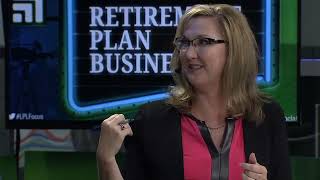
In this LPL Live episode, hosts Samantha Davison and Gary Karai interview Brian Hodgins, Senior Vice President of Retirement Partners, and advisor Kari Middleton of Middleton Wealth Management. The conversation explores why financial advisors should add retirement plan services to their practice, highlighting the large market of over 560,000 small‑business 401(k) plans (96% under $10 million) as a revenue‑diversifying opportunity and a gateway to C‑suite relationships. Brian explains LPL’s support tools—including the RPCP (Retirement Plan Consulting Program), the Small Market Solutions (SMS) platform, fee‑based and brokerage compensation options, and ERISA fiduciary services—showing how advisors can leverage these resources without becoming plan specialists. Kari shares her personal journey from commercial lending to retirement advising, driven by a desire to help small‑business owners and her own family’s experience. She describes her B2B approach, emphasizing cash‑flow analysis, risk management for key personnel, and employee‑benefit strategies, as well as practical tactics for new advisors: joining professional organizations, attending RPCP events, and mastering regulatory knowledge. The panel also discusses how retirement‑plan work can feed wealth‑management relationships through group education sessions and private “closed‑door” meetings that reveal participants’ life events, enabling tailored financial planning. Throughout, the tone is conversational and supportive, with enthusiasm for the growth potential of retirement‑plan consulting within the LPL ecosystem.
Chapters
Welcome back to LPL Live. I'm Samantha Davison, and I'm joined again by Gary Karai. And we've talked a lot about the different ways to grow your business and the teams that are here to support you, and now we want to shed some light on another way to support you. We're talking about retirement plans.
Absolutely. So, and joining us now to provide insight into retirement plan business and what LPL is doing to support advisors is Brian Hodgins, Senior Vice President, Retirement Retirement Partners, and Kari Middleton with Middleton Wealth Management. Thank you both for being here. Brian, why don't you start and tell a little bit about your role?
Sure, thanks, Gary. So I'm in Retirement Partners. I manage the sales and consultant team. This is a group of retirement plan specialists that go out and support our retirement plan advisors and helping them grow their business and retain some of the plans they've already got on the books.
And Kari, tell us a little bit about your business.
So I joined LPL almost 10 years ago. 10 years is coming up pretty quick, but I was with a major wirehouse for nearly 8 years. My background is actually commercial lending with a bank based out of Beverly Hills, and I just happen to love the B2B discussion. I love working with business owners. It's really my passion.
And that's pretty much how you got into the retirement—
That's how I got into the retirement business. But also, my parents own a small business in the Palm Springs area, and although they did really good on their Southern California real estate holdings, Nobody educated them about funding an IRA every year or setting up a 401(k) for their employees. And now that my parents are a little bit older, you know, it's a little bit more of a struggle. And I really would like to make sure all Americans know about what their options are.
That's great.
So let's start with a little fun fact. I'll start with you, Brian. Right. Get to know you guys a little bit more. So you recently or not— I guess maybe not so recently adopted your daughter from Russia.
I did. Yeah. So I have 4 kids. First 3 biological, but my wife and I decided a few years back that we would adopt and we adopted from Russia and it's been a wonderful experience. So my daughter is a guaranteed way for us. We had 3 boys, so we were guaranteed to get a girl. So we got a daughter from Russia.
That's a wonderful blessing. All right. So I understand there is a common denominator in your family. Tell us about that.
Oh, goodness. That's right. It's kind of funny. It's just ironic, but all of the men in our family is named Robert. My husband, my brother, my father-in-law, and my dad are all Roberts. The ironic part is my brother and my husband go by Bobby, and my dad and my father-in-law go by Bob. So my 3 little girls think all men are called Robert or Bobby. So then how do you differentiate?
Do you say, do you have to be specific or somehow magically you know?
No, we don't. It just magically happens. It's just that innate family and you just kind of know who's talking You're talking about who, and every once in a while you might throw the "my Bobby" into the equation, but otherwise you pretty much know who you're talking about.
Oh, that's very funny. Okay, so now let's shift gears and really talk about retirement plans. So, Brian, why should advisors think about adding retirement plan business to their book of business?
To their practice, yeah. It's a great question. You know, first let's start with the opportunity. There's over 500,000 retirement plan, 401(k) plans out there in the country, about 560,000 actually, and 96% of them of them have assets below $10 million. So what that says is it's a lot of small businesses that have set up a plan and they need help and they need advisors that, like Kari Middleton, one of our great retirement plan advisors here, to come in and help them. And so for me, it's— and our team— it's a way for an advisor to diversify their revenue stream and their book. And it also allows them not only to get— win the plan business, but to be able to get close to the C-suite employees and the plan participants, which we may talk a little bit more about in a minute. So it's a great diversifier of revenue for them and more opportunities to grow their business.
And you certainly bring up a good point because, Kari Middleton, part of your business is retirement plan, but it's not the whole thing. You also do some wealth management business. Tell us about that connection and how that happened.
Well, I'll be honest, I prefer not to call it small business. I like to call it closely held business. Because the reality is if you're talking to the business owner or you're talking to the executives, it naturally lends itself to talking about college planning for their kids, concern about income replacement, which means we're doing risk management, or other topics that are close to their heart that relate to their family. It's all about the wellness of the family and going after the perspective of their financial well-being.
So, you know, it's funny, when I talk to advisors here, many, even though retirement plan Partners has been with LPL for a very long time. Still ask, what do you do? How do I start? Can you tell a little bit about how LPL helps advisors with retirement planning?
And, you know, we should say Lee Bethel was on our show on Sunday night and he said there is so much more support now. He is just— I mean, really, it just took off and it really— he feels the support. But I'm sorry I interrupted, but I wanted to tell you.
Well, no, it's a good point. Lee, Lee, and we work closely with Lee. We work with Kari Middleton here. So A few things that we can share. The first of all, from our platform perspective, so we give, like everything at LPL, we have choice. We give our advisors the opportunity if they want to work with a plan and do it from a fee-based perspective, we have our RPCP program and our SMS small market solutions platform. So that's from the fee-based perspective. If they'd rather be on the brokerage side, and we have a levelized compensation structure there for those types of plans, it's more more of the commission and trail revenue. We allow them to do either way. From the Small Market Solutions platform, that's a really great way for us to be able to help this advisor that, you know, maybe they're doing a lot of wealth management, they have one or two plans, they're not a specialist necessarily like Kari is here, but— and Kari could use the Small Market Solutions platform too, but that's one where we actually do a lot of the work for the advisor. So we act as the 338, what they call an ERISA 338 fiduciary. We're making the investment selections for the plan. It's really the advisor gets to build a relationship with the, with the owner or the plan owner, plan sponsor, and the C-suite employees of the company. And then the other thing I would say is just the support. You alluded to it, Samantha. It's just the consulting support, the marketing support. We're there for the advisors. If they need us, we can help them. And, you know, some of the specialists out there use just certain parts of our resources.
So what would you say to that, Kari? How do you feel LPL supports your business?
Goodness, I was so lucky the first week that I joined LPL, another advisor introduced me to RPCP and he said, you must, and he walked me over at Focus in Chicago many years ago and walked me over there and said, you must meet RPCP. And ever since then, it has really been my tie to LPL and it's really been supportive. If I'm in a sticky situation and I don't know the answer, because let's face it, I don't know everything, right? I mean, we're in a changing regulation environment, rules with Department of Labor, rules with IRS are changing. I can pick up the phone and call my team, and I do refer to them as my team. They might not be sitting in my office, but they're close by, by telephone. And so that's the, that's the way I utilize RPCP, because they'll help me find that solution or help me find the answer if I don't know it.
So you feel like it's a real partnership?
Absolutely.
So there are a number of advisors watching watching in other places, trying, probably thinking, how do I get in? How do I get started? You've been doing it for a while. You're doing it fabulously. What tips can you give them to get into this?
You know, it's about honing your craft. It's about knowing the details. I already kind of touched on there's, there's a lot of regulations and things you kind of need to learn. Reading a lot, belonging to professional organizations, attending the RPCP events. You know, those are kind of the important parts of being a retirement advisor. And like I said, it's really a little bit more about the business-to-business discussion. We talk about cash flow, we talk about risk management for key personnel, we talk about the benefit package of retention of employees and attraction of employees. So, so those are some of the things that I focus on.
You know, and I'll add that, you know, Kari does a good job. She's got this great book of business. It's a nice balance between wealth and retirement plans and, and really her retirement The retirement plan business has fed the wealth side. And so if that advisor's out there saying, gosh, I want to get more onto that, I would certainly turn to our team and we can help them and kind of work them through the prospecting and learning the business. She, Kari, alluded to sometime earlier about how she gets close to the participants. Maybe you can elaborate more on the C-suite and how you've grown your wealth management through that.
Well, truly, I do a group meeting when we're, when we're educating them about the 401(k). I do a group meeting. We talk about inflation, we talk about longevity. I often ask, how long did your mom live? How long did grandma live? And it's not unusual for me to find out that they have people in their family that live to be in their 90s. So I'm like, that's it. You better plan to live to be in your 90s. We've got to save enough to do that. But really, where I get my mileage is in those closed-door meetings. Closed door because it's private, and you will hear from these people sometimes things they haven't shared with their employer, that they're getting married or maybe they filed for divorce or they're expecting a baby. And that way I'm able to get to know them, those participants, and really tailor the specifically for them.
Well, this has been a fantastic session. Thank you so much. Thank you, Kari. Thank you, Brian. We really appreciate your time.