Tips/Tricks for learning OLL/PLL [New!]
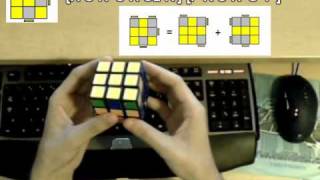
Andrej Karpathy breaks down how to memorize the 57 OLL and 21 PLL algorithms for speedcubing. Learn PLLs first since there are fewer of them, then add one or two algorithms per day with endless repetition. Decompose new moves into familiar chunks, spot patterns, and use color-coded sheets and visual mnemonics to replace pure memorization.
Chapters
Hello everyone. This is a remake of one of my videos that I published more than 2 years ago because it's starting to become a bit outdated. So in this video, I will go over the basic tips and tricks for learning the OLLs and the PLLs. This is something that I get a ton of messages about, and I know that many of you are struggling with it. Now, you are an ideal viewer if you know the F2L, if you know at least some of the Tuluk OLL and the PLL, and if you are basically currently working on memorizing all of the OLLs and all of the PLLs. Just before I start, I have two very quick announcements. Number one, my subscriber count on YouTube is over 9,000! What, 9,000? There's no way that could be right! Not all of you will get that joke. Anyway, thanks. And number two, I've created myself a Bad Mephisto Facebook page. You can find it on Facebook if you just search Bad Mephisto. So become a fan if you like. I already have, let's see, 233 fans. Anyway. I like it a lot, I'm not sure why. I think it's because I get to interact with all of you a bit, and it also lets me see some of your pretty faces right here, which is actually kind of fun. Anyway, getting back to the OLLs and PLLs. At first, the sheer number of OLLs and PLLs you will have to learn may make the task look a bit daunting. There's a total of 57 OLLs and 21 PLLs. But I'm here to tell you that yes, it will speed you up a lot, and no, it's not too bad. If you do it right. Good, now let's get to it. First, I will try to give you some general guidelines for how you should learn these algorithms, and then I will go into some more specific details later. So first of all, I always recommend that you learn the PLLs first. The reason you want to do this is that both the OLL and the PLL will speed you up about the same amount, so it makes sense that you want to learn the PLLs first because there's only 21 of them. In addition, you will most likely already know at least 7 just from beginner's method and the Tulip PLL. So you're basically 30% done even before you start. You want to learn these at about a rate of 1 or 2 algorithms per day. If you try to do more, you will fail and forget them. Second, the best way to learn is to simply repeat the algorithm endlessly. Your brain will pick it up if you just keep repeating it, no matter how hard or long it is. I will demonstrate for you. I've picked a random PLL algorithm that I don't know, say this Emperor, and now I'm going to learn it. I sped this part up for two reasons. First, there is nothing exciting to see here. I'm basically looking at the algorithm and I'm applying it to the cube again, again, and again. And second, this part just naturally takes a long time. I think the biggest reason that people have trouble with these algorithms is that they expect too much too quickly. You must understand that learning these algorithms is not very easy, especially if you are just starting out, so you must be prepared to pay the price in sweat, so to speak. I always tell people that all of these tips and tricks videos that I put up, that gets you at most 10% of the way. 90% of it is you sitting down, investing the time, and doing deliberate practice. It takes a long time, expect it. No, you're not doing it wrong, and no, you're not dumb, presumably. It just really takes that long. But every one of us went through it at one point or another, and it is certainly doable, and it helps with your times. I see it almost as a rite of passage that every cuber just has to go through. So patience. So now I can do it without looking, and you'll just have to trust me that I'm doing this without looking. There it is. So how did I do it? What did I do? Well, the first 4 minutes I was actually thinking to myself that I picked a bad example and that I'll never be able to learn this. But then after that I started to find patterns in the algorithm. For example, I noticed that I can decompose the algorithm into the following: the first part is from when you do this F2L algorithm, which I already know, where you have the white sticker pointing to the top and you need to insert the corner here, and the edge is placed. One of the ways to solve this case is to put the corner there and just repeat that 4-letter sequence 3 times. So I knew that 4-letter sequence from that algorithm already. The third part there, R U' R U, well, this is the beginning of this U perm where you need to cycle this way: R U' R U. So I already knew that 4-letter sequence as well. Now the last 3 letters, when you get to that point where you need to apply the last 3 letters, the cube looks like this. So you can already even see how you can align this cube to solve it. You don't even need to remember the last 3 letters. You just align here, align the whites, and align here. So you don't even have to remember those. PLLs are really nice that way because you can just look at the cube and you can just see how you need to align it to finish it, so you almost never have to remember the last few letters. You can just see what you need to align. And after a few solves, all of this will translate directly into muscle memory and you will just be able to do the whole thing. So the basic guidelines are the following: First, just repeat the algorithm for some amount of time like a robot. Again and again and again. Then start trying to identify patterns in the algorithm. More on this very soon. Later, try to start doing part of the algorithm without looking. Always try to do bigger and bigger portion by yourself until you can do the whole thing without looking. And finally, and this is extremely important, you will want to do the entire algorithm a couple of times several hours later in the day, most preferably right before you go to sleep. This will really solidify the memory in your head and It works wonders for me at least. To make life much easier for you than what it was for me when I was learning this, I've created nice colorful pages for all the PLLs and all the OLLs in the exact order that I recommend you learn them. The order is pretty simple: you want to always learn the simplest algorithms first. This is because most of the algorithms have the exact same chance of occurring in a solve, so might as well start with the easy ones and leave the harder ones for later. Another reason is that it gets easier to remember new algorithms the more and more you know, so even the harder ones won't seem as hard later on. Now I have some tips for the kinds of patterns you can be looking for in the algorithms. Most often you will want to try to group things in the algorithm notation. Some moves, such as for example the R U R' U', occur many times in different algorithms. So for example here, here, here, here, here, all over the place. Now you should try to recognize these frequently occurring groups and use them instead of trying to memorize single letters at a time. On the algorithms that you can find on my website, I have already tried to do a lot of the hard work for you by putting frequently occurring parts in brackets. Another pattern you can be looking for is overlaps with other algorithms that you already know. For example, I was able to successfully use this strategy just seconds ago when I was memorizing the M permutation because I noticed that a part of the algorithm was just simply the beginning of the U perm. You can find many other examples of this, and I always try to comment on them in the last column But this case here is a particularly good example, because here, for example, you can notice that this entire part, well, that's just the solution to this. It's just this first OLL, and it's fitted nicely inside here between R' and UR. So together, this whole thing is just simply the solution to this case. So often you can find whole parts of algorithms in other algorithms. Another way you can try to remember some algorithms is visually, because sometimes an algorithm may be doing something meaningful on the cube, such as moving some pieces or pairs around. A good example of this is the following OLL. You can try to remember it normally, it's not too hard, but just look at what it's doing, what it's actually doing. You have M' U M, in other words, you're taking out this edge piece to the left, then you're doing U2, and then you're inserting it right back but from the right. M' U M, and that's the solution to the OLL. So you can try to remember it that way as well. And finally, note that many times these algorithms reduce to each other, so even though they may seem long, there is very little to actually remember. There are many cases of this, but for example, this is one of them. This long-looking scary algorithm is just simply two algorithms stuck together. You first just do the sune, so this is an algorithm that you already know, and now you just have the TOLL, so you just solve it normally. There you go. So all you actually need to remember is what way to hold it and what algorithm to apply. Anyway, I think those are some of the more useful general tips for what to look for when learning these algorithms, but other than that, I just refer you to the comments that I've written for every one of my algorithms on my webpage. You will find that many algorithms are actually deceptively easy to learn because they are often just a very small variation of something that you already know, but of course there are a few exceptions. And again, if you ever find an easier to learn algorithm than something you see on my website, feel free to recommend it to me. For example, my Facebook page would be a great place to do that. And last but not least, consider getting the iPhone app that I wrote, which lists all of my algorithms for OLL, PLL, the Tulux, and the Beginner's Method. This can come in handy if you don't feel like dragging huge number of printable sheets with you all the time, and you want to always have the algorithms on you in case you start to forget. You can find it in the iTunes Store under the name Bad Mephisto. And that's it for now. I hope I convinced you in the video that learning the OLLs and the PLLs is actually much easier than what it looks like when you just look at the dense algorithms page for the first time, and I hope you give it a try. I'll try to push out the next video in less amount of time than usual. It will be on F2L. Meanwhile, thank you for watching, and bye-bye. And then I will give you some more specific advice details. Specific advice details. Haha. What does that even mean?
More from Andrej

Skill Issue: Andrej Karpathy on Code Agents, AutoResearch, and the Loopy Era of AI










Andrej Karpathy: Tesla AI, Self-Driving, Optimus, Aliens, and AGI | Lex Fridman Podcast #333