A Conversation about Entrepreneurship and Investing with Keith Rabois of Founders Fund
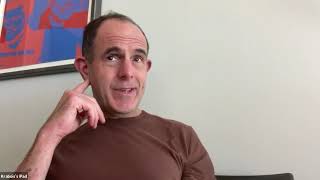
In a moderated Zoom session with the MIT VCPE Club, Keith Rabois recounts his unconventional journey from a law career to becoming a key figure in Silicon Valley startups and venture capital. He describes his early exposure to the internet bubble, joining PayPal during its chaotic early days, and subsequent roles at LinkedIn, Slide, Square, and his own venture OpenDoor. Rabois explains how operating experience informs his advisory role as an investor, while emphasizing that it does not necessarily make one a better selector of deals. He offers career advice for aspiring VCs, contrasting early‑career associate roles with later‑stage operating paths, and stresses the importance of sampling venture work before committing long‑term. The conversation delves into fund dynamics, contrasting the collaborative model at Coasla Ventures with the more independent approach at Founders Fund, and discusses decision‑making processes, partner alignment, and hiring challenges. Rabois outlines Founders Fund’s investment theses: a willingness to back defense‑related companies, long‑horizon technologies, and geographic diversification (Europe, Latin America, but a principled avoidance of China). He shares data on founder age (median ~26) and his preference for backing very young founders, while noting a bimodal success pattern. Hiring philosophy is described as skill‑gap driven, with little formal tracking of diversity beyond seeking varied perspectives and backgrounds. Rabois also reflects on the emerging Miami tech ecosystem, comparing it to a “Noah’s Ark” of talent clusters and emphasizing a decade‑long horizon for ecosystem building. Finally, he admits to an anti‑portfolio of missed meetings, highlighting the difficulty of filtering early‑stage opportunities, and provides practical advice for founders seeking contact with Founders Fund.
Chapters
We are the MIT VCPE Club, one of the largest student organizations at MIT. We've been hosting some really great speakers the last couple semesters, all virtual, and really excited to have you to talk about your background, how you got into VC, and also what got you into entrepreneurship, as well as what you're working on now. So, I would love to just start out by talking about the very beginning and how you got into Technology, I know you spent some time here in Cambridge pursuing a law degree, so we'd love to hear the start.
Sure, yeah. I mean, I sort of navigated my way to technology somewhat serendipitously and accidentally. I really pursued a legal path since I was about sixth grade at least, and went to undergrad, studied political science and sort of joined all these clubs and all these GPA optimizations to maximize the chances to get accepted to various law schools, went to both Stanford and Harvard Law, some misty out somehow, probably probably should've got all three. And then clerked for a well-known federal court judge in this circuit, which is Texas, Louisiana, and Mississippi. And then practiced law in New York and DC for about three and a half years post-clerkship. As the internet bubble was exploding, this is like the late 1990s, several of my friends from college at Stanford had started cool, interesting technology companies in the mid 90s to late 90s and kept trying to persuade me to drop out of law and sort of join them. So, I removed back to Silicon Valley, joined their companies or just generally joined start a company, whatever. Silicon Valley. And I kept being somewhat curious and intrigued enough and sufficiently enough to visit once or twice a year, see some friends, check out the scene sort of in all sorts of scope, but never really pulled the trigger until February of 2000. So literally the height of the internet bubble as a quick history lesson or a reminder. The market collapsed, the internet bubble really started in March 28th of 2000 and I joined a friend of mine from Stanford startup in February of 2000. So the advice about maybe jumping into technology and startups might have been pretty wise and good. You know, doing this for 20 something years since, but the timing was awful, you know, pretty atrocious actually. So six weeks, seven weeks, let's say after I jumped from the practice of a large white shoe prestigious law firm. very traditional, think like 1880s, practice a law, into the startup world, the entire world of technology shifted pretty much overnight. And there's a bit of suspended disbelief for maybe, call it two plus months, maybe three. But then June, the NASDAQ collapsed again. And then at that time, everybody really realized that, you know, sort of that bubble, this was a bubble, and it was over. And then we had to go back to real work. and it was a little scary, terrifying, but one way or the other made it work out fine, I guess. A few months later, I moved to Silicon Valley to join this bunch of misfits that I also went to college with. They were running this company that was kind of a mess called PayPal. It was a mess in many ways, not the least of which was losing, leading a fair amount of money. earning like $10 million a month, which at that time was a lot of money, especially when there was no financing markets because capital markets were basically completely frozen given the macro environment. And the Nasdaq went from 5,000 to 1,500 pretty much overnight. And had three CEOs in a period of four months, so not exactly the most stable place in the planet. where we're the most stable people. And so I joined this kind of messy startup in November 2000. My friend Peter Thiel from college had recently taken over six weeks earlier as interim CEO after Elon Musk had even fired his CEO. And we were able to fortunately turn around the company pretty quickly within months. stop leading money and stop having all these funders take all the money and eventually make it profitable. Followed in public the day before 9/11 in 2001. Still managed to go public in February of 2002, which is one of the only three companies that went public in 2002. JetBlue being one of the others, Netflix, I think, being the third. And so the rest is history. So that's what kind of sent me down this kind of crazy path of technology startups. Investing.
Awesome. Great to hear and nice to hear. Well, I'm just curious, you know, how was your time in Cambridge? And I know you haven't moved back here since, but you've lived a bunch of different places throughout the country over the years.
Well, I did sort of move back, subsuite, but Cambridge was pretty cold. It snowed a lot. It was easy to study, I put it that way. It was much easier to study at Harvard than at Stanford. I had a lot less distractions when it was like 32 degrees and snowy versus sunny 80 degrees on the Oval at Stanford. But in any event, I did actually the first startup I joined in February 2000 was jointly headquartered in both Boston and DC. And so I had a place, I owned a place in Washington DC, but I also had a place in Boston, I basically fly back and forth like every week. So I wound up living in Boston most of calendar year 2000 actually.
Awesome. Well great to hear and okay, PayPal is already 20-20 years ago since you joined. Do you stay connected to a lot of those folks of the mafia?
Yeah, I do. I think it's a smaller group than maybe people might from afar recognize, but yeah, there's a thought of five or ten people that I still constantly work with, chat with, text with pretty much every week. Still on the board of Max Lobchin's new company, Affirm, which we published earlier this year. Been on the board of the company for seven, eight years now. Obviously, I've worked with Peter every day. He also has a house a few blocks away in Miami. I stayed on the board of Yelp almost beginning until 2014, so about nine years on the Yelp board. Actually looking at the little deal toy sitting in my office right now from Yelp. So I still work with all those characters fairly frequently. David Sachs just Barna has a man who's really nice and he's kind of down the street. So I'll see him more frequently. So yeah, definitely stay in touch with a reasonable number, but it's more like 5 to 20 than 200 people.
Got it. We have a lot of students here that have operating experience, some working at startups, some are working at big companies. How do you think your experiences working in operations has helped you get into investing later on?
I don't know if it makes you a better investor, qua investor. It makes you a better advisor, mentor, consigliere after you invest by a fair amount. And part of what you're offering is capital. But part of why founders select you versus other sources of capital is because of your ability to be useful to them. And I think it's extremely difficult, if not, maybe not impossible, to assume it both. to be useful to high caliber founders without experience of building stuff yourself. I think the kinds of questions that you get asked are just almost impossible to answer without having suffered through the mistakes yourself and the challenges yourself and seeing why the grass is not as green over there, you know, these various options, as people think they are intuitively. So maybe that yields to either greater, higher, for probability of winning a better investment or greater portfolio performance because the companies actually make smarter decisions, because they're able to bounce ideas off you and occasionally generate an insight or avoid an unnecessary mistake and that leads to better success. But I'm not sure it makes you a better investor in terms of deciding what to invest in, maybe even worse.
Well, you've got a few other more entrepreneurial experiences before investing after PayPal, correct?
Sure. I mean, yeah. So after PayPal, well, I did a lot of things after PayPal, but most notably joined, well, I was an angel investor in LinkedIn, but joined the company full-time about 18 months later, about 18 months, 16 months after launch and January 1st, 2005. And then I did an early sort of failed startup. I joined Max Levchin for a company called Slide, which we wound up selling, unfortunately, to Google after three and a half years. And then helped get Square off the ground from really like an unlaunched product, a bunch of 17 people running around without a lot of guidance into a pretty good product, pretty good company. So in a rather rapid time clip of probably two and a half years from launch to pretty significant payment volume, revenues, etc. So did all those and then finally got around to co-founding Open Door, which is really a side project I've been working on since 2003, literally the month or two months after I left PayPal. I came up with this idea for what we used to call home run, which would allow any homeowner in the United States to use some they sell their home, achieve liquidity, comfort, certainty. Immediately just by filling out a quick online quiz really about their house. And we built a prototype of that back in the day in 2003. Actually, Max actually encoded the first site for me or lots of reasonable portions of it. Chad Hurley did the first design for me. And we never really launched it, unfortunately. But I kept trying to get it launched for like a decade and then in 2013. Finally got around to packaging the right set of people, talent, skills into a company and we launched it later that year really January 2014. It was live in Phoenix. So co-founded that. So kept pretty busy. Helped a few founders build companies that became real companies either with money during the boards, etc. Over those kind of 13 years before becoming a VC permanently in February of 2015. March 2013.
First with Coasla and then now with Founders Fund.
Correct. So I joined Coasla Ventures in March of 2013, stayed for six years and now about to hit my second year at Founders Fund.
Awesome. Well, I want to leave lots of time for questions. I know there's a lot. So how we'll do this is people can raise their hands in Zoom and we'll call folks. All right, we'll start with Merrick. Hi Keith.
Some of us are thinking about careers in VC and I'm wondering how you view someone coming in at, let's say, an associate through principal role coming out of an MBA versus getting more operating experience at a startup or just operating experience in the industry for a few more years or many more years before looking at VC, maybe someday down the road at a partner level, and how those two trajectories are different.
Yeah, I think the only reason to be at VC early in your career for the most part is to sample it, meaning to try to figure out whether it's something you really want to do for the rest of your life or not. It's a very difficult job to explain from afar what a venture capitalist actually does, how the industry really works, what's important, what's not. You can't really read books on the topic, although you can try, but there's not a lot of really insightful content. And the virtue of spending a year or two, maybe three years, earlier in your career is it may help convince you that this is not what you want to do in your life, or if it is something that's really compelling to you, it'll help you figure out what the key missing pieces sort of in your background skill set, DNA are, and you can kind of devise a curriculum sort of to improve those. I would not generally recommend jumping into venture early though with the goal of I'm going to jump into venture and become really good at it, proficient, get promoted, et cetera, and do this for 20 years. I think that's extremely rare. fairly, mostly naive. My ex-chief of staff, now principal founder, Spundellian, wrote a pretty good blog post on this, like lessons from Keith. Lesson one is how to get a job in venture and why, sort of. I'd recommend reading that. I think he hits many points pretty accurately. Venture is a pretty competitive space, pretty competitive industry, and you need to have, like any other business, comparative advantage. I think it's extremely difficult to formulate the why me, why us answer for people who started venture earlier in their career. There are some platforms and brands where if they were available as options, they allow you to kind of use more of the why us answer to the why me question of why great founders should work with you. It can be why work with us. So there is there are some options there. Those said this, this, this jobs are obviously highly coveted and very rare, you know, rarely available. And the latter to be promoted is pretty compressed. But it does alleviate the stress on having a compelling why me answer right away early in your career, which is pretty critical. Thank you.
Who, who was the author of the blog post you mentioned?
Delian, we can send you, we'll post it in the chat. you can get a feel for his feedback, his pretty much wisdom.
Yeah, also MIT guy.
That is true. He was smart enough to drop out though.
Yeah, well, all of us are typically in two-year programs, so maybe about the same time spent.
Yeah, that's pretty much right. Yeah.
Okay, let's jump to the next question with Jessica.
Hi, thank you for being here. Jessica León. degree MIT HKS. My question is more about how you work with your partners and the dynamics of choosing the right partner for the funds. What are some of, I guess, hiccups that come with it? But I feel that a lot of venture capitalists don't talk about the difficulties of having Working with other people because they build their fund themselves?
Yeah, that's a great question. I don't know what the right answer is. I've had the benefit of being in two different funds that pretty much operate quite differently on this dimension and maybe others as well. So at Coastal Ventures, we'd work together quite closely. We would spend pretty much every Monday, lots of conference rooms, obviously pre-COVID. and jointly analyzing companies, debating companies, reviewing the portfolio, reviewing the company's progress in the portfolio, working on updating financing, finding needs of the companies, hiring needs of the companies, etc. So it's a pretty collaborative approach. At Founders Fund, we're pretty much more independent atoms, atomic units, and each partner is really responsible for quarterbacking his or her own and shepherding the diligence process and the approvals required at different levels of investment. So we don't share a lot of information about our company's performances. We really only review our companies insofar as we are considering a Prorata investment in subsequent financing. So my level of knowledge about probably 110 or so companies in our portfolio, maybe a little more, My level of knowledge of the companies that I'm not personally accountable for, responsible for is very low, whereas at KV is quite high. I could have probably told you mostly about how any company in the portfolio was doing, how effective the team was, CEO, when they were going to run on money, how their financing processes looked, what kind of risk he hires. So it's pretty easy. Here, I rarely know much, if anything, about the other companies where investors are in. So we just work very differently. Much more like playing college tennis on a Davis Cup team, if you like that, or baseball, where you really do develop your own track record as part of your team. And there's some benefits to being part of a team, but you are really responsible for your own performance for the most part. I think that there's pros and cons to each. There's no obviously right answer. There are funds that have produced very significant returns and consistently that certainly have a blend of different of those purchases. I think it is something to be conscious of for your question that when people are starting funds, I don't know they give enough attention to this dynamic of who are the right partners, what is the right process for making decisions, et cetera. When we hire to kind of finish the question, I think we have, we did something that we don't do extremely well, partially because we have somewhat different views about what we should be hiring for. I think at KB we had a much more consistent perspective on what we're looking for and we might debate the specific application of a particular candidate to the criteria, but there wasn't much debate about the criteria. I think there's a fair amount of consensus around the criteria. At Founders Fund, we have a lot of cultural antibodies to certain things, and navigating skills and culture and antibodies is a pretty tricky challenge, truthfully. Thank you.
Awesome. Wow, we have a few more questions. So let's just jump in. Okay, Patrick.
Yeah, so one of the things that strikes me very unique and interesting about Founders Fund is the fact that you've invested in kind of the three biggest defense startup type companies. If you include SpaceX in that, even though that's not their mission per se. So I'm wondering if you have any kind of lessons learned for the hundreds of other VCs that have just not been successful in that area. for working with the government or defense in particular?
Well, I think it's partially because we are proud of our work with the Defense Department. We think our role is supporting American security proudly and on a bashful theme. I think many in Silicon Valley at least have intellectual blind spots or allergies to being pro-American. So I think we intentionally like to fund companies we've actually co-founded, we have companies, two of the three were co-founded by our partners in that space because we think other people, you know, are intellectually blind and that's one great way to make money generally is find other people you compete with blind spots and invest there. So the more we can find blind spots of other people, the happier we probably are and the better our returns are. But pro-defense, so I think about Silicon Valley hasn't been generally pro-defense for the last, let's call it decade, which is somewhat ironic because the whole roots of Silicon Valley from the 1940s and 50s are all defense funding, all defense contracts. So for us, it's very obvious that this is a good way to make money as a VC, but I think most people were afraid of it. And so, anyway, we can find other sectors where other people are afraid of investing or founding. We would love to to be their first investor co-founder.
Great. And I know there's a new incubation at Founders Fund now in the space.
That's true. We have another one. This one's, I think, very defense heavy. The first market's manufacturing space. So Dell in from MIT that I mentioned earlier, in addition to writing great blog posts, that you can read is found it has founded a company that's going to manufacture in space, starting initially with fiber optics and maybe other verticals that I don't think of as really a defense-heavy company.
Great. Aziza.
Hi, Keith. I'm curious for what extent you sort of have backed student founders or recent graduates, whether it's from undergrad or business schools, and sort of what the flavor and context of those deals look like.
We fund, and I fund recent graduates or dropouts all of the time. In some ways, arguably my favorite thing to do is to fund very young founders. Typically, probably across the entire portfolio, median age of founders I fund is probably about 26-ish. especially seeing series A, probably even slightly younger. But yeah, that's by far my preferred course. Old by my scale is probably two to four years of experience, like postgraduate. So that called 26 to 30 range. We're all over the map. I don't think we had it. I'm sure in fact we've never analyzed it across founders fund. so I don't think we actually know. KB might have tried to analyze at some point, but I'm not even really sure if we have. I think what you'd probably see if you look at outcomes is a really interesting bimodal distribution here, which is you have very successful repeat founders with experience sort of that have done phenomenally well. And by definition, they're older because they've done more things before. And then you have a lot of very, very breakthrough successful breakthrough companies that are very young. I think the middle of the curve actually you see less. So there's different hypotheses when performing about why that might be the case. But I think if you did attribute, you know, kind of run of regression against age against success, you'd see outliers on both sides actually. I tend not to fund MBAs per se, but had some success by accident with Jordash, who sort of had a bunch of MBAs paired with some Stanford CS graduates, but definitely not my favorite.
Everyone's gonna drop out after this.
Oh, you should definitely drop out. There's no reason to have an MBA. That's like a waste of time, especially in COVID world. probably even worse before. Jeremy from Yale Supplement was smart enough to drop out of HBS after his first year when he realized every single thing he learned about technology and one of the courses he knew more about than the professor.
Yeah, I know some of the, or at least one of the Craft Ventures guys, David Sachs, I think also dropped out of school.
David has a law degree like me, but he dropped out of McKinsey, which is also a good move. after nine months.
Yeah, so I guess don't be shy to drop out people, but we're so close to the end. Let's keep going with questions, Karan.
Hi Keith, my question is about international investing. We're seeing a lot of large companies that created far beyond Silicon Valley, not just Miami or Austin, but Columbia, China, India, Europe. A lot of your competitors have set up very successful practices there, but Founders Fund has not been very active. Would love to get your thoughts on how you guys think about that.
Yeah, I mean, we would definitely never invest in China, never meeting that radical change in the regime that loans China. We're ideologically opposed to everything they stand for. And so even if we could make money, we wouldn't invest there. But everywhere else we do actually actively invest. Probably the best investment I made at Founders Fund is in Berlin. We just recently invested a lot of money in Mexico. The company in Mexico is doing phenomenally well, but I mean a lot of money. I mean, call it like $150 million. So we'd like to find investments wherever we can. One of the virtues of actually being in Miami is it's a lot easier to invest in Europe or Latin America versus being on the West Coast. The West Coast is okay. You're going to invest in Asia, but other than Australia, there's not a lot of places that really want to be Investing. We do invest, we've invested in Wood Invest easily in Tel Aviv. But yeah, Europe, we spend a lot more time. We have a principal who primarily focuses on Europe, you know, and we have a reasonable set of investments there, but one or two very good ones.
Cool. Okay, Jake.
So my question is about kind of like a general industry trend. I noticed that a lot of VCs try to invest in things like digital services that have a five to 10 year timeline, but I noticed that in your portfolio there's a lot of longer term investments. So I'm curious about your perspective on investing in technologies that would take a lot longer to produce. and a lot longer to have a liquidity event where you could have returns.
I wouldn't say that, well, maybe disambiguate those things. I don't think they're quite the same. I think you can tell whether a company's working or not very quickly, one to two, three years, regardless of the vertical, let's say. You may use different data points, let's say. using data and quotes to assess whether the company is working. So the proof points are different. If the company is in market or not in market, if it's commercializing something or it's still producing a product, innovating in some scientific dimensions. But we typically know which companies are going to be pretty good and which ones might be good and which ones are not. Pretty quickly, we do like a quarterly portfolio review sort of strategy offsite. We're doing one tomorrow. and we'll have a pretty strong perspective on most of the companies in the portfolio, less than a year after we make the initial investment. So I think it's pretty obvious once you're an insider, which is tracking and what's not. Then what's not as clear is when you get liquidity, that chain, there's things that are founder driven, just founder preferences about being private versus public. There's market preferences about the availability of capital, the price of capital, privately versus publicly. Effect that there's plenty of outside that, for example, right now for funding publicly companies that are still in R&D phase. You've seen that play out almost every day these days. Battery companies, electric vehicle companies, space companies, all are going public with no commercial traction whatsoever. So that's very possible. typically true historically with biotech companies as well. So I don't think you have to be in market to have liquidity. There's other drivers to the time horizon. Yes, we do hold companies, hold the equities in companies for a very long time sometimes. Like for example, SpaceX, we're still holding SpaceX shares out of Founders Fund II, which was probably roughly 2006 or seven, maybe eight investment. It's a pretty long time. We're buying, we bought some shares into a firm's IPO. So we basically bought more than we had previously. So yeah, we're not religious about when we're entering and how long we'll hold, tend to have a view that if we've made the right decision, back the right people, doing the right things, that over time, value continues to compound. And so we're not either in a rush to sell either. Obviously, you do look at things like the public markets. And Peter is very capable of kind of making some pretty controversial macro calls about when markets are going to change and transform. and not even to his PayPal days. One of the reasons why PayPal survived was he ran a very aggressive financing process in March of 2000 that closed $100 million financing right in the press of the market collapse that described yesterday by introduction. We made them, we beat the market class by less than three days. And had we not closed that $100 million round, I think we made it more than 24 hours later, PayPal would have been a small, small, small heap of history. So Peter kind of learned from that scar tissue of timing matters a great deal. But we are willing to fund things that will take time to be commercial successes, but we do expect validations, proof points, team building to happen fast regardless of the vertical that the companies competing in. Thank you.
Awesome. Okay, I see there's a couple more. So let's hit Theo and then Michelle.
Yeah, I was curious if you've kept over time like an anti-portfolio and if you have any lessons that you've learned from some of the misses that you wish you had back. Yeah, I mean there's one big lesson which is very different. Well, I would say it's very different. pretty similar probably for comparable VCs. But the real mistakes I've made are about regarding not taking initial meetings. So being introduced to company X, Y, or Z, and for whatever set of reasons not being that interested or not that available to take an initial meeting. I've never really made the wrong call on a company I met. that turned out to do well. We've obviously invested in things that didn't turn out to do well, but really said no to something that did well, pretty much almost ever. But I definitely have screened some things that turned, never met the founder, which is a problem because it's not easy. That's one of the harder things to fix. You literally can't take every meeting. The busier you become, the more commitments you have, the more people you have, et cetera, the harder it is to take incremental meetings. especially when you're doing early stage seed investing, which is what most of these companies are. So it's not that easy to find a solution to that. But when I tend to make a mistake, it's in the filtering process, but I don't get to have an ideal being consciously aware of that helps, sure. But still you don't have infinite time. There's no such thing as infinite time in this job. And the busier you are with current portfolio commitments, the harder it is to take in a meeting. So come It's like a natural limiter. So don't yet have an ideal solution for that. If anybody has one, please let me know.
I can jump in.
Yeah, go ahead.
So I started my career at Palantir and also worked at one of your companies, Quartzy, and in real estate tech. So big fan, been following you for a long time. And recently you've been kind of the Miami champion on Twitter and just wanted to ask you directly if you think Miami is going to be able to replicate the talent concentration of Silicon Valley or if you think it doesn't really matter as much as things can be more remote and flexible.
Well, I think there's a time horizon question there. It wasn't like Silicon Valley just have this massive talent concentration in the 1950s and that's why it exploded. there's exactly 10 people, really eight people that moved from Boston to Silicon Valley and started a company there. And that's what created Silicon Valley. So eight people can move and create a company. I was like, why the hell can't eight people move down and create a company? So it just, I don't think it's particularly important to have an immediate concentration of talent. But if you want to develop 40, 50 years of Silicon Valley, absolutely you do. to do. So the question, just like with the startup, is how do you make traction? How do you generate, how do you create invert inertia? And then how do you generate consistent, constant traction? And that's important if you're going to create a new ecosystem. To create one or two interesting companies, you don't need a lot of those things. I think we've all done at Hotglue. The most important company in the last decade is Shopify sitting in Ottawa, Canada. Probably nobody on this call has been to Ottawa, Canada, except to interview Shopify. And even if you did, you probably wouldn't want to move to Ottawa. It wouldn't be in the top 100 cities in the world that you'd rank in terms of places to live. So if you can build the most important company in the last decade, it's probably going to catch Amazon in scale. Out of left field when everybody said that was impossible, both in the Silicon Valley venture world, as well as in the political world, in the media world. You can almost do it anywhere else. That said, I don't think Ottawa is going to create this hotbed of startups. I certainly wouldn't be opening a venture shop in Ottawa. But I think this job in Miami is a little bit more like Noah's Ark. I need two designers, two angel investors, two engineers, two of these, two of those, and getting them all in one place where they can win spontaneous combustion can sort of emerge and that there's successful companies here that eventually turn into people staying here. So let's say you have a palnt here, when you're starting your next company, if you've had success here, you'll just start your next company here. And then Angels will want to invest in your next company and then VCs will want to invest. So we've been pleasantly surprised with the pace of innovation here, with the pace of moving people here, capital, entrepreneurs, companies, etc. But this is not a one month or even one year project. It's more like a decade, which is nice because for the point about the time scale horizon of a venture capital firm, each fund is about a 10 year time horizon. So we tend to think in 10 year time scales anyway. It's like part of the job. And then you rinse and repeat. So every time you finish a fund, you pretty much three years later raise new funds. So our new year 10, 10x year clock. So it's pretty compatible with venture thinking to help build a city. that can take a tech-savvy from scratch. I'm not so sure it's that compatible with entrepreneurial thinking, which tends to want to move faster, faster, faster. So I think it's easier for a VC to kind of imagine the future this way than it is for an entrepreneur. That's pretty rare. Usually entrepreneurs are much better at actually in the future than we are. Thank you.
Awesome. And I see we have one other person, Melissa.
Hey Keith, it's Melissa. I previously worked at SpaceX, so super interested in what Founders Fund is doing in the defense tech space. Question is what do you look for when you're hiring for, you know, hiring people for your team and kind of how important is diversity to Founders Fund?
So I wish I knew what we were looking for. Right now we have had a recent set of debates about what we're looking for. I think we're looking for somewhat different roles, which is part of the problem, because to some extent there's different skill sets, both by vertical seniority. And we've been debating where do we want to compliment. We have an investment team of roughly 12 people. Where do we want to compliment? What are we doing really well at? What are we not? So where do we think we're getting out and you know how do we fix that or just decide we don't want to compete, which is a very reasonable decision as well. So we've been aggressively interviewing. We want to do, for example, more biotech investing with a different lens. So we'd like to have more skills there. It's somewhat complicated assessment in unique industries or looking for hiring there. We'd like to do more up and coming Enterprise tools investing. There's been a lot of interesting, a bunch of interesting companies created in the last two to three years. They're fairly technical. They're really running on new systems that most of us, when we were running things, didn't really use. So we think we need probably a little bit more DNA there. Possibly on some consumer stuff, maybe that's more debatable. but in any event, part of it's like skill set gaps, some of its seniority gaps, like there are times when younger up-and-coming talent is better at some things and there's times when someone could be a board member consecutively. It might be a better fit for certain kinds of investments. So we do everything from $1 million checks to $200 million checks all day long. So that spectrum or that scope really does require different skills in some ways. There are people who would be much more adept at modeling companies that are already working with traction data, things that look like financial proof points. And then there's very early stuff where the idea may not even be a product, it may just be a deck, et cetera. So in any event, we're always trying to figure out how do we amplify what we do really well. and then how do we improve where we think we could probably do better viS-A-Vis these few people that we compete with. On the diversity side, we actually don't think about it that way. We don't track people's backgrounds either internally or externally when they apply. We're interested in what this person can do to be a successful investor, to be a successful partner, consigliere. to our founders. They do tend to come from very different backgrounds and views and ages. You know, we run from roughly 23 years old, 24 I guess, to 52 right now. We run from several immigrants to us to several people who were born, you know, raised here. We run every pot, not every religion, but we run a lot of religions. Yeah, I don't think we could ever have every religion or to no religion at all, actually. I'm sure we have. So we have different political views. We probably don't agree on anything, actually. It'd be interesting if we actually could find something we all agreed on. So we tend to value people who think for themselves, and that's what creates that. sort of unconventional mold is because everything's from salt. By definition, they don't all, nobody has all the same views on anything, actually. Makes it hard to get stuff done in some ways because there isn't a pre-existing alignment on many views. So everything's sort of argued and debated almost from first principles. And that's, that's tends to make hiring more difficult as well. Whereas again, as I mentioned at KB, we had a more comparable set of perspectives on what we were looking for, which made hiring easier, faster, I think. Doesn't mean we hired better, but it was certainly faster. So in any event, we don't really know. I think there's a pretty strong divergence of views on the seniority and backgrounds of people we're looking for right now. so I think we're kind of just winging it on every alcohol. For better or for worse, it's not my favorite way to hire, but in practice, that's kind of what we're doing. Like, I'm gonna interview, like, literally two hours, two women that they want to join together, which is interesting. They work together currently and. kind of came out of left field and I have no idea what to expect.
Well, very cool, appreciate it. I want to wrap up here, founders funds, you know, started out in San Francisco, but now you mentioned it's an office in Miami. It seems like you're very encouraging for all of us, whether we want to start companies or join businesses. You know, South Florida is a great place to be.
Yeah, we're starting, we have an office, it's not going to be unfortunately building out, the real office won't be open for several months, unfortunately part of construction, but we're also starting a new company here, so we're incubating a new company, won't be going to space, but you certainly could launch a space company from Miami or Florida. Yeah, there's a reason why people do that. But fundamentally we're launching a new company here where everybody's in the work here. So we're really excited about that. Hoping to have an office for that company, like ready to go actually in March. It's a pretty tight timeline, but it's costly to be optimistic.
And for the founders in the room, how could they get in touch or what can they do to prepare to potentially become a founders fund company? Sure.
So in terms of getting in touch, I'm just Keith, the founder of fund. to send me an email, maybe about a company you're raising money for, a job, et cetera. For companies raising money for the easiest way is send me like a standard investor deck or comparable summary. If you want, you know, roll in one of our portfolio companies, probably at least a profile is more than sufficient. If you have specific companies in mind that, you know, are attractive to you and interesting definitely highlight those because sometimes the right company, the right fit might not be top of mind for me, but feel free to sing along with any ideas about companies and then I'll route it to the right company.
Great, it sounds like we have a few folks in here that have worked in the portfolio and had a lot of success. So awesome to hear. Again, thank you Keith. You know, this has been a real treat to have you, you know, and it's the first of three events this week. So we have Amy Wu of Lightspeed and Will Lin of Forge Point Capital. So encourage everyone to attend. But again, thank you so much Keith for joining us.
Pleasure.
All right. Have a great day, everybody.
We'll see you soon.
More from Keith

This Billionaire Trains His Body Like He's Building A Billion-Dollar Startup | Keith Rabois


Vinod Khosla and Keith Rabois on Building and Investing in Enduring Companies | Ep. 40



