A Conversation With Keith Rabois - Venture In The Capital 2025
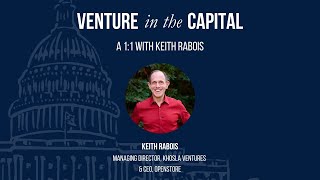
In this 2025 interview, venture capitalist and former PayPal executive Keith Rabois discusses how his legal training shaped his analytical rigor and risk assessment, the importance of finding "alpha" in investments (using peer laughter as a signal), and the strategic choices that helped Square outpace rivals through design‑driven products, instant payment acceptance, and deep underwriting expertise. He explains Square’s radical transparency culture, credits Peter Thiel as his most influential mentor, and describes his "therapist" approach to working with CEOs, emphasizing probing questions over prescriptions. Rabois argues against consumer interviews for product development, insisting that users cannot articulate true needs. He outlines clear IPO criteria (≈$50M predictable revenue and a stable business equation), shares nuanced hiring advice about early‑stage role prioritization, and reflects on the rapid rise of Miami’s startup ecosystem driven by happiness, safety, and the emergence of $10B‑plus companies. He likens the AI revolution to the invention of the transistor, warns of the difficulty of pinpointing disruptive bets, and comments on the limited but growing influence of Washington, D.C. on venture activity. Finally, he offers guidance for aspiring VCs: build something first, develop an original perspective, and cultivate a distinctive voice through writing.
Chapters
I'm pleased to welcome today Keith Raboy, who's an acclaimed venture capitalist and prominent figure in the technology industry. He currently serves as a general partner at Colson Ventures, the CEO of Open Store, a revolutionary E commerce platform, and is famously known as a member of the PayPal mafia. His career includes leadership roles at industry giants and he was instrumental in the growth of PayPal, Opendoor, LinkedIn, and Square. He has also guided companies like Yelp and Zoom from the early stages to successful IPOs as a board member. Keith began his career practicing law at Sullivan and Cromwell. After earning a BA from Stanford and a JD from Harvard Law School. We are thrilled to have him here. So please join me in welcoming Keith Rovoy to Venture in the Capital.
Thank you, Keith.
I'm so excited to have you here. Let's start by looking at the beginning of your professional career where you worked as a corporate lawyer. A number of prominent venture capitalists, including Tommy Davis, Peter Thiel, and yourself, come from legal backgrounds. What do you think explains this trend and how has your legal education shaped your approach as both an investor and an operator?
Yeah. So you gave away this secret. I tried to suppress that. I was a lawyer. I was actually a lawyer in dc. We were joking. I used to actually live here. And I think there's three reasons. One, first, people who go to law school are just smarter than people who go to business school. It's just like it's not even close. I've actually looked at the median GMAT hold constant, like pick your favorite school, Chicago, Stanford, Harvard, wherever, Yale. And just the median scores and they're not even close. It's like a significant shift. Second, law I think is actually law school is actually useful, which is it makes you more rigorous in your thinking and writing. And I'm not sure MBAs do anything productive, probably subtract. So those two things help. The third thing is I don't actually think that most people who are lawyers are actually going to be very good investors because one of the things you learn in law school, every single final exam you take is what's called an issue spotting exam. And so you get a fact pattern, like a kind of cool little narrative. And. And your goal in getting a good grade on that exam is to identify everything that could possibly go wrong and call it spotting all the issues and then resolving them, explaining how they would be resolved by a court. And so I don't think being an issue spotter is really productive. And if anything, it might be very counterproductive to be a vc. Typically it's very obvious, especially early stages in a company's trajectory of the things that can go wrong. Doesn't take a lot of rocket science to figure out. There's a lot of things that can go wrong for this company. The hard part is to figure out what can go right and what's the probability that things can go right. So I think your brain is just trained backwards to be a vc. It may have lots of other benefits to be a lawyer, but generally speaking, I don't think there's a lot of successful ex lawyers becoming venture capitalists. Peter famously quit law after three months and four days, I believe as a lawyer. So long enough to be dangerous. He likes to insult me by saying it took me three years to figure out what took him three weeks. Oh, and then how does it become useful though? So the positive version is for me specifically is there's two positive versions. One is the law. We're sitting in D.C. but it's just so obvious that over the last 25 years, most of what you do in America is constrained by law and regulation. Whether it should be or not. It's just factually, it's really hard to do things. And so being able to understand what's possible to navigate what's the likelihood of probability or difficulty in navigating through the world and the morass of law and regulation probably is moderately helpful. But then there's some specific illustrations, specific opportunities where most people who are not lawyers will be scared of the potential risk associated with a particular company, where in fact the risk isn't too severe. And so being able to do that calculation in your brain is very useful. That led to my investment as an angel in YouTube was most people didn't understand the IP. I happened to be an IP litigator, among other things. And so it's really easy for me to do the triangulation of what the legal risk, if any, any or exposure, if any, to YouTube was and then walk through subsequent investors. So that does happen, does happen in financial services sometimes, which is maybe not accidental. A driver of why a lot of maybe the better company, a reasonable number of better companies I've been involved in have been in financial services. And then I think second, less relevant as a vc, but as an operating executive, being a lawyer somewhat similarly, you can hold risk and business issues in your brain and you can negotiate. Meaning if I took on this legal risk, how much would you pay me? It is virtually impossible to find any outside counsel in the world who could tell you how much this other party should pay you. For that risk. But usually, often there's a trade there like, well, I'll take that legal risk if you pay me a dollar per transaction or $10 a transaction or $100 per transaction. Unless you understand the business and the legal side, that deal just doesn't happen more often than not. So there are opportunities to leverage it. Unfortunately, running a large venture fund probably can't create alpha on legal risk to deploy an entire venture fund. Absolutely.
When deploying, you said that when you make an investment, you want half of your friends in VC to laugh at you because it shows that investment is differentiated and ridiculous enough. But who are the people in VC that you trust where if they laugh, you actually reconsider your investment?
Nobody. In fact, the better the investor that laughs in some ways the better. Maybe not intuitively. I don't just want dumb investors to laugh. I actually want the better ones to laugh too because it means there's some alpha. Basically, it's a simple way of identifying whether there's any alpha in the investment. If everybody can kind of come to the same conclusion, there's no alpha. And generally speaking, in a hyper competitive market, if you have no alpha, your returns are going to look like everybody else's. And if you're returns of venture famously described by lots of people are very mediocre on average. So unless you're in the top x percent, whether you call it 1 or 10, the returns just don't justify the risk. And so if you're going to think like other people, there's no way you can generate disproportionate returns. So you do want that reaction. And it's sometimes shifting. It's not the same people that laugh or don't laugh. But I, you know, and I sometimes apply this to other VCs too. Sometimes I'll read some announcement about some like investment someone made that I like actually respect. And I was like what the hell are they thinking? But that's actually a good sign that there's probably something there that I might have missed.
I want to go to your early operating days and in Square's early days, copycatch such as Net Secure, Intuit, go payment and PayPal here, all rapidly emerged competitors. How did you navigate this competitive landscape and ultimately outpace your rivals?
Well, I think you always want to have a theory, any stage of a company, from literally two kids in Keynote deck to you know, series G or whatever of accumulating advantages like what do you have that's special and how do those advantages compound over time and without those Answers, sometimes they're conceptual and you later back them up empirically. But you have to have a theory of why everything gets better. And so at Square we had some. And you have to prove that there's somewhat hypothetical theoretical hypothesis, whatever vocabulary you like, you have to prove that they're actually true. So at Square it was a design driven company and the thesis was if you build a better design product that will allow for certain things that other companies can't copy. Second, we had a value proposition back in the day, which may sound mundane now 10, 11, 12 years later, that everybody, meaning everybody, should be able to accept payments instantly. And everybody literally meant for US it's actually 93%, but close enough we'd approve. 93% of everybody instantly meant you could literally do it on the fly. There are famous examples of people who would land at SFO and while they were in their taxi, convinced the taxi driver before they got to the hotel to accept Square. I did this literally on the training floor at my gym at Equinox in SF with my trainer. He used to make me bring checks. And I was just so annoyed cause he'd always remind I'd never have a checkbook with me. So he'd always be like harassing me about being late. And I'd be like, just sign up for goddamn Square. And I literally made him do it. Like I showed him literally on the fly. And then everything was great. And then he got all like 70% of his clients within a couple weeks. So instant was important. And then underwriting. To do everybody in instant requires an incredible amount of proficiency in underwriting ability that is very important as a foundation for most financial services, payments oriented financial services companies. But doing that well is not trivial. And outsourcing it to other people, like some of those people, would never really work. So what most people do, almost everybody you named, is they put the filters up front. They either allow 20, 30, 40, 50% max people to apply or get approved. Well, that infuriates the other half. It also means that acquisition channels that expect near universality won't work with you. So for example, we put Square, these little square devices into the Apple Store. You could get them at the Apple Store. Apple was adamant that they weren't going to put too many things there, that if everybody who was shopping in the Apple store could get it, they didn't want it in their store. So you just disqualify yourself from the channel. That's just a specific illustration. So we had a lot of theoretical approaches of why design would matter. I sort of blogged about it, or David Sacks actually summed up my views in a blog post. It's a little bit better. But the design driven decision did lead to what one would technically call like a pseudo viral loop. When we first started Square, we had these Squares plug them into your phone. This was before we had an iPad and before the iPad really exploded. People would notice and they'd say, what is that? They'd see a taxi driver, or they'd see a trainer, or they'd see a coffee shop or whatever. And 1% of everybody who encountered a Square in the real world would sign up. Very predictably, the ratio is never off at all. And so that observability pattern was design driven. That led to a viral distribution that meant most of our customer acquisition could be for free, including the first X months where we really didn't have the money to spend any money on paid acquisition. Later, we did raise more money, and we did. But still a reasonably important blend to make the overall economics attractive was that we had a free distribution. Interesting.
And then also at Square, you know, you've spoken immensely about the culture of transparency that was emphasized and that every meeting with more than two people was documented and shared company wide. Every meeting room had glass walls circulating it. Can you explain why this level of transparency was so crucial and how it contributed to Square success?
Yeah, I think it's pretty simple and I'm going to borrow and channel someone else's explanation. Reed Hastings and Netflix, which is, if you want people on your team to make smart decisions, you have to give them all the information that you have. Usually what frustrates an executive or CEO or somebody is they get annoyed because someone made a decision, whether it's a customer support rep, a product manager, etc. More often than not it's because that customer support rep or that PM or whoever doesn't have access to the whole understanding of the system you're trying to create. And so the only way you can expect people to make better decisions is you've got to suffocate them in the same information. And so transparency is a technique for doing that. Understood.
And in your operating career, you've worked under an impressive lineup of lieutenants, including Peter Thiel, Reid Hoffman, Max Levchin, Jack Dorsey and Vinod Kholsa. Who has had the greatest impact on you?
I'd say Peter. I think Peter particularly, I wouldn't say necessarily as an investor, but as a executive leader, founder kind of person. Peter had a set of views and principles that were at least in 2000 and 2001, very differentiated. And I mostly subscribed to virtually all of them and then remixed a few and hopefully made a few of them better, like a good remix of an EDM song. So I think from a building a company perspective, definitely, Peter. Okay.
In looking at kind of some of the cultures that you've been a part of, one of them is from one of your portfolio companies. And I know you know what I'm asking.
Yeah, guess which one.
And Traba is famously run with the discipline of an Olympic sports team and the culture embodying an Olympian mindset and work ethic. Can you tell us more about that culture and how startups can incorporate that speed and worth ethic into their ethos?
Well, in some ways the culture of Traba is unique. In some ways it's not at all so. When I was growing up in Silicon Valley building companies, I think everybody basically worked nine, nine six. I mean PayPal, 996 would have been an easy week. Truthfully, I don't think I worked.996 would have been closer to a vacation week for me. But I think all companies were built through heroic effort, mostly because building a company was not like a popular thing to do. There wasn't this impression that building a company from scratch was easy or for normal people. And so it wasn't easy. And it definitely attracted a certain caliber of person, a certain motivation, ambition in life. And so I think all the foundational companies kind of had a set of principles that were very similar to trauma's. Then hopefully over time, you turn this company into a machine that no longer requires heroic effort and are accumulating advantages, whether they're network effects or others. But things get easier. And as Buffett used to say, you build it so that it's such a great business even idiots can run it because eventually they will. And so that's your goal. So what Drava really is and what Mike really is kind of in my view, more like just old school of just like, oh, forget all this modern kind of nonsense. Just take away 10 years of like cultural, you know, cultural degradation and just go back to first principles. If you want to be successful in anything in the world, virtually anything from athletics to music to politics, you just have to outwork people. It's really that simple. I mean, I have the benefit now of I get to kind of have fun and occasionally meet people who've been successful. Politics, music, sports, sometimes, occasionally other fields. But those are the ones I'm most interested in. And you try to find these Common denominators of like how'd you break through? Why you DJ Axe instead of the 50,000 other people that wanted to be a famous DJ? Or why are you President of the United States? Usually it comes down to just working harder. And there are other parts and components that you probably have to have too, but it's almost indispensable.
Well, you mentioned working hard, Keith. You're an active CEO, Barry's lover, and a very active investor. And you've stated that for every company you've invested in, you aim to meet with founders or CEOs on a BI weekly basis.
Depends on the stage of the company, but typically for an earlier stage, call it seed series A. Maybe monthly used to be before COVID definitely bi weekly. I think Covid kind of changed it to be probably closer to monthly on average.
Okay, well how do you manage time allocation across portfolio and prioritize?
Not super well. We do track it. The first step, like anything, like as instrument. So my EA and my chief of staff combined every quarter to give me a pretty detailed report on all the allocation of my time. How much is new pitches, new portfolio? How much is like interviewing candidates for a portfolio company? How much is going to board meetings? How much is open store? Specifically what does that decompose into? Like team meetings, product reviews, et cetera. And then I quickly, I mean they put a lot of work into this and they'll be annoyed if I tell them that. I probably look at it for about three minutes, but I'm just triangulating. Do the ratios feel right and what's the delta from the prior quarter? And sometimes you notice interesting things like the new pitch percentage can get too low. So one of the dangers of being an active investor that has a lot of commitments, board seats one on ones companies is you don't allocate enough time to find new cool things. And my job is to find new cool things. That's what LPs expect. Like we're going to raise a new fund. They want me to find new cool things. They don't care. I mean they do care, but they don't really care about the old stuff. They're already waiting for those distributions. What they really want is me to go find some random founder in the middle of the world that's going to create another iconic company. If your schedule gets too crowded, the opportunity slots, you can't be with everybody, so it is scarce. But you wind up getting even shorter on the opportunity slots that you take, which means you probably miss some stuff. And I don't know anybody who's really solved that tension?
Well, in mentioning identifying talent early, you invested in Ramp Seed Round.
Yeah.
While the favored company in the space was Brex. But when justifying your investment, you said you knew the space, knew what Brex was going to do wrong, and knew that you just needed the right founders to dominate. What was Brex doing wrong? And how did you know that Ramp was the winner so early?
So, yeah, actually, I kind of build on my square example. When I met the Brex founders, they totally did not understand underwriting and that the foundation of any successful financial services company is an underwriting advantage. And it just didn't compute. So I knew they were eventually going to get burned, and they did, both publicly. And even if you don't get burned publicly, you wind up suppressing your growth. You wind up having to dial back the approval rate or the growth because your risk team can't handle the volume accurately without, like, losing a lot of money. So I was just looking for someone. The idea of, like, creating a modern Amex at the time, simplifying the value prop and simplifying the vision of either company, which is not exactly that, but a modern AMEX business card was very compelling. AMEX is still coded in cobol. Like, I don't think probably anybody in this room knows how to code in cobol. I actually learned it, like, a long, long, long, long time ago. And I don't remember, but. But there's just things because you're coded in cobol, there's nobody who knows how to code in COBOL that you just can't create and you can't integrate. Can't integrate that with modern SaaS tools. There's just a lot of things that are broken. So the opportunity was there. It's just like, Brexit is the wrong people trying to do it. And there's other issues, too. But then it's like, okay, well, I want to go find people who are capable of doing this. Fortunately, they kind of dropped into my lab. Curious.
Your work as a venture capitalist, you've said you're almost never making a decision, but that at Khosla Ventures, the only true decision that you have to make is, are we firing a CEO?
Yeah, yeah, yeah. I mean, people do not choose to work with me, at least, like, in a governance sense. Like, my job is not to govern the company. My job is to be, like, more like a consigliere or pop psychologist to the founder. Like, and so the only decision is really, then is the CEO the right person to be making These decisions for me, as opposed to my partners, me specifically, individually, I won't invest if I don't believe that the CEO is the right person to permanently run the company. We do as a fund, I wouldn't say often, but frequently fund companies where the founder is not going to be the CEO permanently. And everybody knows that up front. I don't do that, but we do. KV does. Okay. It often. You often see it in very deep technology investments, sometimes coming out of academia, sort of where the founder is like a professor, doesn't really aspire to run it forever, et cetera, but has done pioneering research. Like, we had one founder who is a noble, literally a Nobel Prize winner. Sometimes you run into that we, because we're investors in deep technology more than probably any other vc, tend to be a magnetic pole for people who have breakthrough technologies but may not want to scale a company of humans forever.
And I want to touch on something you just said within that. And we had Sean McGuire speak yesterday, and he said the same thing. And that is comparing an effective venture capitalist to that of being a therapist.
Yeah.
Can you elaborate more on what you mean by that?
Well, I think that maybe not to take it too far, but I think that if you watched my interaction with the CEO, you would think it was like therapy, because basically we would sit down. Actually, my office is configured like this. It would sit down. CEO sits down. I'm like, okay, tell me your problems. And then your CEOs like, oh, this person's driving me crazy today. Or this executive screwed this up, or blah, blah, blah, blah, blah. And I'll be like, well. And then I just asked a series of questions. It's like, well, have you thought about this? Have you talked to this person? Have you tried this? Blah, blah, blah. And that feels like therapy because it's just question, question, question. It's never prescribing like an answer. I'm never like, oh, this is what you should do. I will occasionally say, oh, this company over here, there's what they did. Or back in the day, here's what I did, just as illustrations, but it's like just constant question, question, question, question, probing and trying to get the CEO to kind of train their brain, wrap their brain around the process. And once in a while you see their eyes light up, which is nice. Like they realize that they've solved the.
Problem for themselves in speaking with entrepreneurs or operating yourself. You said that you have a pretty strong stance against talking to consumers when building a product.
Yep.
Why do you recommend against that? Or why don't you do that yourself?
Well, because consumers don't know what they want. I mean, it's basic. I mean, there's these famous adages, but I'll try to go one or two levels deeper of the horse. And if you ask them if they want a faster horse, they would have said that you never would have built cars. But the general point is, consumers make decisions consciously and subconsciously in a mix. And even with the best intent, there's some subconscious decisions. So my edgy anecdote I like to use with people, I don't know if it's original, but I've been using it for a long time, so it almost feels original, but it's probably not. Is like, ask anybody you know who drives a fancy sports car like a Porsche, and ask them why they bought the car. They will never tell you the real answer. Never, ever, ever. I've met a human that tells you the right answer, the true, authentic answer. And so if you ask them about your product, they're never going to tell you the authentic answer either. So I think, therefore, even when they're not trying to mislead you, they are. The second reason is marketing to consumers cannot be done through brute force. There's too many consumers. If you need 100 million people, you can't interview them all. But then people want to talk to customers, and the consumer side is like, well, I interrupt you. I go interview people in the audience. I talk to you. Or I have a program at Starbucks or something, I talk to you. The hardest part is interrupting a normal, busy person and getting them to pay attention to your new product. So when you do a distorted interruption, when you conduct a distorted interruption, you're not really replicating the experiences, which is this normal person is sitting at home juggling two kids, a job, some family member that's driving them crazy, and you're trying to convince them through some marketing channel to adopt your new product. Anything that is not a proxy for how they're living their life is completely irrelevant and often directionally wrong. That almost no one talks to consumers in the experience of them listening to Spotify when their baby's yelling, screaming, and the nanny's, like, running out of the house for some reason, like, that's what the real world's like. And so to have a cut through consumer product, you need to be something that's so compelling that even when I'm juggling all these things and I'm going to Barry's and I'm late and my Uber driver's annoying me because he took the wrong turn and now I'm going to be late for class. That's when I adopt a new product and it's got to be that compelling that while I'm cursing the Uber driver, I'm like, I'm willing to try this new app.
In giving advice to I want to stay in the front of working with CEOs. You believe that companies should go public as soon as possible due to the transparent accountability and IPO provides. And in today's market, it seems that that's going to be pretty delayed.
No, there's plenty of opportunities. It's a CEO choice. If you have a good business, people will appreciate you. In any market, there's different degrees of good businesses. There's good, great and outstanding. But if you have a really good one, for example, Ramp is a wonderful business. We could be public whenever we want to be. It's a conscious decision. When do we want to spend some energies going through the exercise for what rewards? For those of you who are interested in the topic, I wrote a full chapter in Elad Gill's book called the High Growth Handbook. There's two chapters. One about hiring people, this second chapter about when to go public, what the criteria is, what are the benefits. But Bill Gurley and I are both on the roughly $50 million revenue, roughly predictable revenue. And you should be a public company and everything else is an excuse. I don't like excuses generally.
Well, you mentioned Eli Gill's book and your other chapters you mentioned is on recruiting. I'm curious, in hiring talent, which roles do startups tend to over invest in too early and which critical functions do they commonly neglect for too long?
I don't know if there's a common formula. It depends what the startup's trying to do, what market and how are you competing in that market. So for example, in payments, When Stripe started, one of their first 10 hires was General counsel. Actually turned out to be a really good general counsel and that was critical to Stripe success. But I wouldn't go around recommending to 95 to 99% of other startups to go start your company with a gc. So it depends what's the landscape you're competing and what are the wedges or what's the most powerful dimension you want to compete on. And so that formula can be all over the map sometimes as a designer, per my point about square, like the most important perhaps hire for square was Robert Anderson, who's the first design designer. Typically that might not be the number one hire for the founder to obsess on. We allocated considerable equity to make that higher. So we had to rip them out of Apple. It totally depends on what market you're in and what's the dimension that you really want to compete with the rest of the world on. There's no right answer. You told me what business you're in. So, for example, Delian I know, spoke last year. So Delian created a company called Varda which aspires to manufacture things in space with zero gravity, which allows less defects that are caused by gravity for different use cases. Pharmaceuticals, fiber optics, et cetera. So when he's starting the company, there's three things you have to do. You have to put this thing up in space, he has to manufacture something and you have to bring it down safely. So his slide deck is like a perfect Keith slide deck, not surprisingly. But it's just like, okay, I have one person who's done this before. I have one of the few people who's done this before. And I have someone. Actually very few people have ever done this. I have one of each. That's the easiest investment decision ever.
Yeah, no, definitely makes sense. And you mentioned stripe. I want to go back to that with Stripe ramp. I mean, Canva. If transparency and accountability aren't what is needed for an ipo, then what is it?
Usually some scale revenue, I'd say again, 50 million plus or minus and then some degree of predictability. You want to be able to have a non spiky business that you have a form, basically a business equation in my vocabulary which is if you inject more of this, it produces this, this and this. And you're just doing more of this and this produces this. Once you have a business equation that roughly works, then I think you should be a public company.
Well, we'd be remiss not to ask you about Miami. Oh yeah, you're a big fan. Delian's a big fan.
Yeah. We'd all be suntanning right now.
It'd be nice. It's pretty crazy.
Vitamin D is good for you.
But Miami startup ecosystem has grown tremendously since you moved there in 2020. I mean, Delian, I think recently or you mentioned that delian said that 11% of all seed investments in the US are now coming out of Miami, up from virtually zero a few years ago.
Literally zero. Yeah.
What specific factors have you observed in Miami that led to this rapid growth? And looking ahead, what do you think needs to happen for Miami to sustain this momentum and potentially challenge Silicon Valley's?
There's two things. One is people Just want to be happy. I have this view that entrepreneurs are people too. And I was like, well, we're the happiest people in the United States. They're in Miami. If you literally go into a coffee shop, the baristas are happy. If you go into your Uber, the Uber drivers are happy. You go to a bar, everybody's happy. And happiness is contagious. So I think entrepreneurs sometimes forget that all humans are basically the same. And it's also safe, which is also important. It's really hard to build stuff when in at least the Bay Area, your employees are getting shot, robbed, houses broken, broken into. I think Delian talks about like his car got broken into five times in the last six months before he left. So I think those things are foundational. To be successful, you need to mint several $10 billion plus companies because that creates an ecosystem where you have like angel investors and people who've learned and absorbed lots of building company that want to build it from scratch themselves. And everything kind of propels itself. Now it does take time. You can't really microwave a $10 billion company. Like it usually takes 6 to 12 years, like best case, you know, to kind of build and you need a few of them and then you might have a recursive loop. I think one of the down or challenges now is because if you believe in the future, that the future is really AI driven and, you know, whole topic we could debate or discuss. There's a lot of complexity to that comment, but if so it has led to a gravitational pull back to at least the Bay Area. Without AI, I don't think there would have been any gravitational pullback. Everything was fragmenting. New York, Miami, wherever. And there was no center of gravity. And all the dysfunctional elements of the Bay Area, mostly from a political and cultural perspective, were compounding. But when OpenAI started succeeding, a signature OpenAI company with a potential platform and a potential wave has led to at least a reasonable fraction of us entrepreneurs who want to build an AI to relocate to the Bay Area. I think the applications built on AI, you see a lot of them maybe in New York and stuff. But I think that has been the thing that is if anything saves the Bay Area, it's going to be this AI wave led by OpenAI.
Well, I actually. So I want to, I want to dive deeper into that. And I'm curious regarding the way AI agents or just in gentic AI will reshape human work or just kind of recruiting in general. What historical revolution do you think offers the most relevant parallel in terms of scope and scale. Web 1.0, 2.0.
No, I mean this is somewhat banal too. I'm going to borrow someone else's. I don't think I have a lot of original thought on top of this. I actually think it's more like a semiconductor chip. It's like a transistor that led to semiconductors. You couldn't see all the implications on the first transistor, but the world was for the next 50 years completely different and was never the same. That's probably closer than any of these, like Internet, bubble Internet, you know, browser based things or mobile based things that are pretty defined and pretty concrete. The transistor did spread to everything. Like, like, you know, we probably have. It's almost impossible to fathom, like living your life without a transistor at this point. Like you probably couldn't even have like a working microwave oven. Like, you know. So I think it's more like that. It'll take maybe take 50 years to see all those implications. But I think it's radical, which is why it's scary. Meaning as an investor, it's pretty easy to either make the mistake of investing in everything or try to be too judicious and cherry pick because it does have such broad implications that if you're just picking like rifle shot things that are that disruptive, it's really hard to be rifle shot and. Right.
Given that we're in dc, I have to ask you about kind of the convergence of Silicon Valley and dc, and particularly in the realms of AI and cryptocurrency, in the influx of prominent tech figures like David Sacks, Scott Kapoor, your husband Jacob Helberg's recent position. How do you see increased tech engagement in Washington reshaping the VC investment landscape?
I'd love to reshape the VC landscape. I mean, I'm not sure there's investable opportunities any more here today than there was three months ago, six months ago, a year ago. I do think there's degrees of freedom that at least the federal government may enable entrepreneurs to experiment. That may have been more constrained in AI, in crypto, maybe in healthcare too, that allow entrepreneurs to maybe build companies, but I don't think they're going to be building them here. There is a sea change in people's willingness to travel tech, people's willingness to be in dc. When I'd come to DC for other reasons previously, I would have no professional work to do. I'd be here for family or whatever or something. Now when I come to dc, my schedule is deluged with random interactions with very successful tech people. I was at this event Tuesday night in D.C. and just by accident, totally without intent, without any pre existing knowledge, I ran into Mark Zuckerberg and Jensen from Nvidia and that never would have happened in my entire life before in dc, like zero chance. And so that is leading to a, oh well, if I go to dc, there are these spontaneous sparks and there are these interactions that can be useful. Like you can parlay that interaction into okay, we should follow up about X, Y, Y and Z. And so maybe that leads to at the emerging people like me or other people spending more time here and then that catalyzes more energy. But I don't know if people will build here. So I got to be careful. As an early stage investor, for example, being here is unlikely for me to drive me to meet some undiscovered talent who's going to create a next iconic company. And so I'm substituting time here away from these scarce pitch meetings I probably should be taking. That said, once in a while you have an interesting conversation with a successful CEO and it does yield an insight or an angle or an opportunity for M and A or something. So it's not like zero, but it definitely still is not where early stage venture capitalists should be spending too much time. I have family reasons why I have to be here a little bit more frequently. So I will be and we'll try to parlay that into useful things, turn the proverbial bug into a future and make it more successful and we'll see how that goes for a year or two. And then I do have intellectual interest in politics. But that said, at least my friends in politics like to come to Miami. All the Republican side loves to go go to Miami for some reason. So for the last four years I've been running into all the Republican politicians anyway. So I don't really know you need to come to dc, but since I have some ideas, I will occasionally try to drop an idea into someone's brain when I run into them. And so it's moderately interesting to me to do that.
Well, given that we're at Georgetown and there's a bunch of students in the room, I think a great place to end it would be for those that want to follow in your footsteps, become the next venture capitalist, the next PayPal, mafias of the world. What's your recommendation? To get involved in tech and to be the best investor they can be.
I think on the investing side. Delian wrote a good blog post. I'd recommend about how to enter a venture capitalist. And it's still pretty good. It's a little dated, but I'd recommend it in the original. For most people, being a VC is not a good first choice, like right away, certainly. I think building something, trying to build something, developing a network of talented, ambitious people is 90% of the time more likely to work out, I think, to be an investor, if you really like, for whatever set of crazy reasons you're like, I gotta be an investor, I want to be an investor, blah, blah, blah. I'm just going to ignore everything Keith said and I'm going to be an investor. The best way then, with all the caveats of you shouldn't do this is you have to have an original perspective about something. And that can work. If you can develop an original perspective about a field, a vertical, a technology, the implications of the technology, possibly that you can cut through the clutter so someone might notice you, which can help. B if you're right, perhaps nobody else really wants to invest in, in, or help these founders of a certain type. And then if you're right and they do well, that gives you the credibility to then compete more globally, successfully. So I would at least look in the mirror and say, do I have original ideas about something? And then if so, it's not a crazy idea to try to double down on them. Fortunately, with things like X blogs, other mediums, podcasts that are successful, if you have an original idea, it's now possible to get that idea into the ether. Even if you're not famous, you don't have a big audience, it's possible to distribute it, and then people will notice. That is a real thing. The opportunity to bypass gatekeepers and get into the thought stream can allow someone earlier in their career to potentially thrive. But the truth is, most people are not very original thinkers, myself included. Like, how many times do you really have an original thought about a topic that a lot of people pay attention to? For example, in tech, people always ask me, what do I read recently, the only thing I read is truthery. I don't read anything else in tech on a regular basis because in my view, there's nobody else who writes anything about tech that has an original, differentiated, consistent voice. So I don't want to read it. I may read other things on an ad hoc basis, but I don't read it generally. So think about how good you have to be as a writer or analyst, where you can create a blog where it's the only thing worth reading. In tech, in sports, for a while. For example, lots of people write about sports. Lots of people are sports writers, reporters, et cetera. For a while, Bill Simmons had a voice that was completely differentiated. There was nothing like him. And so if you have that spark where you can just write or say things that are completely different, go for it. But without that, I think you gotta build something or be around builders and develop some competitive edge. Maybe simplifying. This venture is very competitive, and the people who thrive in venture develop a comparative advantage, like, why me? Why take my money? Or why take ours? At our fund, usually it's a mix. Actually 20% me, 80% of the fund, or vice versa. Until you have that answer, it's really difficult to be successful as a venture capitalist to figure out what that answer is as soon as possible, or test it. Like, I have an answer. Let me try it. Let me see.
Well, Keith, I can't thank you enough for coming. Pleasure. It's been a real honor and we're so lucky to have you here today.
Thanks. You can thank my husb.
More from Keith

This Billionaire Trains His Body Like He's Building A Billion-Dollar Startup | Keith Rabois


Vinod Khosla and Keith Rabois on Building and Investing in Enduring Companies | Ep. 40



