A Critical Thinking Crisis Is Underway | Keith Rabois
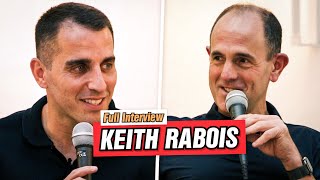
Keith Rabois argues that critical thinking is in crisis and that data-driven state-level experimentation offers a framework for contentious issues like gun control and wokeism. The venture capitalist draws on his legal training to evaluate asymmetric advantages in investments, and advocates for homeschooling over traditional education.
Chapters
All right, we're gonna, we'll get started, though, I'll come over here. Obviously, I'm very excited about doing this. Before we get started, I don't know where Constantine is from Reed Smith. Reed Smith is sponsoring this. They're amazing. Keith and I don't know really where we are in the store, but we're here, this cool place. And Reed Smith's like a 1800 person law firm. They do everything from tech, they've got a huge crypto practice, etc. I use them for a bunch of stuff, so take that for what it's worth. Either I'm an idiot or they're good. But if you are looking for any legal services, talk to Constantine. He's the, there he is right there. I was gonna say the good looking guy. But go check them out. So thank you guys so much for sponsoring this. All right, are you ready, Keith?
Always ready.
You gotta turn it on, I think.
Now I'm ready.
Yeah, see?
There we go. One me up.
That's the only time tonight that I will look better than Keith. All right. What is your resting heart rate?
It's 46 today, which is lame.
Why?
It should be 44.
That's a great place to understand Keith Roboy. Why is health, diet, berries, all this? Why do you spend so much time on it? And what has changed over the years around your health or diet? in your life?
So it's a function, I mean truthfully it's a function of vanity, life extension and performance and they're all related. Like you can't disambiguate these. Some things are around like how do you live longer, like have more lifespan so to speak when you can be active, the disadvantage of getting old as you start thinking that way. Second thing is definitely aesthetics like vanity, like anybody else I just like I'm conscious about it. And then third is pure athletic performance and competing with people and competing for various things. So for example, resting heart rate, mostly around life extension, two-minute recovery is definitely around life extension. Other things are designed for other purposes. Barry's just happens to be the most efficient way to do it. So I'm generally pretty busy. In one hour, I can do everything I need for all three goals. And it's the only time probably during the day that I put my phone away. which is a pretty big accomplishment. Maybe date night. I'm usually pretty good at putting, we do two date nights a week.
I'm usually pretty good at putting my phone away. So are you optimizing for longevity or.
You'Re optimizing for all three of them? Pretty much all three. Like for example, if you were optimizing only for lifespan, you'd probably never drink alcohol. You can debate this whether you should have like a glass of red wine once in a while, but I actually do drink alcohol. So obviously I'm not totally optimizing that way. But generally speaking, optimizing for the middle of how do I live longest, be as high performance as possible, like mentally. So I optimize my sleep. We were talking about Mateo just briefly, but I've been optimizing my sleep for 30 years, literally eight hours sleep basically every day, and then reverse engineer everything around that. So it's accommodation. So we're gonna talk about a bunch.
Of topics that some of them are very down the fairway, some of them will people will be scratching their heads, being like, what are these guys talking about? But part of why I want to start off talking about fitness is there's a mental clarity that comes with being fit, with eating healthy, et cetera. Is there anything that you do specifically for the mental clarity or the ability to think better, make better decisions?
Well, sleep is definitely the number one variable. If you're going to change anything in your life, if you change your sleep, you're both going to live longer most likely, but you will definitely think smarter, act smarter, have a better personality. I used to remember as an executive at Square, I'd present I'd actually run the board meetings at Square and I had this board member, some of you will know, Mary Meeker was on my board. And she would observe after a couple of years that she could tell how much sleep I had the night before a board meeting because my vocabulary would suddenly shift and I would use like less elegant words. And usually before a board meeting, my adrenaline would be running so my sleep was mediocre. But the fact that she could notice this and I actually knew the sleep differences and she was picking up on it, it was just evidence of how You act differently when you haven't had, you know, a perfect night's sleep. Obviously there's great studies done by the Stanford basketball team about free throw shooting and three point shooting, that really make it clear that elite trained athletes, Stanford basketball team historically have been pretty good. So if you can add 10 percentage points to free throw percentage by sleeping an extra hour, that's like amazing. You could train for the rest of your life and not add 10 percentage.
Points to your free throw percentage or like similar comparable percentages to threes. So that, that was very eye opening, but I was already pretty dedicated to sleep. So when we think about how to think before we actually talk about specific topics, you're trained as a lawyer. I think you practiced for like maybe three days?
No, I was dumb enough to practice for three and a half years. My friend Peter Thiel practiced for three months and four days and he still introduces me as this is my greatest character flaw. He literally, he'll be like, oh, Keith's obviously incompetent because it took him three years to figure out what I figured out in three months. True story. Actually, he's done this several times.
I have no doubt that's a true story. What did the legal training though, from a how to think standpoint, like what do you attribute that you took away from it?
Well, there's a way of thinking that you learned as a lawyer and some of it's very valuable across all disciplines, some of it's very narrow. The part that you do develop a hierarchy of thoughts and an organized mind, one of the ways you can tell is if you ever date somebody who goes to law school, you will see his or her mind change before you. Everybody who dates somebody through law school notices the change in how their significant other starts to think. So that's really useful. You do learn a little bit too much of what they call issue spotting. So when you get graded in law school, the primary driver of your law school exam grade is how many of the potential issues can you identify, things that could go wrong, and then can you resolve them, meaning discuss how they would most likely be resolved by a court of law. The problem with this, so it's a very good general exercise of avoiding risks in life, but it leads to a little bit of overthinking, because everywhere you go, everything you see, all you do is see problems. It's like problems still left, problems to the right, it's like that song, Joker's still left. So you start thinking everything that can go wrong, which really doesn't help you, certainly as an entrepreneur or investor. When people pitch me with a new investment idea, it's obvious what can go wrong. The hard part is what can go right. But so that part doesn't translate as well. And then the part that also translates relatively well is, you know, I've been involved in a lot of financial services, heavily regulated areas with IP issues or like healthcare with lots of legal issues. And being trained as a lawyer allows you to navigate stuff for yourself as rather than outsourcing it to some black box. And so I like things that have the perceived legal and regulatory risk because I don't outsource the diligence to other people.
So when you think about that pathway to becoming an investor or an entrepreneur, are there certain operational roles or certain investment styles that lend itself. If you have been trained as a lawyer, you're more likely to be better at operations or marketing or a venture investor or hedge fund investor. How do you think about the overlap coming into investing in business? A global statement is I always believe.
That you should invest in things that you have an asymmetric advantage in. So the earlier in your life you figure out which your asymmetry is, the easier it is to sort of magnify that, amplify, double down on it. So if you're a lawyer, per my point, I love things with legal risk, like Maybe the most obvious example of this is when YouTube first was started. Yeah, I knew the founders from PayPal, we'd worked together at PayPal, and I met them at a barbecue, or I met one of the three, ran into one of the three at a barbecue, and I asked them just casually, like, hey, what are you up to? Just like you would do, sort of introduce yourself to any friend at a barbecue. And he said, oh, I just launched this new company. And it's like, well, what's it called? And it's called youtube.com, and I said, okay, what does it do? And he basically is like sharing videos, blah, blah, blah. I asked him three questions, literally as we're in line to get a drink, like literally in line to get a drink at my friend's place. And at the end of those three questions, I was like, I need to invest. Can I invest? And he's like, don't you want to see the website? And at the time, this is like 2005 or six or something, we didn't have like, you know, basically computers in our pockets. And so he goes to the host, this guy named Mike, and says, hey, can we borrow your computer? And so we go off into Mike's bedroom and for the next hour he shows me every single video on YouTube. which was very painful, but he did allow me to invest. Now, the point of the story though is when people, when I started telling other people about the potential opportunity to invest with me because back then I couldn't write a big enough check myself to send to other people, every single person talked to their lawyer friends and every single fund was like terrified of the legal risk. And so I just walked through my favorite funds at the time. the legal diligence myself. I just said, here's what people are gonna tell you and here's the right answer and blah, blah, blah. And, you know, not surprisingly, we were able to convince a very good fund to go invest. But like, if I didn't understand IP loss, I happen to have been partially an IP litigator, there's no way that I would have been able to do that, A, with confidence and enough credibility to convince a very large VC fund, but B, would I have known the right answer myself, almost surely not. Kind of funny anecdote to this is there was one part of the law that I forgot. so, you know, I graduated law school a long, long time ago and had quit a few years before this. There's a slight part of law around music licensing that's, that works very differently than standard law and certainly IP law because Congress passed a statute in like 1914 or 1910 or something where every time music plays in the background, there's a statutory fee. So it's one of the few things that doesn't, doesn't have a market price. And I sort of forgot this part because it doesn't, generally conform to normal principles a lot. So when YouTube did eventually have some legal risk, it was only because of the background in music being played in the background of the videos that caused a problem. They never had IP risk around the actual videos, which is what everybody was paying attention to, but I sort of forgot that.
Now we passed the statute of limitations.
So I can tell the story. What were the three questions that you asked? Is it coded in Flash? Was the number one one. There's a reason for that. I'd been waiting for three years to find a company I found it on a flash. So my friend Max, why? Well, so after we left PayPal, I went to work sort of part-time with my friend Peter Thiel. And Peter said, go down to Mountain View and figure out the future. And what he meant is go talk to Max, Max Levchin. And so I was like, okay. So I call back. So I'm like, Peter's dispatched me down to Mountain View to meet with you to figure out the future of technology. Max is like, okay, whatever. So we sit down and he starts, you know, he's like, I can't really predict the future, but blah, blah, blah. He's like, one thing that is kind of cool is this thing called Flash. And I had no idea. I'd heard of it, but no idea why. So he explained to me all the magical properties in 2003 that Flash had and that someone would take advantage of it, particularly around commerce, but like, here's what it could do that other people weren't realizing. So I'd been looking around, scaring the universe to find some way to invest in Flash. And then I realized as he's talking about videos that Flash was actually a pretty good application of that. Second question was around whether it was long tail videos or he was targeting professional videos. And he said long tail videos, which led to some of the legal analysis, but made me more interested. I always am interested in long tail stuff. Still am interested in long tail stuff as the guys from Open Store here. No. And then third, the question was, well, we had a PayPal product that internally we called x-click for the web. What that really was was an HTML button you can embed in your eBay listing. And that's what led to the viral adoption. of PayPal back in the day. And so I said, are you gonna be able to do something like X click for the web? And he's like, yeah, that's the whole plan. So fully embedded flash video that could be embedded anywhere, and it would lead to ideally the same adoption as PayPal. And it actually turned out to be the case.
Pull it back to the website. You mentioned PayPal. How much of it is like nurture versus nature? Do you got the right people into that business versus you guys had some magic potion and got everyone to be really smart and go on to be super successful afterwards?
I think it was mostly that Peter and Max deserve a lot of credit for hiring people. So Peter hired most of the non-technical people. Max basically hired all the technical people. And they assembled a critical density of talent. And then that became self-fulfilling meaning the derivative people that were hired were probably comparable. And you get a critical density talent. All of a sudden things that are unsolvable become solvable. I don't think, I mean, there was definitely lessons I learned that I specifically abstracted from those days and those people, but fundamentally it came down to their hiring skills.
Last question I have about kind of history, PayPal obviously is now not only very well known that story, but everyone went on to do such great things.
That I think a lot of-- well, not everyone. There's 254 people there. You know probably about 20 names.
20 people went on to do great things. But I think a lot of young founders look at that and they're like, wow, that was just like amazing business. On a scale of like, you guys had your shit together, it was a complete shit show internally. Where were you on that scale?
It was a complete shit show internally. Well, one easy example of that is we had three CEOs in four months. So usually you don't have three CEOs in four months unless things are going pretty catastrophically wrong. The other empirical data point is in August 2000, we had a burn rate of $10 million a month and $30 million in the bank in the middle of the complete internet bubble collapse. That's a real problem. But it was always kind of a mess. It was kind of a fun, chaotic mess. It was intentionally chaotic, though, once things started working. Peter came back as interim CEO after we fired Elon Musk September 25, 2000. And within a couple months, it was clear that the first derivative and second derivative were good or better. And then, you know, things did work, but it was always, always a mess. There'd be, like, all these random things that you thought everything was okay, and then, boom, you know, get slapped in the face with some very pleasant surprise.
So in November, I was mindlessly scrolling on Twitter, and I saw somebody chirp at you and say, are you calling the top?
And you responded, it was October 18th, by the way.
And you said, yes. And I said to myself, they better hope to God he's wrong, 'cause he'll never let them forget.
By the way, it wasn't a random person. It was Ari Levy of CNBC. So it was a pretty well known journalist.
And I think it was the day of the top?
It was exactly the day. It was off by a couple of hours.
So they have not forgotten because they keep bringing it up. Describe why you thought it was that. And a lot of it, I think, came from the 2000 kind of bubble bursting and kind of what the historical overlay was.
So yeah, I mean, a lot of people had this view, including a lot of my colleagues at Founders Fund that have been, let's say, cracking a whip on recently, that things just go up and to the right. And it's only a question of time. Like every company will be worth more money or more value over time, whether it takes one year, two years, three years or five years, so that you could pay any price for an investment, let's say, because eventually you'll grow into that. And that's logic. Over the last 18 months, Peter and I particularly internally were like, this market is going to collapse. Here's why blah, blah, blah. So internally we've been debating this pretty consistently with incredible clarity. Both Peter and I argued this at an offsite last summer and then strongly argued it about a week before. So one of the reasons why when already asked, we had conducted an offsite in San Francisco about a week or two before and had made strong case internally that we should stop stop investing period. Like there's nothing that's priced appropriately. So my brain had been chewing on this. It wasn't kind of a random response. That said, the lesson of 2000 was things that go this way also go this way. And this specific reason things collapsed in 2000 was the Federal Reserve raised interest rates six times from mid 1999 to early 2000. And what that did was it caused technology stocks to collapse. collapsed by 90%. So it's like, well, guess what? If the Fed raises interest rates six times, technology stocks are going to collapse by 90%. This is like a law of physics. We had actually used this slide, a version of this slide, which I've actually tweeted recently in our LP presentation, a founder's fund, the last two years. So we've been internally talking to our LPs saying, eventually interest rates have to go up. When interest rates go up, technology stocks will go down. Yeah, we can talk about why that is, but it is actually inevitable. And so the reason why that specific timing came to be is for a long time, many people, myself included, have been talking about publicly, Jack Dorsey, et cetera, that we've been going through inflation in the United States. I started tweeting about inflation in January 2022. Oh, sorry, maybe actually 21. But yeah, 21, sorry, getting the years confused. But everybody was, the government, the current administration, and their sort of supporters, we're in denial about that we're inflation and that we're suffering inflation. There's all these excuses. It's like transitory, blah, blah, blah. You should see the reaction to my tweet about we're in real inflation and everybody's like transitory. I'm like, no, it's not transitory. That's the stupidest thing ever. But basically all the excuses were starting to decay over the last year. And by October, even the transitory people ran out of logic to argue that it was transitory. So I was like, basically what's going to happen is eventually when the excesses go away, the Fed and everybody else is going to realize we have actual inflation. When they have actual inflation, the technology stocks will start going down. And so that's basically what happened. So when there was one press conference, I think the White House press secretary basically gave up on the transitory line. I was like, okay, all hell's going to break loose. And that was right around then.
And that's why I was like, okay, well, you don't have to discount the probability that people figure this out anymore. So I don't want to spend too much time on macro, but they say inflation's 8.6% now. The Fed, when it was 7% back in December, was still conducting quantitative easing. They hadn't raised interest rates. Just what's your general take in terms of maybe incompetence, ignorance? How do we get here? And then how much confidence do you put in their ability to navigate a-- I think they call it a soft landing now. What is a soft landing?
Soft landing, euphemistic for recession, like moderate recession. Moderate unemployment, moderate recession. No, there's an old paper from Milton Freeman in 1972 that you all should read. Basically, Milton Freeman argued among many things, but this probably is number one Nobel Prize winning contribution, is that a federal central decision maker, whether the Federal Reserve or some other institution, will always get this wrong. They will always raise rates when they should be lowering them and lower rates when they should be raising them. Basically, the lag is too great, so that leads to because you're basically amplifying the problem by the time you act, but then it makes the problem worse. So the best thing to do is to do nothing in his view, and it's a very well argued paper. So this is a classic illustration of that. But right now, I don't know. All I can do is go shopping. So this is what I've told several people here before. Just go to the grocery store and if the price of your groceries going up every week, we have inflation. If they start settling and being stable, then we're fine. And then when they start going down again, we'll have deflation, which is not necessarily a good thing. But in any event, groceries are still going up as far as I can tell.
The craziest thing to me is, I don't know why I did this, but one day I went deep down the.
Rabbit hole of how they calculate inflation.
Oh yeah, yeah, that's 466 people who are employed by the Bureau of Labor Statistics and they go into the grocery store and they're giving a printout and they make sure they find the exact Campbell's Soup, tomato with no salt, and.
There'S like an 11 page document to make sure they have the right one.
And then they punch it into a device.
So yeah, so when we were starting Square before we launched, we wanted to build a true inflation tracker. So because we had all these goods and services, obviously sales in real time, price adjustments basically in real time. And so when Jack started tweeting about inflation and hyperinflation, I was like, he's looking at real data. He's not making this stuff up. He's not a macro, he's not being a macro thinker. He's actually seeing the data. And so it is so obvious from from the square data, we had real inflation in early 2021.
Well, it's not just the price and point of sale stuff. There's also payroll data. He kind of has a full 360 view of the economy to some degree. And I think that it does beg the question. So we have, I don't know, we can call it an analog version of price collection versus even if you look at apartment.com or Zillow, Open Door, like all of these real-time data points and sometimes 100 million data points.
Well, they don't use real-time data. So here's a funny, there was just a Twitter thread about this this morning. So you talk about leasing, the methodology really matters. So if you say, what is the rate of inflation on rental prices? You can calculate it two different ways and you'll immediately see the difference. One is across all leases in the United States. The other is leases signed in the last three months. Guess what? One is up like 41% and one is up 6%. Guess which one actually tells you where you are?
I can only imagine. When you start to think of the geopolitical landscape, there's a lot of blaming of inflation on the Putin price hike and other excuses that have been invented recently. But I don't know if you saw, I think Putin yesterday or today gave a speech, and in it he basically said, hey, this is exactly what's happening. He talked about the monetary expansion. He talked about the US's sanctions and how that drastically reduces people's trust in keeping their foreign currencies and reserves with the US system. How much do you think about things outside of the tech industry or the business industry when it comes to geopolitics, inflation, or other things that could be like macro or external shocks to the system?
Well, I don't think this is a macro shock. This is pretty simple. There's a let's see, there's only two variables that lead to inflation. you have a fairly finite amount of goods produced. And over time, it's not finite, but at one point in time, a fixed point in time, today, this week, maybe next month, there's only a certain amount of variance to how many goods there are. That's all the goods that could be bought by everybody in the world or everybody in the country. And when the government prints more money, there's only one thing that can happen. There's more money chasing the same number of goods. Guess what? The price has to go up. This is so basic. It's like, basically, so where are you going with this, by the way? I actually think all life kind of works this way. There's a couple fundamental principles and once you understand them, the world just makes common sense. It's like, you know, Newtonian physics and stuff like that. What's another example?
Like another example of how this applies to rest of life?
Let's see. Yeah, let's put another one.
A good one.
I stumped Keith Robboy.
Everyone.
No, it's just like, I have so many of these. Like it's like simple, it's basic simple rules. Like I did tweet once I was talking it's actually pretty popular, surprisingly popular tweet that the easiest way to be successful is just forget all the stupid stuff in the world.
If you didn't know anything, you'd probably be more successful. I was going to ask you at the end, but I'll ask you now, are you going to put your kids through traditional school or how do you.
Think about educating them so that they don't have to unlearn things later? Good question. And they're 11 months old, so starting to think about it. They're not ready for homeschool yet, although we are interviewing educators to start indoctrinating them. I've taught, I've actually taught the little baby boy like my favorite expression, which is no, no, no. But really good at it.
I guess how do you think about the legacy education system and is it net positive, net negative? Like do you see specific things that should be changed or fixed there that would have a drastic impact?
Yeah, I mean, homeschooling has been the greatest success of policy in the last 40 years anywhere on the planet. So 40 years ago, there's about 78,000, I think, kids that that went home, that were homeschooled. Last year there was 5 million. That's where the world's going. And the reason why is some of it's ideological, like people are opposed, parents are opposed to what they're being, their kids are being taught. Zoom sort of unlocked a lot of that exposure because suddenly you could like watch what your kids are being taught. A lot of parents are like barfing, like oh my god, I didn't realize they were doing that all day. Second though is one size fits all education makes no sense. If you want your kids to be successful, you need to allow them to grow at their own pace and challenge them to grow at faster and faster paces. And a traditional school room just is not organized that way.
So Keith has no clue that I'm going to ask him this. I want to do an example of how you critically think about topics. And I figured I'd find something that was complex enough, but also not leave you completely out to dry.
It's like live magic tricks?
Basically. Gun control. has it.
Start with the easy stuff and then build from there. Cool.
The reason why I think it's an interesting one to kind of talk through is there's an emotional element to it, right? There's obviously people who get hurt, die, and that emotional component can make people mad, can make people sad, all this stuff. There's also kind of a constitutional element to it in people's rights. Then there's also a federal level, a state level. There's like this individual responsibility versus dependence on the government, you know, pretty simple problem here. So how do you think through not necessarily what is the answer, but like how do you think through coming to a conclusion as to where you would stand on an issue like that?
Yeah, so it's a good example. So one thing I would do is I tend to like to contrast things either before or after or in multi-states. Like so, like to take data from point A and compare it to point B. And you kind of did this with COVID which is a popular thing to do. The reason why one of the reasons why we moved moved to Miami was all the policies of San Francisco made no sense to us. Everything San Francisco and to some extent California was doing were completely irrational. We're just like, we just woke up and said, we're not wasting our lives this way and we're moving, et cetera. So the good news was Miami and Florida were an open laboratory where you could compare different policies around masks and vaccination and indoor, outdoor weather, all this stuff. And so basically just take that experiment. The framework Constitution, sort of, framers of the country, basically how this clever phrase, turn of phrase called Laboratories of Democracy. And that the whole point of having 50 states was that you could have 50 different policies and see what worked and what didn't work. And without that, actually, you have one unified policy that you're running one experiment at a time, which isn't a great way to learn. So I always start that way. And there's great places, great books to read. I also like books. I actually built maybe the first library in Miami, a custom-built library. I was like, none of the homes here seem to have built-in libraries. I need a built-in library. It took me six months, but I have one. So I go back to books, interesting books. What's one book you'd recommend? So John Lott, who's I think still a professor at the University of Chicago, wrote a series of books about gun control. There's critics and debates about the quality, the research, but it's a pretty good start. And then you can read all the critics of different studies and different chapters if you want to. But it'll give you a good introduction. And then the other thing to do is actually, there's a lot of data that, you know, sometimes the world is getting a lot better than people realize. There's a couple, there's two really good books about this, but about how the world's better than people realize. And one thing about gun violence particularly is when I was growing up, the gun violence was like probably an order of magnitude worse than it is today in the United States. Like your chance of being murdered with a gun was like about 10x It depends where you live in the, but like New York City, for example, where I was growing up, it was at least like basically 10x more likely that you'd be murdered with a gun than today. So to some extent, you also have this like comparison set of like, what problems are you trying to solve? What risks are real? What risks are very real? We have this a little bit with COVID too. Like if you really cared about the risks of COVID are you changing everything else in your life? Like your chance at certain ages of dying by drowning was significantly greater your chance of dying by COVID. Your chance of dying in an auto accident at certain ages was significantly greater.
Than chance of dying by COVID, but people didn't stop driving. The joke, I think, is always there are states that want to leave the United States, or if you go to those states, they may talk about it. California at one point, somebody proposed to break it up. Texas, I saw an article recently that there's people who are always talking about it. Florida, it just happens to be kind of on the edge and people think it could go underwater or float away. How do you think about the state experiment today? Is that what we need to put more emphasis on? Or do you think that there's actually a healthy balance between kind of federal government and state experiment?
I think the experimentation state level is great. In education, you're also seeing that where there's some ideas here that are going to become popular. You're starting to see competition now around policy, like city by city policy. Why are we all moving to Miami? Because the city here has different policies than other places. And, you know, as I saw a lot of people tweeting, you know, after the news this morning that Citadel's moving here, a lot of people were tweeting like, oh, well, all these cities are going to have to really start competing. I mean, the framework around city competition is we're now all your customers and cities have to compete for our business. States have to compete for our business. We're not, you know, basically locked down into some monopolistic, you know, tyranny. And so that's going to change everything. Now at the city level, everybody tries to to attract business, attract, you know, entrepreneurs, attract high performing people on different Industries.
When's the last time you changed your mind?
Oh, all the time. This is underrated. I mean, I used to be a Silicon Valley elitist. I was, like, the worst offender ever, like, up until, like, two-ish years ago, maybe three. I remember internally, even Peter would want to move Founders Fund outside the Bay Area, and he moved outside. Bay Area, 2015, I think. And he was always on this crusade that we needed to get founders fund outside the Bay Area. And I used to think he was like crazy. I'd be like, you know, like this thinking.
He's making these arguments. That's what made you think he was crazy.
What?
That's what made you think he was crazy? Yeah, well, I agreed with most of the other stuff.
No. But, like, I always call a softball.
I would only invest in, like, companies in Silicon Valley. You know, I had maybe left sub 10% of my portfolio of investments was outside Silicon Valley until 2019. And then obviously I changed pretty radically. And the epiphany, COVID obviously magnified the epiphany, but the epiphany was not from COVID It was in February 2020. I met this founder from Germany, from Berlin, showed up in my office, and I didn't even want to take the meeting honestly, like my colleague Matthias who you know, was constantly trying to force me to take this damn meeting. I kept trying to cancel it. He's like, no, you gotta take this meeting. You gotta take the meeting. I'm like, cancel. He's like, take the meeting too. Anyway, I show up finally. I sit down, three minutes into the presentation, I was like, oh my God, we need to invest. And so I was just like, trying to hold on, I'll come down. So I was just like, oh my God, oh my God, we need to invest. And so I was basically selling the founder on like working with us the whole time. So I walk out of the meeting and Matthias like taps me on the shoulder. At the time we had, we'd only worked together for like about a year, we didn't know each other as well. So he touched my shoulder and he's like, what happened to you? It's like, what happened? Like, you know, like you barely wanted to take the meeting. And I was like, you just found the greatest founder in the history of Europe. And like, we're investing. And so, but that epiphany of like the single, I sometimes call him the Michael Jordan, but if Michael Jordan is sitting in Berlin, then the epiphany was then why the hell do I need to be just sitting in Silicon Valley and why are all the entrepreneurs sitting in Silicon Valley because this guy had never been to Silicon Valley before this fundraising trip. He had no connection to Silicon Valley. There was no side channel of information. The new bank example is a little different because they went to Stanford Business School. One worked at Sequoia. So yes, they built a great and very impressive company in Brazil, but they had a lot of infusion of Silicon Valley thinking and people and networks. Christian at Trade Republic had zero. He'd learned it all sort of online and through osmosis. And I was like, great, well, Michael Jordan's sitting in Berlin, then the days of Silicon Valley are over.
I asked for questions online. I only am taking one of them because it was so good. When's the last time you were wrong?
Oh yeah, I saw that one. Well, I'm wrong. I mean, the funny thing about being a VC is you're wrong all the time. You know, like for example, if I do my job really well, I'm probably right 40% of the time. That means 60% of the time I'm wrong.
Yes, but you have told me what is the percentage of founders that you've met. Just tell you just tell the, I don't want to ruin it.
Yeah, so this is mostly true. It's mostly true because every day like it's an experiment you can screw it up. But I basically maybe met one founder in person that I should have invested in that I didn't in like 20 years. Now that said, I turned down a significant number of meetings. But out of the ones that turned into good companies.
So Keith basically says to me one.
Time, he said, out of all of.
The times that I've met a founder in person, I basically have never missed. And then actually I'm surprised that now maybe there's one. Well, there's one. One.
The one's a complicated story. I actually wound up becoming an investor leader, but I. I missed. on the seed, which said it cost me 100x.
Small thing.
But I fixed it. I realized I made a mistake. I'm like, this is, we need to fix this.
Actually, that's interesting. So what made you fix it and why were you not emotionally tied to like, I missed it, I'll just go find the next early stage company?
Well, without giving away the company, but maybe it's fine to give away the company. My mom actually convinced me I was wrong. This is very true. She's like, why did you pass on the company X? And I'm like, blah, blah, blah. And she's like, no, it's amazing. And I'm like, so yeah, that's actually the story I tell publicly, like when we announced the financing, because some people knew I had passed earlier. That's true. It's true. Totally true.
Unfortunately, she's coming to visit this weekend.
I'm sure she's gonna remind me. Has mom ever commented on another investment?
Yeah, you wanna make her on your.
Put her on your investment committee?
Maybe.
She's got a lot of free time right now, sitting in Charlottesville, Virginia. She's got plenty of time. But no, she's usually more conservative. Well, that's what was so astounding was, like, I remember when I joined LinkedIn, she's like, Nobody will ever use that and put their resumes online. Yelp, like, nobody near us in New Jersey, you know, will ever use that, blah, blah, blah.
So it's often wrong, but she did, this was Stripe.
So you were counter-Strike.
She did call Stripe correctly. Yeah, you're a county of trading mom until strife.
Okay. Yeah, now I listen to her much better.
The last thing I wanna talk about, I'm just gonna call it kind of wokeism seems to have infiltrated everywhere. And it's not a thing, right? It is a state of mind. It's a set of ideas, but everything from the way we work, the way that we operate on a daily basis, the things we're allowed to talk about, not allowed to talk about, just so many things in life, how do you think through that problem?
Right. And that's actually easy.
Okay.
Just ignore it. I mean, if something's on the wrong side of history and just wrong, the best thing you can do is like refute either ignore it or refute it or definitely don't let it affect you.
So like use an example. You've invested in a company, do you and you start to see that there is a change in the company and by your reaction, I know you've dealt with this. How do you talk with the founder? Is it immediate identify it and stomp this out? Is it a let's coach?
How do you just deal with it? No. My role as a board member and investor is really to be a consigliere, which is like if the founder wants to talk about it, if the founder identifies that this is a frustrating or challenging issue, then we can talk about it at length and I can point them in different directions, people to talk about who've dealt with this before. Here's like the pros and cons of different approaches, but like it's not my job to kind of fix it like ever. I have one, well I do have one job, two jobs I have to fix. Like if I don't like the founders funds investing and I have to fix that and I've actually been a little slacking on that and then obviously at.
Open Store it's like ultimately my responsibility. All right, we're gonna take questions in one second. You, Peter, Max, we can go down the line. There's a bunch of them. If you had to sum up one thing when it comes to critical thinking or independent thought that you all share, what is that thing? Is it something you guys read? Is it a way of thinking? Is it something that you can tie it all back to and say, this is something we did that a lot of other people don't?
No, I think that there's just, because all these people are very different. Like all the PayPal people that you named and the ones you didn't name that are very successful, they all have different asymmetric advantages in life and they and they figure out how to leverage them. The common denominator is that they do think for themselves. They have their own views on the world. So two examples, there's a kind of a funny witty paragraph in Zero to One that Peter Thiel, Peter leads the book with, which actually originally was going to lead the book if he ever wrote a PayPal book, but enough time was going by, he basically gave it up and put it in Zero to One, that four of the six co-founders of PayPal built bombs in high school. So I didn't build a bomb in high school. I was way too normal for that. but maybe now I would. But back then, I was way too normal. But that shows a certain kind of thinking. Now, three of the four before you get too nervous actually grew up in communist countries. So building a bomb was probably a pretty good idea. But only one of them was an American. But in any event, that kind of hiring philosophy led to people who were kind of iconoclastic and iconoclastic people do have the tendency to think for themselves. themselves. And then they figure out what areas are they strongest and what dimensions. So Max thinks about things differently than Peter does, than Reed does, than Elon does, than Jeremy Stoppelman or Chad or whoever. But they all have figured out how to be different. You can see, like, you can see Chad on Twitter. You can see some of his iconoclastic thinking. Sometimes he likes to make fun of Miami. He's eventually moving here, whether he knows it or not.
Chad South Beach Hurley. That's who's gonna be.
All right.
What questions do you guys? Just raise your hand and we'll call on folks. Nobody has.
Oh, right here. Just yell it out. So I wanted to ask you, Keith, about two sort of movements in tech, which you kind of seem to think that maybe are sort of framing a conversation to each other and see if you see tension and resolve it. One is sort of the rise of people who are really working on car tech, companies like Varga and the very picture of that kind of to the flag, it's kind of a rising China. That's kind of one side. The other side you have kind of left for the crypto which I think in a lot of ways is associated with Miami and the Miami movement, you're a big leader. I think sometimes people think that in the latter sort of like, they're kind of like, America's over, right? Like it's too bloated, it's too inefficient. We're like kind of betting on the dollar to fail so people can go off. On the other hand, we're like really concerned about, you know, preserving the West, dealing with the country.
Do you And if so, how do you resolve that? So the question, just in case anyone didn't hear, is basically, is there tension between like hard tech, Varda, Anderal, et cetera, and then more of like the US is screwed, let's build a different, like a escape boat basically with crypto, Web3, Bitcoin, et cetera.
So two answers. Personally, in a founder's fund, we don't back trends, we don't invest in trends, we invest in people. So if you read the technology manifesto that Founders Fund published probably in 2014, we basically have N01 founders. So the right founder, we find the right founder for the right problem and we'll give them money. So we funded Varda, Anduril, funded there's crypto companies we funded, we bought Bitcoin directly when that was appropriate. So fundamentally, we just want to find the right founder tackling the right problem, not try to sort of predict the future. But is there tension? I mean, ultimately there's people probably better suited to solve different types of problems too. I'm not sure I'd be the best biotech founder, but I could probably learn parts of it. For example, there is a heavy biz dev component and distribution component that I can learn. There's some legal in FDA, so I could learn parts and contribute. But I probably am not designing molecules very well. And please don't adjust these molecules if I design them. Secondly, I also think though the best thing about technology is you get to write the future. So you can believe that America is in decline and say, you know what? I'm gonna wake up and do something about it. Like think FARTA and Delian is actually like America's in decline. We need to do something about it and they're all like America's vulnerable. We're gonna do something about it. So like technology is kind of this magic wand that you get to shape the future. You pick it up. It's like you get learning a code is kind of this magic wand. You want to rearrange the world world and you kind of walk through the world and you kind of wave your wand.
Let's do two or three more. Who else got a question? Why does anyone over the age of 35 believe in web3? I planted him.
I don't know. I guess Chris Dixon's over 35, so. We should probably ask him. He's way over 35, actually. So I don't know. I'm not one of the Web3 proponents. I would invest in a Web3 company if I believe the founder was tackling a specific problem that he or she had insight into. And I have, you know, funded, I guess, two companies that arguably could be Web3-ish, but they don't brand themselves. Well, one definitely doesn't brand itself. It's Royal. It's reinventing the music industry. Just happens to to use some components, but it's really reinventing the music industry for the future, not reinventing crypto. The other one is a more Web 3.0 company, but it was the specific founder had insights into a very unique problem.
Okay.
I still want one more question.
Good.
So.
NFTs are a big bet on the Ethereum chain being-- well, the Ethereum team features us as the IPFS and Ethereum chain. It's pretty slim chance that's really going to be around in 20 years. So I just want to know you.
Two before we go. So the question is about nfts being built on top of ethereum, being highly dependent on ethereum. And a lot of the internet history would suggest that it might not be around 20 years.
Well, I think the macro Point behind an FT makes sense, which is people are going to have concentric circles of people professionally and socially that they care about their lives. that are more virtual or more digital than real world. Like, i.e. people are gonna manage relationships in the real world differently than they manage relationships. So like when I go out, I care about what sneakers I wear, what brand the shirt I'm wearing, you know, do I have an Apple Watch versus like a traditional watch? People are gonna encounter more and more people online and NFTs of different types are a way of self-expression. Self-expression is incredibly important and is there, are there gonna be, you unique ways to express yourself online. Absolutely. And so what do you purchase online to express yourself? That's the open question for entrepreneurs. But that's not going away. That's a human emotion back to Shakespeare.
And I think the other piece of this is just the underlying technology almost doesn't matter. If I asked you guys, what is the tech stack of Google? If you're not an engineer who worked at Google, most of you don't know. And so I think at some point.
It'S just like, can people buy what they want? And if it works, It works. Well, can you transition it to, right? I mean, like most, almost every successful company I've ever invested in or been involved in has recoded itself almost from scratch. That's right. You know, from scratch at some point. If you have enough traction, you'll reinvest. Like Square started it, believe it or not. I hate to give this away, but like, Ruby on Rails, another very famous site started in PHP. Like, you really don't want to worry about that stuff too much.
So very important to. Well, I don't think that's true. Like, a blockchain is dependent on the availability of by definition is when to disperse. Why was it in the first place?
Well, you'll just have a different generation of, like, that's. Oh, that's definitely true. But, like, do people. But, like, do people still collect the same baseball cards that they used to? To some extent, Mickey Mandell is still valuable, but, like. the values of different people change over time, too. All right, we're going to take one.
More question, but quickly, what are your thoughts on Bitcoin, specifically not the other stuff? Have you changed your mind at all? So I had two concepts around Bitcoin.
And they're kind of directionally correct, but not perfectly correct. I don't know that anybody has been perfectly correct to Bitcoin now. For a while, there was people claiming to be perfectly correct with their Bitcoin predictions. There's an Actually, I'm not sure anybody who's really got it right. So I had two concepts.
It's hard when things go up, hundreds of percent and down 80%.
Try calling both of those to the day. But in any event, two concepts around Bitcoin. So in some ways, I was enthusiastic when it first started because the original t-shirts of PayPal, those of you reading the PayPal book will know this, you know, we are t-shirts, I still have some at home, the world, you know, the world currency, whatever. So the vision of PayPal originally was to try to do this. And one of the reasons I was somewhat dubious about Bitcoin is I remember how damn hard many pieces of that were building the new world currency were. But the first thing that occurred to me in 2013, when I started to think about this like professionally, because I didn't become a VC until 2013, was Bitcoin adoption should be inversely correlated with the rule of law. So in countries that have a predictable rule of law, there should be less adoption on a per capita basis or whatever, or per GDP or something, some metric, than in countries that have a predictable rule. And you can even argue that kind of happened in the United States. Like, according to some people, after Trump got elected, we had less rule of law here. And you do see Bitcoin actually appreciating after the election of Trump. But the, the number two point that's probably more live and relevant is I believe that Bitcoin was a speculative asset in that eventually if you could stitch, people like to speculate, people speculate on stocks, obviously, people speculate on NFL games. Like speculation is a really big business in the United States. If you could get everybody to adopt a platform on a speculative basis, could someone build an application layer on top of the network or the node that were built on speculation in power some fundamental utilitarian thing that was not speculation. Absolutely. So I started saying this as early as 2015 publicly. Then, you know, basically no one's really built that application layer on top. But there's a lot of nodes that were built in this speculative error. Now, with prices going down in other, let's say, in equities going down, unless people have less dollars available for speculation, you may have to build on top of the nodes that are already, you.
Know, sort of plugged in. But that's like 80 million folks. I mean, this is, if you read, what is it, power law? I think they talk about a lot of speculation, a lot of capital goes in, you basically build the infrastructure and then eventually do it. Last question, no pressure.
I believe that science, which you organize in the humanity, I feel like science.
Has become very political.
And scientists are extremely divided, and they feel like they have, they go being on borders and nations. Like they could, they're physicists in China, they would like to work with physicists in Germany. So how do you protect a critical thinking that science just needs in the US? It seems like it's becoming really, after the pandemic, it really became a, you know, monopoly of thought and a great scare.
The question is science started to become very political, but a huge piece of science is collaboration, especially sometimes cross borders, but if it gets politicized, how does a scientist in America and a scientist in China work together if there's this political divide?
I think that's a choice that scientists and quotes made. Most scientists in history that you remember the names of were incredibly controversial in their own times. And so I think there's a certain character to the scientists who come up with the most important ideas and then eventually bring the world with them, it's not the other way around. Like how do I dumb down my ideas to be approachable to everybody? That's it.
All right, everyone, I hope that you guys enjoyed this. Thank you so much for your time. Real quick, Constantine, thank you very much. I think we have this place for like another hour, hour and a half. So enjoy, there's drinks upstairs, there's drinks downstairs. If you need a lawyer, Constantine's right there, go harass the shit out of them. At Reed Smith. Yeah, one lawyer for the whole room. All right, thank you guys.
More from Keith

This Billionaire Trains His Body Like He's Building A Billion-Dollar Startup | Keith Rabois


Vinod Khosla and Keith Rabois on Building and Investing in Enduring Companies | Ep. 40



